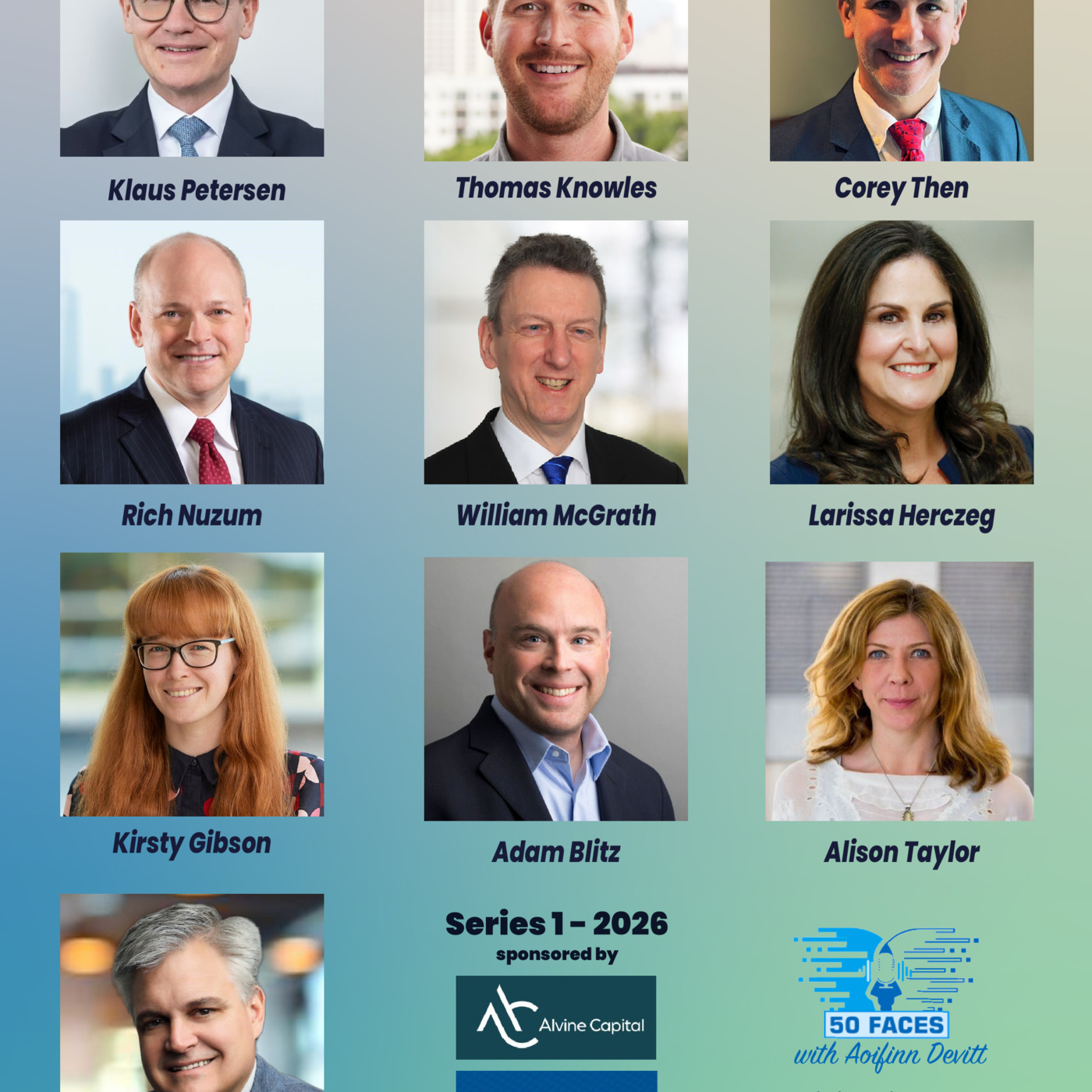
Aoifinn Devitt: Welcome to Series 1 of the 2026 50 Places Podcast. As a podcast, we are now approaching the age of 6. If we were a person, we’d already be at school. So as we come of age as a podcast, it’s time to go deep into some of the analysis of investments that we get through in our podcast. Tune in to a series in which we question what it is to stick to one’s investment beliefs.
Multiple Guests: Your core investment beliefs are always evolving and changing, but I think that they’re just becoming clearer. I think you might go through times in which you might make these big changes in your beliefs. So you have to be different, basically, in some way, shape, or form. And I think while others are focused on short-term horizons and the spurious precision of more short-term models, I can analyze underlying business models and I can ask myself, what if? Like, what if things went right? What if that opportunity was unlocked?
Aoifinn Devitt: We dig deep into the changing world of being an OCIO.
Speaker C: But what’s grown really quickly and kind of some of the larger mandates are mandates that are more a keep up with me model where they have a sophisticated in-house team, a CIO, other team members who are just as smart, just as expert as our OCIO team members. And they’re not looking for us to tell them what to do, but they’re looking for us to add value. It’s a partner. It’s not somebody to tell them what to do. And in implementation, again, we’re going to do that together.
Speaker D: Be honest when it comes to working with clients. We’re all fiduciaries, but I kind of believe in that true fiduciary, which is go above and beyond for your clients. If you take care of a client, you’re brutally honest with that client all the time.
Aoifinn Devitt: We encourage listeners to think about pensions a little differently.
Speaker E: If you think about overall, there is still $1.2 trillion in private sector investments in the UK that we could decide how to use. If you decide that, yes, we’re not walking off the pitch, we’re going to run on, which has been the thing I’ve been hammering away at since 2018, that run-on beats buyout.
Aoifinn Devitt: Moving to stablecoin, we ask what it may mean for financial inclusion.
Speaker F: So I just think that you’re going to see stablecoins enable commerce to speed up and As you increase money velocity, you can actually bring more prosperity to more people around the world, which is what our mission actually is.
Aoifinn Devitt: In the world of impact investing, we look at how to measure impact.
Speaker F: When we’re investing in a company, throughout our diligence process, we’re trying to underwrite what is the potential impact of this business from really a systems level. So we really do want to avoid more Band-Aid type solutions, really getting at things that we think are solving the root cause problem. We come up with what we call a theory of change, which is a bit more typical in the nonprofit sector, but I think is a great framework for thinking about, you know, inputs to driving outputs and outcomes.
Aoifinn Devitt: Back to fund analysis, we hear about the importance of looking beyond performance.
Speaker G: We’re not investing in people based on their presentation skills, right? We’re investing in them based on how we think they’re going to perform going forward from an investment perspective, right? And those are two different things, right?
Aoifinn Devitt: It’s important also to maintain critical thinking.
Speaker H: You need to understand what you invest in and don’t believe just what people are telling you because it’s a nice big story and it’s exciting. Just questioning it and ask yourself, is this true? Is it possible?
Aoifinn Devitt: We realize just how high the stakes have become as we conflate investing with our political stances.
Speaker I: It looks as if a certain sector of society that has less power is willing to stand up and a certain sector of society that has a lot of power is not willing to stand up.
Aoifinn Devitt: And finally, we ask how we know when enough is enough.
Speaker J: And I, my team is probably sick of this analogy, but I like to say back in your college days, you can go out and party and it seems like a good idea. And the longer you party, the worse you feel the next day. Day, and if you keep partying too much, you wind up dead in a gutter. And it feels like we’re at that point where we’ve been partying for a really long time as an economy, and I worry we’re going to wind up dead in the gutter. And if that happens, there’s really no underwriting today that makes sense.
Aoifinn Devitt: So tune in to listen to all of the Series 1 podcasts from the beginning of the year. You can find them on Apple Podcasts, Spotify, or wherever you get your podcasts. Thank you as always for your support from everyone at 50 Faces Productions.
Aoifinn Devitt: Welcome to Series 1 of the 2026 50 Places Podcast. As a podcast, we are now approaching the age of 6. If we were a person, we’d already be at school. So as we come of age as a podcast, it’s time to go deep into some of the analysis of investments that we get through in our podcast. Tune in to a series in which we question what it is to stick to one’s investment beliefs.
Multiple Guests: Your core investment beliefs are always evolving and changing, but I think that they’re just becoming clearer. I think you might go through times in which you might make these big changes in your beliefs. So you have to be different, basically, in some way, shape, or form. And I think while others are focused on short-term horizons and the spurious precision of more short-term models, I can analyze underlying business models and I can ask myself, what if? Like, what if things went right? What if that opportunity was unlocked?
Aoifinn Devitt: We dig deep into the changing world of being an OCIO.
Speaker C: But what’s grown really quickly and kind of some of the larger mandates are mandates that are more a keep up with me model where they have a sophisticated in-house team, a CIO, other team members who are just as smart, just as expert as our OCIO team members. And they’re not looking for us to tell them what to do, but they’re looking for us to add value. It’s a partner. It’s not somebody to tell them what to do. And in implementation, again, we’re going to do that together.
Speaker D: Be honest when it comes to working with clients. We’re all fiduciaries, but I kind of believe in that true fiduciary, which is go above and beyond for your clients. If you take care of a client, you’re brutally honest with that client all the time.
Aoifinn Devitt: We encourage listeners to think about pensions a little differently.
Speaker E: If you think about overall, there is still $1.2 trillion in private sector investments in the UK that we could decide how to use. If you decide that, yes, we’re not walking off the pitch, we’re going to run on, which has been the thing I’ve been hammering away at since 2018, that run-on beats buyout.
Aoifinn Devitt: Moving to stablecoin, we ask what it may mean for financial inclusion.
Speaker F: So I just think that you’re going to see stablecoins enable commerce to speed up and As you increase money velocity, you can actually bring more prosperity to more people around the world, which is what our mission actually is.
Aoifinn Devitt: In the world of impact investing, we look at how to measure impact.
Speaker F: When we’re investing in a company, throughout our diligence process, we’re trying to underwrite what is the potential impact of this business from really a systems level. So we really do want to avoid more Band-Aid type solutions, really getting at things that we think are solving the root cause problem. We come up with what we call a theory of change, which is a bit more typical in the nonprofit sector, but I think is a great framework for thinking about, you know, inputs to driving outputs and outcomes.
Aoifinn Devitt: Back to fund analysis, we hear about the importance of looking beyond performance.
Speaker G: We’re not investing in people based on their presentation skills, right? We’re investing in them based on how we think they’re going to perform going forward from an investment perspective, right? And those are two different things, right?
Aoifinn Devitt: It’s important also to maintain critical thinking.
Speaker H: You need to understand what you invest in and don’t believe just what people are telling you because it’s a nice big story and it’s exciting. Just questioning it and ask yourself, is this true? Is it possible?
Aoifinn Devitt: We realize just how high the stakes have become as we conflate investing with our political stances.
Speaker I: It looks as if a certain sector of society that has less power is willing to stand up and a certain sector of society that has a lot of power is not willing to stand up.
Aoifinn Devitt: And finally, we ask how we know when enough is enough.
Speaker J: And I, my team is probably sick of this analogy, but I like to say back in your college days, you can go out and party and it seems like a good idea. And the longer you party, the worse you feel the next day. Day, and if you keep partying too much, you wind up dead in a gutter. And it feels like we’re at that point where we’ve been partying for a really long time as an economy, and I worry we’re going to wind up dead in the gutter. And if that happens, there’s really no underwriting today that makes sense.
Aoifinn Devitt: So tune in to listen to all of the Series 1 podcasts from the beginning of the year. You can find them on Apple Podcasts, Spotify, or wherever you get your podcasts. Thank you as always for your support from everyone at 50 Faces Productions.