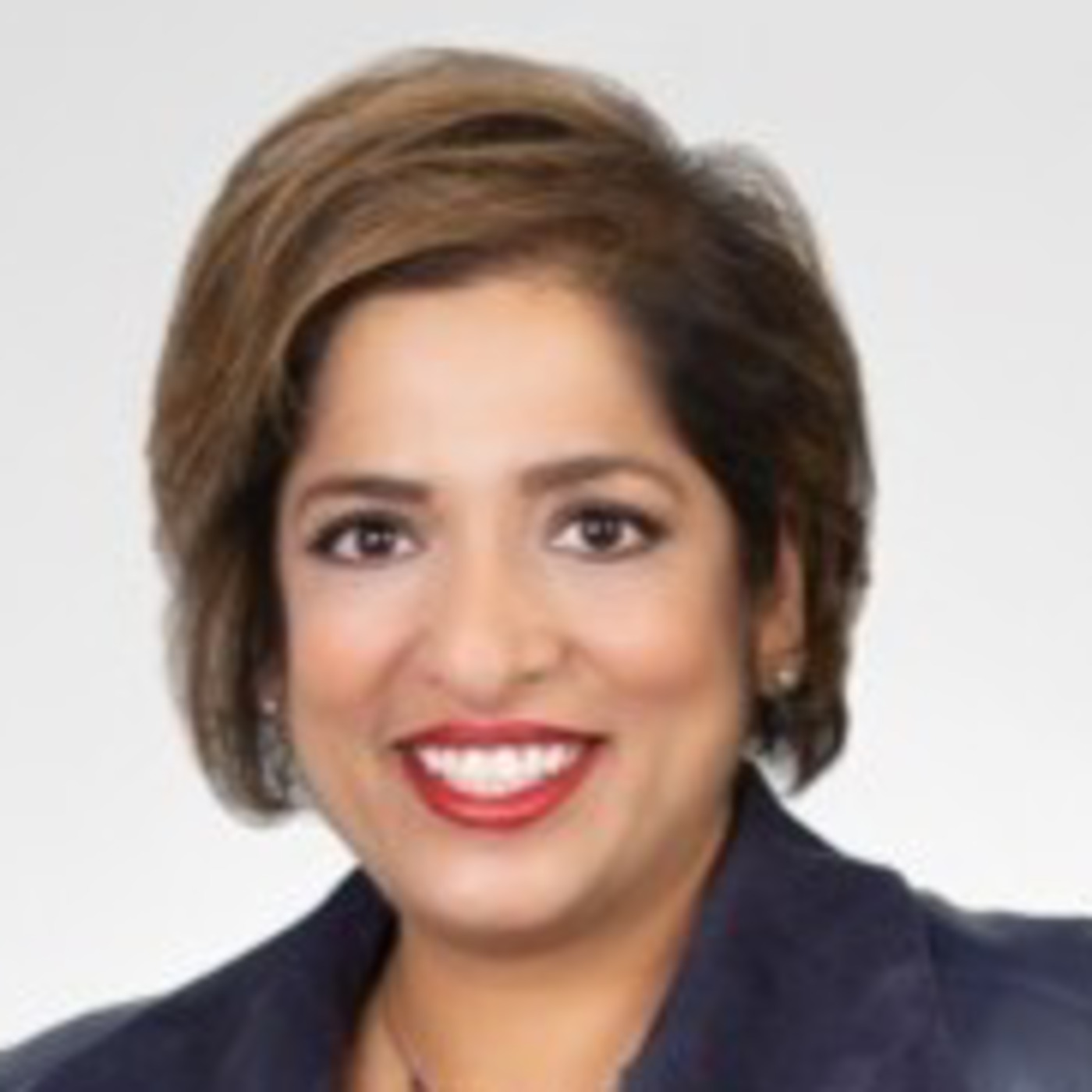
Aoifinn Devitt: Our next guest has taken a hard look at what boards need in order to reflect the constituencies they serve and truly embrace the benefits of diversity. Let’s hear how she uses this experience to drive real progress. I’m Aoifinn Devitt, and welcome to the 50 Faces Podcast, a podcast committed to revealing the richness and diversity of the world of investment by focusing on its people and their stories. I’m joined today by Sharmila Kassam, who is the founder of Aligned Capital Investing, as well as having a portfolio of board roles. She’s a senior fellow at the Milken Institute and was previously Deputy Chief Investment Officer of the Employees Retirement System of Texas., a public defined benefit plan with around $30 billion in assets under management. There she held a series of roles for almost 12 years. She previously worked as an attorney and a venture industry professional. Welcome, Sharmila. Thank you for joining me today.
Sharmila Kassam: Thank you.
Aoifinn Devitt: Let’s talk about your journey from law into investing, which is one that I made myself, in fact. What drove that? And can you also talk about your current roles that you’re holding?
Sharmila Kassam: Sure. So I’m happy to. Thanks again for having me. The opportunity to be an attorney was not one that I originally thought I would pursue. For very long. I actually started off my career in public accounting and then moved into startup and companies, basically large, very high-paced growth companies in the corporate world and management roles and in financial roles. And honestly, I just got to a place where it was very difficult when you have a dynamic organization, if you don’t have the support of your legal team. So I honestly joke, but it’s true. I wanted to go to law school to better understand how to work through both structures as well as negotiations and the different aspects of a business growth from the legal side. I did wind up practicing and still am licensed, but it’s one of those areas where I think it gives you a better perspective because you learn in law school, like I know you know, how to analyze things and how to really appreciate risk management from a way that is very applicable to the investment industry.
Aoifinn Devitt: And then going back to your time as Deputy CIO at the Employees Retirement System of Texas, what issues took priority in that role as Deputy CIO of such a large public fund?
Sharmila Kassam: So coming from the private sector, I was probably a little unprepared for what public sector organizations needed to go through. So I think originally, and you may have also experienced this with your time in the public sector, that there’s a lot of just kind of basics in terms of commercial culture, the way the structures need to work for investment strategies to really be maximized. A lot of things where we just really spent the time in the beginning focused on sort of making sure the fundamentals were there. And it was an organization that was really growing because they were investing in the alternative markets for the first time. So we came in at a very exciting time in the portfolio. What I learned quickly is once we got a lot of these basics, whether it was compensation or agreements with our regulatory matters kind of structured so we could do private equity and hedge funds and other asset classes, then it became more about asset allocation. And I mean, it sort of built up from there. So there’s a lot of talk and a lot of consultants always trying to give advice to pensions and What I really found trying to analyze everything, both we were doing, what our funding and distribution needs were, as well as what peers were doing, is that there’s a lot of things that we needed to do in our portfolio that maximized our competitive advantage. And we had several people who were very transactional in nature. They became very useful on a co-investment side. So my focus became, how do we not only find an asset mix or an investment strategy for the overall trust, that met our return target needs, but also provided the liquidity and capitalized on this team. And I think that was a little bit of a challenge because I think sometimes these models that we use in the industry to try to decipher portfolio management become a little esoteric and they don’t necessarily take into account some of the soft nature of what you have. And then at the very end, I think I spent most of my time really on governance because you’re trying to create a legacy, especially in the chief investment officer, deputy chief investment officer role that lives beyond you. So governance and even the framework of how our investment policy worked became a huge aspect of my role and real proud of what we built over there.
Aoifinn Devitt: And what kind of challenges did you have on the funding front? Obviously I came from a Chicago public fund where we had and their notoriously poor funded ratios. Did that have the same sort of level of challenge in Texas?
Sharmila Kassam: It did. Probably not as extreme as what you faced in your part of the country, but it was eye-opening for me to see that even though our kind of needs from a contribution standpoint from the employer, the State of Texas, was relatively modest part of the budget, it’s that dynamic of, you know, pensions for state employees versus most of the private sector doesn’t have that. So there was a lot of noise in the industry and things get compounded, I think, because of the way pensions invest in things that are not always easy for some of the stakeholders to understand because they’re not what you see in your 401(k) or your DC program. So the funding was really critical. We were still very well funded relative to a US plan, But I think what that got me thinking more about was how to look at liquidity in a different way and not just search for returns, but really provide some protection in terms of income coming in as we were distributing $2 billion a year, but we were only receiving a partial amount of that in contributions. So the liquidity of the portfolio needed to be able to accommodate that. And so lots of endeavors into shorter duration private credit and longer duration assets like infrastructure that provide yield were very important to compensate for that liquidity kind of complexity.
Aoifinn Devitt: Yeah, that was exactly the approach that we took in Chicago was create a cash flow driven portfolio to generate some yield, essentially because we had such a structural negative cash flow situation. But it’s interesting that you were also doing a similar thing, even if your situation wasn’t quite so dire. I know that I’ve always known you to be quite a lead in the industry in terms of your I suppose your understanding of and adoption of ESG principles really well before they were becoming common, certainly on the conference circuit that we met on. What role has that played in your priorities, both at Texas ERS as well as now? And did you seek diverse and emerging managers as part of your role in Texas?
Sharmila Kassam: So ESG, I think, has been such a talked-about concept. But been very, I think, as we’ve met and discussed over the years, wanting to look for a way to actually apply that. I think I’m doing it more now in my current role, but can definitely speak to it. My current role is consulting, but when I was at Texas ERASS, you know, the governance aspect of ESG obviously resonates. I mean, there’s so much coming at these pensions and whether it’s the governance in these private market portfolios or the governance of the investment. Program itself, it was very important to set the stage for a real appreciation for that. We were always a little bit probably behind in terms of formalizing some of that, but we incorporated it into our investment process. Diversity is one aspect of it that definitely probably resonated more than climate change issues. Being in Texas, there’s some headwinds to really looking at climate change, as the economy is very much run by fossil fuels and oil and gas. However, there is a lot of innovation going on in the renewable space and even in the oil and gas industry. On the diversity front, and I think the current social situation, both in the US and outside of the US, has really been a catalyst too, is that there’s a lot of discussion about needing to do this, but really understanding why. I mean, we started with really looking at our staff. I was brought in originally before I joined the investment team when I was actually lead attorney on many of the deals to talk about emerging managers, partly because I was a diverse person in the room but had, you know, obviously had the business experience to know that bringing different people to the table, regardless of their gender and ethnicity, but because of kind of where their perspectives were, where they came from, what their experiences were, resulted in better solutions. So we did have an emerging manager program. I’m really proud of the fact that we actually tried to focus on the performance of that program. So I think we were one of the first to actually disclose our performance relative to the established larger managers in the portfolio. And for years it did perform 200 to 300 basis points higher. And I think it was a contribution of a lot of things, but it included being opportunistic about the set of managers that included smaller managers, included diverse professionals. Oftentimes we had at least 40% of the portfolio in women or minorities, and really just honestly trying to seek out strategies that would have been difficult for us to find on a larger scale. So, I mean, that program in itself became well-established across several asset classes. And in my final couple of years, we were able to establish a hedge fund platform that really can be an interesting, innovative way of having smaller managers launch by working within a multi-manager platform like we’re used to seeing in the industry, but then having the opportunity to move from that into having their own firms and having the support of pensions like ERAS and others. Because I mean, right now, the ability for smaller managers and particularly diverse investment professionals to get launched is really being challenged with the current COVID situation. So I hope to see more of that. And in my current roles, I’m trying really hard to bring attention to some of that, those issues as more of a thought leader with some of the organizations that I’m affiliated with and think tanks and appreciate the opportunity today to talk about this.
Aoifinn Devitt: Oh, absolutely. And I’d like to talk, turn now to speak about some of your board roles and current affiliations. Can you speak a little bit about some of the movements you’re involved in and what you seek to bring to those board roles in addition to this cognitive diversity and, and as was championing some of the diversity issues we’ve spoken about?
Sharmila Kassam: So board service is something that I think some of us have never really been able to understand from the perspective of what we grew up with. I didn’t necessarily have role models that had served on boards. It has seemed like a very exclusive type of space, but there’s been a lot of discussion, rightfully so, for all the reasons why there should be different viewpoints and including having women at the table that have traditionally not been included in board service. I work with a few organizations, particularly one called AIF, Alternative Investor Forum, and they appreciated from their investor base that there is a call for diversity. Obviously, there’s a lot of discussion in the public company arena about increasing the number of women on boards. There’s even been statutes passed for— in California. I know in Europe there’s certain requirements of having so many women represented. And I think what the next step is, is really getting these women into the pipeline. And so I feel like many of us have been in front of boards in our seats, like you, was facing the board on a regular basis, very strategically involved. And then we had the added burden of doing it in a fishbowl where it was often publicly conducted. So the experience there, I think, is a natural fit to try to leverage it into either a public or private company that’s really trying to understand what their investors do. So my focus has been really just a lot of people say they want to get on boards is helping people understand what that means, the fiduciary responsibility, the aspect of not really being in the weeds, but providing your strategic guidance and oversight, which is a very different element than doing the work, which is what most of us did to get to where we are in in our, our careers, as well as getting companies and private equity firms to understand that there are these pipelines that are outside of their own networks, outside of recruiters often, where they can find talented women across industries. So we’re working on an ecosystem with several of the large private equity companies, as well as I think there’s a slower movement because it is difficult in the mutual fund space to bring some diversity on that front as well. So I look forward to continuing that work with other leaders in the industry. And I think this may be the time that the, the stars align for all of this.
Aoifinn Devitt: Well, thank you, I suppose, on our behalf, all of us, for that work you were doing to raise visibility there, because I think it’s so important. And I think what also makes your role perhaps particularly powerful is having had the experience of, you know, long experience of building these portfolios and really seeing the benefits of you diversity, know, prove themselves essentially through performance. And I think that’s always very good to have that as a validator, because as you said, there could be naysayers perhaps, or And some that you have to yet convince, but that’s extremely valuable that you’re doing that work. Going back to your own career, were there any key people who influenced you along your journey or any key pieces of advice maybe that you received that you still live by?
Sharmila Kassam: So, I just recently had my mother pass, and like many of us, we attribute some of who we are as people to a strong and nurturing mother. But one of the things I actually learned recently from her brother that she really— she came from a different climate and culture. We talk a lot about it right now with RBG’s passing of how hard it was for women to kind of have the career and the personal life. And I only recently learned she was actually a very successful professional in her home country of India before she immigrated to the United States in the education sector, spent a lot of time and was very fruitful in her career and came to a point where just culturally, she couldn’t do both. And so she decided to spend her efforts on being a mother and a wife. And I think it’s because of some of that now I look at her very differently, because she kind of set a stage where if you knew you couldn’t succeed at both, you needed to do something very well and you needed to show excellence there. And then all the things that I never really appreciated growing up, she gave us those opportunities such that we didn’t have to think twice about being able to have both a career that was very promising and just kind of assumed that everything would be available to us as long as we worked hard and took risks. And so I think if you’d asked me this question a few years ago, I probably would have said one of the great investors in the industry or someone else, maybe more from kind of a celebrity standpoint. But right now, I think some of those personal connections, as well as just having worked in the public sector, you see you see a lot of things very differently. It no longer becomes just about transactions or performance by itself. There’s a bigger effort you’re building for sustainability in terms of these people’s retirement and their perspective of leaving something bigger than yourself behind. So that’s had a lot of influence. And in terms of, I guess, things I live by now, I mean, I’ve always thought you never give up, you have to be resilient. And I think many of us who are either women in the industry or have come to this country, the United States, from other places by— through immigrants or something else, have learned that probably younger in life than others. But that has obviously rung true right now in this very unprecedented time. But it also has, I think, provided some opportunities that I’ve thought a lot more about. I’ve heard people talk about intentionality and momentum, and I never really completely understood because I always thought I was being very intentional about everything I was doing, but I think a lot of us do kind of get into a focus of trying to get the next step done, whether it’s professionally or personally. And I think these opportunities right now lend to thinking more about what we can have more of an imprint on, more of a legacy behind. And so hopefully a lot of the efforts I’m doing right now not only let me do some good work, but also have more of a value. That can multiply itself working with other folks like yourself.
Aoifinn Devitt: Those are really beautiful reflections, and I’m sorry for your loss of your mother, but it seems that she really was an unsung hero, and certainly her spirit is living on through you. But I see this myself with some of the extraordinary stories I hear from ordinary people, and I think any— both of us have been in public service, and that’s where I think we see true resilience, true public service, and just really extraordinary strength. So I think it’s lovely that you have brought her to the fore like this. So now back in the investment world, you moved from law into the investment world. What do you like most about it?
Sharmila Kassam: So we’re all probably just fascinated by the intellectual innovation, the intellectual curiosity of exploring different strategies. I mean, I think fundamentally the idea, especially as I grew up with an immigrant family where you saved money, you invested in the markets. You did all the things you needed to do, and then you were able to put your kids through college so that they can have opportunities in grad school. I mean, the markets make that possible. And the idea of contributing to the success of those investors that are everything from the people behind pensions to people who are just investing in the markets for their own portfolios, that’s exciting to me. I sometimes wish the innovation and some of the progress in the investment industry was as fast-paced as perhaps some other industries that I’ve been in, like technology. But I do think that the markets are adapting to the challenges, not just now, but things that have happened over the past decade, two decades, where, I mean, there’s been a very different shift and kind of a reversal of some of the benefits we had going into, say, the ’90s and the heyday of those to The Great Recession, the beginning of 2008, 2009. And, and now obviously more than ever, the investment industry can provide solace if we can bring capital to companies and continue to allow people to be able to save and invest in their portfolios for kind of their future success as a family.
Aoifinn Devitt: Absolutely. I mean, leverage really is the lifeblood of commerce. So being able to lend and to, and being able be able to, I think, contribute to fortunes growing.
Sharmila Kassam: Very well said.
Aoifinn Devitt: Yeah, it is. We’ve talked a little bit about— a lot actually, not a little bit— about diversity. And clearly you have a very nuanced view given your own path, as well as the work you’ve done with emerging managers, as well as the work you’re now doing on boards to shine a light on the importance of diversity in different organizations. What is your scorecard if you were to look at the investment industry today in terms of how well it’s doing on diversity and how that needs to improve and maybe how it can?
Sharmila Kassam: So it may be controversial to give it a bad grade, so I won’t give it a particular grade, but I do think that the score is not where it needs to be, especially from an industry that prides itself on beating benchmarks and exceeding in terms of performance. And the diversity to me, again, is it’s about the type of people that you bring to the table, whether they’re gender ethnicity, but also the investment industry is competing now with a lot of other industries where you really need to have different perspectives. I think both of us had some, some different perspectives going into the investment industry, and I think that’s what made us better investors. And so attracting that kind of talent, showing people early on— I mean, I had a very limited view of the financial markets just growing up, and having that kind of opportunity to build those pipelines with girls in particular is important.
Aoifinn Devitt: Yeah, I think that’s exactly right. It needs to be welcoming. There needs to be a sense of inclusion. There needs to be a sense of a support network, I think, because the pipeline is there. But the problem is there’s the retention issue. And I actually think right now, here we are in the fall of 2020, and apparently the dropout rate among professional women everywhere is higher than it has been in years, which is an absolute tragedy.
Sharmila Kassam: We’re definitely challenged by that. I think women are feeling a lot of pressure for lots of different reasons that are coming in terms of just keeping personal and professional lives managed with the current pandemic. But you also, I think, brought up a good point. I think it’s about inclusion even before diversity. I mean, there’s many cultures that aren’t even inclusive of the folks that are there, and it’s more of a homogeneous population. I mean, it takes sort of accepting people and trying to create a culture that will be one someone wants to stay in before you can even try to challenge that culture to accept diversity.
Aoifinn Devitt: Last question is around any advice you would have for your younger self. Anything that you know now that you wish you had known perhaps when you were in your early 20s?
Sharmila Kassam: I think it all becomes about context right now, and maybe you’d agree with this, that at the time the deal seems the most important, or kind of that board meeting seems to be what you’re focused on, and you’re a little bit almost letting that momentum guide you instead of having the broader perspective of the failures as well as the wins, but sometimes the failures are even more important. As much as most of us, because of our own personalities, don’t like to fail because you learn from them. And so I actually think that the challenges are actually ones that I wish I had known were the ones to spend more time reflecting on to be able to kind of have the better successes going forward rather than seeing everything as a zero-sum game.
Aoifinn Devitt: Well, thank you so much, Charmila. It’s been a pleasure speaking with you today. Thank you for the work you are doing and continue to do. In the diversity arena and for continuing to bring attention to this important topic. And I know that your legacy at Texas ERS lives on and is a real testament to the early seeds you were sowing there. So thank you so much for sharing your insights with us.
Sharmila Kassam: Thank you for having me. Appreciate it.
Aoifinn Devitt: I’m Aoifinn Devitt. Thank you for listening to the 50 Faces Podcast. If you liked what you heard and would like to tune in to hear more inspiring investors and their personal journeys, Please subscribe on Apple Podcasts or wherever you get your podcasts. This podcast is for informational purposes only and should not be construed as investment advice, and all views are personal and should not be attributed to the organizations and affiliations of the host or any guest.
Aoifinn Devitt: Our next guest has taken a hard look at what boards need in order to reflect the constituencies they serve and truly embrace the benefits of diversity. Let’s hear how she uses this experience to drive real progress. I’m Aoifinn Devitt, and welcome to the 50 Faces Podcast, a podcast committed to revealing the richness and diversity of the world of investment by focusing on its people and their stories. I’m joined today by Sharmila Kassam, who is the founder of Aligned Capital Investing, as well as having a portfolio of board roles. She’s a senior fellow at the Milken Institute and was previously Deputy Chief Investment Officer of the Employees Retirement System of Texas., a public defined benefit plan with around $30 billion in assets under management. There she held a series of roles for almost 12 years. She previously worked as an attorney and a venture industry professional. Welcome, Sharmila. Thank you for joining me today.
Sharmila Kassam: Thank you.
Aoifinn Devitt: Let’s talk about your journey from law into investing, which is one that I made myself, in fact. What drove that? And can you also talk about your current roles that you’re holding?
Sharmila Kassam: Sure. So I’m happy to. Thanks again for having me. The opportunity to be an attorney was not one that I originally thought I would pursue. For very long. I actually started off my career in public accounting and then moved into startup and companies, basically large, very high-paced growth companies in the corporate world and management roles and in financial roles. And honestly, I just got to a place where it was very difficult when you have a dynamic organization, if you don’t have the support of your legal team. So I honestly joke, but it’s true. I wanted to go to law school to better understand how to work through both structures as well as negotiations and the different aspects of a business growth from the legal side. I did wind up practicing and still am licensed, but it’s one of those areas where I think it gives you a better perspective because you learn in law school, like I know you know, how to analyze things and how to really appreciate risk management from a way that is very applicable to the investment industry.
Aoifinn Devitt: And then going back to your time as Deputy CIO at the Employees Retirement System of Texas, what issues took priority in that role as Deputy CIO of such a large public fund?
Sharmila Kassam: So coming from the private sector, I was probably a little unprepared for what public sector organizations needed to go through. So I think originally, and you may have also experienced this with your time in the public sector, that there’s a lot of just kind of basics in terms of commercial culture, the way the structures need to work for investment strategies to really be maximized. A lot of things where we just really spent the time in the beginning focused on sort of making sure the fundamentals were there. And it was an organization that was really growing because they were investing in the alternative markets for the first time. So we came in at a very exciting time in the portfolio. What I learned quickly is once we got a lot of these basics, whether it was compensation or agreements with our regulatory matters kind of structured so we could do private equity and hedge funds and other asset classes, then it became more about asset allocation. And I mean, it sort of built up from there. So there’s a lot of talk and a lot of consultants always trying to give advice to pensions and What I really found trying to analyze everything, both we were doing, what our funding and distribution needs were, as well as what peers were doing, is that there’s a lot of things that we needed to do in our portfolio that maximized our competitive advantage. And we had several people who were very transactional in nature. They became very useful on a co-investment side. So my focus became, how do we not only find an asset mix or an investment strategy for the overall trust, that met our return target needs, but also provided the liquidity and capitalized on this team. And I think that was a little bit of a challenge because I think sometimes these models that we use in the industry to try to decipher portfolio management become a little esoteric and they don’t necessarily take into account some of the soft nature of what you have. And then at the very end, I think I spent most of my time really on governance because you’re trying to create a legacy, especially in the chief investment officer, deputy chief investment officer role that lives beyond you. So governance and even the framework of how our investment policy worked became a huge aspect of my role and real proud of what we built over there.
Aoifinn Devitt: And what kind of challenges did you have on the funding front? Obviously I came from a Chicago public fund where we had and their notoriously poor funded ratios. Did that have the same sort of level of challenge in Texas?
Sharmila Kassam: It did. Probably not as extreme as what you faced in your part of the country, but it was eye-opening for me to see that even though our kind of needs from a contribution standpoint from the employer, the State of Texas, was relatively modest part of the budget, it’s that dynamic of, you know, pensions for state employees versus most of the private sector doesn’t have that. So there was a lot of noise in the industry and things get compounded, I think, because of the way pensions invest in things that are not always easy for some of the stakeholders to understand because they’re not what you see in your 401(k) or your DC program. So the funding was really critical. We were still very well funded relative to a US plan, But I think what that got me thinking more about was how to look at liquidity in a different way and not just search for returns, but really provide some protection in terms of income coming in as we were distributing $2 billion a year, but we were only receiving a partial amount of that in contributions. So the liquidity of the portfolio needed to be able to accommodate that. And so lots of endeavors into shorter duration private credit and longer duration assets like infrastructure that provide yield were very important to compensate for that liquidity kind of complexity.
Aoifinn Devitt: Yeah, that was exactly the approach that we took in Chicago was create a cash flow driven portfolio to generate some yield, essentially because we had such a structural negative cash flow situation. But it’s interesting that you were also doing a similar thing, even if your situation wasn’t quite so dire. I know that I’ve always known you to be quite a lead in the industry in terms of your I suppose your understanding of and adoption of ESG principles really well before they were becoming common, certainly on the conference circuit that we met on. What role has that played in your priorities, both at Texas ERS as well as now? And did you seek diverse and emerging managers as part of your role in Texas?
Sharmila Kassam: So ESG, I think, has been such a talked-about concept. But been very, I think, as we’ve met and discussed over the years, wanting to look for a way to actually apply that. I think I’m doing it more now in my current role, but can definitely speak to it. My current role is consulting, but when I was at Texas ERASS, you know, the governance aspect of ESG obviously resonates. I mean, there’s so much coming at these pensions and whether it’s the governance in these private market portfolios or the governance of the investment. Program itself, it was very important to set the stage for a real appreciation for that. We were always a little bit probably behind in terms of formalizing some of that, but we incorporated it into our investment process. Diversity is one aspect of it that definitely probably resonated more than climate change issues. Being in Texas, there’s some headwinds to really looking at climate change, as the economy is very much run by fossil fuels and oil and gas. However, there is a lot of innovation going on in the renewable space and even in the oil and gas industry. On the diversity front, and I think the current social situation, both in the US and outside of the US, has really been a catalyst too, is that there’s a lot of discussion about needing to do this, but really understanding why. I mean, we started with really looking at our staff. I was brought in originally before I joined the investment team when I was actually lead attorney on many of the deals to talk about emerging managers, partly because I was a diverse person in the room but had, you know, obviously had the business experience to know that bringing different people to the table, regardless of their gender and ethnicity, but because of kind of where their perspectives were, where they came from, what their experiences were, resulted in better solutions. So we did have an emerging manager program. I’m really proud of the fact that we actually tried to focus on the performance of that program. So I think we were one of the first to actually disclose our performance relative to the established larger managers in the portfolio. And for years it did perform 200 to 300 basis points higher. And I think it was a contribution of a lot of things, but it included being opportunistic about the set of managers that included smaller managers, included diverse professionals. Oftentimes we had at least 40% of the portfolio in women or minorities, and really just honestly trying to seek out strategies that would have been difficult for us to find on a larger scale. So, I mean, that program in itself became well-established across several asset classes. And in my final couple of years, we were able to establish a hedge fund platform that really can be an interesting, innovative way of having smaller managers launch by working within a multi-manager platform like we’re used to seeing in the industry, but then having the opportunity to move from that into having their own firms and having the support of pensions like ERAS and others. Because I mean, right now, the ability for smaller managers and particularly diverse investment professionals to get launched is really being challenged with the current COVID situation. So I hope to see more of that. And in my current roles, I’m trying really hard to bring attention to some of that, those issues as more of a thought leader with some of the organizations that I’m affiliated with and think tanks and appreciate the opportunity today to talk about this.
Aoifinn Devitt: Oh, absolutely. And I’d like to talk, turn now to speak about some of your board roles and current affiliations. Can you speak a little bit about some of the movements you’re involved in and what you seek to bring to those board roles in addition to this cognitive diversity and, and as was championing some of the diversity issues we’ve spoken about?
Sharmila Kassam: So board service is something that I think some of us have never really been able to understand from the perspective of what we grew up with. I didn’t necessarily have role models that had served on boards. It has seemed like a very exclusive type of space, but there’s been a lot of discussion, rightfully so, for all the reasons why there should be different viewpoints and including having women at the table that have traditionally not been included in board service. I work with a few organizations, particularly one called AIF, Alternative Investor Forum, and they appreciated from their investor base that there is a call for diversity. Obviously, there’s a lot of discussion in the public company arena about increasing the number of women on boards. There’s even been statutes passed for— in California. I know in Europe there’s certain requirements of having so many women represented. And I think what the next step is, is really getting these women into the pipeline. And so I feel like many of us have been in front of boards in our seats, like you, was facing the board on a regular basis, very strategically involved. And then we had the added burden of doing it in a fishbowl where it was often publicly conducted. So the experience there, I think, is a natural fit to try to leverage it into either a public or private company that’s really trying to understand what their investors do. So my focus has been really just a lot of people say they want to get on boards is helping people understand what that means, the fiduciary responsibility, the aspect of not really being in the weeds, but providing your strategic guidance and oversight, which is a very different element than doing the work, which is what most of us did to get to where we are in in our, our careers, as well as getting companies and private equity firms to understand that there are these pipelines that are outside of their own networks, outside of recruiters often, where they can find talented women across industries. So we’re working on an ecosystem with several of the large private equity companies, as well as I think there’s a slower movement because it is difficult in the mutual fund space to bring some diversity on that front as well. So I look forward to continuing that work with other leaders in the industry. And I think this may be the time that the, the stars align for all of this.
Aoifinn Devitt: Well, thank you, I suppose, on our behalf, all of us, for that work you were doing to raise visibility there, because I think it’s so important. And I think what also makes your role perhaps particularly powerful is having had the experience of, you know, long experience of building these portfolios and really seeing the benefits of you diversity, know, prove themselves essentially through performance. And I think that’s always very good to have that as a validator, because as you said, there could be naysayers perhaps, or And some that you have to yet convince, but that’s extremely valuable that you’re doing that work. Going back to your own career, were there any key people who influenced you along your journey or any key pieces of advice maybe that you received that you still live by?
Sharmila Kassam: So, I just recently had my mother pass, and like many of us, we attribute some of who we are as people to a strong and nurturing mother. But one of the things I actually learned recently from her brother that she really— she came from a different climate and culture. We talk a lot about it right now with RBG’s passing of how hard it was for women to kind of have the career and the personal life. And I only recently learned she was actually a very successful professional in her home country of India before she immigrated to the United States in the education sector, spent a lot of time and was very fruitful in her career and came to a point where just culturally, she couldn’t do both. And so she decided to spend her efforts on being a mother and a wife. And I think it’s because of some of that now I look at her very differently, because she kind of set a stage where if you knew you couldn’t succeed at both, you needed to do something very well and you needed to show excellence there. And then all the things that I never really appreciated growing up, she gave us those opportunities such that we didn’t have to think twice about being able to have both a career that was very promising and just kind of assumed that everything would be available to us as long as we worked hard and took risks. And so I think if you’d asked me this question a few years ago, I probably would have said one of the great investors in the industry or someone else, maybe more from kind of a celebrity standpoint. But right now, I think some of those personal connections, as well as just having worked in the public sector, you see you see a lot of things very differently. It no longer becomes just about transactions or performance by itself. There’s a bigger effort you’re building for sustainability in terms of these people’s retirement and their perspective of leaving something bigger than yourself behind. So that’s had a lot of influence. And in terms of, I guess, things I live by now, I mean, I’ve always thought you never give up, you have to be resilient. And I think many of us who are either women in the industry or have come to this country, the United States, from other places by— through immigrants or something else, have learned that probably younger in life than others. But that has obviously rung true right now in this very unprecedented time. But it also has, I think, provided some opportunities that I’ve thought a lot more about. I’ve heard people talk about intentionality and momentum, and I never really completely understood because I always thought I was being very intentional about everything I was doing, but I think a lot of us do kind of get into a focus of trying to get the next step done, whether it’s professionally or personally. And I think these opportunities right now lend to thinking more about what we can have more of an imprint on, more of a legacy behind. And so hopefully a lot of the efforts I’m doing right now not only let me do some good work, but also have more of a value. That can multiply itself working with other folks like yourself.
Aoifinn Devitt: Those are really beautiful reflections, and I’m sorry for your loss of your mother, but it seems that she really was an unsung hero, and certainly her spirit is living on through you. But I see this myself with some of the extraordinary stories I hear from ordinary people, and I think any— both of us have been in public service, and that’s where I think we see true resilience, true public service, and just really extraordinary strength. So I think it’s lovely that you have brought her to the fore like this. So now back in the investment world, you moved from law into the investment world. What do you like most about it?
Sharmila Kassam: So we’re all probably just fascinated by the intellectual innovation, the intellectual curiosity of exploring different strategies. I mean, I think fundamentally the idea, especially as I grew up with an immigrant family where you saved money, you invested in the markets. You did all the things you needed to do, and then you were able to put your kids through college so that they can have opportunities in grad school. I mean, the markets make that possible. And the idea of contributing to the success of those investors that are everything from the people behind pensions to people who are just investing in the markets for their own portfolios, that’s exciting to me. I sometimes wish the innovation and some of the progress in the investment industry was as fast-paced as perhaps some other industries that I’ve been in, like technology. But I do think that the markets are adapting to the challenges, not just now, but things that have happened over the past decade, two decades, where, I mean, there’s been a very different shift and kind of a reversal of some of the benefits we had going into, say, the ’90s and the heyday of those to The Great Recession, the beginning of 2008, 2009. And, and now obviously more than ever, the investment industry can provide solace if we can bring capital to companies and continue to allow people to be able to save and invest in their portfolios for kind of their future success as a family.
Aoifinn Devitt: Absolutely. I mean, leverage really is the lifeblood of commerce. So being able to lend and to, and being able be able to, I think, contribute to fortunes growing.
Sharmila Kassam: Very well said.
Aoifinn Devitt: Yeah, it is. We’ve talked a little bit about— a lot actually, not a little bit— about diversity. And clearly you have a very nuanced view given your own path, as well as the work you’ve done with emerging managers, as well as the work you’re now doing on boards to shine a light on the importance of diversity in different organizations. What is your scorecard if you were to look at the investment industry today in terms of how well it’s doing on diversity and how that needs to improve and maybe how it can?
Sharmila Kassam: So it may be controversial to give it a bad grade, so I won’t give it a particular grade, but I do think that the score is not where it needs to be, especially from an industry that prides itself on beating benchmarks and exceeding in terms of performance. And the diversity to me, again, is it’s about the type of people that you bring to the table, whether they’re gender ethnicity, but also the investment industry is competing now with a lot of other industries where you really need to have different perspectives. I think both of us had some, some different perspectives going into the investment industry, and I think that’s what made us better investors. And so attracting that kind of talent, showing people early on— I mean, I had a very limited view of the financial markets just growing up, and having that kind of opportunity to build those pipelines with girls in particular is important.
Aoifinn Devitt: Yeah, I think that’s exactly right. It needs to be welcoming. There needs to be a sense of inclusion. There needs to be a sense of a support network, I think, because the pipeline is there. But the problem is there’s the retention issue. And I actually think right now, here we are in the fall of 2020, and apparently the dropout rate among professional women everywhere is higher than it has been in years, which is an absolute tragedy.
Sharmila Kassam: We’re definitely challenged by that. I think women are feeling a lot of pressure for lots of different reasons that are coming in terms of just keeping personal and professional lives managed with the current pandemic. But you also, I think, brought up a good point. I think it’s about inclusion even before diversity. I mean, there’s many cultures that aren’t even inclusive of the folks that are there, and it’s more of a homogeneous population. I mean, it takes sort of accepting people and trying to create a culture that will be one someone wants to stay in before you can even try to challenge that culture to accept diversity.
Aoifinn Devitt: Last question is around any advice you would have for your younger self. Anything that you know now that you wish you had known perhaps when you were in your early 20s?
Sharmila Kassam: I think it all becomes about context right now, and maybe you’d agree with this, that at the time the deal seems the most important, or kind of that board meeting seems to be what you’re focused on, and you’re a little bit almost letting that momentum guide you instead of having the broader perspective of the failures as well as the wins, but sometimes the failures are even more important. As much as most of us, because of our own personalities, don’t like to fail because you learn from them. And so I actually think that the challenges are actually ones that I wish I had known were the ones to spend more time reflecting on to be able to kind of have the better successes going forward rather than seeing everything as a zero-sum game.
Aoifinn Devitt: Well, thank you so much, Charmila. It’s been a pleasure speaking with you today. Thank you for the work you are doing and continue to do. In the diversity arena and for continuing to bring attention to this important topic. And I know that your legacy at Texas ERS lives on and is a real testament to the early seeds you were sowing there. So thank you so much for sharing your insights with us.
Sharmila Kassam: Thank you for having me. Appreciate it.
Aoifinn Devitt: I’m Aoifinn Devitt. Thank you for listening to the 50 Faces Podcast. If you liked what you heard and would like to tune in to hear more inspiring investors and their personal journeys, Please subscribe on Apple Podcasts or wherever you get your podcasts. This podcast is for informational purposes only and should not be construed as investment advice, and all views are personal and should not be attributed to the organizations and affiliations of the host or any guest.