Aoifinn Devitt: This series of the 50 Faces podcast is proudly brought to you by BFinance, a trusted partner to the world’s leading institutional investors. With a proven track record in strategy, implementation, and oversight, BFinance delivers bespoke investment consultancy that empowers asset owners to achieve their unique objectives. Whether it’s refining portfolio strategy, selecting fund managers, monitoring performance, or getting better value for money, BFinance combines global expertise with tailored solutions to unlock value for their clients. To learn more about how they’ve supported over 500 clients in 45 countries managing assets totaling over $9 trillion, visit bfinance.com.
Steve: Opportunities do not present themselves every day, and it’s kind of to seize the day. You know, when you see something, you see an opportunity, when you see whether or not it be personal or professional, an investment opportunity is really focus and really unpeel the opportunities, and they present themselves in areas and places that you would never, never even think about.
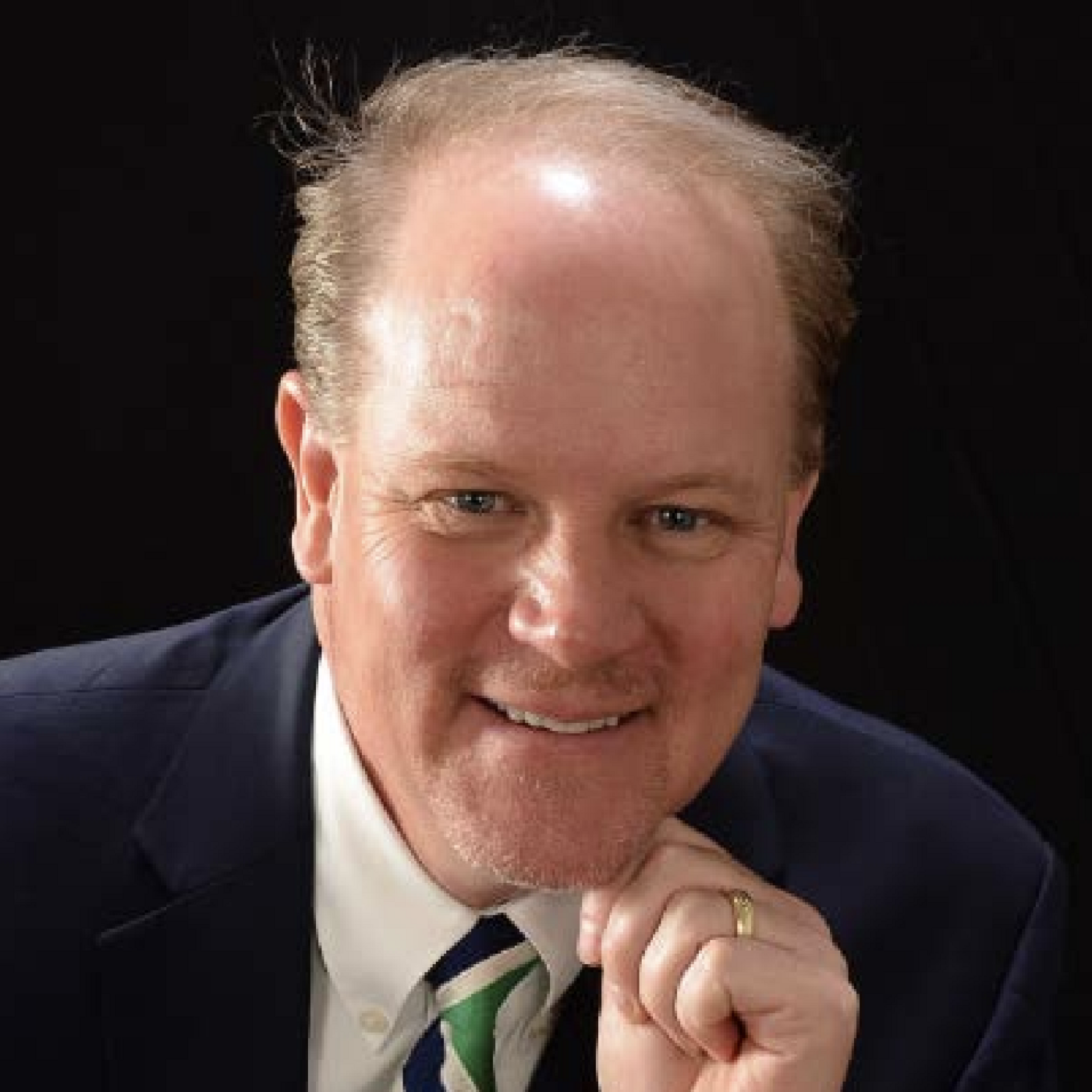
Aoifinn Devitt: I’m Aoifinn Devitt, and welcome to the 50 Faces Podcast, a podcast committed to revealing the richness and diversity of the world of investment by focusing on its people and their stories. I’m joined today by Steve Neal, who’s Deputy Chief Investment Officer at the New Mexico Educational Retirement Board. Welcome, Steve. Thanks for joining me today.
Steve: Welcome. Thanks for having me.
Aoifinn Devitt: I’d love to start by talking about your background. Can you talk about where you grew up, what you studied, and how you ultimately ended up pursuing a role in investment?
Steve: Oh, Yeah, certainly. It’s a, this is a, a circuitous route to say the least. I’m actually a native Hawaiian, believe it or not. So I went from what is the wettest state in the union to now, of to, course, yeah, I’m in New Mexico, which is, is generally considered the driest. But my journey’s been long. Anyways, I’m one of 8 kids, very large family, and the family moved all over the western United States. ’cause my dad worked for the Department of Transportation. Anyways, I showed up when we were in Hawaii and I was able to dispense some of my young years in Hawaii. And fast forward, they get moved from Hawaii to New Mexico and that’s where most of my formative years have been. I would like to say I am a proud adopted New Mexican. I’ve been here long enough to order from a New Mexican menu better than most, but I’ve been here most of my high school years. And for that matter, I was fortunate to attend the University of New Mexico in both my undergraduate and my graduate work. Like you said, it was very Securitas. But when you look at my professional career, that’s also Securitas. My education background is in economics. I’m a recovering economist, but my professional career was generally focused in corporate finance. I have stints in corporate finance for a company actually out in in the Arizona area that was structuring itself to go private. So that was really great experience. I moved back and married my wife who is also a New Mexican, and I came upon a number of different opportunities, some of which was in institutional real estate. I did a stint in institutional real estate where I would craft basically business plans and model opportunities for large-scale subdivisions in real estate, which was a great, it was a great learning opportunity for me. From there, I transitioned into a role with the state and I received a phone call from who was the former Chief Investment Officer for New Mexico Teachers, which is the organization where I reside now. And they had mentioned, “You know, Steve, we are starting an alternatives platform. Would you be interested in quarterbacking those efforts?” And keep in mind, this is 2006. I’m working in real estate. It’s the go-go years. Believe it or not, I was like, “Gosh, this is a really great opportunity to do a really a de novo startup of a platform.” Obviously, I accepted. And here we are 17, 18 years later. I’m the Deputy Chief Investment Officer responsible for alternative assets in a platform that’s between $17 and $18 billion.
Aoifinn Devitt: Well, we are going to get into that. That is a fantastic trajectory. So tell me, what would you order? What should we order from a New Mexico menu?
Steve: Oh, most definitely, it’s the combination plate. You have to have a chili relleno. You have to have your enchiladas. And if you’re really fortunate to be in the right spot, you have to have something called pozole, which is— oh, and when you order it, it’s not red or green chili. It’s both. You’ve got to have both. There’s no question.
Aoifinn Devitt: Well noted for when we get together in New Mexico. So thank you for that. So let’s shift now to what’s on your mind in your role at the New Mexico Educational Retirement Board. I’d love to talk about where your role starts and finishes as Deputy CIO, speak about the assets that you look at, alternatives in particular, and the journey around having such a high conviction approach to alternatives.
Steve: Sure. Yeah. You know, it’s interesting. I always like to tell people that I work in the fun part of the portfolio. The reality is it’s a team effort, right? I mean, whether or not you’re on the traditional side or on the alternative side, it all comes together to provide a retirement for our educators. But generally speaking, where I’ve been spending an incredible amount of time recently is in a space that we’ve referred to as alternative assets. And it’s actually The asset class is other alternative assets because we had a toehold in some other positions that were referred to as alternatives. And what this represents, it’s about between 8 and 10% of our portfolio. And what we are endeavoring to do is replicate what, for those of us that have been around a while, back in the old days, they used to put together absolute return strategies through a portfolio of hedge funds. To be able to generate consistent returns regardless of what you’re seeing in equities or for that matter in credit. Well, that’s what we’ve endeavored to do in diversifying assets through various private market positions. That has been my life here over the last few years. We’re building out that portfolio. It’s actually been performing very well. It’s challenging because these are assets that’s not like a middle market buyout or a venture position or something. It’s much more eclectic in nature. I like to refer to it in some ways, it’s kind of the island of misfit toys. It’s all these really innovative, idiosyncratic positions that don’t fit well in other asset classes, but really have the ability to drive returns regardless of what the equity markets are or, doing, you know, for that matter, credit.
Aoifinn Devitt: And I’d love to just set the stage a little bit. Can we just paint a picture in terms of the overall portfolio size, how much you have allocated, maybe just broadly to different asset classes, including these misfit toys, and maybe some traditional alternatives as well? And then we can dig into what is on or off the table.
Steve: Sure, sure. So the portfolio is between $17 and $18 billion. And when you look at our asset allocation, we’re very atypical of a public pension. About 65% of our assets are in alternatives broadly defined. So we have about 17% of our assets that are in something called opportunistic credit. That’s a portfolio that’s been a while. It’s performed fairly well. In private equity, we have about 17% of our assets dedicated to private equity. We’re slightly over our allocation, over our target in private equity. I think many of my peers are in the same situation. And then we also have our Diversifying Assets book, which is about 10% of our assets. And then we have a smattering in real estate, then also in infrastructure. And there’s some other smaller eclectic areas that we play in, an area called mitigation banking, which is basically we’re creating wetlands and we’re selling credits to developers in order to facilitate the development process. And in the meantime, we were creating wetlands. Many of them are in the southeastern part of the country. So when you look at it in total, we’re about 25% in traditional equity. And when we get our equity exposure, it’s generally passive. We take what the market will give us. And what we do is we redeployed our assets. And I say our assets are basically our people, and it’s focused in opportunities where we feel like we can generate alpha. And that’s generally in the private market space.
Aoifinn Devitt: And then in terms of thinking of your combination platter analogy, what’s on or off that platter in terms of what you’re willing to look at? You mentioned the misfit toys. How far out there do you get in terms of opportunistic strategies? What have you just passed on?
Steve: Certainly, yeah. I would say one of the things that are, I think our culture has engendered, we’ve been afforded the ability to be very creative. So there’s not a lot that we won’t look at. I’ll give you some examples of recent opportunities that we’ve executed on. We’ve committed to litigation finance. We have 2 or 3 different positions there, and that resides in our diversifying assets portfolio. We’ve committed to music royalties. We actually created an aircraft leasing structure. I felt like, gosh, we should have put the New Mexico Teachers moniker on the back of one of the fins of one of the 737s. We put together basically a structure of about $150 million where IRB was the sole investor in this structure. It’s done incredibly well. We’ve done aircraft leasing, we’ve done healthcare royalties, both passive and synthetic. But I think what’s really interesting about most of our alternatives structures and asset classes, they’re generally kind of a core satellite in structure with the core being a very robust co-investment structure. For example, in diversifying assets, we have $300 million that’s committed exclusively to co-investments. We’ll be adding some additional capital there, but we’ll build out from that co-investment book to more directional strategies like the reinsurance, the litigation finance, those type of things. But at core, you’re looking at a, say, a $300 or $400 million core of co-investments, which are obviously, they’re economically advantaged and it really instructs us in different parts of the market. With regard to what we won’t do, we generally don’t do a lot of hedge funds. Our alternatives platforms, we view ourselves as a fundamental investor. Hedge funds, we have to really innately understand what’s going on across the utilization of leverage, where our general partners are going to be playing and so forth. And oftentimes I think in the hedge fund space, some of that’s a little bit more difficult to access or for that matter, understand. So That’s a space that I would say we’re very, very light on. We have, I think, maybe one legacy position there.
Aoifinn Devitt: And I’d love to talk about the leadership role you’re taking, because clearly when you have these structures specially constructed for you, you may be the seed investor or the lead investor. And clearly a co-investment program needs a lot of in-house expertise and firepower, essentially, as analysts and being able to look at these. And there may be other entities like yourself that would like to be in these areas, but maybe don’t have the initial insights into as to how. How do you approach that from a staffing perspective as well as in terms of leading these partnerships?
Steve: Certainly. I mean, that’s a great, great question. And that’s, for me, I think that that’s the $10,000 question for a number of my peers is, okay, how do you access resources? How do you retain top quality, top-notch staff? My team that’s exclusively focused on kind of alternatives is 6 people. And as a matter of fact, I have 2 vacancies right now. Recently, I had a retirement and then another gentleman has left for other opportunities. But being able to execute on a highly diversified portfolio that’s in some very eclectic areas, you really need to both have great staff and be able to retain great staff, but not also have staffing as a focus, but you have to have— I refer to My consulting crew is my dance partners. And in each asset class, we have what I would describe as specialists. And I’ll give you an example. In our diversifying assets, we work very closely with a group out of Conshohocken by the name of Cloverley. And quite frankly, this is the space that these guys live. And not very many of my peers are probably aware of Cloverley, But these are guys, a number of their practitioners spun out from Morgan Stanley, but they’ve lived the space of whether or not music royalties, reinsurance, cold storage. So you think about all of these eclectic opportunities that are really tangential to a normal buyout or something along those. It’s kind of what I would describe as the next generation in private markets. You have to have those market participants that are really close to the market where you’re looking at opportunities you have staff dedicated to looking at opportunities that can be a bit of a devil’s advocate, you know, that you’d say we all have these great ideas, but you need somebody that’s going to say, you know what, 5 years ago I saw something substantially very similar to whatever it might be and it didn’t turn out well. Having those relationships where you can leverage 6 people on staff to, you know, people that have been actually living the space And that same construct is what we’ve done here at New Mexico ERB. We have these very much specialist dance partners that live the space that we’re asking them to give us advice in. In venture, we have a group called TopTier Capital Partners. In distressed and special situations, we’ve got a group by the name of Banner Ridge, which, you know, in my opinion, is probably the most sophisticated secondary focused organization in distressed special situations and other opportunities kind of on the very end of the private equity spectrum. And then in the center, the more conventional opportunities, we’ve teamed with a group called— well, actually everyone knows is BlackRock. That’s their private equity partners. It’s the boutique across their platform. So we have dance partners that have generations of deep domain expertise that we’re looking at, okay, let’s talk to somebody in venture. We’ll talk to the guys at top tier where that’s what they do. So many times, a lot of platforms, consulting platforms, they’ll do— we’re looking at venture in the morning, growth buyout in the afternoon, and hedge funds in the evening. It’s like, these are people that are actually living the asset class that we’re asking them to opine on.
Aoifinn Devitt: I love that approach. Certainly reminds me of the African proverb about going fast, going alone, but going far. Going together and having that really additional ballast and partnership is just so key to sustainability too of your platform, because clearly you’re not personnel dependent then. You have that kind of bench built in and just that succession assured. So really interesting approach. And speaking of sustainability, some of your peers have taken this leadership role into whether it be making investments and giving spark capital to emerging managers, or to having a concerted, say, climate resilience agenda, such as maybe CalPERS and CalSTRS. Do you have any such inclination there in New Mexico to take this approach with your substantial expertise and make a difference, whether it be in emerging managers or Sure, elsewhere? Sure.
Steve: With regard to emerging managers, that’s something we very much focus on. If you look across our platform, you will see a plethora of first-time funds. As a matter of fact, the group I mentioned to you earlier, Banner Ridge, we were their first $50 million where we said, here, let’s do a separate account. And we’ve made the representation to say, hey, look, you know what, put $50 million to work for us and please go take our track record out and raise capital. From that first $50 million, Banner Ridge today is, I think it’s the second largest independent secondary platform. We’ve done some stuff with a group called NovaQuest. In NovaQuest, we seeded their first buyout fund, and it was two practitioners that we knew from Texas Teachers and a gentleman that used to be at BlackRock’s private equity partners. They came together, and again, we provided them their first $40 million. The returns there have been silly. They’ve done very, very well. But when we’re looking at seeding various opportunities and platforms, one of the things that obviously that we want to do is we want to be compensated for our risk. Because the easy thing is to turn to a big asset manager and say, okay, I’m going to go into your Fund 13 and you cross your fingers that you’re going to generate the returns that you think are appropriate. But it’s much more labor-intensive. But I think it’s more edifying to provide startup capital to an organization that you feel like can really outperform. The large platforms have their place in a portfolio, but I think when you’re looking to drive alpha, I think it’s much more readily accessible in an emerging manager, a first-time fund, something of that sort. We did something very similar to this with our aircraft leasing. It was a platform extension where we went to the general partner and we said, you know what? “We’re looking to deploy capital in aircraft leasing.” And we mentioned to the general partner and said, “You guys have the requisite resources, talent, and domain expertise to manage an aircraft leasing sleeve.” We provided them $150 million. And this was, what, gosh, 2020, was going into COVID. We were able to secure aircraft usulages during COVID when they were sitting on the runways. The results there have been remarkable, have been very, very good. And it’s across our platform from real estate to infrastructure, first-time funds. I think it’s that I would put that as part of our secret sauce.
Aoifinn Devitt: And I’d love to tie that then to a theme that courses through this podcast series, which is around diversity in the industry and attention that less well-represented voices get. And clearly this DAOing of emerging managers and supporting of first-time funds is a massive support to this segment of the industry. In your in time in the industry, any observations around its diversity? Is access to capital uniform? And how do you see maybe things are changing for the better or for the worse?
Steve: You know what, when I look at particularly around diversity, I’m always focused on what I would describe as a diversity of point of view. And here in the state of New Mexico, I would say we are probably among the most diverse states in the union. And I think we’re very, very sensitive to, okay, let’s look at bringing different voices on board. I was at a conference earlier this week and with this, we were talking exactly around these points. And I think when we’re looking at providing additional diversity to the universe and what the Education Retirement Board can provide is, I look at a number of our general partners and I look where they actually recruit their people. I’m an alumni of the University of New Mexico. I’m a proud Lobo, and I will be candid with you. I’ve never seen a private equity manager on the campus at the University of New Mexico. There’s a huge number of very, very talented and smart students that come out of the University of New Mexico that aren’t being recruited. You know, the recruitment for, you know, a number of, in Canada, the bulge bracket firms, are all the Northeastern schools, maybe one or two large state schools. But I look at, you know, if we can diversify where the recruitment takes place, whether it be in the high-quality state schools at the University of New Mexico, Arizona State, University of Arizona, New Mexico State University, that would be a huge starting point to really start bringing in a number of different points of view. And that, like I said, that was a discussion point that we were having earlier at a conference I was having that I attended earlier this week.
Aoifinn Devitt: Well, thank you for the work you’re doing to further the advancement of some of these managers. Before we move to some closing questions, I’d love to know if there are any other causes that are close to your heart, having spent almost a lifetime there in New Mexico and working in public service. Any observations on that or causes that you’d like to draw attention to?
Steve: Yeah, I mean, I would tell you, I mean, if I could have the perfect career at the New Mexico Education Retirement Board, I would love— you know, our plan is, it’s not fully funded, but I think we’re better funded than many, but not as well funded as some. You know what, if I could say the perfect career is at the end of my career, if I could say, you know what, the fruits of my efforts is a fully funded New Mexico teachers’ pension. That to me is like, you know what it would be like? Okay, your pension is fully funded. I look at what we do. This is altruistic. We’re the good guys, right? We’re providing education. We’re providing pensions for the education-related employees in the state of New Mexico from kindergarten through college. I mean, what a better gift to the state that I love to provide? Here you go. You’re fully funded. That would be magnificent. Other causes, you know, I’m a very, very proud— I’m married to the love of my life, my wife Rhonda, and I’m very proud I have 5 incredible kids. If I could pass on a better world to them, oh, I would love to do that. That’s a huge cause for me. Today, I’m not certain we’re there, but I would love to be able to do that.
Aoifinn Devitt: And what a legacy a fully funded pension plan would be too. So definitely worth aspiring to. I’d love to just move to some personal reflections now. And looking back at your career, including the public service aspect of it, were there any setbacks or challenges or moments where you really learned lessons that you can share here?
Steve: Sure. You know what, when I look back at the career, you know, I’ve been inherently blessed to be able to do what I do and to live where I want to live. I mean, there’s not a lot of positions like this in the state of New Mexico. I’ve been inherently blessed to be able to do it here. I would tell you there’s opportunities that I think when you look at the evolution of private markets, there’s different things you would’ve liked to have moved in quicker. I kind of giggle that if you were to turn your career back 25 years, you could have started a secondary fund someplace and done incredibly well, right? I mean, You look at the secondaries industry, it’s just bloomed and blossomed. And the secondary industry, they continue to reinvent themselves, okay? From just a basic LP secondary to a continuation vehicle to structured vehicles, all these other things. You know, I look at how that industry has developed and blossomed. It’s like, gosh boy, if I would’ve focused a little bit more on that years and years ago and had a nor to the benefit of the teachers here, I would love to be able to do that.
Aoifinn Devitt: And when you look back at the people you’ve worked with, and you’ve already talked a lot about people, and I should say that you’re creating a great advertisement for those two positions you have open, your clear love of what you do and of the state you live in. Hopefully you’ll be inundated with applications for that alternative team that you mentioned.
Steve: Oh, I’d love that. That would be great.
Aoifinn Devitt: Let’s see what we can do on that front. But now looking back at people you’ve worked with, were there any mentors to you that maybe suggested certain paths or that you’ve learned lessons from?
Steve: Yeah, certainly. I mean, the gentleman that hired me, bless his soul, he’s passed away, was a gentleman by the name of Frank Foy. He was a longtime CIO here. He was the one that made the call to me. And the other one that I think is very instrumental is the current CIO, Mr. Bob Jackshaw. I look at organizations, it’s all about culture. If you build a culture that is focused on high performing and being really receptive to creativity, that’s the hallmark of a great investment organization. Because you know what? When the day is done, the numbers aren’t that difficult. This isn’t astrophysics. It’s about the creativity that we’re able to bring to bear and to create high-quality institutional portfolios. And I will tell you, Bob Jackschei is very receptive because you’ll come up with some really creative opportunity of a creative structure, you know, for that matter, a creative asset class. The answer is always, that’s interesting. Let’s look at it. Let’s kick the tires a lot closer. And it wasn’t like, okay, Steve, this is not a stock or a bond. It’s like, let’s look at opportunities, what could be. That’s been a bit of the secret sauce here at New Mexico Teachers.
Aoifinn Devitt: I think in our careers there are some kind of catchphrases that stick out, and I remember I used to work at Goldman Sachs, and at that time their catchphrase was “Minds wide open.” And it sounds like that’s exactly what you have in place there, and extremely lucky you are that that is the case, because to have an open mind is such a fruitful environment for learning.
Steve: Most definitely, most definitely. Yeah, we are open to opportunities and when it comes to creativity, I think, you know what, we’re in a pretty good spot here.
Aoifinn Devitt: My last question is around any words of wisdom or maybe advice for your younger self or anything you can leave us with as a takeaway after such a career you’ve had so far and your experience.
Steve: Yeah, I mean, I think the one thing I would say is opportunities do not present themselves every day, and it’s kind of just seize the day. When you see something, you see an opportunity, when you see whether or not it be personal or professional, an investment opportunity, is really focus and really unpeel the opportunities. And they present themselves in areas and places that you would never, never even think about. When I got the phone call here, I’ll be honest with you, I didn’t think I would be doing this. I think I’m inherently blessed to be able to do it. But you know what, myself 30 years ago, I would not have anticipated doing what I’m doing today. And it’s been a really great road. So yeah, seize the day, look at different opportunities, and return those phone calls.
Aoifinn Devitt: Well, thank you so much, Steve. There is that expression, as long as the music hasn’t stopped, keep dancing. And I think with all those dance partners and your incredible head start, your, your fund will continue to keep dancing. So, uh, thank you so much for sharing your approach and your insights here with us.
Steve: Well, thank you so much for the time and thanks for the interview.
Aoifinn Devitt: I’m Aoifinn Devitt. Thank you for listening to the 50 Faces podcast. If you liked what you heard and would like to tune in to hear more inspiring investors in their personal journeys, please subscribe on Apple Podcasts or wherever you get your podcasts. You can find all of our content on the 50 Faces Hub where you will find a library of role models, resources, and other solutions to enhance your career. This podcast is for informational purposes only and should not be construed as investment advice, and all views are personal and should not be attributed to the organizations and affiliations of the host or any guest.
Aoifinn Devitt: This series of the 50 Faces podcast is proudly brought to you by BFinance, a trusted partner to the world’s leading institutional investors. With a proven track record in strategy, implementation, and oversight, BFinance delivers bespoke investment consultancy that empowers asset owners to achieve their unique objectives. Whether it’s refining portfolio strategy, selecting fund managers, monitoring performance, or getting better value for money, BFinance combines global expertise with tailored solutions to unlock value for their clients. To learn more about how they’ve supported over 500 clients in 45 countries managing assets totaling over $9 trillion, visit bfinance.com.
Steve: Opportunities do not present themselves every day, and it’s kind of to seize the day. You know, when you see something, you see an opportunity, when you see whether or not it be personal or professional, an investment opportunity is really focus and really unpeel the opportunities, and they present themselves in areas and places that you would never, never even think about.
Aoifinn Devitt: I’m Aoifinn Devitt, and welcome to the 50 Faces Podcast, a podcast committed to revealing the richness and diversity of the world of investment by focusing on its people and their stories. I’m joined today by Steve Neal, who’s Deputy Chief Investment Officer at the New Mexico Educational Retirement Board. Welcome, Steve. Thanks for joining me today.
Steve: Welcome. Thanks for having me.
Aoifinn Devitt: I’d love to start by talking about your background. Can you talk about where you grew up, what you studied, and how you ultimately ended up pursuing a role in investment?
Steve: Oh, Yeah, certainly. It’s a, this is a, a circuitous route to say the least. I’m actually a native Hawaiian, believe it or not. So I went from what is the wettest state in the union to now, of to, course, yeah, I’m in New Mexico, which is, is generally considered the driest. But my journey’s been long. Anyways, I’m one of 8 kids, very large family, and the family moved all over the western United States. ’cause my dad worked for the Department of Transportation. Anyways, I showed up when we were in Hawaii and I was able to dispense some of my young years in Hawaii. And fast forward, they get moved from Hawaii to New Mexico and that’s where most of my formative years have been. I would like to say I am a proud adopted New Mexican. I’ve been here long enough to order from a New Mexican menu better than most, but I’ve been here most of my high school years. And for that matter, I was fortunate to attend the University of New Mexico in both my undergraduate and my graduate work. Like you said, it was very Securitas. But when you look at my professional career, that’s also Securitas. My education background is in economics. I’m a recovering economist, but my professional career was generally focused in corporate finance. I have stints in corporate finance for a company actually out in in the Arizona area that was structuring itself to go private. So that was really great experience. I moved back and married my wife who is also a New Mexican, and I came upon a number of different opportunities, some of which was in institutional real estate. I did a stint in institutional real estate where I would craft basically business plans and model opportunities for large-scale subdivisions in real estate, which was a great, it was a great learning opportunity for me. From there, I transitioned into a role with the state and I received a phone call from who was the former Chief Investment Officer for New Mexico Teachers, which is the organization where I reside now. And they had mentioned, “You know, Steve, we are starting an alternatives platform. Would you be interested in quarterbacking those efforts?” And keep in mind, this is 2006. I’m working in real estate. It’s the go-go years. Believe it or not, I was like, “Gosh, this is a really great opportunity to do a really a de novo startup of a platform.” Obviously, I accepted. And here we are 17, 18 years later. I’m the Deputy Chief Investment Officer responsible for alternative assets in a platform that’s between $17 and $18 billion.
Aoifinn Devitt: Well, we are going to get into that. That is a fantastic trajectory. So tell me, what would you order? What should we order from a New Mexico menu?
Steve: Oh, most definitely, it’s the combination plate. You have to have a chili relleno. You have to have your enchiladas. And if you’re really fortunate to be in the right spot, you have to have something called pozole, which is— oh, and when you order it, it’s not red or green chili. It’s both. You’ve got to have both. There’s no question.
Aoifinn Devitt: Well noted for when we get together in New Mexico. So thank you for that. So let’s shift now to what’s on your mind in your role at the New Mexico Educational Retirement Board. I’d love to talk about where your role starts and finishes as Deputy CIO, speak about the assets that you look at, alternatives in particular, and the journey around having such a high conviction approach to alternatives.
Steve: Sure. Yeah. You know, it’s interesting. I always like to tell people that I work in the fun part of the portfolio. The reality is it’s a team effort, right? I mean, whether or not you’re on the traditional side or on the alternative side, it all comes together to provide a retirement for our educators. But generally speaking, where I’ve been spending an incredible amount of time recently is in a space that we’ve referred to as alternative assets. And it’s actually The asset class is other alternative assets because we had a toehold in some other positions that were referred to as alternatives. And what this represents, it’s about between 8 and 10% of our portfolio. And what we are endeavoring to do is replicate what, for those of us that have been around a while, back in the old days, they used to put together absolute return strategies through a portfolio of hedge funds. To be able to generate consistent returns regardless of what you’re seeing in equities or for that matter in credit. Well, that’s what we’ve endeavored to do in diversifying assets through various private market positions. That has been my life here over the last few years. We’re building out that portfolio. It’s actually been performing very well. It’s challenging because these are assets that’s not like a middle market buyout or a venture position or something. It’s much more eclectic in nature. I like to refer to it in some ways, it’s kind of the island of misfit toys. It’s all these really innovative, idiosyncratic positions that don’t fit well in other asset classes, but really have the ability to drive returns regardless of what the equity markets are or, doing, you know, for that matter, credit.
Aoifinn Devitt: And I’d love to just set the stage a little bit. Can we just paint a picture in terms of the overall portfolio size, how much you have allocated, maybe just broadly to different asset classes, including these misfit toys, and maybe some traditional alternatives as well? And then we can dig into what is on or off the table.
Steve: Sure, sure. So the portfolio is between $17 and $18 billion. And when you look at our asset allocation, we’re very atypical of a public pension. About 65% of our assets are in alternatives broadly defined. So we have about 17% of our assets that are in something called opportunistic credit. That’s a portfolio that’s been a while. It’s performed fairly well. In private equity, we have about 17% of our assets dedicated to private equity. We’re slightly over our allocation, over our target in private equity. I think many of my peers are in the same situation. And then we also have our Diversifying Assets book, which is about 10% of our assets. And then we have a smattering in real estate, then also in infrastructure. And there’s some other smaller eclectic areas that we play in, an area called mitigation banking, which is basically we’re creating wetlands and we’re selling credits to developers in order to facilitate the development process. And in the meantime, we were creating wetlands. Many of them are in the southeastern part of the country. So when you look at it in total, we’re about 25% in traditional equity. And when we get our equity exposure, it’s generally passive. We take what the market will give us. And what we do is we redeployed our assets. And I say our assets are basically our people, and it’s focused in opportunities where we feel like we can generate alpha. And that’s generally in the private market space.
Aoifinn Devitt: And then in terms of thinking of your combination platter analogy, what’s on or off that platter in terms of what you’re willing to look at? You mentioned the misfit toys. How far out there do you get in terms of opportunistic strategies? What have you just passed on?
Steve: Certainly, yeah. I would say one of the things that are, I think our culture has engendered, we’ve been afforded the ability to be very creative. So there’s not a lot that we won’t look at. I’ll give you some examples of recent opportunities that we’ve executed on. We’ve committed to litigation finance. We have 2 or 3 different positions there, and that resides in our diversifying assets portfolio. We’ve committed to music royalties. We actually created an aircraft leasing structure. I felt like, gosh, we should have put the New Mexico Teachers moniker on the back of one of the fins of one of the 737s. We put together basically a structure of about $150 million where IRB was the sole investor in this structure. It’s done incredibly well. We’ve done aircraft leasing, we’ve done healthcare royalties, both passive and synthetic. But I think what’s really interesting about most of our alternatives structures and asset classes, they’re generally kind of a core satellite in structure with the core being a very robust co-investment structure. For example, in diversifying assets, we have $300 million that’s committed exclusively to co-investments. We’ll be adding some additional capital there, but we’ll build out from that co-investment book to more directional strategies like the reinsurance, the litigation finance, those type of things. But at core, you’re looking at a, say, a $300 or $400 million core of co-investments, which are obviously, they’re economically advantaged and it really instructs us in different parts of the market. With regard to what we won’t do, we generally don’t do a lot of hedge funds. Our alternatives platforms, we view ourselves as a fundamental investor. Hedge funds, we have to really innately understand what’s going on across the utilization of leverage, where our general partners are going to be playing and so forth. And oftentimes I think in the hedge fund space, some of that’s a little bit more difficult to access or for that matter, understand. So That’s a space that I would say we’re very, very light on. We have, I think, maybe one legacy position there.
Aoifinn Devitt: And I’d love to talk about the leadership role you’re taking, because clearly when you have these structures specially constructed for you, you may be the seed investor or the lead investor. And clearly a co-investment program needs a lot of in-house expertise and firepower, essentially, as analysts and being able to look at these. And there may be other entities like yourself that would like to be in these areas, but maybe don’t have the initial insights into as to how. How do you approach that from a staffing perspective as well as in terms of leading these partnerships?
Steve: Certainly. I mean, that’s a great, great question. And that’s, for me, I think that that’s the $10,000 question for a number of my peers is, okay, how do you access resources? How do you retain top quality, top-notch staff? My team that’s exclusively focused on kind of alternatives is 6 people. And as a matter of fact, I have 2 vacancies right now. Recently, I had a retirement and then another gentleman has left for other opportunities. But being able to execute on a highly diversified portfolio that’s in some very eclectic areas, you really need to both have great staff and be able to retain great staff, but not also have staffing as a focus, but you have to have— I refer to My consulting crew is my dance partners. And in each asset class, we have what I would describe as specialists. And I’ll give you an example. In our diversifying assets, we work very closely with a group out of Conshohocken by the name of Cloverley. And quite frankly, this is the space that these guys live. And not very many of my peers are probably aware of Cloverley, But these are guys, a number of their practitioners spun out from Morgan Stanley, but they’ve lived the space of whether or not music royalties, reinsurance, cold storage. So you think about all of these eclectic opportunities that are really tangential to a normal buyout or something along those. It’s kind of what I would describe as the next generation in private markets. You have to have those market participants that are really close to the market where you’re looking at opportunities you have staff dedicated to looking at opportunities that can be a bit of a devil’s advocate, you know, that you’d say we all have these great ideas, but you need somebody that’s going to say, you know what, 5 years ago I saw something substantially very similar to whatever it might be and it didn’t turn out well. Having those relationships where you can leverage 6 people on staff to, you know, people that have been actually living the space And that same construct is what we’ve done here at New Mexico ERB. We have these very much specialist dance partners that live the space that we’re asking them to give us advice in. In venture, we have a group called TopTier Capital Partners. In distressed and special situations, we’ve got a group by the name of Banner Ridge, which, you know, in my opinion, is probably the most sophisticated secondary focused organization in distressed special situations and other opportunities kind of on the very end of the private equity spectrum. And then in the center, the more conventional opportunities, we’ve teamed with a group called— well, actually everyone knows is BlackRock. That’s their private equity partners. It’s the boutique across their platform. So we have dance partners that have generations of deep domain expertise that we’re looking at, okay, let’s talk to somebody in venture. We’ll talk to the guys at top tier where that’s what they do. So many times, a lot of platforms, consulting platforms, they’ll do— we’re looking at venture in the morning, growth buyout in the afternoon, and hedge funds in the evening. It’s like, these are people that are actually living the asset class that we’re asking them to opine on.
Aoifinn Devitt: I love that approach. Certainly reminds me of the African proverb about going fast, going alone, but going far. Going together and having that really additional ballast and partnership is just so key to sustainability too of your platform, because clearly you’re not personnel dependent then. You have that kind of bench built in and just that succession assured. So really interesting approach. And speaking of sustainability, some of your peers have taken this leadership role into whether it be making investments and giving spark capital to emerging managers, or to having a concerted, say, climate resilience agenda, such as maybe CalPERS and CalSTRS. Do you have any such inclination there in New Mexico to take this approach with your substantial expertise and make a difference, whether it be in emerging managers or Sure, elsewhere? Sure.
Steve: With regard to emerging managers, that’s something we very much focus on. If you look across our platform, you will see a plethora of first-time funds. As a matter of fact, the group I mentioned to you earlier, Banner Ridge, we were their first $50 million where we said, here, let’s do a separate account. And we’ve made the representation to say, hey, look, you know what, put $50 million to work for us and please go take our track record out and raise capital. From that first $50 million, Banner Ridge today is, I think it’s the second largest independent secondary platform. We’ve done some stuff with a group called NovaQuest. In NovaQuest, we seeded their first buyout fund, and it was two practitioners that we knew from Texas Teachers and a gentleman that used to be at BlackRock’s private equity partners. They came together, and again, we provided them their first $40 million. The returns there have been silly. They’ve done very, very well. But when we’re looking at seeding various opportunities and platforms, one of the things that obviously that we want to do is we want to be compensated for our risk. Because the easy thing is to turn to a big asset manager and say, okay, I’m going to go into your Fund 13 and you cross your fingers that you’re going to generate the returns that you think are appropriate. But it’s much more labor-intensive. But I think it’s more edifying to provide startup capital to an organization that you feel like can really outperform. The large platforms have their place in a portfolio, but I think when you’re looking to drive alpha, I think it’s much more readily accessible in an emerging manager, a first-time fund, something of that sort. We did something very similar to this with our aircraft leasing. It was a platform extension where we went to the general partner and we said, you know what? “We’re looking to deploy capital in aircraft leasing.” And we mentioned to the general partner and said, “You guys have the requisite resources, talent, and domain expertise to manage an aircraft leasing sleeve.” We provided them $150 million. And this was, what, gosh, 2020, was going into COVID. We were able to secure aircraft usulages during COVID when they were sitting on the runways. The results there have been remarkable, have been very, very good. And it’s across our platform from real estate to infrastructure, first-time funds. I think it’s that I would put that as part of our secret sauce.
Aoifinn Devitt: And I’d love to tie that then to a theme that courses through this podcast series, which is around diversity in the industry and attention that less well-represented voices get. And clearly this DAOing of emerging managers and supporting of first-time funds is a massive support to this segment of the industry. In your in time in the industry, any observations around its diversity? Is access to capital uniform? And how do you see maybe things are changing for the better or for the worse?
Steve: You know what, when I look at particularly around diversity, I’m always focused on what I would describe as a diversity of point of view. And here in the state of New Mexico, I would say we are probably among the most diverse states in the union. And I think we’re very, very sensitive to, okay, let’s look at bringing different voices on board. I was at a conference earlier this week and with this, we were talking exactly around these points. And I think when we’re looking at providing additional diversity to the universe and what the Education Retirement Board can provide is, I look at a number of our general partners and I look where they actually recruit their people. I’m an alumni of the University of New Mexico. I’m a proud Lobo, and I will be candid with you. I’ve never seen a private equity manager on the campus at the University of New Mexico. There’s a huge number of very, very talented and smart students that come out of the University of New Mexico that aren’t being recruited. You know, the recruitment for, you know, a number of, in Canada, the bulge bracket firms, are all the Northeastern schools, maybe one or two large state schools. But I look at, you know, if we can diversify where the recruitment takes place, whether it be in the high-quality state schools at the University of New Mexico, Arizona State, University of Arizona, New Mexico State University, that would be a huge starting point to really start bringing in a number of different points of view. And that, like I said, that was a discussion point that we were having earlier at a conference I was having that I attended earlier this week.
Aoifinn Devitt: Well, thank you for the work you’re doing to further the advancement of some of these managers. Before we move to some closing questions, I’d love to know if there are any other causes that are close to your heart, having spent almost a lifetime there in New Mexico and working in public service. Any observations on that or causes that you’d like to draw attention to?
Steve: Yeah, I mean, I would tell you, I mean, if I could have the perfect career at the New Mexico Education Retirement Board, I would love— you know, our plan is, it’s not fully funded, but I think we’re better funded than many, but not as well funded as some. You know what, if I could say the perfect career is at the end of my career, if I could say, you know what, the fruits of my efforts is a fully funded New Mexico teachers’ pension. That to me is like, you know what it would be like? Okay, your pension is fully funded. I look at what we do. This is altruistic. We’re the good guys, right? We’re providing education. We’re providing pensions for the education-related employees in the state of New Mexico from kindergarten through college. I mean, what a better gift to the state that I love to provide? Here you go. You’re fully funded. That would be magnificent. Other causes, you know, I’m a very, very proud— I’m married to the love of my life, my wife Rhonda, and I’m very proud I have 5 incredible kids. If I could pass on a better world to them, oh, I would love to do that. That’s a huge cause for me. Today, I’m not certain we’re there, but I would love to be able to do that.
Aoifinn Devitt: And what a legacy a fully funded pension plan would be too. So definitely worth aspiring to. I’d love to just move to some personal reflections now. And looking back at your career, including the public service aspect of it, were there any setbacks or challenges or moments where you really learned lessons that you can share here?
Steve: Sure. You know what, when I look back at the career, you know, I’ve been inherently blessed to be able to do what I do and to live where I want to live. I mean, there’s not a lot of positions like this in the state of New Mexico. I’ve been inherently blessed to be able to do it here. I would tell you there’s opportunities that I think when you look at the evolution of private markets, there’s different things you would’ve liked to have moved in quicker. I kind of giggle that if you were to turn your career back 25 years, you could have started a secondary fund someplace and done incredibly well, right? I mean, You look at the secondaries industry, it’s just bloomed and blossomed. And the secondary industry, they continue to reinvent themselves, okay? From just a basic LP secondary to a continuation vehicle to structured vehicles, all these other things. You know, I look at how that industry has developed and blossomed. It’s like, gosh boy, if I would’ve focused a little bit more on that years and years ago and had a nor to the benefit of the teachers here, I would love to be able to do that.
Aoifinn Devitt: And when you look back at the people you’ve worked with, and you’ve already talked a lot about people, and I should say that you’re creating a great advertisement for those two positions you have open, your clear love of what you do and of the state you live in. Hopefully you’ll be inundated with applications for that alternative team that you mentioned.
Steve: Oh, I’d love that. That would be great.
Aoifinn Devitt: Let’s see what we can do on that front. But now looking back at people you’ve worked with, were there any mentors to you that maybe suggested certain paths or that you’ve learned lessons from?
Steve: Yeah, certainly. I mean, the gentleman that hired me, bless his soul, he’s passed away, was a gentleman by the name of Frank Foy. He was a longtime CIO here. He was the one that made the call to me. And the other one that I think is very instrumental is the current CIO, Mr. Bob Jackshaw. I look at organizations, it’s all about culture. If you build a culture that is focused on high performing and being really receptive to creativity, that’s the hallmark of a great investment organization. Because you know what? When the day is done, the numbers aren’t that difficult. This isn’t astrophysics. It’s about the creativity that we’re able to bring to bear and to create high-quality institutional portfolios. And I will tell you, Bob Jackschei is very receptive because you’ll come up with some really creative opportunity of a creative structure, you know, for that matter, a creative asset class. The answer is always, that’s interesting. Let’s look at it. Let’s kick the tires a lot closer. And it wasn’t like, okay, Steve, this is not a stock or a bond. It’s like, let’s look at opportunities, what could be. That’s been a bit of the secret sauce here at New Mexico Teachers.
Aoifinn Devitt: I think in our careers there are some kind of catchphrases that stick out, and I remember I used to work at Goldman Sachs, and at that time their catchphrase was “Minds wide open.” And it sounds like that’s exactly what you have in place there, and extremely lucky you are that that is the case, because to have an open mind is such a fruitful environment for learning.
Steve: Most definitely, most definitely. Yeah, we are open to opportunities and when it comes to creativity, I think, you know what, we’re in a pretty good spot here.
Aoifinn Devitt: My last question is around any words of wisdom or maybe advice for your younger self or anything you can leave us with as a takeaway after such a career you’ve had so far and your experience.
Steve: Yeah, I mean, I think the one thing I would say is opportunities do not present themselves every day, and it’s kind of just seize the day. When you see something, you see an opportunity, when you see whether or not it be personal or professional, an investment opportunity, is really focus and really unpeel the opportunities. And they present themselves in areas and places that you would never, never even think about. When I got the phone call here, I’ll be honest with you, I didn’t think I would be doing this. I think I’m inherently blessed to be able to do it. But you know what, myself 30 years ago, I would not have anticipated doing what I’m doing today. And it’s been a really great road. So yeah, seize the day, look at different opportunities, and return those phone calls.
Aoifinn Devitt: Well, thank you so much, Steve. There is that expression, as long as the music hasn’t stopped, keep dancing. And I think with all those dance partners and your incredible head start, your, your fund will continue to keep dancing. So, uh, thank you so much for sharing your approach and your insights here with us.
Steve: Well, thank you so much for the time and thanks for the interview.
Aoifinn Devitt: I’m Aoifinn Devitt. Thank you for listening to the 50 Faces podcast. If you liked what you heard and would like to tune in to hear more inspiring investors in their personal journeys, please subscribe on Apple Podcasts or wherever you get your podcasts. You can find all of our content on the 50 Faces Hub where you will find a library of role models, resources, and other solutions to enhance your career. This podcast is for informational purposes only and should not be construed as investment advice, and all views are personal and should not be attributed to the organizations and affiliations of the host or any guest.