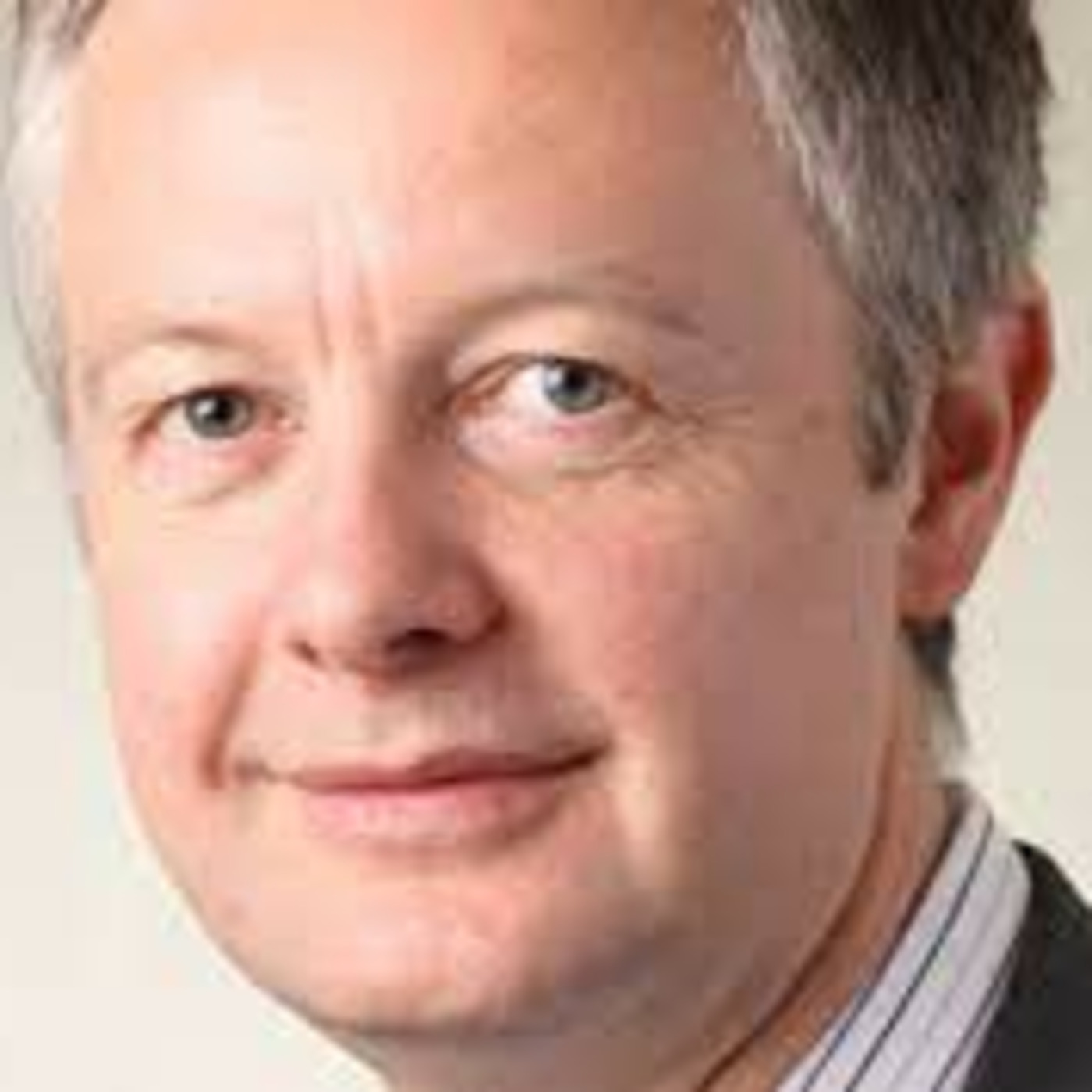
Aoifinn Devitt: Our next guest is now immersed in governance. Hear how he believes we can make it better, make it sustainable, and make it work for the next generation. I’m Aoifinn Devitt, and welcome to the 50 Faces podcast, a podcast committed to revealing the richness and diversity of the world of investment by focusing on its people and their stories. I’m joined today by Chris Hitchen, who is Chairman at the Border to Coast Pension Partnership, as well as the Pension Superfund, and is Trustee and Chair of the Investment Committee at NEST, the National Employment Savings Trust. He holds a number of other board and director roles and was formerly Chief Executive of RPMI, representing over £27 billion of pension arrangements for the UK rail industry. Welcome, Chris. Thanks for joining me today.
Chris Hitchen: Thank you for having me, Aoifinn.
Aoifinn Devitt: Well, let’s start by talking about your background and how you ended up pursuing a role in the investment world.
Chris Hitchen: Oh, where to start? I guess I’m one of those people who was always quite good at most things, but not really a genius at anything. So my early life, I suppose, was a series of logical but perhaps not massively inspired steps. I took maths at university where I was a perfectly unremarkable student because I thought it would be a useful thing to do. I probably spent more time singing and playing my violin than I did actually studying maths while I was there. And when it came to thinking about careers, I’m indebted to a careers advisor whose name I’ve long since forgotten, but who told me the difference between actuaries and investment managers, although she might have meant investment bankers, I’m not sure, was that actuaries make decisions based on data, whereas investment managers, stroke investment bankers, it’s more about hunches. So I, I felt I was probably more suited to the data than the hunches, so I decided to become an actuary.
Aoifinn Devitt: And so then talk us through the steps from actuary to RailPen.
Chris Hitchen: Okay, so I began my career at a pensions advisory firm called Clay Partners. It’s now hidden somewhere inside Aon, I think. But at the time, it was a well-known mid-sized player. It was probably quite like Lane Clark Peacock is today, I guess. In fact, a number of my former colleagues at Clare Partners are now at LCP, as it happens. So I did the usual thing. I worked on pension schemes, valuing them, working out strategies for them whilst becoming a qualified actuary, going through my exams. The hot thing then, this was the late ’80s, was investment consulting. So that’s what I naturally wanted to do because it was new, It was interesting and exciting insofar as things are interesting and exciting in pensions. There was a lot of new stuff to do. But back in those days, pension schemes were not yet being funneled into de-risking and closing and working out their runoff strategies. So it was possible really to come up with innovative and interesting investment strategies, which were actually going to generate good long-term returns. That was a really interesting job to do for a few years. My big break, I suppose, was a job came up to work for Railplan, RPMI as you said, we’ve used the two names over the years, to be their investment director and effectively the CIO. This was not something I was expecting to do, but it was something I really wanted to do. A number of reasons for that. One is you can advise lots of pension scheme trustees, but it’s not quite the same as making the decisions. But even more importantly than that, I just really like trains. I think if you’re going to do something in life, it really helps if you feel connected to the thing that you’re doing. Sure, it’s pensions and investment, but to me, it was also about railways. They’re just something that I like. So that was a fantastic opportunity for me. And I joined there at the end of 1998.
Aoifinn Devitt: Well, I’m going to dig in, if you forgive me, to a number of aspects of your tenure there, because some of the things are so interesting. And you did implement quite a lot of changes that were, at their time, I think, quite groundbreaking. So in particular, you overhauled investment governance, you brought a number of teams in-house, and you focused on value for money. So can we go through some of those things and just ask you what that meant to you in terms of how you did that? Maybe for starting with the investment governance.
Chris Hitchen: Well, I probably need to start with the context actually. When I joined the railways, it was just after the railway had been privatized, a peculiarly UK thing at the time. We had a nationalized railway called British Railways, which was split into more than 100 pieces. And with great foresight, the trustees of the scheme managed to keep the scheme together, but at the price of it becoming sectionalized. So effectively there were 100 different liability pots, one for each railway’s employer. And essentially I was running a fund of funds, multi-asset pool, if you like. So that was a fantastically complex train set for an ex-investment consultant to play with. But it did mean that decision-making was kind of atomized. We were setting investment strategy 100 times Instead of once, we had 100 sets of stakeholders and still the same third of a million members who needed to get good pensions at the end of the day. So my time at Rail was largely— and I was there for nearly 20 years, by the way, first as CIO and then as CEO— was largely about trying to make sense of that. I inherited a completely outsourced model. Rail had had an internal investment management team back in the ’70s, and they’d done some interesting stuff. But I think it was the reorganization of the city, the big bang, that led them to realize that they couldn’t at the time afford to employ fund managers on train driver salaries, colloquially speaking. So I inherited an outsourced model, and my job was to make sense of that as well. Probably spent a few years rowing in the wrong direction, trying to introduce investment consulting type approaches, so asset liability models to help the different railway employers construct their strategies. And it was a time when specialist investment management was in vogue. The thing about investment people, well, all sorts of technical people is we enjoy complexity. So the natural tendency is to, if you see another shiny thing becomes available, you want to add it to your nest. Like a magpie. So we did some of that through the 2000s, but it gradually dawned on me that what we really needed was a more holistic approach. We needed, as far as possible, to run the scheme as one scheme whilst respecting the different stakeholders and really to leverage the economies of scale. So the governance review that you mentioned, Aoifinn, and all the associated work around that was, was really about trying to make the scheme an effective scale institution, which is actually what’s stayed with me through the rest of my career. That’s what I’m still trying to do in the things I do now.
Aoifinn Devitt: And the focus on something like, say, value for money— what does that mean and how does that relate to bringing, say, teams in-house?
Chris Hitchen: So value for money is in the eye of the beholder. It is value, it’s not just cost. But I’ve already explained that at rail we did have relatively complex investment arrangements and Frankly, we majored on some quite expensive asset classes and the scheme’s still pretty heavily invested in private assets, which are entirely appropriate for a long-term investor. If I reflect, we were probably paying too many layers of hedge fund fees, for instance, at the time. So value for money is partly about looking at the big picture and really working out what the drivers of return are that you have and that you want, and finding the cheapest way to deliver those. And sometimes that just means putting in place simple beta index management, et cetera. Sometimes it still means employing skilled professional external firms, but sometimes it is something which you can do just as effectively and more cheaply by employing your own people. And if I reflect on the way pension schemes moved over the ’80s, ’90s, noughties, that there was a tendency to outsource expertise to a point where, well, A, you’re probably paying too much for some things as I’ve just described, but B, you no longer have the internal intellectual capital to make the big decisions that you need to make. I’ve often felt that it’s relatively easy to outsource small decisions, which stock we should buy today, how to beat that benchmark tomorrow, etc. It is really hard to outsource the big decisions such as how do we set up the scheme and its strategy to deliver good long-term outcomes for its members and stakeholders. That’s something that trustees and their officers can’t really give away, so it’s important that they surround themselves with enough talent, frankly, to enable those decisions to be made in an informed way. You can’t know if you’re getting it right, but you have more chance if you’re doing it with a sort of brains trust, I guess.
Aoifinn Devitt: That’s an excellent point. I think that’s probably why we’ve seen quite a lot of institutions reverse course, perhaps initially outsource and then realize perhaps that they have had the brain drain and that they, they need to get closer perhaps to the action or to the coalface and have to then rehire. So it’s a very interesting analysis. One last question on Railpen before we move on to some of your other roles. £27 billion is obviously a significant pot of assets. Did you find that forging strategic partnerships, not outsourcing, but maybe working very closely with a manager, say, in a separate account, a dedicated mandate, was a good way to flex the muscle in terms of the size of those assets, achieve value for money, and maybe have a tailored solution?
Chris Hitchen: Sometimes, sometimes. I think where you have a long-term relationship with a manager, that can really emerge. Equally, there’ve been occasions where we’ve had good conversations about how we are going to have a strategic partnership, and then in practice, actually, it’s hard to make that work. There’s a degree of IP on both sides, which is sometimes hard for people to give away. I would say the most fruitful partnerships that I’ve had over my career have been more with other asset owners in many different ways. And that’s something that I know Railpen is majoring on now, building coalitions of other asset owners to actually invest particularly in private markets. But it’s something that we’ve long applied to, for instance, governance initiatives where we’ve got together with other investors to actually try and influence companies. It’s something I did formally as a board member for the Investor Forum, which we set up a few years ago, and which does that very, very effectively when there are particular issues with particular companies. So I think there is a lot that asset owners and asset managers can collaborate on, but we have to remember that it’s, it is still a commercial world and there are some things where interests can’t be combined.
Aoifinn Devitt: Let’s move on to your board and chair roles now. What do you seek to bring to those roles and what do you think makes an effective chair or board member?
Chris Hitchen: I wish I knew, Aoifinn, I wish I knew, but I can tell you what I try to do. I try to create a collaborative collegiate board that will actually help the management to make the organization work better and more effectively and keep it running that way. The job of the non-executive is quite nuanced. You have to be a critical friend and you, you do have to be prepared to lay down the law occasionally, but it’s very important that you hold that responsibility lightly in your hands and you don’t do it too often. The worst thing is, is for management to feel that they’re at the beck and call of the board, and frankly, they focus on doing what the board wants rather than running the business in the best way. I’m very clear that for organizations, and particularly organizations that work in pensions. They need to work as effectively as they possibly can just to do a decent job because it’s a hard job and the resourcing isn’t usually overgenerous. So as a board, you have to work with what you’ve got and make the best of it. So as a chair, I have to recognize that it’s really not about me. It’s about outcomes to stakeholders. When you’re a CEO, people expect that it is more about you. I’m not sure I was ever very comfortable with that. Anyway, but it’s certainly not the case for a chair. I’m a success if my CEOs are a success, because that will mean that we get good outcomes for the members and other stakeholders. Does that make sense?
Aoifinn Devitt: Absolutely. And you’re right. It is getting more complex. And we’re getting back to some of those themes we just discussed, such as the idea of value for money. And also now ESG integration, focus on climate change resilience is coming to the fore for boards all around us.
Chris Hitchen: It’s really important to me that institutions carry on and that it’s not just that one person runs them for a certain amount of time and then they go in a completely different direction. I mean, clearly I’ve handed over the reins quite a while ago now, and I wouldn’t pretend to be close to what’s happening, but I have great confidence in the people and the team that are there. And John Tilman, the Chief Exec now, he’s been involved with the railways for a long time. Richard Williams, the CIO, has actually been involved since before me, because he worked for us as an external asset manager twice. We appointed him twice to different mandates in the fund. And eventually I was able to entice him to come and work inside the team. So I think the most important thing is to build a team that has momentum and resilience, and that will continue. It will obviously continue to develop. And they’ve been doing frankly much greater things since I left than they did while I was there. But The important thing to remember is that pension schemes, they last for decades, sometimes even centuries. And so we need to try and build some of that longevity into the teams that run them as well. And it’s important to have that in the governance layer as well. And I’m pleased that at rail, they still have lots of trustees that I worked with at the time. You have to have some refreshment of the board, but you have to have some continuity as well. There’s one trustee called Richard Goldson who lives quite close to me. So I do meet him for lunch occasionally. We talk about railways as well as trains. He actually knows about railways, I just like them, so that’s good. So organizational resilience was the thing I wanted to really point out, and I think that’s important to build in any organization. It’s something I want to build in the organizations I’m working with now.
Aoifinn Devitt: That certainly is the ultimate legacy, to have a strong and sustainable organization. Of course, sustainability is what we’re all aiming for. So governance there clearly can key at the forefront of your mind now. In terms of the ESG integration, climate change resilience issue, is that dominating the agendas of some of the organizations you work with now, such as say Nestlé and Border2Coast?
Chris Hitchen: It certainly is. I think Nestlé has been thinking about these issues for quite a long time, frankly. I’ve been involved with Nestlé since 2010, on and off. I’m in my second term as a Nestlé board member, my second term as investment committee chair. But we set the organization up from the start to be a responsible investor. And for quite a while now, it’s employed climate-aware strategies in its investment management. So it’s tilted away from carbon-emitting stocks. And very recently, actually, it’s moved to excluding certain stocks where frankly the team feels that they’re not getting the engagement with company management in a way which suggests that company management gets it. There’s a danger that if company management doesn’t get it, that those assets will become stranded eventually. So there’s an investment rationale for this investment, in my view, not just a moral stance. Bodge the Coast, we obviously manage money for a number of different clients. We have 11 local authority funds, as I said. They all collaborate. I think they all are like-minded in many ways, but they nevertheless have their own minds., and they’re moving at different speeds on a journey to become sustainable. So we have one client, South Yorkshire Pension Fund, which has announced that it wishes to be carbon neutral by 2030, which is pretty soon. We have others where 2050 is a more realistic goal, and, and our job as fund manager is to help them all achieve their goals insofar as that’s possible to do. From my perspective, it’s important that we do that, frankly, because I think it will also help us deliver the best financial outcomes for the members, and in the case of the local authority funds, it’s also important to council taxpayers as well. So it’s not at all altruistic in my view. Well, we have a phrase at NEST, bigger pensions in a better world, and I think that’s a good strapline for all trustees and fiduciaries to bear in mind.
Aoifinn Devitt: Absolutely. And obviously one aspect of the ESG debate is diversity, as well as governance, which we’ve discussed thoroughly here. Any thoughts from you on the diversity of the investment industry since you’ve been in it for many decades? Have you seen it improve?
Chris Hitchen: Well, I explained my background, and it’s fair to say that there wasn’t a lot of diversity in the groups that made the same choices as me at the time I made them. I think that has improved greatly. And you must be an example of that. And within the businesses which I’m involved with, actually, there’s a lot of gender diversity. Both Nestlé and Baltic Coast have women as chief execs. Baltic Coast has a female CEO as well. Perhaps less evident further down in, in the portfolio management teams, but we’re doing what we can to improve that. More widely, I would say there’s been great strides made At board level, I’ve been a supporter of the investing group of the 30% Club over the years as one example of initiatives which have sought to bring more diversity onto boards. At Borders and Coasts, by the way, I was the only man on the board for a while, and I’m pleased to say we’ve achieved more of a balance now. So gender diversity, I think, making great strides. Other aspects, particularly ethnicity, not so much. And it probably goes back to the size of the available pool. It’s something that we all need to be conscious of. I mean, clearly I’m a white male of a certain age, so there’s not a lot I can do to assist this other than be very aware of my own biases and try and ensure that I’m empowering cognitive diversity on the boards that I’m involved with. And cognitive diversity is partly about protected characteristics, but it’s also about just having people who think differently. And in that respect, frankly, a very important tool that I’ve used over the years is to ensure that we have stakeholders involved in our board. So back at RailPen, whilst we professionalized our governance structures, we made sure that the trustees who came from the rail industry were still involved in all the relevant boards because they brought that legitimacy that you can’t have if you’re a hired hand. And at Border to Coast, we’ve done a similar thing. We have two councillors on our board who are nominated for us by our partner funds. We still have to vet them and ensure that we’re happy they can do a job on a regulated board, but they’ve massively increased the richness of our discussions at board level and they’ve ensured that, frankly, we never forget about our clients when we’re having board discussions. I hope we wouldn’t forget about them anyway, but we certainly don’t. And that’s something which, frankly, the FCA requires us to do. We have to consider both clients and markets when making our decisions as a regulated entity. And so I’m very pleased that we can do that in that way. My next challenge is to build a board for the Pension Superfund, which is a startup I’m involved with. We’re looking to consolidate some private sector pension schemes that are more perhaps moving towards not buyout but runoff, if you like, and where their sponsor probably will do better as a business if they’re relieved of the responsibility of looking after the scheme. So that’s very much something we’re in discussion with the pensions regulator about at present, but we have a trustee board ready and waiting to take on the job. And my job is to build a corporate board. Which will govern the corporate entity very much along the lines I’ve just been describing.
Aoifinn Devitt: Well, you really are unstoppable, Chris. That’s quite impressive. And I agree with you, my LGPS work too, having the stakeholder representation on the board really draws the connection to the overall mission and purpose of the, uh, the entity. So I completely agree with that. Well, let’s move on back to some personal reflections. So your career has been a stunning example of, I think, a natural transition from one place to another and moving in seniority all the time. Have there been setbacks or challenges along that way? Are there any lessons learned from them?
Chris Hitchen: Yes. Too many to mention in terms of setbacks and challenges. How to group them though. I think in terms of investments, the key is not to get too hung up on the short term. That’s something that I think, frankly, most pension schemes and certainly their advisors got wrong for many, many years. And it’s something which I’ve been seeking to rectify over the last 10 or 15 years. But having said that, you can’t just focus on the long term. One of my learnings from the financial crisis of 2007, ’08 was that even if you’re a long-term institution, liquidity still matters. It was puzzling to me that this was the case. But I think what we found at the time was that In times of stress, many assets that even erudite fund managers considered to be liquid assets became very illiquid. So at Railpen, we had a lot of, for instance, credit and spread products, and we couldn’t sell them at any price during the crisis. So the only asset which remained liquid were common or garden equities and You could sell them, but not at the price you wanted to sell them. And I think that’s why, if you remember, the UK stock market in particular, it pretty much halved during the crisis. That’s because it was the only thing anyone could sell. And we had to pay pensions. The most important thing as a pension fund manager is that you pay the pensions. So a reflection there, a quick dose of humility is that if you don’t have the liquidity, then you can’t do your job.
Aoifinn Devitt: Looking now at any key people throughout the course of your career, I’m sure there are far too many to mention. So this is not an exhaustive list.
Chris Hitchen: My mother was a grammar school girl, first generation to university. Well, my father was a grammar school boy and first generation university as well. They met at school, by the way. But my mother became a doctor and juggled that with being a mother and homemaker and running the choir and all manner of different things for so long. I suppose one thing that I therefore never had was a sense that there were jobs for men and jobs for women. I can’t claim that I don’t have my own biases. I clearly do. But it probably helped me to have such an early picture of at least gender equality in the workplace. She’s been a great influence on me and probably instilled in me a bit of a Protestant work ethic as well. Who else to mention? Well, I probably should mention Peter Murray, who was my first boss at Railpen. He got me into the Pension and Lifetime Savings Association, by the way. He encouraged me. I became chair of that. I was chair during the financial crisis, which was tremendously interesting and challenging time. But the thing I took away from him was that discrimination comes in different forms. Because to me, he was just a very successful businessman. He’d been a career Unilever executive before he joined the pensions industry. But his story was that he’d been a Belfast Catholic. And he realized very early on that he just couldn’t get on in the Belfast of the 1960s. ’50s and ’60s. So he came to England really to escape and to make something of himself. And that was a bit of a learning for me. Of course, I wasn’t unaware of the local situation there, but it’s just an example for me that we have to be aware of discrimination in all its forms and seek to remove it. A couple of other people just to mention because they happen to bracket together: Baroness Jeanie Drake and Lord Paul Minors. They’re bracketed together because they were both at one time chairs of PADA, the delivery authority, which was the precursor of NEST. But I knew Jeannie because she did some work with us at Railpen for a while, but she was on the board of a thing called the Pensions Quality Mark that I set up with Joanne Segars when I was chair of the PLSA. And that was about driving better standards in DC pensions and bringing in charge caps, for instance, before the government did that. But Jeannie is just so meticulous and so thoughtful. And so indefatigable work that she continues to do in the Lords to this day. So she’s been a great inspiration to me. Lord Paul Miners, he sadly died fairly recently. He’s really an example to me that actually people are complicated and you need to accept them as they are and take the good, I guess. I tend not to have a lot in common with most city grandees. I probably don’t have— didn’t have a lot in common with him. By the way, we did fall out when I was chair of the PLSA because he came to our conference and told us effectively that pension scheme trustees were to blame for the financial crisis because we were asleep at the wheel when all these banks were getting ahead of themselves. I didn’t accept that at all. I thought that was a very lazy piece of blame deflection. He was a government city minister at the time. Nevertheless, he had a lot of great instincts. As I’ve said, he was chair of NEST Precursor for a while. He also chaired The Guardian, where I sit on an investment committee that helps them invest the money that backs the paper. He had a lot of good instincts. I suppose what I learned from that is that, as I said, people are complicated and you can get good things out of everyone. The challenge is to try and maximize those and not get too focused on the other things. So many other people I could mention, even I feel embarrassed. It’s invidious to mention anyone, but you you probably don’t have time for a 2-hour podcast. No.
Aoifinn Devitt: And we did notice not an exhaustive list. So I, I’ll give you that disclaimer. And my last question is around any wisdom or keywords of advice or creed or motto that you live by, maybe that you’ve heard from one of these people or that you’ve developed on your own.
Chris Hitchen: Well, I, I think I’ve already said several times that I, I try to focus on the long term. We can’t really picture it, But if we don’t, then we’re destined not to do right by it. My pithiest instruction to myself, I suppose, is to do the right thing, which I seem to have mysteriously picked up from Spike Lee somewhere along the way without being a great aficionado of his films. But do the right thing, I think, is a good instruction for anyone involved in a fiduciary-type relationship. It’s certainly what I try to do.
Aoifinn Devitt: Well, thank you so much, Chris. I just said before, you are unstoppable. And the volume that we’ve discussed here has been quite formidable indeed. I think to blend the interests you mentioned of trains, violins, singing, and governance is more than impressive. And I have learned a lot through working with you. I’ve enjoyed witnessing your chairing, whether it be of a meeting or an event. And I think you are a great asset to the pensions industry. So thank you so much for coming here and sharing just some, I’m sure just a fraction of your insights with us.
Chris Hitchen: You’re far too kind, but I’ll take it.
Aoifinn Devitt: I’m Aoifinn Davitt. Thank you for listening to the 50 Faces podcast. If you liked what you heard and would like to tune in to hear more inspiring investors and their personal journeys, please subscribe on Apple Podcasts and wherever you get your podcasts. You can find all of our content on the 50 Faces Hub, where you’ll find a library of role models, resources, and other solutions to enhance your career. This podcast is for informational purposes only and should not be construed as investment advice, and all views are personal and should not be attributed to the organizations and affiliations of the host or any guest.
Aoifinn Devitt: Our next guest is now immersed in governance. Hear how he believes we can make it better, make it sustainable, and make it work for the next generation. I’m Aoifinn Devitt, and welcome to the 50 Faces podcast, a podcast committed to revealing the richness and diversity of the world of investment by focusing on its people and their stories. I’m joined today by Chris Hitchen, who is Chairman at the Border to Coast Pension Partnership, as well as the Pension Superfund, and is Trustee and Chair of the Investment Committee at NEST, the National Employment Savings Trust. He holds a number of other board and director roles and was formerly Chief Executive of RPMI, representing over £27 billion of pension arrangements for the UK rail industry. Welcome, Chris. Thanks for joining me today.
Chris Hitchen: Thank you for having me, Aoifinn.
Aoifinn Devitt: Well, let’s start by talking about your background and how you ended up pursuing a role in the investment world.
Chris Hitchen: Oh, where to start? I guess I’m one of those people who was always quite good at most things, but not really a genius at anything. So my early life, I suppose, was a series of logical but perhaps not massively inspired steps. I took maths at university where I was a perfectly unremarkable student because I thought it would be a useful thing to do. I probably spent more time singing and playing my violin than I did actually studying maths while I was there. And when it came to thinking about careers, I’m indebted to a careers advisor whose name I’ve long since forgotten, but who told me the difference between actuaries and investment managers, although she might have meant investment bankers, I’m not sure, was that actuaries make decisions based on data, whereas investment managers, stroke investment bankers, it’s more about hunches. So I, I felt I was probably more suited to the data than the hunches, so I decided to become an actuary.
Aoifinn Devitt: And so then talk us through the steps from actuary to RailPen.
Chris Hitchen: Okay, so I began my career at a pensions advisory firm called Clay Partners. It’s now hidden somewhere inside Aon, I think. But at the time, it was a well-known mid-sized player. It was probably quite like Lane Clark Peacock is today, I guess. In fact, a number of my former colleagues at Clare Partners are now at LCP, as it happens. So I did the usual thing. I worked on pension schemes, valuing them, working out strategies for them whilst becoming a qualified actuary, going through my exams. The hot thing then, this was the late ’80s, was investment consulting. So that’s what I naturally wanted to do because it was new, It was interesting and exciting insofar as things are interesting and exciting in pensions. There was a lot of new stuff to do. But back in those days, pension schemes were not yet being funneled into de-risking and closing and working out their runoff strategies. So it was possible really to come up with innovative and interesting investment strategies, which were actually going to generate good long-term returns. That was a really interesting job to do for a few years. My big break, I suppose, was a job came up to work for Railplan, RPMI as you said, we’ve used the two names over the years, to be their investment director and effectively the CIO. This was not something I was expecting to do, but it was something I really wanted to do. A number of reasons for that. One is you can advise lots of pension scheme trustees, but it’s not quite the same as making the decisions. But even more importantly than that, I just really like trains. I think if you’re going to do something in life, it really helps if you feel connected to the thing that you’re doing. Sure, it’s pensions and investment, but to me, it was also about railways. They’re just something that I like. So that was a fantastic opportunity for me. And I joined there at the end of 1998.
Aoifinn Devitt: Well, I’m going to dig in, if you forgive me, to a number of aspects of your tenure there, because some of the things are so interesting. And you did implement quite a lot of changes that were, at their time, I think, quite groundbreaking. So in particular, you overhauled investment governance, you brought a number of teams in-house, and you focused on value for money. So can we go through some of those things and just ask you what that meant to you in terms of how you did that? Maybe for starting with the investment governance.
Chris Hitchen: Well, I probably need to start with the context actually. When I joined the railways, it was just after the railway had been privatized, a peculiarly UK thing at the time. We had a nationalized railway called British Railways, which was split into more than 100 pieces. And with great foresight, the trustees of the scheme managed to keep the scheme together, but at the price of it becoming sectionalized. So effectively there were 100 different liability pots, one for each railway’s employer. And essentially I was running a fund of funds, multi-asset pool, if you like. So that was a fantastically complex train set for an ex-investment consultant to play with. But it did mean that decision-making was kind of atomized. We were setting investment strategy 100 times Instead of once, we had 100 sets of stakeholders and still the same third of a million members who needed to get good pensions at the end of the day. So my time at Rail was largely— and I was there for nearly 20 years, by the way, first as CIO and then as CEO— was largely about trying to make sense of that. I inherited a completely outsourced model. Rail had had an internal investment management team back in the ’70s, and they’d done some interesting stuff. But I think it was the reorganization of the city, the big bang, that led them to realize that they couldn’t at the time afford to employ fund managers on train driver salaries, colloquially speaking. So I inherited an outsourced model, and my job was to make sense of that as well. Probably spent a few years rowing in the wrong direction, trying to introduce investment consulting type approaches, so asset liability models to help the different railway employers construct their strategies. And it was a time when specialist investment management was in vogue. The thing about investment people, well, all sorts of technical people is we enjoy complexity. So the natural tendency is to, if you see another shiny thing becomes available, you want to add it to your nest. Like a magpie. So we did some of that through the 2000s, but it gradually dawned on me that what we really needed was a more holistic approach. We needed, as far as possible, to run the scheme as one scheme whilst respecting the different stakeholders and really to leverage the economies of scale. So the governance review that you mentioned, Aoifinn, and all the associated work around that was, was really about trying to make the scheme an effective scale institution, which is actually what’s stayed with me through the rest of my career. That’s what I’m still trying to do in the things I do now.
Aoifinn Devitt: And the focus on something like, say, value for money— what does that mean and how does that relate to bringing, say, teams in-house?
Chris Hitchen: So value for money is in the eye of the beholder. It is value, it’s not just cost. But I’ve already explained that at rail we did have relatively complex investment arrangements and Frankly, we majored on some quite expensive asset classes and the scheme’s still pretty heavily invested in private assets, which are entirely appropriate for a long-term investor. If I reflect, we were probably paying too many layers of hedge fund fees, for instance, at the time. So value for money is partly about looking at the big picture and really working out what the drivers of return are that you have and that you want, and finding the cheapest way to deliver those. And sometimes that just means putting in place simple beta index management, et cetera. Sometimes it still means employing skilled professional external firms, but sometimes it is something which you can do just as effectively and more cheaply by employing your own people. And if I reflect on the way pension schemes moved over the ’80s, ’90s, noughties, that there was a tendency to outsource expertise to a point where, well, A, you’re probably paying too much for some things as I’ve just described, but B, you no longer have the internal intellectual capital to make the big decisions that you need to make. I’ve often felt that it’s relatively easy to outsource small decisions, which stock we should buy today, how to beat that benchmark tomorrow, etc. It is really hard to outsource the big decisions such as how do we set up the scheme and its strategy to deliver good long-term outcomes for its members and stakeholders. That’s something that trustees and their officers can’t really give away, so it’s important that they surround themselves with enough talent, frankly, to enable those decisions to be made in an informed way. You can’t know if you’re getting it right, but you have more chance if you’re doing it with a sort of brains trust, I guess.
Aoifinn Devitt: That’s an excellent point. I think that’s probably why we’ve seen quite a lot of institutions reverse course, perhaps initially outsource and then realize perhaps that they have had the brain drain and that they, they need to get closer perhaps to the action or to the coalface and have to then rehire. So it’s a very interesting analysis. One last question on Railpen before we move on to some of your other roles. £27 billion is obviously a significant pot of assets. Did you find that forging strategic partnerships, not outsourcing, but maybe working very closely with a manager, say, in a separate account, a dedicated mandate, was a good way to flex the muscle in terms of the size of those assets, achieve value for money, and maybe have a tailored solution?
Chris Hitchen: Sometimes, sometimes. I think where you have a long-term relationship with a manager, that can really emerge. Equally, there’ve been occasions where we’ve had good conversations about how we are going to have a strategic partnership, and then in practice, actually, it’s hard to make that work. There’s a degree of IP on both sides, which is sometimes hard for people to give away. I would say the most fruitful partnerships that I’ve had over my career have been more with other asset owners in many different ways. And that’s something that I know Railpen is majoring on now, building coalitions of other asset owners to actually invest particularly in private markets. But it’s something that we’ve long applied to, for instance, governance initiatives where we’ve got together with other investors to actually try and influence companies. It’s something I did formally as a board member for the Investor Forum, which we set up a few years ago, and which does that very, very effectively when there are particular issues with particular companies. So I think there is a lot that asset owners and asset managers can collaborate on, but we have to remember that it’s, it is still a commercial world and there are some things where interests can’t be combined.
Aoifinn Devitt: Let’s move on to your board and chair roles now. What do you seek to bring to those roles and what do you think makes an effective chair or board member?
Chris Hitchen: I wish I knew, Aoifinn, I wish I knew, but I can tell you what I try to do. I try to create a collaborative collegiate board that will actually help the management to make the organization work better and more effectively and keep it running that way. The job of the non-executive is quite nuanced. You have to be a critical friend and you, you do have to be prepared to lay down the law occasionally, but it’s very important that you hold that responsibility lightly in your hands and you don’t do it too often. The worst thing is, is for management to feel that they’re at the beck and call of the board, and frankly, they focus on doing what the board wants rather than running the business in the best way. I’m very clear that for organizations, and particularly organizations that work in pensions. They need to work as effectively as they possibly can just to do a decent job because it’s a hard job and the resourcing isn’t usually overgenerous. So as a board, you have to work with what you’ve got and make the best of it. So as a chair, I have to recognize that it’s really not about me. It’s about outcomes to stakeholders. When you’re a CEO, people expect that it is more about you. I’m not sure I was ever very comfortable with that. Anyway, but it’s certainly not the case for a chair. I’m a success if my CEOs are a success, because that will mean that we get good outcomes for the members and other stakeholders. Does that make sense?
Aoifinn Devitt: Absolutely. And you’re right. It is getting more complex. And we’re getting back to some of those themes we just discussed, such as the idea of value for money. And also now ESG integration, focus on climate change resilience is coming to the fore for boards all around us.
Chris Hitchen: It’s really important to me that institutions carry on and that it’s not just that one person runs them for a certain amount of time and then they go in a completely different direction. I mean, clearly I’ve handed over the reins quite a while ago now, and I wouldn’t pretend to be close to what’s happening, but I have great confidence in the people and the team that are there. And John Tilman, the Chief Exec now, he’s been involved with the railways for a long time. Richard Williams, the CIO, has actually been involved since before me, because he worked for us as an external asset manager twice. We appointed him twice to different mandates in the fund. And eventually I was able to entice him to come and work inside the team. So I think the most important thing is to build a team that has momentum and resilience, and that will continue. It will obviously continue to develop. And they’ve been doing frankly much greater things since I left than they did while I was there. But The important thing to remember is that pension schemes, they last for decades, sometimes even centuries. And so we need to try and build some of that longevity into the teams that run them as well. And it’s important to have that in the governance layer as well. And I’m pleased that at rail, they still have lots of trustees that I worked with at the time. You have to have some refreshment of the board, but you have to have some continuity as well. There’s one trustee called Richard Goldson who lives quite close to me. So I do meet him for lunch occasionally. We talk about railways as well as trains. He actually knows about railways, I just like them, so that’s good. So organizational resilience was the thing I wanted to really point out, and I think that’s important to build in any organization. It’s something I want to build in the organizations I’m working with now.
Aoifinn Devitt: That certainly is the ultimate legacy, to have a strong and sustainable organization. Of course, sustainability is what we’re all aiming for. So governance there clearly can key at the forefront of your mind now. In terms of the ESG integration, climate change resilience issue, is that dominating the agendas of some of the organizations you work with now, such as say Nestlé and Border2Coast?
Chris Hitchen: It certainly is. I think Nestlé has been thinking about these issues for quite a long time, frankly. I’ve been involved with Nestlé since 2010, on and off. I’m in my second term as a Nestlé board member, my second term as investment committee chair. But we set the organization up from the start to be a responsible investor. And for quite a while now, it’s employed climate-aware strategies in its investment management. So it’s tilted away from carbon-emitting stocks. And very recently, actually, it’s moved to excluding certain stocks where frankly the team feels that they’re not getting the engagement with company management in a way which suggests that company management gets it. There’s a danger that if company management doesn’t get it, that those assets will become stranded eventually. So there’s an investment rationale for this investment, in my view, not just a moral stance. Bodge the Coast, we obviously manage money for a number of different clients. We have 11 local authority funds, as I said. They all collaborate. I think they all are like-minded in many ways, but they nevertheless have their own minds., and they’re moving at different speeds on a journey to become sustainable. So we have one client, South Yorkshire Pension Fund, which has announced that it wishes to be carbon neutral by 2030, which is pretty soon. We have others where 2050 is a more realistic goal, and, and our job as fund manager is to help them all achieve their goals insofar as that’s possible to do. From my perspective, it’s important that we do that, frankly, because I think it will also help us deliver the best financial outcomes for the members, and in the case of the local authority funds, it’s also important to council taxpayers as well. So it’s not at all altruistic in my view. Well, we have a phrase at NEST, bigger pensions in a better world, and I think that’s a good strapline for all trustees and fiduciaries to bear in mind.
Aoifinn Devitt: Absolutely. And obviously one aspect of the ESG debate is diversity, as well as governance, which we’ve discussed thoroughly here. Any thoughts from you on the diversity of the investment industry since you’ve been in it for many decades? Have you seen it improve?
Chris Hitchen: Well, I explained my background, and it’s fair to say that there wasn’t a lot of diversity in the groups that made the same choices as me at the time I made them. I think that has improved greatly. And you must be an example of that. And within the businesses which I’m involved with, actually, there’s a lot of gender diversity. Both Nestlé and Baltic Coast have women as chief execs. Baltic Coast has a female CEO as well. Perhaps less evident further down in, in the portfolio management teams, but we’re doing what we can to improve that. More widely, I would say there’s been great strides made At board level, I’ve been a supporter of the investing group of the 30% Club over the years as one example of initiatives which have sought to bring more diversity onto boards. At Borders and Coasts, by the way, I was the only man on the board for a while, and I’m pleased to say we’ve achieved more of a balance now. So gender diversity, I think, making great strides. Other aspects, particularly ethnicity, not so much. And it probably goes back to the size of the available pool. It’s something that we all need to be conscious of. I mean, clearly I’m a white male of a certain age, so there’s not a lot I can do to assist this other than be very aware of my own biases and try and ensure that I’m empowering cognitive diversity on the boards that I’m involved with. And cognitive diversity is partly about protected characteristics, but it’s also about just having people who think differently. And in that respect, frankly, a very important tool that I’ve used over the years is to ensure that we have stakeholders involved in our board. So back at RailPen, whilst we professionalized our governance structures, we made sure that the trustees who came from the rail industry were still involved in all the relevant boards because they brought that legitimacy that you can’t have if you’re a hired hand. And at Border to Coast, we’ve done a similar thing. We have two councillors on our board who are nominated for us by our partner funds. We still have to vet them and ensure that we’re happy they can do a job on a regulated board, but they’ve massively increased the richness of our discussions at board level and they’ve ensured that, frankly, we never forget about our clients when we’re having board discussions. I hope we wouldn’t forget about them anyway, but we certainly don’t. And that’s something which, frankly, the FCA requires us to do. We have to consider both clients and markets when making our decisions as a regulated entity. And so I’m very pleased that we can do that in that way. My next challenge is to build a board for the Pension Superfund, which is a startup I’m involved with. We’re looking to consolidate some private sector pension schemes that are more perhaps moving towards not buyout but runoff, if you like, and where their sponsor probably will do better as a business if they’re relieved of the responsibility of looking after the scheme. So that’s very much something we’re in discussion with the pensions regulator about at present, but we have a trustee board ready and waiting to take on the job. And my job is to build a corporate board. Which will govern the corporate entity very much along the lines I’ve just been describing.
Aoifinn Devitt: Well, you really are unstoppable, Chris. That’s quite impressive. And I agree with you, my LGPS work too, having the stakeholder representation on the board really draws the connection to the overall mission and purpose of the, uh, the entity. So I completely agree with that. Well, let’s move on back to some personal reflections. So your career has been a stunning example of, I think, a natural transition from one place to another and moving in seniority all the time. Have there been setbacks or challenges along that way? Are there any lessons learned from them?
Chris Hitchen: Yes. Too many to mention in terms of setbacks and challenges. How to group them though. I think in terms of investments, the key is not to get too hung up on the short term. That’s something that I think, frankly, most pension schemes and certainly their advisors got wrong for many, many years. And it’s something which I’ve been seeking to rectify over the last 10 or 15 years. But having said that, you can’t just focus on the long term. One of my learnings from the financial crisis of 2007, ’08 was that even if you’re a long-term institution, liquidity still matters. It was puzzling to me that this was the case. But I think what we found at the time was that In times of stress, many assets that even erudite fund managers considered to be liquid assets became very illiquid. So at Railpen, we had a lot of, for instance, credit and spread products, and we couldn’t sell them at any price during the crisis. So the only asset which remained liquid were common or garden equities and You could sell them, but not at the price you wanted to sell them. And I think that’s why, if you remember, the UK stock market in particular, it pretty much halved during the crisis. That’s because it was the only thing anyone could sell. And we had to pay pensions. The most important thing as a pension fund manager is that you pay the pensions. So a reflection there, a quick dose of humility is that if you don’t have the liquidity, then you can’t do your job.
Aoifinn Devitt: Looking now at any key people throughout the course of your career, I’m sure there are far too many to mention. So this is not an exhaustive list.
Chris Hitchen: My mother was a grammar school girl, first generation to university. Well, my father was a grammar school boy and first generation university as well. They met at school, by the way. But my mother became a doctor and juggled that with being a mother and homemaker and running the choir and all manner of different things for so long. I suppose one thing that I therefore never had was a sense that there were jobs for men and jobs for women. I can’t claim that I don’t have my own biases. I clearly do. But it probably helped me to have such an early picture of at least gender equality in the workplace. She’s been a great influence on me and probably instilled in me a bit of a Protestant work ethic as well. Who else to mention? Well, I probably should mention Peter Murray, who was my first boss at Railpen. He got me into the Pension and Lifetime Savings Association, by the way. He encouraged me. I became chair of that. I was chair during the financial crisis, which was tremendously interesting and challenging time. But the thing I took away from him was that discrimination comes in different forms. Because to me, he was just a very successful businessman. He’d been a career Unilever executive before he joined the pensions industry. But his story was that he’d been a Belfast Catholic. And he realized very early on that he just couldn’t get on in the Belfast of the 1960s. ’50s and ’60s. So he came to England really to escape and to make something of himself. And that was a bit of a learning for me. Of course, I wasn’t unaware of the local situation there, but it’s just an example for me that we have to be aware of discrimination in all its forms and seek to remove it. A couple of other people just to mention because they happen to bracket together: Baroness Jeanie Drake and Lord Paul Minors. They’re bracketed together because they were both at one time chairs of PADA, the delivery authority, which was the precursor of NEST. But I knew Jeannie because she did some work with us at Railpen for a while, but she was on the board of a thing called the Pensions Quality Mark that I set up with Joanne Segars when I was chair of the PLSA. And that was about driving better standards in DC pensions and bringing in charge caps, for instance, before the government did that. But Jeannie is just so meticulous and so thoughtful. And so indefatigable work that she continues to do in the Lords to this day. So she’s been a great inspiration to me. Lord Paul Miners, he sadly died fairly recently. He’s really an example to me that actually people are complicated and you need to accept them as they are and take the good, I guess. I tend not to have a lot in common with most city grandees. I probably don’t have— didn’t have a lot in common with him. By the way, we did fall out when I was chair of the PLSA because he came to our conference and told us effectively that pension scheme trustees were to blame for the financial crisis because we were asleep at the wheel when all these banks were getting ahead of themselves. I didn’t accept that at all. I thought that was a very lazy piece of blame deflection. He was a government city minister at the time. Nevertheless, he had a lot of great instincts. As I’ve said, he was chair of NEST Precursor for a while. He also chaired The Guardian, where I sit on an investment committee that helps them invest the money that backs the paper. He had a lot of good instincts. I suppose what I learned from that is that, as I said, people are complicated and you can get good things out of everyone. The challenge is to try and maximize those and not get too focused on the other things. So many other people I could mention, even I feel embarrassed. It’s invidious to mention anyone, but you you probably don’t have time for a 2-hour podcast. No.
Aoifinn Devitt: And we did notice not an exhaustive list. So I, I’ll give you that disclaimer. And my last question is around any wisdom or keywords of advice or creed or motto that you live by, maybe that you’ve heard from one of these people or that you’ve developed on your own.
Chris Hitchen: Well, I, I think I’ve already said several times that I, I try to focus on the long term. We can’t really picture it, But if we don’t, then we’re destined not to do right by it. My pithiest instruction to myself, I suppose, is to do the right thing, which I seem to have mysteriously picked up from Spike Lee somewhere along the way without being a great aficionado of his films. But do the right thing, I think, is a good instruction for anyone involved in a fiduciary-type relationship. It’s certainly what I try to do.
Aoifinn Devitt: Well, thank you so much, Chris. I just said before, you are unstoppable. And the volume that we’ve discussed here has been quite formidable indeed. I think to blend the interests you mentioned of trains, violins, singing, and governance is more than impressive. And I have learned a lot through working with you. I’ve enjoyed witnessing your chairing, whether it be of a meeting or an event. And I think you are a great asset to the pensions industry. So thank you so much for coming here and sharing just some, I’m sure just a fraction of your insights with us.
Chris Hitchen: You’re far too kind, but I’ll take it.
Aoifinn Devitt: I’m Aoifinn Davitt. Thank you for listening to the 50 Faces podcast. If you liked what you heard and would like to tune in to hear more inspiring investors and their personal journeys, please subscribe on Apple Podcasts and wherever you get your podcasts. You can find all of our content on the 50 Faces Hub, where you’ll find a library of role models, resources, and other solutions to enhance your career. This podcast is for informational purposes only and should not be construed as investment advice, and all views are personal and should not be attributed to the organizations and affiliations of the host or any guest.