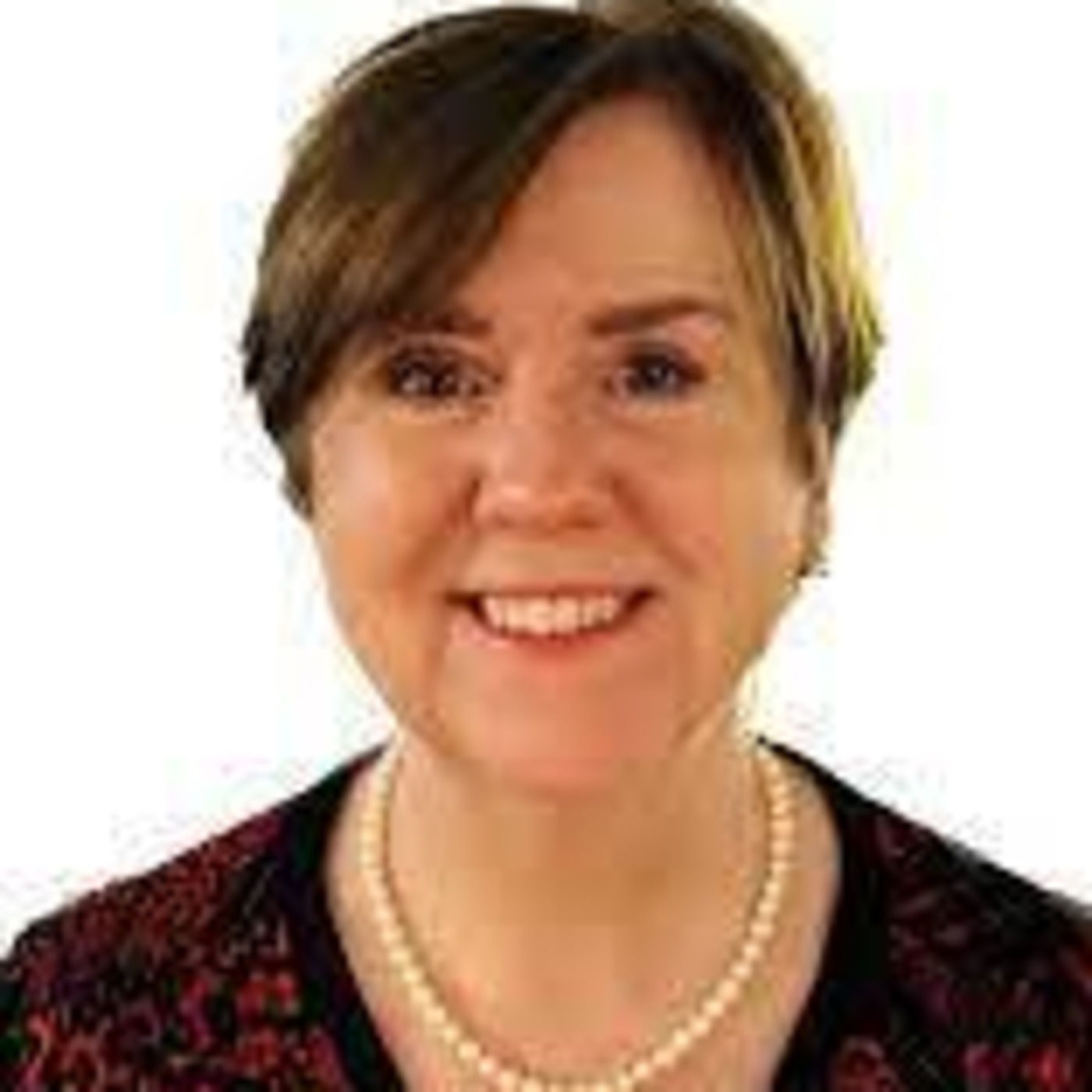
Aoifinn Devitt: Our next guest sits at the intersection of innovation and change at my alma mater, Trinity College Dublin. Hear from her about the innovative microcredentials designation that they have introduced, what the impact is, and what this means for the university learning of the future. I’m Aoifinn Devitt, and welcome to the 50 Faces Podcast, a podcast committed to revealing the richness and diversity of the professional world by focusing on its people and their stories. I’m joined today by Professor Orla Sheehills, who’s the Vice Provost and Chief Academic Officer at Trinity College Dublin, as well as holding the position of Professor in Molecular Diagnostics. Prior to her appointment as Vice Provost in 2021, Orla served as the Director of Medical Ethics in the School of Medicine, was the founding director of the Trinity Translational Medicine Institute, and was Dean of the Faculty of Health Sciences from 2019 to 2021. Most recently, Orla was elected as a member of the Scientific Council of the International Agency for Research on Cancer for 2024 to 2027. This is a cancer research agency of the World Health Organization that supports cancer prevention research. Welcome, Orla. Thanks for joining me today.
Orla: Thanks so much, Aoifinn, and it’s lovely to be here.
Aoifinn Devitt: Well, I’d love if you could talk a little bit about your background, your progress to this role ultimately, but, you know, a little bit about your path.
Orla: Okay. So when I left school, I suppose I had a bit of a dilemma. I loved science at school, I was also really interested in law, and so I wasn’t really sure which path to go. So I went the scientific way. I studied biomedical science, and from there was very lucky in the ’80s to get a job, an actual job, in Trinity College. So I worked initially in the Sir Patrick Dunne Research Laboratory, which is based up in St. James’s Hospital. So it’s unusual that it’s an academic lab but based within a clinical setting. And that gave me the foundation to then go on, do my PhD. I subsequently got an academic post, start to build up my own research group, and began teaching. And meanwhile, in the back of my mind, I always still had this niggle, what about law? So I took a figary and went back and did a master’s in medical law and ethics. And that was actually, I suppose, in one way unusual, but in another way really helpful because it allowed me to bring those two disciplines together. And so I developed more teaching modules in medicine and for some of our research science courses involving ethics in the context of biomedicine. And then from then I became the director of the Translational Research Institute. Again, it’s based up in St. James’s. It’s Trinity’s newest research institute. After that, I was elected to become the faculty dean. And then 3 years ago, I was asked to become the Vice Provost and Chief Academic Officer.
Aoifinn Devitt: Well, fantastic. And we’re going to speak a lot about the education aspect of your focus right now and some of the changes you’re putting in place in Trinity, which I’m very excited about. But just a few questions on that background, because we do also have a medicine series and we dive into some themes in medicine. What exactly is translational medicine?
Orla: So translational medicine is that area of research that looks at questions that are patient-centered. So everything starts with the patient.. And they are questions that will ultimately assist a patient through their disease course. So whether that’s in identifying their disease earlier, in identifying markers that will triage those patients for more personalized therapies, or identify them for drugs that will more efficiently treat the disease that they have. And I was particularly focused on, on cancer research.
Aoifinn Devitt: And moving to your recently just started role there and the research for cancer at the IARC, what exactly is, would you say, the agenda there for the next 3 years? What excites you about some of the advances in cancer research?
Orla: So within the IARC itself, I mean, it’s a global organization in education and research and just developing knowledge in the context of global health generally, particularly then focusing on cancer, looking at things like the environment, the effect of the pollutants we breathe in, the foods that we ingest, how some of those can exacerbate cancers, looking at differences throughout the globe, different exposures, and how different types of cancers occur in different areas. And then also looking at the area that excites me particularly, which is in this precision or personalized medicine, using molecular diagnostics to understand how cancers progress and to try and think a couple of steps ahead of the changes that happen in a person’s tumour, so we can predict which drugs may be used at particular points in a disease path. Historically, we used to treat cancer with very toxic drugs, and you got a drug and that was the drug. And if it worked, good, and if it stopped working, that was unfortunate. Now we’ve a more sophisticated appreciation of how cancer evolves, and so we watch and we monitor the progress of a cancer through a patient’s disease course., and we can alter and tweak the drug depending on the genetic route or the genetic driver that’s pushing that disease in a particular way.
Aoifinn Devitt: And given the dramatic advances that we’ve seen in this area, and it has been quite recent, and I know that your current role also focuses within Trinity College on— there’s a funding aspect and the fundraising aspect to all of that. Just on the cancer side for now, what would you say is sort the of state of fundraising around cancer research relative to its history?
Orla: So I suppose it depends where you are globally. So in Ireland, we are seriously challenged to keep up and to keep relevant with our research because of the paucity of national funding available. We do quite well through Europe, but by the same time, when you look to the East and the amounts of money that are invested into biomedical research, we lag far, far behind. And even on the European landscape, the research budget has been cut dramatically. I suppose in recognition of some of the geopolitical events that have happened. But it’s very unfortunate that one of the first things to be cut always seems to be research.
Aoifinn Devitt: And that kind of brings me now to looking at third-level institutions and their role. From your position, your vantage point as Vice-Provost, what would you say is at the forefront of your mind as you look at the, the role of an educational institution like TCD and how it’s evolving?
Orla: So I think we are a very old university. So 1592, we’ve been around for a long time. And what struck me when I took up this role and, you know, the Provost first said to me, you know, what do you want to do? I had this sort of an existential moment where I looked and I thought, we haven’t really changed the way we teach throughout all of that time. We look at students in a very binary fashion. So they are either undergraduate students or they are postgraduate students. Or perhaps they are full-time students or they’re part-time students, but there’s very little flexibility in between. And I don’t think we’ve really evolved or matured in our way of delivering education to respond to the needs of society currently. And so that was the first thing I thought I’d like to change and have a look at.
Aoifinn Devitt: And how much of a role do you think COVID played in that? Be, I suppose, the swift, almost overnight acceptance of the online form of delivery. And I suppose the reach that that provided, but equally some of the limitations.
Orla: So I think it was a huge benefit, but there were challenges, as you say. So prior to that, online would always have been seen as the, the poor relation to in-person education. As you say, we were forced to pivot almost overnight to online delivery. Now, while that demonstrated and it accelerated the pace at which we could deliver online teaching, I think there is a big difference between an emergency online delivery of education and true sort of considered pedagogy in the way we deliver. So what it allowed us to do was pivot quickly and develop the technologies so that we could deliver online material. What we’ve been doing since is refining that so that the online experience is just as meaningful and in some ways perhaps more meaningful than in person. Now, there are benefits obviously still to both, but there is a place for good online teaching, and that’s where we’re getting to now.
Aoifinn Devitt: And I know in the professional workplace there’s a lot of focus on creating these collisions and these opportunities for people to collide together, I suppose, and their ideas to generate creativity and just generally build a better body of work. And I know in the interview with the Provost Linda Doyle, we talked a little bit about some of the cross-disciplinary initiatives in Trinity around Trinity East, these hubs of learning being created. What kind of a role will they play actually bringing people together physically in order to really look at cross-sectional as well as synergies?
Orla: Yeah, I think there’s huge benefit from that coexistence of different disciplines. I know myself, I said at the beginning, I started on a scientific route. I you then, know, incorporated some arts, humanities, social science elements and merged the two. And I think the world is richer for having a tight-knit intersection between varied disciplines. Even within the research institute I mentioned, we have wide-ranging modules, things like music and medicine. So it’s very important, I believe, to, you know, incorporate the arts into what would be traditionally scientific subjects and vice versa, because there’s so much you can learn from one another and push one another on. I think from looking at problems with a different lens or from a different perspective, we can often see more clearly through to a solution.
Aoifinn Devitt: And then on the topic of continuing education, because I think this is another factor we’ve spoken about, how quickly some fields are developing, technology, medicine itself, and the need for this lifelong learning commitment.
Orla: Yes.
Aoifinn Devitt: And in particular, I wanted to speak with you about the microcredentials initiative at Trinity. I think this is quite innovative and love to hear how that started, what the goal is and how it’s going, I suppose.
Orla: Yeah, so we’ve been doing quite a bit on microcredentials, on all forms of lifelong learning, really. Microcredentials are short accredited pockets of education that allow the learner to dip in or dip out of a particular topic. They offer lots of opportunities. So it could be for somebody who wants to see if their interest in a particular topic might be fulfilled. Equally, we are working with industry and enterprise partners to deliver educational modules to upskill staff within the workplace, and the government has provided funding as well for people to upskill and change the direction of their professional careers. So they have quite a wide remit, and there is a broad variety. In Trinity, we’re focusing in the initial stages. We got funding from the government to establish a suite of micro-credential courses, and we’re looking at 4 pillars really. We’re looking at environment and sustainability. We have microcreds on well-being and the care community, ICT, data science and engineering, and then people, leadership and culture. So 4 basic pillars, and we have suites of courses within each of those, and all of them have been developed in conjunction with enterprise, looking at the skills deficit here in Ireland and seeing how we might address some of those needs, working in partnership within industry and enterprise.
Aoifinn Devitt: And what’s the target audience? I think you mentioned some upskilling within existing roles, and I think the other perhaps binary way that we used to look at students was mature or not mature, whereas of course there is a spectrum across of age across which people would want to learn. So what’s your target audience?
Orla: So my target audience is everybody that we don’t currently educate. So that’s a little bit ambitious, but I suppose there are pockets of students that we are aiming for. I think the large group would be people either in a professional capacity, working in industry, in enterprise, or in the healthcare setting who need to or want to upscale in particular areas. So those pockets that will assist them in that further down the line, we want to have people who will look at microcredentials, collect them, and ultimately gather them and assemble them into a major award. At the moment, they are small, 5 or 10 ECTS modules. So ultimately, I— the ambition would be to be able to knit them together, as it were, into a substantive degree. And that might be from a single institution, multiple institutions in the same country, or multiple institutions across countries. And that would be the ultimate goal.
Aoifinn Devitt: And what response have you had so far? And where are you in this goal? I suppose in terms of, are we only at the beginning of your ambition?
Orla: At the beginning. So we’ve done a pilot, we’ve had about 6,500 learners. I think we’ve almost 3,000 applications this year. So we’re on a steep upward trajectory. We brought out our initial— our first offering was about 67 microcredentials. We’re expanding that all of the time and we’re part of an evolving movement within Ireland. There are all of the other institutions are developing their own suites of microcreds also. So there is a widening sort of universe of microcredentials available within Ireland. We have, as I say, targeted those specific 4 areas in the short term. We’re expanding that all of the time, but we’re building closely on our links with enterprise, trying to circle back to make sure that what we’re developing is relevant And that especially if we’re expecting a company to sponsor their staff to go on a course, it needs to be something that’s relevant for that particular company. So that part of the work is ongoing and evolving. But I’m also very keen that we would look at and try and, you know, through our access pathways, encourage students to come in. There are some scholarships available. There are other routes of entry into microcredentials. Traditionally in Trinity, we have a long history of our Trinity Access Programme where we try and help students who wouldn’t typically come to Trinity to come here and experience the student life that we have on offer and the education that we can give. But we don’t— and I don’t think anybody really in Ireland has looked beyond that. Those people who missed the opportunity when they left school and maybe for other reasons have gone out into their life, maybe now they have caring responsibilities, maybe they have work responsibilities, and it’s to try and encourage them in and entice them into third level education so that they can then explore and expand and develop themselves.
Aoifinn Devitt: And I suppose two questions really. One is how much has the advent of AI— and I know that the Provost is probably one of the most forward-thinking academic leaders I know in terms of her embrace of AI and her vision as to how it can be used— but obviously fast-forwarding that into the workplace and the kind of skills that will be needed to complement that, how much of that has influenced your development? And then I suppose a broader question around universities and careers in general. I think, you know, when in my day back in the ’90s, there wouldn’t have been a massive career university integration. It was the idea that there was a career office and then you moved on. Is that changing?
Orla: Yes. I mean, we actually have a growing careers office, which is a wonderful interface, and I see it just as that. It’s quite a bidirectional fluid interface. That allows engagement with enterprise partners, also allows them to voice back to academics what they need, because there’s no point in us, 400-year-old university, delivering the same things we’ve always done. We need to be relevant to society. We need to provide and create students who are alive to society’s needs and who can respond to them and deal with the problems that we, we currently face. And so it’s really important for me that we have that input back from enterprise and industry. Increasingly, we have adjunct staff who will come from industry sponsors or partners who will come and educate and teach on courses. And that brings a huge relevance, I think, to the material that’s being taught. And it’s really important for the industry and enterprise partners to feel that they can input and co-design. But it’s equally important for the students to know that what they’re learning is relevant, does have a career trajectory, and there is a career pathway that they can follow and they can see where they might lead or eventually end up.
Aoifinn Devitt: And I suppose when you look at subject matter that will perhaps be in focus going forward, and we’re getting close to the end of the conversation here, just in terms of gaps maybe that you think are really apparent in the educational arena, whether it be subject-wise and this flexibility, how do you think this will evolve? Say if you were to look back in 5 years’ time, where do you think you’ll be with this offering?
Orla: With microcredentials? Yes. So I think, yeah, I think they will evolve dramatically. But I really would hope within 5 years’ time is that we have sufficient agility and flexibility within our own infrastructure and systems so that we can efficiently stack microcredentials for students. That’s our limiting factor at the moment. Our computer systems are quite archaic. They haven’t been invested in in many years, and they need to be updated so that we can have that agility. At the moment, to give you an example, it takes some unfortunate person in our academic registry office the same length of time to upload a microcredential as it does an entire master’s program. So it’s a completely manual process, and something like that shouldn’t be happening in this day and age. And I would hope to God in 5 years’ time that that isn’t the case, that these things happen seamlessly. I would also hope that we can incorporate AI not just in our teaching, but also in our processes within the university so that we can streamline things that currently take so much time, manual time, manual labor, to free up those people to use their creative skills in much better and more productive ways.
Aoifinn Devitt: And my last question is a bit of a surprise question. I put it in, put on script, but it’s really this been the material that we’ve talked about that’s generated it. And it’s really around the marriage of the old and the new when it comes to theory and learning, because clearly medical ethics is probably as old a topic as medicine itself, but there will be modern-day influences in how we interpret that. And a book I’ve been reading, The Almanac of Naval Ravikant, speaks a lot about the older the idea, the more relevant the book. So essentially, if we’re talking about interpersonal relations or family, the 2,000-year-old book is, is just, is probably as relevant because it stood the test of time. How in a university do you get that blend of teaching the old, the old maxims that never change and have actually stood the test of time, with the demand for the new?
Orla: Okay, and I actually think, and I completely agree with you, that those old questions are the same questions. I mean, history keeps repeating itself. We keep walking ourselves into the same problems that we’ve hooked ourselves into in the past, and, and the answers don’t change. So I think the way of doing that is to demonstrate how a question which is as old as the ages itself is relevant, and you can superimpose a historical question into a current dilemma and work out, and you, you can then use history to see how has this been addressed in the past, where did it go wrong, where did we make progress, and how might we use that learning in order to inform what we’re going to do with today’s problems and crises.
Aoifinn Devitt: And I think translating the old, I suppose, the older arts Yes. Into modern-day application and leadership, you know, refers back to philosophy.
Orla: It absolutely does. For the med students, I used to do a particular lecture. I’m just thinking of it now. It’s society’s evolving attitudes to the body. And we went right back, you know, 2,000 years and cataloged exactly how things changed, how our thinking changes. The reason it’s relevant is because it speaks to the core of maybe stem cell research. But the same questions that are there that are relevant for stem cell research, you can follow them all the way back and look back at Michelangelo stealing bodies, dissecting cadavers in a completely illegal way, but without which we wouldn’t understand anatomy. So you can use utilitarian arguments for doing particular things, and you can see where things have gone too far. And I think students actually find that fascinating to see ‘Oh my God, this is so relevant to stem cell research.’ But God, that same question has been rehearsed over centuries.
Aoifinn Devitt: Hence why the rich repository of universities are so relevant.
Orla: Yeah, and that’s why we need comprehensive.
Aoifinn Devitt: Universities, and they need to be allowed to thrive. Well, Orla, thank you so much. I hope you will package that medical ethics content into a microcredential someday that we can access remotely and take away, because it seems absolutely fascinating. And thank you to you for the leadership you’re providing. It’s an astonishing example of just how well universities are evolving behind the scenes, and I couldn’t be more excited, as I said in my interview with Provost Linda Doyle, to be an alumna of this university and to see what, what’s going into place. So thank you for the innovation and clear joy in learning that you’re bringing to the role.
Orla: Thank you, Aoifinn, and thank you for being a wonderful alumna.
Aoifinn Devitt: I’m Aoifinn Davitt. Thank you for listening to the 50 Faces podcast. You can subscribe on Apple Podcasts or wherever you get your podcasts. This podcast podcast This is for information only and should not be construed as investment or legal advice. All views are personal and should not be attributed to the organizations of the host or any guest.
Aoifinn Devitt: Our next guest sits at the intersection of innovation and change at my alma mater, Trinity College Dublin. Hear from her about the innovative microcredentials designation that they have introduced, what the impact is, and what this means for the university learning of the future. I’m Aoifinn Devitt, and welcome to the 50 Faces Podcast, a podcast committed to revealing the richness and diversity of the professional world by focusing on its people and their stories. I’m joined today by Professor Orla Sheehills, who’s the Vice Provost and Chief Academic Officer at Trinity College Dublin, as well as holding the position of Professor in Molecular Diagnostics. Prior to her appointment as Vice Provost in 2021, Orla served as the Director of Medical Ethics in the School of Medicine, was the founding director of the Trinity Translational Medicine Institute, and was Dean of the Faculty of Health Sciences from 2019 to 2021. Most recently, Orla was elected as a member of the Scientific Council of the International Agency for Research on Cancer for 2024 to 2027. This is a cancer research agency of the World Health Organization that supports cancer prevention research. Welcome, Orla. Thanks for joining me today.
Orla: Thanks so much, Aoifinn, and it’s lovely to be here.
Aoifinn Devitt: Well, I’d love if you could talk a little bit about your background, your progress to this role ultimately, but, you know, a little bit about your path.
Orla: Okay. So when I left school, I suppose I had a bit of a dilemma. I loved science at school, I was also really interested in law, and so I wasn’t really sure which path to go. So I went the scientific way. I studied biomedical science, and from there was very lucky in the ’80s to get a job, an actual job, in Trinity College. So I worked initially in the Sir Patrick Dunne Research Laboratory, which is based up in St. James’s Hospital. So it’s unusual that it’s an academic lab but based within a clinical setting. And that gave me the foundation to then go on, do my PhD. I subsequently got an academic post, start to build up my own research group, and began teaching. And meanwhile, in the back of my mind, I always still had this niggle, what about law? So I took a figary and went back and did a master’s in medical law and ethics. And that was actually, I suppose, in one way unusual, but in another way really helpful because it allowed me to bring those two disciplines together. And so I developed more teaching modules in medicine and for some of our research science courses involving ethics in the context of biomedicine. And then from then I became the director of the Translational Research Institute. Again, it’s based up in St. James’s. It’s Trinity’s newest research institute. After that, I was elected to become the faculty dean. And then 3 years ago, I was asked to become the Vice Provost and Chief Academic Officer.
Aoifinn Devitt: Well, fantastic. And we’re going to speak a lot about the education aspect of your focus right now and some of the changes you’re putting in place in Trinity, which I’m very excited about. But just a few questions on that background, because we do also have a medicine series and we dive into some themes in medicine. What exactly is translational medicine?
Orla: So translational medicine is that area of research that looks at questions that are patient-centered. So everything starts with the patient.. And they are questions that will ultimately assist a patient through their disease course. So whether that’s in identifying their disease earlier, in identifying markers that will triage those patients for more personalized therapies, or identify them for drugs that will more efficiently treat the disease that they have. And I was particularly focused on, on cancer research.
Aoifinn Devitt: And moving to your recently just started role there and the research for cancer at the IARC, what exactly is, would you say, the agenda there for the next 3 years? What excites you about some of the advances in cancer research?
Orla: So within the IARC itself, I mean, it’s a global organization in education and research and just developing knowledge in the context of global health generally, particularly then focusing on cancer, looking at things like the environment, the effect of the pollutants we breathe in, the foods that we ingest, how some of those can exacerbate cancers, looking at differences throughout the globe, different exposures, and how different types of cancers occur in different areas. And then also looking at the area that excites me particularly, which is in this precision or personalized medicine, using molecular diagnostics to understand how cancers progress and to try and think a couple of steps ahead of the changes that happen in a person’s tumour, so we can predict which drugs may be used at particular points in a disease path. Historically, we used to treat cancer with very toxic drugs, and you got a drug and that was the drug. And if it worked, good, and if it stopped working, that was unfortunate. Now we’ve a more sophisticated appreciation of how cancer evolves, and so we watch and we monitor the progress of a cancer through a patient’s disease course., and we can alter and tweak the drug depending on the genetic route or the genetic driver that’s pushing that disease in a particular way.
Aoifinn Devitt: And given the dramatic advances that we’ve seen in this area, and it has been quite recent, and I know that your current role also focuses within Trinity College on— there’s a funding aspect and the fundraising aspect to all of that. Just on the cancer side for now, what would you say is sort the of state of fundraising around cancer research relative to its history?
Orla: So I suppose it depends where you are globally. So in Ireland, we are seriously challenged to keep up and to keep relevant with our research because of the paucity of national funding available. We do quite well through Europe, but by the same time, when you look to the East and the amounts of money that are invested into biomedical research, we lag far, far behind. And even on the European landscape, the research budget has been cut dramatically. I suppose in recognition of some of the geopolitical events that have happened. But it’s very unfortunate that one of the first things to be cut always seems to be research.
Aoifinn Devitt: And that kind of brings me now to looking at third-level institutions and their role. From your position, your vantage point as Vice-Provost, what would you say is at the forefront of your mind as you look at the, the role of an educational institution like TCD and how it’s evolving?
Orla: So I think we are a very old university. So 1592, we’ve been around for a long time. And what struck me when I took up this role and, you know, the Provost first said to me, you know, what do you want to do? I had this sort of an existential moment where I looked and I thought, we haven’t really changed the way we teach throughout all of that time. We look at students in a very binary fashion. So they are either undergraduate students or they are postgraduate students. Or perhaps they are full-time students or they’re part-time students, but there’s very little flexibility in between. And I don’t think we’ve really evolved or matured in our way of delivering education to respond to the needs of society currently. And so that was the first thing I thought I’d like to change and have a look at.
Aoifinn Devitt: And how much of a role do you think COVID played in that? Be, I suppose, the swift, almost overnight acceptance of the online form of delivery. And I suppose the reach that that provided, but equally some of the limitations.
Orla: So I think it was a huge benefit, but there were challenges, as you say. So prior to that, online would always have been seen as the, the poor relation to in-person education. As you say, we were forced to pivot almost overnight to online delivery. Now, while that demonstrated and it accelerated the pace at which we could deliver online teaching, I think there is a big difference between an emergency online delivery of education and true sort of considered pedagogy in the way we deliver. So what it allowed us to do was pivot quickly and develop the technologies so that we could deliver online material. What we’ve been doing since is refining that so that the online experience is just as meaningful and in some ways perhaps more meaningful than in person. Now, there are benefits obviously still to both, but there is a place for good online teaching, and that’s where we’re getting to now.
Aoifinn Devitt: And I know in the professional workplace there’s a lot of focus on creating these collisions and these opportunities for people to collide together, I suppose, and their ideas to generate creativity and just generally build a better body of work. And I know in the interview with the Provost Linda Doyle, we talked a little bit about some of the cross-disciplinary initiatives in Trinity around Trinity East, these hubs of learning being created. What kind of a role will they play actually bringing people together physically in order to really look at cross-sectional as well as synergies?
Orla: Yeah, I think there’s huge benefit from that coexistence of different disciplines. I know myself, I said at the beginning, I started on a scientific route. I you then, know, incorporated some arts, humanities, social science elements and merged the two. And I think the world is richer for having a tight-knit intersection between varied disciplines. Even within the research institute I mentioned, we have wide-ranging modules, things like music and medicine. So it’s very important, I believe, to, you know, incorporate the arts into what would be traditionally scientific subjects and vice versa, because there’s so much you can learn from one another and push one another on. I think from looking at problems with a different lens or from a different perspective, we can often see more clearly through to a solution.
Aoifinn Devitt: And then on the topic of continuing education, because I think this is another factor we’ve spoken about, how quickly some fields are developing, technology, medicine itself, and the need for this lifelong learning commitment.
Orla: Yes.
Aoifinn Devitt: And in particular, I wanted to speak with you about the microcredentials initiative at Trinity. I think this is quite innovative and love to hear how that started, what the goal is and how it’s going, I suppose.
Orla: Yeah, so we’ve been doing quite a bit on microcredentials, on all forms of lifelong learning, really. Microcredentials are short accredited pockets of education that allow the learner to dip in or dip out of a particular topic. They offer lots of opportunities. So it could be for somebody who wants to see if their interest in a particular topic might be fulfilled. Equally, we are working with industry and enterprise partners to deliver educational modules to upskill staff within the workplace, and the government has provided funding as well for people to upskill and change the direction of their professional careers. So they have quite a wide remit, and there is a broad variety. In Trinity, we’re focusing in the initial stages. We got funding from the government to establish a suite of micro-credential courses, and we’re looking at 4 pillars really. We’re looking at environment and sustainability. We have microcreds on well-being and the care community, ICT, data science and engineering, and then people, leadership and culture. So 4 basic pillars, and we have suites of courses within each of those, and all of them have been developed in conjunction with enterprise, looking at the skills deficit here in Ireland and seeing how we might address some of those needs, working in partnership within industry and enterprise.
Aoifinn Devitt: And what’s the target audience? I think you mentioned some upskilling within existing roles, and I think the other perhaps binary way that we used to look at students was mature or not mature, whereas of course there is a spectrum across of age across which people would want to learn. So what’s your target audience?
Orla: So my target audience is everybody that we don’t currently educate. So that’s a little bit ambitious, but I suppose there are pockets of students that we are aiming for. I think the large group would be people either in a professional capacity, working in industry, in enterprise, or in the healthcare setting who need to or want to upscale in particular areas. So those pockets that will assist them in that further down the line, we want to have people who will look at microcredentials, collect them, and ultimately gather them and assemble them into a major award. At the moment, they are small, 5 or 10 ECTS modules. So ultimately, I— the ambition would be to be able to knit them together, as it were, into a substantive degree. And that might be from a single institution, multiple institutions in the same country, or multiple institutions across countries. And that would be the ultimate goal.
Aoifinn Devitt: And what response have you had so far? And where are you in this goal? I suppose in terms of, are we only at the beginning of your ambition?
Orla: At the beginning. So we’ve done a pilot, we’ve had about 6,500 learners. I think we’ve almost 3,000 applications this year. So we’re on a steep upward trajectory. We brought out our initial— our first offering was about 67 microcredentials. We’re expanding that all of the time and we’re part of an evolving movement within Ireland. There are all of the other institutions are developing their own suites of microcreds also. So there is a widening sort of universe of microcredentials available within Ireland. We have, as I say, targeted those specific 4 areas in the short term. We’re expanding that all of the time, but we’re building closely on our links with enterprise, trying to circle back to make sure that what we’re developing is relevant And that especially if we’re expecting a company to sponsor their staff to go on a course, it needs to be something that’s relevant for that particular company. So that part of the work is ongoing and evolving. But I’m also very keen that we would look at and try and, you know, through our access pathways, encourage students to come in. There are some scholarships available. There are other routes of entry into microcredentials. Traditionally in Trinity, we have a long history of our Trinity Access Programme where we try and help students who wouldn’t typically come to Trinity to come here and experience the student life that we have on offer and the education that we can give. But we don’t— and I don’t think anybody really in Ireland has looked beyond that. Those people who missed the opportunity when they left school and maybe for other reasons have gone out into their life, maybe now they have caring responsibilities, maybe they have work responsibilities, and it’s to try and encourage them in and entice them into third level education so that they can then explore and expand and develop themselves.
Aoifinn Devitt: And I suppose two questions really. One is how much has the advent of AI— and I know that the Provost is probably one of the most forward-thinking academic leaders I know in terms of her embrace of AI and her vision as to how it can be used— but obviously fast-forwarding that into the workplace and the kind of skills that will be needed to complement that, how much of that has influenced your development? And then I suppose a broader question around universities and careers in general. I think, you know, when in my day back in the ’90s, there wouldn’t have been a massive career university integration. It was the idea that there was a career office and then you moved on. Is that changing?
Orla: Yes. I mean, we actually have a growing careers office, which is a wonderful interface, and I see it just as that. It’s quite a bidirectional fluid interface. That allows engagement with enterprise partners, also allows them to voice back to academics what they need, because there’s no point in us, 400-year-old university, delivering the same things we’ve always done. We need to be relevant to society. We need to provide and create students who are alive to society’s needs and who can respond to them and deal with the problems that we, we currently face. And so it’s really important for me that we have that input back from enterprise and industry. Increasingly, we have adjunct staff who will come from industry sponsors or partners who will come and educate and teach on courses. And that brings a huge relevance, I think, to the material that’s being taught. And it’s really important for the industry and enterprise partners to feel that they can input and co-design. But it’s equally important for the students to know that what they’re learning is relevant, does have a career trajectory, and there is a career pathway that they can follow and they can see where they might lead or eventually end up.
Aoifinn Devitt: And I suppose when you look at subject matter that will perhaps be in focus going forward, and we’re getting close to the end of the conversation here, just in terms of gaps maybe that you think are really apparent in the educational arena, whether it be subject-wise and this flexibility, how do you think this will evolve? Say if you were to look back in 5 years’ time, where do you think you’ll be with this offering?
Orla: With microcredentials? Yes. So I think, yeah, I think they will evolve dramatically. But I really would hope within 5 years’ time is that we have sufficient agility and flexibility within our own infrastructure and systems so that we can efficiently stack microcredentials for students. That’s our limiting factor at the moment. Our computer systems are quite archaic. They haven’t been invested in in many years, and they need to be updated so that we can have that agility. At the moment, to give you an example, it takes some unfortunate person in our academic registry office the same length of time to upload a microcredential as it does an entire master’s program. So it’s a completely manual process, and something like that shouldn’t be happening in this day and age. And I would hope to God in 5 years’ time that that isn’t the case, that these things happen seamlessly. I would also hope that we can incorporate AI not just in our teaching, but also in our processes within the university so that we can streamline things that currently take so much time, manual time, manual labor, to free up those people to use their creative skills in much better and more productive ways.
Aoifinn Devitt: And my last question is a bit of a surprise question. I put it in, put on script, but it’s really this been the material that we’ve talked about that’s generated it. And it’s really around the marriage of the old and the new when it comes to theory and learning, because clearly medical ethics is probably as old a topic as medicine itself, but there will be modern-day influences in how we interpret that. And a book I’ve been reading, The Almanac of Naval Ravikant, speaks a lot about the older the idea, the more relevant the book. So essentially, if we’re talking about interpersonal relations or family, the 2,000-year-old book is, is just, is probably as relevant because it stood the test of time. How in a university do you get that blend of teaching the old, the old maxims that never change and have actually stood the test of time, with the demand for the new?
Orla: Okay, and I actually think, and I completely agree with you, that those old questions are the same questions. I mean, history keeps repeating itself. We keep walking ourselves into the same problems that we’ve hooked ourselves into in the past, and, and the answers don’t change. So I think the way of doing that is to demonstrate how a question which is as old as the ages itself is relevant, and you can superimpose a historical question into a current dilemma and work out, and you, you can then use history to see how has this been addressed in the past, where did it go wrong, where did we make progress, and how might we use that learning in order to inform what we’re going to do with today’s problems and crises.
Aoifinn Devitt: And I think translating the old, I suppose, the older arts Yes. Into modern-day application and leadership, you know, refers back to philosophy.
Orla: It absolutely does. For the med students, I used to do a particular lecture. I’m just thinking of it now. It’s society’s evolving attitudes to the body. And we went right back, you know, 2,000 years and cataloged exactly how things changed, how our thinking changes. The reason it’s relevant is because it speaks to the core of maybe stem cell research. But the same questions that are there that are relevant for stem cell research, you can follow them all the way back and look back at Michelangelo stealing bodies, dissecting cadavers in a completely illegal way, but without which we wouldn’t understand anatomy. So you can use utilitarian arguments for doing particular things, and you can see where things have gone too far. And I think students actually find that fascinating to see ‘Oh my God, this is so relevant to stem cell research.’ But God, that same question has been rehearsed over centuries.
Aoifinn Devitt: Hence why the rich repository of universities are so relevant.
Orla: Yeah, and that’s why we need comprehensive.
Aoifinn Devitt: Universities, and they need to be allowed to thrive. Well, Orla, thank you so much. I hope you will package that medical ethics content into a microcredential someday that we can access remotely and take away, because it seems absolutely fascinating. And thank you to you for the leadership you’re providing. It’s an astonishing example of just how well universities are evolving behind the scenes, and I couldn’t be more excited, as I said in my interview with Provost Linda Doyle, to be an alumna of this university and to see what, what’s going into place. So thank you for the innovation and clear joy in learning that you’re bringing to the role.
Orla: Thank you, Aoifinn, and thank you for being a wonderful alumna.
Aoifinn Devitt: I’m Aoifinn Davitt. Thank you for listening to the 50 Faces podcast. You can subscribe on Apple Podcasts or wherever you get your podcasts. This podcast podcast This is for information only and should not be construed as investment or legal advice. All views are personal and should not be attributed to the organizations of the host or any guest.