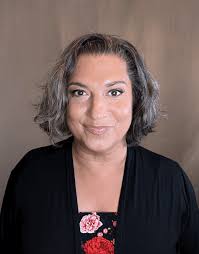
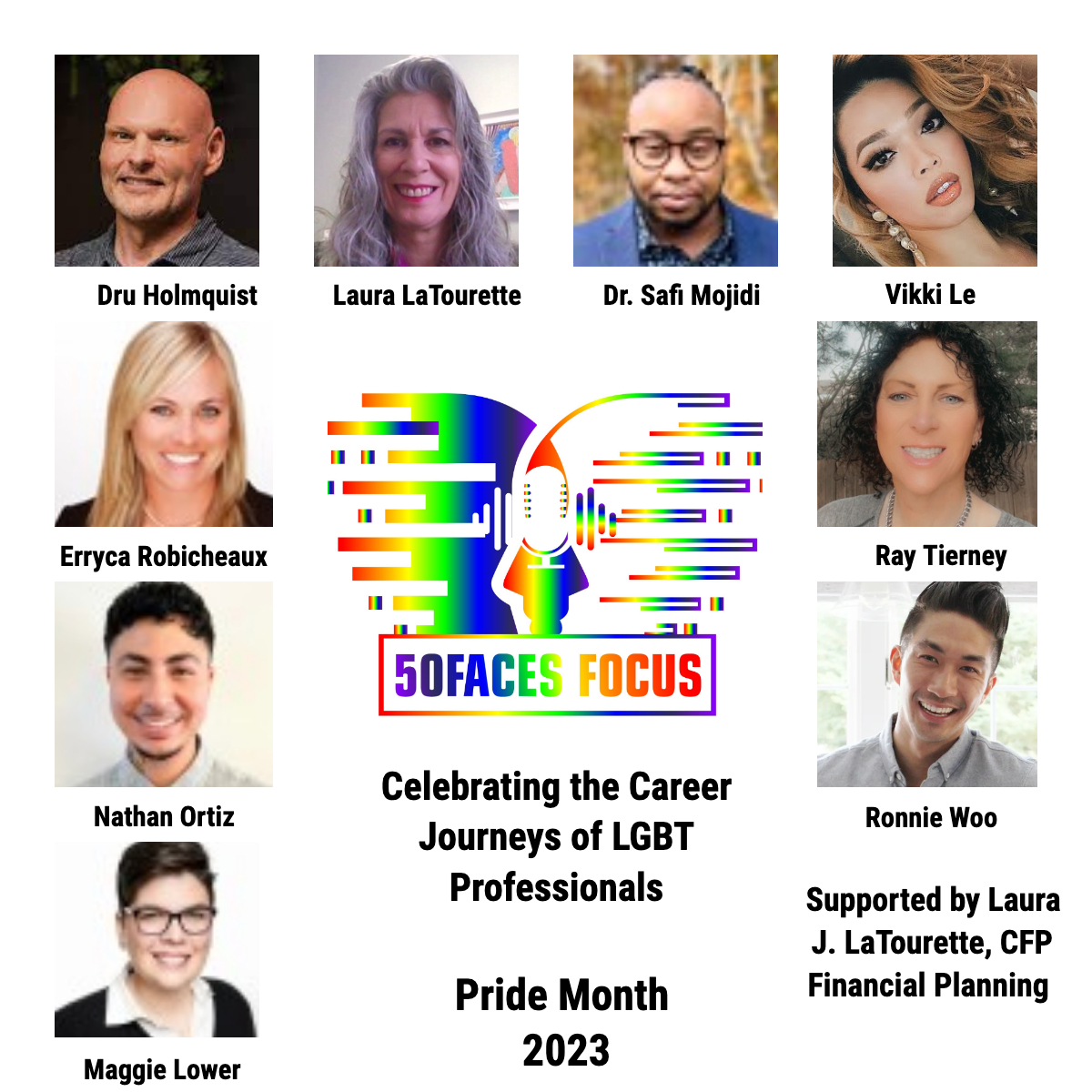
Aoifinn Devitt: This Pride series in 2025 is kindly supported by Latimer Partners LLC. Our next guest is CEO of Oasis Domestic Abuse Service, and she came to my attention when she posted a poignant post on LinkedIn about Lesbian Visibility Week and her family life with her partner. Tune in to hear from her about her upbringing, why Lesbian Visibility Week remains so deeply personal, and why she is so optimistic about the evolving state of employers. I’m Aoifinn Devitt, and welcome to this 50 Faces focus series in which we are celebrating LGBTQ+ professionals in a special series for Pride Month 2025. I’m joined today by Clare Williams, who is CEO of Oasis Domestic Abuse Service, and she has spent most of her career in the charity sector. We got to know each other over LinkedIn when I responded to her popular LinkedIn post about Lesbian Visibility Week. In which she described her life with her partner and their 6 children and the changing climate and political backdrop. Welcome, Clara. Thanks for joining me today.
Claire Williams: Thanks ever so much. I’m really excited to be here, so thank you for inviting me.
Aoifinn Devitt: Well, before we get to that LinkedIn post and the reaction you got, could you just talk us a little bit through your background? Where did you grow up and what were your early interests?
Claire Williams: Yeah, of course. So I know it’s probably a bit of a cliché for a lesbian to say this, but I grew up in a little seaside town of Whitstable which many lesbians will probably recognise from the very famous Sarah Waters novel, Tipping the Velvet. So yes, maybe I was kind of destined for a bit of drama and rebellion from the start. I grew up on a council estate at the time, and I always thought that my childhood was kind of great, really. I played lots of sports, I was absolutely obsessed with music, and I mean obsessed with music and movies. And I learned to play the guitar very badly. And spending time outside really with friends, socializing. And I was a very competitive young person, probably still am if I’m honest. And I, I just loved experiencing things. I’d give anything a go. But I guess now that I’m older and I have children of my own, all 6 of them, which you touched on. I think very differently, and my family often back then didn’t know where I was half the time. I had no mobile phone back then. I was out until stupid o’clock and only went home when I was hungry. So from a parenting perspective, I look at that and I think, God, is that okay? And actually, no, it isn’t. And I found myself in quite unsafe situations or places that just weren’t suitable for a child, and I just shouldn’t have been there, full stop. There must have been kind of poverty around me, but I didn’t always recognize it back then. But my eyes were very much open to things like people drinking a lot of alcohol and using other substances at a young age, and I was never really interested in trying any of those things. I wanted a job, I wanted a car, I had aspirations, but I would have been in a position where I could have easily used those things and I could have potentially gone down a very different path had I have done. And I suppose looking back, I used to hang around with a really large group of people. There were about 20 of us who all grew up together. But when I think back, very few of those people from that group had actually, like, turned out okay. They had positive futures, and several never even had the chance to begin one, if I’m honest. And what I didn’t appreciate until now is that even though I wasn’t taking part in that activity, people looking from the outside would have tarred me with the same brush and made those assumptions, which makes me realize that actually you can just— you can never judge a book by its cover. I was a child who kind of struggled to learn in a classroom environment. I never made a full week at school. I, I absolutely hated it. And when I left school, I was 16. I completed my GCSEs, but I didn’t get any decent grades. I got a B in art, and you know, what the hell was that going to get me? So all I wanted to do really was work, and I was never afraid of hard work. So I’m what you would kind of call a bit of a grafter. I’ve worked in factories, supermarkets, care homes. I’ve worked in a family-run sandwich bar. I do actually make a cracking BLT also. And then when I reached 23, I finally came out about my sexuality, and I, I wanted to change. I wanted more for my life. I wanted more for my son at that time. And I, I reached a bit of a crossroads when it came to my career and some of my life choices as well.
Aoifinn Devitt: That’s a wonderful story, and I thank you for sharing that. And as you were describing it, I was thinking of your current work with Oasis and how much some of your lived experience must help with with the empathy and with understanding some of the situations your clients or the stakeholders you serve. And that is a remarkable story. And then you said it’s interesting also that focus on hard work and how that was a strand that came through your life. How did then the charity sector make itself known to you? Why was that somewhere you found you wanted to be working and add value in?
Claire Williams: Well, I’ve kind of watered this down a little bit because I found my way into the charity sector by complete and utter fluke. I was out one night with friends and I ended up talking to a wonderful woman about her job and her background and what she was doing, and she was telling me about how she worked with young people in a homeless hostel and was explaining how she taught them life skills to live independently. And the one thing that really struck me about her was her absolute passion for this job, and it really kind of got me excited. It got the hairs kind of stood up on the back of my neck and I didn’t even know that jobs like this existed, really. And I asked her to keep me in mind if anything came up and became available. Not for one minute did I expect that she would remember me after a few drinks in, if I’m honest. But she did remember me. And a few weeks later, she called me up and told me about this job that was available. And I was in absolute shock that she even remembered me. So it was a real opportunity for me to sort of grab it with both hands. So I applied for the job. I’ve got to be honest, I had absolutely no experience whatsoever of the charity sector, of homelessness, or anything like that. And I was very lucky that this amazing organisation gave me a chance. And like I said, I took it. So I started in this organisation, it was a homeless organisation, as an occasional worker. They just called me up as and when they needed help, like for short staff, and if they were short staffed with sickness or holidays. So I just took every shift that was offered to me, every opportunity to just learn every aspect of the role. And, and I was a bit like a sponge, I guess. I just absorbed everything that they could teach me. I also went back to education in the evenings to retake my GCSEs. I continued to study further education to develop sort of management leadership qualifications. And slowly but surely, I worked my way through frontline roles into management and leadership positions within this organisation. And, and I will be forever grateful for the knowledge and opportunities that they gave me.
Aoifinn Devitt: So can you tell us about the work you do at Oasis?
Claire Williams: Yeah, of course. So I’m now the CEO of Oasis Domestic Abuse Service. We are a charity who is dedicated to supporting individuals and families affected by domestic abuse. We have provided refuge and support services for over 30 years, and we have a wide range of different services including safe accommodation, dedicated helpline, outreach services, high-risk services, and specialist children and young people services as well. We support individuals of all genders and backgrounds, and our focus is very much trauma-informed, person-centered support that doesn’t just respond to kind of crisis but helps people to rebuild their lives. And I think what sets us apart is our infrastructure. We’ve got dedicated teams for safeguarding, quality, training, data, and a lot more, which helps us keep standards high and respond quickly when needs change. And we also work very closely with partners like the police, health, education, and social care to make sure that people get the wraparound support that they need.
Aoifinn Devitt: And just a quick question about the use of your services. If you were to kind of plot the, I suppose, the need for the services, the incidence of abuse, Is this something that’s fairly stable, or do you see it as growing currently?
Claire Williams: It’s awful, isn’t it? Because you don’t want a charity like ours to exist in the first place, but because domestic abuse is now— people are becoming very, very aware of what DA is, of course that does increase the referrals, that increases the need. And we saw significant increases over COVID, people becoming sort of locked behind closed doors with that perpetrator in very unsafe environments and situations. And so from that point, it’s just been a kind of steady growth of new referrals because the awareness of it is just out there and it’s far greater, and so it should be. But with that awareness, obviously the need far outweighs what is available to them, which is one of our biggest issues when it comes to funding.
Aoifinn Devitt: And before we move on to talk about LGBT inclusion, which is obviously the key focus of this podcast, I’m quite interested in some of the work you do in the charity sector because I think it’s the work with marginalized communities sometimes that kind of gives us— I’ve mentioned the word empathy before— because often, you know, it is about inclusion. Would you say that there is anything about whether the homeless population or the people you work with at Oasis that most of us misunderstand or don’t appreciate by not being in the sector, that what has being in the sector kind of taught you perhaps that we don’t know?
Claire Williams: You know, I’ve worked in homeless services for 18 years, and during that time I saw just how complex homelessness actually is. Many people in this situation are dealing with sort of co-occurring conditions, mental health issues, substance misuse, and often unresolved trauma. And often that trauma goes all the way back to childhood, including abuse or witnessing domestic abuse. And that’s why a joined-up, trauma-informed approach matters so much. So, something that really struck me was the number of young people I worked with who identified as LGBT+ at that one point as well. I managed a hostel for 9 young people, and at one moment in time, 7, 7 of those young people identified as LGBT+. Now, that’s not coincidence. It says a lot about rejection, discrimination, and trauma in families and communities that push young LGBT people back into homelessness. It’s something that we have to talk about. And that realisation gave me the evidence I needed to show that more support was urgently required for LGBT young people. And so I approached an amazing Commissioner and asked for her backing to pilot a dedicated support service for young people identifying as LGBT+. And I think, you know, she just took absolute pity on me and probably just wanted to shut me up. So she said yes to giving me this opportunity to run this pilot. And within a few weeks of running it, it was such a huge success in a very short space of time. The numbers of young people accessing the service spoke for themselves. And the commissioner could see just how much that service was needed and the outcomes from that. And now, thanks to that success, the service now operates across the whole county of Kent and Medway and has supported thousands of young people over the last few years.
Aoifinn Devitt: That’s extraordinary, and it reminds me, we’ve had many guests on this podcast that have worked with other segments of the LGBT+ community, say the elder segment It’s interesting how the youth, the elders, there are ways to push in and ensure better inclusion at every level. But extraordinary work that you’ve done there. And I’d like to now move to the focus of how we got— we met each other on LinkedIn and the post you made. Can you just tell us a little bit about that post that you posted? Lesbian Visibility Week and that it comes around. I think I ever say to come around again and a little bit about your own story.
Speaker C: I started working in factories when I left school in 1996. I’d have been 16 years old. I already knew at that stage that I was gay. I knew from the age of 4 that I was definitely identified as a lesbian, but I didn’t feel comfortable coming out at that stage. It just wasn’t talked about, not in a professional sense or personally, and I wasn’t even out to my family, so coming out at work, that would have been impossible. And later on, I moved from that factory to another, which was an all-male factory. I was the only woman. All of the other women worked in the offices, and the two just didn’t mix. And, well, there I had to deal with constant— and when I say constant, I mean constant— sexual innuendos and inappropriate behavior, touching. And at that time, the guys only— they meant it in jest and jokingly, but God, you know, it was awful. It was awful. And I made a pretty strong stock, and I’ve got what I would class as a good sense of humour, but when I think back to those times, it was just too much. And also, if somebody else was in that situation, they were a bit more vulnerable, I dread to think how they would have coped. They wouldn’t have coped. They most definitely wouldn’t have, because it was such a tense and just inappropriate setting. And when you think back, I was 17. I was a kid. So You know, it just wasn’t okay. And had I come out in that kind of workplace, I mean, God, it would have just made me more of a target. So I definitely, definitely stayed quiet when I was there. And things have changed a lot since then. Now we’ve got proper policies, support systems, things like shared parental leave, we’ve got Pride networks. I mean, the list is endless, isn’t it? And not all providers of services or companies do those things well, but we are a lot further forward than what we ever have been before. We just hope that it doesn’t go back, but, you know, those kinds of things like Pride networks and parental leave, they just didn’t exist back then. And so it is a very different landscape, and that progress really does matter. We can’t lose that.
Aoifinn Devitt: Can you paint a picture for how well LGBT professionals were included at the beginning of your career? And how has this changed over the course of your career? Do you think we’ll still have work to do to create more inclusive environments, for example, and what kind of initiatives have you found work best?
Speaker C: But I guess for me, everything kind of shifted when I started working for myself in a family-run business, and all of a sudden I could just be myself. I could be open without fear. I was working with my sisters, they knew who I was, I was out to them at this time, and, and actually I could just be my true authentic self. I didn’t have to hide that part of myself, and that was a massive, huge relief for me. And so by the time I moved into the charity sector, I was already out. I was well ahead of this. And at that time, I was in a position where I could educate that setting, I could educate my colleagues, I could work with the clients around around their sexuality, and so therefore I was in a position to help shape their policies, shape their practices, making sure that they were inclusive. And I guess I kind of got them ahead of the game back then. That’s what I really love, and I really love this about the voluntary sector. There’s a real appetite to learn and improve, and that workplace, the people that you work with, they’re open. They listen, and they genuinely want to do better. And you’re not pushing against closed doors, which I imagine you could be in other companies, other areas. And that’s just, it’s not the case in all of those areas, and that’s really sad. That’s really sad, and there is more work to be done there. People need to be open to creating those environments where people can be themselves and be safe.
Aoifinn Devitt: And why is Lesbian Visibility Week particularly important?
Claire Williams: So, the Lesbian Visibility Week is quite important to me, actually, and it’s very personal. As a kid, I didn’t know a single lesbian, and yet from the age of about 4, I knew that I was a lesbian, or I knew that I was very different. And I remember thinking, God, why do all ladies have boyfriends and husbands? You know, I even looked at my own family setting and I looked at my sisters and my mum and I thought, well, why do they all have boyfriends? And husbands, you know. I don’t want a husband when I’m older. I would like a wife. But I also knew that it wasn’t something you would openly talk about because people just didn’t voice those things when I was a kid. And then at 12, I had a Saturday job, believe it or not, in a video shop. It was the best job in the world, watching videos all day and disturbing customers, especially when you’re obsessed with movies. And literally across the street lived a lesbian couple and that absolutely changed everything for me. I remember seeing them and thinking, oh wow, it’s real, it exists, I’m not the only one. And these women didn’t even know me, but their existence just gave me such hope and really changed the way that I thought. And I suppose that’s why visibility matters. I want to be someone else’s hope. Because just being your true authentic self can give someone else the courage to do the same. Recently, I was at a concert with my partner, and we were stood next to a very young lesbian couple who were there with our parents, who looked very, very cautious, barely looking at each other, no eye contact or anything like that. And a few songs in, they saw me and my partner being affectionate to one another, and then they quickly started to hold hands, and even saw that, you know, I even saw their parents kind of smile because they were pleased that that embrace had happened, that they had got that confidence. And I think that’s what it’s all about. But being visible also means about facing comments and assumptions, some of which still shocked me. I mean, I think back over the years of some of the situations that I’ve been in, I think, God, I went to the GPs when I was pregnant and My GP made a remark and said, you know, “Why are you a lesbian? Penis isn’t that bad, is it?” Or I’ve been told things like, “Well, we don’t get funding for you people,” when we were looking for advice around IVF. “No, we don’t get funding for you people.” Or I’ve been reassured by things like, “Oh, you’re just like a normal family,” as if that’s meant to be kind of comforting. I’m not the kind of person who gets easily offended, and I don’t think everyone who says these things means harm. Not all of it is all malicious, but it still needs to be challenged because if we don’t speak up, nothing changes. The progress we’ve seen has come from visibility, from Pride, from healthy challenge, and that challenge has to continue because equality isn’t a given. And we have to keep pushing forward with that. I always say this, my staff probably hate me saying it, but if we all kind of hide in the shadows, that’s where we’ll always stay. But if we stay visible, stay vocal, and stay proud, that’s how we make space for the next generation to thrive. And I see so many steps forward with that next generation already. It’s amazing. It’s just making sure that we don’t go backwards. Now?
Aoifinn Devitt: It’s funny because the last time I just specifically discussed Lesbian Visibility Week was actually 4 years ago, 2021, and I’m not sure how much has changed since then. There’s still obviously the week, there’s still a need for it. Maybe some of the pushback against other members of the LGBT community has been damaging to that visibility because it’s taken— maybe people are lying low and not presenting role models. I think one of the best ways of ensuring visibility is, A, doing what you’re doing and being on LinkedIn and doing this podcast, but also sometimes celebrities and high-profile people being more open, and that’s why we try to showcase them. But it is, I suppose, a pity that we still need a Lesbian Visibility Week when there isn’t a similar for gay men. But thank you for doing what you’re doing, and I do think that that role modeling is so critical. When it comes to— you mentioned some of these comments, and clearly we’re not where we need to be in terms of full acceptance and inclusion. How would you say in the professional world being a member of the LGBT community has affected you or hasn’t?
Claire Williams: So I guess every workplace is different and it’s shaped by different values. I don’t know, as an example, my partner works for a company with incredible benefits. They have something called communities of belonging, pride events, egg freezing. Their policies are, you know, incredible. And what they have available. Like, the list just goes on. I suppose smaller organisations, including, you know, my own charity as an example, we don’t always have the budgets for that kind of extra support to go the extra mile. So we have to think a lot more creatively instead around how we support our workforce and those accessing our services. That said, some organisations or companies They still don’t even have basic EDI policies in place. And that’s where I guess the real work begins. But inclusion, it isn’t just about policies, it’s about culture. People need to see it in action and who’s getting promoted, who’s being heard, who’s in the room. And I guess that’s when inclusion starts to become real. Personally, I can think of nothing worse than writing a policy just to tick a box. My teams are my absolute biggest asset, and that’s true of every organisation and company. So instead of treating people as, you know, a disposable diversity process, we should be striving for better practice, full stop, like just better practice. And changing culture is one of the hardest things to do, and that’s why It has to be a shared effort and a commitment. Policies and values have to be valued. They have to be lived and breathed by everyone. Workplaces need to be safe spaces where voices are captured and heard and also acted on. And we need to think about inclusion long before recruitment. You know, by the time someone joins your team and reads your values, reads your policies, is being inducted, you’ve already kind of missed a trick. People should know who you are, know what you stand for before they even apply. It’s about how you externally get that across as well and being visible.
Aoifinn Devitt: I love those ideas. That certainly culture is key. And now that we’re releasing this in June, uh, it’s Pride Month, what can allies across different workplaces do? What what are the little gestures that you think make a difference? Is it about the rainbow lanyard, the, the rainbow flag on your desk, going to a Pride parade, or just kind of a sign of allyship? Anything that you found has particularly made a difference to you or to your friends and colleagues?
Claire Williams: Well, do you know, I think it’s all of those things. I think people underestimate the power of wearing that badge, that flag. I’ll use an example. I worked with a young girl once who was housed in a homeless accommodation, and she came to my service and said that she was ultimately made homeless again because the people who ran that place were homophobic and caused her nothing but grief and bullying. And so she felt safer to be on the streets than in that accommodation, which is actually the accommodation that should keep you safe. And when she came to my project for an interview for housing, she said the first thing she picked up on was the fact that two members of the staff, including myself, was openly gay, and that as she walked through the front door, there were posters in celebration. And we asked the question about how somebody identified, and she said those tiny little things made her feel safe to the extent where she felt she could be her own authentic self. And I think that’s key, isn’t it? Nobody even realizes the difference a poster can make, but it’s all of those little gestures that make such a significant change.
Aoifinn Devitt: Couldn’t agree more. So thanks for the reminder, especially if people think, oh, I won’t bother this year, or everyone knows it always matters. So thanks for that reminder. I’d love to return to some personal reflections now. So we’ve talked a bit about your career and how you ended up in the charity sector. Were there any any particular highs or lows there so far that you can talk about?
Claire Williams: Gosh, yeah, there’s quite a few actually. I think one of the hardest parts of my early working life was dealing with sexual harassment and innuendos, that kind of stuff. I mean, when I think back to those days, I was just 17, still a kid really, working in an environment where inappropriate comments and unwanted sort of touching were brushed off as normal. And I guess I was kind of, I don’t wanna say the word lucky, but I look back and I guess I felt more lucky at that time that I was strong enough to kind of push through those times. But it makes me think about how someone more vulnerable might have coped. And, you know, we’re just working in different times and that kind of behavior should just never have been acceptable. And it still needs calling out today. And then on the other side, I guess the high points has been building a career in the charity sector from the ground up. So I left school without any GCSEs, and I’ve always been open about my sexuality, which hasn’t always been easy or straightforward, but I’ve worked at every level from from frontline roles to leadership. And I think by doing that, it’s kept me really grounded. And I know, like, the value of every role in a team. And I often say that if one cog breaks, the whole clock stops. And I’m proud. I’m proud of what I’ve achieved, not in spite of the challenges, but because of them, I guess. Every kind of tough experience has shaped how I lead, how I listen, how I support others, how I work with others. And I don’t always get it right. I mean, who does? But I do my absolute utmost to learn from everything that I do, and I reflect on all of my practices.
Aoifinn Devitt: And speaking of teams and every cog needing to work, have there been any people on your team— and not necessarily your work team, your life’s team— that have had a particular impression on new or been pivotal in your life?
Claire Williams: Yes, it’s a really difficult question because you have to try and think of these, you know, few handfuls of people that have kind of inspired me. And I suppose when I think of this question, I’ve worked with so many people, including in my personal life as well, who’ve inspired me. Each of them have their own kind of strengths, but I suppose what’s inspired me most is seeing people grow and being part of that as well, like watching someone evolve in front of you is an absolute privilege. I can use an example of one person I remember working with, was a young man that I, I worked with who had a background kind of similar to mine, I guess. He’d had a bit of a tough start in life, unsure of where he was going, what he was going to do, what he was good at. And at the time, we helped him get a job in a hotel kitchen and something kind of just clicked with him when he went to work in, in that kitchen. And from there, his life just took off. He took up every opportunity available to him through that work placement. They sent him to work in Michelin-star restaurants in Europe. He entered competition after competition after competition, and he won them all. He literally traveled the world entering these competitions. And fast forward 20 years, and he is now in a top role at a 5-star department store in London. And I just think that’s my inspiration, like kind of watching him thrive, knowing where he was at the beginning and seeing him now, that kind of reminds me why I do this work. And it, again, it keeps me grounded. And I think back to team members that I’ve worked with and I’ve seen them progress I’ve seen them develop, I’ve seen them go into leadership roles or start families, and I think just to be part of those individuals’ pathways and futures is just incredible.
Aoifinn Devitt: Well, those are some wonderful shoutouts there, I think, and a reminder of just the sheer grit that is involved in making a life and, and that, that needs respect at every time. The last question is any words of wisdom or creed or motto you might have for us, or anything you would say to your younger self, that young 16-year-old leaving school, maybe steering clear of temptation and trouble?
Claire Williams: Yes. So I suppose, like, thinking about my background as well, I sadly lost one of my best friends at a very young age. I was 9, she was 11. And I also lost other friends along that journey in teenage years as well. And I suppose those experiences and those losses they kind of shaped how I live my life today, even though I didn’t really realize it at the time. But they taught me not to kind of take anything for granted, especially things like your health and your happiness. So I try to make the most of every opportunity that whenever we don’t have our 6 children, we go traveling quite a bit and go away for weekends. And I remind myself that age happens, doesn’t it? We see the gray hairs kind of covering your head or getting the dye on your hair, kind of reminds myself that age is a privilege and not everyone gets the chance to grow older. I live with that sense of gratitude every day. So I do get days where I struggle to drag my ass out of bed. Of course I do. But I’m also grateful to be getting up at the same time. And I kind of, if I could go back to my younger self, I would tell myself that everything would be okay. Stop worrying so much. Stop holding yourself back. When I was younger, and I suppose because of my sexuality, I really struggled. Like, struggled with my identity so much. I felt feminine inside, but I didn’t really know where I fitted, you know. I, I didn’t feel comfortable enough to wear dresses because I didn’t particularly walk that femininely. And if I did wear a dress, I felt stupid. I felt too masculine. I never felt comfortable in my own skin. Now that I’m older, quite frankly, I couldn’t give two hoots what I look like now. But it’s taken me years, years to be comfortable with who I am. And I wish, I wish I realized that sooner, that just being you is actually more than enough. And I would tell anybody exactly the same. Thing as well.
Aoifinn Devitt: I think that’s one of the well-kept secrets of getting older, is that growing into your own skin, that is actually a huge plus among the many negatives that there— that’s a huge plus. And I think it’s hard to convey that. Maybe it only comes with age. Well, thank you so much, Clare. We have yet to meet in person though, although I know we will.
Claire Williams: Your—
Aoifinn Devitt: the sheer energy that comes from your profile on LinkedIn, from the whole content on this podcast, it is because you are your authentic self to every, every last bone of your body, I feel. And, and that energy is incredibly empowering to those of us who listen to you because I think it encourages us to be our own selves as well. And thank you for coming here. I do not know how you have the capacity to not only have your 6 children but also be so caring about the people you work with and carry that through their trajectory. And not only the people you work with, but your community as a whole. Because that’s what your post was about and that’s why your concern for Lesbian Visibility Week is there and why you’re, you’re doing this. So thank you so much for coming here, for your advocacy, and for sharing your insights with us.
Claire Williams: Thank you very much, and thanks for your kind words. That means a lot.
Aoifinn Devitt: I’m Aoifinn Devitt. Thank you for listening to our 50 Faces Focus Series. If you liked what you heard and would like to tune in to hear more inspiring professionals and their stories, please subscribe on Apple Podcasts or wherever you get your podcasts. This podcast is for informational purposes only and should not be construed as investment advice, and all views are personal and should not be attributed to the organizations and affiliations of the host or any guest.
Aoifinn Devitt: This Pride Series in 2025 is kindly supported by Latimer Partners LLC.
Meghan Stabler: It’s about leaning into your heart and your mind when I give a keynote to really get you to emphasize or be empathetic at least with what I’m saying and what may be impacting others so that you go, “Oh my, I’m also impacted by that.” And from a business perspective, I need to have that software solution or from an equity or equality perspective, Oh, I know somebody in the same boat. Now I feel that I could go change and do something, become an activist or take some action on something, or it impacts me. I either feel better about it or I know that I can go do something. So storytelling’s all around everything I do.
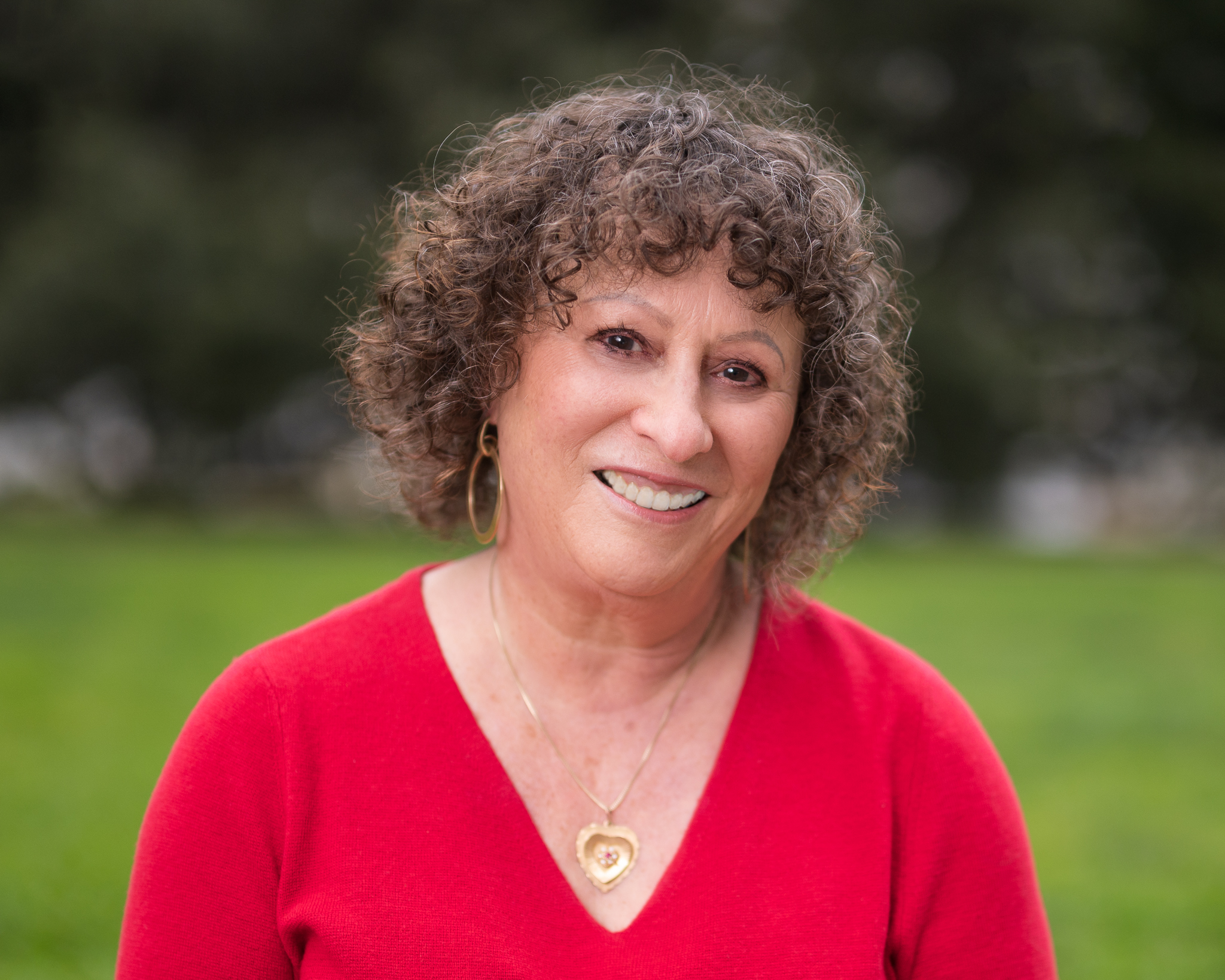
Aoifinn Devitt: I’m Aoifinn Devitt, and welcome to this 50 Faces Focus Series in which we are celebrating LGBTQ+ professionals in a special series for Pride Month 2025. I’m joined today by Megan Stabler, who until recently was a fractional CMO at Thrivecart and a member of the board of directors of Grindr since May 2022. She’s had a series of marketing and strategy roles over the course of her career and is a keynote speaker on a range of topics. Welcome, Megan. Thanks for joining me today.
Meghan Stabler: Thank you, Eithne. How are you?
Aoifinn Devitt: Very well. It’s great to have you here. Can we start by talking a bit about your background? Where did you grow up and what were your early interests?
Meghan Stabler: Oh boy, I’m old. So I grew up, believe it or not, and I think people will hear from my accent that it’s a very weird one. I grew up in Yorkshire. So I was born in the north of England in Yorkshire, moved just north of London when I was in my teens, and then left for America when I was in my mid to late 20s. So I sort of have a very weird accent. I’ve also spent a lot of time in different countries, so you’ll find an Australian twang probably come out occasionally, as well as me using Texanism. I’m not even sure if that’s the word, but Texanism is like y’all, because I live in Texas.
Aoifinn Devitt: Yes, I would have gone with Australia first off with that, but definitely Yorkshire is very, very faint in there. So just in terms of, you clearly had a gift for marketing and made a career there. What was it about maybe your early education or childhood? Did you always have the gift of the gab or the ability to communicate?
Meghan Stabler: No, how it started was not in marketing. I was actually a product coder, a developer. So if I go way, way, way, way back when computers involved punch tape and a lot of lights that were flashing and stuff, somebody had to program them. And I was programming these IBM big old mainframe, as they called them back then. And I enjoyed it. I then did a little bit of programming and support for a software company that led me into being able to go speak about it because what matters to me is how you translate this technical buffoonery jargon into what’s in it for me, what’s the value, what’s the outcome I can drive, how is it going to change my business and do something better than I could have done myself? So what is the outcome? So I found myself being able to talk about the software products that I had written, which were in the security space. And that led me into sort of a sales-like role where I would be brought into accounts to talk about the value of the software that we were selling. And eventually, when I was in and around sales, there’s a lot of frameworks when it comes to sales. The thing is like SPIN Selling, Sandler, ACCLIVUS, solution selling. And I realized that marketing didn’t really have the equivalent. So sales were getting trained in how to do discovery calls, how to figure out everyone, what’s going on with you? And because you can’t solve it, what’s the impact on you? And what’s the impact on somebody else? And how much is that costing your business? And what if you had a way to go solve it? Would that be worthwhile to you, right? Sales were trained on that. Marketing were trained on this is our product, this is what we do, this is the feature, the button is green, do you want it? And I realized that I could move now into marketing and start enlivening the story of marketing, which does one cool thing, which is to bring prospects into the pipeline and hopefully quality pipeline that sales can convert to sales. So that moved me into marketing and I love marketing because if you don’t get what’s most important, the customer, the prospect, what they’re asking for, what they’re needing, then they’re not going to buy. So it’s just as simple as you said it. It was— it’s storytelling. No, but that drifted into it and the ability to connect to people. And from keynotes I’ve done, especially on LGBT issues and even technology as well, it’s about leaning into your heart and your mind when I give a keynote to to really get you to emphasize or be empathetic at least with what I’m saying and what may be impacting others so that you go, oh my, I’m also impacted by that. And from a business perspective, I need to have that software solution or from an equity or equality perspective, oh, I know somebody in the same boat. Now I feel that I could go change and do something, become an activist or take some action on something or it impacts me. I either feel better about it or I know that I can go do something. So storytelling’s all around everything I do.
Aoifinn Devitt: I love that. We’ve kind of gone into the values part of marketing, and it reminds me of just the classic disruptors, I think, paradigm. What was it around? What is the problem this product is designed to solve? And focusing it from that angle as opposed to pushing a product per se.
Meghan Stabler: 100%.
Aoifinn Devitt: We’ve had a number of— on this podcast subseries, we’ve had a number of marketers actually. Maggie Lauer, who of course introduced us, I asked her about some things that people overestimate maybe, or overlook, underestimate when it comes to marketing? She mentioned not to do kind of random acts of marketing. I think that would maybe accord with your kind of very intentional focus. Any other kind of, I suppose, mantras that you adopt or you think that people often miss when it comes to marketing or any other values that drive you?
Meghan Stabler: Oh my gosh, how long have we got on this podcast? I could write—
Aoifinn Devitt: Oh, we have a little time.
Meghan Stabler: I’m interested. I could write pure classes. So the centricity that I bring is around product marketing. Right, because I came from product and I moved into marketing. Doesn’t mean I’m a solid product marketer because of those two things, but understanding the narrative and the story. But if, as a product marketer, and that is my root at 20 years of product marketing and leadership, it is a matter about understanding your ICP. As Maggie sort of gave you those words, I’d say that different sizes, meaning different scales of companies, where they are in their journey, if they’re a seed round, a Series A or a Series B, or maybe they’re a D or an E, then moving maybe towards IPO, there’s different levels of marketing activity that needs to happen. So very early seed round, you’re sort of a, I think the phrase nowadays is zero to one, right? Which is, as you said, you know, you gotta focus. And for them, it’s about focusing on maybe your top 40 customers that you want to bring into your pipeline and wholeheartedly go after each and every one of them just as if they’re your aging mother or your aging father and you love them to death. You’re not going to go over the top with them, but you want to win them over in terms of brand, right? You want to focus on the top 40, especially from brand recognition. So my statement that I make to people is always think about things as an aperture, just like a lens of a camera, right? So the earlier you are on your investment round, Series A, Seed round B or C, your aperture should be relatively tiny so that you’re just focused. And try not to shift after the shiny objects. Oh, oh, there’s something over there. Let’s all move focus and go do this. Focus, focus, focus, especially in those early stages. Now, as you start to grow, as you’re bringing in these prospects, converting them to merchants, you’re bringing in those focused brand names where because they bought your software, there are followers of them that go, wow, if that company bought it, then I should be looking at this too. So you open up the aperture a little bit. Now you’re doing a lot more case studies and stories and thought leadership. You’re probably beginning to blend in your analyst relations team to go talk to the analysts about why you are better than the competition. Maybe you’re doing similar to the competition or same as but better than. You’re beginning to open up that aperture both into the ICPs that you can go after, new market segments, new profiles. That’s the aperture bit. Just realize and recognize where you are in the journey of your business. Don’t be too aspirational. Certainly have a guiding North Star, but don’t be too aspirational. Keep relentless pursuit of revenue— is another word I use— on the aperture that you have at that moment in time. And obviously investors, especially PE firms, VCs, want you to go fast and drive as much revenue as you can do. But sometimes in early stage, you’ve really got to focus on getting not beyond the product market fit into it’s really customer market fit. If you have a product market fit, great, got all the features, bells and whistles. But if you don’t have the right customer market fit, the messaging and everything else that surrounds it, you’re not gonna be there. So it is that relentless pursuit of revenue based off of ICP. And at that point, then you can expand the personas and the messaging and building out core messaging frameworks and other things.
Aoifinn Devitt: Fascinating. And just to define ICP, I may have missed it earlier in the conversation. Could you just tell us what—
Meghan Stabler: Yeah, ICP is ideal customer profile.
Aoifinn Devitt: Thank you. But not all of us are, are marketing professionals, so that, that’s very helpful. And then just the last question on this before we move more into the LGBT inclusion question, digital marketing, the digital transformation, it doesn’t sound like that would necessarily change much of what you’re saying, that maybe it’s just the execution. Has changed, but has digital marketing changed?
Meghan Stabler: Well, your digital marketing strategy has to match both the size and scale of your company, what you’re actually trying to sell, as well as— remember, this is all about the people you’re trying to sell to. Where are they at? You have to meet the economic buyer. That’s the person with the budget that’s willing to sign the contract or willing to approve whatever it is that’s out there. And then you have the influencers that are trying to say, please buy this because it’s going to solve our problems, but they’re the budget owner. You have to make sure that you are focused on them as much as you can. So digital marketing has a very broad term. If you’re doing PPC, pay-per-click ads, and you’re using Bing or Google, you know, you’re probably buying keywords, search terms. You’re buying the things there from— you would say, I’m looking on Google, just to use the Google example, of shovel, whatever it is. If you want to come up first in the search, you’re buying placement essentially, and it’s costly. Now, in enterprise software where I come from, B2B, B2C as well, but B2B enterprise software, the likelihood of somebody searching online for your software is still there, but the cost is going to be high because you’ve probably got competition. You’re all competing to buy those keywords to rank top of place. So Digital for me is really watch what your spend is, really understand who your customers or prospects are and where they go for information, and build content, relevant subject matter, thought leadership content that is relevant to them that’s going to rank and pull them in before you go into a full digital strategy. So that’s just the digital bit pulling them in. But digital transformation as a whole, right, it’s happening all the time. I think there’s been a little bit of a downturn post-COVID, Obviously with the economic issues nowadays, but everybody wants to find a way that you specifically will come to their site or use their mobile app and then buy and then convert and use a payment term that you like, Apple Pay, Google Pay, whatever it may be, or Adyen or Affirm or Klarna or whatever it is. And that you have a wonderful experience when you’re getting those goods shipped to you, if you’re buying consumer sector goods and you’re unpacking them and you’re delighted and you want to share it on social. Or you’re pissed off and upset, it doesn’t fit and you need to return it. And the return process is easy as well. So digital is a huge term. And obviously I dove quickly into PPC because as a marketing executive, I’m always air quote iffy on how effective PPC is. You gotta measure it. And obviously as marketers, we have ways to measure top of funnel, mid funnel, and bottom of funnel, but the cost can be extremely high using digital.
Aoifinn Devitt: That’s a fascinating deep dive and tons of wisdom shared there. Thank you. And now I’ll take the aperture back. We talked about narrowing it. Let’s take it back a bit to the LGBT question because this is a Pride series and obviously Grindr is a huge presence in the LGBT community. And we’ll talk about your board role there in a second. But this, the purpose of the podcast is the career journeys of LGBT+ professionals. And just starting with your own journey, can you talk about your own experience of coming out in the professional world?
Meghan Stabler: Sure.
Aoifinn Devitt: What stage that was at, how it went down, so to speak?
Meghan Stabler: Yeah, so let me open it up with the prefix of I wish I’d come out early. I wish I’d had the opportunity to be who I knew I was earlier on, right? For those that are listening, I am a transsexual. I transitioned in 2004. I had known about who I was but couldn’t put words to it when I was typically 5 or 6. This was before the internet per se. So trying to figure out the right words that defined who I was, I just felt different. I didn’t know what it was. And for me, it wasn’t until there was a newspaper article about a lady tennis player called Renee Richards who had transitioned, and this was in the mid-’70s, maybe early ’70s, that I read a newspaper here in the UK. Yeah, this is before the internet, and it just said, ‘Sex change tennis player Renee Richards.’ And it was like a light bulb going off. But now I’m sort of trying to go into school and look in the library in the old Rolodexes, trying to find things. There’s no books, there’s no nothing, right? Sex change wasn’t a term, I think, even in the Oxford Dictionary, and certainly wasn’t in the Encyclopedia Britannica. So I really didn’t know what to do. I knew my parents loved me. I figured it would break their heart to try and explain that there was something wrong with me. So I sucked it up and moved forward. I went through puberty. I hated it. I did fall in love with a woman. I was 16, she was coming on 18. We eventually got married, moved to the States, and then I was living in New York at the time, and I was caught up in 9/11, and I lost people that I knew, and I went through the experience in Lower Manhattan myself, and I really asked myself, you’re seen as a very successful software executive. I was a senior vice president in a multi-billion-dollar software company, but every day I was waking up, putting on my French cuff shirts and ties and cufflinks and suits and traveling around the world. Occasionally I’d be flying on a G4 jet or a helicopter, and life was great. I could be in Singapore one day, get a phone call that I needed to be in London the next day, and flights were being arranged. We’d go do business deals or meetings, but I was dying inside. 9/11 happened, and I was standing on the train platform after 9/11, having gone to loads of memorial services, knowing some people, as I mentioned, that we’d lost. And it really was her, me raising a hand, going again and saying, I’m still here. I moved to Texas, got involved in another tech company, did a turnaround on it, sold it, to another software company. So my way of coping with not coming out at that point in time was to work as hard as I ever could so nobody could ever see it. And if we talk about that aperture idea, if you take your thumb and your finger and you close it, but just leave a little bit of gap and then hold your hand as far away from your face as you can do, you can see light and you can see color. You probably can’t see much else, but if you bring your, that little speck of hole back to your eye, you can start seeing, right? You’re busy nodding. I can see you on the— and you just blinked right now. So I can see. So my role was to keep all my friends as far away from me as they could so they’d never see me because I didn’t want to out myself. And then I felt again, look, I’ve sold the company. You need to be true to who you are. And I got into therapy. I was diagnosed as transsexual. I knew there was a pivot I could make. I could either stay as him, suck it up, be miserable, but everybody would believe that I was happy and enjoying life. Or I could become me and potentially risk and lose everything from my job, my income, my career, the job respect, my family, my wife, my daughter, my home. No insurance covered anything back then, but I felt that somebody who had a voice— I was used to speaking in the tech circuit. If I was facing this, I could be a voice and I could stand up and I could speak out. Parallel to all of this, and I’ll tell you that in the late ’80s, early ’90s, I was also helping gay men that had HIV/AIDS. And I knew plenty, and I was friends. I’ve lost friends. I had somebody that even worked for me when I moved to Ohio that I cared about deeply, Tony Mullins, God rest his soul. He and his husband— his husband died first. Tony lasted a lot longer. I last saw him in 2000, I think it was. But just being a friend and an ally, even though I was closeted trans, was core to me. Finding equity, making sure that women in the workplace were seen as well as heard and had a voice at the boardroom table was core to my identity. And I’ll loop those things back together that when I did come out in 2004 and ’05 and begin my transition, several women who worked for me at the software company in Houston said, “Thank gosh. We thought there was something odd about you because you would notice various things or you would speak up for us in a meeting. We would say something and then one of the guys in the room would echo what we had just said and then amplify it. And other people would go, good job, Steve. Yes, we agree with you. And you were the one that sat there and said, hold on a second, it was Tracy’s idea at first. Tracy, do you have anything else to add? And it’s just trying to bring people into that room and then go through my own transition and navigate a world that didn’t have process, had no experience in people like me doing this within a multibillion-dollar software company in Houston, Texas, where the CEO was a Southern Baptist, right? So take it on, try and change the world. And as I started to work with HR and other folks, it wasn’t about establishing policies, procedures for me. It was making sure that the people that came behind me, I was pulling forward in their journeys and stuff. And so, I became a very outspoken, visible transsexual woman who spoke on the Hill and Capitol in favor of bills that was, you know, going to Connecticut to advocate for non-discrimination bills, or the state of Texas where I live in. That’s really what got me into it. I did lose things. I lost my wife, and I loved her. I lost my daughter for a significant period of time because we got divorced in the state of Texas. The judge said, what you’re doing is cruel an unusual behavior. So I’m awarding your wife everything, including pretty much everything out of the house. You’re going to have to pay alimony, you’re going to have to pay child support, even though there’s no alimony in the state of Texas. She has the right to move back to the UK, she has the right to take your daughter, you’re going to pay for your daughter’s education over there. And I didn’t see my daughter for a number of years despite trying. My daughter was confused, rightly so. She was 9 at the time, and it was tough on her. And I humbly, continuously beg for forgiveness to this day, where things that trigger me, I’ll still say to my daughter, who’s now 32, I’m sorry. I’m sorry that I put you through that. But I didn’t have any option. I did. I actually did. My other option was to pull the trigger of a gun, and I came close to it. My daughter, by the way, is Now back living in Austin, Texas, in 2014, 2015, she volunteered with a human rights campaign out in Washington, D.C., and was one of the folks behind marriage equality and focusing on things to the point that she was on the Supreme Court steps when marriage equality came through. And the BBC and other news outlets took photographs and pictures of her hugging another friend of ours on the steps. And she was crying. And I was glad because my kid had moved from being— she was never hateful, but I wouldn’t say not accepting. I just say that she didn’t know what she should do or could do because she still had her mom with her, into an advocate, into somebody who walks through life today as a marketer, by the way, with grace for other people, for marginalized communities, and an advocate. So I’m blessed to have her, and I’m blessed to still be here.
Aoifinn Devitt: Well, thank you for sharing that extremely personal and candid story. I appreciate that. And it’s funny, the activism you mentioned in your daughter, it’s often— it’s not from the air they get it. So that chain of activism— when I spoke with Mark Segal on last year’s series, his grandmother had been a suffragette, and he had learned— became active in the Stonewall movement. And that was all laid down, I think, by being dragged out to suffragette style, at least, civil rights activism. In his youth. So it’s wonderful that that persisted. And your own advocacy allyship clearly started early and well before your own transition. In your post-transition career, did you experience life differently as a woman? Did you have more— I mean, you already clearly had empathy for how women were treated in the workplace. How did that change or become maybe sharper once you were now presenting as a woman and, and but essentially with the same level of professional expertise.
Meghan Stabler: Let me just take a sidestep if I can do and explain, because there’s a lot of consternance going on both in America and in the UK where I am this week over trans issues, mainly focused on trans women. If we go back to basics, sex is who you go to bed with, gender is how you identify. So having this brain that I had who said you’re different, right? Those early years. Then a brain that went light bulb moment, sex change tennis player, was a man, became a woman, was there. My two best friends at school, Jane Brown and Amanda Pearson, if they ever listen to that, they know that they are because we did reconnect post-transition. I was jealous. I was so jealous about them going through puberty. I didn’t know at the time why my body wasn’t going through the same thing. So my brain was saying, you should be. And my body was saying, uh-uh, you’re not going to go do that. And Keith Vipond and Julian Pence, the guys that I hung out with, they would know I was always with Jane and Amanda doing things. So, it’s hard to answer that question directly, did things change? I know from me being a leader in multiple companies that I do my best, and I fail sometimes, to stand up And again, I’ll use the word I used before, see everybody, male identified, female identified, non-binary, whomever, and make them individually feel like they’re the only person in the room that I’m speaking to. So if my activism, the word that you used, comes through, it’s because I want each individual to be successful in a way that they want to be successful. I will champion them. I will find things that can help them. And pull them through. As a woman of trans experience, and I’m trying to choose my words carefully now, I’ve had to navigate it too in terms of how am I seen, how am I accepted, how am I included? And in the technology space, which is still predominantly and traditionally male-dominated, we just had an event in Chicago where I moderated a panel with 4 magnificent female tech executives. And we were all talking about DEI or how to be inclusive and see things. And one of the things I said in my opening remarks was, we’ve been here for 2 days. We still see the cliques of the men getting together. We’re going to go to a baseball game, right? Very male-orientated types of things that the guys— let’s just go for a beer, right?— types of things that they want to do. And while not intentional, they are leaving others out of this space. So it’s what I see, again, for the individuals, but also what I see around me of that exclusion. I get excluded as well. I think people sometimes may fear having a trans woman around them. You don’t— you’re not going to catch it, trust me. So having to navigate that, but also just making sure that as I walk as gracefully as I can do, and I’m not always graceful through the world, that I present in a way that is authentic to me. I’m not going to conform to stereotypes of womanhood. I realize that I could never carry a child. I realize I don’t have a uterus, but I’m doing my best to comport my way through life, both in a personal setting as well as in a professional setting, right, with other executives. And, you know, I am actually job hunting right now. I left Thrivecart in January, February of this year. So I’ve been job hunting for a while for either another Chief Marketing Officer role or an SVP of Product Marketing role. And it’s tough because I come onto these Zoom calls and maybe they have an expectation, but I am authentically me. Whenever they meet me, and if they enjoy that, they get a great conversation and know that I’m experienced and knowledgeable, I bring cultural leadership, I want to champion everybody, then that’s okay. So I don’t know what defines a woman. I’m not talking about DNA, XXXY, and all the multitudes of that. I’m not talking about what’s inside of your body. I think it’s how we show up every day and how we champion each other.
Aoifinn Devitt: That’s a great distinction. And I think that focus on encouraging everybody to be their most successful, productive selves in whatever way that they present, I think is a great way to think about inclusion. And I suppose if you look at the workplaces you’ve been in over decades, how would you say the climate of inclusion is today? Because I think many Young people of transgender experience, I suppose we call it that, do experience higher unemployment rates, and they do experience— it’s absolutely statistically proven. So it’s— I know a lot of their parents, for example, if they’re very, very, you know, teens or early 20s, and their parents are rightly concerned not only about the transition and its effect on the child’s happiness, and there is actually about the employment side, the productivity. How does this affect my child’s ability to be productive citizen. So I suppose, how do you think the workplace has improved and what makes a difference?
Meghan Stabler: I wish it had. I thought it was improving. I think those of us that are visible and out, as you know, we started off talking about age, or at least being older and being around the workplace for a long time. I had a young trans person at a rally at Texas Capitol about a month and a half ago go from the stage, I have, you know, I’ve been out for 2 years, I’ve never met anybody that is trans over the age of 30. And he said that, he said that from the rally stage. I went up to him afterwards, I was like, I transitioned 20 years ago. And he goes, oh my gosh, you’re an elder. And I was like, oh, that’s not the word I want to listen to. Look, I had to navigate the workplace back in 2004, ’05, ’06, ’07 as I was coming out. There was nobody in the company, and we were several thousand employees that had done this before, nor was there again any policies or procedures in place or processes. So I had to do things in a way that I could get it done. There were only 4 surgeons in the US that would perform surgery at that point, and there was no insurance coverage, so I had to pay out of pocket. I was flying every 6 to 8 weeks to Phoenix, Arizona to get electrolysis. My good friend Karen Biondi would fly with me because she knew that I’d be spending 6 to 8 hours every 6 to 8 weeks to get hair removed from my chin, my face, and everything else. And it just took a lot out. So for a trans person to go through and navigate this world right now, or back then, it was tough, but we navigated it and there was no point— not, not a lot of pushback. It was questioning. I don’t quite understand it. Tell me more. Share more. I think nowadays the narrative is being unfortunately written against us by people who are trying to other us and demean us, and it comes from fear and an unwillingness to listen and see us. Go back to that word I’ve been using for a while. I think it’s also driven by cliques. It’s also driven by people who want to build an audience and be seen as a champion for justice because of sports or restrooms, bathrooms, changing rooms, right? So we live in a very hyper clipped world where we didn’t used to back in the, in the noughties, so to speak. So I think it is harder from a workplace perspective. I do believe that companies have tried their best to enact more common policies, and I certainly worked on that with the Human Rights Campaign. I was a member of their business council for 13+ years where we’re putting in the corporate equality index in businesses and ensuring that they included gender transition care all the way from therapy to hormones surgery. We’re going through an inflection point right now because there are so many, many of us coming out, right, or being visible and seen. And it’s not because there’s something in the water, right? So RF Kennedy, there’s nothing in the water that’s causing this. It’s because we can now put the words to the stories, or to the personal stories of how we feel different, right? And I connect that to my beginning story about how I didn’t know what the words are. Now we’re beginning to find those words and the kids are beginning to use it. Companies are beginning to understand. But I still think there’s, and this is my word, I still think there’s an iffiness that a lot of people that don’t understand our lived lives have, or an irkiness about us and being around us. Look, I pushed myself to go through full transition. It wasn’t a choice. It was something I had to do for myself. Otherwise, I would not be here. On this planet. I had a very successful life. I had a very successful income, job, and family. Why the heck would I get rid of that if I didn’t know to the deepest bone cell inside of my body that my brain, what I saw every day, was different to the body that I had? And that if I could live my authentic, true self, no matter what the pain was, no matter what I was going to lose, no matter how I was going to be judged, it’s something that I needed to do. It’s something that I wanted to do. I think that companies have done their best that they can. I think there’s a bit of wariness right now about how much further forward can they go through. They’re worried about the administration in the US. They’re worried about what’s going on in the UK with the EHCR stuff. But it’s like a rubber band. We stretch the rubber band to try and get acceptance. It snapped back a bit. We’re going to stretch it again. And I do hope and believe that the world will become a more accepting, equitable place and understanding that trans people are not here to do any harm. We’re literally here just to live the lives that we want to and believe we should be leading.
Aoifinn Devitt: Well, again, beautiful words that I think will be very much panacea and also very comforting for many listening to this. I think it’s important that we speak about words, and this is the point of this podcast series, is to draw out stories, draw out individual experiences which are not part of those cliques, part of those soundbites, part of the individual stories when they see, in your case and in many cases, the tremendous sacrifice involved in these decisions and in the ongoing challenges that come with it. Just to have a very few quick round of reflection questions at the end, I’m going to throw in one about Grindr and your board role. What do you seek to bring to the board there? Just a short answer, doesn’t need to go into all the detail.
Meghan Stabler: I’m bringing my technical and business experience to the board. I sit on the audit committee and I sit on the privacy and trust committee. And occasionally when we need to do investigations or other things, a special projects committee. So I bring my 3 decades worth of business experience to the board in technology and mobile app development, in lifestyle, in engagement and in marketing to every conversation that we have as board members. I’m certainly not directing where the company needs to take the product. They’re coming to us with the ideas, and we’re certainly either engaging and blessing, or we’re pushing and challenging, right? Just to understand, my responsibility for Grindr, because it is a New York Stock Exchange publicly listed company, is to the shareholders. So I want to maximize shareholder value as often as I can and wherever I can, hence, again, being on the audit committee and privacy and trust. So it is experience. I’ve done that as well for some privately held companies, and I also do it for a number of nonprofits as well.
Aoifinn Devitt: Fantastic. And now just on the reflection questions, you’ve mentioned some of these individuals who’ve been from the childhood days and school to accompanying you on trips during your transition. Can you mention— and this is not an exhaustive list— any key people who are mentors to you meant to you throughout your career or, or your personal life?
Meghan Stabler: My mom. It’s gonna have to be my mom, you know, coming out to my mom and my dad. Sadly, we lost our mom a year and a half ago. It was— it would have been her 89th birthday yesterday on May 14th. Just knowing that she didn’t understand at first, but she was willing to learn. She accepted, but she was willing to learn. So I’d say that as far as mentors I’d say that there isn’t a name of a person that comes to mind, but there’s been goodness in many, many people that I’ve seen along the way and how they treat others, what they do, how they go out of the way to be a good human, which is a word that I use all the time. So it’s not so much a person I’d call out. Obviously, I just called out my mom, but I’d say it’s just the range of people that I’ve had the experience to and great opportunity to both work with, to convene with, to drive equality with. Other trans people like Diego Sanchez, who’s in DC, trans man who’s been around, worked on the Hill for the longest time. Donna Rose and a few of the other elders that we get called that have also pushed and changed for this narrative. So it’s a lot of people, but it’s more along the lines, to be honest with you, Efrain, that it’s just treat others as you want to be treated, right? Go live a life of good. Right.
Aoifinn Devitt: You’ve almost taken my last question, which was your kind of tag— if you’re going to use the marketing terminology, your tagline, your punchline, your creed or motto that you can leave us with, or maybe advice to your younger self.
Meghan Stabler: I think the only thing that I’ve ever been using consistently is be yourself because everybody else has already taken it.
Aoifinn Devitt: Well, as an Irish woman, I’m always happy for an Oscar Wilde quote. So thank you so much, Megan. Maggie knows a good story, clearly, as a marketing guru herself. She directed me to you and your Your story has been, from start to finish, uplifting and really heartwarming. Thank you for sharing it with us in such an honest way. Thank you for the work you’re continuing to do to ensure that everyone feels heard, feels seen, and listened to. And that’s the first step in keeping us all on this journey, allies and members of the community alike. So thank you for sharing your insights with us.
Meghan Stabler: It’s been an absolute pleasure. Thank you for the opportunity.
Aoifinn Devitt: I’m Aoifinn Devitt. Thank you for listening to our 50 Faces Focus Series. If you liked what you heard and would like to tune in to hear from more inspiring professionals and their stories, please subscribe on Apple Podcasts or wherever you got your podcasts. This podcast is for informational purposes only and should not be construed as investment advice, and all views are personal and should not be attributed to the organizations and affiliations of the host or any guest.
Aoifinn Devitt: This Pride series in 2025 is kindly supported by Latimer Partners LLC.
Rob Smith: And I can’t help but think, building on that, like Cyndi Lauper’s song True Colors, which is kind of a bit of a pride anthem as well. But to think about, you get to see a company’s real true colors come out during the month of rainbows. It’s interesting, isn’t it? And we get to see who the real supporters are and the other actors who were just playing the part before.
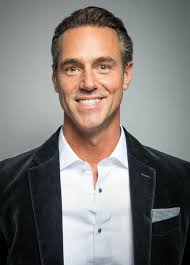
Aoifinn Devitt: I’m Aoifinn Devitt, and welcome to this 50 Faces Focus Series in which we are celebrating LGBTQ+ professionals in a special series for Pride Month 2025. I’m joined today by Rob Smith, who is founder and CEO of The Fluid Project, a brand that recognizes the shifting attitude of Gen Z and young millennials, merging fashion with community and education. He has served on boards for over a decade and currently serves on the board of directors for Steve Madden, following a career in marketing in which he held a series of executive roles. He chairs the development committee for the LGBTQ board of directors, is a TEDx speaker, and is currently working on his first book. Welcome, Rob. Thanks for joining me today.
Rob Smith: Thank you so much for having me.
Aoifinn Devitt: How’s it going? Well, let’s start by talking— it’s going well. Thank you very much. I’m so excited to capture this here. Love to start by talking about your background. Could you tell us where you grew up and what your early interests were?
Rob Smith: Of course. I grew up in Detroit, Michigan, actually then the suburbs of Detroit. My interests were, gosh, as a young kid, I liked art, I liked music, I liked anything my sister liked. Basically, I would help her pick out her Christmas presents. I’d make strong recommendations for what she should get because I couldn’t get the dolls that she got, the dolls that I wanted. So my brothers were very active in sports. My dad was an athlete too. That bug didn’t hit me till later in my life. But yeah, I was a little creative kid and not a very popular kid at that. I would say it was an interesting childhood, but I definitely knew I was different than the other boys because I guess I didn’t know what the word was, but I guess I would say gay. Yeah.
Aoifinn Devitt: I will say—
Rob Smith: But then I ended up going to high school and playing sports and I became the person that I think everybody thought I was supposed to be. And life started getting better. Then I became a frat guy and life changed. And I am my whole self now. A whole person.
Aoifinn Devitt: Well, we’ll certainly get into that, and I can see that not only have you come into your whole self, you’re allowing others to do that as a key part of your purpose, which is just so wonderful to ensure that that effect has leverage. Then moving from high school into your career, so marketing, could you just take us through some of the executive roles you held before you moved into a portfolio career?
Rob Smith: Yeah, yeah, it’s marketing and merchandising is essentially where I spend my time. So my first job was at a company called Berdines. And Burdines is the Florida department store. And that was really nice moving from Michigan to Florida and enjoying that life for 10 years. I moved pretty quickly up in the company in the merchandising space, and then I moved to San Francisco and LA for Macy’s West. Then I moved to Macy’s East in New York City and then Macy’s Corporate. And that was a fun journey, almost 25 years with Macy’s, and then I moved to Victoria’s Secret and worked in the direct-to-consumer space. You remember the catalogs, the good old days. And then I moved to a company called Hedda Brands, and I was the chief product officer for Levi’s and Nike Kids globally, which was really cool. And then I started Fluid. That’s been my journey, my professional journey anyways.
Aoifinn Devitt: And in terms of the board roles, how did you end up pursuing board roles as part of a portfolio career?
Rob Smith: Actually, when I was pursuing the board role, Steve asked me to join the board. I had known Steve for years and it was an honor and really just becoming a board member and understanding the responsibility of a board member. It’s a fabulous career. It allows me, especially now as an entrepreneur, it allows me to continue to work my corporate muscles because sometimes as an entrepreneur, you have a small team and a small business and this Certainly Steve Madden is a big business, and it’s a different way to show up as well. You’re asking questions, you’re guiding, you’re not doing the work. And I’m continuing to pursue other board opportunities if they arise. And I really like being involved in the board community. There are a bunch of smart people, and there is a community of board members that I really enjoy.
Aoifinn Devitt: And let’s jump into the Fluid Project now. So you mentioned your entrepreneurial existence today. Can you tell us all about that, from the vision to the execution?
Rob Smith: Yeah, Fluid started off with me merging my profession, which is retail and fashion, which I mentioned, with my passion, which is social justice, and especially around, but not exclusively, the LGBTQ space. And it’s a merging of the two. Fluid has a mission statement to challenge boundaries with humanity. We say just because things are one way does not mean there’s a better way. And how can we find a better way, bringing more people along and doing it with kindness and humanity versus meanness or malice? And that’s the goal. We try to find a place for everyone, regardless of your gender, your race, your body size, your orientation, your nationality, your faith, your age. We try to find a place for everyone within Fluid. And Fluid shows up in 3 different ways. There’s the Fluid Project, which is our fashion brand, which includes apparel accessories. Oh my gosh, scents, undergarments, denim. It goes on and on. And Fluid’s in about 10,000 points of distribution this year, which is really exciting. And then there is Get Fluid, which is gender expansive training. So we are educational and strategic advising team of people that work with corporations to help them really understand who the LGBTQ customers and employees are and how to retain and recruit the best employees, especially now with adult Gen Z’s, 25% identify as LGBTQ, which is, which is wild. It’s already, and now 10% of the overall US population. So it’s an important customer to understand or demographic to understand. And then finally, the Fluid Foundation, which is our nonprofit, and we’ve raised over $1 million in the last 3 years with corporations And we regift that money into grassroots organizations across the country, the frontline workers who are doing the real work in their communities, and we support them with gifts. And so that’s Fluid.
Aoifinn Devitt: That’s great. And I always like to ask, you know, what some other brands maybe underestimate or overlook when they’re targeting consumers, maybe some of the missteps they make because they don’t fully understand the consumer. It seems like some of the— you mentioned just changing attitudes of Gen Z. You’re very much tapping into that. What would you say that other brands perhaps are missing about this?
Rob Smith: Well, young brands, I think, are tapped into it. They can do better probably if they listen to their employees. I think more mature brands are a little reluctant and hesitant to understand Gen Z because they’ve got 5 generations to deal with. But Gen Z is fascinating. They’re really value-driven. They do their research. They know where companies and leaders stand. On issues, and especially social issues, that they’re demanding that their CEOs have a point of view about issues. I think that’s really tricky. And one of the things we try to do with Get Fluid is to help companies show up with authenticity, with integrity, and doing it through their values of their company. Every company has values. So if we go through that lens of your values, you start to understand why it’s important to support groups that sometimes people turn their back on, including people of color, queer people. Yeah, it’s really interesting to see how companies are navigating this new environment that we’re in. There’s something really interesting. So a couple of years ago, there’s a phrase, rainbow washing. Have you heard of rainbow washing? Yeah. A lot of companies were jumping into the queer dollar, which is $1.5 trillion in the United States and wanted a piece of it. And people started to get a little kind of icked out, I guess, in the way some corporations were showing up. It just wasn’t authentic. And now we’re in a new era where companies are hesitant and reluctant to support the LGBTQ community. And so now we’re seeing this shift to corporations moving from rainbow washing to actually real courage and leadership by supporting and standing with LGBTQ folks, especially publicly. So it’s really interesting time right now to see how companies are navigating this new norm that we’re in. I call it norm. I don’t know if it’s a norm, if it’s normal or not, but it’s our reality.
Aoifinn Devitt: So interesting. And when we set up an organization like that, that you’re mentioning, which is very purpose-driven, very mission-driven, usually a lot of it stems from one’s own personal experience. And you already mentioned knowing something was different when you were growing up. Can you talk a little bit about your coming out experience and particularly how that was in the professional world?
Rob Smith: Yeah, it was 1990, maybe ’89, ’90. I was living in Miami and I began the process of coming out as a young adult at maybe 21, 22 years old. And it was an interesting time to come out. I was really in a really fun place in South Beach as it was really becoming this new, exciting, electric place for people to be. There were models there and there was all these like beautiful people showing up. And along with that creativity was like a large population of gay men and women. And it was fun to be a part of that. And so that queer community was very strong there. The challenge was it was also really the peak of HIV and AIDS. So to come out was liberating, but there was a limit to how much fun you could have. Like, it was like, you know, when it came to the fear of contracting HIV and AIDS and seeing people dying around you. And so it was exciting and terrifying at the same time and certainly was terrifying for my family who was concerned that I would get swept into this epidemic. So yeah, it was an interesting time. But that said, corporately, I was really well received, both personally by my family, professionally by my colleagues. I didn’t lose a friend. If anything, it just allowed me to show up at work as my authentic self, not hiding anything, I was a better friend, a better colleague because I was able to be who I really was.
Aoifinn Devitt: And maybe retail and marketing was a particularly inviting or welcoming industry for that, because if I recall around about that time, there were many other industries that would’ve been far less welcoming, maybe more buttoned up. I think there was still an era of whispering in corridors, et cetera. Over the course of your career, how have you seen the inclusive nature of professional workplaces change and improve? Has it been a one-way trajectory or are we now seeing a bit of a rolling back of that?
Rob Smith: Well, it’s a good question. I do want to go back and say that, you know, coming out, I didn’t really have— other than the head of visual, there was nobody else who was openly gay in our company. And I was one of the very first. And so in some ways being a trailblazer and then, you know, more and more people started to come out. But yeah, it was just the visual team and maybe some of the marketing team, but it was not as much as you would have thought, as I would have thought too. In this creative space. How have things changed? I think that coming out as gay is not as much of a big deal. I say that at the same time, 40% of people who go to work hide their identities. And so, meaning sexual orientation or transgender folks. So there’s still a big number of people who are hiding their identity. Well, we think it’s totally normal, and in our— maybe in bubbles like New York and LA, in San Francisco, it is normal. But outside of that, there’s still people who fear losing their job, being ridiculed, or anything else. It’s sad, especially around gay and lesbian. Trans is a different issue. We’re seeing what’s happening right now with the trans community that’s really challenging for them to live with their rights with dignity. And that’s being attacked every single day. So I’m doing what I can to help support the entire community, but especially the trans community.
Aoifinn Devitt: And one of the impressions I have is, you know, you’re a board director, is that there’s still not that much representation at that level, at director level. I know there are groups that are dedicated to, I suppose, providing support and network for LGBTQ+ board directors and Ozzy Gramado-Mesa. I’m going to get his name wrong. Ozzy. I think he was one of the very first.
Rob Smith: Yeah, yeah, yeah. And Ozzie leads, if folks don’t know, the Latin Corporation of Association Directors, LCAD, I think it’s called. Ozzie is also a board member with me on the Association of LGBTQ+ Corporate Directors. And yes, I mean, if you think about it, if you think about, and I don’t know if people agree with goals like 50% of board members should be female. I mean, that’s a good goal because 50% of the population is. And how do you build a pipeline that that happens? The same thing with both Black population, brown population, Asian population is still underrepresented. The highest like delta between the representation on boards and the board population or the US population is LGBTQ members. So right now, less than 1% of board directors identify as LGBTQ with 10% of the US population. So it’s tenfold between the board representation and US population.
Aoifinn Devitt: And I think that then is happening in every level in terms of representation, role models, different industries, just not having a large number of senior people, as you mentioned, having one. I think in some professions there may still be a kind of equally narrow funnel, at least of role models. And then just in terms of other gestures and I suppose inclusive actions that make a difference, when you speak to other members of the community, is there anything in particular that you find happens in the workplace that improves their sense of well-being, their sense of being welcome and included.
Rob Smith: Yep. Well, I do want to circle back to the board conversation. And a lot of folks think, well, gosh, Rob, just because you’re gay doesn’t mean you deserve a board role. And I say, you’re right. It starts with excellence. With your experience and your excellence, as you become a board candidate. And then to put in a board a group of people with diverse ideas, diverse experiences, Diverse points of view creates healthy conversation, creates innovation, and minimizes risks. And companies that have diverse boards have better results, 15% better than their competitors. So it’s about a business case because certainly, you know, if you think, go back and think about the summer of 2020 and folks were trying to figure out how to deal with the murder of George Floyd and everything happening. Imagine if you had the benefit of having a person of color, a Black person on your board, you could have an interesting conversation with someone with a lived experience. Otherwise, you’re just guessing and trying to do the right thing without being informed with a board director. And board directors have a big impact on the company and the company’s direction and the decisions the company makes, protecting the company from bad decisions. So it’s a business case. So I just wanted to go back and answer that and kind of build on that.
Aoifinn Devitt: That’s a fair point. And it’s kind of surprising that more consumer goods or consumer-facing companies don’t do this, given this trend you mentioned, particularly in Gen Z. They need to reflect their consumers’ wants and needs, or at least be preempting where those needs and wants are moving to. So it is a real miss. And then it’s just in terms of the original question then around gestures in the workplace, I’m thinking this is, we’re coming up in the month of June, we’re publishing this in the month of June, it used to be the time of rainbow lanyards, Pride parades, changing corporate logos, be interesting to see how much of that takes place this year. But what would you say in terms of like, does that matter? And these small gestures, are they important in their own way?
Rob Smith: They do matter. They do matter to an employee who sees their company standing with them and with unwavering support. It matters both with internal education and activations. It matters if a company’s willing to march down a street and standing in a parade or a march to show their solidarity and support. It matters that a company puts money back into the community to support the community, especially in this case, the queer community, and gives back and donates and participates and volunteers. All of that matters. It does matter. And there’s been performative actors for sure in this space who have done it just, you know, ’cause it’s the thing to do. I think those performative players have fallen out of favor. We’ve seen that their support has been wavering. You know, there are the very quick companies like the tractor company and Tractor Supply Company and other companies that just abandoned DEI as soon as it was an option. I don’t think they were in it to win in the first place. There’s other companies been doing this work for decades that continue to do the work and will continue to stand firm in their values and in their support. So it does matter. I’d say in some ways it matters now more than ever. Or at least in the last 30 years, it matters a lot. And I look forward to seeing, and I know many other folks in our community too look forward to seeing, which companies are standing up and showing their support both internally to their employees and externally to their consumers. And people will respond to that positively too and negatively. You’ll see boycotts continue to happen. You’ll see companies continue to do very well. Who are standing firm. I like watching that. I like seeing it happen.
Aoifinn Devitt: It’s interesting. I have kind of mixed feelings. I always have a kind of structural bias towards being positive. And I think the fact that you said some of the performative inclusion has fallen away and some of the rainbow washing has fallen away because it’s not beneficial any longer, in a way that allows the authentic allies to shine through. And maybe it also draws out from the background some of the allies who might have blended in because there was so much performance going on. So I think in a way, at least, it’s possible to see who really cares at this juncture. And even though there may not be as many as it looked initially, at least in a way, the tide has gone out, to quote Warren Buffett and distort it somewhat, and we see who’s been swimming naked. So there’s now a clarity, and we can rebuild from here.
Rob Smith: I love that. And I can’t help but think, building on that, like with Cyndi Lauper’s song True Colors, which is kind of a bit of a pride anthem as well, but to think about you get to see a company’s real true colors come out during the month of rainbows, it’s interesting, isn’t it? And we get to see who the real supporters are and the other actors who were just playing the part before.
Aoifinn Devitt: Well, speaking of the true heroes and the actors, looking at your own personal story, just going back to some reflections now, were there any key people, mentors, guides throughout your life story or career that were particularly influential on you?
Rob Smith: Oh, there’s so many. There’s so many. Professionally, there’s so many. Of the people who I worked for. I can name them, but there’s too many and I’ll miss someone. I would say that personally, there’s one player, David Mixner, who is an LGBTQ activist. I have a poster of him in my office right here looking at me. He just passed away last year after an incredible life of over 50 years of social justice, from marching with Martin Luther King Jr. To leading anti-war movements, anti-nuclear movements, to really standing and fighting for HIV and AIDS, fighting against Don’t Ask, Don’t Tell, and really just committed his entire life to social justice. And he’s a real hero. He continued to reinforce my commitment and determination to make a change and what one person can do. He taught me that, and I learned so much from him. So I’m deeply grateful for this man and what not just he taught me, but he taught so many other people as well that we live, we live with his voice in our head. So I encourage everyone search David Mixner, an author, an activist, a mentor, and one of my best friends.
Aoifinn Devitt: Well, such a lovely shout out there. And it just reminded me of Mark Segal, who was one of the guests last year, another legend in the space and one of the original founders of the Gay Liberation Front, a lifelong activist and advocate. And he created the gay youth program and was involved in Stonewall, and just a wonderful discussion. He’s now in his 70s. So, it is some real legends there. And speaking of voices in your head, my last question is around any creed or motto that you live by, or gem of wisdom or advice that you would have for your younger self.
Rob Smith: Yeah, I wish— I mean, I wish I could tell my younger self— First of all, so much of what I do now is— for my younger self is to make my younger self proud to do the work that I do. I think about what little Rob would say if he saw big Rob in action. I think he’d say, I’m proud of you. And that’s what I’d want him to say. And so a lot of what I do is with him in mind, and him meaning not just little me, but there’s a million little mes. And how can I be supportive for so many people who feel lost and unseen to see them, to hear them, to affirm them. That’s what I do. So I guess what I would say to my younger self that I say to a lot of people is you’re going to get everything you want, but it’s never going to happen when you want it, and it’s going to be bigger than you could ever dream because the potential, the future is unlimited. And to live in abundance versus scarcity, to be grateful every day for everything you have, Don’t take anything for granted and make the best of this life because it’s remarkable. It’s a remarkable life every one of us can lead.
Aoifinn Devitt: Well, those are beautiful, uplifting words on which to end this. And I think that’s the first time I’ve actually heard a guest— and there have been 400 guests throughout the series, 400-plus— refer back to their younger self as somebody that holds them accountable. And that’s really remarkable because I think we tend to think that that person’s left behind. But, you know, by remembering that person and who— what that person would want to see, I think we can pay it forward to the next generation. And that’s clearly what you’re doing through the Fluid Project. And you are, I would say, for most of us, living the dream right now. I think some of your board role is probably one that many would give an arm and a leg to do. So thank you for sharing your insights from that and from the Fluid Project and from the rest of your career journey here with us.
Rob Smith: Thank you for the opportunity. I really appreciate it.
Aoifinn Devitt: I’m Aoifinn Devitt. Thank you for listening to the 50 Faces Focus Series. If you liked what you heard and would like to tune in to hear from more inspiring professionals and their stories, please subscribe on Apple Podcasts or wherever you get your podcasts. This podcast is for informational purposes only and should not be construed as investment advice, and all views are personal and should not be attributed to the organizations and affiliations of the host or any guest.
Aoifinn Devitt: This Pride series in 2025 is kindly supported by Latimer Partners, LLC.
Taryn Talley: Validity comes from within. Okay, so like you’ll come out to family members who do not accept you, right? They see you as this person that they’ve known all their life. They’re unwilling to change. Some are just outwardly hateful, right? Don’t pull your validity from them. Pull your validity from yourself that you are here, you are who you are, your feelings are what they are. Right? And they are valid. And just, I want you to hold that close to your heart, right? Because it’s important to know that as much as the outside world influences how we feel and how we think, I know that, like, for me, I’m valid. And it doesn’t matter if I’m traveling to Utah or Texas or wherever, you know, and they hate me. I mean, I’ve actually had somebody push me in the back getting on an airplane, like push me into a seat. Like I was nothing and I’m not small. Like I’m 6’1″ and somebody came up and shoved me. I’ve been in experiences like that in LA. It’s like you’ll deal with that stuff, right? But being your authentic self is so much more powerful than the hate that they give you. And your validity comes from within. Like, never forget that.
Aoifinn Devitt: I’m Aoifinn Devitt, and welcome to this 50 Faces Focus Series in which we are celebrating LGBTQ+ professionals in a special series for Pride Month 2025. I’m joined today by Taryn Talley, who is a marketer with over 20 years of experience who is currently head of marketing at an agency, Position 2. She’s had numerous marketing roles across the digital and traditional spectrums. Welcome, Taryn. Thanks for joining me today.
Taryn Talley: Totally glad to be here.
Aoifinn Devitt: Well, let’s start by talking a bit about your background. Can you start with where you grew up, what you studied, and what your early interests were?
Taryn Talley: Yeah, so I’m a kind of a lifelong East Coaster until I wasn’t. So born and raised around the Philly metro area. For me, my early interest led into my college education and then my early career. So I always loved art. So I was one of those really quiet students that I just like to build my worlds and I would use clay or drawings. And I remember my mom always saying that I was pretty advanced for a third grader. So, you know, I always had art in the background. And that kind of led me to, you know, go and kind of continue through that all the way to graduating through high school. And then I went to art school at Kutztown University. So just getting a degree in design. And that’s really what got me started in my career that I was able to transition over to marketing a few years later.
Aoifinn Devitt: We’ve had a lot of marketing experts on the Pride series in particular, and I love to ask about, you know, core beliefs or values. Because so much of marketing is storytelling. I know we’ve had a lot of words of wisdom scattered around about what you should and should not do. What would you say are some of your core values when it comes to marketing?
Taryn Talley: For me, I believe— and I actually said this in 2019 at a conference, I was on a panel and they were asking me what the future of marketing was, right? So I mean, it’s really easy to say, well, it’s personalization at scale, or blah blah blah, right? Some other thing, or, you know, a new platform that’s coming out. But For me, it was intentional inclusion, right? So, and this maybe is flavored by being a trans woman, but some of the most authentic marketing I’ve seen has been inclusive of historically marginalized communities, right? So I remember early on in my design career, there was always that kind of, it was, I hate to use this word, but it was like the diversity mindset. I need one person like this, I need one person like this, I need one person like this. That’s not intentional. Right? Like what we’re doing right now is intentional. It’s promoting the stories, right? And the journey of people that are in a historically marginalized community. So like that kind of authenticity, intentional inclusion is really what I think marketers should be focusing on and with a strong leaning on authenticity.
Aoifinn Devitt: And when you look at what succeeds and what doesn’t, and I’m thinking of, you know, Super Bowl ads and other campaigns, And it’s sometimes hard to pinpoint why something succeeds and why something flops. Have you been able to see any common trends or strands through some of the successful marketing campaigns?
Taryn Talley: Well, I mean, I think some of the campaigns that really resonate with me have been some of the recent, like, PrEP medications and HIV medications, right? So I don’t know how familiar the audience would be, but I forget what the drug’s name is, but I know the commercials. And I remember seeing the first commercial and trans woman of color, Latina, just enjoying life, going out with girlfriends and enjoying. And the series of commercials went through there to when she got married, right? And I felt like a marketing message like that of intentional inclusion was so beautiful. Like you have success, like ultimately success in marketing is eyeballs and revenue. I mean, it’s as simple as that, right? If you’re not making money, what are you doing? And if people aren’t looking at it, what are you doing? For me, some of the successful marketing touches me here, right? So I can’t tell you the name of the drug, but I can tell you the experience and the journey I watched of this woman in the commercial and how it resonated with me. And there’s a similar one in India for Starbucks also, you know, it resonated as well. Do these things get eyeballs? For sure. Do they generate revenue? I don’t know, but I know that I was touched by the messaging, right? The authenticity of what they’re doing.
Aoifinn Devitt: And just the last topic on that, the digital world. So marketing in the digital world, I guess more delivered by, you know, cell phone apps, Facebook, other digital platforms. Is anything different there in terms of the ability to tailor? Maybe does AI help to, you know, make multiple versions, say, of a different message?
Taryn Talley: I mean, a lot of marketers are integrating AI. I mean, I’ve integrated AI into my workflows, right? It’s how I write. So I do a lot of content marketing too, and a lot of research on different techniques and, you know, whatever I need, you know, I’ll go— I’m a Gemini user, so I just pop over to Gemini and get my answers. I think for me, social media is very positive and very strong, you know, and I feel like that’s a good platform that you can really kind of define your personal brand. Your marketing brand. It’s where people engage. It’s where you inspire employees to take action on your content and promote it. So I feel like digital platforms still have a really— it has a place, right? And it’s only going to continue to grow, especially with video. Like LinkedIn, for example, they’re prioritizing a 9 by 16 format video. So it’s in the app. There’s a video button. So if you’re not utilizing video for your personal brand or for your brand, you know, you’re missing out on a key function. Right. And I think that was kind of inspired by— I’m going to say it like this because I always get chuckles when I do the tickety-tock. So like you get that video marketing and it’s, it’s a way to showcase you. Right. And sometimes it’s hard to get messages through just on an image and a print message. So it’s like doing video kind of really creates this world that you can use to get your message across.
Aoifinn Devitt: Let’s talk then about your personal experience in the LGBTQ+ community. So you spoke about being a trans woman and how maybe did that experience affect your career or how did you come out and at what stage of your career?
Taryn Talley: Yeah, so I think I had probably about, I wanna say it was maybe 20, so I’ve been doing my career of creative and marketing for about 29 years. So I came out at 50, so I was really late in the game. So like, I was like one of those people, like, towards, you know, when you finally work through all the things you have to work through and you get there. I think for me, it hasn’t really had a negative impact. I mean, there have been challenges on the job and some hurdles that I’ve had to do that I didn’t have to do before. So as somebody who’s mixed, you know, kind of European, African, and Indigenous, I always had some level of weird kind of racism that I had to deal with. But I also have the privilege of maleness because I was assigned male at birth. I think being a brown trans woman, there were some times that I felt like either I was a diversity hire to kind of get some press, or I was somebody who just was disrespected or not respected enough for who I am. So I have had some challenges in the career where I dealt with some kind of low-key racism to high-key racism. Now I deal with that kind of little bit of misogyny and stuff like that. So it’s been a challenge and a hurdle. But I think for me to overcome that, what’s really important is the joy I feel. So living in my authenticity and being my authentic self every damn day kind of gets me through those hurdles, right? Because beforehand, before I came out, before I transitioned, I had everything that most people would want in their lives and none of it was satisfying, right? Because I wasn’t my authentic self. I felt like every day I had to strap on the mask. Right? That wasn’t me. You know, and of course dealing with the stuff I just mentioned, you know, and coming out and being happy and being joyful. And some people call it trans joy, but it’s just regular old joy. And that gets you through so much for me.
Aoifinn Devitt: I’d love to then ask about the process of coming out at 50 in work. How did that process go? And I suppose reactions to that. And one thing that’s come up when I’ve interviewed other trans women, been fascinating, is just how they’ve been the same person doing the same job essentially. And how they started to appreciate the female experience when they were executing their same skillset as a woman because they felt that they now understood why they were maybe not getting the respect or the airtime or some, maybe the other type of aspect that they had got previously. Have you experienced something like that?
Taryn Talley: Yes, for me it’s like coming out. So I didn’t announce it to my employer in 2018 when I came out. I came out out in public, right? I was out on social media in 2013. So I kind of built up a large presence on Twitter pre-Musk. So I started with electrolysis and hormones, and I was at a tech company in San Jose, and I had team members of mine that reported to me commenting on my body changes, right? And prior to coming out and moving to the West Coast and transitioning, sometimes that mask I had to wear would slide down, and I would show pieces of my authentic self and just get looks like people like, You know, like, that’s not what I would expect. But, you know, for me, like, coming out and doing it, I kind of felt like I need to get another job. Like, I just didn’t feel like it was somewhere— like, when they’re saying stuff like that or kind of derogatory statements, not knowing the background of somebody, it just felt really kind of hurtful. So I moved on to another opportunity. That’s where I kind of felt like maybe a hire to fix a problem which they had a couple of years before. It was relatively visible on social media. And then just running into some straight up trans misogyny at another company. And the current company I’m at has been incredibly kind and inclusive. And I remember we were talking about building this event up and CEO wanted to invite this one person. And I know from a person who knew them that they were incredibly transphobic. I offered this to them. I said, listen, you can kind of disown me and just be like, I’m just event staff, right? And not acknowledge me. And invite her, or, you know, you can kind of not invite her. It’s up to you. I said, I don’t want to keep business, so whatever you want to do, I’ll just deal with, right? And he turned around to me, he’s like, oh, hell no. Yeah, she’s off. She’s not coming. Like, I’m not going to have anybody disparage anyone on my team. So he’s like, thanks for the offer, but yeah, we’re going to stand by you. And that to me was like being seen and just recognized and somebody prioritizing me. That, after some of the stuff I’ve had over the years prior, was just very validating.
Aoifinn Devitt: I can imagine that’s a wonderful story. That is the kind of gesture that could be the gift that keeps giving in that you can draw on it again and again, maybe at low points when you see you don’t get the support perhaps that you would need. How about the kind of the mindset? I mean, we’re now in the USA, not perhaps the most welcoming mindset out there. What mindset do you have to have? And maybe, ’cause I think there will be people listening who are going through this at a younger age, maybe without the confidence in your career that you had at 50, without the self-assuredness, without the awareness of their own authenticity. Any kind of tips in terms of mindset for that resilience, that kind of self-presence?
Taryn Talley: Yeah, validity comes from within, okay? So like you’ll come out to family members who do not accept you. They see you as this person that they’ve known all their life. They’re unwilling to change. Some are just outwardly hateful, right? Don’t pull your validity from them. Pull your validity from yourself, that you are here, you are who you are, your feelings are what they are, right? And they are valid. And just, I want you to hold that close to your heart, right? Because it’s important to know that as much as the outside world influences how we feel, feel and how we think. I know that, like, for me, I’m valid. And it doesn’t matter if I’m traveling to Utah or Texas or wherever, you know, and they hate me. I mean, I’ve actually had somebody push me in the back getting on an airplane, like, push me into a seat like I was nothing. And I’m not small. Like, I’m 6’1″ and somebody came up and shoved me. I’ve been in experiences like that in LA. It’s like, you’ll deal with that stuff, right? But being your authentic self is so much more powerful than the hate that they give you. And your validity comes from within. Like, never forget that, right? So even when I got shoved in the back, intentionally abused, right, by people for just being me and occupying a space, not even them saying a word to me, right? I can get past that because I know what I have cannot be destroyed or taken away from me. And hold that close to your heart.
Aoifinn Devitt: That is so powerful. And then just in terms of gestures that make a difference in the workplace, so we spoke about your boss standing up for you, protecting his team against a force from the outside that would make his team feel excluded. How about other gestures in the workplace? And I’m thinking of, you know, whether it’s unisex bathrooms or having a rainbow lanyard or a trans flag on the lanyard. I mean, are these gestures some people may think of as being insignificant, but often they subconsciously make a difference. Anything that you’ve seen that is particularly good?
Taryn Talley: Yeah, I mean, to be honest, when I see somebody with their pronouns, like I have in my name, next to my name, that to me is like a key sign, like you understand and you hold these identities as valid in your mindset and that you’re, you know, most likely an ally, right? Seeing a lanyard or something like that. Yeah, that could be too, right? Or seeing a sign like, I just posted on Instagram, I stopped by some of my friends’ shop in Campbell and she has a sign on the back of her store, like, right? That’s like, we respect preferred pronouns and everybody in the store. And she’s had guys come in and challenge that. And she said to me just yesterday, she’s like, listen, I know that maybe one day somebody’s going to come in here and hurt me because I have that sign. But she’s like, I’m damned to hell if I’m going to take that down because what I believe is stronger than their hate. And it’s like the signs like that that really help point the way for us, right? And for me, unisex bathrooms are a whole different thing. I have a healthy fear of cisgender white women in bathrooms because even in this building, so I work in a mixed-tenant building and I’ve been in the bathroom and I’ve had some women just do some really mean things to me. That’s the outliers of maybe 5% of them. 95% of them are like, oh my God, what is that lipstick you have on? I love your shoes. I can’t believe you wear these shoes so well. I love your outfit. Or how are you doing in your job and what’s going on? If they don’t see me for a couple of weeks, they’re like, oh my God, I was worried about you. There’s just that outpouring. I get 5% of people that maybe are not accepting and kind. I get 95% of people who are just reaffirming and caring and hugging me in the bathroom. Supporting me. And those are the times that get you through.
Aoifinn Devitt: And I’d love to talk about your own unique origin story because you shared a little bit of that with me in the prep call, and I think it was extremely powerful and grounding and gave a kind of a spiritual security, I thought, that to you perhaps. And also I could feel it when it was conveyed to me, the story around your Native American heritage and some of the leaders in that community that you’ve drawn on. For strength.
Taryn Talley: Yeah. So mixed Shipponee. Shipponee’s based in North Carolina. It’s a tribe. I was able to join. So about, I think it was 2008, 2009, getting therapy, unpacking a lot, right? And just really working towards that authenticity. So about 2010, 2009, 2010, I never thought I’d have an opportunity to transition even later in life, right? I just thought that door was shut to me. I’m just going to have to wear this mask for the rest of my life. So I had lost my job during the Great Recession, and I immediately started with an Army induction. So like joining the US Army, and I wanted a combat role. And of course, there were all the stipulations and stuff. You got to have this kind of score and this and that. I achieved everything, right? So then I had met during that time I was going through, I had met a Cherokee Indian, Little Bear. So John Little Bear, I was helping him on a fundraiser raising money for a medical procedure in which he was dying of a liver disorder. And afterward I asked him, you know, so he got better, he healed. I asked him, I would love to, because I never was raised with any tribal identity. So I asked him if he could maybe recommend a tribal community in the area that I could kind of go to and just learn the ways and just, you know, be kind of communing with the community. And just learning from them. And he gave me two options. He said one is pro-Two Spirit, led by a Two Spirit, which is a blanket term about 35 years old that covers multiple different variations of sexuality and gender. So one was led by Two Spirits, but the other was not pro-Two Spirit. So it was more of a kind of a conservative viewpoint, or what I like to call as an anti-traditionalist Native viewpoint. So colonized to kind of despise something that was accepted in our culture for centuries. So fast forward a little bit. So I joined the Two-Spirit community and Little Bear had told me he wanted to spirit walk on my army journey. So I said, okay. So he spirit walked and basically that’s active dreaming and you’re going through a path and you’re, you’re guiding your dreams and understanding what’s ahead of you. And he came back from that and he was like, yeah, I forbid you from serving in the Army. No more of our people for a white man’s oil. You’re going to have to move forward, pass up. So I didn’t really like it. Like, I was not happy with that. But in the community, I already started learning to obey our elders, right? And to understand what they’re teaching us and what they’re saying and take that to heart, right? Because there is purpose and there is wisdom behind that from their own experiences. So I asked him, so I countered and I was like, can you put me out on a vision quest? And that is simply put in English, a vision quest, right? So we chose like November, I think it was 2011, and I went through it. It was 3 days in the woods, just blankets, a drum, the pipe, water, no food. It was November, so it was about 25 degrees Fahrenheit. And I sat out there with blankets just praying and meditating and You know, like every day chewing the bear root, which suppresses hunger and everything. So I was like, just on that third day, I was getting weak. And I started on a sweat, did the humblation, and then they pulled me with grass ropes and like kind of, cause I’m still in the spirit world, right? And when they come get me, I do that half sweat lodge afterward. And in it, they were asking me what did I learn from the spirit world? And, you know, one of them was my spirit animal, which is a red-tailed hawk circling me above when I was out there in the woods. And then I learned to learn the ways of my people before I learned the ways of others. And my third point was, if you’re going to live this life, I have to live it with the authenticity that is within me, right? And I have to bring that out. And then 2011, like November 2011, is like when I knew that I have to take this path. And that’s kind of what set me on the path. So sometimes I’ve done this on previous posts from 2020 and 2021, but Literally, I tell them my Native culture and identity saved my life and put me on the path that I am today.
Aoifinn Devitt: Such a great story, just in terms of that ancient wisdom that is so grounding. And my next question is, they’re usually around key people who have influenced you in your career or life, and I’m guessing that spiritual leader was one of them. Was there anyone else that you could mention that had a particular impact on you?
Taryn Talley: Yeah, I’d say my brothers, you know, Little Bear and Jimmy, right? Just teaching me the ways and just allowing me to be part of that community and learning. I mean, I’ve had amazing leaders in my career that just really supported me as a marketer, as a designer, and kind of formed me as a leader, right? And how to lead with effectiveness and efficiency. And of course, also what I’ve learned in those Inipis, the sweat lodges with Jimmy, about what a leader truly is, right? And I think I got better as a leader after hitting that in NEPI and just being able to put into practice what he said, right? And what I’ll share with y’all is he said with our people, right? So he was Lakota, Little Bear is Cherokee, I’m Shabboni. So it’s a mixed tribal community and he was teaching the Lakota way, but he said our people don’t hang signs out, right? That are medicine man, medicine woman, healer, leader, tribal chief, like, The people know who the leaders are. And it’s not through words or marketing. It’s through the actions of those people. They know who heals the community. They know who leads the community. They know who has the best interest, right? And those are the people that they turn to in those times that they need it. Understanding that helped me be a better leader, right? Because it wasn’t about the praise or the money. It was about taking care of the people. And of course, Jimmy is also a Redtail Hawk spirit. And he said to me, he’s like, do you know what that means? And I was like, I don’t. So tell me. And he goes, we are the far striker. We are the protector and the eye of the people, right? We have to keep them from harm and to keep an eye on them and watch them. And integrating that into that leadership definitely made me a better leader.
Aoifinn Devitt: Words to live by. Very powerful words. My last question is around any advice you might have or any creed or motto, whether from that red-tailed hawk elsewhere, anything you can leave us with in terms of a gem of wisdom?
Taryn Talley: There’s a lot of little things that I have in my mind, right, that get me through. From Lattice, from just from Voltaire, there’s all these little sayings that we have, right, that we pick up and it gets us through those days. But I’d say for me, it’s like, if you are going to live this life, live it authentically, right? You will find your people. You will connect with your people. You will get by, and the road isn’t easy. It is really, really difficult at times. But know that you have community, you have elders, you have people looking out for you, right? There are people that are standing for the community and for you. You’re not alone.
Aoifinn Devitt: Well, what a beautiful place to leave it. Taryn, you are a force. You are a leader in every way, and you provide, I think, the message that is absolutely the right message at the right time. And I think that I know there will be many listeners who come back and listen to this message over and over again, because seeing someone like yourself leading with authenticity, and I think it’s no surprise that we talked earlier about your marketing skills, because marketing’s about communication and connection. And this podcast has provided a direct connection to that source of strength that I think you’re sharing now with the listeners. So thank you so much for coming here and sharing your insights with us.
Taryn Talley: Absolutely. And thank you for a platform to share the journey and to just share the story with others.
Aoifinn Devitt: I’m Aoifinn Devitt. Thank you for listening to our 50 Faces Focus Series. If you liked what you heard and would like to tune in to hear more inspiring professionals and their stories, please subscribe on Apple Podcasts or wherever you get your podcasts. This podcast is for informational purposes only and should not be construed as investment advice, and all views are personal and should not be attributed to the organization and affiliations of the host or any guest.
Luigi Lewin: But I think the other sometimes overlooked unofficial ERG is the ally network, right? I have read studies that indicate that for a person to come out in the workplace fully, and this may not be true today, but it certainly was a few years ago, it on average takes 6 to 7 interactions with perceived allies before someone feels completely comfortable bringing their full self to work. That was certainly my experience. It wasn’t an overnight process. It was a few conversations with some trusted colleagues who were also friends at the beginning, and then it kind of evolved from there. But I think the work that the ERGs, particularly the LGBTQ ERGs, do to support allies, to give them the tools to show up as sponsors, as mentors, is key to this process.
Aoifinn Devitt: I’m Aoifinn Devitt, and welcome to this 50 Faces Focus Series in which we are celebrating LGBTQ+ professionals in a special series for Pride Month 2025. I’m joined today by Luigi Lewin, who is Senior Vice President and Head of Partnerships at GLAAD. He formerly spent 25 years on Wall Street, where he worked in a series of roles in sales, relationship management, operations, and business development until he left to move to the nonprofit sector. GLAAD is the largest and most visible nonprofit advancing LGBTQ+ acceptance. Welcome, Luigi. Thanks for joining me today.
Luigi Lewin: Thank you. It’s great to be here.
Aoifinn Devitt: Well, we’ve got a lot to talk about, but let’s start by talking about your background. Can you tell us where you grew up and what your early interests were?
Luigi Lewin: Sure. I grew up in New York City, in Manhattan, actually. And early interests, I can tell you, were, were certainly not Wall Street or nonprofits. My early interests were really trying to find a way to give back in some way. And so from a very early age, I volunteered through schools and other programming to donate my time, get involved in local organizations that supported the community. And I think that that’s what kickstarted ultimately my journey to the world of nonprofits.
Aoifinn Devitt: And before nonprofits, though, you did cycle through Wall Street for a period. Can you tell us about your role there? And 25 years, it’s got to be quite a few lessons learned.
Luigi Lewin: Indeed, yes. I spent 25 years on Wall Street, starting in New York. I was fortunate enough to work in Japan, in Hong Kong, in Italy, and in London during all of those years. And I think I fell into the industry almost by accident. I was at a career fair at my college just 6 or 7 months before graduating, and and met with a number of different companies that came to recruit. And an alumni who worked at a major Wall Street bank had set up time to meet with me. We had a great conversation. And from that connection, I ended up going straight to Wall Street after graduating and started my career at Morgan Stanley in fixed income operations.
Aoifinn Devitt: I actually hadn’t known you’d spent so much time around the world when it comes to our discussion about LGBT acceptance in the workplace. I think it will be really interesting to hear your perspectives from different regions. So now you moved to the nonprofit space. Can you maybe talk to us through why you left Wall Street and why GLAAD?
Luigi Lewin: As you know, I spent 25 years on Wall Street. I started out in operations and progressively moved into different roles, mostly but not exclusively in fixed income. As I progressed, I made the transition over to equities and equity derivatives. And that’s really where I guess you could say I finished my career. And that was when I was at Credit Suisse. After 25 years, I really needed a change. I felt as though the industry is constantly changing and is challenging and rewarding to work in at the same time. I honestly was just tired. I was on the road a lot. I was working long hours. I wasn’t really spending a lot of time at home with family. I needed a shift. I needed something that would leverage the skills, the discipline, and the sort of great work ethic that I learned and thrived in and with on Wall Street and repurpose it into something else. And I knew from about halfway through my 25 years that it would have to be the LGBTQ space. And I say that because the journey that I had on Wall Street really offered me a lot of perspective on coming out, the needs of the community, and what skills and experiences I had over those 25 years that could be repurposed into making a meaningful impact on the community that I represent, but also help it thrive by raising money, raising money for different programs, funding grants that support many, many different aspects that touch the community from healthcare to youth to emerging talent. So there were all these ideas that were swirling in my head that were a combination of my experience on Wall Street with a desire to do something for my community. And that’s why I made the switch.
Aoifinn Devitt: And Les, before we talk about GLAAD and the work that it does, can we go back to your own coming out story? Were you always out in the workplace? Did that happen at a certain point of your career?
Luigi Lewin: I was not out on Wall Street officially. I’m sure people knew. I wouldn’t say that I went to great lengths to hide who I was, but there was an element of, I guess, what we call covering, which is probably a term we don’t use so much anymore. But at least I hope folks don’t have to use that term. But in some spaces, maybe they do. I started working on Wall Street in 1994. The world was a different place then. I was really focused on more than anything else as I entered the industry. I had a good understanding of what I was getting myself into, and I always believed the most important thing was to be known as being reliable, competent, collaborative, and learn skills and have knowledge that people could leverage all around me. That was my main priority. Who I was as a person didn’t seem to factor in, and maybe it was because of my age at the time or the environment that we were in. But, you know, I spent a lot of time anonymizing what I did over the weekend. I would have conversations with people that were, you know, yes, I hung out with friends or I went on a trip, but never any conversation, you know, about a boyfriend or meeting a boyfriend’s parents or anything like that. I suppose that I did that because I wanted to make sure that no aspect of my personal life would interfere with my career trajectory. I was very career-focused, as a lot of people are in that industry. And I mentioned to you at the beginning that I traveled all over the world through my time on Wall Street. And that was both a gift and a challenge because I had to reinvent myself in the workplace over and over again before I officially came out to my colleagues. So I moved from New York to Tokyo, which came with the challenges of learning an entirely new workplace culture. Being in a country that I’d never lived in before and didn’t know very much about. And so again, the focus was always on relating to my colleagues, being reliable, being collaborative. My personal stories didn’t seem to factor into any of my engagement with folks. But slowly, many of my colleagues let me know that if I wanted to signal something, if I wanted to talk about who I was, it would be okay. I picked up on those signals early on And that was a very big part of what ultimately enabled me to bring my full self to work.
Aoifinn Devitt: That’s beautiful to think that that came from your colleagues. I think that really is a huge step forward, and I hope others are lucky enough to be surrounded by colleagues like that. Before, we’ve talked on this podcast a little bit about code switching and about the stress that that can cause. And I would imagine once you did feel comfortable bringing your whole self to work, you no longer had to worry about some of that code switching. And did that kind of lift a burden in some way?
Luigi Lewin: It really did, because you spend so much energy in your day-to-day. In my case, it was always on a trading floor, which the environment is intense. And if you overlay that with constantly having to adjust your own personal behavior, how you engage with other folks, not being able to be your full self, it really gets exhausting very quickly, right? Again, you’re very focused on that trading floor, on detail, on transactions, on speed and accuracy. And if you think about having to double back and think about, oh, what did I say, or what did I not say? And if I had a conversation or an engagement with a colleague where we might have both known about each other’s story, what did that look like? And having to go back and think about all of those things, it does weigh on you. And it also, I think, has the potential or had the potential to affect professional performance. So that was a major factor in wanting to figure out a way quickly to just be myself. And as I figured it out, I realized that there really wasn’t so much risk that I thought there was. And I think I attribute that, or I know I attribute that to the approach that I’ve always had in interpersonal relationships in the workplace, which is to lean in with empathy. I did that from the beginning. I think I leaned in with empathy originally because I felt as though I was part of a marginalized community. And so I always had to compensate for that in some way and get people to like me. Get people to relate to me. But I turned that whole approach around very quickly, very early in my time on the street, and realized that the best possible relationship I could have with colleagues is one of mutual interdependence, trust, and being known as a subject matter expert. The rest would come through a lot easier if I had established that first. And so as I made the switch and began to relax about who I was in the workplace, it all started to fall into place a little bit easier. And a lot of that I think is also attributed to just general trends and changes in workplace culture. A lot of LGBT equality in the business world probably began on Wall Street. Many Wall Street firms, the industry was known as being at the forefront of being more accepting and supportive of the LGBT community very early. When you look at marriage equality, for example, among the first businesses that signed on to the amicus briefs were Wall Street banks. So there was this sort of natural evolution of my journey with all of these things happening around me that made it possible for me to quickly adjust and be open and honest about who I was.
Aoifinn Devitt: And when you now look at the work that GLAAD is doing to promote acceptance of the LGBTQ+ community, I’d love to talk about that, but maybe can you first kind of give us a snapshot of the state of acceptance in the area in which you focus, which I presume is mostly North America? And then what’s at the forefront of your mind as you promote acceptance now?
Luigi Lewin: Well, a lot of our work is about visibility and representation. And if I look back at, you know, those first couple of years on the street, the amount of representation and visibility, particularly in media, which is where GLAAD spends a lot of its time, wasn’t quite as built out as it is today, but it was certainly on the upswing. And having characters in film, in television, people talking about their personal experiences in ways that maybe they didn’t in the ’80s or the early ’90s made a difference. Right? And so the work that GLAAD did back then and still does today creates those spaces, creates those stories and the environment for those stories to thrive. And so while we didn’t have terminology like influencers and, you know, there was no social media 30 years ago or 40 years ago almost when I got my start on Wall Street, I think the evolution of that representation has made a big difference in people’s lives and particularly professionals in the industry. Seeing people who look like them, sound like them. It also opens up social conversation in the workplace, which also helps people relax and come out and be who they are in a setting where, you know, you’re in the work 10, 12 hours a day.
Aoifinn Devitt: And just to be clear, is GLAAD’s work across all industries, not just the finance industry? It’s a nonprofit-focused—
Luigi Lewin: We, yes, while our work is, uh, was traditionally rooted in entertainment and media, we work with all different types of Fortune 500 companies across all industries.
Aoifinn Devitt: The reason I, I pointed out is I think there are certain industries where, you know, certainly like medicine, for example, where representation, knowledge, education, familiarity is key. It almost becomes a health issue, a life and death type of issue. It’s even more critical And it’s, I think, raising awareness throughout many industries is key. And when you look at the gestures or the actions or the policies that promote acceptance, and what triggered this question is really thinking about that wonderful gesture from your colleagues who made you feel safe revealing your true self. What have you found to be particularly effective at promoting this culture of acceptance just within the workplace, like whether it’s affinity groups or pride celebrations, that kind of thing?
Luigi Lewin: Yeah, absolutely. I think it’s all of those things. We were fortunate to have ERGs. I think the term affinity group, when sort of the focus groups were initially created, the titling of those groups changed a few times and were rebranded. And I think, you know, right now we’re probably settled on, you know, employee resource groups. I think those were very helpful tools and are very helpful tools in the workplace. But I think the other sometimes overlooked unofficial ERG is the ally network, right? I have read studies that indicate that for a person to come out in the workplace fully, and this may not be true today, but it certainly was a few years ago, it on average takes 6 to 7 interactions with perceived allies before someone feels completely comfortable bringing their full self to work. That was certainly my experience. It wasn’t an overnight process. It was a few conversations with some trusted colleagues who were also friends at the beginning, and then it kind of evolved from there. But I think the work that the ERGs, particularly the LGBTQ ERGs, do to support allies, to give them the tools to show up as sponsors, as mentors, is key to this process. It’s key to having a rich culture of acceptance, of openness, and creating a path for folks to feel comfortable being their full selves at work, bringing their full selves at work and being their full selves at work. So that interaction with allies can be a conversation, it can be a manager, or it could be, as is often the case on Wall Street, when you’re hoping to get promoted, it’s usually a committee decision and you Often need to go around and get support from many different folks who can vouch for your performance, your knowledge. You often have to really be performing the role at the next level before they officially give you the title. And so going around and finding those sponsors and those mentors, signaling to them just how much they mean to you as a person in helping shape and propel your career, but also what they represent to you as allies. I think is a very, very important part of the journey. And it can be a quiet conversation. It could be a colleague who is an ally who has a pride flag on their door, outside their office, on their desk, on the trading floor. We had a lot of those at the different places that I worked at. I was also very fortunate to lead an employee resource group at one of the global banks that I worked at, where it was really built out from scratch, right? I was working at a firm that was growing very quickly in the US and really wanting to build a culture while also building out a huge book of business. And the entrepreneurial spirit that that firm had at the time extended to building out ERGs, not just for LGBT employees and allies, but other folks who were looking for that kind of cohort within their workplace community.
Aoifinn Devitt: And you’ve spoken about the movable middle and working with the movable middle. What does that mean to you?
Luigi Lewin: Look, I think we’re in a very different place now where so many things are polarized and the political narrative that swirls all around us, I know probably most of us just want to get away from it, avoid it, or certainly not have it become part of the discourse in the workplace. But the way I look at what the movable middle is, is folks who we as a community can bring along to support us, who understand our stories, where we came from, what challenges we’ve experienced, what obstacles lie in our way towards full equality, who understand the changes that our community has experienced all the positives, but also the negatives that have come with it. To me, that best illustrates who that sort of cohort of what I think is a very large and probably a majority of folks, I hope anyway, in this country who believe in that. And I say that because if you look back at the marriage equality movement a decade ago, a little bit more than a decade, it was with lightning speed that businesses, politicians, civil society all rallied behind the concept of marriage equality because everybody understands what love is, right? You can’t really argue with that. And I believe, and I think a lot of organizations that work in this space also believe this, that that’s where you have the best examples of your movable middle. It’s the folks that you can bring along to support you, who can help influence and shape the narratives and create the paths that we need as a community to achieve full equality.
Aoifinn Devitt: Hear, hear. Well, I think that movable middle could be mobilized in many walks of life, but it’s great to think of how you, you’re going ahead and doing it in this segment, which is so critical. I’d love to go back to your personal journey now. Were there any key people in your career or life that had a particular influence on you?
Luigi Lewin: Oh, there were many. I mean, I think 25 years, I guess, feels like a long time. I have many colleagues who are still in the industry who have now crossed the 30, 35-year mark. I think, you know, if I look back to growing up, I had teachers and coaches who were out, who growing up, you know, that was obviously an exception and not the rule. And Those folks were early role models and some of those folks were, you know, one of the first people that I came out to actually was a high school teacher who really helped me in those early, early days of figuring all of this out before I even engaged my family or even some of my friends on who I was, who I am, who I was then. In the workplace, there were many. I was very fortunate in that, again, my approach, I think I attribute this to my approach with empathy and listening and collaboration, I think earned me a lot of really wonderful colleagues who I strongly feel wanted to support me, wanted to see me thrive, and were very helpful to me in letting me know in many different ways that it was completely okay with them and that it should be okay with the majority of folks all around us. So those individuals If not for them, I don’t know that I would have lasted as long as I did in the industry. I was very focused on moving forward and moving ahead in my career, so I had to seek out mentors and sponsors, and I was very deliberate in that process. I made sure that it wasn’t a transactional relationship. I would often have conversations over coffee or in someone’s office about the authenticity of that relationship. I didn’t want it to just be a way to get to the next level, to grow my remit. I I wanted those conversations and the time that we had together to be a really good understanding of just how important that space was to me. I learned a lot from them and I shared that with them in ways that I think were very authentic. And so without those individuals, I don’t think I would’ve gone on to the next firm and finally the third firm before I ended up leaving the industry. I was fortunate to be surrounded with so much support. That’s, I think, one of the things that I credit with keeping me in the industry as long as I was employed there.
Aoifinn Devitt: Well, I think it’s great that you have shouted out to some of those high school coaches and influencers because they don’t always realize the impact they have. So I think it’s important that we, we all remain available to be that safe space for anyone to confide in us. So, so thank you for that reminder. And just last few questions, my last one, well, second last, I got to sneak another one in, is about any Cree dermatology that you might have or any words of wisdom just to sum up how you see the world?
Luigi Lewin: From the perspective of the workplace, I will say lean in with empathy. It pays a lot of dividends. I think that it’s really important to build relationships based on trust. It’s hard in any workplace. Trust isn’t something that is often talked about on Wall Street because in many ways it’s an industry where individualism is certainly championed, but I think, you know, you can only be as good as the team that you’re part of. And that’s one of the things that I really enjoyed about my time on the Street was that in almost every experience that I had there, I had something like 10 or 12 different roles over those 25 years. Almost all of them were in teams that were high-performing and in many cases, high potential. From my perspective, I think the way I related to the individuals in those teams came from, obviously, we were fortunate to be thrown together in the chaos of a trading floor environment, but being helpful, being resourceful, being a trusted colleague, but also someone who would be willing to lean in with information, with support, I think was key. I think flattery will only get you so far, but trust is very important. And I attribute that to just my— I mentioned it a bunch of times, but empathy is key. Understanding what the person you’re engaging with is up against is a great communications tool to hone in on in those settings. I think other things really are— I’m a little bit of a perfectionist. I’m not ashamed to admit that. And with that comes a lot of focus on detail. And so again, I think in the world of financial services, I think you absolutely have to be detail-oriented to succeed. And so with that focus on detail and being known as a subject matter expert and relating to colleagues with that without any bluster, I think is a workplace ethic that I think has paid dividends for me as I transitioned out of Wall Street and into the world of nonprofits.
Aoifinn Devitt: That’s wonderful. I love the bluster-free advice. Any advice you would have for your younger self, or is that pretty much the, the same?
Luigi Lewin: Anything for my younger self would probably be If I knew back then what I know now as an out person, I think I probably would have expended a little bit less energy on hiding who I was. And I wonder if there were things that I missed during that process that could have shaped my career trajectory in a different way. I’ll never know. And I don’t— I’m not someone who looks back in regret. But I hope that the culture of openness and acceptance in the workplace continues because so much has been achieved and there’s still so much more work to do. But if you can remove those barriers and that energy that you have to spend on focusing on who you are and what you choose and choose not to disclose, if that can all melt away, the possibilities can be endless.
Aoifinn Devitt: I love that. You’re not the first who has said something similar about wondering what life might have been like had they been out earlier or sooner or leaned in. But as you said, we’ll never know. But I would like to ask the final question, which is around your state of hope, I suppose, at this point around LGBTQ+ inclusion. We are at an interesting crossroads, perhaps, in terms of corporate policies around DEI, inclusion, explicit support How do you keep the faith, I suppose, and remain hopeful?
Luigi Lewin: Well, there’s certainly a lot of noise and a lot of news cycle that would have you believe that the concept of DE&I, the infrastructure around DE&I is going away. I firmly believe it’s not. I think that there are some companies that have been very public about moving away from it, but I find that the majority are actually not. And I say that because there are two things that I genuinely believe corporate America absolutely wants to focus on and deliver for. One is that major companies want to be recognized as employers of choice when it comes to talent. And so those firms, those companies that are really focused on attracting, retaining, and supporting LGBTQ and other folks are the ones that I think will win out. I think the other factor that has me believe that DE&I won’t go anywhere. It may be rebranded or repurposed in different spaces. Companies don’t want to lose focus of who their consumer segments are. Who are they marketing themselves to? Right? Not just from, you know, recruiting the best and the brightest, but also who are they selling their products to? Where do they need to or want to open bank branches or expand their businesses? They need a roadmap to that. And if you remove all of that, you’re flying blind. And I firmly believe that no company that is really focused on growing would do something like that and simply walk away from very valuable market intelligence that helps propel sales, that helps propel marketing, and ultimately growth. So I don’t think that DE&I is going away. So from a business lens, I think that a lot of these things are, you know, sort of temporary noise in the news cycle. But the reality is that it’s here to stay. I’m also encouraged by the fact that so many shareholder proposals that have been attempted to remove or significantly reduce the DE&I footprint aren’t succeeding. We’ve seen many, many companies with shareholders overwhelmingly supporting DE&I. Major companies like Costco and Disney have all signaled through their shareholders that they genuinely believe and support the work that is part of inclusion and diversity. So those things on a macro level give me hope that we may just be in a sort of temporary situation that’ll eventually change. The other thing is I look at sort of emerging talent and emerging leaders and the growth of the LGBTQ population. That’s a trend that’s just going to continue. And so I genuinely believe that there are so many that will probably not have to experience some of the awkwardness that I did early in my career and will continue to thrive in those places that they choose to work at where they can be their full selves. And that will help them be the most creative, the most focused, the most talented in the industries that they work in. So I don’t think that any of this is going away. And I think there’s plenty of evidence, despite the news cycle that we’re seeing every day, that gives me hope. I think we just need to get through what we’re going through right now. And I think ultimately we will.
Aoifinn Devitt: Well, that is a beautiful moment on which to end this. I think this sense of hope, the sense of human capital really being at the heart of what every company does and what we all— why we exist here. And I think it’s protecting that human capital is in everyone’s interest. So thank you for being the signal throughout the noise and for the work you’re doing with GLAAD, Luigi. It is appreciated. I think not everybody will shout out to you, but I think that the work you’re doing to advance acceptance is critical, not only for the LGBTQ+ community, but for every marginalized community. So thank you for coming here to share your insights with us.
Luigi Lewin: Thank you for having me, and thanks for having me tell my story.
Aoifinn Devitt: I’m Aoifinn Devitt. Thank you for listening to the 50 Faces Focus Series. If you liked what you heard and would like to tune in to hear more inspiring professionals and their stories, please subscribe on Apple Podcasts or wherever you get your podcasts. This podcast is for informational purposes only and should not be construed as investment advice, and all views are personal and should not be attributed to the organizations and affiliations of the host or any guest.
Aoifinn Devitt: Hi, I’m Aoifinn Devitt, and welcome to the 50 Faces Focus Podcast, a special series for Pride Month 2025. This is a little bit different, this podcast, as it’s not with a new guest, but it’s with one of our original guests who kindly sponsored our original Pride series in 2021, Tom Soto. And he also featured as a guest in our main series. And I thought this was a great opportunity to get myself and Tom together on the podcast to talk about, not only get an update from Tom, but also to talk about Pride 2025, what it looks like, how different it is from Pride 2021 when we put it together first, to speak a little bit about why we’re making this podcast today, what was going through my mind when I started to curate the series, which I’m now halfway through recording, and to discuss why we thought it was more important than ever to come with a series this year together with some of the updated messaging that the guests are conveying. Welcome, Tom. Thank you so much for joining me here again.
Tom Soto: Thanks, Eve, and I really enjoy being asked. Thank you.
Aoifinn Devitt: Well, as I mentioned, you were a guest back in one of the original years of the Pride series as well as the podcast series. I’d love to get an update in terms of what you’ve been doing professionally and personally over the last 4 years and maybe just bring us up to speed professional journey has continued, but there have been some personal circumstances that have intervened, which have led you to pivot, but at least deal with those emergencies and now pivot back. So can you update us on where you are in terms of the energy transition work and some of the other professional commitments?
Tom Soto: Well, sure, absolutely. I mean, listen, I think the energy transition work that I’ve been doing for 25 years, I don’t think necessarily ends in the current era. I think it gets a little slow and a little messy by the current administration, but it has so much traction and is such a part of our economic fabric. The 5 million jobs that were created in energy transition during the previous 4 years, the trillions of dollars that have gone in to capitalize the sector, and quite frankly, the success that we have where now we have more renewable energy being deployed than fossil fuels being deployed as new energy sources. So it’s not going to go backwards. It’s just going to slow because of the vagueness that is being offered by this administration. But you even see the House Republican leadership in some cases asking that the House not reverse the tax credits and the subsidies that went into this sector. So I’m sticking to my guns. You know, I’m going to stick with the sector. Last we spoke, I had just initiated SAS Earth Energy Technology. And that is a biomass energy transition platform that seeks to de-risk catastrophic fires in our forests by harvesting and monetizing all the dead trees, what we call high-hazard forest waste, and putting it into a supply chain for fuel for biomass facilities in California, which is cheap fuel, and then converting those biomass facilities from combustion to pyrolytic gasification, taking them to a net carbon negative operating cycle and generating biochar and carbon credits, thus giving me multi-revenue streams and outsized returns. So I’m still focused on that and looking at a great future for that. We’ve raised a good amount of debt and equity to support the vision and the platform. So that’s what I’m focused on for a good part of my time. And then the other part of my time, as you know, I’ve been a fund manager for many years, for 2.5 decades. And so I thought I was done with that after I left TCW until a very, very close friend of mine who had just exited a large-cap private equity fund came to me and wanted to start a new fund. So probably 8 or 9 months ago, we began the fund formation process and we agreed that we were not going to launch the fund until we had capital committed. So we have a number of LPs behind us and we’re going to announce the launch of this fund in early June and the first close, which is very significant because we have the commitments made from the LPs. And we’re also building out office space in Midtown New York at this point. So in June, I’ll be able to come out of the closet, so to speak, on this platform and make it a little bit more known. But I’ve been spending plenty of time with that and my co-founder, and we hope to see that launch and be public probably around first, second week of June. So that’s been the bulk of my time. And of course, as you mentioned, there were certain events that occurred. When you started this podcast, we were in an event, and that was COVID. And one of the things that I saw was the deterioration of the social protocols that one learns at a preteen or preadolescent level, like my son who was Zooming in school for 2 and a half years. And praise God, COVID got under control, kids were able to get back into the classroom, but there was a recovery process. And that’s when you and I first had these conversations. You began your podcast, which I thought was an excellent outlet for folks like all of us who were stuck in their Zoom rooms but wanted to interact socially. And we’ve had that now for the past couple years. And then lo and behold, on Tuesday, January 6th, I look out my window and I see a plume of smoke about 3 or 4 miles away in the Palisades. And I live in the Palisades. And an hour later, when I look out the same window, the two streets behind me are now on fire and we get an evacuation notice. And for one month we were evacuated from our home. The neighborhood behind us, thank God our street is intact, but homes behind us and then up the hill throughout the Palisades and Pacific Coast Highway, maybe 70% of it was destroyed, just burned, gone. Thousands and thousands of homes and structures gone, including about 45% of my son’s school, Palisades Charter High School. And so I hung up my spurs on the fund, on SAS, on all my nonprofit work, which is the NRDC as a board of trustee, the Dodger Foundation, the Science Center. And all I did was focus with Dr. Pam McGee, the principal and executive director of Palisades High, to identify a temporary alternative campus to get the kids into so they didn’t have to go back to the Zoom environment. They had to do Zoom every day from 8:30 to 12, and they did it for several weeks. But in that time, we were able to secure through hook or by crook— we did it— a 100,000-square-foot former Sears store in Santa Monica on Colorado and 4th. And amazingly, over the course of 5 and a half weeks, we were able to negotiate the lease. We were able to get architects come in at a 90% discount. A construction crew at a 90% discount, building materials donated, paint donated, legal donated, a lease signed. And as of April 22nd, Earth Day, we were able to have the 2,500 students of Pali High occupy that site. We took 4 floors, 100,000 square feet. That was nothing. And in 5 weeks, we had 98 classrooms built in that place. And now the kids have a safe, supportive learning environment for their education. So as much as I can make that a thumbnail sketch, that’s what I’ve been up to, you know.
Aoifinn Devitt: It’s so like you, so unexpected to hear that from you. And it’s just so typical, I think, of your— we spoke in our first podcast— of your, your activism, your deep commitment to community, to rebuilding community, and I think to restoring that sense of just connectedness that a community and a school would have. So incredible effort and work, and thank you. I think, I’m sure there have been many thanks he’s given, but it’s just so restorative to see that type of effort. So thank you so much for what you’ve done there. I think many lives changed, just much damage averted in terms of those students and their education and their track. And it was that kind of you being the fixer, you being the sense of having kind of overcome a lot of adversity before. Which I’m sure has made you a great fixer in this case. But it was why you were one of the first people I went to when it came to building the Pride Series ’25. And I think the context of this is we have done a Pride Series, as you noted, since 2021. It was put together because I had canvassed some of my guests who happened to intersect with the LGBTQ+ community, as well as other perhaps aspects of their personality. Perhaps they were in a minority in another way. And their stories had been particularly poignant, and I canvassed them at the beginning of this year to say whether I should do this podcast in 2025. Honestly, normally I wouldn’t have thought twice about doing it, but given some of the headwinds that the community was facing, a sense that I had from some of them that they were preferring to keep their heads down, focus on their immediate work and shoring up their community, and maybe not necessarily raising the head above the parapet to speak about Pride, This was also in light of many corporations pulling back from their support of Pride. And I just asked the question whether this was the year, whether we should, even though it was strongly within my DNA to want to repeat this, to do this because of the importance of storytelling, I did ask the question as to whether this would be a year that we should sit it out, maybe because we might not get the guests willing to participate, and we certainly might not get the sponsors willing to step up. And the overwhelming response from the 40 or so people that I canvassed who’d been previous guests on the series was an overwhelming yes, you must do it, it’s more critical than ever. But your response stood out in particular. And that was what I think convinced me that there was no going back and there was no retreating from this position. And I’d love if you could just take us through a little bit of your thoughts when I asked you that question and how you responded.
Tom Soto: Yeah, listen, I think it’s actually more difficult to say no to an opportunity like this. When you discerned over the idea of continuing the podcast, it’s frankly, because of the character that you are, less difficult to say, you know what, I’m going to continue this. You struggled with why I should stop, right? And if we don’t have community, if we don’t have family, to support and be a part of. We have nothing. But before we have that, we have spirit and we have a moral obligation to become the platform that supports others as their platform helps to support us. And that’s what you do. That’s what this podcast is part of. It’s not a promotional activity. It really is an effort to bring communities together and to provide a fabric that we could all be a part of and express opinion and feel as though there is some affection for our opinion, for our position, for what we’re going through, through the challenges, through the victories, through the defeats. And that’s what you’re providing, despite whether they’re gay or straight or whatever it is. And in our community of fund managers, People are hypersensitive about perception and hypersensitive about tone and content, but sometimes you just have to be bold and say, this is what needs to happen. And you did that. When you asked me that question a couple of weeks ago, maybe a month ago, and asked why I should do this is because we’re in an era where people are actually having to question, are we looking into the face of some tyranny? It may not be textbook, but it certainly is dictionary. And it is tyranny in the sense of oppression, tyranny in the sense of wanting to have control over others. And it’s a tyranny in a sense of just making one’s environment and psychology feel fearful. And that’s not a healthy environment to be in. And the only way that you respond to it, in my opinion, is by standing up to it. And I think I was quoting Timothy Snyder, who’s the author of On Tyranny. And, you know, his basic thesis is, as it was in Nazi Germany and other authoritarian regimes, that, you know, his position is you don’t obey in advance, that most of the power of the authoritarian epic is freely given. In other words, they want it and they pursue it and they set a framework for it. And some communities and individuals just give it. In times like these, the individuals think ahead of what’s ahead. Is it a more repressive government that they’ll want? And then they offer themselves without being asked. We saw Colombia take a deal with the Trump administration. Once you give in to that threat, you have lost your base to negotiate a future. Now the tyranny is in charge of your future. So what happens? The terms of what they thought the agreement had been was changed and became more forceful and more disrespectful, not only of the institution, but the whole educational, higher educational sector. And then Harvard stood up. And now there’s something to be said about they being a beacon that others can rally around and focus on and be part of a larger collective that is concerned about the future of higher education being removed from tax-exempt status, having their federal grants and federal support removed, which, by the way, is not an effect on education. It’s an effect on research into things that I or my parents or family have suffered from— cancer, Alzheimer’s. Solutions to these did not just appear. They went through years and years of billions of dollars of research in institutions like the UC system or Harvard or the Ivy League. That’s where it was all sourced from. If we give that up, if we allow that to be given up, then we’re giving up a future of an improved quality of life. But we can adapt to this way of how power is taught. It’s not how it should be. If you allow it, then it will continue to consume the community and consume more individuals and oppress more. So as I said to you then, if not now, when? And if not me or you, who, right? And what does that remind us of? I was just Thinking that my son, as I say, Mijo, he texted me this morning and he brought a little tear to my eye because we have this conversation about what’s going on right now. And he texted me from school and a screenshot of Eli Wiesel’s Night. His text actually says, holy crap, this book is horrifying, Dada. And I said, it is, Mijo, but it must be read. Eli Wiesel was there and suffered and lived only so he could share with the world the atrocities that the Nazis put the Jewish people through. We can never forget 6 million Jews were murdered, not in battle, but in concentration camps. It’s horrifying. But I agree, young people need to know the history of this kind of behavior so that it never happens again. And unfortunately, books like this are being removed from our educational system and in our own country in less than 100 days. Our president is damaging 250 years of leadership our country has given to the world to stop and avoid these atrocities, and in fact are now doing things similarly to the least of us, the poor, the unfortunate immigrants who just want to live and do well for their family. It’s awful. This is why Dad worked so hard, and your family stands for all the things that Eli Weisel was trying to get us to understand. And that is the promotion of humanity.
Aoifinn Devitt: Very powerful words. And it was your words equally around the authoritarianism and obeying in advance that struck me because it really forced me to ask, why do I do this? And I think, why did I consider not continuing? Partly it was due to it trying to be sensitive to some members of the community desire perhaps not to be as prominent or as overtly seen supportive of each other and of their differences. And then I realized that what are we doing this for? And we are, first of all, seeking to share as many individual stories as possible so that the listener can understand the breadth of the human experience and equally to act as, I suppose, a bit of a time capsule as to how that experience is changing over time. Each of these podcasts starts with an origin story. It always discusses in the Pride series a coming out story. It discusses the evolution of a career backdrop, and usually that has been a story of progress in terms of the increased openness in the workplace, the increased numbers of role models in the workplace for LGBTQ+ individuals, and just an increased sense of inclusion. And I always ask about the gestures that make the biggest difference, whether that’s rainbow lanyards, rainbow events for Pride Month or just the little gestures of allies. And that’s generally, as I said, only going one way, and that’s been up. And I think to be a proper time capsule, we need to chart the impacts that the mood music is having on the community, whether they sense that that direction is now reversing. And I’ve already, in the few podcasts that I’ve recorded out of this series this year, have sensed that it is very real, even from perhaps the most secure members of the community. They do feel tremendous rollback of some of the openness, inclusion that they’d enjoyed before. I think they feel under threat. They feel concerned that some, whether it’s their right to be married, will change over time. And they certainly feel that there has been a weaponization of pride aspects of, say, the trans community that was not there before. And this has touched their lives in many different ways, profound and superficial. And I think that’s my duty as the chronicler of the human experience, is to capture that. I will say that these Pride podcasts have always been among the most poignant and moving of the podcasts that I’ve recorded. They generally provide insights that nobody else can provide, particularly those with some members of the trans community who’ve experienced life as both genders, so have experienced life really on both sides, and therefore can actually give the true insight into how experience is different on the other side. And I’d say that the coming out stories have been so beautiful and so restoring in terms of faith in human nature. And finally, why I do this is because if even one person who is going through a sense of isolation or a sense of not finding their people, if one person hears an experience that they can relate to where they see themselves in that experience, and that gives them confidence, hope, solidarity, and a sense of hope and openness and just general happiness, then that’s worth it. So it’s not a bold ambition. It’s not a grand ambition to change anything, but it was really to keep telling these stories. And thanks to you and that encouragement, I’m now happy to have a Pride series to have in 2025.
Tom Soto: You’re welcome. I look at this era and I think If you want to spite this era, be successful, be happy, live a life of gratitude, but live a life of truth. I am at, and my family live at the crosshairs of everything this administration despises. I am gay. I am out. I have a successful marriage on 20 years with a beautiful 15-year-old adopted son. 5th child born into homelessness, who we were able to adopt and bring into this world as a 3-day-old. And I think the thing that bothers them the most is I believe I’m a successful business leader in the Latino community. Oh, and I’m Latino, right? That’s another thing. And a successful investor. I helped to create and build the climate tech, clean tech sector, which is now embedded into the fabric of our economy. You can’t turn back. We have a price on carbon. We have tailpipe standards. We have a global voluntary market on carbon because, in part, that type of leadership. So I’m at the crosshairs of all of that. And despite it, I get up in the morning and I praise God for this next day and my beautiful family and all the opportunity, the abundance, prosperity, and fortune in our lives. And I know that there’s more. I take a very Jesuit approach to this. And my feeling is, as my mother used to say, which is old proverbs, is those who were cherished cherish, those who have been wounded wound. And we have an administration of wounded. We have an administration that wants to send out more wounds. And it’s very, very unfortunate. But as Voltaire once said, you get what you vote for. And this is what the country voted for. 77 million people were more happy after the election, and 76 million people were very not happy, and another 70 million didn’t vote. And so there is a huge difference between the landslide that this president claims to have had and the actual 1.6% that he actually won by. And so that’s not a mandate, and the pendulum swings. So take notes, remember what happened, and let’s hold those people accountable in the future. And let’s more importantly make sure this never happens again, because 250 years of leadership and building the stature, the prosperity the currency, the economics that we have that is now being fleeced and abused needs to be rebuilt. And that even is going to be the job that you and I are going to have in 2 to 4 years so that our children could look us in the face and say, thank you for doing that. That’s what I’m looking for, Jonah. I’m not going to hand Jonah a country that was less than what I was given by my parents. And so I think our mission is to ensure that we’re active. I see people leaving the country. Oh, I’m going to New Zealand, going to England, whatever. Go. I’m staying here. I’m going to resist. I’m going to fight, and we’re going to win. And our children will have a greater country in their hands when we go to God. So there’s a lot of reasons to do what you’re doing. And by this point, I mean, I don’t, I’ve, past several years, I’ve seen you less as a CIO and an investor and more as a voice and a champion for those folks that are more diverse. But as I always tell, when I sit on these panels and they ask me about DEI and ESG, I just said, get off this stuff. This is not a social experiment. This is a returns-based strategy. Those corporations that have more diversity in the C-suite or on their board, more women, more people of color, those public companies outperform on a free cash flow basis the rest of the index. The same is true with private equity. When you have a diverse fund, you’re going to generate 400 to 500 basis points greater than your core equities. If I don’t hit my hurdle rate, I get fired. If a large-cap BlackRock-type fund doesn’t hit their hurdle rate, they lower the hurdle rate. So, you know, don’t tell me that there’s no discrimination out there. I get it, I live with it, I overcome it.
Aoifinn Devitt: Very well said, Tom. And I know you’ve been a political player for most of your life, and I actually am apolitical in my podcasting. That’s how I thread the needle. I don’t take political positions. I’m quite strict on that. But I will say, I’ll paraphrase words of a charity that I used to see on television growing up, as our work goes on even when it’s no longer news. So my work goes on in terms of chronicling these stories, these human experiences, so that others may gain from them and that I may amplify these experiences and be a scribe at this time as to how this experience is manifesting. And thank you for your support and for your encouragement, and look forward to releasing a great series in the month of June.
Tom Soto: Right on. It’s great that you’re doing this. Just keep it up.
Aoifinn Devitt: This podcast is for informational purposes only and should not be construed as investment advice, and all views are personal and should not be attributed to the organizations and affiliations of the host or any guest.
Perry Zizzi reflects on how far things have come since the mid-1990s, when he moved from “whispering in the corridors” to proud support of Pride Parades. Listen from 14.55 to 15.55 on Apple or Spotify.
He also shares his experience with the Romanian Diversity Chamber of Commerce. Listen from 16.01 to 17.52 on Apple or Spotify.
Genie Cesar-Fabian shares her own work experience and how positively her work colleagues embraced her. She also shares her experience as a parent, her joy at experiencing her first pride parade and the challenges she experienced in coming out in a Catholic family in New Jersey. Listen from 14.46 to 18.09 on Apple or Spotify.
Georgy Egorov discusses how the experience in investment banking shifted too over the decades in which he worked there. Listen from 12.58 to 16.34 on Apple or Spotify.
David Mooney asks whether some shifts in inclusivity are cynical gestures, when not so long ago high street banks were actively discriminating against their gay customers. Listen from 14.11 to 15.32 on Apple or Spotify.

Hear from Jenny Whiteman about why we still need to have Lesbian Visibility week and the startling statistic that gay women are twice as likely NOT to be out at work than gay men. Listen from 16.28 to 18.04 on Apple or Spotify.
Ozzie Gromada Meza talks about his Latino heritage and the some of the challenges he originally faced due to not being out at home. Listen from 14.24 to 9.12 on Apple or Spotify.
Go to our Meditations Hub for a series of free inspiring meditations. Whether you want to start the day with a positive mindset, reset during the day, calm your mind or draw upon the power to forgive, these reflections will encourage you to give yourself this time.
Go to our Coaching Hub for videos from some of our inspiring guests and coaches to help with your career and personal development.
Hear from Oli Shakir-Khalil about his mental health advocacy here: Listen from 6.30 to 12.5 on Apple or Spotify.
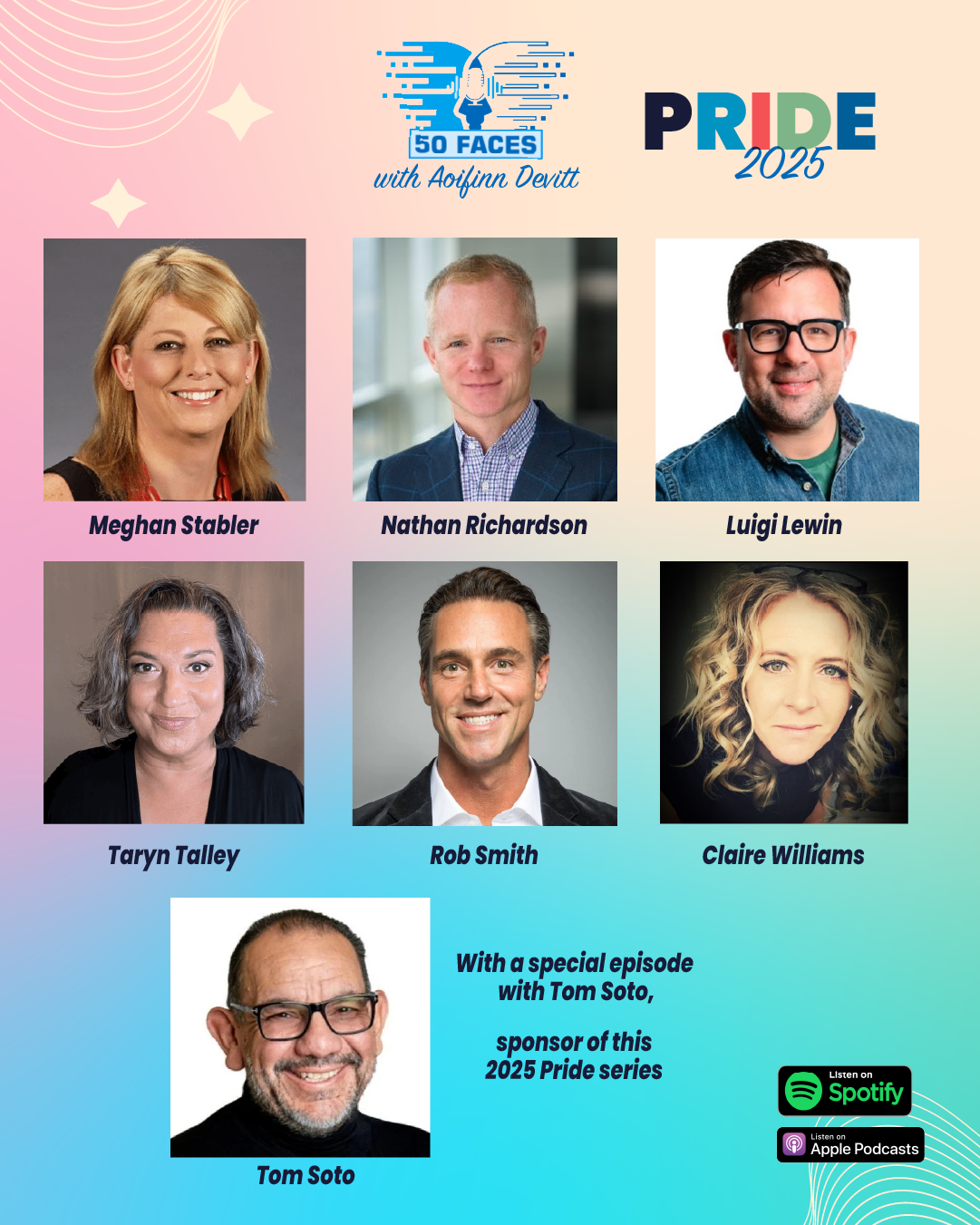
Hear from Matthew Choyce about the resources that his foundation for Gay Youth in technology provides. Listen from 5.47 to 6.45 on Apple or Spotify.

You might find the following links to affinity groups, mentors and advocacy programs helpful:
If you would like to recommend a guest, send us any resources to share with our listeners, make any suggestions, or contribute to the discussion, please write to us via the form below: