Aoifinn Devitt: Public awareness is not just about education and textbook and this happened in this far distant country or to this one person or this one athlete. This is something that is happening to all of us that we are not being heard, right? So we’ve constantly talked about amplifying our voices, being brave about doing so. So I would just want to pull that caveat into what we mean by public awareness I’m Aoifinn Devitt, and welcome to the 50 Faces podcast.
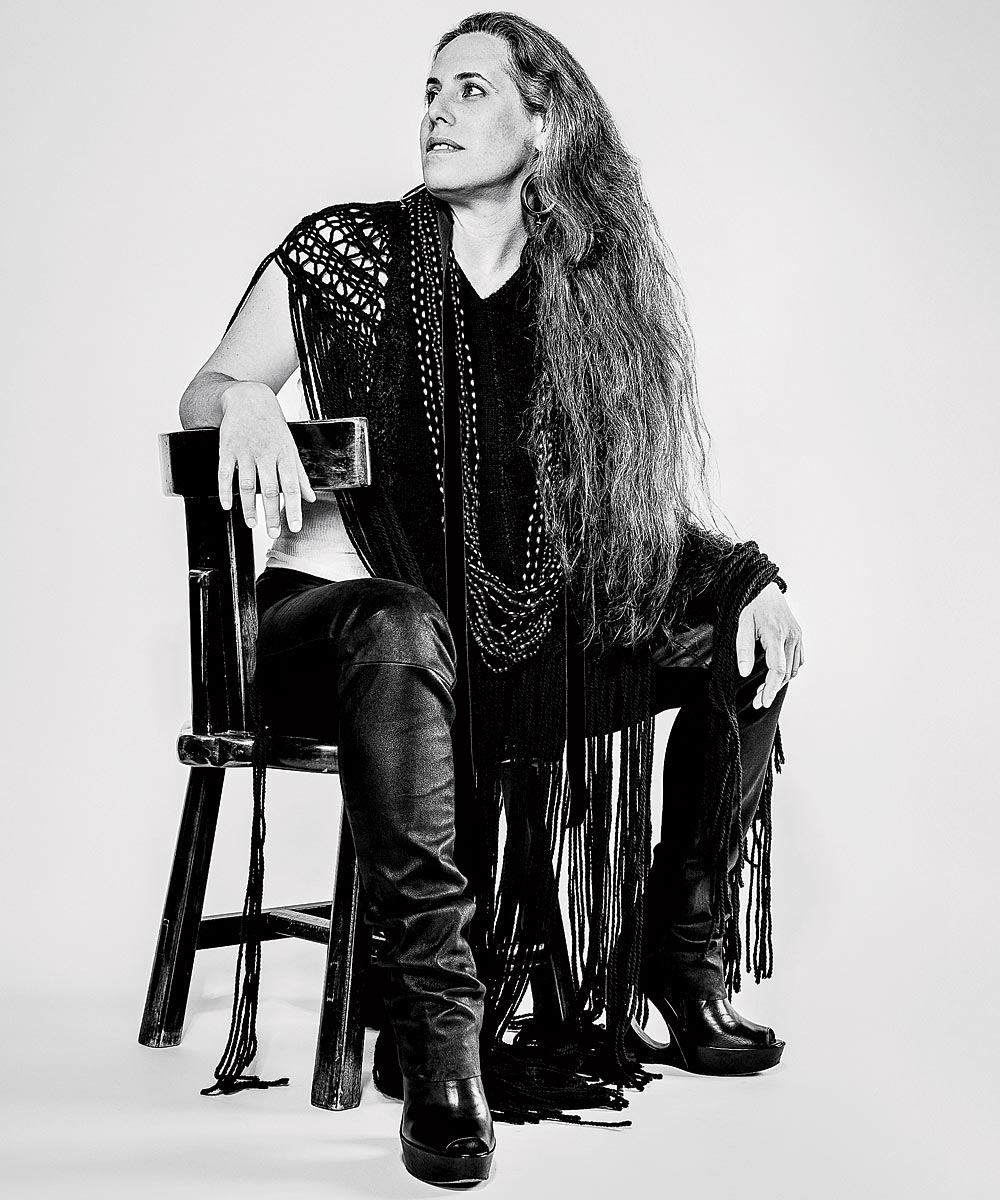
Tiffany: In this focus series, we are focused on women’s health and maternal mortality in particular, and I’m delighted to be joined by Tiffany McKeever, who’s the founder of Consensus Healthcare Consultants Inc., which provides strategic advisory and innovation in the healthcare industry. As an entrepreneur focused on population health, equity, and women’s health, Tiffany’s innovation has been acknowledged by HIMSS with an appointment as one of the future top 50 Class of 21-22 innovators in the patient leader category for maternal health strategies and applications, and the top 200 femtech personalities globally. Prior to founding CHC Inc., Tiffany gained extensive experience in strategy and technical operation with experience over 20 years in big pharma. She’s passionate about startups in Israel and serves as president of Philadelphia-Israel Chamber of Commerce, which supports collaboration between regional US partners and Israeli companies. Welcome, Tiffany. Thanks for joining me today.
Aoifinn Devitt: Thank you for having me.
Tiffany: Well, this is a series about maternal mortality, and I’d love you to set the scene for us a little. Can you talk to us, starting from a high level and getting into definitions, about the scope of the maternal mortality problem in the US as we sit here in 2024?
Aoifinn Devitt: Sure, most certainly. So I just want to give a little bit of background to our listeners. So maternal mortality in the US is a significant public health issue with multifaceted causes. Federal agencies in the past have been quoted by saying it’s a very complex system to look at. And what I understand just from research is, is that in addition to the healthcare service delivery itself, our social systems themselves are actually complex and ever-changing. So this causes lots of challenges in the maternal mortality problem. If we actually look at the formal or universal definition of maternal mortality, it’s defined as deaths due to complications from pregnancy or childbirth occurring during pregnancy within, I guess, 42 days is what the global component is. We’ve since had some legislation that has changed in the United States that has moved that end of pregnancy date through 365 days. We can talk about that at a little bit of a later time as I just wanna go over some definitions right now. And maternal mortality ratio, which is also known as the MMR, is the number of deaths per 100,000 live births. So when we look at the current statistics in the United States, one of the highest maternal mortality rates is what we have among developed countries. And the MMR has been increasing over the past few decades, contrary to trends in many of the other developing nations. And what we’ve even seen is, is that some of the metrics that have come out post-COVID have significant concerns for us that those numbers have somewhat, in fact, doubled, particularly in the African American community with most of the maternal mortality deaths now over 80% and all of them likely preventable. And that was just actually published this month. And the United States, I guess, overall still continues to have the highest rate of maternal deaths of any high-income nation. And just to give you an example, some of the last metrics that we have, because the way this is bundled, we get the mortality review boards that review this each year or so. And some of the latest numbers that we had over 2022 is, is that approximately 22 maternal deaths in every 100 live births in the United States, which is far above rates for any other high-income country. The US maternal mortality is lowest in Asian American women and it’s still highest in African American women. So, someone like myself was very passionate about Black maternal health. I want to just talk a little bit about how I actually found myself in the space. If you don’t mind, we can chat about that a bit. In 2018, I was moving around. I’d started Consensus in 2017. Really, as you mentioned, me leaving the pharmaceutical space to really look at healthcare disparities and population health in our community and find out how I could better serve the community. And of course, in 2018, the maternal mortality numbers were published quite significant that I was 3 to 4 times more likely to die in the maternal health space here in the United States. I live in New Jersey. Our number is 47 out of the 50 states. So quite significant concern there. And at the time, I had 5 children. So as we looked at these stats, it’s the first time that you sort of catch your breath and say, wow, is that significant risk in some places? But I think what stood out most to us was the fact that highly educated women who actually had access to resources were still part of this number and still part of this preventable number. So that’s what really made me carve out a segment in Consensus Healthcare and population health specific to women’s health, and then of course specific to maternal health, focusing on healthcare inequity. So all of these numbers and these statistics that we see are quite alarming across the US in general for women’s health. But to just see it exacerbated, you know, in the community.
Tiffany: Just one of the areas in terms of definition, which you pointed out to me at our first discussions and I thought was so relevant, was that we talk a lot about death, but actually maternal injury, you said, is something that rarely gets measured and that can in fact be as certainly quite traumatizing and, you know, can be debilitating. When you speak about these numbers, are these just death numbers? Are we talking injury as well?
Aoifinn Devitt: So the injuries number, some of the numbers that we’ve seen in some of the zip codes, particularly in New York State, has an injury rate of 60% for African American women, which is a huge percent. And, you know, all of this really starts to tie into our experience in healthcare overall, right? And if those are some of the complex situations that we see, I think we have to get less sensitive about the structural components of healthcare, how it’s delivered in the US. We have to get truthful about racial bias that we have in the system. And in addition to that, you know, when I’ve done some of my studies here in the healthcare analytics program at Rutgers, we really started to look at the future of patient adherence and what that would look like from a policy standpoint and really where we’re able to sit with that. And is that a risk to us as African American women who are injured at 60%? How are we ourselves responsible for those white coat syndromes and all of the things that come with that where the onus is constantly pushed back to us about our healthcare system in the system that we somewhat don’t control. So those injury rates are where we start to hear the community start to talk about healthcare outside of the US healthcare system, where doulas and birth partners and all of those things, those advocates start to come in heavily. And we’ve had some sense of response for that with expansion of doula care, particularly in our state, but still have some access issues that we’re hearing in the periphery. So thank you for bringing that up because that 60% injury, right, we can come home and still have these issues in terms of how healthcare was delivered to us. And, you know, back to 2018 when we, we received the stats, it’s interesting when we talk about birthing partners because we were going through some of the things that were happening to the women at the time. And I have these 5 children and, you know, I’ve been married and I’m with my husband now 32 years. And I remember him saying, you know, Tiff, you went through some of that. Like, you were having the baby, but I was with you. And I remember the nurse not giving you pain medication. I remember them in a nurses’ meeting just as you delivered our first child, and someone forgot to write your script for your anesthesia. You just came directly off of anesthesia. It was my first delivery. It was quite painful. And my husband was running around trying to find the nurses, right? This mistake had happened. So that birthing partner piece, doula, whether you’re coupled or not, is very important. And he’s talking about a birth that I had at that time 23 years ago.
Tiffany: With a 23-year-old daughter myself, I know that time. And I suppose one of the conundrums that we’re facing is it’s one thing not to improve because we all know that improvement takes intentionality, it takes dedicated policy response, it takes follow-through, it takes funding. But to disimprove in this way, for the numbers to deteriorate, To what can you attribute that? Because you would think with the more connected world, more media coverage of these events, or maybe not, but certainly more awareness in medical education, that these at least should be becoming more front and center. Why are we deteriorating in terms of these numbers?
Aoifinn Devitt: Well, I think we look at the medical education in the US and, you know, we’ve been quite critical of the medical education. And candidly, I’ve had physicians say to me, We have challenges dealing across multicultural communities. We really need help and support in doing this. Some of the comments that I’ve received is, is that they spend a large amount of their time on social determinants of health conversations. When that walks through their door, they have a percentage of it that is clinical, which is a small percentage of it, particularly in the maternal health space. But the rest of the conversation is really around cultural congruence and social determinants of health, which is where you talked a little bit about the HIMSS award. What we really looked at from those insights— I can’t change the medical associations right now, how they roll out healthcare in the United States. But what I can do is provide tools that give patients early access in education. I can connect them to social determinants of health to take that out of the physician space. And then from there, I can connect them to community components where we’ve looked at some research where peer-to-peer engagement through healthcare service delivery helps increase some of our numbers. So depending on what it is that your state is doing and what your hospital system is doing, and then how much your physician group and the leadership and administration is advocating for that, particularly in safety net hospitals, right, where we see under-resourced, underrepresented patients. That is what is causing some of the numbers because that’s the crux of the healthcare system. The social components ebb and flow. So this is somewhat what I call the ghost in the system, which is really evident to us. And we cross out of healthcare from this point and get really honest about wealth in the United States, about payer models in the United States, about the iron triangle and triple aim around cost, access, and quality. And whether we really believe that for you to get good healthcare, it has to cost you lots of money. For you to get quality healthcare, it has to cost you lots of money, and those different types of things. So of course, in the economics, transportation, nutrition, education, behavioral health, which is a significant component of that, which we really haven’t talked about too much in the US. I don’t think that we’ve done a great job around mental health in the US, but that postpartum depression pieces of it is what’s extending us down into that 365 days. So we have to get much better about that. I think we can do better in talking about suicide rates and things like that. But if I was to pull us back through a clinical standpoint, we know the comorbidities that we have in the healthcare space, particularly in maternal health. And we do have some ghosts in the system like preeclampsia. It’s very scary. Like when we see these, when we get beyond the wealth and we say people have money and there’s physicians and You know, in 2018, African American women were the most educated. I think we may still hold that space in terms of the maternal mortality deaths. Most educated, most wealth at the time, still had this stark disparity. And you see it in athletes and all of these other things. And you say sort of, sort of what is that? I start to look at the structural pieces of the OB-GYN bundle. Now, there’s been some conversations that are from OB-GYNs to say, we almost want you to go to high risk because then we can see you more often and we can get over the addendums and all of the other kind kind of things. But that’s not really the way that I want to do healthcare. And we talked a little bit about my time in Israel and startup, but prior to going into that startup space, I was with academia and research in a very public healthcare system in Israel. They have 4 HMOs, but because they’re not actually run by ICD codes like we are here in the United States with bundles and different time points that we have to wait to see patients they’re able to research in a different kind of way. And some of that research, just to give an example, is a biomarker that sits at a time point that we never look at in the United States that is very much tied to hemorrhage. Now, if I was able to bring that biomarker, put it in a technology, source for it, and then find that at a certain time point, when we look at these maternal deaths and hemorrhage being one of the second or third in terms of what happens with unnecessary C-sections. We save so many lives.
Tiffany: And when it comes to funding, so you talked about if there seems to be a biomarker that relates to hemorrhage and if you could get, I suppose, the funding or the support to research that and to actually get that tracked. How do we bridge that gap? And I know we’ve spoken with other innovators and entrepreneurs, including from Israel, on this podcast, Karen Leshem, Maura Rosenfeld, And this is an ongoing problem. We’ve compared the status there and their healthcare system. They, they still have people who fall through the cracks there. Some of it’s cultural as opposed to based on, on race, but there’s still gaps. But there’s also a much more, I suppose, joined up nature of these efforts. What do you think is the funding gap? What would it take to get at a national level the attention to this area? Because every so many different strands of medicine are competing for funding.
Aoifinn Devitt: Mm-hmm. Yep. And when I created United We Raise during the COVID era, I talked to a lot of companies that work with payers. And the payer said to me, Tiffany, you’re 10, 15 years ahead of us. We’re not ready yet. The funding is not ready yet. We’re not ready. We’re not ready. We’re not ready is what we heard. What’s interesting is that as I’ve traveled globally, these researchers are actually in DC with us. They’re at the NIH. They’re at the CDC. They’re sitting on these steering committees. So my question to them was, so how are you here in the US with us, and for some reason or another, this has not moved to policy, this has not moved to the payer groups, this has not moved to the funding sections, these metrics? And I think what you have probably heard from Karen and from Maura, who are good colleagues and brilliant women in the space that they are, is, is that it’s really around the tension that we get in women’s health or the tension we don’t get in women’s health, right? I worked in the pharmaceutical space for, as you mentioned, over 2 decades. And I’ve run clinical trials, serious adverse event reporting, all of those different types of things. And it’s really about how we look at women in society, first of all, right? How we look at health outcomes research in ICER, how we price drugs for us, if they’re for us, right? How are we in clinical trials, all of that. So those are some of the root cause pieces of that. So to pull that all the way into funding where us as startups go into a funding space primarily with male funders talking about something in women’s health, it’s to somewhat of a degree a foreign concept to them. And those are, those are some of the challenges. So I’ll say, do these institutions have an equivalent ear, right, to it when these experts say something like, We see a biomarker at week 17, and in the United States, that patient isn’t coming in until week 20. And when she comes in through week 20, we know what happens at week 20, right? We take the diabetic drink, we do our diabetic tests, we get some genetic screening, those different types of things. But we would have had the option to see that biomarker 3 weeks earlier and then have that reported to us, right? Should you be high risk and need a cesarean section? These are some challenges and some things that we need to look at for you postpartum. And, you know, we wouldn’t go home in 3 days’ time and then wait for a 1-month checkup.
Tiffany: I suppose what would you like to see as action items? We know and we’ve discussed on previous podcasts some of the funds that have been put aside by the Biden administration and committed to women’s health. We have private philanthropists like Melinda French Gates, who is dedicating a fund to female founders that may flow through into women’s health through the tech venture that they perpetrate. What would you like to see as a list of action items that you think would gain bipartisan traction?
Aoifinn Devitt: Yeah, so I think some of the pieces since we dived a little bit into women’s health and down into maternal health, into Black maternal health, I’d like to move through this ladder of inference and the way we talked about funding and we talked about research down into funding. What I want to also talk about is the policy pieces itself and how we actually change that, which is how we distribute the money and how we look at underrepresented and under-resourced populations and why we do it that way. When we look at this funding and you hear it in the startup world, you know, Europe and the US, you’re going to have your ROI there. And I often talk about funding below the equator. Is how I, how I think about it. And it’s a little bit of a paradigm. Obviously, it’s not directly under the equator, but I think people understand what I’m saying about it. Some of the comments that we received when I actually moved into this space was because we were African American women, no one would invest in us. No one invests in African American women, and no one definitely invests in African American women health. So we looked at it as under-resourced, underrepresented, and of course they categorize us immediately as mission. And I think that when we look at it in that lens, when we look at research in that lens, when we look at funding in that lens, when we look at distribution in that lens, that is what is the crux of the issue of what is happening with us, right? And I think the design of looking at the African-American woman who can be wealthy and still be found in these places is some of the issues that those organizations have not looked at yet. Look, I was in pharma for 2.5 decades. Our household was at $500,000. If I lost that and lost COBRA, if I lost my job, lost my transportation, all of these other things, and then suddenly found myself in a federally qualified health system just so that I could get healthcare, pregnant, and then loss of life, you may not see that full trajectory of how that actually moves. And I think those nuances is what the United States actually misses when they distribute this money, because there’s no governance around weighting the population and how the actual healthcare is delivered. We just go right back into the medical textbook.
Tiffany: Fascinating. So tell me more then. So that’s perhaps African American women as a whole. What would be on your wishlist to change this?
Aoifinn Devitt: There definitely has to be policy change advocating for things like cell gene therapy. And we look at personalized medicine. I would hope that we would have some personalized social design that actually happens as well. We don’t need it person to person. Do we need it as group to group? That’s fine. Let’s stratify us in some kind of way that we at least feel whole. We’ve looked at healthcare reform in the United States. We looked at Obamacare. And yes, people got access. Was it really far away from home? I mean, I have a disabled father that I take care of. Yes, he had access, but I had to take him 55 minutes away for the services that he needed. Someone else may not have that opportunity to do so. So I think some of those policy access in a comprehensive way to match if we’re going into the future of personalized medicine has to happen at a social standpoint as well. And this is really about healthcare system reform and improving healthcare delivery. In addressing those systematic inequities that we have. And then as I mentioned before, you know, the onus is on us as well too. I mean, I say that sometimes in these spaces and women say, you know, we really don’t like that narrative. This is some things that are happening to us. And, you know, Consensus has taken the stance that it’s our responsibility too, but it’s our responsibility to educate and provide public awareness, which is why I do what I do, right? Why I’m passionate about what I do. So increasing awareness and education around things and maternal health issues is critically important. So when we see these startup companies that are doing that in multiple ways, in all of the parties that are doing healthcare service delivery, that is another degree of the design that we really have to look at when they are distributing money to people. It can’t go to just friends. It can’t go to just large systems that are part of the lobbyist group that look at it. I’ve looked at large amounts of money go to zip codes where We aren’t even there, and the number is not as disparaging as other places where they could be distributed. Has anyone looked at where there isn’t access down in the lower South, but they’re under the Bible Belt and birth control and all of those issues? So all of these things sort of lead up, you know, the debates were just last night and we were looking at somewhat of this discussion around Medicare, which I wish was flushed out a little bit more. Giving me really deep concern. But even those distribution channels need to have that sort of comprehensive look about how this money is used and how it’s distributed. And I think it’s important not to just distribute money for the sake of distributing money, which is— I don’t want to get too political, but for sort of tax curves or tax harbors in the space or sort of feel-good mission work. But we really have to get to healthcare and change our lens to do this for America.
Tiffany: And I think you make an excellent point. It’s almost like this needs to be a pincer motion in the sense that we cannot wait for policy change to get where it needs to get to. We cannot wait for equity in distribution or in recognition or in funding. There should be equity. I think we all know that. Whether we’ll see it in the next decade is another question. But what we can do is grassroots community movements. And one of the previous podcasts, Adonica Shaw, who spoke about My Wing Woman, again derived from her own experience. And I think that her own experience in receiving less than adequate healthcare led her to seek out a community whereby they could put language on their trauma, educate, heal, and build awareness and visibility. And that just came from grassroots. And it seems that it needs to be this kind of a pincer movement because unfortunately waiting for one side to get to where it needs to get to will not be adequate. So I have been, I think, humbled by what I’ve seen in the community of women who have suffered through negative healthcare events to rally and use this experience to do the better good in terms of ensuring that other women don’t have to go through this trauma.
Aoifinn Devitt: Yeah, I just wanted to just pull back a little bit to the point where you mentioned Wingwoman and Adonica Shaw. Since we’re talking a little bit about our global access and reach, I was one of the managing directors of the MedFemTech Congress. In Paris, France in May last year. And somewhat of the design that we did for this particular conference, which was important to Consensus at the time, was Voice of the Patient, which is where I met Adonica and I was able to interview her and to put these 6 women on the stage to really talk about what our healthcare experience is like. I can tell you that by the time these women finished with various experiences, I mean, all different cultural country differences, on this stage, there were physicians standing in front of us who had walked up to the stage because it was so powerful what these women had experienced in healthcare service delivery. And I think we need to talk about it more. Public awareness is not just about education and textbook and this happened in this far distant country or to this one person or this one athlete. This is something that is happening to all of us. That we are not being heard, right? So we’ve constantly talked about amplifying our voices, being brave about doing so. So I would just want to pull that caveat into what we mean by public awareness. And then I very much agree, United We Raise is very much grassroots. We realized that that was really the only way short of delivering babies at our home, right? But still really realize that should there be an emergency, we would go into that Western healthcare system. So where consensus at that juncture really sat on the spectrum of the maternal health space was really around data. 1 1 is always 2. I’m not gonna have these bipartisan arguments or nonpartisan arguments around what Democrats are saying versus what Republicans are saying. Are these numbers really real? Are they inflated? Was COVID real? All of these different types of things that happen in the healthcare space. That really stop and halt the conversation. And in Consensus, we’ve seen that because even in the sales cycle of United We Raise, a particular hospital that we were working with, just the 2 years past COVID, we lost a woman every month in that hospital system, every month. And then there’s another— I want to say there was another 6 or so that were really at high risk that were able to be saved. So these are real numbers that we are looking at, and we’re just really trying to— really, really trying to find the solution. There are instances where we are given information, just to pull back a little bit to the voice of the patient experience, where we can think we’re really educated, and a physician tells us something. And we had someone on the stage actually lose her children because where she read the medical paperwork She thought that she could just go to a clinic for some blood work the next day, and it was actually supposed to be translated as stat, like right now, go to the emergency room. So these mistakes that happen, how she could go a whole evening without that physician saying, we didn’t get a report from the emergency room, those types of things are just gaps and errors that are happening in the healthcare service delivery design. All of that to say of what I would like to see in the future, I don’t want postmortem reports from the maternal morbidity board that just sort of says, this is what happened, this is what our numbers look like, this is what we’ve seen. And then we do that again next year. We need some practical components where we are actually tying our investors to those outcomes that we saw and saying how we’re solving for them. And I think there’s significant opportunity. We can tell from this podcast lots of things that we can do just to pull us back to what is being defined as so complex. And in recent, I guess, months or so, probably about a year and a half or so, I’ve looked heavily more at policy and having some function down in DC because I can see great technologies that are coming to the forefront that are just not making it through because of the very lenses, the multiple lenses that we have talked about on this podcast.
Tiffany: Thank you so much, Tiffany. This series started 10 months ago with the tragic story of Tori Bowie, the Olympic sprinter who was found dead at her apartment at 8 months pregnant, having gone into premature labor. And my hashtag I used at that time was #RememberHerName. And I think you mentioned postmortems. I also don’t want to read any more about any more postmortems. I think we have to remember the names of the victims, that the cases, their case studies and their details, because it is only by remembering and these stories that we will be reminded of the triggers and not to have that happen again. So thank you so much for the work that you’re doing, both on your own, but also by supporting startups and founders who are committed to new technologies in that arena. And thank you for bringing together so many advocates of this important cause. Thank you for coming and sharing your insights with us.
Aoifinn Devitt: Yes, thank you so much for having me.
Tiffany: I’m Aoifinn Devitt. Thank you for listening to the 50 Faces podcast with this particular focus on maternal mortality within the framework of medicine and science. If you liked what you heard and would like to tune in to hear from more experts in this field, please tune in to Apple Podcasts or wherever you get your podcasts. This podcast is for informational purposes only and should not be construed as investment advice, and all views are personal and should not be attributed to the organizations and affiliations of the host or any guest.
Speaker A: Welcome to the second collaboration between Monumental Me and 50 Faces Productions. Monumental Me and the Mindshare Podcast help women access the tools needed to thrive in life and then work. 50 Faces Productions and the 50 Faces Podcast are dedicated to showcasing inspiring people and their career journeys. This series captures key insights and current trends from women dedicated to innovation and discovery in women’s health in particular, as well as in healthcare more broadly. Focused on women, healthcare, wellness, and health tech, we hear about the funding gaps, technological advances, and awareness campaigns that are bringing this issue out of the shadows and into improving lives. In this first short capsule collection, we hear from startup owners and venture capitalists, as well as medical researchers about what drives them to address the imbalance around women’s health.
Special Collaboration: Our mission is improving lives of people who have been overlooked. A lot of places where women have been overlooked is intersectional with women of color as well. So a lot of the health disparities for women are worsened for BIPOC. And so we’re really looking to have a lot of ways in which we’re improving women’s lives.
Speaker C: As a mother to children, I’ve never had any issues with bringing them into the world. I saw that this is such an underfunded area, and I knew that, you know, we need to do better and help that.
Speaker A: We hear about the illnesses and conditions that disproportionately affect women.
Speaker D: There are things that are very specific to women that have to do with the fact that women have different organs, that women have different cycles in their lives and go through different conditions. So, for example, women can become pregnant. They go through menopause. They go through menarche, which is the start of having menstruation. On the same side, women also just have health issues and health needs and conditions that are also very prevalent in women in addition to men. And so when I think about women’s healthcare, I think about that holistic view of women’s healthcare.
Speaker C: So we’re talking 1 in 3 women that suffer from heavy menstrual bleeding. We’re talking about 1 in 10 that suffer from endometriosis, even though today it’s even believed to be 1 in 6. We’re talking about 7 out of 10 women that will have a fibroid, a uterine fibroid, by the age of 50. 8 out of 10 women of color. These are insane numbers, population numbers, not just in women’s health. We’re doomed to either take these oral pills that have these horrific systemic side effects How can you avoid side effects when you have to swallow these medications? Or the other option we have is surgery. We have to literally go into the hospital and either get this invasive, aggressive surgery or get our uteruses removed. Why? There’s a reason they’re there.
Speaker A: And lists the unexpected ways that women can have less positive outcomes.
Speaker D: Cognitive impairment is unfortunately more prevalent in women. We have to think about that as part of the women’s health ecosystem. Cardiovascular disease is the number one killer of women.
Special Collaboration: Their first use case is just diabetes.
Speaker D: Most of the data that we have as it relates to healthcare and the evidence that led us to treatments is actually being provided for women, but it comes from testing men. There are chronic conditions, something in particular called autoimmune diseases, that women are disproportionately affected by— rheumatology, inflammatory diseases— and really more research is needed into the causes and treatments.
Speaker A: We ask where the areas for investment are.
Special Collaboration: We’re heavily focused on digital health right now and have a big thesis around what makes a successful digital health company. And so when COVID hit, it really accelerated adoption of telehealth. But at this point, a lot of the companies that may have been overvalued in telehealth, telehealth for XYZ, haven’t fully moved the needle. And so what we’re seeing right now is telehealth may be a component, but there should be like an entire digital platform that’s defined the health outcomes that they’re improving.
Speaker A: And look to the opportunities of tomorrow.
Speaker D: We look for companies that are at the collision of healthcare and technology. We spend a lot of time looking at artificial intelligence and the role that it can play.
Speaker C: You have this incredible technology that is able to deliver drugs in a safe manner. It’s been validated.
Speaker A: While being cheered by the fact that there is finally some money on the horizon.
Speaker D: I think this announcement by the administration is actually going to just increase funding, both venture funding and public research funding, for women’s health in many, many ways. The proposal is, like you said, for $12 billion to fund research on women’s health.
Speaker A: As always, we conclude with words of wisdom and a call to action.
Speaker D: The quote that I often will share is, “We are not humans having a spiritual experience. We are spiritual beings having a human experience.”.
Speaker A: Thank you for listening to this collaboration between Monumental Me and the 50 Faces Podcast. We look forward to sharing our with stories you.
Yele Aluko: And this is what we call missing persons in healthcare. There is a large void of African American healthcare providers at every, in every discipline, doctors, nurses, and otherwise. It is not increasing. It’s at risk of going down. So diverse representation in the workforce is one thing. What are the consequences of lack of a more representative workforce? Is another thing. The absence of industry alignment about the importance of a diverse physician workforce is, I believe, part of the problem.
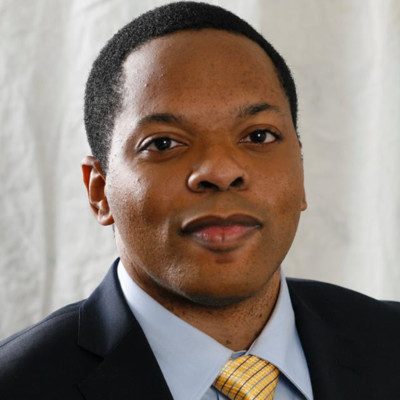
Aoifinn Devitt: Our next guest has had an extraordinary career in medicine and is now seeking to influence policy at the highest levels. Let’s hear his journey. Next. I’m Aoifinn Devitt, and welcome to the 50 Faces podcast. I’m joined today by Yele Aluko, who is Chief Medical Officer at EY, a role he has held for close to 4 years. He is co-chair health equity advisory at the International Well Building Institute, an advisory board member at the Children’s National Hospital, and a board member of the Wake Forest University School of Business. He has worked as a cardiologist in hospital settings for over 30 years. Welcome, Jelle. Thank you for joining me today.
Yele Aluko: Good afternoon, Aoife. It’s a pleasure to be with you today. Thank you for the invitation.
Aoifinn Devitt: Well, you’ve had a long and varied career, which has seen you move from a medical career to into now healthcare management consulting in a global position. Can you talk us through your career journey, maybe going right back to where you grew up, and did it take any surprising turns along the way?
Yele Aluko: Going back to where I grew up, I was born in Lagos, Nigeria in West Africa. I went to boarding school, school called King’s College Lagos. I got in there when I was 11 years of age and left there when I was 17. And boarding school formed my closest relationships over a 7-year period. It was in boarding school that I developed interests in physics, chemistry, biology. I was fairly good in those subjects, but I hadn’t made any career decisions until I turned 15 years of age when I happened to accompany my mother to visit a family member in a hospital in Lagos. And the experience I had there is what indelibly informed my decision to go into medicine. And I’ll very quickly tell you what happened. So we’re walking through the emergency room. And a taxi comes screeching to a halt in front of the emergency room, and a man runs out shouting, “Please help my wife. My wife is dying. I need a stretcher.” There were no stretchers available, so he runs back to the taxi. Doors are flung open, and he and the taxi driver are bringing out this large woman with her hands flailing. And they bring her in, half dragging, half carrying her into the emergency room floor. There are no stretchers. And he is running around, eyes wide open, sweating, pleading for help. And she dies on the floor in front of me. That was a very traumatic experience. First time as a 15-year-old kid that I came that close to the reality of mortality. And at that time, in that day, I decided I was going to go into medicine with the naive rationale that I didn’t want that experience to happen to any family member of mine. So I went to medical school and I went to medical school in Nigeria at the University College Hospital in Nigeria, which was birthed several years ago as a college of the University of London and then became an autonomous medical school in the University of Ibadan. And I came to the United States to do a residency in internal medicine. When I came to the United States, my plan was to do 3 years of an internal medicine residency and then go back to Nigeria to be on faculty at my medical school. One thing led to another, 30-plus years after, I’m still here. And having finished my internal medicine residency, I did a number of fellowships in general cardiology fellowship, invasive cardiology fellowship and then an interventional cardiology fellowship. All of these were done in the Northeast USA, New York and Massachusetts. And having finished those fellowships, I came to Charlotte, North Carolina to start a solo practice. Starting a solo practice was not by design. I essentially, despite my extensive qualifications, could not get a job with any of the existing large cardiovascular medicine practices, considering that in the Southeast USA at the time, you don’t just drop out of the sky to come to practice. You essentially get recruited by alumni organizations. If you went to Davidson, went to Chapel Hill, you went to Emory, then you have those networks. I had none of those networks having not gone to those schools in the United States. So I turned up, so I turned up African-American with a funny name. I didn’t get hired, so I started my own business as a solo practitioner, grew that to a 4-physician practice of African-American cardiologists, and eventually merged that practice into, with an 8-physician Caucasian cardiology practice. There were 12 of us initially. I became the president of that practice. We grew the practice to about 50 adult cardiologists, the second largest in North Carolina. That practice eventually got acquired by a health system. I was asked to be the medical director of the Heart and Vascular Institute in that 14-hospital health system across 4 states in the Southeast USA. I became a physician executive, a physician leader. I was on the board of trustees of the organization. I ended up in business school, did an MBA. Having done that MBA, I developed non-clinical interests, which were focused more on the macroeconomic perspectives of the industry. And I decided to leave the bedside and I joined Ernst Young as a healthcare management consultant, where I am now as chief medical officer.
Aoifinn Devitt: Well, that’s a very moving story of how you entered medicine. And thank you for sharing that with us. Was it a difficult decision to leave the bedside or was the time right in your view? Did you think you could have more influence perhaps in a policy role?
Yele Aluko: It was a very difficult decision and it’s not surprising to understand why. Physicians generally birthed within a very narrow ecosystem of colleagues. You go to medical school and because of the all-encompassing and depth of intellectual commitment that’s required. You are, for the most part, buried within the environment of medicine. You then get into a residency program and it’s the same thing, 18-hour days surrounded by physician colleagues, co-residents and co-interns and nurses. And then you get into clinical practice, the same thing. So the exposure that one gets is very valuable and the work we do is very valuable, but it’s very linear. And leaving medicine is a difficult decision for most physicians because our entire DNA revolves around the doctor designation and the role the doctor has in society. So it’s very conflicting, at least it was for me, to even begin to consider that I’d step away from the bedside from dispensing care to patients that I had done for decades. But the truth of the matter is that having done the MBA, I had developed just broader interests, and I had this conflicting desires to be equally impactful but in a broader manner over a larger geography and utilizing a louder megaphone. And I felt that leaving the bedside, even though so doing brought value to patients every single day, was something that I could do. But it took me 2 years to really come to terms with the fact that if I was gonna do it, I had to put the wheels in motion. And I put the wheels in motion with a fair amount of trepidation because understanding that I was coming from an organization where I had spent my entire professional career, developed a brand, a reputation and a comfort zone. And stepping outside that comfort zone was scary. However, I’ve taken risks before and I take calculated risks. And I felt that I was well positioned to be successful by reinventing myself within another career.
Aoifinn Devitt: That’s very powerful. And I’m sure that having had that long career in medicine at the bedside, that gives you so much more credibility and ethos when it comes to the policy role. I always ask my guests who’ve had a long career like you have about some of the highs and low points. What would be some of the highs and low points of your career so far?
Yele Aluko: I would say the, one of the lowest points of my career was having come to the United States without having any social support. I didn’t have any family here. Coming here as a foreign-trained physician, I had to do the standardized examinations that enable foreign-trained doctors to apply for residency positions in the United States. You apply for a position and you also apply for a visa to work. So having passed those examinations and having gotten into a residency program, my first pro— residency program, I wasn’t paid for 6 months. Because they didn’t have a budget to pay me. That was the rationale at the time. But I was doing the full portfolio of work that other residents were doing on call every third night. And it took me a while to understand that there was probably something very wrong with that scenario. But even more importantly, the loneliness, the social isolation, the enormity of the work. Led me after 6 months when winter came, had never seen winter before. I essentially felt that I had made the wrong decision coming to the United States. And I called my dad back home and I said, you know what? He didn’t want me to come in the first place because I had a position to go to England where we had more common relations being a former English colony and my medical school being a former college of University of London. We had more natural connections in the UK. So he wasn’t really supportive of my coming to the United States, but essentially called him up and I said, you know what, I made the wrong decision. I think I’m going to come back and rethink this thing. And he said, no, you’re not. You, you lay in the bed you make. So that was a very low point for me trying to navigate the work-life balance. Which at best is not good in the absence of any social family support. Regarding high moments, I will say that coming to Charlotte, North Carolina and starting a practice— I’ll just mention a couple of high moments because there are a number— starting a practice as a solo African American cardiologist, the only African American cardiologist in the city that was trained to do very specific interventional procedures. I was the first cardiologist in my hospital to perform a procedure which we call a balloon aortic valvuloplasty. And this was a novel procedure at the time that I had been trained to do in my fellowship program that wasn’t being done at that hospital. And lo and behold, it turns out that I’m referred a patient that was too sick to get their aortic valve replaced surgically and would ordinarily have been left to die. But the word got around from a referring physician that I had a new procedure under my belt and they asked me to do the procedure, to consider doing the procedure. I saw the patient and set them up for the procedure. I will say that with much resistance from the physician leadership in town, if you consider that a Black doctor who dropped out of the sky all of a sudden is bringing innovation into the practice in a hospital that had 99.9% Caucasian leadership at the time. There was a fair amount of resistance put in front of me, but I was able to navigate the leadership obstacles and do the procedure successfully. And having done that, I actually began to develop an individual personal professional brand of clinical excellence in cardiovascular care.
Aoifinn Devitt: That’s a wonderful story, a very empowering story to hear. And also, thank you for sharing the low point about the sense of isolation and lack of social capital, because I think that is probably an experience that’s being replicated 100-fold across some of the new immigrants to the US in your profession too. So sharing that is very helpful. Moving now to some of the policy issues that might be at the forefront of your mind, what is at the forefront of your mind in terms of the most pressing matters in healthcare policy today? And I know we can’t dedicate the whole podcast to this, Maybe, maybe in kind of very high level.
Yele Aluko: Well, that question really speaks to what led me to consider leaving the bedside and to eventually deciding to do that. Having worked within clinical care delivery for many years, working within successful healthcare systems, very, very highly branded healthcare systems with very committed colleagues, very skilled colleagues who wake up every single day to go to work to make people feel better, live longer. If the inevitability of death occurs, ensuring that people transition with empathy and dignity. That’s the work we do day in, day out. However, having gone to business school, I became keenly aware of the gross level of inefficiency within the industry. The healthcare industry, understanding that there are intersecting stakeholder groups that create the ecosystem that forms the healthcare industry. I, as a doctor, worked within healthcare systems, and both physicians and healthcare provider systems are called provider groups. You have the insurance companies as another stakeholder group. You have drug companies as another stakeholder group. And then of course you have the patient that should be the most important stakeholder within that ecosystem. But it occurred to me time and time again that even though we delivered good care, the value that the consumer, the patient as the most important stakeholder, the value they got was poorly defined, poorly understood. Poorly measured, and the industry wasn’t being held accountable for driving value. And by value, I speak to being able to provide a clinical product, irrespective of whatever specialty it is, that has excellent outcomes driven at the best cost. The cost of care delivery in the United States is inordinately expensive. It’s the most expensive in the world. And if we look at the societal metrics of performance, across the healthcare industry in the United States fails woefully across societal metrics such as infant mortality, maternal mortality, life expectancy, access to healthcare. So those issues of healthcare value began to gnaw at my sensibilities, and I felt that I could provide insight to thought leaders about the imperative for industry transformation, even though this industry transformation imperative is spoken about on a daily basis for several years. But you talked about policy. Part of the issue is the fact that holding healthcare systems and physicians accountable for delivery of value in a consistent manner. Why should it cost $30,000 for open heart surgery to be done on the West Coast and cost $90,000 for it to be done on the East Coast for the same procedure? So there are pockets of significant variation when it comes to cost and when it comes to outcomes. And we know this, we’re aware of this. And we are unable to eliminate unnecessary variation and create some degree, some semblance of necessary standardization. So that’s one issue about around policies. How do we develop accountability processes that move the needle towards standardization? And of course, on the other end of the spectrum is a policy around access to healthcare. It is clear that The health of any community, any society, any country, any human ecosystem is driven by the availability of the individuals to get good quality care. And by good quality care, talking about basic healthcare, preventive care, doesn’t necessarily have to be à la carte care, tertiary level, but basic healthcare. At a preventive level and at a diagnostic level and a treatment level. Healthcare policies in the United States do not enable ubiquitous healthcare coverage. There’s a large number of people, currently around 30 million of US citizens that don’t have healthcare coverage. During the Obama administration, the Affordable Care Act was passed with much resistance which persisted throughout the last presidency. The inability for the most sophisticated, the richest country in the world, the richest country within the portfolio of the OECD, to embrace the moral obligation of a country with such resources to provide health coverage to the disabled, the poor, and all vulnerable populations. It’s an obligation that in the United States we continue to struggle with and policy around healthcare access in reasonable manners because this is expensive to do but can be done. We are one of the few countries in the industrialized world that does not provide universal healthcare access. And by universal healthcare access, I’m not talking about a single-payer system like a Medicare for All. I’m talking about having some model that covers everybody who can’t afford to purchase health insurance.
Aoifinn Devitt: Those are very powerful points. I think another kind of a related problem, perhaps related to access, but certainly related to how a profession is perceived and maybe levels of trust, is how well that profession represents the communities that it serves. And the theme of my whole podcast series is around representation within professions. How do you assess the level of diverse representation in medicine today? And is it improving? Has it improved over the course of your career?
Yele Aluko: So if we look at the African American community, I’ll focus on that just for sake of time. The African American population in the United States is about 13%. About 4 to 5% of the physician workforce in the United States is African American. And you see similar gaps if you look at the Latinx community. The enrollment into medical school for African Americans is actually going down. And this is what we call missing persons in healthcare. There is a large void of African American healthcare providers in every discipline, doctors, nurses, and otherwise. It is not increasing, it’s at risk of going down. So diverse representation in the workforce is one thing. What are the consequences of lack of a more representative workforce is another thing. And as you are well aware, With COVID-19, there has been a recent overwhelming insight about healthcare disparities, the lack of health equity in the United States. Some think this is a new observation with COVID-19, but indeed this is a deep-seated historical observation that is not new to those of us that have practiced medicine for decades. This is a conversation that has been going on for at least 50 years and the needle hasn’t moved. One of the factors that have been put forth and have been validated is that the more minority doctors you have, the more likely you’re going to get engagement with minority patients about health literacy, other things that impact personal decision-making. But the truth of the matter is that As of now, there are not enough doctors that are Black to take care of Black patients. And the message should not be that you want to match one ethnicity with a patient and a doctor. Yes, patients should have choice, but the strategy shouldn’t be, “We want to increase the pipeline of minority doctors so that Black doctors should treat Black patients.” No. It’s important to increase the pipeline, but it’s also important that we understand The strategy should be to teach cultural sensitivity to all doctors so that non-African American physicians understand through training the importance of cultural sensitivity that enable them to be better doctors to all segments of society. And by so doing, we begin to move the needle away from subliminal bias that exists in healthcare and stereotyping towards humility in service and elimination of health disparities over time.
Aoifinn Devitt: So it seems like there are really two aspects to the problem, the shortage of doctors entering the profession today, as well as an overall still inadequate number, as well as that training. Is that training something that you’re overseeing now going into, well, are you seeing it happening more in medical settings? The type of inclusion training, and also what do you think is the reason for the decline in Black doctors entering the profession?
Yele Aluko: Well, first of all, the, in the healthcare industry though, is that the DEI activities oftentimes are penetrating the administrative workforce and less so the clinician physician workforce. Because having conversations around diversity and inclusion within the physician workforce leads to circumstances where physician leaderships say, “We don’t know where to find minority doctors from. We just can’t find them.” And when it comes to talking about subliminal bias and stereotypical treatment, it becomes a difficult conversation. So hopefully, the work that consulting firms— and we are involved in this type of work— the work that we are doing seeks to provide insights into the business case for diversity and the importance of eliminating subliminal bias and stereotypical behavior in the clinical workforce that allows for standardization of care for all people.
Aoifinn Devitt: Do you believe that the reason for the slow rise in these numbers is to do with the cost of medical school? Is that, is that a barrier? Are there not enough scholarships, for example? I have heard there have been some scholarships to encourage more diversity in the profession.
Yele Aluko: So the cost of medical school is clearly a barrier for a lot of people, Black and otherwise. And the pipeline of medical students has been borne largely by the historically Black college and university medical schools, of which there are 4. The absence of industry alignment about the importance of a diverse physician workforce is, I believe, part of the problem. There are several mainstream medical schools in, the United States that don’t have an alignment around the need to diversify the workforce. So, absent of that alignment, it’s impossible to develop pipeline strategies for recruitment. If there is a strategy for recruitment, then there will be access to scholarships to do so. And there are significant philanthropic donors that will be aligned with, you know, different types of educational agendas, one of which would be increased diversity in the workforce. So yes, the cost of medical education is significant. And for that reason, there had been a uniform decline in medical school applications up until about 2 years ago. And honestly speaking, with COVID-19, there has been an uptick of medical school applications in general, but not of minority applications.
Aoifinn Devitt: So clearly a long road ahead and a lot of work to be done, but thank you for your contribution to shining a light on this. I just wanna move back to your personal story now. Earlier in the conversation, you spoke about social capital. You didn’t have a lot of it when you first moved to the US due to circumstance. Can you speak about any key people in your life, whether before or since your time in the US, who had an influence on your career and in what way?
Yele Aluko: Well, there’s no question that my parents and my nuclear family had a significant influence in my career. My father was a civil engineer, at a point in time was a minister of finance in the western region in Nigeria, and then became a university professor. Of engineering and an author. He wrote about 10 books. My mother initially was a homemaker. She had 6 children. And she went back to school and got a degree in French at the age of 50 and became the principal of a high school and a French teacher. But, you know, beyond and more importantly beyond the academic achievements, there was just the personal growth, character, humility, education, awareness that they instill. Boarding school was very important. I had 5 siblings. My elder sister, she was the first, I’m the third. My elder sister is a pediatric cardiologist and I followed in her footsteps. So she was a role model. I had 2 uncles that were doctors. One was a general surgeon and an ENT surgeon, another one. So when I came to this country, I came with that database, sense of self, and a purpose that had been instilled by those experiences. So I had a lot of social capital when I got here from whence I came, but that social capital is not automatically transportable. I had to build that social capital here to support me. It’s interesting that I will say I didn’t have a lot of mentors in my professional career here. I stumbled around a lot and eventually got back onto the road towards the North Star. And I think that’s the story of life in general. You seek to go to the North Star, the true north, and every now and again you go backwards or you go sideways, but as long as you can get back on the right path, all is okay. I had a mentor, a couple of mentors in Charlotte, North Carolina when I got here. None of them, neither of them are in healthcare. One is a gentleman called Harvey Gantt. He’s an African-American architect who was the first Black mayor of Charlotte, was the first Black Black student to go to Clemson University. I got to know him and he was an inspiration to me. He mentioned to me that as the first Black cardiologist that did the procedures that I did in Charlotte, I would have large opportunities but significant obstacles. I also met a gentleman called James Ferguson who was a civil rights attorney. Who helped me navigate some political obstacles that I was exposed to as an African American physician new in town. There was an occasion where I was almost arrested in a hospital for being accused of impersonating a doctor, which was very traumatic for me, as you can imagine. So the lack of structured mentorship for me has led me to prioritize being a mentor at any point in time that I can. And I probably have mentored over 100 students at different levels of their educational pedigree that have an interest in healthcare, in any discipline of healthcare, starting from when they are in high school all the way through to their medical school and residency and fellowship programs. So I’m very committed to mentorship And I think that the reason that I’m committed to it is that I’ve learned a lot. And having not had that direction in a structured manner myself, I do know the importance of networks and especially the importance of enabling minority students to have orthodox mentorship to help them stay on the north path.
Aoifinn Devitt: Well, that’s a wonderful creed or motto, I think, that North Star analogy. Are there any other creeds or mottos you live by now that you can share?
Yele Aluko: My father used to say this all the time, “Thank God for little mercies. It could always be worse.” And I am a glass half full kind of person. I do not fret or obsess about things that are not within my control. I essentially realize that things could be worse. And I think about that almost every single day. And I remember my dad used to say that a lot. Thank God for little mercies, it could be much worse. And that’s one of the credos that I live by, that to whom much is given, much is expected. And one should not minimize the importance of the blessings that one has had the benefit of being exposed to or have been given.
Aoifinn Devitt: And my last question, after such a long career with many changes, is there anything that you know now that you wish you could tell your your younger self?
Yele Aluko: I would have been less militant in my earlier years. It took me a while to develop the emotional intelligence to be more embracing of diverse thoughts and less quick to judge, even if I had made judgments about business decisions or interpersonal relationships that were rationally— appeared to be rationally right. I would advise a younger person and the younger me to spend a little more time developing emotional intelligence to allow one to navigate through complexities quicker, even if one was right. I’d have gone to business school earlier. I’d have probably, you know, I practiced medicine for about 22 years before I went to business school. I’d have probably practiced for 10 years before I went to business school, and I might have stayed as a clinician, but Then again, I might have left clinical medicine after 10, 12 years and entered the industry and might have been positioned to have more time to be significantly impactful in transformation. All that being said, I’m very fortunate and happy with the blessings that I’ve received and the progress that I’ve made and the value that I have brought to human society and intends to do so going forward.
Aoifinn Devitt: Well, Yele, it has been such a pleasure to chat with you here. You’ve given us so much food for thought. First of all, I’m inspired by your mother. I think I can now pursue that French or English literature degree that I’ve always wanted to. It’s never too late, clearly. I also agree with you on business school. I went to business school after about, I suppose, 5 years in my profession, which was law, and it really does open your mind, I think. And not so much how much you take in terms of books, book knowledge, but it really forces you to think differently. So I definitely see that point. And it’s really been such a privilege to speak with you. You’ve spoken about a North Star. To me, you embody that for so many, for your profession. You are a role model and you really are the definition of what it is to give back, but you’ve also given us some profound things to think about. And thank you very much for that and for sharing your insights with us.
Yele Aluko: I thank you for the opportunity. It’s been my privilege.
Aoifinn Devitt: I’m Aoifinn Devitt. Thank you for listening to the 50 Faces Podcast. If you liked what you heard and would like to tune in to hear more inspiring people and their personal journeys, please subscribe on Apple Podcasts or wherever you get your podcasts. This podcast is for informational purposes only and should not be construed as investment advice, and all views Opinions are personal and should not be attributed to the organizations and affiliations of the host or any guest.
If you would like to recommend a guest, send us any resources to share with our listeners, make any suggestions, or contribute to the discussion, please write to us via the form below: