

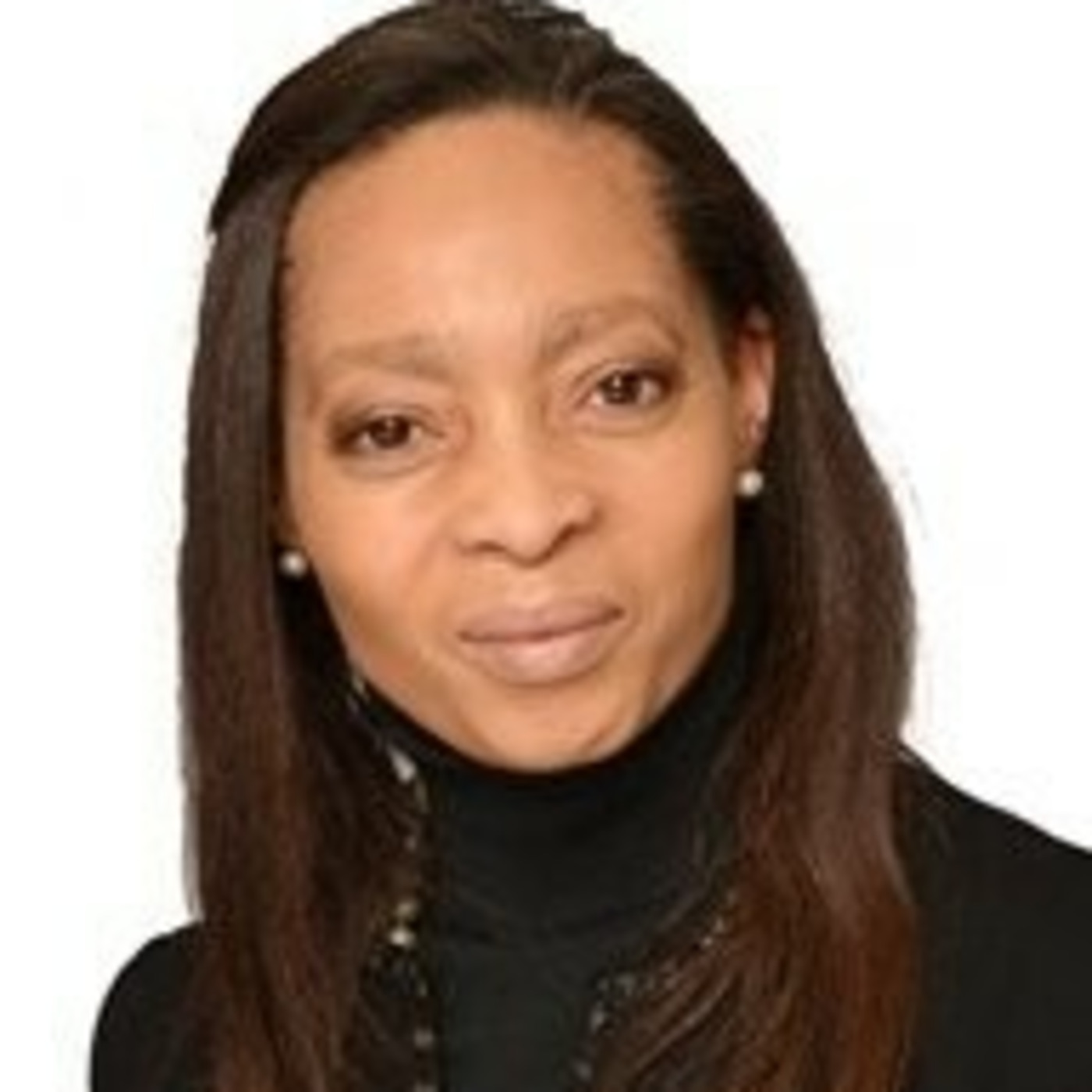
Aoifinn Devitt: People do need to feel safe, but I, I think that part of feeling safe is also building your own resilience. Building your own resilience means actually finding strength to be able to counter what you meet. So it’s irresponsible to shelter people from absolutely everything. I think that it is important in giving freedom of speech to enable people opportunities to counter and to listen well. And in fact, I think that’s something that should be essentially taught in schools, the dignity of responsible and respectful debate.
Margaret Casely-Hayford: I’m Aoifinn Devitt, and welcome to the 50 Faces Podcast, a podcast committed to revealing the richness and diversity of the world of investing and beyond. By focusing on its people and their stories. I’m joined today by Margaret Casely-Hayford CBE, who until recently was Chancellor of Coventry University, a role she held for 7 years. She’s had an extensive career, having been a partner at Dentons in legal practice for close to 20 years, and has held roles as NED of the NHS, as a special trustee at Great Ormond Street Hospital Children’s Charity, chair at Shakespeare’s Globe, and as a board member of Co-op, to name just a few. We featured her on the podcast in February 2021, where we discussed her role as a champion for diversity in the law, and are delighted to now welcome her back to discuss her candidacy for the Chancellorship at Oxford University.
Aoifinn Devitt: It is indeed the Chancellorship, yes, and thank you very much for inviting me.
Margaret Casely-Hayford: So in our earlier podcast, we discussed your fascinating career journey and your various career moves, as well as your move into board roles. You spent 7 years in the role of Chancellor at Coventry University. Looking back at those 7 years, what were some of your proudest achievements there?
Aoifinn Devitt: I think that actually you, you started in your introduction by talking about the turns in my career, and one of the really key steps that I took.
Speaker C: Was leaving private practice where I had.
Aoifinn Devitt: Been for 20 years and going into the John Lewis Partnership as a director. That was a turn that really made me focus on the importance of good governance, seeing how the that really can create an entity that is seen as.
Speaker C: Iconic and pivotal in its role and at the helm of, of an industry. And good governance has been something that I’ve been really fortunate in being able to participate in through many of the moves in my career. And joining Coventry was really wonderful because of being able to go into an area of academia that I hadn’t been in before. And it’s a strangely sort of hands-off sort of role in that you’re sort of totemic, you’re sort of ambassadorial, but you do have to make sure that you understand the industry really well so that you can champion it at the right levels. And say, for example, speaking on behalf of the university and its sector to central government, which I did at times, and making sure that it— you represent it For example, when talking to industry and seeking opportunities for links, whether that’s to help get work placements or to strengthen the pipeline of potential opportunity for students. And one of the things that I’ve been seen as is a sort of diversity representative, and I don’t mind that because it means that people who might think to themselves, I’m not sure whether that’s for me, whether it’s women who wouldn’t otherwise have thought about getting into academia at a late stage in their career, whether it’s people of color, or whether it’s people who really just hadn’t even thought about it, but just because I look different, it’s made them think, perhaps that’s for me. I’m happy to be that diversity representative, and I’ve done a number of talks in that respect and say widening perception of opportunity just by being there is actually helpful. And then one of the things that I did do, which was helped a lot by the university, was to set up a charity called the Gallery of Living History with Andy Serkis and Jonathan Cavendish, the actor and film producer. And that was during lockdown. It was a sort of response to the death of George Floyd, the murder of George Floyd. And we were thinking about how we got people to look at each other.
Aoifinn Devitt: With greater respect and dignity.
Speaker C: And we established it really to enable young people to think about their forebears and what their forebears did. And as part of the historic context in which we find ourselves, because history is so often written from the perspective of kings and generals, and we wanted to say everybody has a role and everybody’s forebears helped to build the city, the community.
Aoifinn Devitt: The country.
Speaker C: So we established the charity, and the charity actually has allowed children and students to work together to research unsung heroes. And it’s been great to see the student proctors find themselves in giving them an opportunity to use their skills in a practical way. And then through that, they’ve actually helped widen the pipeline by stretching out to.
Aoifinn Devitt: Schools, reaching out to schools where young.
Speaker C: People who might not otherwise have come through the portals of the university have come through to use the university’s workshops, understand how they can research better and create new stories of unsung heroes. So that’s been fantastic. I’ve also done numbers of talks in schools about opportunities and so on. Again, widening access has been a really, really key aspect of who I am and what I do and what I champion. And then also just making sure that the Vice Chancellor’s messages go out to as many people as I can possibly help them to go out to. I mean, he’s a fantastically, what should.
Aoifinn Devitt: I say, farsighted individual.
Speaker C: And so it’s been great working alongside somebody like him as well. So I’ve learned the most enormous amount, and I hope I’ve been useful to Coventry in 7 happy years.
Margaret Casely-Hayford: That’s wonderful. And access comes out very strongly from your achievements there. And I do remember during our discussion in 2021, It was obviously in the middle of COVID a particularly challenging time for all institutions of education. And you talk there a little bit about your vision for what the modern university would look like, the university of the future, and how it might fuse the online opportunities as well as in-person learning opportunities, and also a lot more cross-institutional learning and exchange. Very interesting. But I think we will come to that when we speak about your vision for Oxford University. And I’d love to now hear what’s at the forefront of the mind of any leader of a third-level institution today as you see it. What are some of the issues that you think are most pressing? And then we can talk about your vision for what these would mean at Oxford University.
Aoifinn Devitt: I think it’s quite helpful that Universities UK, which is the vice-chancellor’s organisation, has literally just published— I think it came out today— a blueprint for growth which focuses really strongly on the need to stabilise the revenue for universities. It’s been something like 12 years since the fees rose, but I know that people see that an increase in fees.
Speaker C: Is something that’s of great concern because they’re quite worried about what that will.
Aoifinn Devitt: Do to student intake numbers. Having said that, a freeze of that.
Speaker C: Length of time really just makes for unsustainable economic budgeting.
Aoifinn Devitt: And so I think that their call.
Speaker C: For some form of indexation is right. I do think, however, that what that does throw into relief is a need for the public to be given evidence.
Aoifinn Devitt: And just to understand the story. You know, why do we need to.
Speaker C: Support the universities in the way we do? What do we really get out of this? ‘Cause I think that there’s, there’s been quite a wealth of information about the fact that if you learn more, you earn more. Okay, fine, that’s great for the individual.
Aoifinn Devitt: But there are social benefits, cultural benefits. You know, there’s, there’s different sort of.
Speaker C: Asset and capital growth in different ways. There are health benefits, there are social benefits, and then of course there’s the wider economic benefit and the enormous soft power benefit. From our sector, which is hugely respected globally.
Aoifinn Devitt: And we, we really do need to.
Speaker C: Have a really strong evidence base so that we can point to the numbers that really underpin all of that, so people recognize what it is they’re getting for the investment. And to me, that’s a really critically important thing. And the sector generally needs to be singing that song and to be looking at the data hard. But a chancellor of a global icon like Oxford really has the opportunity to really champion that loudly. So to me, it’s a really brilliant opportunity to just grasp that responsibility to marry the growth of the sector and the change of its model to make it more modern with giving people greater data.
Aoifinn Devitt: And really just sort of, I think, treating the public with respect and saying, this is what we do, this is who we are, this is the data to prove it.
Margaret Casely-Hayford: Let’s get back to that iconic status you mentioned before, because Oxford is obviously quite an unusual university with its college and hall and the identity and the symbolism that goes with an institution of such grandeur and stature. Can you speak a little bit about how you would weave that into your role? And, and you are an alum yourself of Oxford, I understand?
Aoifinn Devitt: Yes, that’s right. I’m a Somervillian, so a proud graduate, and in fact an honorary fellow of Somerville. I have a huge love for the college and the university, and it did so much to give me confidence and to make me the person I am. So I’d be really happy to celebrate and advocate and champion the University. I mean, I think that there are a number of aspects to the question that you’ve just raised. One is that, first of all, the colleges and halls have their own individual identities, but they are part of this unified whole, which is the University. And it’s really important that the Chancellor listens to, understands, accepts, and recognizes those various elements because they’re critical to the legacy and the way the institution’s structured. But it’s also important that that iconic role doesn’t mire the university in its progress as a modern institution. And so in respecting the status and its excellent legacy, one’s also got to be prepared to push forward in terms of pushing boundaries, testing norms, and enabling innovation and research as an organization. And I think that’s one of the things that Oxford has done brilliantly over the years. And it’s, in fact, it’s no accident that government often leans on Oxford. And it was really just brilliantly symbolic that during COVID the key challenges to the virus itself were founded at Oxford University. And that comes from researchers that push boundaries the whole time. So actually, championing and promoting that is critical to the future. But one needs to make sure that we’re doing this in a global context because of course, first of all, there’s the partnering aspect with— because you can’t do this on your own. There’s a really important role to make sure that you’re nurturing partnerships with industry, nurturing partnerships with other countries and other institutions, other academic institutions. There’s also the fact that one needs to make sure that there’s a stream of sensible funding coming in. And all of that means that you’ve got to make people understand the relevance of the organisation, the relevance of the institution in a modern context. So that means really sort of listening to the scientists, the thinkers, the philosophers, to make sure that one really can articulate its relevance, because everything moves really quickly these days, and the really key thing is to be agile in your messaging, agile in your operation. And so I think that the chancellor needs really to make sure that they’re under the skin of everything. To not just understand, but to be able to understand it so well that they can articulate all of that and make sure they’re in the right place at the right time to get the messages over appropriately.
Margaret Casely-Hayford: I love that. I’m definitely getting the themes of transparency, communication, proactive communication coming from that, as well as that balance act that needs to be struck between a heritage and an iconic status and a reputation. And this gets to the research agenda, and I think a topic that’s often on many lips when it comes to the academic institutions of today is around academic freedom. So given that academic freedom is essential to allow this research to flourish, what is your position on that?
Aoifinn Devitt: Well, obviously a university is a place of learning and learning comes from listening. It comes from accepting challenge. It comes from being able to accommodate, assimilate other points and perspectives. And to deal with those in a rational fashion. So allowing free speech, allowing academic freedom clearly motivates and promotes that. And so to me, that’s really important. I think it’s also important for what I, I mentioned before, which is pushing boundaries and testing norms. It’s actually all too easy to accept a body of thinking and to operate within that. And one of the things I learned from being a law graduate, a jurisprudence graduate from Oxford, was that there are two types of There lawyers. Are the lawyers who apply the law, and there’s nothing wrong with that. You, you know, you do you, that’s great. And then there are the lawyers that challenge things and say it can’t stand still, this is not the way it was meant to be, or this might be the way that it is currently, but that progress suggests, or our morality has moved on, And it suggests that we should test this and go in a different direction. And one of the really abiding memories for me was sitting at the feet of Lady Hazel Fox, who was actually the stepdaughter of Lord Denning. And Denning was one of the greatest challengers of norms, testing the norms. And I just think that that sort of academic freedom, that sort of liberation is really critical for the progress of society. And sometimes it can be uncomfortable, you have to be prepared to stand your ground. Last week I spoke to a wonderful young man who was chaplain of one of the City of London churches, St. Catherine’s Cree, and he said that people in certain roles— he and I were talking about the chaplaincy in the city and, you know, how difficult it must be given how increasingly secular the city is becoming— and he said that there are times when you just have to stand or something like a tent pole and allow the canvas to fall in such a way that others can come within it. But your, the, the importance of your role is to stand for something. And I, I just thought that was a really lovely analogy. So if you stand for something, you allow others to come in, you allow them a safe place in which they can operate. Because you stand for something, they can actually question, they can actually test, but they can see what the parameters are, they can see what the certainties are, and in fact they can even test you, and you need to be able to respond in a helpful fashion to enable them to mature, to move forward. That’s what a university environment should be. It should be like the tent on the campus that people can come into.
Margaret Casely-Hayford: So the other freedom, and I know you’ve already touched on this, is around freedom of speech, and this comes as much from the student body as well as from the academic quarters. And equally, there is the concern around safety on campus and feeling safe and hate speech, etc. And we really had a few years of having much of this play out in a public arena. So how would you thread that needle?
Aoifinn Devitt: Yeah, it’s a really tough one, isn’t it? Because people do need to feel safe, but I think that part of feeling safe is also Building your own resilience. Building your own resilience means actually finding strength to be able to counter what you meet. So it’s irresponsible to shelter people from absolutely everything. I think that it is important in giving freedom of speech to enable people opportunities to counter and to listen well. And in fact, I think that’s something that should be essentially taught in schools the dignity of responsible and respectful debate. But I don’t think that that should go to the points of putting people in danger. And we’re very fortunate in this country.
Speaker C: We’Ve got a great legal structure in that respect.
Aoifinn Devitt: You’ve got the Equality Act of 2010, which essentially safeguards people to quite a wide extent. We’ve got the laws that prevent people from being put in danger of their lives. And, and I think that provided one ensures legal compliance, there’s an enormous amount of room to maneuver and to enable what I would say is the growth of resilience in listening, learning, and respectful debate. And as you know, it’s often been said, I might not agree with what you say, but I will go to the death to protect your right to say it. What I don’t have is the right to put somebody else’s life in danger. In order that you should say it.
Margaret Casely-Hayford: And just to tie this then, we’ve already spoken about diversity as a need that is in place in order to make institutions and society more sustainable. And clearly this resilience is is a, a real backbone of sustainability too. Can we just tie this together in, in just hearing maybe a few words on how sustainable you want the institution to be and what you would do around the resilience, not just to speech and speech that was not palatable perhaps, but also around environmental change?
Aoifinn Devitt: That’s such a good question because you were talking about sustainability. One of the really important things is to widen access so that you are not going to miss the next Einstein because they can’t get to university because they can’t survive because financially it’s too difficult for them. I mean, it’s really interesting to note that in, I think it was about 2022, there was a report that said that 1 in 4 of the young people at age of 18 in the Northeast can expect to go into higher education, whereas it’s around 50% in the Southeast. And if Einstein, and in fact, interestingly, Einstein’s wife was thought to be the actual writer of a lot of his papers, but of course, because of the way that women were treated at the time, she was sidelined. And so that says a lot. So if young Tina Einstein is sitting in the Northeast of England, she has a much lesser chance of going into higher education than she would if she was sitting in the Southeast. Well, that is completely ludicrous, and it’s, it’s bad not just for her but for the economic growth of the country as well as the prospects of excellence within the education establishment. So I really strongly advocate widening access, and in order to do that, it does mean that we need to think about how we create a more stable revenue stream for universities and the maintenance grants, whether it be through bursaries, grants, loans, accessibility for the students. So yeah, that sustainability question is a really, really big one. And as I say, it’s great that the Blueprint for Growth has been published asking all of these questions and really exhorting the sector to look at itself in a transformative way. And I mentioned the farsightedness of the Vice Chancellor of Coventry. These are points that he’s been making for quite some time. So I was actually really pleased to see them so deeply enshrined in the blueprint.
Margaret Casely-Hayford: Well, we have a lot to talk about clearly, and this may only end up being part 1 of this set of podcasts, but I’d love you to just, in order to wrap up, it’d be great if you could capture for us a creed or motto that you live by or any words of wisdom that capture the essence of your personality and your commitment to academic life?
Aoifinn Devitt: I think I probably said this when we spoke last time, that I’ve had a motto that I’ve lived by for some time: I can, I will, just watch me. And I think it’s something for many women and also ethnic minorities to think about, because we, we tend to be marginalized because of who we are. We therefore have to prove ourselves. And there’s— you walk into the room and you can feel the doubt.
Speaker C: You walk into the room and you.
Aoifinn Devitt: Can see people thinking, have you come to make the tea. And I do think it’s really important that we bear in mind the fact that we’ve got that slight burden to bear. I mean, it’s slightly, it’s gradually going. People have greater trust in our ability, but I’m happy to break ceilings to demonstrate what I can do and hopefully to allow others to let the light shine on others. And I was just thinking about the fact that it’s almost a millennium since Oxford was founded as a learning institution. And it’s never yet had a female chancellor. So that’s a, what is it, a 950-year glass ceiling, which I think apart from sort of the religious institutions is probably the world’s oldest glass ceiling. And it would be really fantastic to break through that and just go, “I can, I will, just watch me.”.
Margaret Casely-Hayford: And indeed, I will take away from this your lifelong commitment to taking a stand. To being a first, to having a principal position on almost every topic, and to seeing that through with commitment and grit. And thank you so much for coming here, Margaret, and having this conversation with us.
Aoifinn Devitt: Oh, thank you for asking me. It’s been a great pleasure. Thank you very much indeed.
Margaret Casely-Hayford: I’m Aoifinn Devitt. Thank you for listening to the 50 Faces Podcast. If you liked what you heard and would like to tune in to hear more inspiring investors and their personal journeys, Please subscribe on Apple Podcasts or wherever you get your podcasts. This podcast is for information only and should not be construed as investment or legal advice. All views are personal and should not be attributed to the organizations of the host or any guest.



Aoifinn Devitt: Our next guest sits at the intersection of innovation and change at my alma mater, Trinity College Dublin. Hear from her about the innovative microcredentials designation that they have introduced, what the impact is, and what this means for the university learning of the future. I’m Aoifinn Devitt, and welcome to the 50 Faces Podcast, a podcast committed to revealing the richness and diversity of the professional world by focusing on its people and their stories. I’m joined today by Professor Orla Sheehills, who’s the Vice Provost and Chief Academic Officer at Trinity College Dublin, as well as holding the position of Professor in Molecular Diagnostics. Prior to her appointment as Vice Provost in 2021, Orla served as the Director of Medical Ethics in the School of Medicine, was the founding director of the Trinity Translational Medicine Institute, and was Dean of the Faculty of Health Sciences from 2019 to 2021. Most recently, Orla was elected as a member of the Scientific Council of the International Agency for Research on Cancer for 2024 to 2027. This is a cancer research agency of the World Health Organization that supports cancer prevention research. Welcome, Orla. Thanks for joining me today.
Orla: Thanks so much, Aoifinn, and it’s lovely to be here.
Aoifinn Devitt: Well, I’d love if you could talk a little bit about your background, your progress to this role ultimately, but, you know, a little bit about your path.
Orla: Okay. So when I left school, I suppose I had a bit of a dilemma. I loved science at school, I was also really interested in law, and so I wasn’t really sure which path to go. So I went the scientific way. I studied biomedical science, and from there was very lucky in the ’80s to get a job, an actual job, in Trinity College. So I worked initially in the Sir Patrick Dunne Research Laboratory, which is based up in St. James’s Hospital. So it’s unusual that it’s an academic lab but based within a clinical setting. And that gave me the foundation to then go on, do my PhD. I subsequently got an academic post, start to build up my own research group, and began teaching. And meanwhile, in the back of my mind, I always still had this niggle, what about law? So I took a figary and went back and did a master’s in medical law and ethics. And that was actually, I suppose, in one way unusual, but in another way really helpful because it allowed me to bring those two disciplines together. And so I developed more teaching modules in medicine and for some of our research science courses involving ethics in the context of biomedicine. And then from then I became the director of the Translational Research Institute. Again, it’s based up in St. James’s. It’s Trinity’s newest research institute. After that, I was elected to become the faculty dean. And then 3 years ago, I was asked to become the Vice Provost and Chief Academic Officer.
Aoifinn Devitt: Well, fantastic. And we’re going to speak a lot about the education aspect of your focus right now and some of the changes you’re putting in place in Trinity, which I’m very excited about. But just a few questions on that background, because we do also have a medicine series and we dive into some themes in medicine. What exactly is translational medicine?
Orla: So translational medicine is that area of research that looks at questions that are patient-centered. So everything starts with the patient.. And they are questions that will ultimately assist a patient through their disease course. So whether that’s in identifying their disease earlier, in identifying markers that will triage those patients for more personalized therapies, or identify them for drugs that will more efficiently treat the disease that they have. And I was particularly focused on, on cancer research.
Aoifinn Devitt: And moving to your recently just started role there and the research for cancer at the IARC, what exactly is, would you say, the agenda there for the next 3 years? What excites you about some of the advances in cancer research?
Orla: So within the IARC itself, I mean, it’s a global organization in education and research and just developing knowledge in the context of global health generally, particularly then focusing on cancer, looking at things like the environment, the effect of the pollutants we breathe in, the foods that we ingest, how some of those can exacerbate cancers, looking at differences throughout the globe, different exposures, and how different types of cancers occur in different areas. And then also looking at the area that excites me particularly, which is in this precision or personalized medicine, using molecular diagnostics to understand how cancers progress and to try and think a couple of steps ahead of the changes that happen in a person’s tumour, so we can predict which drugs may be used at particular points in a disease path. Historically, we used to treat cancer with very toxic drugs, and you got a drug and that was the drug. And if it worked, good, and if it stopped working, that was unfortunate. Now we’ve a more sophisticated appreciation of how cancer evolves, and so we watch and we monitor the progress of a cancer through a patient’s disease course., and we can alter and tweak the drug depending on the genetic route or the genetic driver that’s pushing that disease in a particular way.
Aoifinn Devitt: And given the dramatic advances that we’ve seen in this area, and it has been quite recent, and I know that your current role also focuses within Trinity College on— there’s a funding aspect and the fundraising aspect to all of that. Just on the cancer side for now, what would you say is sort the of state of fundraising around cancer research relative to its history?
Orla: So I suppose it depends where you are globally. So in Ireland, we are seriously challenged to keep up and to keep relevant with our research because of the paucity of national funding available. We do quite well through Europe, but by the same time, when you look to the East and the amounts of money that are invested into biomedical research, we lag far, far behind. And even on the European landscape, the research budget has been cut dramatically. I suppose in recognition of some of the geopolitical events that have happened. But it’s very unfortunate that one of the first things to be cut always seems to be research.
Aoifinn Devitt: And that kind of brings me now to looking at third-level institutions and their role. From your position, your vantage point as Vice-Provost, what would you say is at the forefront of your mind as you look at the, the role of an educational institution like TCD and how it’s evolving?
Orla: So I think we are a very old university. So 1592, we’ve been around for a long time. And what struck me when I took up this role and, you know, the Provost first said to me, you know, what do you want to do? I had this sort of an existential moment where I looked and I thought, we haven’t really changed the way we teach throughout all of that time. We look at students in a very binary fashion. So they are either undergraduate students or they are postgraduate students. Or perhaps they are full-time students or they’re part-time students, but there’s very little flexibility in between. And I don’t think we’ve really evolved or matured in our way of delivering education to respond to the needs of society currently. And so that was the first thing I thought I’d like to change and have a look at.
Aoifinn Devitt: And how much of a role do you think COVID played in that? Be, I suppose, the swift, almost overnight acceptance of the online form of delivery. And I suppose the reach that that provided, but equally some of the limitations.
Orla: So I think it was a huge benefit, but there were challenges, as you say. So prior to that, online would always have been seen as the, the poor relation to in-person education. As you say, we were forced to pivot almost overnight to online delivery. Now, while that demonstrated and it accelerated the pace at which we could deliver online teaching, I think there is a big difference between an emergency online delivery of education and true sort of considered pedagogy in the way we deliver. So what it allowed us to do was pivot quickly and develop the technologies so that we could deliver online material. What we’ve been doing since is refining that so that the online experience is just as meaningful and in some ways perhaps more meaningful than in person. Now, there are benefits obviously still to both, but there is a place for good online teaching, and that’s where we’re getting to now.
Aoifinn Devitt: And I know in the professional workplace there’s a lot of focus on creating these collisions and these opportunities for people to collide together, I suppose, and their ideas to generate creativity and just generally build a better body of work. And I know in the interview with the Provost Linda Doyle, we talked a little bit about some of the cross-disciplinary initiatives in Trinity around Trinity East, these hubs of learning being created. What kind of a role will they play actually bringing people together physically in order to really look at cross-sectional as well as synergies?
Orla: Yeah, I think there’s huge benefit from that coexistence of different disciplines. I know myself, I said at the beginning, I started on a scientific route. I you then, know, incorporated some arts, humanities, social science elements and merged the two. And I think the world is richer for having a tight-knit intersection between varied disciplines. Even within the research institute I mentioned, we have wide-ranging modules, things like music and medicine. So it’s very important, I believe, to, you know, incorporate the arts into what would be traditionally scientific subjects and vice versa, because there’s so much you can learn from one another and push one another on. I think from looking at problems with a different lens or from a different perspective, we can often see more clearly through to a solution.
Aoifinn Devitt: And then on the topic of continuing education, because I think this is another factor we’ve spoken about, how quickly some fields are developing, technology, medicine itself, and the need for this lifelong learning commitment.
Orla: Yes.
Aoifinn Devitt: And in particular, I wanted to speak with you about the microcredentials initiative at Trinity. I think this is quite innovative and love to hear how that started, what the goal is and how it’s going, I suppose.
Orla: Yeah, so we’ve been doing quite a bit on microcredentials, on all forms of lifelong learning, really. Microcredentials are short accredited pockets of education that allow the learner to dip in or dip out of a particular topic. They offer lots of opportunities. So it could be for somebody who wants to see if their interest in a particular topic might be fulfilled. Equally, we are working with industry and enterprise partners to deliver educational modules to upskill staff within the workplace, and the government has provided funding as well for people to upskill and change the direction of their professional careers. So they have quite a wide remit, and there is a broad variety. In Trinity, we’re focusing in the initial stages. We got funding from the government to establish a suite of micro-credential courses, and we’re looking at 4 pillars really. We’re looking at environment and sustainability. We have microcreds on well-being and the care community, ICT, data science and engineering, and then people, leadership and culture. So 4 basic pillars, and we have suites of courses within each of those, and all of them have been developed in conjunction with enterprise, looking at the skills deficit here in Ireland and seeing how we might address some of those needs, working in partnership within industry and enterprise.
Aoifinn Devitt: And what’s the target audience? I think you mentioned some upskilling within existing roles, and I think the other perhaps binary way that we used to look at students was mature or not mature, whereas of course there is a spectrum across of age across which people would want to learn. So what’s your target audience?
Orla: So my target audience is everybody that we don’t currently educate. So that’s a little bit ambitious, but I suppose there are pockets of students that we are aiming for. I think the large group would be people either in a professional capacity, working in industry, in enterprise, or in the healthcare setting who need to or want to upscale in particular areas. So those pockets that will assist them in that further down the line, we want to have people who will look at microcredentials, collect them, and ultimately gather them and assemble them into a major award. At the moment, they are small, 5 or 10 ECTS modules. So ultimately, I— the ambition would be to be able to knit them together, as it were, into a substantive degree. And that might be from a single institution, multiple institutions in the same country, or multiple institutions across countries. And that would be the ultimate goal.
Aoifinn Devitt: And what response have you had so far? And where are you in this goal? I suppose in terms of, are we only at the beginning of your ambition?
Orla: At the beginning. So we’ve done a pilot, we’ve had about 6,500 learners. I think we’ve almost 3,000 applications this year. So we’re on a steep upward trajectory. We brought out our initial— our first offering was about 67 microcredentials. We’re expanding that all of the time and we’re part of an evolving movement within Ireland. There are all of the other institutions are developing their own suites of microcreds also. So there is a widening sort of universe of microcredentials available within Ireland. We have, as I say, targeted those specific 4 areas in the short term. We’re expanding that all of the time, but we’re building closely on our links with enterprise, trying to circle back to make sure that what we’re developing is relevant And that especially if we’re expecting a company to sponsor their staff to go on a course, it needs to be something that’s relevant for that particular company. So that part of the work is ongoing and evolving. But I’m also very keen that we would look at and try and, you know, through our access pathways, encourage students to come in. There are some scholarships available. There are other routes of entry into microcredentials. Traditionally in Trinity, we have a long history of our Trinity Access Programme where we try and help students who wouldn’t typically come to Trinity to come here and experience the student life that we have on offer and the education that we can give. But we don’t— and I don’t think anybody really in Ireland has looked beyond that. Those people who missed the opportunity when they left school and maybe for other reasons have gone out into their life, maybe now they have caring responsibilities, maybe they have work responsibilities, and it’s to try and encourage them in and entice them into third level education so that they can then explore and expand and develop themselves.
Aoifinn Devitt: And I suppose two questions really. One is how much has the advent of AI— and I know that the Provost is probably one of the most forward-thinking academic leaders I know in terms of her embrace of AI and her vision as to how it can be used— but obviously fast-forwarding that into the workplace and the kind of skills that will be needed to complement that, how much of that has influenced your development? And then I suppose a broader question around universities and careers in general. I think, you know, when in my day back in the ’90s, there wouldn’t have been a massive career university integration. It was the idea that there was a career office and then you moved on. Is that changing?
Orla: Yes. I mean, we actually have a growing careers office, which is a wonderful interface, and I see it just as that. It’s quite a bidirectional fluid interface. That allows engagement with enterprise partners, also allows them to voice back to academics what they need, because there’s no point in us, 400-year-old university, delivering the same things we’ve always done. We need to be relevant to society. We need to provide and create students who are alive to society’s needs and who can respond to them and deal with the problems that we, we currently face. And so it’s really important for me that we have that input back from enterprise and industry. Increasingly, we have adjunct staff who will come from industry sponsors or partners who will come and educate and teach on courses. And that brings a huge relevance, I think, to the material that’s being taught. And it’s really important for the industry and enterprise partners to feel that they can input and co-design. But it’s equally important for the students to know that what they’re learning is relevant, does have a career trajectory, and there is a career pathway that they can follow and they can see where they might lead or eventually end up.
Aoifinn Devitt: And I suppose when you look at subject matter that will perhaps be in focus going forward, and we’re getting close to the end of the conversation here, just in terms of gaps maybe that you think are really apparent in the educational arena, whether it be subject-wise and this flexibility, how do you think this will evolve? Say if you were to look back in 5 years’ time, where do you think you’ll be with this offering?
Orla: With microcredentials? Yes. So I think, yeah, I think they will evolve dramatically. But I really would hope within 5 years’ time is that we have sufficient agility and flexibility within our own infrastructure and systems so that we can efficiently stack microcredentials for students. That’s our limiting factor at the moment. Our computer systems are quite archaic. They haven’t been invested in in many years, and they need to be updated so that we can have that agility. At the moment, to give you an example, it takes some unfortunate person in our academic registry office the same length of time to upload a microcredential as it does an entire master’s program. So it’s a completely manual process, and something like that shouldn’t be happening in this day and age. And I would hope to God in 5 years’ time that that isn’t the case, that these things happen seamlessly. I would also hope that we can incorporate AI not just in our teaching, but also in our processes within the university so that we can streamline things that currently take so much time, manual time, manual labor, to free up those people to use their creative skills in much better and more productive ways.
Aoifinn Devitt: And my last question is a bit of a surprise question. I put it in, put on script, but it’s really this been the material that we’ve talked about that’s generated it. And it’s really around the marriage of the old and the new when it comes to theory and learning, because clearly medical ethics is probably as old a topic as medicine itself, but there will be modern-day influences in how we interpret that. And a book I’ve been reading, The Almanac of Naval Ravikant, speaks a lot about the older the idea, the more relevant the book. So essentially, if we’re talking about interpersonal relations or family, the 2,000-year-old book is, is just, is probably as relevant because it stood the test of time. How in a university do you get that blend of teaching the old, the old maxims that never change and have actually stood the test of time, with the demand for the new?
Orla: Okay, and I actually think, and I completely agree with you, that those old questions are the same questions. I mean, history keeps repeating itself. We keep walking ourselves into the same problems that we’ve hooked ourselves into in the past, and, and the answers don’t change. So I think the way of doing that is to demonstrate how a question which is as old as the ages itself is relevant, and you can superimpose a historical question into a current dilemma and work out, and you, you can then use history to see how has this been addressed in the past, where did it go wrong, where did we make progress, and how might we use that learning in order to inform what we’re going to do with today’s problems and crises.
Aoifinn Devitt: And I think translating the old, I suppose, the older arts Yes. Into modern-day application and leadership, you know, refers back to philosophy.
Orla: It absolutely does. For the med students, I used to do a particular lecture. I’m just thinking of it now. It’s society’s evolving attitudes to the body. And we went right back, you know, 2,000 years and cataloged exactly how things changed, how our thinking changes. The reason it’s relevant is because it speaks to the core of maybe stem cell research. But the same questions that are there that are relevant for stem cell research, you can follow them all the way back and look back at Michelangelo stealing bodies, dissecting cadavers in a completely illegal way, but without which we wouldn’t understand anatomy. So you can use utilitarian arguments for doing particular things, and you can see where things have gone too far. And I think students actually find that fascinating to see ‘Oh my God, this is so relevant to stem cell research.’ But God, that same question has been rehearsed over centuries.
Aoifinn Devitt: Hence why the rich repository of universities are so relevant.
Orla: Yeah, and that’s why we need comprehensive.
Aoifinn Devitt: Universities, and they need to be allowed to thrive. Well, Orla, thank you so much. I hope you will package that medical ethics content into a microcredential someday that we can access remotely and take away, because it seems absolutely fascinating. And thank you to you for the leadership you’re providing. It’s an astonishing example of just how well universities are evolving behind the scenes, and I couldn’t be more excited, as I said in my interview with Provost Linda Doyle, to be an alumna of this university and to see what, what’s going into place. So thank you for the innovation and clear joy in learning that you’re bringing to the role.
Orla: Thank you, Aoifinn, and thank you for being a wonderful alumna.
Aoifinn Devitt: I’m Aoifinn Davitt. Thank you for listening to the 50 Faces podcast. You can subscribe on Apple Podcasts or wherever you get your podcasts. This podcast podcast This is for information only and should not be construed as investment or legal advice. All views are personal and should not be attributed to the organizations of the host or any guest.
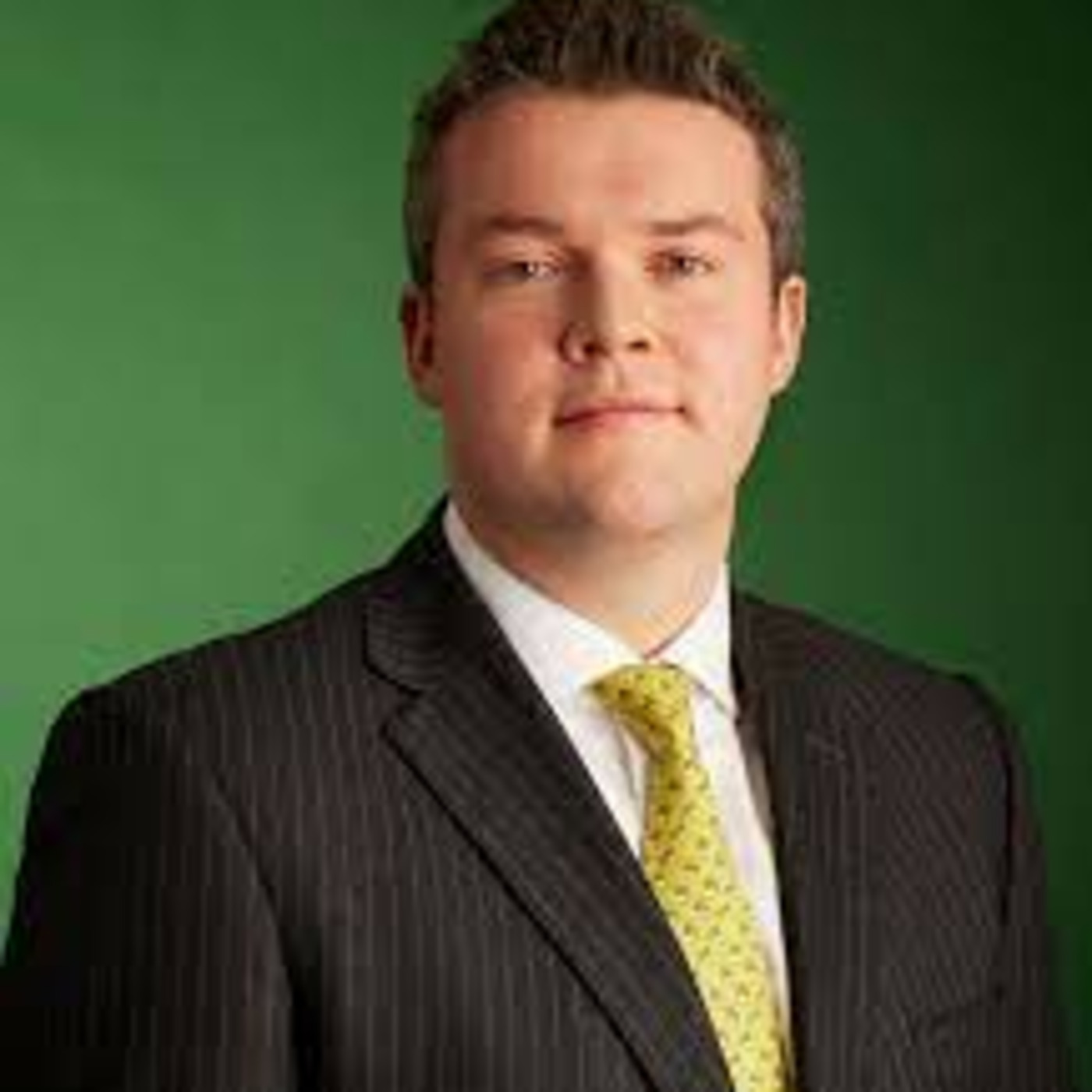
Aoifinn Devitt: Series 3 is kindly supported by Eagle Point Credit Management. Eagle Point Credit Management is a specialist investment manager principally focused on income-oriented credit investments in niche and inefficient markets. Founded by Thomas Majewski in partnership with Stone Point Capital in 2012, Eagle Point currently manages over $7.8 billion in AUM. Investment strategies pursued by the firm include collateralized loan obligations, CLOs, portfolio debt securities, and other opportunities across the credit universe. Currently, Eagle Point is the largest investor in CLO equity in the world and one of the largest non-bank lenders focused on providing financing solutions to credit funds. You can learn more about Eagle Point at eaglepointcredit.com. What are some of the unintended consequences of the bank crisis? Why is superintelligence sometimes overrated? And what are some of the trends we are overlooking today? Find out next. I’m Aoifinn Devitt, and welcome to the 50 Faces Podcast, a podcast committed to revealing the richness and diversity of the world of investment by focusing on its people. And their stories. I’m joined today by Duncan MacInnes, who is an investment director at Ruffer LLP, where he has spent over a decade. He previously worked in wealth management. Welcome, Duncan. Thanks for joining me today.
Duncan MacInnes: Hi, Aoifinn, and thanks for having me.
Aoifinn Devitt: Well, let’s start with your background and career journey. Can you talk about where you grew up, your early interests, and how ultimately you came to enter the world of finance and investing?
Duncan MacInnes: Yeah, so I’ll try and make my background as interesting as possible. I grew up in a place called Motherwell, which is just outside Glasgow, where I went to school and university. And that’s in Scotland, for those of you that don’t know. And in high school, I would say that I was a capable student, but somewhat lacking in motivation and direction. And really, for me, it was all about sports, friends, computer games, that sort of stuff. And only because it was quite a good school was I sort of handheld through to university. Otherwise, Lord knows where I’d have ended up.
Aoifinn Devitt: And when you mentioned sport, was there any particular sport that motivated you more than others? Anything that captivated you?
Duncan MacInnes: It was always rugby for me. I’m not sort of— I’m not built for ballet, so rugby worked quite well. And played that from the age of sort of 7 through to the end of university.
Aoifinn Devitt: Right. So we’ll come back to that maybe just to see in terms of lessons learned. And then when it came to choosing a discipline or a direction, How did that pan out?
Duncan MacInnes: My family are medical, lots and lots of doctors on my dad’s side, and the advice from them was to not be a doctor, and in fact, how about suing doctors? So I was steered towards law because I liked an argument and I was relatively verbose, as we’ll all find out. And so I ended up doing law at university, or reading law at university, but actually All that taught me was that I didn’t want to be a lawyer. I realized very, very early on in my legal degree that this was not for me, that it’s not like the law that you see on the TV. There’s only, only very few lawyers get to stand up in court and pontificate. So I really did not enjoy my degree. And the only thing that came, the only positive that came from it is my wife, who I met at university and we’re sort of still together as far as I’m aware.
Aoifinn Devitt: And then in terms of, I’m certainly one can pontificate in investment, I suppose that goes with the job. How did you then find yourself applying to investment roles? Did you find your legal skills enhanced your aptitude there?
Duncan MacInnes: A very, a very meandering journey. So I really, all I knew, like I said, is I didn’t want to be a lawyer. And then in the summer of second year after all of university, my dad died fairly suddenly from a sort of aggressive cancer and my mom. They were separated, long divorced at the time, emigrated to the UK in the same week. So it was a pretty traumatic week. And that sort of jarring experience, I think, forced me to grow up quite a bit and actually to take ownership of financial affairs to a degree that I hadn’t before then. But in terms of what came next, so I sort of survived the rest of university. And I ended up at the end of university being a sort of, you know, decent student with a decent degree from a decent university that was Glasgow University. So without a sort of burning vocation or actually any really useful work experience, which, know, you if you even brought that forward to today, it would be almost impossible to get a good graduate job in 2023 with that CV. But back in 2007, so we’re talking about then, It was still difficult. And so what I did was the only reasonable strategy was spray and pray. So I applied to everything you could imagine, from Unilever to Tesco to MI5 to the Big Four accountants, investment banks, legal firms. And I had a legal traineeship lined up actually when I got a job at Barclays. And I have to be honest, I was totally cynical about it because I didn’t know anything about what I wanted to do. I ditched the legal job and took the Barclays job because the money was a lot better. It really was as simple as that. But if we sort of go on a bit, the Barclays grad scheme back then was— it was just before the financial crisis, so you were still in the sort of heyday of big bank spending. So it was a very luxurious program where you rotated around different departments and different cities. So I worked in Glasgow, Edinburgh, London, and Singapore for 6, 7 months in each place. And it was only when I got to Singapore that I sort of fell in love with something, and that something was markets. It was a really interesting time to be working and learning about financial markets because the job began 2 weeks before Lehman Brothers went bust. And I think I moved to Singapore in Q1 2009, I think it was. So that was pretty much the exact market bottom. Post-financial crisis. So I had this formative experience of financial markets driving everything that was happening in the world, being the focus of everything and getting to be, although incredibly junior, right at the coalface of that. So this idea that in financial markets you could have a thought or an insight, and if that is proven correct, you get to make money from it. Was just so sort of exciting to me, and it sort of feels like the biggest and best game in the world played by, you know, lots of clever people. So all of a sudden, having gone from having no direction, I had this thing that I really, really enjoyed. And for me, it sort of became tunnel vision from that point.
Aoifinn Devitt: It’s really interesting. A couple of points there I’m taking away. First of all, it’s good and instructive that one doesn’t need to have necessarily a storied university career full of medals and awards, because I think not everybody does. I mean, especially the graduates coming out today who may have had a sidetracked university experience. Equally, those graduate schemes are fantastic. I think they still offer amazing opportunities, especially those with global rotations. And I also spent time in Hong Kong in my early 20s, and I found that there’s something about Asia that makes it very immersive. Maybe it’s the very concentrated nature of those cities, the fact that, you know, you’re surrounded by skyscrapers, surrounded by markets, by retail investors sucking up every piece of information. It is the ultimate immersive game if you think of in it that— They’re.
Duncan MacInnes: Very long days as well. In Asia. I mean, that’s what I sort of remember, was that I would start at— I think I started at 7 AM, and people would take long lunches, but they would work until 6 or 7, and they would often go for dinner and then come back to the office. So I think it was maybe something to do with the fact that people have small apartments in Hong Kong and Singapore, but actually the office was maybe a more enjoyable environment to be in. So people worked really long hours, which, like you say, made it very immersive and collegiate.
Aoifinn Devitt: And you were in private wealth at this time, is that correct? Or did you— I, yeah.
Duncan MacInnes: So I was hired for Barclays Wealth, which was the private bank of Barclays. And the intention of that graduate program was that you would end up as a private banker. The rotation to Singapore was into equity research. And that was when I sort of realized that I wanted to be closer to the coalface of investment decision-making and investment research than the client side.
Aoifinn Devitt: And if we take it forward then into what’s on your mind today, so Ruffer is known to have a multi-strategy approach. It’s known to have a wide variety of investment views, some of them contrarian. As you look out, we’re recording this second quarter of ’23, what’s on your mind now? What’s at the, I suppose, the forefront of your mind as you look to markets? What’s obsessing you today?
Duncan MacInnes: So for those of the listeners that don’t know, very brief history of Ruffer. The business began in 1995 from sort of humble beginnings with a shared office with another firm. We’ve grown to $26 billion under management for a whole variety of clients, from private individuals through to sovereign wealth funds all over the globe. But for those, all those different client types, we’re doing one thing, and the one thing is trying to build an all-weather portfolio. So global multi-asset, totally unbenchmark, go anywhere, which, as you say, leads us occasionally to contrarian or interesting positions. And I think reputationally, we’re known as bear market operators. So we’ve done particularly well in the crises. So we made money in the dot-com crisis, we made money in the financial crisis, and we made money in the COVID crash, and then in 2022 where almost everything fell as well. So that’s really forged the reputation of the firm. But over the long term, we’ve actually, we’ve outperformed the stock market and we’ve done it with less risk and less volatility. But I think the biggest difference between us and conventional asset managers is that Most investors start from a position of return maximizing. How can I make the most money? And then maybe I’ll sprinkle some hedges around the outside of that to try and mitigate the downside. Our approach is almost completely the opposite. We have this sort of minimax regret, so minimize the probability of your maximum regret. How do we make sure we don’t lose money? And then once we’ve done that, how much is left to shoot for the stars? So Bearing all that in mind, how do we look at 2023? I think it’s been a pretty surprising first quarter of the year. So if you went back to December and said by the end of the first quarter, 3 of the top 30 US banks will have disappeared and Credit Suisse will have been silently assassinated over a weekend and merged with UBS, do you think stock markets and bond markets will be up or down? I think most people would’ve said that sounds like they’re going to be down quite a lot. And in fact, they’re actually pretty substantially up. So I think the big question, the live issue is whether or not this is a banking crisis. And if it is a banking crisis, to what extent it looks like 2008. And I think the headline is it doesn’t look like 2008. It’s not a global financial crisis. We don’t need to worry about Alastair Darling saying that the cash machines were going to run out of money. But that doesn’t mean that we shouldn’t be very worried about what’s happening here. So I think this is quite a— the acute phase of this crisis has probably passed, but the chronic phase could go on for quite a bit longer. And the problem at the center of this that we see is that central banks and governments have a very difficult choice at the moment because they have competing goals. On the one hand, they want to focus on financial stability. But they also have to manage monetary stability. And monetary stability effectively means inflation. And if you try and fix financial stability by posing the banks with money to make sure that they survive this, then that exacerbates the inflation problem. And if you continue to raise interest rates and withdraw liquidity from the system, which is what they’ve been trying to do for the last year or so, that will exacerbate the bank run. So how they square this circle is going to be the big issue for 2023. And the sort of the way that I try to describe it to people is that money is moving closer to the center of the financial system. So people are withdrawing money from the regional banks, the smaller banks, and they’re moving it to treasuries and money market funds or to JP Morgan and Citigroup where they know it will be safe. But the closer the money moves to the center, the less monetary energy or velocity it has. And that reduces the risk-taking capacity of the financial system as a whole. Now, every individual is acting rationally here. So even though I don’t think people have to worry about the safety of their deposits, the truth is, is that you can earn more in a money market fund than you can in the bank, and you don’t have to worry about it. So why wouldn’t you do it? But if everyone— it’s a sort of tragedy of the commons. If everyone acts like that, then it creates a really big problem. And it’s that reduced risk-taking capacity of the system and specifically It’s the smaller regional banks that do lending to the real economy. So small and medium businesses, commercial property, these sorts of things. And that we are seeing day by day as the data comes out is having a real squeeze at the moment. And that could be quite concerning and potentially will tip us into recession this year.
Aoifinn Devitt: Really interesting analysis. And I like your acute versus chronic analogy. Clearly, once born into a medical family, you will always have that with you, the medical analogies. Having been in a medical family myself. But I’d love to say, so that’s a very, a fairly big idea out there. And what one of my next questions was around anything that we’re overlooking or perhaps not fully appreciating in today’s markets. And Rothbard, as I mentioned, you know, was early perhaps into gold and into other kind of commodities at the time. So if we do the thought experiment of taking that centralization of, of money and the lower velocity to its logical conclusion, Where do we go from here? What are some of the scenarios? And maybe we talk a lot about things breaking and maybe this wasn’t the thing that broke, but could anything else break?
Duncan MacInnes: There’s this idea that when the Federal Reserve raises interest rates, it tends to raise interest rates until something breaks. So there is now a question as to whether the thing that breaks, whether that was Silicon Valley Bank and Signature and Credit Suisse, it’s hard to say. So I like to think of these things you think back about the financial crisis and you think of it as an event, but it wasn’t really an event, it was a process. So over the course of 2 years, you had Northern Rock, then 6 months until Bear Stearns, then another 6 months until Lehman Brothers, and then another 6 months until the stock market bottomed in March 2009. So perhaps Credit Suisse is Bear Stearns, but I don’t think it’s Lehman Brothers, and I don’t think it’s the bottom. So I think there’s potentially more things to break But what I would say in terms of what people can do about investing is that none of this stuff is good news that I’m talking about, but actually it would be okay if it came with low asset prices. So there wasn’t much good news in March 2009, but it was still a phenomenal time to invest. Unfortunately, there’s lots to worry about at the moment out there. There’s the banking crisis, there’s the risk of recession, there’s the war rumbling on, there’s China making noises about invading Taiwan, there’s commodity and wage pressures, there’s taxes going up. But if asset prices were cheap, I think you could still find a way to get excited about things. But unfortunately, they’re not particularly. Risk premiums, which are sort of the additional return that you earn above cash for owning riskier assets, are pretty low on average. So provocatively, I’ve been saying to clients, why take risk if you don’t have to? So at the moment, you can earn 5% in US dollar cash, in a money market fund or a very short-dated Treasury bill. And if you look at the earnings yield on the S&P, the S&P 500, it’s also 5%. So the stock market is subject to all of those vicissitudes and uncertainties that I mentioned. Cash is subject to none of them apart from inflation. So really, I don’t think you’ve been compensated for taking much risk. Our view would be that later in the year, you probably get the reality of recession. You get the consequences of this liquidity being withdrawn from the system. And our base case would be that the stock market revisits the lows of, of last year. And that might be the buying opportunity because I think you will get ultimately a government response, sort of fiscal policy response to try and get the economy going again from recessionary lows. But we probably have to feel more pain between now and then.
Aoifinn Devitt: Really interesting. And just like the SVB woes could maybe be said to have been hiding in plain sight, I mean, it wasn’t any secret that interest rates have been rising and that they’ve been forced into buying so-called low-risk assets, which as we know from the UK, low-risk government bonds can be less low-risk than we think in these extreme events. Would you say there’s anything else kind of hiding in plain sight? Can we take hints from the stock market, the bond market? The bond market doesn’t seem to believe the Fed with this inverted yield curve. Equally on the equity market side, tech stocks have been doing very well despite a lot of bad news and negative utterings there. So what’s actually going on? And are we missing something large?
Duncan MacInnes: Yeah, I think so. I think that first point you made about low-risk assets is very important. So what we sort of all learned to focus on was counterparty risk. And so you buy government bonds, you have no counterparty risk, so it’s a low-risk asset. What everyone overlooked was duration risk, the sensitivity to changes in interest rates. Of course, very long-dated government bonds come with lots of duration, and the long-dated inflation-linked bonds, which are so important to the UK pension industry, fell 70% last year. They were down more than Bitcoin. These were revealed to be much riskier than people thought. Full disclosure, we held some and still do. I think the risk hiding in plain sight and is being discussed, but I think is still underappreciated, is that the entire institutional asset management industry— pension funds, charities, endowments, and so on— have increasingly been drawn to illiquid assets over the last decade or so. So private equity, venture capital, private credit have become the flavor of the month. And I think there is a reckoning coming for these assets. Now, that’s bad news for investor portfolios, The good news is that I think to go back to the phrase of acute versus chronic, that’s a chronic problem, not an acute one. The benefit of the opacity and illiquidity is that I think these losses will be realized over a very long time. But I have pretty high conviction that there will be losses and they will be realized. But what you won’t have is the sort of cataclysmic down 50% that you’ve seen in some of the profitless tech public companies. Instead, you’ll see a slow-motion bleed over quarters of down 5%, down 5%, down 5%. And then in 5 years’ time, 10 years’ time, we’ll look back and we’ll say the vintage of illiquid and private investments from 2019, ’20, and ’21 were pretty poor. They were bad investment decisions. But it will take a while for that to be born out.
Aoifinn Devitt: And another question I just want to ask you about while we’re on this fascinating topic, you know, philosophical topic in terms of what investors are focusing on. In tech, there’s that old adage that we overestimate in the short term, underestimate in the long term. And it seems with some of these big events, whether it be the energy transition, there’s a lot of concern now, I’m based in the US, around will the US dollar continue to be the reserve currency? These are sort of long-term perhaps changes that sometimes get brought forward into short-term concerns. Do you think there’s anything out there that we’re perhaps worrying too much about today, that it’s longer dated and it will play out later, and something that maybe that it is a large, big structural change that we need?
Duncan MacInnes: That’s a good question. I think two things. I think one you mentioned, de-dollarization does seem to be the topic du jour. So every meeting I’ve done in the last few weeks, that has come up. It definitely feels to have sort of caught the narrative zeitgeist. And there have been various announcements from foreign governments of trade between nations. I can’t remember who the specifics were, but India is buying oil from the Middle East and they’ve decided to denominate it in gold or in yuan rather than dollars. So I think the direction of travel, the desire for de-dollarization from Asian economies or economies that the West would deem bad actors is clear. That will happen over time, I think. But I think that’s something that’s currently somewhat overblown. So the reality is that the dollar is the only game in town when it comes to a global reserve currency. So much of global debt outstanding is in dollars. So if you want to prove your creditworthiness or if you want to deleverage, you need the dollars to do it. So I think that that is a trend that will be live for the next decade. But the idea that we’re all going to sort of switch to buying our oil in Bitcoin or gold or yuan tomorrow is probably not going to happen. And then maybe another trend that is exaggerated, and we’re very much talking our own book here, is the demise of fossil fuels. So the energy transition is an inevitability. There is a huge amount of political capital and desire from the population for us to transition, never mind the fact that it’s possibly a scientific imperative if we’d like to stay on the planet for more than a few more decades. We will need to transition the economy off fossil fuels. However, the reality is, is that that will probably go a lot slower than the hardcore ESG proponents would like it to, and that fossil fuel demand, oil demand globally is still growing. And that’s because emerging markets continue to grow, global GDP continues to grow, everyone wants an air conditioner, everyone wants a car, etc., etc. So We have pretty significant exposure to oil in our portfolios because we think that is underestimated. Because when you look at the pricing of the assets, it would suggest that oil’s going to sort of disappear from the global energy mix in the next 10 years. I think that’s probably fanciful.
Aoifinn Devitt: Well, I could talk all day. We could go all around the asset pie chart and it would be fascinating. Just to move a little bit more to maybe investor sentiment, you mentioned having a lot of meetings talking about de-dollarization. I’d just love to ask you more in terms of the different priorities right now in terms of, say, institutional investors and maybe the private wealth investor. Do they have different things on their mind right now?
Duncan MacInnes: No, I think broadly we’re all wrestling with that same sort of menu of challenges: war, inflation, recession, interest rates, narrow risk premiums. But as a generalization, I would say that the biggest distinction is that institutional investors focus upon benchmarking, relative returns, career risk, not being willing to stick their head above the parapet on certain issues. Individuals, private wealth, worry more about preservation of capital, protection against inflation, and being able to sleep well at night. So I think philosophically there are sort of differences there.
Aoifinn Devitt: And the question I always ask on this podcast, given it does have a particular focus on diversity, So having started in the industry perhaps at the early part of the 2000s, have you seen any change in terms of its diversity? What are your thoughts? Studying law tends to be a bit more of a 50/50 equation in university. Any thoughts on how the diversity of the industry is evolving?
Duncan MacInnes: I would probably make a distinction between Ruffer and the industry, although acknowledge that both have more to do. I think both are heading in the right direction. But there’s more to do. The industry has undoubtedly improved, I think, since 2008 when my career began in terms of diversity of social class, gender, ethnicity. But where the industry fails, I think, is diversity of thought. So there’s still a really strong emphasis on finance graduates, pass your exams, think a certain type of way, think like a CFA. Know, You I did the CFA. And I sort of feel like I’ve spent the 10 years since trying to unlearn most of it. So, you know, there’s a lot of pressure on thinking a particular way in the finance industry. Whereas to contrast with Ruffer, I think Ruffer has done very well in terms of gender equality. We had a female CEO, several females on our executive committee and board, lots of female partners. But I think we have more to do in terms of social class and diversity of ethnicity. But, you know, we’re trying there, like I said. Where I think we’re very good relative to the industry, as well as gender equality, is that cognitive diversity. So we reputationally, as you said at the start, we think very differently from the rest of the industry. As a firm, we’ve got lots of people who think about things in different ways that come from different academic disciplines. Fiona, that I work with in the Edinburgh office, I didn’t touch a calculator or a spreadsheet from the age of about 16 to 22. That’s quite rare in finance. So I think we do very well in that regard. And I’ve never quite been able to put this as eloquently as I would like, but investing in finance, it’s a little bit like a language. And different people within the industry speak different languages. You have people that speak in quantitative terms, you have people that speak in qualitative terms, you have the value investing tribe that speak their language and a growth investing tribe that speak their language. Or you have people like me that sort of speak in riddles or metaphors. And I think we have a pretty good mix within Ruffer of people that speak all those different languages and that sort of bring different perspectives.
Aoifinn Devitt: I like that, the idea of this multilingual organization, certainly, and different clients speak different languages as well.
Duncan MacInnes: And I think that’s the— as well as literal languages. Yes, we have clients that speak lots of literally different languages.
Aoifinn Devitt: Yeah. Let’s get back to some personal reflections now. So over the course of your career so far, clearly finance is a humbling place as well. Have there been any setbacks or challenges or investment calls that you got wrong that have had an impact on you?
Duncan MacInnes: Yeah, it is definitely humbling because it’s one of the few industries where you get a scorecard on a minute-by-minute basis from the market reminding you how wrong or right you are. And everything is so measured. One of the biggest challenges when I made the jump from Barclays to Ruffer, that was sort of making the jump from wealth management to institutional fund management. And that’s not an easy one to traverse. There’s a degree of snobbery, I would say, between the two, where institutional fund management views itself as superior to wealth management. And to be honest, I think that is slightly unjustified. There’s really talented people in both. But what I was finding was that my CV as a wealth manager wasn’t taken seriously as I was only 24, 25, whatever it was at the time, trying to make that move. And so in hindsight, I’m not sure if I’m sort of overlaying too much method to the madness in hindsight, but I think when I was trying to manufacture that move, in hindsight anyway, it feels like the plan was laying the groundwork, Passing the exams was of course necessary, but I wrote an investment blog to try and showcase my work, I suppose, showcase my thinking, show that I was willing to go above and beyond and market myself effectively to potential employers. And I think that the lesson from that was probably that basically people are willing to take a chance on you if they see passion or potential.
Aoifinn Devitt: That’s so good. I had another guest who spoke about the problem of pigeonholing. And he was pigeonholed as a banker. He wanted to move into industry and strategy, and he was always thought of as just a service provider and a banker. And I had never heard of that. I’d heard of being pigeonholed as a lawyer, but pigeonholing is a problem. And equally, it demonstrates that, you know, the old adage of if you don’t have the job you want or you can’t find the job you want, invent it, or actually kind of just start doing it, which is in a way what blogging can be, just doing the work you want to do. So I like that approach. Have you had any particular key people, mentors or sponsors that have had an influence on you or even outside your career that have influenced you in life?
Duncan MacInnes: So I knew this question was coming, and it feels sort of almost arrogant to not have an answer. I wouldn’t say I was self-taught, but I would say that I didn’t really have any mentors early in my career because I was quite remote. I was based in Glasgow and Edinburgh for Barclays, so I was miles away from the city or Wall Street, where most of the people that I would have wanted to learn from were based. But I did have that formative experience of sort of being born into my career exactly as the financial crisis was kicking off. So what I did very simply was sort of try to learn from, either by meeting or just by reading their output, the people who navigated the financial crisis well. It felt like that was a pretty good test of competence. You know, if if you, you can survive the biggest financial crisis the Great Depression or thrive in it, then you probably were doing something right. So a lot of my learning came from books and investor letters and so on from people who did well there. So I did a huge amount of extracurricular reading in my 20s, learning about the sort of old-school macro hedge fund managers who were willing to have these contrarian or controversial opinions and express them in ways that made money. That was one of the reasons that I came to Ruffer. My Ruffer origin story is that one of my first-ever client meetings at Barclays, the client’s portfolio had quite a lot of red ink on it because of the time of the particular meeting. But one of the few holdings that was on a gain was the Ruffer Total Return Fund. And I said, “Well, what’s that?” So I went online, Googled it, found the fact sheets, and started reading Jonathan’s investment reviews. Kept reading them for another 3 or 4 years. And then when I had passed my exams and so on, applied for the job and actually was rejected and then tried again 6 months later. And that time there was a space and I snuck in.
Aoifinn Devitt: No, that’s great. And you’re not the only one to have not had a specific mentor. I think that’s quite common, more common than we think. And it’s actually quite possible to have a very successful career without one. I think that’s part of the point of that question, you know, to draw out how common it is. And last question— my I think, you.
Duncan MacInnes: Know, it’s if you are lucky enough to have one, then I think it sounds like a phenomenal advantage that you should really, really try and leverage. Or even having an uncle in the industry, all these sort of slightly old-fashioned things. If you have any of those advantages, then I think you should try and use them.
Aoifinn Devitt: My last question is around any advice or word of wisdom, creed or motto that you’ve picked up over the years through this extensive reading. And I will say we can put some, any recommendations in the show notes if you have any, but Anything you can leave us with there?
Duncan MacInnes: Well, recommendations. I always recommend— I get this question quite a lot, and I think my top 4 books that I always say are Superforecasting by Philip Tetlock, Thinking in Bets by Annie Duke, who’s a former poker player, The Most Important Thing by Howard Marks, who’s a famous distressed debt investor, and then one called The Psychology of Money by Morgan Housel, which is just the most dense book of wisdom that you could ever imagine. He squeezed so much wisdom into about 250 pages that can be read in almost 1 or 2 sittings. So I think those 4 contain an awful lot of the information that you would want to know, which actually, I suppose, brings on to the creed or motto. Wouldn’t be an investment interview or discussion without a Warren Buffettism sneaking in somewhere. And I think his business partner, Charlie Munger, actually was the one that said, it’s remarkable how much long-term advantage people like Warren and I have gotten by trying to be consistently not stupid instead of trying to be very intelligent. And I think there is a lot to that. The way that at Ruffer we sort of frame that is that if you look after the downside, if you minimize the losses, the upside sort of looks after itself. You own a portfolio of risk assets, you own equity in businesses, these things make money over time. The key is to avoid the big losses. And the other thing, the other Buffetism, which is maybe comfort to people like me who are capable but not exceptional students, is that investing is a game where the guy with the 100 IQ can beat the guy with 160 IQ as long as he’s in control of his emotional intelligence. So there are many, many lessons in finance of people who were exceptionally smart who ended up blowing themselves up like Long-Term Capital Management, the geniuses that sort of invented CDOs squared in 2006. Sometimes a PhD in rocket science is actually a disadvantage. So I think it’s trying to harness your emotional intelligence and make consistently not stupid decisions gets you a long way.
Aoifinn Devitt: I love that. So everything in moderation, even intelligence. Definitely a good way to look at it. Well, this has been a great discussion, Duncan. Thank you so much. It’s been sweeping. As I’ve said, any one of these rabbit holes, we, we kind of just sniffed at, we could easily have gone down and had a very podcast-length thorough discussion. It’s been a pleasure to speak with you here, and thank you for coming to share your insights with us.
Duncan MacInnes: Thanks for having me.
Aoifinn Devitt: I’m Aoifinn Devitt. Thank you for listening to the 50 Faces podcast. If you liked what you heard and would like to tune in to hear more inspiring investors on their personal journeys, please subscribe on Apple Podcasts or wherever you get your podcasts. This podcast is for informational purposes only and should not be construed as investment advice, and all views are personal and should not be attributed to to the organizations and affiliations of the host or any guest.
Aoifinn Devitt: Series 3 is kindly supported by Eagle Point Credit Management. Eagle Point Credit Management is a specialist investment manager principally focused on income-oriented credit investments in niche and inefficient markets. Founded by Thomas Majewski in partnership with Stone Point Capital in 2012, Eagle Point currently manages over $7.8 billion in AUM. Investment strategies pursued by the firm include collateralized loan obligations, CLOs, portfolio debt securities, and other opportunities across the credit universe. Currently, Eagle Point is the largest investor in CLO equity in the world and one of the largest non-bank lenders focused on providing financing solutions to credit funds. You can learn more about Eagle Point at eaglepointcredit.com.
Cathy: I think that the hardest part that I had basically as a woman was when I started, and my very first boss— I worked so hard, I was a young MBA, I did everything. I showed up early. I stayed late. When it came time for the annual review, I was in his office. He said, well, look, you did a great job and you definitely are an asset here, but my salary pool is limited and there are men in this department that have families and they need the money more than you do. And that was so depressing at that moment in time. And I went back and I talked to my dad and I said, I don’t know what to do with this. And he said, look, this is somebody’s mind you’re not going to change. Find another job.
Aoifinn Devitt: I’m Aoifinn Devitt, and welcome to the 50 Faces Podcast, a podcast committed to revealing the richness and diversity of the world of investment by focusing on its people and their stories. I’m joined today by Cathy Youlosis, who is Chief Investment Officer at Drexel University, where she has just celebrated her 13th anniversary as CIO. She’s had a long career in asset management, including stints as a bond trader and portfolio manager. Welcome, Cathy. Thanks for joining me today.
Cathy: Thank you for having me.
Aoifinn Devitt: Well, let’s start with your career journey. Can you start with where you grew up and what you studied?
Cathy: Sure. I grew up in Cheshire, Connecticut, which is right in the middle of Connecticut, north of New Haven and south of Hartford. I went to a small university in New Jersey, Drew University, and I got my MBA at George Washington University.
Aoifinn Devitt: And at what point did you start to work in the world of finance? So was this always something you saw the cards for you? What did you actually study when you were at university?
Cathy: Well, I was a political science and economics major, and I did put myself through graduate school by working on Capitol Hill. But when I graduated, I actually went back to Connecticut, and I started in the Hartford Insurance Companies, which I will say was phenomenal training ground. So I started in a banking services area, and I moved over to corporate finance, and then ultimately went to the bond group and as an analyst and then as a trader. And I spent my formative years at Aetna, and it was a phenomenal experience. And I still have colleagues that I stay in touch with from that time. And it was a wonderful training ground because I think, as we talk later, my approach is always a risk-based approach. In investing, and that’s where I truly learned how to analyze risk.
Aoifinn Devitt: I know we’re going to talk a little later about diversity, but can you just paint a picture for what it was like to be a trader in those days? Were you one of many women on the trading floor? Did this even occur to you as being an issue?
Cathy: No, I was the only woman at the time. There had been a woman before me in the trading room, and then she was promoted out, and I came into the trading room, and I liken that experience to having 7 others. So there were days they were very tough on me, and there were days that they were in my corner. And I have a story about a bond salesman at Salomon Brothers who was really trying to beat up on me. And my move was from an analyst position on financial institutions to the mortgage desk, and I didn’t know much about mortgage-backed securities. I knew little about mortgages other than I had one. And so it was a really huge change. And I will tell you, the trading room wasn’t really thrilled about me getting that job. And frankly, I didn’t apply for it. My boss walked in and said, you’re a mortgage-backed trader and you’re going to be working for Kevin. And he was a phenomenal guy and I learned so much. But there were those who wanted that seat and it was a bit difficult, but they all came around and they did treat me like a sister. So yeah, they would beat up on me from time to time, but when the Solomon Bond salesman was giving me a very difficult time. And those were the days of where you had the phones and the direct lines and everybody could click on. My boss was not there that day and I kind of started waving my hand and they all jumped on. And they finally said to the guy, “Stop calling her name and she’s right.” And that was the end of it. So I will say that there were times where it was tough. But I think that the hardest part that I had basically as a woman was when I started and my very first boss— I worked so hard, I was a young MBA, I did everything, I showed up early, I stayed late. When it came time for the annual review, I was in his office. He said, well, look, you did a great job and you definitely are an asset here, but my salary pool is limited and there are men in this department that have families and they need the money more than you do. And that was so depressing at that moment in time. And I went back and I talked to my dad and I said, I don’t know what to do with this. And he said, look, this is somebody’s mind you’re not going to change. Find another job. And I was lucky. I found another job. I moved to a different department and I went to the corporate finance department at Aetna, and it was on the same floor. And this gentleman didn’t speak to me again. I had left him. I wasn’t loyal. And he was very, very angry. So it was those moments that were so difficult to deal with in the beginning. Ultimately, you learn to shake a lot of this off, and more and more people are actually good to you and nice to you and support you than those that were like this gentleman who was in his own biased world.
Aoifinn Devitt: So interesting. You describe that as a biased world, but he probably was saying the quiet part out loud. And what concerns me is whether that’s still a quiet part that is part of the decision-making when it comes to promotions, when it comes to salary setting, that there’s a presumption that maybe a male employee is the breadwinner and therefore perhaps needs the salary more. I would hope that bias is shrinking, but that’s really interesting. And equally that he expected you to be loyal notwithstanding it.
Cathy: Yes. Yeah, yeah. A strange part, it was a different century. So I will say that I think a lot of that has stopped. And I will say that all but one of my promotions that I have received in my career were by men. And as we talk a little bit more, the changes that have happened to me, some of them were huge surprises, but all because a male saw in me something that was worthy of a change and of a promotion. So over time, I think this has changed. It certainly has for me, and I’m hoping for everyone else as well that just the biases in general are dropped.
Aoifinn Devitt: Well, let’s continue on that surprise theme a little bit because you mentioned some surprising turns. When we chatted before this, you mentioned one stint you had more building a platform or growing a platform that actually, again, someone had kind of handpicked you for that turned out to be a tremendous learning experience. Can you talk about that?
Cathy: I think we’re referring to the time at ING Direct when I went to the process improvement side. So I was senior portfolio manager on our treasury desk. We had $63 billion worth of securities and the great financial crisis was sort of in swing at that moment in time. And I walked in the door one morning and the CEO was in the lobby and he said, hey, Kathy, come over here for a second. And I said, sure. He goes, I got something I want you to do for me. And you know the answer when the CEO asks you is, sure, anything you want, Arkadiy. And he said, I want you to run the process improvement team. Or actually, I think he said the black belt team. And I had no idea what he was talking about. He said, you know, that process improvement stuff, that Six Sigma stuff. And yeah, we got to do this for the home office. Well, we were not doing much activity on the treasury desk right then. We weren’t really trading anything and kind of shut down a lot. And I said, okay. I really thought this was like a project. I didn’t really realize it was a full job. And by the end of the day, my— actually, my boss came up to me, said, what did you do? I said, what do you mean, what do I do? He said, what did you tell Arkadiy? I said, well, I do that process improvement. He goes, you have a new job. And just like that, I went from $63 billion of mortgage-backed securities that we were managing to 11 Six Sigma black belts in 3 locations across 3 time zones. Working on these process improvement projects for the bank. I learned more about banking, about process improvement, about interaction with people, and it was one of the most formative 2 years I’ve spent in learning different skills and broadening my knowledge, which I then left there and went to Draxel. And I think that experience helped me so much to help rebuild an investment office at Drexel and to integrate into the university because I just wasn’t in one lane. I learned a lot about working cross-departmental at ING Direct and working for the good of the bank. And ultimately, all of our projects were very successful. We saved in less than 2 years $18 million for the bank, which was a big deal at the time. Only one person lost their job in those efforts, and that was because we stumbled on fraud. There was a person that kind of got caught up in that, and that was the end of that. We literally stumbled on it, but we didn’t downsize. We weren’t downsizers. We were process improvers.
Aoifinn Devitt: So interesting. It sounds like something out of an MBA case study as you’re describing these terms. I haven’t heard them since my own MBA. I know. When you go now into Drexel and we talk about your role as a CIO, Were there any particular takeaways, any kind of cardinal laws of how things should be done that have stayed with you since that time?
Cathy: Well, I think all of this comes back to mission and what your, you know, you have corporate goals, you have corporate mission, and at Drexel, we have our institutional mission. And I think the most important thing about how we invest and how we think about risk and how we execute is for the mission of the university long-term. And I think that is the most important thing. It’s not about how well you do in a Nikobu survey or what your return is. If your return doesn’t match the appropriate risk, it’s not worth it. You need to know that what you’re doing is for the long-term of your institution and the mission that that institution has.
Aoifinn Devitt: Does that mean exactly when you speak about your mission and how that infuses your investment process? I’m thinking there’s a lot of discussion of impact investing. Maybe do you invest with a view to creating impact within the university, within its population, or how do you translate that into your CIO role?
Cathy: Well, again, I think that obviously the mission of Drexel is about educating students, and Anthony Drexel put Drexel where it is in the middle of then the manufacturing district in Philadelphia to educate workers. So what we start with that, is what’s most important. And for us now, we are very concerned as a university, and we do stay about our role within the community, our community involvement. So yes, that is also part of our mission and part of what we bring into the process in our thought process. We need to sometimes always balance how we approach things, but overall we are focused on the overall mission and our goals at Drexel. I have one example where that came into play, and, and that is where the hospitals that Drexel medical students trained at, our physician services were at, were actually owned by, at that time, a private equity firm. And the way that it was set up was that one private equity firm owned the buildings and the ground, and the other owned the operations. Both of these hospitals, Hahnemann Hospital and St. Chris Children’s Hospital, serve the underserved in Philadelphia. And St. Chris is a wonderful children’s hospital. The other one in Philadelphia is far better known. That would be Children’s Hospital of Philadelphia at the University of Pennsylvania. Phenomenal, phenomenal place. St. A Chris, bit different, serving the underserved, but also an extraordinarily special place. These two hospitals have always had a lot of financial strain, and ultimately they went bankrupt. We could see this coming, but Drexel did a lot to try to keep them in business and worked very closely there, but they went into bankruptcy. And this was a real problem for Drexel. This is where our medical school is, and this is very, very important to our mission. So ultimately, Drexel did buy St. Chris out of bankruptcy with Tower Health. The way in which that was funded actually came from the endowment. And we did it as an investment and we provided a $40 million line of credit to get it back up and running. This is not something that happens every day. This is not an expected transaction. And it took a lot of work with the finance team to get this done so that the money didn’t have to leave the endowment permanently. We were ultimately paid back with a bond issuance that Drexel did several months later. And in, in the covenants of that bond deal, it says we’ll pay back the endowment. So it was a phenomenal transaction. St. Chris is up and running today. Our students are able to train there as well as many other residents. The importance of that hospital to our mission was, is extremely important. We have one of the largest private medical schools in the country. So many doctors have passed through Drexel in one way or another as part of their training. So keeping the medical school in place, not losing its accreditation, was extremely important. So that’s an example of staying with mission.
Aoifinn Devitt: That’s a great example, and I think one that many other universities can certainly learn from, just staying on mission on your own, I suppose, investment mission and investment beliefs. Can you talk us through any that you hold and maybe how you translate that into what’s on your mind today as CIO?
Cathy: Well, I think, again, when we talk about that, the guiding principle that I have is I took this job because of what Drexel is and what Drexel is trying to achieve in its academics and its presence in the community. So, yes, again, I’m led by the mission here, and that’s how we focus on how we’re going to accomplish that mission. We’re part of accomplishing the mission and having it continue. That’s the overall guiding principle and how we basically set up our portfolio is really based on a risk approach. And we, we are looking to say what is the level of risk that we are willing to take and what kind of return do we want to achieve. And balancing those is how we set up our investment strategies. And we do that for the long term.
Aoifinn Devitt: And how much do you think being a trader taught you how to take risk, maybe how to tolerate loss, how to maybe stop that loss, and generally think about an overall portfolio construction?
Cathy: Sure. Well, as I said, I came out of the insurance and banking industry, so risk is first in the analysis. So I’ve always been, I’ll say, risk biased in an approach to investing. So when you think in those terms first, it does set a floor for you, and it does set the parameters for how you want to achieve your return. And I think that is really important. Trading teaches you how to get the return risk profile that you want, and you are in a constant negotiation when you are trying to fund your liabilities. And you know what guardrails you have in doing that. So what you learn basically from an insurance background is an asset is really just a funded liability at the end of the day. So when you think in those terms, you tend to maybe be a little more conservative, but you understand that when— if you take on excess risk, it very well may not achieve the goal you want.
Aoifinn Devitt: And certainly in an endowment, and many of your endowment brethren, they do have the luxury of being long-term investors and maybe being able to take that illiquidity premium to enjoy it. What do you do in terms of diversification, say, beyond what the insurance company might have done into, say, alternative assets, private assets?
Cathy: Sure. Well, we actually have, because we are long-term investors here and because we were able to set up our risk budgeting in such a way, what we found when actually we changed from sort of that traditional asset bucket method and putting a certain amount in each bucket and coming up with your risk-return, we actually turned it around and created more of a risk target. And when we actually turned it around and did that, we actually came up with lower risk and higher return. So for us, over time, we are moving more into illiquid assets, but we are managing our liquidity to our needs. So we are very much cognizant of how we do that and the time that it takes to do that. But we’re managing both in terms of making sure that we always have the liquidity that we need in the portfolio and maybe even a little excess at it because markets are volatile. And we are moving more towards illiquid because we are long-term investors and that is our goal.
Aoifinn Devitt: I’d like to talk now about some of the director and board positions that you hold because I often think many people at a certain stage of their career want to go into these roles, but there’s no playbook for what makes a good director or chair. What do you seek to bring to those roles, and what are your thoughts on that question of what makes a good director or chair?
Cathy: Sure. So I, I’m very blessed to have had 3 very good chairs at the investment committee at Drexel, and all 3 of them have the same quality in that They participate, they’re available, and they know a lot about both the university and the endowment. They stay very engaged. They’ve been very engaged for me. And they challenge, and they ask questions, and they make me and my team much better for the perspectives and questions that they bring to the table. And I think that interactive behavior as an investment committee chair or any chair of any committee at a not-for-profit in particular is really important to have that. And that said, they’re very supportive of staff, and that is also very, very important. I think as a member of a committee, the best thing you can do is be prepared. Too many people are not prepared when they walk in, and the best thing that you can do as a board member is be prepared, read the materials, and basically show up and participate. And I know I find myself too, if I’m on one of those Zoom calls, you want to check your email and you can be easily distracted, but it’s so important to stay engaged and that’s how you can be the best board member.
Aoifinn Devitt: And I want to go back to the diversity point because you spoke a little bit about your experience of diversity and inclusion, I suppose, at the beginning of your career. Now that you’ve progressed into a senior role, How have you seen that evolve? And maybe when you look at the industry today, what grade would you give it in terms of its level of diversity?
Cathy: Overall, I think in investments, maybe a B-minus, not there yet. Certainly has improved along the way. I think that it is so important to have diversity of opinion. I was thinking earlier today about our conversation that was upcoming, and I was thinking about, you know how people always want to go on those experiential trips. They want to try something different and they want to try something new. Well, you got to bring that to work too. You got to bring that into your life every day. People have different experiences, and if they share them with you, you learn something. You then have more knowledge. And sometimes it’s not always positive, not always negative, but listening to people and their experiences and listening to their perspectives can be so instructive and it can be so helpful that it’s a shame that that doesn’t happen more often, that we try to fit into particular sleeves or pedigree. I was recently at a conference where it was about diversity and women, and there was one guy from a private equity firm who said, Well, know, you we look for pedigree. I thought, what do you mean by pedigree? Wharton? Harvard? That’s not going to get you diverse opinions. And so I really took up a point with that and saying that’s not the way to achieve the best results. And I think we’ve proven that over and over again, that diversity of opinion does make our decisioning better and stronger. So I think we’re not there yet, certainly in the investment world. I have seen more inclusion, I have seen better results, and I hope that continues.
Aoifinn Devitt: Well, I don’t think I was at that conference, but I can totally see you asking that question, challenging the orthodoxy and being unafraid to just put it out there. And I’m sure it probably shocked Speaker, but I hope that we actually got a little more thoughtful response. So thank you for always challenging the corporate speak. Let’s get back to some personal reflections now, and really let’s kind of bring up this authenticity theme that you’ve already raised. When you think about people who’ve inspired you, or any mentors, or any wisdom that you’ve received from people that you’ve worked with, any kind of number of things you can share there?
Cathy: Sure. I think that one of the people that actually I found to have the most impact on me was a woman at JPMorgan. She has passed away. Her name was Eunice Reich Berman. She was amazing and head of the research department at JPMorgan and on the bond side. She was extraordinarily well respected. And when I was out of the workforce having babies she brought me back in as a consultant to her research group, and that really brought me back into the workforce. And for that, I will always be very thankful. But she was the kind of person that did so much for people, and you never knew it until her funeral, where there was probably 400 people, and there were male bond traders in tears because she was so beloved and she was a brilliant investor and analyst, but she was also such a good person, but she didn’t talk about it. She didn’t talk about the things that she did, but she was just such a good role model and for so many people, not just for women, but for men as well.
Aoifinn Devitt: That’s wonderful. Well, they say that character is what happens when no one’s looking. It’s what you do when no one’s looking, or something to that effect. So that, that does sound like an extraordinary person to have in your life. When you think about any creed or motto, is there anything that you carry with you now?
Cathy: I do, and I, I came to this later in life, and someone once said to me, and I’ve really taken this to heart, don’t assume malice when stupidity suffices. And I know that sounds like an odd thing to say, but when you think someone is doing something against you and if you take away sort of the malicious thought, you are far more empowered. And sometimes when you say they just don’t know what they’re talking about, and I don’t really want to focus on the word stupidity here, but they don’t really know what they’re talking about. Your job then is not defense, but persuasion. And when you take away that view that you’re on the defensive, but that you’re persuading, it changes you. It lightens you, and it allows you to better put forth your ideas and your opinions, your needs, whatever it is. And I think that if we take away the first impression that it may be malintended and we just assume they really don’t know, it works a lot better.
Aoifinn Devitt: That’s great advice. And actually something similar to how my mother approaches the world. She is a politician and I think it’s probably been the source of her surviving in what can be a brutal career choice. And I think funnily enough, it’s interesting. I think that’s something that certainly young people need to be reminded of because we seem to instinctively jump to the assumption of malice and bad intention when perhaps it would be much, as you said, lighter and easier to just assume otherwise. Well, Cathy, thank you so much. You, I think, are someone in the industry who holds us all to account individually, as a group. You call out some of our jargon and corporate speak and force us to examine it for sense and essentially to help eliminate some of that stupidity, which can creep in everywhere. So thank you for being such a beacon of authenticity in the industry and for sharing your insights here with us.
Cathy: Well, thank you so much. I’ve really enjoyed the opportunity to speak with you and talk about some of my past experiences.
Aoifinn Devitt: I’m Yifat David. Thank you for listening to the 50 Faces Podcast. If you liked what you heard and would like to tune in to hear more inspiring personal journeys, please subscribe on Apple Podcasts or wherever you get your podcasts. This podcast is for informational purposes only and should not be construed as investment advice, and all views are personal and should not be attributed to the organizations and affiliations of the host or any guest.
Aoifinn Devitt: Series 3 is kindly supported by Eagle Point Credit Management. Eagle Point Credit Management is a specialist investment manager principally focused on income-oriented credit investments in niche and inefficient markets. Founded by Thomas Majewski in partnership with Stone Point Capital in 2012, Eagle Point currently manages over $7.8 billion in AUM. Investment strategies pursued by the firm include collateralized loan obligations, CLOs, portfolio debt securities, and other opportunities across the credit universe. Currently, Eagle Point is the largest investor in CLO equity in the world and one of the largest non-bank lenders focused on providing financing solutions to credit funds. You can learn more about Eagle Point at eaglepointcredit.com.
Libby: And I would just say that from my observations, you know, a lot of people, I think it’s the human condition in some ways to have self-doubt. And I think there are ways that preparing and practicing and what have you can make you feel comfortable. But I also think, just sort of turning down the volume on that self-doubt is really important. I also think, ask for what you want. And again, not just to apply this for women, I think this is just as applicable for men as well. But a lot of times, at least from what I’ve observed, that young women head down, working super hard, plowing through things, really efficient, really productive, but aren’t really necessarily articulating what they want from their career. Nobody cares about your career as much as you do. And so really going on air, if you will, about the things that you want. A lot of opportunities that I’ve ended up having here at PIMCO really wouldn’t have existed if I hadn’t actually said that I wanted it.
Aoifinn Devitt: I’m Aoifinn Devitt, and welcome to the 50 Faces Podcast, a podcast committed to revealing the richness and diversity of the world of investment by focusing on its people and their stories. I’m joined today by Lily Cantrell, who is a managing director in PIMCO’s portfolio management group. In her role, she analyzes policy and political risk for the firm’s investment committee and leads US policymaker engagement and policy strategy for the firm. She also works closely with PIMCO’s Global Advisory Board, led by former Federal Reserve Chair Ben Bernanke. Prior to joining PIMCO in 2007, she served as a legislative aide in the House of Representatives and also worked in the investment banking division at Morgan Stanley. Welcome, Libby. Thanks for joining me today.
Libby: Thanks so much for having me.
Aoifinn Devitt: Well, let’s start with your background. Where did you grow up? What did you study? And how did you come to enter the world of investing?
Libby: Yeah, so I grew up in Denver, Colorado, in the western part of the United States. I was always interested in economics and policy. I ended up going to Brown University for college, not totally understanding exactly what I wanted to do. My senior year, I was applying to both the Peace Corps and to jobs in investment banking, if that’s sort of any indication of where I was, a little bit all over the map, but then ended up going to Morgan Stanley, and that’s how I got my foot in the door in finance.
Aoifinn Devitt: And sometimes people’s interest in policy is triggered maybe through maybe involvement in student politics or in debate or a particular experience in their own life. Was there anything in particular that triggered that interest in policy for you?
Libby: There was. So in Denver, when I was growing up, there were a few sort of formative experiences that really whet my appetite for the policy and sort of political world. The school that I went to had these fantastic mock political conventions. So when I was in first grade, I was a delegate for Ronald Reagan from the state of Iowa. And then you fast forward to 1988, I was a delegate for Michael Dukakis, I believe, from the state of Nebraska. But really just that experience gave me a really kind of a hands-on taste of the amazingness of the United States democracy and the process. And then fast forward to high school, again, being raised in Colorado during the 1980s, there was a lot of political activity at that state because of certain state rules allows for direct referendums to get onto the ballots. So when I was 14, I took an interest in one particular issue and ended up campaigning for that issue in my neighborhood, passing out literature. And then lo and behold, one of our neighbors ended up running for the state legislature. So throughout my whole high school career in Colorado, I actually both interned on her campaign. I was her first volunteer for her state legislative campaign and then also interned for her down in the state capitol. So I would ride my bicycle or take the public bus down to the state capitol after my high school classes. And again, just an incredible experience, a kind of firsthand experience of the amazing kind of benefits and some disadvantages of democracy in action.
Aoifinn Devitt: Wow, the ultimate grassroots experience there. And it’s interesting how in your high school they had you on both sides of the aisle there with the Reagan and the Dukakis.
Libby: Actually in elementary and middle school.
Aoifinn Devitt: Oh my goodness.
Libby: And you had to articulate why you were for each candidate. So it was a great training ground in many ways.
Aoifinn Devitt: Very early beginnings. Well, let’s fast forward now to your time as a legislative aide, because I’m sure you saw the ins and outs of Washington there, how policy is made. What do you think that taught you, that period?
Libby: Yeah, so I had worked at Morgan Stanley as an investment banking analyst for 3 years and had certainly enjoyed that experience. Working 80 to 100 hours a week. So learned a ton, but again, had this itch to round out some of my experiences before applying to graduate school. I was pretty intent on applying to business school, but went to the Hill, actually ended up working for the woman who I had worked for originally in the state legislature in Colorado. She, in the intervening period, got elected to the House of Representatives and I worked on her staff. So in some ways it was kind of like coming home because I was working for a member from Colorado. And obviously had been familiar with her for a very long time. I think that the main learning, I had kind of two main learnings. One is if it seems like Capitol Hill is run by a bunch of 25-year-olds, it’s because it is. Just the average age of the staff is quite young. Now, with that said, folks are incredibly hardworking. They’re very dedicated to public service on both sides of the aisle. And I think the second big learning is that really in order to govern, in order to legislate, you really do need to compromise. And I think the social media sort of exacerbated this and people are so focused on how polarized our politics are today. And that’s of course more true than it was when I was on the Hill 20 years ago, but even still, there’s still a lot of bipartisanship working together across the aisle, just in order to continue sort of the functioning of the government and government services. So overall, it was a fantastic experience. I do think that it’s maybe underappreciated how many people who work in Capitol Hill, on and off the Hill, and in Washington are really devoted to advancing the goals of public service, and how in many ways, even though it’s easy to demagogue them, that we should in many ways be thankful for their service, again, regardless of what your politics are.
Aoifinn Devitt: And I’m always interested in how political compromise is kind of similar to negotiation skills in terms of the horse trading, the converting something from a single issue into multi-issue, and being able to maybe trade off some of those on either side. How did you learn that skill there? Did you see that comes naturally to some politicians? Do you see it’s something that really has to be kind of almost done in apprentice style?
Libby: Yeah, I think it really depends on who you’re working for in many ways. And like working for a company, all of these offices on Capitol Hill have their own kind of subcultures that are really in many ways determined, at least in part, by the member or the principal at the top of the House, whether it’s the member of the House or the member of the Senate. And I would say in my case, I really did observe my boss really wanting to get things done, not letting ideology necessarily get in the way of advancing goals, not letting perfection be the enemy of the good, so to speak. And so I did see her really collaborating with folks across the aisle, and that sort of set the tone for, honestly, for the rest of the office. So we were really encouraged to not only work with, but also to socialize with folks across the aisle because my boss had the view that, again, the objective for her and for all of us to be on the Hill was to advance good policy for her constituents. And in most cases, in order to do that, you do have to compromise. And those, having those sort of foundational relationships is really important. I mean, I’ll just say as an aside, one thing that has changed in Washington is that members and their staff are not necessarily encouraged to work across the aisle, but they’re also not necessarily living in Washington, D.C. I think a lot of members understandably now are spending more time back in their districts, which is great from one perspective in that you’re more connected to the constituents that you’re representing. But I think the downside is, is that you’re not able to form as many sort of foundational bipartisan relationships that you might have been able to formerly, just in terms of doing all the social things like going out to dinner or going to your kids’ sporting games and what have you. So that culture has, I think, changed in DC over the last 20 years, and maybe it’s contributed to some of what we see today in terms of that kind lack of comity and, and relationship across the aisle.
Aoifinn Devitt: Well, we’re definitely going to dig in a little bit more to that and where we are now in terms of politics. I’d like to just move now to your role at PIMCO, your US public policy lead there. What is on your mind as you work with clients? What are questions are clients focused on as they speak with you today?
Libby: Yeah, so I, as you sort of said at the top, I have two hats, I wear two hats in this role. One is more of kind of a political strategist providing political intelligence to our investment team, to our investment committee, and to to our clients, and the other is really leading policymaker engagement. So, and kind of in both of those, wearing both of those hats in many ways, we’re receiving questions from clients from kind of the political intelligence perspective. Most of our clients are very concerned about the debt ceiling in particular, whether it will be raised, what does it mean for the economy and for markets? China is also top of mind. That has been a trend that just having had been on the Hill 20 years ago, I was able to identify pretty early on for the firm and just be kind of understanding the politics around that. There’s been actually a lot of bipartisanship and skepticism around China, not only in the last 5 years, but for the last 20 years on Capitol Hill. So it felt like one of those areas that could become more of an issue in terms of kind of US-China tensions. And I would say 2024 is also another question that again, is a kind of a tip of the tongue for our clients, just in terms of thinking, for the next 5 years or so, what does the political landscape look like after the presidential election? And importantly, what is the composition of Congress? And again, what are the implications for policy? The most important thing in my role is really that we always bring it back to the economy and to markets. So with both hats on, we try to strive to be completely neutral, completely objective, really talking to clients about what is likely to happen, not what should be happening. So we don’t overlay our own kind of political views on, on any of this. And I do think that’s kind of unique in the market. I think a lot of these sell-side folks all have understandably their own agenda or their own partisanship, but we really try to be completely neutral because we don’t think our clients benefit from having, again, overlaying our own kind of normative views. But to get back to your question, those are kind of the big issues, the debt ceiling, China, and then 2024 that clients are asking about.
Aoifinn Devitt: It’s so interesting. I think that’s important, that kind of so what point, bringing it back to markets. Obviously, if they want to have political debates, they’re probably better forums to do that, then maybe with their investment advisor. And just maybe relating to that point of the landscape and how it’s evolving the next 5 years, do you see the current level of polarization increasing? Do you see it maybe in some ways being less severe, perhaps because we’ve seen some bipartisan legislation pass? How do you see that shaping up on the political landscape?
Libby: Yeah, and again, I think that the newspapers and the media understandably are not incentivized of like covering all of the bipartisanship that does actually happen, sort of the day-to-day blocking and tackling, if you will, on Capitol Hill, just again, to keep the kind of things functioning and keep things running. There’s a lot of bipartisanship work on at the committee level in particular. So I don’t wanna overstate how polarized and partisan we are, but of course, if you’re reading social media and just hearing certain politicians talk on both sides of the aisle, it may seem like a very disparate and partisan environment. And of course, I think objectively it is much more partisan than it was, say, 20 years ago. With that said though, I just think if you look at recent data, there does seem to be a bit of the pendulum swinging back, particularly if you just look at the midterm results. There was in many ways more of a rejection against extreme ideology, again, on both sides of the aisle. If you look actually interestingly at those states where there was maybe a more moderate candidate running for one office, in many cases for the governor’s office, and then a more kind of extreme candidate running for the Senate office, Oftentimes the same party would win both of those, the governor’s and the Senate seat, but the more moderate candidate would win by a much bigger margin. And so I think that that is actually in many ways quite instructive that the United States, just if you look purely on self-reporting, the plurality of Americans are sort of self-identify as independents or as centrists, meaning more Americans identify as independents than they do either Republicans or Democrats. And I do think that finally you’re starting to see maybe our politics reflect that a little bit. So politicians who are being sent to Washington maybe have more of an incentive to compromise, to work across the aisle. Over the last 10 years or so, the incentives really have been to be more extreme and not to necessarily compromise for fear of being primaried, honestly, on the left or the right. And of course, more extreme redistricting has sort of exacerbated that. But I do, I am kind of a long way of saying that even though there has been this, I think, objectively disturbing trend, again, from a markets or from an economy perspective of more partisanship and polarization, and that does seem to be abating a bit. So my expectation is that politicians will always be trying to get elected. Social media will always be trying to get clicks. With that as a background, there does seem to be maybe a little bit more of a push towards centrism and away from extremism, maybe at the margin. I don’t wanna overstate that either, but I do think at the margin, if the midterm election results were any indication, this sort of rejection of extremism may continue and may result into, yeah, maybe a more functioning Washington in many ways.
Aoifinn Devitt: I’ll definitely hold onto that hope towards function.
Libby: It might sound quixotic, I know.
Aoifinn Devitt: Function over chaos, always.
Libby: Exactly. Yeah.
Aoifinn Devitt: But one of the areas that’s become a lightning rod for division and polarization in this country, perhaps not on a global level, because it seems that in Europe and other regions there is less division on this topic, is around the energy transition, sustainability, if we even use the term ESG anymore. Have you seen your clients raise that as issues? And where does it sort of rank maybe compared to where it ranks for your global clients?
Libby: Yeah, I think that there’s sort of maybe these are two different issues in some ways. There’s the politicization of pension assets and decisions by CIOs regarding what they’re doing to their own portfolios. And this kind of anti-ESG effort. But then there’s also more of the kind of practical implications of the energy transition and what that means for individuals’ portfolios outside of the whole ESG debate. I would say on the latter, I think our view has been that these reductive narratives on either side of the aisle aren’t super helpful from an investing perspective. That the reality is, is that of course, just looking at any sort of viable transition, fossil fuel companies are going to be part of the picture for the foreseeable future. There’s also sort of a national security argument that could be made, at least from the US’s perspective, of having at least some fossil fuel exposure. And so I think when we’ve been investing, we’ve seen it through that type of lens. Maybe something that the press doesn’t necessarily cover is that, as many people listening understand, is that a lot of these fossil fuel companies are also part of the energy transition, meaning that they’re actually doing a lot of the R&D on renewables and what have you. So I think in some ways this is where it’s helpful just to be an investment manager and not necessarily a politician because we can look at things in a more nuanced way. So yes, fossil fuels are part of the transition, but they also can be part of the solution in many ways. But I also think that we believe this— the push for renewables in the United States is also real, but of course it’s going to take some time. I mean, the pretty significant down payment, if you will, on a lot of the R&D around green energy that was made in the Inflation Reduction Act, I think is pretty significant, and especially significant in its ability to crowd in private capital in this area. It also, I think importantly, while there’s always have been these tax credits for wind production and solar, a lot of times they were kind of rolling 2-year tax credits. Now the IRA did extend them for 10, 15 years in some cases, so provides a lot more kind of assurance for private capital to make these investments that are needed and obviously gives them the incentives to do so. So Again, I think this is where it’s nice to be an asset manager and not necessarily a politician, because we can look at these things in the kind of more multidimensional nuanced way than maybe politicians can. And then as it relates to sort of the ESG debate, I think we’ve sort of stuck to our knitting that we are fiduciaries. We’re not asset owners, we are asset managers, and it is the asset owner’s decision at the end of the day about how they want to apply their and allocate their capital. So for those clients who are interested in climate-oriented or broadly ESG investing, we certainly have those solutions and those expertise. At the same time, we have clients who aren’t necessarily invested in that, and that’s obviously fine too. And we have lots of solutions that will meet their objectives and their sort of risk metrics and what have you as well. I think we were always confused at the beginning of this whole issue when asset managers were making proclamations about what they were going to be doing with their clients’ capital as it relates to climate and ESG investing. And again, it’s not to say that we don’t necessarily have individually or as an organization have those views, but we don’t necessarily think it’s our place to overlay our views on our clients’ assets. So long way of saying, again, we kind of stick to our knitting on this one, and just really adhere to our fiduciary role and manage ESG assets for those clients who want it. And for those who don’t, we think it’s pretty straightforward in many ways.
Aoifinn Devitt: And some of the work you do is with the PIMCO Advisory Board, and you work closely with Ben Bernanke. I’d love to know what that’s like working with not only him, but some of the other illustrious members of the Global Advisory Board.
Libby: Yeah, it’s been a fantastic experience. So we put our Global Advisory Board in place in 2015 on the heels of the departure of Bill Gross, and it was in many ways to function as, in certain ways, to supplement from kind of a macro perspective to make sure that we were getting the best macro expertise and macro advice from various various people. So obviously Ben Bernanke is the chairman of that, but we have Gordon Brown who also sits on the board, and Michele Flournoy is a recent addition. She came from the Defense Department, has been just crucial honestly in understanding what’s happening in Ukraine in particular and the three-dimensional chess that’s being played with Iran and China and Russia and what have you. So we really have grown to use them, I think, in a much more integral way Lots of times those individual members will come to our investment committee, provide their insight on what is going on. And then also we share them with our clients because we’re only here because of our clients trust us with their assets. And so a lot of times we will have them speaking at client events and what have you. In terms of just working with them, I mean, they’re all really lovely people. Obviously they’re titans in their own world, but just so down to earth and also hardworking. Obviously all very bright, but it kind of also shows you that behind these big names, there’s just an individual who oftentimes have a lot of inherent talents, but also work incredibly hard as well. And in this case, have all been very dedicated to helping us advance our goals for our clients.
Aoifinn Devitt: Well, what I think is so key about that is that this was the wisdom that comes from the years and years of experience, even if this particular picture hasn’t played out before. There will be analogy, there will be the rhyming characteristics of this current political and economic backdrop we find ourselves in. So I can imagine that is extremely valuable, and I certainly have loved that the PIMCO events, or one of those, has dropped in. So thank you for that.
Libby: Yeah, completely. I was just going to say that in 2020, when obviously COVID was beginning and the fixed income market in particular seized and the Fed was using these really unconventional, extraordinary measures under what’s called their 13 authority. Chairman Bernanke at the time was just incredibly helpful because he was able to really help us navigate what was possible, what could potentially be on the table, because of course, to your point, while he hadn’t necessarily gone through this exact global pandemic-induced economic shutdown, he had obviously managed and navigated the economy after the financial crisis. So his expertise and his know-how were really helpful. During that experience. So sort of to your point.
Aoifinn Devitt: And just returning to one of the topics that is often under the ESG umbrella around diversity, I’d love to know your perspective on the, maybe the industry’s diversity ranking as you see it today. You’ve been in it as an undergraduate and you’re coming into it at Morgan Stanley. How would you grade it today? How would you say maybe it’s been to progress through it?
Libby: I was actually just talking about this with one of my friends who was a fellow investment banking analyst at Morgan Stanley. She’s now actually the CFO of Morgan Stanley. I’m gonna be interviewing her tomorrow for our PIMCO Women’s Summit. And she and I were sort of discussing this. And I think that objectively the industry could be doing a lot better. If you just look back at, so I was an analyst in 2000, my analyst class had maybe about 40% women. That was a lot at the time. I’m not sure that if you kind of extrapolate that 40% in the investment banking analyst class in 2000 going forward, you would just think that there would be a lot more women today in finance and you just, they’re not. And so I think that broadly speaking, speaking, generally we can’t give the industry that high of a grade. However, I would say in the last 5 years or so, I do think it’s changed. I think the fact that we’re even having pretty upfront discussions about what needs to change, and I think really importantly, this is not just as it relates to gender diversity, not just women talking to women, because for so long we had these women networks, which were fantastic, and I think very needed as well. I think women need to support each other, but really importantly, especially when you’re talking about the top of the house at many of of these firms, a lot of the majority of folks are still men. And so men need to be part of the conversation. And I do think that’s actually what’s changed in the last 5 to 10 years or so. And so you have folks in the C-suite who are much more dedicated to it, much more focused on it, and are really committed to seeing results. And I do think that success on the gender diversity part is so dependent in many ways on who is the CEO or the CIO. And how dedicated they are into this. But broadly, maybe I would give it a C+, but I do, I am hopeful that there is some convexity here going forward that things will improve. I will just say, we kind of know what the issue is, at least for a slice of women, and it is sort of these mid-career women who are having children. And I think our objectives in some of our programming have been, how do we make sure that we retain those women during what is a pretty difficult and kind of tricky time? They’re trying to navigate a lot, in their personal life, but try to just make sure that they stay in the game, if you will. So providing support, and whether it’s flexibility or peer support or what have you. But I do think that that is one of the pain points that we kind of know about. It’s just trying to figure out what the solution is to retain them through that period of time.
Aoifinn Devitt: And what does a successful peer support program, I suppose, look like? Because I know you’re involved in both PIMCO Families and PIMCO Women, and I, I would agree, I think this isn’t just a women’s problem for them to solve, but however, I also quite like those dedicated female groups. I think quite empowering and just important for dialogue. So do what you, in terms of actual concrete, maybe changes that you can make or enhancements you can provide to support services, what has worked?
Libby: Yeah, so when we started PIMCO Families back in, I think, 2014 or so, it was through that lens where, especially as it relates to working parents, this wasn’t just a female issue, that in many ways there are lots of men in finance who also want to have a rich home life and want to have a little bit of flexibility. My husband has worked in various positions at various hedge funds for the last so many years. So he and I were kind of dealing with this together and it was quite real and salient for both of us. So when we started PIMCO Families, one thing we did look at was just our leave policies. And again, this was back in 2014 when the standard in finance, which is actually quite good, at least in America, was 12 weeks. And we proposed that we extend it to 16 weeks. Our CEO at the time, to his credit, eagerly embraced that. And we also changed, importantly, paternity leave from 1 week to 4 weeks, and really importantly, put the messaging out that we wanted people to take it. We wanted men to take it in particular. And so looking at the data after we put some of those changes in, that first year where those new policies were in, we saw that everyone who had leave, with the very rare exception, took all of the leave that they were given. And we just thought that was a really really important cultural change as well. And now, of course, the standard is 16 weeks in finance, but that was really, I think, a little bit more revolutionary how many years ago it And I was. Almost, whatever it is, I guess 2014, almost 9 years ago. And so how time flies. The other thing that we did in terms of peer support, again, going back to just sort of the pain point about women who are going through these vulnerable periods of time, we started this program called the Nest Program for first-time PIMCO mothers. And we coupled them with folks who who had already navigated maternity leave and navigating, importantly, coming back and had been at the firm for several years after they had had their first child. So they could kind of give advice really from the very practical kind of to the sublime, honestly. And that actually really has helped as well in terms of just providing women with support during those kind of pain point periods. And not to say that I just think we should don’t want to conflate the woman, that sort of gender equality issue in finance with just child rearing, but it certainly is a dynamic that I think we would be foolish to ignore. And so some of our programming has addressed that.
Aoifinn Devitt: And just moving on to some personal reflections, and by the way, I love that term, the nest. I should have said that earlier. That definitely evokes the kind of support everyone needs. Some personal reflections. So if you look back at your career, were there any highs and lows so far? And of those lows, maybe any that you learned lessons from?
Libby: Yeah, and I think my career is something we haven’t really spoken about, but I actually came to PIMCO as a client-facing person. And after the financial crisis and once Dodd-Frank was passed, which was of course the huge overarching piece of financial reform legislation, it was sort of the decision of Mohamed El-Erian and Bill Gross at the time that we needed more eyes and ears in Washington, somebody to at least coordinate what we were doing to make sure that our subject matter experts, our portfolio managers were really singing from the same song sheet. And Mohamed had known that I had worked on Capitol Hill for a very brief period of time and had asked if I was interested. And honestly, I think one thing that was sort of a highlight and in retrospect in particular was, was a good thing that I did. Was I really took that opportunity and I put together a whole business plan of what a policy job would look like. I made the argument that a policy job should be based in our New York office, not our Newport Beach office like they were envisioning. And so that was a real highlight in terms of being able to create really the job that I have now back in 2010. And obviously they had the sort of vision and the idea, but I think I filled in the details and then I also just started doing the job job that I sort of had envisioned. And that was certainly a highlight. And also, I think if I look at some of the positive decisions I’ve made in retrospect, that was certainly one of them. And I think like the other folks, I’ve had ups and downs in terms of my promotion trajectory. And there was one year I was put up for partner and I did not get it. And I, I think that I wish I had a little bit more perspective about just kind of keeping it in context and keeping it in perspective. But that was certainly a learning lesson. And, and the other was in my job, I obviously do have make political calls. And in 2016, I think the consensus, I was pretty adamant that President Trump was not going to win that election. I was obviously very wrong. And I really learned a lot actually from that. I learned to maybe think about, it was obviously still surprising. And just if you just looked at like the facts, the weeks before the election in terms of the polling and the Electoral College math and what have you, but that mistake, that failure, if you will, which was quite public, cause I was like on the television talking about how Hillary Clinton was going to win and what have you. Was actually really informative. And it’s, I think, really made me, when I make a big call like that, really making sure that I have covered my bases in terms of looking at all of the various evidence and trying to be as rigorous as possible about it. I mean, you never know exactly who’s gonna go out to vote and projecting voter turnout in particular is difficult, but there is a way to make a lot of, especially elections, a little bit more analytical, and I’ve tried to sort of adopt that to the extent that I can. Again, I think that failure, pretty public failure, has taught me a lot.
Aoifinn Devitt: Well, certainly I think very few people would have forecast that. And even in, in the economy and markets, I don’t think many people forecast how 2022 turned out. So it was certainly a deeply humbling experience operating in politics or markets. So thanks for sharing that. And thanks also for sharing around the promotion trajectory, because I think we only see the finished results. We don’t see the twists and turns, the false starts, that perhaps the need to try again. So I think it’s also important for people to know that not everybody has a hockey stick promotion trajectory, and that’s okay. Things can turn out just fine in the end.
Libby: Yeah. And I would just say, like, I mean, I just think not quitting is really important. And there are times where I think, like everybody, I had thought about either leaving or quitting or what have you, just because of some kind of personal short-term frustration. And I just think it’s really important in terms of advancing your own goals. You’re not going to get there if you quit, that’s for sure. And so I just think staying in it, and not to say that folks should persist if things are really miserable, but I do think there is value in persisting and staying in the game. And there are other times in my career, having my first child, for instance, where I think that was more of a question for me. And again, I, I’m very glad that I did persist, but it can be difficult to do that at the time.
Aoifinn Devitt: Well, just a couple closing questions now. So you mentioned someone spotting your talent, spotting your prior interest, and asking you to do we change roles, and how fulfilling that was. Did you have many mentors like that through your career, or anyone in particular that made a particular impression on you?
Libby: I think in some ways just sticking to that true north and really understanding what I was interested in has really held me in good stead. That’s your actual question, but There was another example of this of my leaving Morgan Stanley and going to Capitol Hill and folks at Morgan Stanley telling me that I would never come back into finance and never get into business school and, and what have you if I left and worked in public service. But just really kind of knowing yourself and knowing what you’re interested in and also understanding that careers are quite long and that there are lots of ways to get to a certain destination, I think is really important. In terms of mentors, one of my main mentors was this woman I worked for on Capitol Hill. A real role model in many ways, a real pioneer in many ways too, because at that point in time she got elected to the House in 1996. There were not many women in Congress, more today, probably still not enough, but she was a real pioneer. But outside of that, I’ve actually had a lot of, I would say the majority of my sponsors have been men. And maybe that’s just because I work in a very male-heavy industry, but I also think it’s advice I give to young women is don’t kind of preclude having a really close close professional relationship with somebody who isn’t a woman because there’s a lot to learn. A lot of times men are just best positioned in order to help your career as well. So, Mohamed El-Erian, who was our former CEO, our current CEO, our current CIO have been great sponsors of mine as well. So, I kind of subscribe to the triangulation method of just trying to find things I can learn from, from lots of different people, whether they’re senior to me or whether they’re at my same level or junior to me. I try not to put all of my eggs in one basket, so to speak. I do think that folks have this view that you find the silver bullet of a sponsor, and I think that at least that’s been very rare in my career. But just trying to take, glean away, you know, learnings and kind of professional to-dos from a variety of different people has held me in good stead.
Aoifinn Devitt: Well, let’s get to some of those professional to-dos. Just my last question, I have this kind of idea that at something like the Global Advisory Board, there are these nuggets of wisdom just being liberally sprinkled around. So is there anything that’s stuck with you? Any creed or motto or even something you maybe wish you had known sooner, advice for your younger self that you can share here?
Libby: Yeah, I mean, we’re usually talking about inflation targeting or military strategy on the Global Advisory Board, so I’m not sure there are any kind of pearls of wisdom to really share from a career perspective, although I would love to pick Ben Bernanke’s brain at some point about his own career trajectory for sure. But yeah, I mean, I would say just in my own experience, there have been a kind of a couple of key takeaways. And one actually came from a professor of mine at Harvard Business School. Our professors used to give these concluding lectures at the end of the semester. She sort of gave this telling wisdom, if you will, shared this telling wisdom about going towards the discomfort. And she didn’t really necessarily define what that meant, but she said, know, you in your career, you will be asked to do things that will make you incredibly uncomfortable. And she said, my advice to you is to say yes. And so there have been times in my career where I have been asked to do things or I’ve had opportunities to do things and I think it would have been much easier just to say no or to kind of demure from the opportunity, but I have kind of used that advice as, in some ways, as a litmus test. Am I uncomfortable? That’s probably a good thing. And honestly, a lot of the things that I have said yes to that have made me uncomfortable have been the things that have really benefited my career. So that’s one. The other, I think, for women in particular, there’s a lot of talk about the imposter syndrome. I think especially of our generation, there’s a lot of talk about the imposter syndrome And I would just say that from my observations, you know, a lot of people, I think it’s the human condition in some ways to have self-doubt. And I think there are ways that preparing and practicing and what have you can make you feel comfortable. But I also think just sort of turning down the volume on that self-doubt is really important. I have to do TV quite a bit and I still have, still have to acknowledge that voice of self-doubt and kind of turn down the volume. So that’s, So that’s another piece of advice and learning from my career. And then I also think, ask for what you want. And again, not just to apply this for women, I think this is just as applicable for men as well. But a lot of times, at least from what I’ve observed, that young women head down, working super hard, plowing through things, really efficient, really productive, but aren’t really necessarily articulating what they want from their career. Nobody cares about your career as much as you do. And so really going on air, if you will, about the things that you want. A lot of opportunities that I’ve ended up having here at PIMCO really wouldn’t have existed if I hadn’t actually said that I wanted it. I think there have been assumptions were made about me or what have you. And again, if I hadn’t spoken up, I wouldn’t have had the opportunities that I’ve had. I guess lastly, I would say find a spouse that supports you because I think that’s been a key, at least in my career, My husband has been just as ambitious, if not more ambitious, for my career and for me than I have been. And so he has been— he’s helped me in some ways leaning towards that discomfort, saying yes to those things that I otherwise would have the inclination to say no to.
Aoifinn Devitt: Well, here, here for the supportive spouse. Definitely the secret to my success as well. So thank you for, for being a cheerleader there. And I was finding the sentence you said about no one cares about your career as much as you do I might have just ended that with a period about your career, but I know it’s not strictly true, but I do think that sometimes just reminding ourselves that we are the ultimate drivers of our destiny and we can’t rely on others is such an important humbling, but also just important driver. So, Olivia, it’s been such a pleasure speaking with you. I’ve always seen you as one of the true rock stars on the PIMCO stage and with such fluency in policy and markets that really has bowled me over. And I think it’s just such an excellent role model for everyone watching. So thank you for coming here and sharing such a rich set of recollections and insights with us.
Libby: Well, likewise, and thank you so much for the very thoughtful questions. It’s really been a pleasure.
Aoifinn Devitt: I’m Aoifinn Devitt. Thank you for listening to the 50 Faces Podcast. If you liked what you heard and would like to tune in to hear more inspiring investors on their personal journeys, please subscribe on Apple Podcasts or wherever you get your podcasts. This podcast is for informational purposes only and should not be construed as investment advice. And all views are personal and should not be attributed to the organizations and affiliations of the host or any guest.

Aoifinn Devitts: Series 3 is kindly supported by Eagle Point Credit Management. Eagle Point Credit Management is a specialist investment manager principally focused on income-oriented credit investments in niche and inefficient markets. Founded by Thomas Majewski in partnership with Stone Point Capital in 2012, Eagle Point currently manages over $7.8 billion in AUM. Investment strategies pursued by the firm include collateralized loan obligations, CLOs, portfolio debt securities, and other opportunities across the credit universe. Currently, Eagle Point is the largest investor in CLO equity in the world and one of the largest non-bank lenders focused on providing financing solutions to credit funds. You can learn more about Eagle Point at eaglepointcredit.com.
Tory Hyndman: What do you do when people, particularly men, right, say, how can I help? How can I make a difference? I know this is a challenge. What can I do? The best thing you can do, Amanda always says to them, is walk the talk. Put a female into the portfolio management seat, appoint a female to your senior team, make sure that the women around the table in your exec committee meeting or in the mid-management meeting are speaking up, right? So it’s— so much of it is about this not being seen as important for some people, but so much of it is about the leaders in our industry, particularly male leaders, really being allies and being supportive and actually not just talking about all the good reasons to do this, but helping to do something about it.
Aoifinn Devitts: I’m Aoifinn Devitts, and welcome to the 50 Faces Podcast, a podcast committed to revealing the richness and and diversity of the world of investment by focusing on its people and their stories. I’m joined today by Tori Heinemann, who is a partner at Charter Partners. She’s had a career of 25 years in executive search focused on investment management, having spent time at Heydrich Struggles as well as David Barrett Partners, where she established the London office and the wider EMEA business. She’s passionate about educating women about careers in the city and is a volunteer for Founders for Schools as well as Maths for Girls, as well as an ambassador for the Diversity Project. Welcome, Tori. Thanks for joining me today.
Tory Hyndman: Thank you, Aoifinn. It’s lovely to be here. Thank you for having me.
Aoifinn Devitts: Well, we’ve known each other, it seems, for a very long time, but I don’t think we’ve ever properly traced where you grew up and the arc of your career that brought you to executive search. Can you talk us through that?
Tory Hyndman: Yes, certainly can. I grew up in Vancouver. I completed my undergraduate degree in Canada. And actually, I started my career in executive search a couple of years after I graduated, not in Vancouver or Toronto, but actually in Hong Kong. And this was the sort of mid-’90s, and Vancouver was absolutely booming off of the wave of immigration and investment going on from Asia Pacific. So I thought it might be interesting to go and check some of that out. And live there rather than just travel. And long story short, I was actually interested in a career in public relations or executive search, having thought about the things I like doing and transferable skills and what I might really enjoy. Weirdly, quite strangely, my oldest friend that I knew since I was 2 in Vancouver, who I’m still friends with, her uncle has always owned and run a really successful executive search business in Vancouver. She worked there in the summers. Her mother worked there. So rather uniquely, I grew up actually hearing about this industry called executive search. I was quite intrigued by it. Got to Hong Kong, quickly found out I need to speak Mandarin and/or Cantonese to work in PR. So I ended up working in search, and I was really lucky to find an industry and a career that I really, really loved right from the beginning.
Aoifinn Devitts: It’s really interesting because I kind of thought you might have needed to have a network perhaps within investment management or maybe investment banking in order to then go into search, because it’s quite a common trajectory for someone to work in the industry and then enter search. So how do you then go about, I suppose, the building blocks of starting your career?
Tory Hyndman: Yeah, I really followed what is now quite a classic career path in terms of joining a large global search firm, Heidrick Struggles, many years ago as an associate. I joined them in London. I moved here in 1997 from Hong Kong. And really worked my way up there at the firm to partner, but spent a good number of those early years very focused on conducting research for searches and executing them. And that is really how you build your network if you are entering search from the ground up as a young associate, as opposed to the older school, older style way of doing search, which was of course people retiring from careers in banking, for example, and then turning themselves into hunters. So I probably grew up in the industry just as it was really professionalizing and really, really being run not dissimilar to other professional services firms, other consulting firms, etc.
Aoifinn Devitts: Interesting. And what traits would you say make a successful participant in your area of the industry, make a successful executive search professional?
Tory Hyndman: I suppose I think particularly if you’re joining the search industry as an associate and you’re really involved in research, I always look for this when I’m hiring. Associate and research talent, or when I have done in the past, you have to be curious. You have to be really curious and really, really keen to find the answers. Is that the only portfolio manager on the team who would be appropriate for this role? Are there a couple of others? And if there are, who are they and how can I figure them out? So you’ve got to be curious. You’ve absolutely got to be tenacious. You can’t give up at the first hurdle. It’s not always easy. Linked to that, obviously, resilience is needed, particularly from a broader perspective when the markets are difficult and there’s not as much hiring going on and not as much work from clients. And of course, I I think, think you’ve got to be really positive, right? This is an industry where it’s all about adding value to businesses and actually potentially playing a big role in the careers of people. And I think you have to be positive and really committed that you can get the job done and that, that it is a really great opportunity you’re working on.
Aoifinn Devitts: You’ve always been tremendously positive and filled with joy, which is, is quite a magnetic, I think, force in this industry. In terms of how it’s changed, executive search, over the course of your career, have you seen more retained mandates, fewer? How has LinkedIn changed the game?
Tory Hyndman: LinkedIn has definitely changed the game for junior to mid-level recruitment, no question. It’s played a role in disrupting that. The flip side of that is we’ve probably seen that there continues to be very healthy demand for retained search, but that tends to be more and more for search assignments that are really at a very, very senior level in terms of the kind of people that you’re looking for and/or tend to be very specialized particularly unique searches, unique requirements. And of course, on everybody’s minds at the moment is the challenge of diversity and trying to find diverse solutions. In those instances, we’re finding that there’s still a lot of demand for retained search and for clients being willing to see the value of and to work very carefully with us on specific retained search mandates.
Aoifinn Devitts: And that’s a great segue into the topic of diversity, because before we talk about some of the initiatives that are close to your heart, I’ve seen some executive search professionals almost turn into career coaches when it comes to particularly some of the senior women that they work with and place. Have you seen a difference in how senior men and women approach the search process, approach maybe their suitability for certain roles? What’s going on there in terms of diversifying the high ranks of the industry?
Tory Hyndman: It has changed somewhat. I think overall search has always actually been quite a good career and career path for women, primarily because so much of what we do is on the phone or over Zoom and not always in person. And as we know, you can take telephone calls and do Zoom calls from a number of places, right? You don’t have to be in the office. So I think the flexibility that it can offer, particularly to young women starting families and not wanting to necessarily be working 5 days a week, That has all developed quite well. A link to that though, and to your comment, as women have continued to look for ways to build their careers, there’s definitely been a move to see more women become billing partners, senior partners in search firms. That’s certainly not just the preserve of men any longer. And linked to that, yes, I think for a lot of women, perhaps it’s some of those values we think about in terms of empathy, relating to people, being very focused on development. A lot of women actually do end up also being coaches or segueing into a career in coaching. So I would say the trajectory has only become even better actually for women to develop a very satisfying career that they can hold on to and work and tweak flexibly as and when they need to.
Aoifinn Devitts: And in terms of some of the senior women maybe that you would approach for positions in the industry, say to be a CIO or a CEO or a Chief Risk Officer, have you seen any difference when you approach male or female candidates in terms of just some of the encouragement maybe that’s required to aspire to more senior roles? Or do you think that that’s pretty even across both?
Tory Hyndman: The aspirations most of the time are quite similar. The way the conversations tend to be different, particularly for senior roles as you mentioned, is it can often be harder to bring a senior female candidate to the table to talk about an opportunity because she will often say, look, that sounds like a really interesting opportunity, but I’ve been here for over 5 years. I’ve built my political capital. To some extent, I work flexibly and it’s working. People understand some of the restraints or the constraints I have, or some of my other priorities. I don’t want to have to rebuild all of that from scratch in a new place. My firm is treating me very well. I feel loyal to them. I feel committed. So there’s a lot of that going on when you are trying to talk to senior women about making a move. And as we know, there’s often more of those kinds of issues, right, are much more real than for men who may not be constrained by some of those things or think they’re constrained by some of those things. And therefore it can be a much more straightforward conversation just about the role and the opportunity itself and is it of interest to them.
Aoifinn Devitts: Really interesting. Of course, the role that you play in, in terms of plugging that gap, in terms of encouraging them perhaps to take the leap. Moving just to the investment industry as a whole, given you’ve seen it, how have you seen the diversity change across the industry, say, throughout the course of your career?
Tory Hyndman: Things have definitely improved in most areas, not all, but in most, in terms of absolute numbers, right? We all know that, for example, we haven’t really improved on the number of women sitting in portfolio manager positions, but there’s a number of initiatives going on at the moment to address that. So there certainly has been some change. I think the other thing that we’ve really noticed in the past few years is that it is very rare for us to sit down with a client to talk about a search requirement and to not have them talk about diversity, right? And 5 to 10 years ago, actually quite often it wouldn’t come up at all. I would say in the past 5 years it comes up all the time. And of course, it’s not just gender diversity that firms are trying to tackle— socioeconomic, neurodiversity, race and ethnicity, etc. So the good news is, is that the diversity challenge is fully on everyone’s radar screens. I think everybody buys into all the reasons why we need to change it. The challenge and the hurdles are still there when it comes to the actual action required around it, changing behaviors and really walking the talk.
Aoifinn Devitts: It’s really interesting to hear that it’s coming up though at every discussion you’re having about senior hires. Very, very good to hear that. Let’s move now to getting at the front end of that diversity challenge and the pipeline and STEM education in particular, because I know this is something very close to your heart. Can you talk about the Maths for Girls and Founders for Schools initiatives what they are, how you got involved in them, and what you hope they’re going to achieve.
Tory Hyndman: Maths for Girls— and actually, I should start with Founders for Schools. Founders for Schools was started by Sherry Kutu as a very high-impact but very simple way for role models to get in front of school children of all ages and to talk to them about their careers. The whole premise obviously being If you can’t see it, you can’t be it. She’s done an absolutely super job building out that platform and that model of volunteering, and it works because it doesn’t require a lot of time on the part of the volunteers. It has a huge impact in front of these young children who ask all sorts of questions. It’s male and female role models at the Founders for Schools initiative and making a high impact by talking to both young boys and girls in schools about the kinds of careers that they could have. So giving them that sort of inspiration face to face. Maths for Girls is linked to that same concept, launched in conjunction with 100 Women in Finance, the focus very much being on maths and on encouraging young women considering their A-level options to stick with maths. Many young women don’t pursue maths at A-level even though they end up getting the same results at GCSE that young men do. And really inspiring them again around all of the things that they can actually do with a career in maths. So Maths for Girls is, given the name, obviously much more focused on really keeping young women in studying maths, and then obviously linked to that, helping to encourage them to pursue graduate studies or undergraduate studies in maths and therefore careers in, in STEM. Linked to that, I should also add Girls Are Investors, or GAIN, is another super organization that I volunteer for. Same concept, but it’s all about inspiring young women to learn about and be inspired to pursue careers in investment management so that we can start building the diverse pipeline right from graduate level into our industry.
Aoifinn Devitts: It’s a— three great initiatives, and of course I know GAIN very well. One of the questions that comes up all the time in investment is impact, how we measure it, whether it’s a word that gets thrown around a lot. And then the other one is engagement. And unfortunately, engagement is a you challenge, know, not only at the student level perhaps, but even at the total other end of the spectrum, pensioners, retirement, it’s hard to get them engaged about something like mathsy around their pensions. It just isn’t perceived as being that interesting. So how have these initiatives had an impact and how do you find you can create that engagement?
Tory Hyndman: The impact can be very difficult to measure, as you mentioned. I think the really exciting things with the initiatives like Girls Are Investors is that we are starting to be able to compile figures around, for example, we have this number of young women pursuing internships this summer with these number of firms. We then have had this number of women pursuing full-time roles once they graduate from university with firms in the investment management industry. So that pipeline of talent actually going into the industry, having been part of a program like GAIN, is actually starting to be able to be measured. Similar to that, the Pathway program that the Diversity Project has launched, which is specifically aimed at getting more women into portfolio management seats. Again, if that program is successful, which I’m sure it will be, we will be able to measure and see the increase in the number of actual named female portfolio managers that we have in the industry. I think it’s a bit harder to measure with things like role modeling, Maths for Girls, or Founders for Schools, but there’s no question that when you’re there and you’re volunteering and you hear and see the questions coming from these young people, you do see firsthand the impact you’re having. You can literally see the wheels turning. You can literally see the thoughts that they’re developing through the questions that they’re asking. And so I think we have to be positive that actually that’s got to start having a good impact, which can be measured of course in due course in terms of the number of people sticking with maths in sixth form and hopefully pursuing STEM-related subjects at university.
Aoifinn Devitts: It’s interesting, I’m thinking of other role models like say Dario the CEO, and he would have the founder’s energy, I suppose. That always seems to be very attractive for young people. I suppose if we can make money and managing it seem a little more exciting, we will probably increase the throughput there. But really great to see these many different initiatives. Would you say we’re doing enough? Do you think more can be done?
Tory Hyndman: I think more can always be done. I think the initiatives we’ve just talked about are extremely important to help fill the pipeline appropriately with enough diverse candidates coming through and therefore hopefully applying to be part of the investment management industry. As we know, that’s only one part of the challenge. So there is still lots to do to then retain the diverse talent that you are able to recruit. And then of course, to be able to role model internally so that your senior executive team, for example, is also diverse. I think it’s tricky, and I talk with clients a lot about this, If I recruit a female C-suite individual from Fidelity and I put them into BlackRock, it’s a bit of a zero-sum game, right? One for BlackRock, they’re up one, Fidelity’s down one. We haven’t really actually fundamentally addressed the broader issue in the industry apart from numbers looking a bit better at the senior ranks at one firm. So I think in terms of game-changing, what we need more of is walking the talk. I had a great chat with Amanda Pullinger, CEO at 100 Women in Finance, about this recently. What do you do when people, particularly men, right, say, how can I help? How can I make a difference? I know this is a challenge. What can I do? The best thing you can do, Amanda always says to them, is walk the talk. Put a female into the portfolio management seat. Appoint a female to your senior team. Make sure that the women around the table in your exec committee meeting or in the mid-management meeting are speaking up, right? So it’s— so much of it is about this not being seen as important for some people, but so much of it is about the leaders in our industry, particularly male leaders, really being allies and being supportive and actually not just talking about all the good reasons to do this but helping to do something about it.
Aoifinn Devitts: And it’s interesting because immediately to fix some of this gap or avoid the zero-sum game, we could think of encouraging more lateral hires, maybe even from different parts of the industry, more returnships, which I know have been quite successful. And I did speak with Amanda Pullinger before, fantastic work she’s doing to raise the profile and amplify so many senior women. Well, I suppose I’ve also heard about a juniorization going on across some parts of the industry where increasingly many senior ranks are being replaced with more junior. And I suppose if we want— there’s no reason to say women can’t be executives perhaps at a relatively more junior stage than previously, because that’s happening in the tech world. So maybe it’s just about trusting them, giving them the confidence to rise to these challenges.
Tory Hyndman: Absolutely. And that is so much part of it. And this is again where I often see clients really grappling with making diverse hires because it can be very uncomfortable. Because nobody means to operate through the way the paradigm of the way they’ve always recruited top talent or mid-level talent and the way they’ve done it. But you all of a sudden have to start thinking about transferable skills and not just about, well, have they done this role before? Can they actually do this role? I only want to hire that person if I know they have done this before. And it’s a very different mentality to say I’m hiring this person because they have the transferable skills. I believe they have the ability to get up the curve. This is the program we’re going to put in place to make sure this hire has all the support that they need. It is definitely a different way of hiring and looking at hiring and interviewing and calibrating talent again through a much, much different paradigm. But to help solve the diversity challenge, that is a really, really important part of it, but it’s not easy. It is hard because it requires not only a senior leader to buy into it, but actually, as we all know, for hires to be successful at almost any level in investment management, you have to have buy-in across the firm, right? And that’s what can take a long time to really get solidified.
Aoifinn Devitts: And that’s actually— gets to my last question on this whole search arena, because some of our listeners will be aspiring to senior positions. And two things I want to ask is whether the hybrid working environment we have now is changing things that much at the senior level? Because as I said, you need buy-in, you need networks, you need strong relationships, which maybe can only be kind of crafted in person. And then the great resignation, has that been a phenomenon that’s been real across the senior ranks?
Tory Hyndman: So on the great resignation, we have seen that to a certain extent. At the senior ranks, particularly when we were just coming out of COVID and people definitely wanted something different, or it was time to go home to Australia, or time to go home to Canada, or time not to be working so hard. Flip side of that is I was having a really interesting conversation with somebody at PGym about this. In many ways, it’s made some senior people stickier, right? Because I’m not commuting every single day in and out of the city an hour and a half each way, 5 days a week. My work-life balance is actually better. I don’t feel I have to retire next year or when I thought I might. I actually am really enjoying this. I’m still really productive. My work-life balance is better. It’s not quite as much of a grind. So that’s sort of an interesting flip on that particular angle. We certainly saw quite a bit of the Great Resignation when recruitment activity was really busy, sort of mid-2020 through to mid-2022, and there was a lot of early to mid-stage career individuals resigning to do something completely different or to literally have a change of scene because they had been doing so much— well, all their work on a screen via Zoom. They’re at the early stages of the career and they actually need a change of scene. So we saw quite a bit of that from the younger individuals. Given how challenging the markets have been in the past 6 to 12 months, a lot of that has calmed down and gone away actually, because there’s been much less hiring. And actually, I think at the moment, most firms have had a certain degree of restructuring going on, and most people are actually quite happy just to still have their job in certain circumstances.
Aoifinn Devitts: Well, absolutely fascinating. And of course, I immediately think of the stickiness you mentioned, some people being less likely to leave Flip side, that can also be a problem because then the top-heavy nature doesn’t change and then there’s no path forward. So that, of course, is another reason for frustration at mid-level. So one last point on the senior recruiting, and we hear a lot now about the integration of environmental, social governance issues and risks across all the investment industry. Do you find that that’s coming up now in job descriptions and in profiles?
Tory Hyndman: It is. It’s certainly not going away. It is still a massive challenge for so many investment management firms to address and to figure out. It feels a bit like now we’re in version 2.0. The common themes I hear around that at the moment is regulation and all the work to do to ensure that firms are on the right side of that regulation, that they are definitely not greenwashing. The focus is almost really, really wrapped up in the governance and the regulations and the compliance at the moment. Whereas version 1, I think, felt much more creative and off we go and we can do much more around sustainability and sustainable investing. Linking to diversity, the great news is that it’s probably a separate conversation as to why, but it’s traditionally been an area where there’s been a lot of great female investors around sustainable investing, ESG, etc. So in terms of firms continuing to be able to build their slate of diverse talent. That area will continue to be a rich seam for that. But as I say, I think at the moment it’s a tougher time for firms to really, really figure out what their proposition is and how they are positioning it and how they’re going to get there. So still a lot of heavy lifting around that.
Aoifinn Devitts: Very complex. I think our human capital in investment management is clearly our absolute greatest asset. So I could talk to you about this all day, but I would love to move to some closing questions just to go back to reflections. So you’ve had a long career and sure, some high points, low points, maybe setbacks in there. Was there anything that you learned from any of these low points or any, any high point that you can share?
Tory Hyndman: High points and low points. High points, definitely becoming a partner at Hydrokin Struggles, having spent 11 years there and having joined as an associate. Low point, without a doubt, then being made redundant after my first year as a partner in the wake of the global financial crisis. Definite high point: joining Charter Partners and really creating the opportunity for myself to be fully in the driving seat and to completely bring my whole self to work. And that can sound a little bit corny to some people, but I do believe in most instances it is such a key to working productively and happily. And without a doubt, being able to raise a family while I’ve had the privilege of working in such a wonderful industry that I have absolutely loved every moment of.
Aoifinn Devitts: And your industry in particular, your kind of segment of the industry, is filled with some very strong, impressive characters, including yourself, of course. Have you had any mentors throughout your career that have maybe had an impression on you?
Tory Hyndman: I would love to have had more mentors, and my advice to anybody starting out in investment management, or indeed any career would definitely be get yourself a mentor, possibly more than one. I worked with a wonderful individual at Hydrogen Struggles for many years called Daryl Adachi, who was really the first person who understood the value I could add to him and to the business overall, was a very good person to work with and for, and who really sponsored me and supported me in a way that I really hadn’t had. So that was a real privilege to work with him. And when I look back, I think, you know, if only I’d had more of that earlier on. So getting yourself a mentor and understanding that particularly in a large organization, you need to have somebody that has your back and that can guide you accordingly and be there for you. Very, very critical for success.
Aoifinn Devitts: And given some of the— I’m sure the executives you’ve mixed with, placed, or chatted with to place somebody— have you come away with any word of wisdom, any creed or motto that you found particularly inspiring?
Tory Hyndman: I had this great conversation with a head of distribution. I’ve known her for a number of years, Sarah Aitken, who is at Legal General Investment Management. We were talking about hybrid working, new paradigms of management coming out of COVID She’s always been a really open-minded thinker, but she said, why does it always have to be and/or? Why can’t it be and/and? And I thought that is an absolutely great question to pose, that quite often we just don’t— we think it’s this or that. I also think that for anybody at any stage of their career, Dr. Grace Lordan at the LSE who founded the Inclusion Initiative, she has a, a great phrase, which is that you need opportunity, you need visibility, and you need voice if you are going to enjoy your career, have a successful career, and be able to be effective in your career. And actually, when you think about it, that is so, so true. So I would also say to people that those are the questions you need to ask yourself. The flip side is if you’re not enjoying where you are or you feel like you’re stuck in your career, ask yourself on this platform, do I have opportunity? Do I have visibility? Do I have voice? And if you don’t have those three things, that may well be why you don’t feel that it’s necessarily at that moment in time the right or ideal place for you.
Aoifinn Devitts: Really powerful. I love those three— opportunity, visibility, voice— that those three key characteristics. I suppose also as leaders, the onus is on us to ensure that that is created for our teams because they may not know it yet, but that’s what they need. So I think that that’s a very good reminder. My last question is whether you have any advice for your younger self, maybe for that young Canadian graduate embarking on a new life in Hong Kong. Anything you know now that you wish you had known then?
Tory Hyndman: I would say don’t be afraid to speak up. It took me a long time to realize that when you’re in one of those meetings or you’re sitting around the table with a lot of people and you’ve got a question or something isn’t quite right or you want to clarify something or you’re, you’re not clear on something, most of the time, 99% of the time, everybody else is confused as well. So I would say don’t be afraid to speak up. Put up your hand, ask the question, have that confidence to do that. Listen to your inner voice and bring your whole self to your work. Find a role, find a career where you truly do feel that you can be yourself because that’s one of the keys to success that will allow you to really flourish and really enjoy what you’re doing.
Aoifinn Devitts: Well, Tori, it’s been such a pleasure to have this conversation. I’ve mentioned before that human capital is our industry’s greatest asset, and we talk a lot about stewardship, but I see you very much as a steward of that human capital, not only at the senior end where we’ve been having most of this discussion, but also at the very, very early stages before we even get into the pipeline. So thank you for the work you’re doing and for being such a great asset to our industry.
Tory Hyndman: Thank you, Aoifinn. It’s been super to chat to you today. Thanks ever so much for having me on as one of your guests.
Aoifinn Devitts: I’m Aoifinn Devitt. Thank you for listening to the 50 Faces podcast. If you liked what you heard and would like to tune in to hear more inspiring investors and their personal journeys, please subscribe on Apple Podcasts, wherever you get your podcasts. This podcast is for informational purposes only and should not be construed as investment advice, and all views are personal and should not be attributed to the organizations and affiliations of the host or any guest.

Aoifinn Devitt: Series 3 is kindly supported by Eagle Point Credit Management. Eagle Point Credit Management is a specialist investment manager principally focused on income-oriented credit investments in niche and inefficient markets. Founded by Thomas Majewski in partnership with Stone Point Capital in 2012, Eagle Point currently manages over $7.8 billion in AUM. Investment strategies pursued by the firm include collateralized loan obligations, CLOs, portfolio debt securities, and other opportunities across the credit universe. Currently, Eagle Point is the largest investor in CLO equity in the world and one of the largest non-bank lenders focused on providing financing solutions to credit funds. You can learn more about Eagle Point at eaglepointcredit.com.
Sonali: You need to keep evolving. If you’re not learning, you’re stagnant. If you’re not growing, you’re stagnant. And I think having that growth mindset, having that adaptability, having that flexibility is so key, right? The investment world is shifting constantly. The landscape is shifting, the way people assess risk, the types of things clients care about, the democratization of alternatives, right? All of these things are impacting our industry in real time, and you need to be able to adapt, whether it’s in your personal life, your professional life, in your perspectives. You got to keep moving.
Aoifinn Devitt: I’m Aoifinn Devitt, and welcome to the 50 Faces Podcast, a podcast committed to revealing the richness and diversity of the world of investment by focusing on its people and their stories. I’m joined today by Sonali Patel-Wilson, who is Managing Director and Director of Alternatives Americas at Wellington Management, where she is based in the New York City area. She sits on the investment committee of the Harry and Jeanette Weinberg Foundation in Baltimore, and she’s also a trustee of EWAB, Encouraging Women Across All Borders, which helps college-age women and non-binary individuals build their confidence to enter STEM and finance fields. She previously held various positions at PIMCO focused on account management in the alternatives area and has held various investor relations and analyst roles. Welcome, Sonali. Thanks for joining me today.
Sonali: Aoifinn, thank you so much for having me. I’m delighted and humbled.
Aoifinn Devitt: Well, let’s start with your background and your career journey, maybe going right back to where you grew up and what you studied.
Sonali: Sure. Even I am born and raised in New Jersey, which is where I live today. The daughter of Indian immigrants, my parents came to the US in 1970 for my father, 1977 for my mother. Their first port of entry was here in Hoboken, New Jersey, which is right down the street from where I live. So very much full circle, grew up with an elder sister and really had what I’ll say is somewhat of the prototypical upbringing of the daughter of immigrant children, extraordinarily focused on our studies. Our parents came here truly to give us a better life. And I think our goal growing up was to ensure that that sacrifice was never taken for granted. And so very, very much focused on doing well in school, putting your head down, getting your work done. And as I got older and then I grew up in what is a pretty entrepreneurial family, my father is an engineer by trade. My mother actually studied and has a master’s in English, but when she came to the US, made the decision that she didn’t want to work for anyone and so had a number of businesses over the years. Lobby stands within office buildings. Eventually they started buying real estate. So grew up in a very business-minded and entrepreneurial family to some degree. And then stability mattered. And that’s why my father was an engineer. And so when it came to my studies, I think I knew pretty early on that I didn’t want to follow in the prototypical steps of a South Asian, which was expected of you, right? You want to be a doctor, an engineer, a lawyer even. And I didn’t want to do any of those things. And so I thought to myself, you know what, business is really interesting. And so from high school onwards, I was very proactive. Call me a nerd, if you will. I was part of the Future Business Leaders of America starting at the age of 14 and loved competing and loved being part of these business competitions. And so decided I’m going to go to business school, which led me to the Stern School at NYU, where I studied finance and CPA accounting with the thought that I could maybe become a lawyer. And, and so I minored in political science to appease my parents and quickly realized that the world of finance made sense, the numbers made sense. And so went into banking right out of undergrad and, and the rest is history.
Aoifinn Devitt: I love that. I love the entrepreneurial roots. And were there any surprising turns then once you found yourself in asset management?
Sonali: I think the first most surprising turn was, was probably I realized I went into banking, thought I was going to be this investment banker, went to Goldman, right? The apex of what young college-age kids who want to do this went to and got there and was like, oh my gosh, I don’t think I want to do this. I thought I wanted to do this, but I don’t. And so that wasn’t necessarily a surprising turn, but certainly one where you work and work and work to a moment and you get there and you realize, well, maybe this isn’t for me, which is what caused my pivot. And happy to talk through that as we go through this. But the most surprising turn in my life, honestly, Aoifinn, and I know we’ve talked about this before, was not necessarily from a professional standpoint. It was in my personal life. At the time that I had started at Goldman, actually my first month on the job, I met my husband, Sean Wilson, which is where the Wilson comes from. In a bar in New York City. So, so what I’ll say is the old-fashioned way relative to, I think, the way people date and meet today. And I never in a million years, growing up with such strong cultural ties, growing up in the family that I grew up with, I would have never told you in a million years that I was going to marry someone that was outside of my race, somebody who was more of a creative than maybe a business person or an entrepreneur or doctor or something along those lines.. And so I think that journey for me has probably been the biggest deviation. I couldn’t be happier with the life that we’ve built, but certainly something my 20-year-old self would have never conceived of in a million years.
Aoifinn Devitt: It’s funny because this is, I’m sure, not an atypical story in our world, our professional world, but it is a great example of pushing outside your comfort zone and of the wonderful success that can come when you do that. And I’d love to know whether doing that in your personal life, going maybe against the norm or against expectation, whether that emboldened you then in your career, because you’ve made some interesting moves. You’ve moved firm, you’ve made huge inroads into the world of alternatives. You’re an expert networker and client service person. I’ve seen that up front. So do you think that you are emboldened in other ways in your career now? Have you been ambitious and set an agenda?
Sonali: Well, I appreciate you saying it, Aoifinn. I think for me, interesting that you ask it that way. I think marrying someone like Sean, growing up, by the way, in the household, I did as well. Like, forget my story with, with my partner, which is sort of a step out on the spectrum. But even in looking at my parents’ story, my father, as I said, was a— is an engineer by trade. He is of a Jain background. Jainism is, is his religion, his background. My mother is, is a Hindu. And so their marriage was very much against the norm in 1977 when they were married. You didn’t marry outside of your caste. It was something— my mother is a Brahmin, not just a Hindu, is a Brahmin. So sort of top of the food chain, I guess, is what you would call it in Hinduism. Her move and the way in which she lived her life when she came to the US, I think every step of the way paved the path for me. My mom’s been breaking glass ceilings and pushing the boundaries of norms for so long that I got to grow up with that. I was also the second child. My older sister sort of took the brunt of all of the tradition and became the doctor and sort of followed all the things. So I always got to march by my own drumbeat to some degree. But what marrying Sean certainly did in pushing the boundaries is it’s given me a completely different perspective in terms of being able to see things from a very different lens from my own, culturally, socially, from a religious perspective, right? We’re different in so many ways. Yet at the same time, what it’s allowed me to do is also see where people can be very similar. We couldn’t come from two more different places. He grew up in Kentucky, the son of two teachers in a very kind of Christian upbringing, if you will. I grew up as the daughter of immigrants. And what I think it’s emboldened me to do is, as you’ve put it, right, and maybe part of where I can attribute some of my success professionally, though a lot of it has been luck and timing and a lot of things, is being able to see things from multiple perspectives and trying to find solutions for whether it’s my clients, internally within an organization, that bridge different perspectives, different gaps. And I’ve had the benefit of seeing that from the time that I was really young and finding a path, right? When you, when you hit a wall, you, you find a new path. And I’ve gotten to see that firsthand in my own life experience. And I think it’s allowed me to translate a lot of that into the work environment.
Aoifinn Devitt: That’s a wonderful perspective, and certainly it enables us to see connections, embrace different points of view, I’d love to know exactly what is it— can you describe what you do at Wellington now in your role and how it relates to alternatives, what you’re hearing from clients in terms of their willingness to push new boundaries, and just how the client service and portfolio side works there?
Sonali: Sure. So I had the privilege of joining Wellington just about a year ago in this role as an Alternatives Director, and I get to wear a few hats within the organization. First and foremost, as you’ve come to know me over the years, I am in a, a more client-facing role, so partner very closely with my colleagues on bringing the firm’s alternative solutions, whether that’s in the hedge fund business or in, in private markets to bear and partnering with our clients in that capacity. And then the second hat that I wear and the one that really drew me to the job and what I’m most excited about is the opportunity to push the firm’s goals and objectives and, and alternatives into the world of private credit. We have a very large fixed income business within the organization. And as we— and one of the things you asked about was how have clients’ needs changed over time, right? Clients, I think, increasingly in alternatives are looking for partners that can really provide end-to-end solutions from public markets all the way out to private markets. And it’s something we’ve done successfully on the equity side of our business. And looking to do that within the credit side of the business. So actually being part of a leadership team or within the organization that’s thinking about how we can bring private credit solutions to our clients in a way that is authentic to the firm and aligns with the firm’s core values and competencies.
Aoifinn Devitt: And I should say that you’re not going to admit this about yourself, but in terms of your ability to connect with clients, it is without compare because I, I’ve really enjoyed being at networking events with you and I, I let you show me the way. So thank you Being such a complete natural in our industry like that. Moving on to your role in finance and how you’ve seen finance change. Obviously you’ve been experienced with maybe being in an underrepresented group right from the time you went to elementary school. How has that kind of followed you, I suppose, through your life and career, and how does it feel in finance right now in terms of the level of inclusion you see?
Sonali: It’s changed a lot in the time, certainly in in the, the last 15 or, or 20 years. I will say maybe one of the benefits that I’ve had is as someone that was often the minority in the room, whether I was the only female in the room, the only person of color in a room, you learn to adapt and you learn to, for better or for worse, right, kind of be a chameleon and adapt to the environment that you’re in. Because you do, if you’re at a board meeting in Louisiana or Oklahoma, it’s maybe different. Than when you’re sitting in New York City and you’re chatting with clients and colleagues there, right? And so I think my upbringing and my background and sort of the experiences I’ve had to this point have really allowed me, I hope, to take in lots of different perspectives and adapt to the environment that I’m in. And that’s been a net benefit certainly for my professional life. Where the industry I think has changed the most is a lot of the topics that we’re talking about, your podcast today, right, 50 Faces, these were not things that came up back then, right? I think diversity was probably almost purely through a gender lens back then, right? It was a female or male. And today diversity means so much more, which I think is incredible. And it’s not just cultural diversity, racial diversity, gender diversity. It’s also cognitive diversity. And these are conversations that are really at the forefront versus being something that was either not talked about at all when I entered the industry or was not something that was really given a second thought. And I think investors are certainly increasingly voting with their own feet and making it a priority and pushing the envelope, which is forcing the industry to sort of move along. I have the privilege of working at a trillion-dollar asset manager that is run by a woman in Jean Hines. And that’s pretty amazing because what I’ve seen firsthand within Wellington is them leading from the front on a lot of these issues. And having someone at the top who I think broke her own glass ceiling and has an amazing story in terms of how she got to CEO of the organization has paved a path for so many. And the number of women in leadership positions, the number of minorities in different positions is something that really resonated with me in my journey to come to Wellington. As an organization within our industry, and our industry has a long way to go, let’s be really clear, but as an organization within the industry that understands the importance of having multiple lenses of diversity, and doing so in a way that feels very authentic and genuine to it.
Aoifinn Devitt: Let’s talk about EWOP because that is also core to the mission of that. It seems to be to introduce more women, more non-binary individuals to STEM and finance in general. Can you talk about the work that that organization does?
Sonali: Yes, it’s something I am so excited about and so proud of in terms of having the opportunity to be involved. So EWOP was started at the Stevens Institute here in Hoboken, New Jersey. There was a young woman named Caitlin Gilly who was studying in the STEM field, was one of the first individuals in her family to go to college, and realized that in these very male-dominated environments, helping young women, non-binary individuals find the confidence to walk into a very male-dominated organization or, or room and hold their own was really important. And so the team at EWOP has gone on to build a curriculum for these young college-aged women and non-binary individuals to follow. And instead of teaching tactical discounted cash flow models for those who want to study finance, the goal of the programs is to really help them find their voice and be able— again, that key point of being able to adapt being able to adapt to any environment such that you can take on any job with confidence and take it on head-on. And we’re now, I believe, in 10 schools globally. We’ve helped dozens of women be able to find that. And the greatest part about the program is the women who’ve gone through and then move on into their own professional careers have continued to come back and help the next generation of women. And I think that is something that’s so important as we think about the journey of women, whether it’s in this industry or in STEM more broadly, to create that flywheel, right, where we continue to give back, we continue to bring up the next generation. The only way that you get parity over the longer term, right, and the data sort of bears this out, is we need to invest in the younger generations. We need to invest in that future.. And being a part of EWAB has allowed me to give back, I hope, in a much broader way and an impactful way over time.
Aoifinn Devitt: And I’d love to learn a little bit about that process because you mentioned the confidence gap and building confidence and teaching them to feel comfortable perhaps in a setting. How long did that typically take? Because I’m sure it’s not something that is just a kind of a summer program can do. How long would you work with these candidates and how have you found that they respond?
Sonali: I think that the response rate has been great, right? And, and a lot of the, the measurement after the fact is around how they feel about right? Themselves, So it’s their own perception of their confidence. There aren’t necessarily objective, so to speak, measures. That being said, it is a program that goes throughout the school year, right? And I think this is where, where it’s differentiated. So typically targeting sophomores through a 1-year program, and then there is coursework along the way. That addresses different topics. And something we’re actually talking about right now, and I’ve been working with a few of the members on, is actually doing more work with these individuals on tackling tougher conversations, tougher situations, right, within the workplace. How do you find your voice to respectfully dissent on a topic? How do you maybe tackle conflict with an individual that might be more aggressive or more abrasive than what you’re used to? How do you navigate some of that complexity, right, when you’re in an internship? How do you think about different careers that are available to young women that are studying in a lot of these fields? And so the curriculum is really meant to address and have modules to be able to to take on some of these topics. It is a work in progress. We’re always looking for more mentors and individuals that are willing to teach. But I think so much of what EWOB is trying to do— and one of the individuals on the board had asked me this recently— how do you think about measuring confidence? How do women, like those that you’ve met that are really confident, what traits do they embody or what do they do? And as I reflected myself and I think about women like yourself, Aoifinn, who are blazing these amazing trails, and they do it with such confidence and grace and dignity. How do they do it? And importantly, how do you teach that? Right. And I don’t think it’s something that’s easily taught, but sort of how do you give people the tools to do that? What does it look like? How can we empower young women to be comfortable being uncomfortable and maybe not become the wallflower when they’re put in an uncomfortable situation?, but really be able to put their shoulders back and, and take something head on. So that’s a lot of what EWAB is trying to do in its mission. And I think we’ve had a few dozen women go through this program and, and happy to say that the vast majority, many of these women are first generation going to college, often are women of color. And so to your earlier point, when you’re one of the few in a room and it’s been that way your entire life, How can a program like EWOB, and I think it’s done this successfully, effectively allow these women to find power in being the minority, however you’d like to define that, versus being taken down by it?
Aoifinn Devitt: Hear, hear. I think also when you hear how women, I think how they bridge that confidence gap, my advice to them is always practice. Say yes to that opportunity. Do the speaking engagements, make that presentation, and I think just do it over.
Sonali: And over and over again.
Aoifinn Devitt: And unfortunately, it isn’t something that can often be fixed, or at least addressed necessarily in a program. It can— it really has to happen in practice.
Sonali: And I think a lot of it is like role-playing some of that, right? Practicing, saying it. To your point, that repetition over time, I think, builds that muscle memory, and you have to be put in a lot of different situations And then eventually, right, you kind of, you see the pattern and you know how to respond, but you can’t do that without having at-bats. And so what we hope the EWOP program does is give some of those at-bats in a more controlled environment so that when they’re actually in the environment in real life, they can tackle it, right? It’s not completely foreign to you.
Aoifinn Devitt: That sounds like an amazing program. One of the other things that can be taught is dealing with setbacks. And this is my segue to the reflection section. And I want to ask you, Your career looks like an amazing trajectory. Were there any setbacks, challenges in there, anywhere you learned.
Sonali: I.
Aoifinn Devitt: Lessons?
Sonali: Feel like I learn lessons every day. If I’m not learning, I don’t feel like I’ve had a productive day, if you will. But I feel like there’s been so many micro setbacks. I’ve been very fortunate that I’ve had phenomenal mentors. I’ve had great opportunities that were afforded to me, and a big part of why I’m doing EWOP is because I think I was very privileged, all else equal, right? I had parents that did everything, sacrificed everything so that we could go to the best schools or the best programs and not have to worry about it. Not everyone has that opportunity. So that has been very important in terms of how I think about giving back. In terms of my own personal setbacks in my career, I will recount a very early story, and you’ve been extraordinarily gracious about my skill set and then how that’s evolved over time. But early on when I got into this business, I had made a decision to change roles, and it really offended the individual that I was working for. And I was quite young at the time, and so I, I didn’t really know how to approach it, right? But I’d always just had the assumption that, hey, if somebody leaves a role to move on to something that might be better for them, then one should be happy, right? And should wish them well. It’s not a personal thing, right? It’s what’s in the best interest of the individual. And when I had shared with this person that I was making a change, the response function was not what I expected. I ended up having someone who lashed out and said to me, you know what? You’ve always been an honest worker, I’ll give you that, but you’re never going to make it in this industry. I just don’t think you have the talent or the ability. And this is young 20-something me, and I was absolutely crushed. This was somebody I’d looked up to, someone I admire and had viewed until that point as somewhat of a mentor. And I’m sure this person doesn’t even remember the story. It’s been so many years. But that leveled me and it really shook my confidence and my ability to think about whether or not I could be successful in this role, right? In this client relationship-oriented role. And it stayed with me. It stayed with me until now. This is many, many years later. What it gave me, and it wasn’t necessarily a setback, but what it gave me was my first dose of reality, if you will. In the working world, and it gave me resilience. It’s like, you know, I’m going to prove you wrong. I know I can do this. I know I’m better than that. And I remember the role after, I put my head down and I busted my behind because I was going to prove that individual wrong. And it drove me in, in some way. I’m not sure what that says about me, but it certainly, in terms of setbacks or challenges, I had always thought if you put your head down, you worked hard, you had a good work product, why would someone cut you down? And I spent a lot of time trying to figure out how to channel that into a positive way, and I did successfully, and, and I was able to knock it out of the park in the, in the next role. But it definitely shook my confidence, and I had to find a way to build that back. The other area that I’ll highlight, not in terms of a setback again, but just Something that I’ve had to grapple with in my career, and I think many women have to grapple with in their careers, is this Goldilocks notion. I think some folks will guise it under the quote of executive presence in performance reviews and things like that. And I never knew what that meant. And if you know what that means, please let me know. But oftentimes it, it felt like it was code for kind of Goldilocks, right? It’s too little of this, it’s too much of that and it’s not just right. And you’re trying to be just perfect, right? And as a female, as someone who is a person of color, as also a woman in kind of relationship management that doesn’t necessarily always look maybe physically sometimes the, the way that everyone in rooms around me looked, I always felt like I was trying to be this Goldilocks and get it just right. And so it was tweak what you wear, do your hair differently, Maybe you should put on more makeup is something I had been told at some point in my career. And I’ve really had to, particularly in the last 5 to 7 years, I’ll say, I’ve grappled with that. What are the expectations of me from like a societal perspective versus who am I and being comfortable in my own skin and in my own skillset, right? Not having this complex of trying to be something I’m not or trying to fit some mold just because that was what somebody’s impression of what I should or shouldn’t be was. And so in that process, while it certainly hasn’t been a setback, I think both of those situations have forced me to find my own inner strength and authenticity for what I think makes sense for myself and what ultimately is right by my clients and the people that I have to work with. So much of that feedback over the years gave that to me, right? I’ve had this imposter syndrome of always trying to be something. And in the very recent past, and particularly in this new role, I’m just a lot more comfortable being who I am. And that for me is a win.
Aoifinn Devitt: It’s a win for all of us. It’s so interesting though what you’re saying. First of all, a couple of points, reflections on that. What a mean-spirited individual. The only time I was told that was when I was working as a cocktail waitress where I clearly did not have the executive function to wait tables and I I was told I had no role and it was actually crushing. And I’ve never forgotten those words, even though that wasn’t my career hope and aspire, it definitely makes a difference. And it’s so interesting what you say about how much feedback can feed imposter syndrome because I’ve talked about imposter syndrome quite a lot on this podcast, maybe a little bit in the context of it almost being innate and us being born with it. But actually we forget that it can grow and be, as I said, fed and nurtured by the wrong kind of feedback, non-constructive feedback. Hopefully by the same token, we can also destroy it by not feeding it and actually by, by lifting up that authentic voice that you mentioned. So really beautiful reflections there. Well, let’s move from this negative influence individual who ultimately had a positive effect and influence on you into any other individuals who had a positive influence on you throughout your career, maybe as mentors, as sponsors, otherwise.
Sonali: Yeah, look at it. And I think it should come as no surprise. I’ve talked about them a few times on this podcast thus far. Undoubtedly, the two individuals that have influenced my life the most are my parents. And I 100% would not be where I am today without them, without their support, without their teachings, without their love. And I feel very fortunate in that way. I recognize not everyone can say that, and I can. I came upon this quote yesterday and it really resonated with me. And it said, behind every strong person there’s a story that gave them no choice. And a lot of the individuals that have influenced me in my life, my parents being amongst the first of them, right? It’s exactly that. They have so much resilience, they have so much grit. And for my parents who are immigrants in a new country with no support system, with no family, to come here and build a life for themselves, build a life for their family, give their children a better life than they could have ever conceived of in terms of where they came from. That was not easy. And my parents faced so much adversity when they came here in terms of getting their life up and running, scrimping and scraping to be able to save for their children. And then most importantly, right, my father and my mother, the first place where we lived when I was born, they, as I had shared, started to buy real estate in the early days, and we lived in a building that they had owned, and they were the new landlords. And at that time, the part of Jersey that we lived in had a lot of Irish immigrants and, and all different immigrant communities, but more sort of, I’ll say, European immigrant communities versus someone like us who— we were from India. And it was the point at which, like, folks would be banging on my parents’ pipes and telling them to go home to their own country and taking extreme measures to try to get them out of this building where they had recently become landlords. And that really leaves an impression. And I give you that story not as a, oh gosh, woe is us, not at all. It’s a story of resilience. It’s a story of grit. And at every turn, no matter the adversity, no matter what they faced, my parents always had smiles on their faces. They were so grateful for being in a country that was able to provide them and their family with so much opportunity. And so that’s what I remember. And that for me is something I’ve always carried. On one hand, it’s, listen, you always pick yourself back up and tomorrow will be a better day, right? Just forge ahead. The other thing that it probably gave me was a little bit of a complex of, listen, there are a lot of people who sacrificed for you to get to where you are. Don’t screw it up. And so maybe that makes me a little bit more risk-averse in my own decisions. From a professional perspective, I’ve had a number of incredible individuals that I get to count amongst my sponsors and my mentors. Even Jennifer Strickland obviously is a core one. She helped me at Blue Mountain. She was the individual that brought me to PIMCO and I attribute so much of my career and lessons learned in how to do this business correctly to her. She’s been an incredible mentor, an incredible sponsor. We talked a little bit about the Harry and Jeanette Weinberg Foundation Investment Advisory Committee work that I get to do. John Hook, who is the former CIO, has been a core mentor for me in the industry and someone that had a phenomenal career and someone I was able to learn from. And there’s so many more. There are individuals who really have taken me under their wing over the years and taught me. I think in this business, which is very much an apprenticeship-oriented business, I got to learn from some of the best in the industry at a very young age. And that’s critical. We wouldn’t be where we are as professionals without people like Jen and John.
Aoifinn Devitt: Jennifer is amazing. I completely agree with you there. A true leader in our industry and just absolutely so much experience. My last question is around any advice that some of these amazing mentors left with you, or anything from your faith or from your life so far. Any words of wisdom, any creed or motto?
Sonali: We used to have this running joke when I was at PIMCO, a colleague of mine and I, and we used to put this little Post-it on our computer screen, and it’s going to sound a little bit intense, but I think the motto ultimately prevails. And the words were adapt or die. And I think it speaks so much to the world we live in and the industry that we’re in, right? Which is you need to keep evolving. If you’re not learning, you’re stagnant. If you’re not growing, you’re stagnant. And I think having that growth mindset, having that adaptability, having that flexibility is so key, right? The investment world is shifting constantly. The landscape is shifting, the way people assess risk, the types of things clients care about, the democratization of alternatives, right? All of these things are impacting our industry in real time. And you need to be able to adapt, whether it’s in your personal life, your professional life, in your perspectives. You gotta keep moving. And I think that served me exceptionally well. And something I constantly come back to when I find that I’m stuck. For my younger self, I think you nailed it earlier, right? Which is take the risk, say yes. I think certainly as women, sometimes we tend to overthink things. I certainly do. Raise your hand, take the leap. You don’t have to be 99.9% sure about something before you say yes or no for that matter, right? Kind of use that intuition and take the risk. I wish I had done more of that. And then the last piece of advice I would give, and I’m not sure if I’m allowed to say this on the, on the podcast, but for my younger female self, I wish I had told my 20-year-old self, 20-something-year-old self, to freeze my eggs.
Aoifinn Devitt: Absolutely. You never know the twists and turns life will take. Well, thank you so much, Sonali. You’ve always been such a warm and authentic voice in the industry and such a tremendous cheerleader up and down for people at the beginning, middle, and end of their careers. And that is felt. And so appreciated. And thank you for coming here to share your insights, a little bit about your story, how you found your voice, and all of the richness that is in your life today with us.
Sonali: Aoifinn, thank you so much for doing this, for bringing awareness to the industry and to all of these different voices. Thank you. This has been so fun.
Aoifinn Devitt: I’m Aoifinn Devitt. Thank you for listening to the 50 Faces Podcast. If you liked what you heard and would like to tune in to hear more inspiring investors on their personal journeys, Please subscribe on Apple Podcasts or wherever.
Sonali: You get your podcasts.
Aoifinn Devitt: This podcast is for informational purposes only and should not be construed as investment advice, and all views are personal and should not be attributed to the organizations and affiliations of the host or any guest.

Aoifinn Devitt: Series 3 is kindly supported by Eagle Point Credit Management. Eagle Point Credit Management is a specialist investment manager principally focused on income-oriented credit investments in niche and inefficient markets. Founded by Thomas Majewski in partnership with Stone Point Capital in 2012, Eagle Point currently manages over $7.8 billion in AUM. Investment strategies pursued by the firm include collateralized loan obligations, CLOs, portfolio debt securities, and other opportunities across the credit universe. Currently, Eagle Point is the largest investor in CLO equity in the world and one of the largest non-bank lenders focused on providing financing solutions to credit funds. You can learn more about Eagle Point at eaglepointcredit.com. Our next guest is a CIO with unique insights into fintech. Find out from him what the latest advances mean and how integrating a human overlay in its use will be so critical. He’s also a strong advocate of having a view in the world of investing and of seeking out opposing views. I’m Aoifinn Devitt, and welcome to the 50 Faces Podcast., a podcast committed to revealing the richness and diversity of the world of investment by focusing on its people and their stories. I’m joined today by David Simmons, who is Chief Investment Officer at Cadro and an external investment committee member at Wealthify, where he was previously CIO. He holds additional investment committee and advisory roles and is an adjunct lecturer at Heriot-Watt University. Welcome, David. Thanks for joining me today.
David: Great. Thanks for having me.
Aoifinn Devitt: Well, let’s start with your background and career journey. Where did you grow up? What were your early interests and how did you come to enter the world of investing and finance?
David: So I grew up just outside of London. I was always pretty interested in how the world worked. So did maths, science, economics, and also actually psychology, which I studied at A-level. University, I did bachelor’s and master’s in economics, and actually I was on the path to do a PhD. So I had the 1+3 scholarship from Research Council. And but actually during the milk rounds, as it was called back then, I got a job with an emerging markets-focused bank called Standard Chartered, which was quite a bit smaller in the UK than it is now, but it obviously had a significant global presence in the fast-growing markets. Did a 2-year graduate program in London and then actually went to New York to work as a US economist back in 2007. I agreed to do that in the, the summer of 2007, just before everything started to get interesting.
Aoifinn Devitt: Well, I’m starting to see all the links now with some of your academic work, and I’m also going to hold that thought on the psychology piece because it may come up later when we talk a little bit about fintech. Talk us through your career then, once you entered and you ended up as a CIO with what you’re doing today. Were there any surprising turns along that path?
David: So, I mean, I think probably take it back to a bit before being the CIO. So left Standard Chartered as I was wrapping up my Executive MBA at University of Cambridge, which was an excellent experience. And then actually I moved to abroad to Paris to run an economics research team. So I don’t speak French, but went to work for a French firm in Paris. They’d been bought by a German firm, and the office environment was almost entirely in English. So this was ideal for them, having someone who didn’t speak French or German. It’s the first time I’d formally managed a team, very diverse team from Latin America, Africa, and Europe. But equally, it was really swapping the end of the telescope for me. So I’m going from being a single-country economist to being very globally focused, running a team, and actually trade credit they very much worry about what’s happening in the economy, but is it going up or down? Interest rates, inflation, and default rates, and then much more of a geopolitical overlay. So it’s sort of a very different path, complete swap really to what I was doing before. And actually, and again, it’s my own fault for not learning French, but it was quite hard to settle in France. So actually my wife and I returned back to London where I took a role working as a global macro investment strategist at HSBC. And that’s where I really got exposure to asset management, working with portfolio managers who were the key internal clients, and then also the various external clients. And then unsurprisingly, my, my focus there was the US, but very much how that fitted into the, the worldview. And what was probably useful was taking the sell-side experience, which is a lot more short-term, the insurance-focused experience, which is incredibly long-term, and kind of porting that into the buy-side, which is perhaps a bit more in between. And there’s a lot more focus on the balance of probability and what the markets is pricing within the buy side and asset management. And actually, after doing that in London for a couple of years, my wife and I decided we would move somewhere that we wanted to live rather than living somewhere for work. And we actually relocated up to Edinburgh, which was somewhere that we’d always been on holiday and always loved. And that was a very different move. Most people in finance will tend to move for work. And actually, once we’d had a bit of time out and settled in, you had the post-Brexit rapidly emerging asset management industry. So finding a role was perhaps harder than it would’ve been a few years previously. And that’s when I came across a role which was just advertised on LinkedIn to run investment strategy at Wealthify, who’d just been majority acquired by Aviva. And again, that was very different to what I had done previously, having worked for incredibly large companies with tens of thousands or maybe even hundreds of thousands of employees and going working for a startup fintech that had just under 30. Employees, and again, it was very focused, rapidly going, and they were really keen to open up investing to anyone, and you could do so from a pound. So very different environment. And again, know, you they were sort of interested in my skills and what I could bring. And for me, it was also you understanding, know, what I would have the opportunity to learn there as well.
Aoifinn Devitt: Can you talk about your move to Cadro?
David: So I’ve been fortunate over the years to have had several approaches via recruiters or LinkedIn. But I really wanted my next step to evolve my career and knowledge further. So when I spoke to Natasha Williams and Jordan Buck, who are the two co-founders of Cadro, I could see that they were looking to do something different and bring wealth management, and particularly the client communication element of that industry, into the 21st century. Now they’re doing this using an app smartly to keep clients updated and also at the same time bringing greater private market knowledge to the investing process. And that was really important for me because private markets was the gap in my experience. I’ve got extensive public market experience. I’ve even done some angel investing and crowdfunding over the years, but this was another exciting opportunity to build something. And it was the building that I also really enjoyed at And, Wealthfi. You know, we certainly had a fantastic time doing that at Cadro over the last year.
Aoifinn Devitt: Well, let’s dig in a little bit to that world of fintech because it’s not something we’ve actually talked about a lot on this podcast series, surprisingly. Can you tell us a little bit about the world of fintech? From your vantage point today and how you see it improving the investment landscape?
David: Certainly. So I mean, I think one of the most interesting things about fintech, which everyone thinks of being incredibly dynamic, is that part of it, at least the neo banks, are very much sparked by that old institution, the Bank of England, who were looking to increase innovation and competition. And I think they’ll be very pleased with the progress they’ve made there. And equally on the asset management side of things, It was very much born out of frustration with the existing investment firms’ apps. And I won’t name names, but most of the big firms don’t have, or at least a decade ago didn’t have particularly dynamic apps, whereas the fintech starting or wealth tech or even the regtech firms then were very quickly able to respond to client suggestions. And they also didn’t have the legacy systems that you were seeing. So they were able to be much more nimble. They were built purely for this purpose rather than necessarily trying to block together 3 or 4 different systems and come up with something. And I think that was one of the things that was particularly appealing about Wealthfy is that they were very much focused on bringing investment to everyone and making it accessible in the same way as if you are applying for a bank account at one of the challenger banks. They don’t have any branches. You have to do everything online. And again, there’s companies that have helped make that process easier. So when you do your identity check for whichever bank you are signing up for, the fact that you’ve got the phone in your pocket that lets you do all of that makes it incredibly easy to handle and to scale. And I think every time people find a problem with that process, you actually see either the individual fintech that I’m trying to solve it or go out and buy. So there’s very much a build or buy mentality. And I think that’s also one of the approaches that I like, is that it’s very much a problem-solving industry. And that’s really the focus that I think has been particularly interesting. And that’s also probably borne out because you’ve got a lot of people who are engineers and software engineers in particular, who are very problem-solving focused, and they are going to take that approach and fix what is in front of them. And I think that, you know, that has been something that’s been incredible to, to see, which I really wasn’t exposed to working in the banks or the insurance firms, because also, again, you didn’t have that high degree of people being able to code, which I think, again, over the last decade, you see a lot more people who are able to code in the banks who are coming forward to the front office, to the head of the firms, rather than being in the, the quant division.
Aoifinn Devitt: That’s really interesting, that focus on problem solving. And I’m also hearing there’s a certain dynamism, responsiveness, that kind of innovation that probably goes with the tech part of the fintech, perhaps less of the fin. And you mentioned you studied psychology. I’m not sure whether you use your psychology skills much in that role, but see— I’d I think there is certainly an evolution too in fintech around understanding the consumer, the customer psychology, and responding to that. How much of that did you see in practice?
David: Well, I think a lot of the, the interesting part has actually been the consumer testing, because ultimately, if you are trying to create a product that people want to use, you do have to test it and you do have to refine it. So I think that, that part has been particularly interesting. But also, if you think about the last decade, it’s only really the last 18 months, and then for a brief period in 2020 when markets have actually gone down. So there’s, there’s very much a communication element to the role over the last couple of years that maybe hasn’t been there previously. And I think it, it’s trying to put yourself in the investor’s shoes and help them you understand, know, that this is why this is occurring, this is what we’re, we’re doing about it. And markets haven’t necessarily been functioning as, as normal since the global financial crisis. And the recent corrections that we’ve been seeing are much more of a part of normalization rather than the, just the, the end of markets going up. I think it’s that you are going to see a repricing going forward. But if you haven’t seen that while you’ve been on your investing journey, it’s a very difficult thing to bear.
Aoifinn Devitt: It’s really interesting. And then just in terms of the crystal ball question, which I know is a difficult one, if you were to look 5 years hence, where do you think the conversations will be sort of centering when it comes to fintech? Some of this rollout of product, do you think we’ll be talking about more psychology-based coaching, or will we be looking at impact, investing with purpose? Where do you think we’re going to land?
David: So I think if you look at what’s happened over the last decade, obviously you’ve seen significant progress, but it’s still— you’ve got those young companies that are coming in and finding a niche and driving their advantage compared to the incumbent. But I think what’s most interesting going forward is that you’re probably going to see an increase both in personalization and in interactions, as you say, with some of the coaching element. And that’s starting to come through in some of the firms that you’re seeing now. But I think it’s the personalization part that I probably find most interesting, because I think if you look even just 5 years ago where we were with regards to ESG and sustainable investing, It’s moved very much from the sidelines to being a major component of what investors, both institutional and individuals, are demanding. But going forward, I feel that people would want to be able to exclude or include things according to their beliefs and judgments in their portfolio. And some of those are actually going to be much easier to do and also are going to be much more contentious. So for instance, if you look at nuclear power, Nuclear power tends to be a reasonable divider within the ESG space. Some people are pro, they see it as being one of the components of the future of energy, others less so. Similarly, alcohol can depend on who you ask. But things such as modern slavery and pollution, absolutely not. There’s no discussion about that. So I think it’s interesting that there are areas where there are discussions for which people might want to have personalization, and then you look at the components where there isn’t a discussion. Because we can all agree that we should be doing our best to tackle those. That’s where the area for pressure and progress that companies can agree on, and actually you can get individual investors more involved. And I think that’s when they’re interested, when they feel involved and they can see the difference that they’re making. And I think we’re still at a very early stage of that. You’re starting to see it a bit more in the US, but in the UK and Europe, you don’t really have the the depth of ETFs and mutual funds that allow that personalization. So you are unfortunately left with maybe a bit more of a cookie-cutter approach at present. But ultimately, what’s also very important for customers and investors and clients is that when you say you’re going to be excluding something, you exclude that. And I think that’s the thing that I very much enjoying the ESG space is talking to those portfolio managers who have got the commitment and they are doing the work and they’re investing in line both with their values, but also in the companies that they see as being a long-term positive investment.
Aoifinn Devitt: Really interesting that on the one hand, the US is more developed in terms of product, but I would suggest it’s not as developed in terms of this messaging and some of this movement. In some ways it’s actually, it’s not universally understood as being the way investors investment is done the way it might be, say, in Europe or Asia or Australia. I’d love to relate some of what you’re saying here about the industry and fintech to the work you do at Cadro and Wealthify. Can you tell us a little bit about how that comes in?
David: Certainly. So I’m currently sitting on the investment committee at Wealthify, where I was previously the CIO, and I’m CIO at Cadro, where I oversee the the investment process. So I think when you look at how we are approaching ESG investing, so for instance at Wealthify we exclude weapons, tobacco, gambling, and adult entertainment. And at Cadre, how we’re thinking about it is also as part of an input into our overall risk portfolio considerations. So I think that’s one of the things that that I really like is that you’re seeing established investors include it as a consideration from a governance perspective in their investment process. So even if you are not considering ESG as a major component, or you are not running an ESG fund, it’s still interesting to think about, well, how are these companies doing? Because those companies that have got a higher or more positive ESG score, you can expect them to avoid longevity issues. So for instance, if you’re a company and you’re taking aggressive action to lessen your carbon footprint by reducing your energy usage, that’s going to be saving you money. And I think to the point that the US isn’t maybe as, as agreed as we are in Europe of it being a valuable approach, I still think that there’s going to be that element of people can see, well, it’s an interesting factor and you should be including some of the elements in it, whether or not you want to actually have it as your overall approach. And some people just don’t like it having the restriction on their universe. And I think that that’s for them to decide, and that’s their investment offering. But I think the most important thing that I always feel with ESG and sustainable investing is that you are doing what you say you are doing, because you ultimately have to be investing with integrity or it’s simply going to be meaningless as a product.
Aoifinn Devitt: Absolutely. Or quickly, the cynicism will kick in, and I think then you lose the trust perhaps that you’ve taken so long to build. You sit on, you mentioned sitting on an investment committee, but you also sit on other investment committees, other boards, advisory or otherwise. What do you bring to those roles? What do you think makes a good, effective investment committee or board member?
David: Well, I think I sit on the other side of the fence most of the time, so I’ve got executive role at Cadro, which is the vast majority of my working days. But I think it’s sitting on that other side when you are there to provide constructive challenge to decisions and views. You’re really not the executive, you’re not making the decisions in isolation, and it’s remembering you’re a board member and you’re ultimately just one of several people looking to get the best decision for the firm. And I think for me, I can bring the investment experience, but it’s also being comfortable having that drive to eliminate groupthink, because one of the main things you need to be asking yourself is, where could we be wrong? Being comfortable with dissent and realizing it’s not personal, it’s you’re coming to the best possible decision that you can. And I think that’s probably been the most interesting part for me, because you’re essentially bouncing ideas off each other, picking them apart, and then coming to a consensus or not. You won’t always come to a to a consensus, but it’s coming to an agreement in that manner. And I you think, know, for me, it’s being able to bring the investment experience and also the experience within sort of fintech more generally I find very, very interesting. And then probably finally, and it must sound pretty obvious, it’s always reading the board packs, having notes on your thoughts, and thinking about how to get that across concisely, which will make the meetings progress much quicker because actually A 2 or a 3-hour meeting might sound like a long time, but you have an incredible amount of work and information to get through and a lot of decisions to make and trying to be as concise as possible is always key.
Aoifinn Devitt: And before we move to some reflections, I’d love to know whether you have any, in your CIO role, any core investment beliefs on how they’ve evolved over time, anything that you stand by and bring to every role and even into those committee roles as well.
David: Yes. I mean, I think one of the best things that I’ve taken away from moving through the different industries is long-term investing needs to be for at least 5 years. Unfortunately, it’s quite boring to say, but those opportunities that are truly asymmetric in nature, such as when sterling crashed during COVID or when S&P 500 was at, say, 667, they don’t come along that often. And they also come along when it feels perhaps most uncomfortable. And I think, at least for me, it’s always challenge your own view, always picking it apart and understanding and being on top of the data because you can be sure that your clients are going to come in and pick apart your view for you. Equally, having, having a framework and sticking to it religiously doesn’t work. It’s having the flexibility. And when someone brings up a new approach or a new model or even a new tool, you need to understand, well, this is something I should incorporate into my toolkit. So for instance, learning to code. I’ve learned to code over the last 6, 7 years, which was never something I was particularly passionate about doing before, but I can see how useful it is. And I think some people would argue that the quantification of finance has gone too far. Some people would say it hasn’t gone far enough. And I think it’s just part of the change. And if it’s a tool that you can use, it can give you an edge, you should use it, but you shouldn’t just use it for its, its own sake. Finally, I’d say you need to read incredibly widely, and more importantly is to read what you disagree with than what agrees with you. It’s just that confirmation bias, which is maybe a tiny component of psychology, but it’s very easy just to read things and just feel, well, this is all fine. But actually, it’s reading the commentators and those strategists that you disagree with, just because they’re all in their roles because they’re smart and they’re informed. Markets don’t stay static and the world is going to be constantly evolving. There are going to be people who are ahead of you. There are going to be people behind of you, but that, that’s what keeps it interesting. And it’s just trying to stay, stay on top of that.
Aoifinn Devitt: It’s really interesting. And let’s just go back to some personal reflections. So given the career you’ve had and touching on fintech in such a meaningful way, were there any ups and downs there or any maybe lessons learned from perhaps ventures that didn’t succeed?
David: I’ve been fairly lucky in my career, so that the firms that I’ve been involved with have succeeded. Wealthify had just been majority acquired by Aviva when I joined. And so I think the thing that’s been probably the most interesting takeaway for me is understanding what you’re good at and what other people are good at and being able to learn from them on that. I mean, The best thing that I’ve found has been across changing industries is that it is difficult and they all have different focuses. And probably the downs are that it does take longer to adjust and get up to speed than you might want. But ultimately, they’ve hired you for the skills that you bring. So I think that’s been quite fortunate. And it probably is a fairly unique and broad array. So I think people will ask, well, which one do you prefer? And I think for me, it’s been fortunate enough to work with both smart, interesting, and passionate people. That’s been the highlight, really.
Aoifinn Devitt: You speak about passionate people. Were there any people throughout your trajectory that had a particular influence on you, or any mentors that you can mention?
David: So I think, not wanting to name names because I’ve never checked with them on this, I think the people who I found to be the best mentors sometimes don’t even realize that they are. They’ll just be giving you guidance and suggestions as they go along. But I think probably the person who’s always given me some of the best advice has actually been my wife and has always helped me frame my reflections and looking ahead and having those decisions. I think that I’ve been incredibly fortunate with that and probably moving to the US, obviously all my journeys, all my decisions that took me to the US took me there. That’s certainly been the best decision I’ve made. And obviously psychologists come back to, well, who you choose as your life partner really ends up determining an awful lot of how your, your life progresses.
Aoifinn Devitt: Well, I hope your wife wouldn’t mind you mentioning her on this podcast. I hope you have that understanding between you. When you look at words of wisdom or advice you’ve received, and with someone with a psychology background, I’m sure you do mull certain pieces of advice or even distill some of your own. Is there anything you can share there?
David: Probably the best bit of advice was, it’s wonderful having good ideas, but if you can’t communicate them well, then it doesn’t matter, and that’s not that useful. And then one of the other best bits of advice, which was from someone different, was you need to have a view in investing. If you don’t have a view, what are we employing you for? And I think that was, it was very much, you need to be informed, have an opinion and reason why you are stating what your outcome is expected to be. And it was very brutal, but it was incredibly fairly put because saying, well, these are the two things that could possibly happen isn’t really that helpful. If you’re saying these are the two things that could happen and I expect that the probability is 25% outcome A, 75% outcome B, and these are the reasons why. That’s much more interesting. So I think it’s having the backing of your opinions, but also appreciating what could go wrong with them. And I think that’s, that’s also something that I’m constantly trying to work on.
Aoifinn Devitt: And you mentioned reading widely. Where do you find that kind of opposite opinion, some of the counter to maybe your confirmation bias? Any particular sources that you find you go to over and over again?
David: So I think a lot of the asset managers put out very interesting pieces, particularly the more longer-term focused pieces. Equally, I think that actually the individual US Feds can put some interesting pieces out, but also it’s a lot of talking to my friends and former colleagues in the market who have an opinion and understanding what they’re worrying about, what they’re not. And I think there’s that, but it’s also sitting on the committees, getting the packs and talking to those people because they are also talking to other people. And so it’s almost that network and multiplier effect, which I feel I’m particularly lucky to have.
Aoifinn Devitt: And in terms of fintech and its advances, are there any go-to resources? Because as I said, it’s something we haven’t talked about enough. And I think we all need to be getting a little smarter on, especially as we look at what AI can do to our business and our relationships with our clients. And probably the retail client is perhaps the area most ripe for disruption. Any sort of go-to sources for fintech intelligence?
David: So it’s probably a bit hackneyed, but I actually find LinkedIn is an incredible resource for that because people will post something that they found interesting, they’ll say, well, yes, you can use ChatGPT for X, but actually here are 3 different similar products. And then I find that fortunately having lots of people who work in fintech, they will either like or comment on something and that’s much more up to date. So I don’t really use Twitter or Facebook. So LinkedIn is probably my most dynamic resource in that respect because I don’t really read sort of magazines on it, Crunchbase as a website is quite useful for that. But ultimately it’s really people and individuals sharing it on LinkedIn. So I still feel like LinkedIn is probably one of the more constructive social networks left in the world.
Aoifinn Devitt: Well, here, here, because that’s how we met. So I have to congratulate it there. And well, thank you so much, David. I was attracted to your posts on LinkedIn because they were extremely thoughtful, broad, and I think they did present that kind of discursive content that showed you do look at the opposite view. Which is often so rare. You offered us a window here into fintech and where it’s going, which is particularly useful. So thank you for coming here and sharing your insights with us.
David: Well, thank you very much for having me.
Aoifinn Devitt: I’m Aoifinn Devitt. Thank you for listening to the 50 Faces podcast. If you liked what you heard and would like to tune in to hear more inspiring investors and their personal journeys, please subscribe on Apple Podcasts, wherever you get your podcasts. This podcast is for informational purposes only and should not be construed as investment advice, and all views are personal and should should not be attributed to the organizations and affiliations of the host or any guest.

Aoifinn Devitt: Our next guest treats us to a masterclass in making the sale and notes the importance of preparation, follow-up, and maintaining visibility. He also tells a great story. Find out how to seal the deal next. I’m Aoifinn Devitt, and welcome to the 50 Faces podcast, a podcast committed to revealing the richness and diversity of the world of investment by focusing on its people and their stories. I’m joined today by Tom Raber, who’s the founder and managing director of London-based Alvine Capital, a reverse inquiry solutions firm that Tom founded in 2005, with a particular focus on finding solutions for institutional investors in alternative assets. Originally from Sweden, he previously held leadership roles at Key Asset Management and a series of investment banks. Welcome, Tom. Thanks for joining me today.
Tom Raber: Thank you, Aoifinn.
Aoifinn Devitt: Well, let’s start by talking through your career journey. Can you start with where you grew up, what you studied, and how you came to enter the world of investing?
Tom Raber: Absolutely. Yeah. So as you said, I was born in Sweden in the early ’60s, and my parents, my father had a medium-sized business that he sold, and in the late ’70s, we we decided as a family to move abroad. After some deliberation, we ended up in London. So that was the late ’70s. And what I did then was I enrolled in the American School, graduated in ’79, and then in January 1980, I went to the United States to study for 3 years. And it was a great thing. I’d always wanted to go to the US. I was always fascinated by the way the financial system worked and by Wall Street. I always, in a funny way, idolized America, particularly when it came to finance, but also many other things. And going to an American university was always a dream of mine. And I’m delighted that I was able to get into a few different places. And in the end, I went to Boston University and I graduated in 1983. And then if I want to continue from there, I can say that I did try to stay in the United States and I tried to go to Wall Street, but the problems were then, as they still are now, that getting a to get a work working permit in the US was very difficult. I did, however, have lots of interviews, but in the end, I ended up working for a firm in London called Credit Suisse First Boston, which at a time in the early, mid, and late ’80s was actually one of the absolutely most interesting firms to work for in London. And that’s where I joined in the autumn of 1983.
Aoifinn Devitt: It’s interesting. I didn’t know that about your time at Boston University actually, but the ’80s must have been full-on that Wall Street movie, the kind of Wolf of Wall Street deal-making, high-paced, cutthroat. What was your experience of Wall Street, even though you were at the interview stage? And was London similar to that? Was it a hard-driving environment?
Tom Raber: So I went from Boston down to New York for various interviews. And for me, Wall Street and the various American investment banks were absolutely unbelievable. I couldn’t believe it when I walked into the various trading floors. And when I met the people and everybody talked about how they worked and the long hours, the money they made, et cetera, and I was awestruck and got a bit carried away. I mean, this was clearly what I wanted to do. And as I said, in the end, it became clear to me that I couldn’t get a job in New York. So I went to London, but by that time, of course, I’d practiced so much my interviewing technique on Wall Street that by the time I got to somewhat more sleepy London. I was actually on such form that I got loads of work offers, and in the end, I decided to go with CSFB First Boston. And ironically, after 1 year with them, they actually sent me to New York. So I ended up living pretty close to Times Square, working for First Boston on Park Avenue. And for a while there, one of the traders had some time off, and I was responsible for trading one of the bond books. And those were the days, of course, when we had telexes. So I would get a telex overnight about the positions, and then I would have to trade the book myself in the afternoons, which was really quite a challenge, but lovely. I mean, I loved every minute of that. And so I ended up on Wall Street, and then I went back to London. And then in the end, what happened in the crazy ’80s, as you said, I was offered various jobs by other firms. And in the end, I joined Lehman Brothers in 1985, on what I believe was something like 4 or 5 times the salary I had with Credit Suisse First Boston. I mean, particularly because it was so low. And in those days you could get those types of crazy salaries. And of course, you know, being in my early 20s and then already living kind of the crazy life, I was hooked on being a Wall Street banker.
Aoifinn Devitt: Let’s talk through then the turns that took you into Key Asset Management, which is a bit of a change of pace, I would think, from the Wall Street banking.
Tom Raber: Absolutely. So I’ll try to fast forward, although I’m covering quite a lot of years in a quick time here. So essentially, from ’85 to ’95, I was at Lehman Brothers. Unfortunately, today, everybody thinks of Lehman Brothers under bankruptcy in 2008, but the firm was founded in 1865. And I have some phenomenal memories and some very good friends and people that are popping up everywhere in the world from Lehman Brothers. And I can say certainly my time there was Not really a great time. In ’95, I was headhunted away again to work for BNP, the French bank, as European head of fixed income sales. I spent 2.5 years with BNP. There was a change of management in Paris. I got fired actually, which was a good experience for me because it made me really think, what should I do now? I’d been almost 20 years in the city on Wall Street. I’d done I do virtually the same thing, institutional equity and fixed income sales. What should I do now? And I had some sort of an inkling, and I had heard about and knew about hedge funds. And the reason for that was that I’d always been interested in independent fund management. And in fact, I invested already in 1986 with Paul Tudor Jones. So I knew about independent fund management, hedge funds, et cetera. And I thought, well, maybe this is the time for me to do something else. I looked around, I knew a Norwegian guy called Morten Kieland who had a firm called Key Asset Management. Long story short, I joined him essentially January 1998. We were 4 people in Portman Square. I ended up becoming a significant shareholder in that business and the managing director already within 1 year. Morten moved back to Norway and we grew the business at a phenomenal pace from the late ’90s to about 2005. I think it’s important to say that a lot of that was the tailwind that we had, the tailwind in hedge funds. I mean, London and Mayfair that had been essentially focusing on wealth management now was all of a sudden a hedge fund center. And we had a head start because we already had some hedge fund of funds set up. So, we grew them significantly from a couple hundred million to several billion. And then in 2005, I decided it’s time for me to do my own thing. So I started Alvine Capital and that was 2005.
Aoifinn Devitt: Before we go into the Alvine story, which is a great story of entrepreneurship and a startup that is living on to this day, let’s just go back to some of those sales techniques because you did say you had tailwind and key, but I think there’s more to it than that. I think you have a natural instinct for selling, for growing a business, and certainly you’ve been very instrumental in my life in terms of giving me tips as to how to seal the deal. Did anyone in particular teach you the tricks of the trade, or how did you learn to approach sales, and what’s your philosophy around that?
Tom Raber: My father was an entrepreneur. He had started his own business, and in fact several businesses, and sold most of them on quite successfully. And most entrepreneurs, not everyone of course, usually has a good sales technique because you have to sell your own product. You have to sell yourself in the sense that you need money into the business. You need to bring obviously coworkers in and partners into the business. How do you get them all in? You get them in because you’re a good salesman. Now, being a good salesman means so many different things to different people. I think there are a couple of key points that certainly I take away. One is to be genuine. I think it is so obvious when a salesman is essentially just putting on a sales hat, trying to kind of bowl somebody over so that he would get a commission from a specific sale. And I think people see through that. And I think when it comes to most businesses, there is too many sellers and not enough buyers. So people essentially weed you out very quickly. You have to be genuine. You have to be yourself. And I think it’s very important to be forceful in your sales, but you have to be forceful in the sense that you are convinced yourself. You know, if you’re not convinced yourself of what you’re selling, I believe you’re going to be a bad salesman before you’ve even started. So if you don’t believe in what you sell and if you’re not genuine, people see through you. So those are some of the basic facts. Then the other part, of course, is how do you structure a sales call? And it’s extraordinary. I’ve seen this over my, what is now almost 40 years, so many times where people walk into meetings unprepared. So you walk in, you think you know what you’re talking about, so you kind of wing it. That is a very bad idea. What you need to do is you need to be prepared and you need to get the person on the other side of the table to— essentially, you have to get him to focus on what you’re trying to say early on in the conversation. You must not wait too long because they will switch off. It’s absolutely key what you say during the first 5 minutes. But also, of course, you need to know what you’re saying. You need to know the product. So that’s the key thing. And then what within that product are you going to hone into? Now, what I have left out, which is also absolutely key, of course, is to try to make sure in advance of that conversation what is this particular— in this case, an investor— What are they focusing on? Again, I see it again and again and again, people walking into meetings saying, well, I’ve got this, that, and the other, and they just keep going on and on and on. And then at the end of it, you ask, are you interested in this? Let’s call it hedge fund. And they will say, no, we don’t do hedge funds. Okay. I mean, not only have you left a very bad impression, but you’ve completely wasted everyone’s time. So you need to know before you go in. And today, of course, you can find out most information on the internet. I mean, not everything, but lots of information is available. So you can kind of hone in on what that particular person that you’re talking to, what is he doing, and what is it that you have that could possibly fit into what he’s doing. So those are some key things, but I’ll stop there and then you can ask some questions and I’ll fill in some more afterwards.
Aoifinn Devitt: Yeah, definitely, because clearly listening then is a big piece of that. If you’re listening to what they need, and that can happen before, you can listen the evidence of what they’re looking for and listening there at, at the time. How about the sense of patience and taking no for an answer? Do you think people are born with a thick skin? Did your own skin develop in that sense? And, and how do you take the rejection that comes, I suppose, as part of the territory with sales?
Tom Raber: There are kind of two questions, or maybe three even, in there. I would say number one, yes, absolutely, you have to have thick skin. We have worked out at Alvine that the conversion rate is probably something like 2 to 3% of the people with whom we’re having a reasonably active dialogue. So this is not just some guy you sent an email, but people with whom you’re actually having engaged, you have communicated with them, they are roughly in the same space. In other words, they are looking at what you are trying to sell to them, cetera, et et cetera. So Most people, of course, don’t like rejection. I mean, in fact, I don’t really know anyone who does, but you have to early on understand that you have to pace yourself. And I know, Aoifinn, you said you’d run 51 marathons, so you will know when you run a marathon that you can’t start, you know, running a sprint the first 200 yards. You’re not going to last the distance. So with every particular prospect that you’re talking, you need to obviously try to make sure that there is actually something behind that. You never know. Sometimes, of course, there isn’t anything behind there and you think there is and you invest a lot of effort and time and it doesn’t work. But number— yes, you need to be thick-skinned. But the second thing which I must say, and that is, I think you hinted at that, is follow-ups. And in a way you can call it persistence, but persistence is also following people up. The amount of people I have met over the years where you’ve come in, you’ve done a good presentation, you may have sent one follow-up email, And then everything dies. Now, I can assure you, in the 17 and a half years that I’ve run Alvine Capital, I cannot recall one situation where people have actually called in and said, “I would like to place an order with you.” You have to follow up. You can call it chase if you’d like. You can call it persistence if you’d like. You can call it, in some cases, of course, harassment. But harassment is completely pointless. You need to follow up in a constructive and in a proper way. But the amount of people that don’t do that is astonishing. And so you put in a lot of effort to come in, present yourself, and sometimes maybe bringing managers over from the United States. You do this, that, and the other, and then you don’t follow up. And that is a real big mistake.
Aoifinn Devitt: How about actually making the ask? I mean, that is another difficult thing. We can dance around these meetings, we can build network, we can be interested. And hearing whether we know that somebody’s interested in our area of what we’re potentially selling. How do you coach people, or how did you learn to actually ask for the order?
Tom Raber: It’s obviously a question that comes up very often, and I do agree with that. I think it is true. I mean, it’s essentially— so let me give you an analogy. How many times have we seen in football professional players that somehow has managed to get past maybe the last defender and they’ve got the goalkeeper there and maybe they’ve even got past the goalkeeper and it’s an open goal, but somehow they manage not to put it in the back of the net. And I think it is true that some people have the killer instinct that other people maybe don’t have. And that of course comes from confidence. It comes from years of doing it. It comes from practice. But some people are just quite simply better than others, but you can learn how to do it. And you mustn’t be afraid to do it. You mustn’t be afraid to do it. A lot of people I’ve even seen, rather than ask for the order, they talk themselves out of it and they talk the possible investors out of investing. They start arguing, yeah, maybe you’re right, maybe you shouldn’t invest in this. I mean, it’s quite extraordinary how people are so afraid. Now, I don’t know why, but somehow that is one trait I don’t have. If anything, I probably push a little bit too hard. But I think it is fair to say, as human beings, we tend to be cautious. People are cautious, and you just have to overcome that the same way you overcome public speaking, for example. The first time you do it, it’s very uncomfortable. Once you’ve done it 10 times, it’s not too bad. Once you’ve done it hundreds, you don’t even think about it. So That is the way you have to do it. But it’s true, some salesmen, they can do everything right. They get to the 95-yard line, the red zone as they call it in America, in American football, but they can’t get the ball into the end zone. And then you’ve wasted all that other 95 yards and you have to start again. And that is, of course, where the follow-ups, the persistence, come up with another argument, follow up even extra. Try some way of contacting that particular investor one more time, one final time. Can you do something extra? Is there anything else you can add? What is You missing? Know, keep going because sometimes, of course, you have to remember that the investors themselves are afraid of investing and they need to be essentially pushed. And they want to be pushed. They don’t kind of maybe think that way, but that’s actually true. You need to basically box them into a situation where they realize, I’ve got to do this transaction now for me, for you, and for everybody else. And once you get to that space, obviously everything is a lot easier. But, you know, all of these things kind of coming together does take a long time, and that’s training, that’s practice, that’s everything that we discussed in the last 5, 10 minutes are kind of coming together to get the ball over the line. And that’s something that’s more an art than a skill. And you can’t learn that at Harvard Business School.
Aoifinn Devitt: Now you can only get it in the Tom Raver Masterclass, which we’ve just had here. So thank you very much for sharing that with us. And let’s just move to Alpine now. So focus on alternative investments. How has that evolved since 2005? I remember going to one of your launch parties, I believe, back in the day, and now you’re at 18 years in. How would you say client demand has evolved and what you do to meet that demand has evolved?
Tom Raber: Maybe I should just remind everyone what I did when I started. So I came out of a hedge fund of fund business and key asset management, and my idea at Alvine was to do two things simultaneously. One was to run private portfolios of hedge funds, essentially. An example I would put together a portfolio of 10, 15 funds for Mayfair-based family office, and I would run that for them through my contacts in the market, through my contacts with managers. And at that time, I had an investment team with analysts. We ran that business for a while, and it wasn’t a bad business. It was a fee-based business. I had a little team that was doing it. But what we realized quite quickly was that There was a lot of competition from other fund of funds, from wealth managers, from various banks. 2008, 2009 happened, we had the financial crisis. Essentially, since then, hedge funds didn’t perform for a very long time. And I realized that this business was really not going to be able to make money and was going nowhere. And lots of fund of funds went out of business simultaneously. I was quite successful selling independent managers on my own, and I was enjoying that a lot more because I tended to then deal with larger institutional clients, which I preferred. So, I was essentially selling single managers and I was helping various investors to find funds, as you say in the introduction, reverse inquiry solutions. And that was okay. The question was when hedge funds weren’t performing, what were we going to do? So we ventured into, for example, music royalties. We were involved in various other parts of the investment world, including litigation finance, life settlements, all sorts of different things. And to a certain extent, private credit. And private credit was becoming much more of an asset class by itself. So we kind of moved into private markets. And I think it’s important to say Alpine in the last 5 years has essentially closed down the advisory business completely. We did that 5, 6 years ago. We realized we weren’t really able to compete and we didn’t want to deal with the types of clients that were there. So the focus has really gone now to what we are today, which is a placement agent focusing on private markets, and that is private credit and private equity primarily. And although we like the idea of being an advisor, we think we still are an advisor because the types of people we deal with, which are by and large the largest, the most sophisticated institutions in Europe, and I of course include the UK, we don’t just try to call them up and sell them something. What we try to do is we try to We understand what they do. We act as their informal advisors, and we do often find solutions for them. And if we don’t find solutions for them, we’re always looking for various, what we think are good investment opportunities given the circumstances in the market at the time. For example, you could argue right now that there’s a bit of distress in the credit market, so distressed debt investing makes a lot of sense, for example. So at various points of the cycle, there are different things that one can focus on. So essentially today we are a pure-play placement agent focusing 90%+ of what we do on private markets.
Aoifinn Devitt: That’s a very interesting evolution, certainly in terms of the demand. And I think that seems to be the most, I’d say, sticky area of demand in private markets. I’m going to change gears now a little bit because this entire podcast series has a particular focus on diversity across professions. You’ve had a career that’s spanned many decades in finance. Have you— what’s been, from your vantage point, how have you seen the diversity of the financial industry? And I’m talking not just gender and by ethnic group, but the socioeconomic class, perhaps cognitive diversity. We talked a little bit earlier about people with non-finance degrees entering finance. How do you see that evolving?
Tom Raber: Well, I think the first thing that really struck me was when I joined Credit Suisse First Boston in 1983, and you had almost entire graduate intake came from Oxford or Cambridge. And at the same time, you had barrow boys coming up on the trading side. Essentially, working-class people without degrees were working their way up through the back office onto the trading desk, and some of them did extremely well and made a lot of money. So you had almost two extremes. You had these very bright Oxbridge graduates on one end, and on the other end, you had the people that have come from a working-class background, no university education, ended up on the trading floor and they were kind of working side by side. And somehow that seemed to work quite well. Interestingly enough, I also remember in the early days in the ’80s that there were lots of women on the trading floor, particularly in the sales roles, but also on the trading side. So for me, it was always an incredibly obvious and natural thing to have people from different classes different educational backgrounds, different skin colors, different genders, and of course, different nationalities. So that was something I grew up with in the early ’80s and in the ’90s. And I really never thought that there was any tension or misrepresentation or misogyny or anything else like that. I mean, maybe I was too focused on doing my sales deals that I just didn’t pay attention. I don’t know. But I never really saw it. I mean, I guess the only thing I do remember, of course, was on the trading floor, there were some kind of jokes being thrown around that may have been inappropriate today, but even they, I don’t think, would’ve been a problem. So I’m, in a way, a little bit the wrong person, I think, to ask that question. I’m totally aware of what’s going on. I’m conscious of it. I’m trying to make sure that at Alvine, we have representation to the extent that it’s possible in every possible way. But we’re a small company and we have to go with what’s available at the time, so to speak. We don’t have too many roles to fill. But as I said, in my career, I have seen surprisingly few examples of what seems to be happening now every day.
Aoifinn Devitt: It’s interesting because I ask this question of everyone and some people think it’s not their place to comment, but equally I think it’s everyone’s place to comment because it’s only through collaboration and joined-up action that we do improve the diversity. And I think equally our client base is becoming more diverse, and in order to cater for them, I think it’s important. So thank you for your insights on that. I would like to move to another interest now, just moving to some personal reflections, and I think it ties to my question around relationship development follow-ups and sales techniques, because Alvine is known for its wine tastings and some of the outings you might do, whether it be golf outings or Chelsea Football Club. Can you tell us a little bit about those other interests and how they integrate your personal and your professional life?
Tom Raber: Absolutely. Yeah. So I think the wine tasting, you touched on that first. So a couple of points I’d like to make. One is that London is absolutely chock-a-block full of wine shops and wine importers everywhere that are importing wines from all over the world. Essentially, I think the English are the masters of wine. You would think it’s the French, but it’s not. It’s the English are really, really good. There are other people, of course, as well. But so I had some friends that were very interested in wine. I became quite interested. I went to some wine tastings. I loved it. And then I thought, well, why don’t we do Alvine Capital wine tastings? And I, I was also chairman of a wine tasting club. And it is, to be quite frank, if you want to spend a few hundred pounds and get people together and, you know, spend, let’s say, an hour and a half, 2 hours after work, it’s the best bang for your buck that you can get in terms of creating a fun atmosphere, short period of time. You leave after work, you have a few glasses of wine. And then you’re home for dinner. So I thought in the early days of Alvine, this is a no-brainer in terms of client entertainment. The second thing is you can kind of mix everybody in. I mean, it doesn’t matter if you are 70 years old or 25 years old, you know, and all these other things we just talked about in terms of your background or your whatever class you come from, et cetera. Everybody throws in there, you give them a couple of glasses of wine and everybody after a few minutes has a good time. So it’s a great way to get people together and to get people to talk. But the most important thing I think is actually, and this is another thing that touches on sales that people forget, you mustn’t be forgotten. And what happens inevitably, and it happens no matter what you do, if you’re a celebrity or if you’re a placement agent or whatever you are, people forget you. People have busy lives, people have families, people have targets to meet, people have this, that, and the other. So if you are not out there advertising that you are still around, people forget who you are. So when you have a wine tasting and we send out maybe, I don’t know how many invitations, maybe let’s call it a third or 20% come, but the others, the other two-thirds or 80% that don’t come, at least they got an invitation and they will remember, oh, that’s Tom Rayburt Alvine. By the way, I’ve got a new fund. Maybe I should give him a call. Or maybe I have some more money to spend. Maybe I should give him a call. So it’s a good way to remind people that you’re actually around. So that’s the other reason I do it. So those are two extremely good reasons for people to have more wine tastings.
Aoifinn Devitt: Excellent. And your other interests, you spoke about my marathons, but you yourself participate in a ski marathon recently. You’re also a passionate golfer. What role do these other interests play in, I suppose, your general well-being and outlook on life?
Tom Raber: So I try to do at least once a year or sometimes more, something that I haven’t done before. What I try to do is I try to break some habits. And if I may give you an anecdote, I did my MBA at University of Chicago and there was a professor there that had a dice with I think 20 different facets on it. So if you rolled it, you get a number between 1 and 20, and each box that you landed on, you had to do one that particular day. And why do you do that? You do that because you want to break your habits because we’re all creatures of habit. So do something. So for example, let’s say you get in square number 4 and it says buy a magazine in the newspaper shop that you normally don’t buy. So I would then go to the newspaper shop and I would get a tattoo magazine. So I don’t particularly like tattoos, but I would get a tattoo magazine just because it’s something that is completely the opposite of what I would normally do. So Going back to what you said is a way of breaking your habits. So I have never skied despite being born in Sweden. I’ve never really skied cross-country, but I’d heard a great deal about this particular— there’s a race in Sweden called Varsaloppet, everyone knows that. But there’s also one in Italy called Marcia Longa, the Long March. And so I just thought, well, let me just sign up for that. So I signed up. I had trained a little bit on roller skates in Hyde Park. Fell over a couple times, almost broke my arm, but I survived. And I went to Italy, no training because I just couldn’t really train. And I completed the race. Not sure I’m going to do it again. I just thought, well, let’s just break the habit, do something you normally don’t do. I encourage people to do that because when you do things that you normally don’t do, you realize that there’s so much more out there in the world that you don’t know about.
Aoifinn Devitt: That’s a great answer. And I love that focus on breaking habits. I think even Warren Buffett says something about that. So just coming back to some personal reflections, uh, finally, two final questions. One is around any key people in your life. I think you mentioned your father and the influence that his entrepreneurship had on you. Any other key people either in your personal or professional life that really made an impression?
Tom Raber: Absolutely. So many people, but I will mention, if I may, the name of the firm is Alvine. Alvine is my maternal grandmother. She came from Latvia when the Russians invaded. We all know how they do it now again. So she came in the last fishing boat leaving Latvia in 1944. She was born in 1903 and died in 2001. So she essentially lived the entire century, the last century. And when I started the company, I decided to call it by her name. And she was a very stoic woman. A very strong woman, a medical doctor, worked during the Second World War, remember the First World War even, unbelievable. And so she gave me a lot of strength to never give up, you know, and I think, which we didn’t really talk about, but I guess it’s the undertone in sales, never give up because eventually most things do come through. And the expression that says what goes around comes around, which is of course also means that you should behave courteously and nicely towards everyone, because you will probably meet that person again. But importantly, from a sales perspective, is to make sure that you absolutely, under no circumstances, ever give up. I mean, that said, you have, of course, got to realize that some situations are just not going to happen. So she is one. I mentioned my father. My mother, I think, gave me also a lot of strength. She had some hard times in her life and was a very determined woman, but she also had a big heart. And I think that is one thing that I have also taken with me from her. There’s lots of people in finance that are maybe psychopathic or towards that, you know, that’s really bad news. Always remember at the end of the day, we’re all humans and treat everyone with respect.
Aoifinn Devitt: Well, there’s fantastic wisdom there. My last question is usually around wisdom. Creed or motto or advice for your younger self. I’m not sure if you have anything to add to all of that.
Tom Raber: I do. Sometimes things have taken me absolutely forever, things that I wanted to do that just seemed to— although I’m not saying I haven’t done a lot, I’ve done, feels to me, quite a lot. But I think sometimes, for example, when it comes to sports, if I had been reliving my life, I think I would’ve focused on one sport earlier on, one that suited me rather than to dabble in loads of different ones that just didn’t for some reason work and then I move on to the next thing and I’m back and forth, et cetera. I would really like to have had a stronger sport. That’s one thing. I think that this is my personal thing, but I was going to do an MBA in the mid-’90s. I didn’t do it. Took me a long time. I came back, I did it. Why didn’t I do it the first time around? So sometimes it’s taken me a little while to kind of make up my mind, but I have forced myself over time to make sure that I actually do things and I do them decisively. And that brings me onto the last thing, which is 2 years ago, I decided to give up drinking. It took me a little while to come to that conclusion, but I felt for a combination of reasons that that was the right thing for me to do. I wanted to prove to myself that I could do it. I wanted to prove it to people in the office and my family that I can do it. And of course, you have more energy. And when you’re 62 and you’re trying to keep up with people in their late 20s and 30s, you need all the energy you have. And if you walk in having had half a bottle of wine 3, 4 days a week, you’re not going to be working at full capacity. And it’s a really bad thing.
Aoifinn Devitt: And just technical question, Can you continue with the wine tastings even if you don’t drink yourself?
Tom Raber: Absolutely. No problem at all. And you can taste a little bit of wine. You know, I mean, I didn’t do it for medical reasons. It’s not like I’m going to fall back into some drinking habit. No, no, no. You can taste a little bit. But I mean, I wouldn’t order wine in a restaurant. I wouldn’t, you know, if I go to a dinner party, I have a little, little sip because otherwise it becomes always the talking point of that particular dinner. So I’m trying to avoid that. But, you know, I do think, and somebody told me, and I think it’s true, you know, drinking is a young man’s game or a young woman’s game. I think when the older you get, there’s so many other things that fall on you. Sleep worse, you have less energy. If you’re prone to depression, you know, et cetera, et cetera. It’s just, and it costs a lot of money. Why would you want to do all that? I mean, is it that much fun after all? I’m not sure.
Aoifinn Devitt: Arguably the marathons are a lot more fun. Well, thank you so much, Tom. You are one of a kind in the investment industry. You really are demonstrating that warm heart, that big heart, the generosity that you mentioned before. You’ve given us a masterclass in sales technique here, which I for one will be returning to over and over again. I don’t think we can hear some of these pieces of advice frequently enough. So thank you for coming here, sharing your journey and sharing your insights with us.
Tom Raber: It’s been a great pleasure, Aoifinn. Looking forward to seeing you soon. Thank you.
Aoifinn Devitt: I’m Aoifinn Devitt. Thank you for listening to the 50 Faces Podcast. If you liked what you heard and would like to tune in to hear more inspiring personal journeys, please subscribe on Apple Podcasts or wherever you get your podcasts. This podcast is for informational purposes only and should not be construed as investment advice, and all views are personal and should not be attributed to the organizations and affiliations of the host or any guest. This podcast was made possible by the kind support of Alvine Capital Management, a London-based specialist investment advisor and placement boutique.
Aoifinn Devitt: I did a shadow visit to a trading floor before I applied, and just being there and feeling the energy, I, I knew that that was the right place for me. It’s a place where I knew I could be basically a professional competitor and working in a, an environment where, you know, you can’t settle and you have to always continue learning.
Christine: I’m Aoifinn Devitt, and welcome to the 50 Faces Podcast, a podcast committed to revealing the richness and diversity of the world of investment by focusing on its people and their stories. I’m joined today by Christine Reid, who’s an analyst on the fixed income team at 91 covering Latin American sovereign and currency markets. Based in New York, Christine is responsible for all Latin American coverage and supports the alpha decision-making process across investment capabilities. She previously worked at Goldman Sachs Asset Management and Citigroup. Welcome, Christine. Thanks for joining me today.
Aoifinn Devitt: Hi, Aoifinn. Thank you so much for having me on. I’m so excited to be here with you and your listeners today.
Christine: Well, let’s start with your background and career trajectory. Can you talk about where you grew up, what you studied, and how you came to enter the world of investing?
Aoifinn Devitt: Sure, yeah, I grew up in a small town called Los Gatos, which is in the South Bay Area of California. And while I’m just so grateful for my upbringing, I was such an active kid and my, my mom was always driving me around from activity to activity. And in fact, sports were the catalyst for me ultimately leaving California when I was recruited to run track as an undergrad at Harvard. And when I left California to go to college, I was honestly pretty clueless about the world. When I got on that plane, I really only had a vague idea of where Cambridge, Massachusetts sat on a map. And fast forward a month or two, I’m at my first Harvard-Yale football game. It was 18 degrees. That’s -7 Celsius, snowing out, and I had just a sweatshirt on. So needless to say, I had a lot to figure out about the world and where I was. But I figured it out and I started out my academic career career there, uh, pursuing a degree in engineering, following the footsteps of both my parents. And after a few semesters of picking classes more based off of my interests, I found myself gearing more towards economics. And ultimately I graduated with a degree in economics and a secondary concentration in global health and health policy. So, how did I find myself in the world of finance? I guess just knowing my own personality, loving sports, loving competition, loving dynamic environments. I started to filter through all the different career options that were available. I considered going back to the West Coast and doing corporate finance. I thought about consulting. I thought about investment banking. And in the end, my roommate’s dad, John Carlson, he’s a senior PM at Fidelity. He sat me down with my roommate and over a spaghetti dinner, he taught me what a bond was and he encouraged me to pursue a role in trading. And I did, and I did a shadow visit to a trading floor before I applied. And just being there and feeling the energy, I, I knew that that was the right place for me. It’s a place where I knew I could be basically a professional competitor And working in an environment where, you know, you can’t settle and you have to always continue learning.
Christine: This is great because it takes me right back to one of my follow-up questions, which is— it was not scripted, but I always have to ask when I hear about somebody performing at a high level, in your case track at college level, what you learned from that experience, what it— how formative it was. And it’s really interesting how you link it to trading as well.
Aoifinn Devitt: Yeah. Track is such an amazing sport because it’s so objective. The work that you put in before you arrive to the track directly translates to a number, how fast you can run on that track, how far you can throw that shot put, how high you can jump. So it’s, you don’t have any space for excuses. You can’t blame another teammate. You, it’s, it has nothing to do with the weather. It’s entirely the work that you put in. For preparing for that event. And I think like you really just, you spend 95% of the time when you’re a track athlete training and preparing for your, you know, 12-second event. And I think that’s actually pretty similar to being an investor because it’s really the preparation that you put into your investment thesis and your knowledge and understanding of your product that you’re investing in and the countries that you’re investing in, determines how likely you are to succeed in the trade that you’re doing.
Christine: And in terms of some of the resilience, I suppose, to volatility, you probably practiced in some volatile conditions. Did you find it formed a sense of sort of strength there?
Aoifinn Devitt: Yeah, I mean, I guess most of the time, you know, you’re losing in track. Like, there’s a reason why I didn’t end up at the Olympics, right? It’s a very even playing field with like very open access to it as a sport. So you definitely learn how to fail. And I think that does make you extremely resilient And definitely, this is still something that helps me today.
Christine: So you spoke about learning about bonds over a plate of spaghetti. How did you move from there then? And you clearly like trading. What drew you to emerging markets?
Aoifinn Devitt: So as a part of your economics degree at Harvard, you have to take an advanced course called a sophomore tutorial where you get to choose a specific area of interest within economics and you work more directly in a small group with a professor one-on-one. I chose a course on developmental economics. I ended up writing a paper on usage of contraception and family planning in Thailand in the 1960s and how that subsequent decline in fertility rates ended up having really great outcomes on childhood health and education. Just in general, that class inspired me so much. And I guess going back to the fact that when I showed up at school, I really, I knew I still had a lot to learn outside of that privileged California town that that I, I came from. So it really motivated me to keep exploring the world and to see firsthand what life was like outside of the US. And so that following summer, I signed up for an organization called WorldTeach, and I moved to a small town near Cape Town called Komiki. It’s a beautiful town right by the beach. I was a volunteer teacher there at a local township called Masipumalele. And there I learned a lot and I learned, I think maybe most importantly that this was something that I wanted to keep learning about, that I, that I wanted to continue learning about the developing world. And I guess I, at that point, I had no idea that 12 years later I would end up working at a South African-founded asset management firm called 91, which is where, where I’m working today. And 91 was founded in South Africa in 1991, hence the name, around the time that apartheid was ending. At that time, we were a part of Investec, and in 2020, the asset management division split from Investec and we became 91. But going back to how I got into EM in the first place, there’s, I think, one other important thing to add, which is when I started my career at Citibank in sales and trading, I had no idea anything about finance. Yeah, I did have that spaghetti dinner bond trading. I had read the front page of the Wall Street Journal a few times, but otherwise I was really clueless. And when you’re Choosing what desk to be on in sales and trading, you are kind of choosing between like a bunch of different, very niche roles. If you become a US Treasury or US swap trader, you’re given one node of the curve to become an expert in. So you become an expert in understanding what drives the 2-year node of the US interest rate swap curve. Whereas the EM desk, it’s just a less developed market, which means the scope of products that, you’re trading and learning about is so much bigger because EM is really just a microcosm of the entire financial market. So by joining the EM desk, I knew I could learn about bonds, swaps, FX, credit, options, and not just in one country, but dozens or more countries. So for me, it was a no-brainer. EM was fun. It’s, it’s a volatile asset class. It’s rooted in real-world economics, and I was able to learn just about a really broad set of asset types.
Christine: It’s interesting, I had a very similar experience practicing law in emerging markets. There was definitely more scope for creativity because perhaps it was less mapped out. As you mentioned, there was more kind of scope for needing to not necessarily rely on precedent, but to actually create your own, which is great. And you made the transition also from the trading floor to the buy side. Was that a different mindset required for that?
Aoifinn Devitt: Yeah, absolutely. On the trading floor, I think that the most important thing I learned was how to take risk. I remember I was 2 weeks onto the job, and I’ve said this a couple times at this point, I had no idea what I was doing. I was really just figuring out, you know, what was important and how to not lose money. And 2 weeks onto the job, my new boss asked me what my favorite trade was, what risk I had on. And I told him I didn’t have anything on. I, I didn’t know what I was doing. And he scolded me and he told me that, Next time he asked that question, I can never answer it that way. That over the next 2 years, I can move any position that I had that was losing money into his risk book, and that he expected me to lose him $2 million over the next year, but to make him $40 million over the next 4 years. That’s just an incredible environment for learning how to take risk in a really comfortable setting. I just feel really lucky to have had that in my first year of my career. I think it’s very hard to replicate that type of environment. You’re completely right. You learn an entirely different skillset on the buy side than on the sell side. And for me, switching from the sell side to the buy side was motivated by a desire to take on a longer-term investment horizon on the assets that I was trading and to learn more about how those assets related to the underlying economics on the ground in these countries. So I was really grateful after working at Citi, I joined our client GSAM, and there I, I sat next to some really seasoned emerging market economists, and I basically spent all day just picking their brains every day about how these economies worked.
Christine: And let’s dive in a little bit now to some of the, the kind of the information on the ground there, I suppose. Can you paint a picture of how the central banks in those regions have handled inflation? Because we are obsessed with that here, but there seems to be a narrative that, well, because emerging markets have always had to battle with inflation, they may be somewhat better placed to do that today.
Aoifinn Devitt: Yeah, thanks for asking that. I think it’s such an interesting question. I think it paints such a compelling picture for why emerging market countries may actually be in a far better position than developed market countries like the US might even be at managing high inflation. So taking a step back, I guess what happened to emerging markets during COVID I guess first of all, you know, you have a massive shutdown of your economies, huge slowdown, and policymakers responded to that. Then they responded to that with pretty substantial fiscal support. So on average in 2020, the fiscal support was a 3.5% of GDP package. In Brazil, for example, that number was over 6% of GDP. I mean, this is very large. Debt to GDP increased by over 10% for EM ex-China, which is the largest increase ever. And central banks joined in too on providing support. So they slashed rates, and at one point EM credit to GDP increased to levels as high as what we see in, in developed markets, like 100% of GDP, which is very high. So, but unlike developed markets and some of our, our low-yielding, like higher-quality emerging markets, High-yielding emerging market countries have a legacy of really high debt, and they know that they have to deal straight on with a trade-off between fiscal and monetary support and financial stability. So what did those countries do to ensure financial stability? Well, I guess first, countries pulled back on their fiscal stimulus. So as economies reopened in 2021, the fiscal packages that were delivered in 2020 started to be unwound. So I gave an ex— the example of Brazil earlier coming to that, Brazil tightened their fiscal by over 8% of GDP in 2021, reversing the entire prior year stimulus, which is really impressive. And then the next thing that they did was emerging market central banks started aggressively hiking. So as a group, the emerging market policy central banks increased their policy rate from a trough of around 2% at the end of 2020 to 7% by the end of 2022. That’s 100 basis points more tightening than the developed markets. Developed markets only started tightening a year after emerging markets started tightening. So it was early and it was really aggressive. And that worked. It worked really well in 2020 and 2021. We saw emerging market current accounts improve a lot. You had slower growth. Causing a contraction of imports, but also the high rates did a very good job of keeping capital in the country. And you saw private sector savings increase a lot, and that creates a really strong buffer for these economies to weather the storm. And you saw that through 2022 that private sector savings were a buffer for individuals in emerging markets to continue consuming despite having very high rates for lending. Why did emerging markets do this better than developed markets? I think there’s two main reasons. First, you mentioned this earlier, emerging markets have a lot of experience with hike cycles. So going back to Brazil as our example, since 2000, how many hike cycles do you think they’ve done? 7 hike cycles. And the magnitude of those hike cycles is huge in each one of them. In Chile, how many hike cycles have they had since 2006 versus the US? 3. So really since 2000, the US has a very, very limited experience with what a central bank tightening monetary policy looks like. While emerging market central banks have been doing this on repeat for decades. I think the other thing the central banks in emerging markets kind of had a leg up on was managing supply-side-driven inflation. This was really important last year because when the war between Russia and Ukraine broke out, you had a huge shock to supply chains, which drove up oil prices. It drove up food prices. That’s something that developed market economies— that’s a shock that developed market economies really haven’t experienced before. Whereas in emerging markets, you have that type of disruption more frequently than we would want. And the inflation baskets in emerging markets can sometimes be as high as 30% or even 50% food and commodities. So central banks in emerging markets have a lot of experience with knowing how to deal with supply-side inflation. They know that monetary policy needs to respond to supply-side inflation very similarly to how you have to respond to demand-side inflation.
Christine: It’s interesting because I guess then you could say inflation is kind of one of those known unknowns out there, or known— whether it’s known known or known unknown. But there are infinite amounts of unknown unknowns, I suppose, in emerging markets. The additional complexity, the challenge in not being on the ground and feeling that you’re an outsider because perhaps you’re not on the ground and not intimately involved in some of the decision-making or the policy. How do you ensure that you get that level of granular detail? Do you spend a lot of time on the ground in the countries? Do you have local representatives speaking the language, how do you do the due diligence you need to do?
Aoifinn Devitt: Yeah, thanks. So I guess first off, like, what are emerging markets or what is our investable universe within emerging markets fixed income? So we have 30 different local bond markets that we can invest in. Within that, you can invest in either bonds or swaps. We have 40 currency markets that we can invest in. We’ve got 70 hard currency sovereign issuers. And if you look at the corporate side, there’s over 800 bond issuers in our index. So it is a huge asset class. So the, the scope, the breadth of the asset class is overwhelming almost. And how do we tackle that? You really have to have quantitative tools on your side. This is so critical to keeping up with data as it’s coming in. It’s also critical because the investment community in emerging markets has become quite sophisticated. So if you’re not using the quantitative tools that are available to you, you’re going to be missing out on information that you need to have edge on the market. And an example of that is that, you know, maybe 10 years ago we might have just looked at an inflation print as it printed, said, oh, headline inflation and core inflation are going lower. Here are the components. I have sort of an opinion on them and moved on. Oh, you know, inflation’s going lower, therefore I should receive rates. Today, if you wait until you realize inflation to put a trade on, you’re late to the trade. So we built our nowcasts that scrape live data, real-time prices from the internet using sources that we pay for, using commodity prices, using known persistence in different inflation components. And we have kind of a short-term model for helping predict inflation using our quantitative tools. If we didn’t have that, basically the, the market would eat your lunch. So I think quantitative tools is really the answer to being able to cover such an extraordinarily large investment universe. That said, you really do need to marry that quantitative toolkit with a layer of judgment, which requires really in-depth qualitative analysis. Here’s where visiting the countries in person is extremely important. And I think that that’s where you can’t visit a country enough times in a year to have that be your sole source of information for making an investment decision. But it can be a time where you do a really deep dive analysis of the country and understand what the different structural changes are that are occurring in a country. And this is especially important now that we’re spending so much time understanding the different social and environmental conditions on the ground in our countries. It’s a lot easier to assess those vulnerabilities when you’re there in person than it is through our traditional toolkit.
Christine: And that’s a great segue to the issue of sustainability criteria, because of course that is now, I’d say, starting to dominate perhaps the investment landscape in Europe, at least around equity investing and increasingly moving into the fixed income arena. How much is that, you think, is there an awareness of that and is that being integrated across the board in the emerging markets that you cover?
Aoifinn Devitt: I think it’s become so important. It’s always played a role in our investment process. Traditionally, governance was the key factor that we focused on. It’s always been a crucial part of investing in emerging markets. You have to really understand the quality of the policymakers who are in office. You have to understand their ability to provide economic stability. Their willingness to incentivize long-term stable investment for their country to help it grow.
Speaker C: Likewise, social factors have always been really important for us. We’ve seen multiple times since COVID how disruptive social protests can be for a thriving economy. And just as importantly, countries with greater access to healthcare, more equal gender representation in the labor market, more formality in the labor market, have better economic outcomes in general, and can weather through shocks to their economy much more easily. COVID was such a big stress test for these types of vulnerabilities and a great snapshot of how important understanding governance and social factors can be. How more recently environmental factors have become more and more important. We know that planet Earth needs to move towards net zero, and most of the growth in, in emissions is coming from emerging markets. So if you want to have an impact on environmental outcomes, if you want to influence decreasing emissions in the world, you have to engage with emerging markets. There’s no way around that. And while historically environmental factors haven’t had that large of an impact on returns, we’re convinced that understanding environmental vulnerabilities and also understanding the immense opportunities that come with transitioning to cleaner energy will provide us with substantial alpha-generating opportunities. So give a couple examples. Uruguay is a great example. Uruguay has has transitioned their energy sources to be 90% renewable energy sources. They used to be an oil importer. This means that years like last year where you had a huge spike in oil prices, which hurt any oil importer, it punished current account deficits, which in turn punishes your currency. It didn’t impact Uruguay. They were in a much, much more resilient starting point. Another aspect to 91’s take on energy transition that I think might be unique relative to our peers is that we tend not to hyperfocus on decreasing our portfolio’s net emissions. And what do I mean by that? We think that it’s way too easy to bring a portfolio’s emissions to zero. You can just switch entirely to service sector companies and just entirely divest from any commodity miner. That’s way too easy, and you’re not really improving the world. What we like to see is a concerted effort of our countries and our companies to committing to an energy transition. This is important because that means that we’re still comfortable with investing in countries or companies who might still be heavy emitters. They’re The truth is that there are some sectors of the, of the economy that are hard to abate emissions. An example of that is Chile. Chile is a really big producer of copper and now lithium. Both of those metals are critically important for the world and its energy transition. It’s important for electrifying our grids, important for creating batteries. If we were to say that we wanted to have our portfolio have zero net emissions, we would be selling Chile’s commodity exporters. That would be creating harm for the world and decreasing investment in the exact companies that need to be producing goods for the world that will help us in our transition.
Christine: Really positive and encouraging, some facts you pointed out there. We are now going to take a short break to speak with the sponsor of this series about what it is that makes them unique. I sat down with Tom Raber of Alvine Capital. So Alvine Capital has a unique business model that you call reverse inquiry. Can you tell us what reverse inquiry means?
Speaker D: When we were marketing or softly marketing funds, we realized that some institutional investors felt that they were being pushed and every call was the same as the one they just had. And we felt that we had to have another approach to institutional investors. And so we tried to really go behind the scenes and ask them, what exactly are you looking for? If you had a dream scenario and you had an opening in your fund, what would you like to have and how would that fund look? And when we got investors to open up and explain to us what they wanted, we then took down all the information we needed and we went out into the market. It’s a pull sale rather than a push sale. You’re actually helping the investor finding something that’s better than they thought they were looking for in the first place.
Christine: In terms of your client base, so you work with a lot of Scandinavian and Northern European institutions. Is there anything on their mind today?
Speaker D: We opened an office in Stockholm last year. We have Nordic roots. We have obviously Nordic-speaking people in London as well. We’ve covered the region for many years. Yes, we know it very well. What are they looking for? What’s happening up in that part of the world is that they’re a leader in anything that’s ESG and impact. Some very large institutions have decided not to do anything at all unless it’s completely intact, completely green. Everyone is looking for good, well-performing private equity and private credit funds. And we’re fortunate that we’re working with both of them in both categories at the moment. We have a very good selection there.
Christine: And now back to the show. One of the areas we haven’t really touched on is geopolitical risk. And I suppose what we have, it’s kind of been filtered through all of the risk-reward assessment. But how do you kind of rate that now? Mentioning we’ve already talked about some of the stability of the institutions relative to their history. Is that always going to be a factor, an unknown in emerging markets?
Speaker C: Yeah, I think globally it’s always going to be an important factor in any investment decision that you make. I mean, like we just talked about, the social aspects of our world are extremely important for investment outcomes. And right now, cyclically, the point that we’re at in the economic cycle is we’ve just come off of a bout of extremely high inflation followed by substantial rate hikes, what we’re going to see is a slowdown in growth. We’re already starting to see a pickup in, in unemployment. Companies are starting to do layoffs. You will cyclically see the economy slow down in response to tighter monetary policy and in some countries tighter fiscal policy. That does create an environment that increases geopolitical risks to some degree because you have increased social risks. I know you just visited Peru, so we’ll use that as an example. But in the past quarter, Peru has undergone a lot of violent protests which erupted after ex-President Castillo’s impeachment and his imprisonment. It was followed by trucker strikes, road blockages, and protesters are now calling for the removal of President Boluarte, who was ex-President Castillo’s vice president. All of the increased prospects of early elections and the protests were economically important. For example, the Las Bambas copper mine had to suspend its operations. They’re extremely important to Peru’s economy. Moody’s has now revised its outlook to negative because of the increased political risks which have a big impact on the outlook for growth in Peru. Luckily, in Peru, we’re pretty convinced that the country is moving past the worst of this tumultuous period. The protests have receded, as, as you saw, and it appears unlikely to pick up again in the short term, which pushes back the prospects of elections, early elections, until 2024 or even after 2025. So we see the political risk moderating there, at least in the short to medium term, which should help growth bounce back.
Christine: And just building on the question about sustainability, ESG, a big part of that is diversity. What have you seen in your career in terms of starting out on the trading floor, being in an area, maybe emerging market debt may not be particularly diverse. What has your experience of diversity in the industry been and how have you seen it evolve throughout the course of your career?
Speaker C: Yeah, I mean, first of all, I’ll say that I have had a ton of support in my career. I think actually at this point, being a female investor gives you a leg up. I’m given a lot of opportunities because people want to see female representation. So I’m encouraged by that. But I do think sadly, this is still a really big problem and it’s hard to put your finger on exactly why it’s still a problem. I know for sure there’s still a pipeline problem. At the big banks, I think that you have 50/50 representation for incoming analysts, but I don’t think that that’s necessarily true for the broader financial market. And within a couple of years, big banks often see a lot of their best women get recruited away after, after they’re trained and, you know, they join smaller firms that might not have the same diverse pipeline coming in. So you really need more, better than a 50/50 representation in your pipeline if in 5 years you want to maintain 50/50 representation. And then I think there’s a more complicated dynamic just in labor market structure, which is just that it’s very difficult to scale our jobs back to— say you wanted to scale your job from 100% of the hours you’re currently working to 75% of the hours that you’re working because you’ve had a kid. It’s very difficult to find a job, at least a high-paying job, that you can do that and you can linearly decrease your pay by 75%. Most people, you take more than a 75% cut to your pay. So what this means is that when you have two partners who want to have a kid, it almost always makes more sense for one person to continue operating at 100%, the other person going to zero, because the sum of two people working at 50% is a much lower total comp. I’m not sure how to respond to that. I do think that the structure of the labor market has improved. Flexibility has increased. Working from home is more option. And in general, face time is less of an important thing for employers. So that increased flexibility, I think, could possibly help this dynamic. Interestingly though, and going back to Latin America, when I was an analyst at Citibank and traveling to the local countries and visiting our local branches there, I was always so impressed by the number of country heads that were women. The country head of a local branch is a plays a really important role. I mean, this is senior leadership. I’m not certain what’s the case. For all I know, there are a couple of individuals that we have to thank at Citibank for that. But my hypothesis is that the cost of childcare plays a really important role in determining the economics of when women drop out of the workforce or not. And I think that the cost of childcare is lower in developing economies. So it is a little bit easier. It eats away less of your paycheck to have full-time childcare in some of these countries relative to the US.
Christine: Not the first time we’ve discussed that actually. It is a really interesting dynamic because I actually, my experience of emerging markets, say the finance industry, is that it is a little bit better represented, at least by gender diversity. So really interesting that you’ve also noted the same thing. Just going back to some personal reflections now. So one has to have a fairly strong stomach for investing at emerging markets, I’m sure there have been some highs and some lows. Any particular investment mistakes or setbacks that you learned lessons from?
Speaker C: Yeah, I think understanding what you know and what you don’t know is critically important. And when I look back at some of the mistakes I’ve made, it goes both ways. It’s one, you know, not leaning in when I have conviction, you know, having confidence in what I know. And then on the other side, not understanding when what I know actually only represents a small percent of what’s actually driving the market. I think it’s really important when you can sit back and say, I do not understand what is moving this market right now, and so I do not have to participate in this. It can save you a lot of drawdown.
Christine: Did you have any mentor or sponsor throughout your career that you mentioned having had lots of help or assistance or legs up along the way?
Speaker C: Yeah, I think this is an apprenticeship business. So when I think back on my career so far, I can think of dozens of people who have helped me in really big ways, big ways and small ways. You know, you don’t go from not knowing what a bond is to, you know, a year later making markets in illiquid risky securities without having a leg up from quite a few people. And some of that help is technical, understanding how a bond works and how to trade, but some of it’s also cultural and just helping fit into an environment where you don’t look quite like all the people around you. More recently in my career, I had a mentor who was a senior female partner at Goldman Sachs, and she was amazing because she just had my best interest in mind. She was somebody who, if I had a complicated conversation that I had to have with my manager, it was so helpful to do a dry run with her. She gave me, gave me great feedback and believe me, the second or third time that I said that conversation out loud in real life to my manager, it came out a lot better than the first time I was doing a dry run to her. I think what really amazed me about my relationship with her is just you that, know, she had my best interest in heart up until past the moment of me leaving Goldman Sachs and joining 91, which we both agreed was a great decision for me. He helped me fine-tune how I communicated my departure, and she helped me not burn bridges on my way out. I’m really grateful for that.
Christine: And in terms of any words of wisdom or any motto or creed you’ve picked up, whether from your emerging market travels or otherwise, is there anything you can share there?
Speaker C: I think it’s really important to always feel a little bit uncomfortable, and I’ve noticed the that some of the least happy people in my work environment are the ones who have been in the same role repeating the same task day after day, year after year. Where on the other hand, when I think about the woman or anybody who has had the most successful careers in their lives, they’ve made a lot of jumps. They’ve made a lot of jumps into the unknowns where they were constantly being challenged and frankly constantly feeling uncomfortable. So, I always just try to push myself. If I don’t understand something, lean into it. If it’s, if it’s something that I haven’t done before, you know, say do a podcast, lean into it. It’s gonna be okay. It’s gonna make you a stronger, better person.
Christine: And would that be your advice to your younger self, to that young track star entering the finance world? Is there anything you know now you wish you had known then?
Speaker C: Yeah, I think have confidence in yourself and be yourself. Actually being different than the majority of people in your workplace is an edge, opens up a different frame of mind than the other people surrounding you. And, you know, when conforming isn’t an option because you just are different than the other people, you actually have an advantage to others who are, you know, looking around them for people to emulate. I don’t think you need to do that. I think that it’s an advantage to think about what your core skill set is and lean into that. So be confident in yourself and be okay with being unique.
Christine: Well, thank you so much, Christine. You have what I’ve always thought would be my dream job. I am captivated by emerging markets. I’ve always loved them and their promise. But I will say that it’s a role that is not for everyone. It demands a strong stomach and a resilience and a belief, I think, a core belief belief in what you’re doing when, when many, many market participants would have turned away or thrown in the towel. So thank you so much for opening the door into some of the, the opportunities in the region, to sharing some of the sustainability initiatives we might not have known about, and for sharing your journey with us.
Speaker C: Thank you so much for having me. It was such an honor.
Christine: I’m Aoifinn Devitt. Thank you for listening to the 50 Faces podcast. If you liked what you heard and would like to tune in to hear from more inspiring investors and their stories, series. Please tune in on Apple Podcasts or wherever you get your podcasts. This podcast is for informational purposes only and should not be construed as investment advice, and all views are personal and should not be attributed to the organizations and affiliations of the host or any guest.
Aoifinn Devitt: The first time I experienced material financial conflagration was in the crash of ’87 when I was working at this first hedge fund that I worked at that was doing convertible securities and merger arbitrage. And in the beginning few times, right from ’87 to 2008, there were quite a few periods of great loss. And to me, you know, in terms of my last hedge fund, even in March of 2020, it was one of those periods where everything was just going down. There was no way to make money. And so ’87 was really hard. It was depressing. It was disorienting. But each time you go through an experience like that, if you figure out how to survive, if you realize that life goes on, that whatever you may have left is still worthwhile.
Howard: I’m Aoifinn Devitt, and welcome to the 50 Faces Podcast, a podcast committed to revealing the richness and diversity of the world of investment by focusing on its people and their stories. I’m joined today by Howard Fisher, who was the original founder of Basso Capital hedge fund and the co-founder of the Gratitude Railroad initiative in 2013. He’s now the chairman emeritus of Vasso Capital and chief evangelist at the Gratitude Railroad. The Gratitude Railroad is an initiative that unites 9 tracks or different concepts using capitalism to evolve a social or environmental problem. Welcome, Howard. Thanks for joining me today.
Aoifinn Devitt: Thank you very much for having me. I’m looking forward to the conversation.
Howard: Well, let’s start with a little bit about your background and career journey before we turn to the Gratitude Railroad. Can you tell us where you grew up, what you studied, and how you came to enter the world of investing and finance?
Aoifinn Devitt: I grew up in the town of Oceanside on Long Island, the South Shore of Long Island, outside New York City. And I had always been interested, I don’t know exactly why, in the world of finance because it was a way to gain wealth. And I was studying it. I read lots of books. I like to think I read every book on finance in my local library. I subscribed to Barron’s and Forbes and Fortune at a very young age. I had an uncle who I admired very much. Who was a, a business professor at Baruch College who told me that the Wharton School was the best business school in the country. So I endeavored and applied the early decision and went there in 1977, and I ended up studying accounting and finance. In the beginning of my career, I spent the first 4 or 5 years of my career in public and private accounting, first for PricewaterhouseCoopers and then for Salomon Brothers, accounting for their international business operations. And it was, it was an easy job for me to take in the beginning, but I had always longed to get into the world of finance. At some point, I guess in the early ’90s, I read an article in the Wall Street Journal about a new hedge fund being formed that was going to focus on risk arbitrage and convertible security hedging. One of the founding partners happened to be from my hometown of Oceanside, New York, and I reached out to him hoping that he would talk to me about giving me a job there. At the time, I was going to NYU at night for my MBA, which I never ended up completing. And I was motivated to figure out a way to get into the business of trading and investing, which is really where I had wanted to be before I went to Wharton and somehow made this divergence into accounting. He told me no, that he’s going to take his team with him from the firm he was at. But the next day he called me back and said, I’m not allowed to take those people with me. I’m happy to talk to you. I interviewed first with his partner who was going to run the risk arbitrage form area of the company. And I was reading a book on merger arbitrage by Ivan Boesky, and I was taking a course in merger arbitrage and risk arbitrage from Richard Perry. So I was well-versed in the subject. I knew a lot about it. I think that was very helpful in me being awarded the job. So I got this job in, again, it was early ’90s. To work for this gentleman from my hometown who was this convertible securities specialist. And that’s really where my career in finance started.
Howard: And let’s fast forward then to founding your own firm. Can you tell us the thought process behind that?
Aoifinn Devitt: Sure. I had a long career at that point in time in trading convertible securities on both the sell side and the buy side. At the time of the founding, just before the founding of Bassel Capital Management, I was the co-head of the convertible securities department at Smith Barney, and there was a bit of a— this is in 1994. There were some travails in the marketplace related to some global economic issues as well as some financial issues within. I think it was when, was it, Askins had a big mortgage failure and my book lost a lot of money. I was afraid that I was going to lose my job, which I did.. And coincidentally, AIG was looking for somebody to run a convertible securities hedge fund business for them. And I’d been contacted by somebody in the convertible securities business who knew that I was looking for work that said AIG was looking for somebody to do this. And so I ended up partnering with them to launch Basso Capital Management back then.
Howard: Say there were any lessons learned from the experience of actually turning around and now fundraising launching on your own, but raising the capital required, managing the firm. Can you take us through a little bit of that journey?
Aoifinn Devitt: Yeah, I know no one can see because this is a podcast, but I’m smiling and thinking about it. It was a big change. You know, one of the reasons that I was good to partner with AIG was that I believed that their name would help open doors to marketing the fund, but it proved to be a lot harder than I could have imagined. And I think it’s interesting, here it is 40 years later or 30 years later, how hard it still is to raise money for the hedge fund business unless you’re in a small, esteemed, anointed group that all of your listeners probably know well. And it really has been an ongoing learning process as to how to provide information to potential clients, provide the service that they want, and explain to them why what you’re doing for them is unique to you and executed in a manner that is thoughtful, honest, and authentic. And it was definitely a big learning experience, you know, going and knocking on doors and talking to people. I was not necessarily an extrovert, I don’t think, at the time. But as a result of all that work of putting myself out there, and, you know, as you can imagine, over the decades that I’ve been managing Basso Capital, I met with thousands of people. I’ve spoken in front of large groups. I’ve spoken in front of small groups, lots of one-on-one meetings, but it’s something I’ve come to really enjoy. I think the important part of it for me is I can sell myself when I truly believe the work that I’m doing and that I’m being brutally honest. And sometimes the brutal honesty has caused people not to want to invest with me, which is perfectly fine. It’s something that I’ve learned to accept.
Howard: And before going into your other passion here around the environment and sustainability, go back to the point about losing a lot of money in the convertible bond book and maybe how your attitude to risk, loss, capital preservation, how did that evolve? And did anyone train you in it per se, or was it really just the cut and thrust of being on the trading floor and living by your wits?
Aoifinn Devitt: That’s, that’s another really interesting question that brings up a lot of maybe not necessarily fond memories, but experiences. And I’m sure you’ve had this with many of the people you spoke to. The first time I experienced material financial conflagration was in the crash of ’87 when I was working at this first hedge fund that I worked at that was doing convertible securities and merger arbitrage. And in the beginning few times, right from ’87 to 2008, there were quite a few periods of great loss. And to me, you know, in terms of my last hedge fund, Even in March of 2020, it was one of those periods where everything was just going down. There was no way to make money. And so ’87 was really hard. It was depressing, it was disorienting. But each time you go through an experience like that, if you figure out how to survive, if you realize that life goes on, that whatever you may have left is still worthwhile— importantly for me along this journey is I have a beautiful wife who was always supporting and loving, especially in those time periods when it was really hard for me to deal with the consequences of the financial loss and the emotional loss that comes along with those kinds of circumstances. As I sat at the trading desk in March of 2020, when I was specializing exclusively in SPACs and thinking, Howard, you didn’t want to go through this again. You didn’t want to go through this again. But I did it really, I think, very comfortably. With much more comfort and aplomb than I ever had before because I’d been through it so many times. Markets go down, markets go up, and we all know, right? You know, maybe not easy to recognize those periods of where you really make your money. And if you stay calm and you stay unemotional and you do the right thing, sell what you need to sell, buy what’s appropriate to buy, you make it through and it turns out to be a rewarding experience.
Howard: But isn’t that the interesting point about our industry that people like yourselves maybe who’ve seen many cycles tend to retire or do something different, and the industry becomes very young without perhaps necessarily populated by individuals who’ve had that experience without that perspective. Do you see enough of that kind of mentorship down occurring from people like yourself who can see perhaps the perspective?
Aoifinn Devitt: My experience is not really relevant to that kind of conversation. Abbasso, most of its life, a relatively small firm, we really had more than 25 or 30 employees when myself and my 3 partners were sort of at the top. So I really can’t relate to how others might do that. I think it’s really interesting as we speak about business, and I think we’re seeing especially in the economics aside today, significant retirements among people in the baby boomer category. I think always young people think that they know more than everybody else, especially in the financial services industry. And there’s so much change with the technology and the way people trade and the way that people interact that there’s probably a lot less interest in mentorship, but it’s not something I’m really deeply aware of.
Howard: And let’s move now to your interest in the environment. When did this start? Was it something that was always of interest to you? Did it evolve over time? And maybe we can talk then about the origins of the Gratitude Railroad.
Aoifinn Devitt: Sure. So that’s a question that I’ve often wondered about myself. I’d like to think that I had some concern about the environment for a very long time. I know that my giving has had some slant towards the environment over time, but it’s clear in what you read and what you see over the last, really over the last 250 years, but for me personally, the last 20, 25 years has become increasingly evident that there is an issue that is greatly threatening life on the planet for all living things, whether it’s animal life, plant life, certainly human life. And that there is very clear evidence that what we have been doing in industrializing our environment and burning fossil fuels and disrespecting waste and farmland is damaging and impacting our quality of life and is increasingly getting worse. But what that really accelerated is to sort of segue into your next question. The financial crisis in 2008, while despite everything I said about managing through it and recovery, was especially challenging for me, and it was especially challenging to find a path of recovery for Basso. We went from $3 billion under management to $300 million under management. We went from 75 employees to 25 employees. And I was having a lack of success despite what I thought was a relatively skillful ability in marketing to bring the assets back up to a viable, interesting level. So I found out about this program at Harvard University called the Advanced Leadership Initiative, which is an opportunity for people at a later stage in their lives with passions about learning and service to go to a place like Harvard and take any class in any school of their choosing in which the professor would allow you to audit. I applied not expecting to get in. I got in, not sure I wanted to go. But literally from the moment I stepped on campus, I was in love with the program and the process and the opportunity to learn. And I ended up staying there for 3 semesters, 3 full semesters, the first 2 semesters I was up there relatively full-time with my wife, and I began to learn about various things. I took classes that taught me about the environment, they taught me about spirituality, they taught me about politics. And I was engaged with a wonderful group of fellows in my cohort year of 2013 who engaged in various missions of service and purpose and mission. And that deepened my interest in the environment, and importantly, the realization, along with the co-founder of Gratitude Railroad, Eric Jacobson, that capitalism, let’s call it consciously applied, has a very big role to play in it. Early in my time at Harvard, I went to a seminar that was led by the son of a friend of mine who also happened to be a friend of one of my sons, which is how I got to know him, which introduced the concept of grass-fed beef and rotational grazing, the work of Allan Savory. And that just really clicked with me that there was a way to raise cattle that was good for the environment, created healthier cattle, was better for the capital, and in theory could be very profitable. So that began to percolate in my mind— environmental service, economic viability, and good for people too. And so that journey has accelerated dramatically. And I think, you know, over the last— and I think I know, over the last 10 years, it’s an algorithmic progression every day, thinking about the role of business in making the environment better in a manner that’s economically viable and acceptable to most people who would touch that business.
Howard: And what would the different strands of this initiative be? At one point, you spoke about having tracks that may have evolved now. Can you speak about the different areas? I’m sure there’s overlapping and new areas emerging.
Aoifinn Devitt: Yeah. So, so the idea behind Gratitude Railroad was this, that one, that investing in viable, well-run, competitive businesses would provide most of the solutions to the problems we face. Another concept was that there were a lot of smart, passionate, interesting people involved in impact investing, but they didn’t necessarily have the kind of business experience that Eric and I had. And we wanted to bring what we were calling a Wall Street attitude to impact investing and then use that first of all to move capital, right? The most important thing, the essence of Gratitude Railroad and sort of the core thing following all the work is the investment has to come rather than be talked about. And we looked at a number of ways to do it. How do we engage people? So we have people who are engaged actively in our process, they participate like venture partners would at a typical venture capital firm or sort of a, a board member or a board observer or some kind of— you talk about mentorship. In this case, we’re mentoring, let’s call that ambitious, passionate business people who have a problem that they see and a solution that has a, a basis in business, but they’re not necessarily business people. So we wanna engage our community in doing that. So one track is around that engagement and enrichment, both of the business life and the life of the investor. We are focused, broadly speaking, on environmental issues. So we care deeply about the rise in the profitability of regenerative agriculture, of which rotational grass raising of grass-fed beef is a part of. But there are significant aspects within that. That’s an important part for us. Obviously, there is a, a need to change the way that we generate energy. So that’s an important part for us. So we’re always seeking businesses that are addressing these issues, the oceans and water, another area in which we invest. Importantly too, we believe that we need to move trillions of dollars into any one of these sectors, um, energy, transportation, food, agriculture. So we’re also interested in doing another sort of track if we want to use that word lightly in the conversations. How do we help build the impact infrastructure? So over time, we’ve helped to create a private equity fund, a public equity long-short fund. We’re invested in and big supporters of an advisory firm that’s also doing that. But I just want to get back to the areas that we invest in. In addition to the investing in climate, let’s call it writ large environment, which is about half our work. Half our work is what we might want to call social justice, which includes getting capital to women and BIPOC-led businesses, helping in areas and advising businesses in education, in healthcare, dealing with issues around people in and out of the prison system and things like that. So there are all these different ways to invest. We’re also very active in supporting building economies that support Native Americans, indigenous peoples who live in reservations and building businesses around them. So all these different ways, we have hundreds of people who are actively engaged, some of whom the environment doesn’t resonate, some of whom it’s only about Native Americans, some people it’s only gender lens issues, you know, You may know that something like 2 or 3% of venture capital goes to businesses founded or led by women. A similar amount goes to businesses founded or led by people of color. So different cohorts within the Gratitude Rebel community may focus on one of those, though many of them overlap.
Howard: Some really interesting questions. I’ve just got some follow-ups. So this is a capitalism initiative about engaging capitalism. Then when it comes to impact, are you looking to measure it in a concrete way? Say, for example, in some of these social justice initiatives where it’s not easily measurable? And how about the return expectations for investments that are so directed?
Aoifinn Devitt: Two great and important questions. I’ll start with the first one. Impact measurement, I think, is a very fraught issue. I think that it can be an important issue, especially for larger independent fiduciaries. Let’s start with Howard Fisher as an individual. For me and my investing, it’s very simple. I am only going to invest in businesses whose product or service is clearly identifiable as beneficial to, let’s just call it the environment or a social justice issue. And that the founder of that business truly believes it, that they’re not just playing a game because they think they have an economic opportunity. To take advantage of it. So for me, it’s just a clear— this business is good for the environment. Like I’ve invested in 3 very different kinds of composting businesses. There’s no doubt that composting waste rather than putting in a landfill or some other places is better for the environment. Avoiding the use of plastic with a reusable container is better for the environment. That being said, many of the businesses in which we invest, the funds in which we invest, to have impact reports. And there are various ways of measuring it. I have a personal aversion to something that comes out of a regulatory system. Most of it, I think, is sort of lowest common denominator negotiated between some form of government bureaucrat and a larger industry incumbent who’s looking to limit the benefits. There are things, you know, like a lot of people look at the UN SDGs. I think there’s something to be said about looking at the UN SDGs, Sustainable Development Goals, those who don’t know, and adhering to them and identifying them. I think there’s something to be said to reporting on the diversity of a leadership team or the staff of the company, including gender differentiations, whether it’s just male, female, or somebody who identifies as LGBTQ+ or something like that. There are certainly ways to measure carbon emissions avoided. For example, one of my favorite companies is a company called Recompose, which provides what we politely call natural organic reduction,, but in simple terms is human composting as opposed to alternative to cremation and burial. And it’s very easy to measure the carbon emissions avoided by composting relative to cremation. That’s a simple example, but we have many companies in our portfolio that will be able to report on carbon emissions avoided. And the same kind of thing, landfill waste avoided is another factor that some companies will report on. So there are plenty of ways to report on it, and we do provide that reporting. It’s essential and core to the values in the founding of Gratitude Railroad that we’re underwriting to what we would call market rate, competitive, non-concessional returns. Because the way we looked at it, and part of the thesis and the underpinnings in founding Gratitude Railroad, is there are 3 pools of capital in the world. The smallest is the philanthropic pool. Important, but bureaucratic, unsustainable. Again, do some great work, but charity is not going to change the world. The second biggest pool of capital in the world effectively is the, is in the government. And the government has its pros and its cons. It can be an amazing, important partner. I was listening to a presentation the other day by the CEO of a very important impact investment entity who claimed that we’re not going to get anywhere without the help of the government. You look at something like The Inflation Reduction Act IRA, there’s incredible subsidies for moving capital into the businesses that are truly going to be able to solve the environmental crisis we face. But most of the money in the world is in commerce. And the only way we’re going to attract the money from people who aren’t with the same belief set that I have and the Graduate Railroad community has is by being competitively profitable and proving through our work and through other people’s work that those businesses are viable and really will make a lot of money despite the fact they may happen to have some kind of, let’s call it, to segue to the next question, ESG aspect to them. Being the chief evangelist of Gratitude Railway, it just sort of, you asked that earlier question about how I learned about marketing, going from being an employee to marketing a fund and evangelizing is what I love to do. The work of Gratitude Railroad is important, the way that it not only provides me an intellectual challenge and an economic opportunity, but brings me joy and delight every single day. The founders that I speak to, the fund managers that I speak to, the philanthropists who are looking into the space, the other investors, the people of means. I find that my greatest challenge in speaking to people who are a little bit skeptical and sharing with them the joy of this work and the potential for this work and the importance of this work There’s so many people, I believe, of success, of means, who actually have good values, who somehow are able to segregate or choose to segregate their investment work from their charitable work. There are people there, it’s amazing to me, even foundations and nonprofits who engage in environmental work and social justice work, who look at their investments as a separate bucket. That’s so inconsistent, illogical, And at odds, you know, I love that engagement. So I know that there’s a significant conversation in the world about is ESG good, is it bad, does it limit things? It’s so sad that this has become politicized. Like the guy who’s running for president who was anti-ESG. Yeah, people like that who’ve made so much money, who can’t let go of a penny, who think that there’s some kind of insidious relationship between, I don’t know, politicians and the solar industry. We’re all just trying to do good for the world and for human beings and for people and living things. I haven’t really confronted it. I tend to, I obviously not travel in circles, but it is interesting. There are people that I speak to. Gratitude Railroad grows its community by hosting events in various places around the country. And we’re having a meeting on the West Coast next week and I invited a couple people to discuss one of our businesses, which is focused on gender lens and BIPOC-oriented investing. And somebody who I would consider a friend suggested they would never attend such a meeting. And I don’t know why that would be. And I know some people are lost causes, but it empowers me every day to continue to speak about this. And like, here’s another example that relates to an earlier conversation. Recompose, the company that provides human composting, When we invested, it was legal in one state. The most recent state it became legal in, the sixth state, was New York. But there were religious groups that were objecting to people having that option because they felt it was undignified for the human body. To me, an extension of the my body, my choice argument. And I, along with many others, worked really hard to campaign and create a letter-writing campaign to get Governor Hochul to sign the bill. Into action. And to me, I don’t understand why people would object to something like this, or why people would object to home composting, or why people would object to a circular economy. So my evangelizing is deeply embedded in me. And while there might be a headline about ESG is bad, it doesn’t really dissuade me. It’s pretty clear to me in the work that I see that the impact investing world, especially as it relates to climate-related venture capital, is still booming. So I’m heartened and warmed by the idea that many more people are recognizing every day the power of technology and changing in the way that we do things from norms again, like recompose offers is an answer and can be incredibly economically viable.
Howard: One point just to ask about is the impact washing, greenwashing, some of the charlatans that I suppose are now trafficking in this area as they’ve seen an uptick in investor interest, particularly in Europe. And some parts of the US. How do you impose standards, or what kind of rigor do you bring to scrutinizing some so-called impact?
Aoifinn Devitt: Yeah, that’s another really interesting and great question. On one hand, because I care so much, I want every single investment firm to keep the environment and social justice first and foremost in their mind as they invest. Obviously, we’ve got a significant problem because people can pollute and be prejudiced at will without any real penalties. Right? There’s no price on the diseconomies of a coal mine or utility that pollutes the waters by dumping its waste in the water or a factory that does that. So there’s very limited economic balance. And I think that’s unfair. For me, again, sort of similar to the idea that I don’t really care that much about impact measurement because I know when I see it., and I can choose to invest. I choose to invest for the most part with born-for-impact, authentic, mission-aligned managers. And to some extent, the infrastructure building goal of Gratitude Railroad is to bring those enterprises to the marketplace so we don’t have to think about greenwashing and impact washing and doing it just for marketing purposes. So for example, we’ve helped fund a company called Climate First Bank. Again, you don’t need an impact report on Climate First Bank assuming that the name of the bank is what they do, which I believe it is because I know the founder and some of the board members pretty well. So for me, and to some extent largely the group, the work of Gratitude Railroad is we don’t have to worry about impact washing or greenwashing because the people that we fund are actually clearly fundamentally aligned. And when you’re trying to transform an organization, well, some of the great work that, let’s say, Larry Fink is attempting to do or other companies that are attempting to do it, it’s really important that it’s embedded deeply in their values and that they understand that this is really important. So sure, there are lots of companies out there that are faking their way through it and walking their way through it. And there’s a lot of publications about that. I do believe that, you know, you talked about mentorship and the old people like me retiring. I do believe that a higher percentage of people, younger generations care deeply about this work and they will continue to force the conventional firms further along the line. So if they’re doing it on a greenwashing basis at first, but each step is still a step in that, you know, if you want to call it even that slippery slope of actually in a positive way of actually caring about the environment in their work. So my role is to bring new businesses to the marketplace, to hold the old ones accountable and challenge them and hope that as we continue to educate next generations actively and passively and through lived experience, that the world will begin to change.
Howard: We are now going to take a short break to speak with the sponsor of this series about what it is that makes them unique. I sat down with Tom Raber of Alvine Capital. So Alpine Capital has a unique business model that you call reverse inquiry. Can you tell us what reverse inquiry means?
Speaker C: When we were marketing or softly marketing funds, we realized that some institutional investors felt that they were being pushed and every call was the same as the one they just had. And we felt that we had to have another approach to institutional investors. And so we try to really go behind the scenes and ask them, what exactly are you looking for? If you had a dream scenario and you had an opening in your fund, what would you like to have and how would that fund look? And when we got investors to open up and explain to us what they wanted, we then took down all the information we needed and we went out into the market. It’s a pull sale rather than a push sale. You’re actually helping the investor finding something that’s better than they thought they were looking for in the first place.
Howard: In terms of your client base, so you work with a lot of Scandinavian and Northern European institutions. Is there anything on their mind today?
Speaker C: We opened an office in Stockholm last year. We have Nordic roots. We have obviously Nordic-speaking people in London as well. We’ve covered the region for many years. Yes, we know it very well. What are they looking for? What’s happening up in that part of the world is that they’re a leader in anything that’s ESG and impact. Some very large institutions have decided not to do anything at all unless it’s completely impact, completely green. Everyone is looking for good, well-performing private equity and private credit funds. And we’re fortunate that we’re working with both them of in both categories. At the moment, we have a very good selection there.
Howard: And now back to the show. One last question, just speaking of keeping old ones accountable, old businesses, the diversity of the investment industry is something that this podcast in particular is focused on, and that’s why we showcase perhaps less well-represented voices. What score would you give the investment industry? Do you see enough change over the course of your career? And where do you think we are today?
Aoifinn Devitt: Again, I’m not deeply engaged at this point with the conventional investment industry, but what I hear from friends and what I read, it’s changed a lot. I think there are far more women at senior levels, but my sense is, and what I read is, they’re not, generally speaking, moving to the top. I think people of color have a particularly hard time in moving ahead and in being comfortable in some of these environments where it’s not necessarily authentic and sincere. We’ve had businesses trying to hire people of color challenged in competing with the large firms that are trying to meet guidelines and requirements and wanting to report about their diversity, whether or not it’s authentic, and the people who we believe are really, really talented and what we’re trying to hire But will they have the same opportunities? I don’t know. Again, I think that even if the steps are tentative and timid and more about performance rather than sincerity, the more good people, whether they’re women or people of color or various other cohorts that are underrepresented and clearly are underrepresented at these firms, the more they show up every day, the more they outperform, the more they, they at least meet, if not exceed expectations. The more normal it will become. And that’s the important thing, that all these entities out there just normalize a much more diverse population and it won’t be something to speak about. And we all know how the world works. Generally speaking, you get a job by speaking to somebody that you know, that is a contact, it’s a friend of a friend, or like, listen, my first job in finance came from somebody from my hometown. My hometown was totally undiverse. But the more we bring other people in, the more they will have their own opportunities to help continue this diversity of growth.
Howard: Well, you’ve just stated our mission right there. It is to highlight less well-represented names so that we normalize them for our listeners and for young people in the industry, and also create a de facto kind of band of mentors who may not be physically close to you, but who you can listen to their story about their setbacks and challenges.
Aoifinn Devitt: Well, if I can help with that, whether it’s me or We have a lot of amazingly wonderful, successful, brilliant women and people of color in our community who would probably be happy to help you with that work if that’s of all of interest.
Howard: We will be following up. That’s a great offer. My last two closing questions just get around exactly that— key people. Any key people who influenced you in your career that you can mention with the caveat that this is not meant to be an exhaustive list?
Aoifinn Devitt: Yeah, that’s interesting. When I wrote a note about leaving the hedge fund business after 40 years, I thought about all the people who’ve touched me. And I think that we have the opportunity to learn from everybody above us, below us, equal to us, the people who serve us lunch, the people who drive us around town or whatever it might be. And I was thinking about as going through some complications that from time to time, you know, do I have a mentor? But I have to thank Dick Fite, who was the gentleman from my hometown who took a shot and taught me this business. And without him, I wouldn’t be in this world at all. So I’d probably still be an accountant someplace, even though I got fired from my public accounting job. So I think that’s a very important person. I think a really important person who really was transformative in my life, somewhat indirectly, is Rosabeth Moss Kanter. Rosabeth is the first or second tenured professor at Harvard Business School, and she created the program at Harvard, the Advanced Leadership Initiative, that completely transformed my life in so many incredibly important, beautiful, powerful ways that led to the creation of Gratitude Railroad and all the work that has come through there. And there are so many people to mention, but I think those are probably amongst the two most important. Of course, my wife, who’s been incredibly supportive of my transformation, actually very pleased as I went. They gave a speech a couple of months ago to a business school alumni group, and I called it From Gordon Gekko to the Dalai Lama. And before I got deeply embedded in the hedge fund business, I was probably a bit of a different person. And the business as it built to the peak in 2008 was transforming me into that kind of stereotypical hedge fund leader. And then the crisis in 2008 and the period after that and the transformation of my soul and my spirit, my beliefs as a result of going to Harvard in 2013. And the amazing people I’ve met, especially my co-founder of Gratitude Railroad, Eric Jacobson, have transformed me into a very different person. I’ll never be as spiritual and as open and as compassionate as the Dalai Lama, but that’s my goal to work on every day. So you can put the Dalai Lama in there too if you want.
Howard: Well, I mean, we all have inspiration from many, many different sources. And I think that notion of a transformation of your soul is a very evocative image. Thanks for sharing that. My last question is around any words of advice, whether from Dalai Lama or from other of these mentors or inspirational figures, or any creed or motto that you think sums up your purpose today.
Aoifinn Devitt: Yeah, well, again, there’s a lot to say there. I always caveat a conversation like that. It’s easy for me to say these things at age 64, financially comfortable, at a point of life of control and success. And an ability to do the things that I choose to do. I mean, it’s funny because my wife asked me the other day, what would you have done differently in your career at this point in time looking back? And, you know, on one hand, I don’t think there’s anything I really completely would have done differently. I am where I am right now as a result of all of those steps. What I would hope, which is I’ve learned late in life that maybe others would, is Don’t sacrifice your values. Don’t do things that you think are uncomfortable. Don’t pretend to be who you’re not. I think that’s really important. If you could be your authentic self every day, know, you the standard thing is follow your passion, and there’s certainly some value to that. Work isn’t always passionate. Sometimes you have to work really, really hard. A lot of times you have to work really hard, and it’s not fun to be in the office for 12 or 14 hours in a day, and some of that work is clearly drudgery. But if you can always be true to your authentic self, to think about the climate, to think about other human beings, not to be self-centered. Getting rich is an amazing, wonderful thing. There’s no doubt about it. And for many of us, and certainly for me in my journey early on, that was my only goal. And I don’t regret having done the things that I did. There’s nothing I did that I regretted from a moral or ethical basis. But I think, you know, in a world that we’re in today, where there’s so much challenge around the environment, there’s so much challenge around politics, there’s so much challenge around equality and social justice and economic mobility. If we all work together and thought about a bigger picture, right? You think about the diseconomies of prejudice, the diseconomies of pollution. If you just kept that in mind a little bit, I think you would be happier and the world would be a better place.
Howard: Well, that’s a perfect place to bring our discussion to an end. You call yourself an evangelist, and I think of that as somebody who preaches, and I don’t think there has been much preaching in this conversation, but there’s been a lot of translation of those areas that drive you into a language of commerce, language of capitalism that I think we all understand. So thank you for coming here and sharing your insights with us.
Aoifinn Devitt: Well, thank you, and I appreciate you saying it’s a translator rather than an evangelist. I like that a lot. Yes, you can’t evangelize this. You can only tell the people the stories and see if they resonate. So thank you very much. I really appreciate your time today.
Howard: I’m Aoifinn Devitt. Thank you for listening to the 50 Faces Podcast. If you liked what you heard and would like to tune in to hear more inspiring investors and their personal journeys, please subscribe on Apple Podcasts or wherever you get your podcasts. This podcast is for informational purposes only and should not be construed as investment advice, and all views are personal and should not be attributed to the organizations and affiliations of the host or any guest.

Aoifinn Devitt: Our next guest is an original thinker on the LGPS officer circuit and may just be a real-life Ted Lasso. Hear about his passion for football, for supporting the underdog, and for getting to the nuance of sustainable investing, pooling, and today’s investment opportunity set. This podcast is part of a special collaboration between 50 Faces Productions and Crispin Derby Limited. I’m Aoifinn Devitt, and welcome to the 50 Faces podcast, a podcast committed to revealing the richness and diversity of the world of investment by focusing on its people and their stories. I’m joined today by Paul Giliotti, who’s Assistant Director Financial Services at Richmond and Wandsworth Councils.. He’s had a long career in local government and is a frequent participant in discussions around levelling up and LGPS pooling. Welcome, Paul. Thanks for joining me today.
Ted Lasso: Thank you, Aoifinn. Pleasure to be here.
Aoifinn Devitt: Well, let’s start with your background and career journey. Can you tell us where you grew up, your early interests, and how you came to enter the local government arena?
Ted Lasso: Yeah, by all means. So it’s sort of a mixed bag, really, for me. So early years, sort of thing. So I am officially a cockney. I was born in Homerton Hospital, so I can actually put that claim to fame, but family soon moved out to Enfield when we were— well, I was extremely young, and then we moved to Africa. So I spent some time in Zambia in my early sort of years, just, you know, around between 3 and 6. My dad, he was an engineer and he was looking after some of the copper mines out there. So we moved back and then relocated to Hertfordshire, where I spent most of my sort of childhood before then going on to university. As a child, I was pretty much the same as most people, really. It was, we weren’t into necessarily gaming in the same sort of ways as they did nowadays. Biggest frustration for me was I only had a BBC computer, rather than having sort of like the Commodore 64 or Spectrum, which everyone else had. So I think my parents were hoping I’d become a computer programmer, but it wasn’t for me. But so I then started out and ventured into other aspects. So I liked most sports, but was more of an armchair fan really than actually active apart from swimming and hockey. And then that sort that sort of, of tempered off as you get older and you move into different things. But in a working environment, how I ended up going into local government, well, that was pretty much by mistake really, in a way. And it wasn’t really an aspiration or a key aim. At the time I was a financial advisor, but the role meant that you were working long and sociable hours. But I had a daughter about to arrive. And it was more of a, can I find a more of a traditional 9-to-5 type role? I wanted it to try and be somewhere in financial services to a particular section or element of it. And just took really, to be honest with you, the first job that came along, which happened to be Wandsworth Council in their pensions administration team. So like I said, it wasn’t planned. It wasn’t a real ambition or an aim, but that was in year 2000. And I’m still here now.
Aoifinn Devitt: Well, I just want to go back over one or two things there from your childhood. Really interesting to spend time in Zambia. Now, obviously you’re very young, not sure how much of those years were formative years, but did you take anything with you from those years, whether it be memories or what it’s like to live in a, in a very much a frontier market?
Ted Lasso: Like you say, I mean, I was, I think I was 6 by the time I came back, so I don’t really remember too much about it. I remember going to school I went to what’s known as the Wantra Trust School, and for me it was just normal. I mean, you know, we’re in a scenario whereby if you’re thinking about EDI nowadays, the school I went to was very mixed. It was, bearing in mind we are looking at a lot of expats being there, and it was, you could say, you know, it’s coming out really of colonial-type rule, but the community over there was integrated. Like I said, I went to the local state a base school where you had people from European backgrounds and also from the, you know, the local towns. So from my perspective, I went, you know, and grew up in a very much of a different culture to what most people would perceive to be when you’re going out and you’re living in that different lifestyles. So probably take that away in coming out, and basically we’re all the same ultimately, and therefore you should treat people how you’d expect to be treated, and it doesn’t matter what your background is. It’s how you treat others and what you do with your life going forward.
Aoifinn Devitt: And then your name, Gugliotti, is not a common Cockney name, even though you said you may be pure Cockney. Can you give us a little color on where that name came from?
Ted Lasso: Yeah, so, but it’s, it is relatively unique at this present moment in time, bearing in mind both my kids are not in the country at the moment. There’s only 4 of us in the UK. With her name purely spelled the way that it is because it’s an Italian background, but it’s not spelled the same. My grandfather, I think the first documents that he ever had was his army papers when he served in the war for Britain, and the army didn’t know how to spell his name, and they wrote it and spelt it incorrectly. And hence why we managed that with a surname spelled the way that it is.
Aoifinn Devitt: Well, it’s always been a question for me, so thank you for putting that to bed. Looking now forward into the LGPS world, so we came across each other on the LGPS circuit and pensions occupy a lot of your time today. Would you say you have any key investment beliefs, or what’s your approach to pension fund investment broadly?
Ted Lasso: So broadly, it’s separating your own internal philosophies and what you do with your own money to what you do on an institutional basis. We’ve got to remember we’re local government, so the risk appetite for us in general has to be different than what it would be if you’re either in full commercial terms or if you’re investing individually, because we’ve got to protect the public purse. But one way you can protect the public purse is not to be frightened of taking risk, because if we do and all we want to be is ultra-conservative, we’re going to end up costing significantly more. Because there’s only two ways that we’re in a position whereby we can actually pay for the pensions that we’re paying out for. It’s either through contributions or through investment returns. So we’ve got to make sure that we invest wisely, that we try to invest responsibly. And I don’t necessarily mean from an ESG perspective. I mean from a risk appetite in trying to ensure that there isn’t significant amounts of volatility because every 3 years we have to rebase our contribution rate. And one of the challenges that financial directors have is ensuring that they’ve got sufficient amount of contributions to pay for on your payroll, because if you don’t get that right, two impacts will happen. Either you’re going to have to look at your staffing levels or the services will be impacted. So yes, so from what my belief really is saying, it’s a measured growth approach and ensuring that you try to preserve capital as much as you possibly can. But more and more of us are moving in towards negative cash flow positions. So therefore you’ve also got to try and style it in a different way that you’re not just balancing up growth, you’re actually generating sufficient income to basically meet those shortfalls rather than be reliant upon selling assets at an inappropriate time.
Aoifinn Devitt: It’s interesting, many issues there coming up. Would you say that you have— these beliefs have evolved over time? You mentioned tracking your cash flow position, maybe tracking a recognition of the need for more income to flow out of the portfolio. What has that meant in terms of the asset classes you’re prepared to look at?
Ted Lasso: Yes, substantially different to what I inherited. So part of the reason why I took on this particular role was, like many authorities, we’re going through change, looking to downsize. And we reduced the number of assistant directors that we had. So Bob Claxton, who many people who are listening to this would probably know, did the role on the pension side before me. So we knew that this was going to be a transition point. So I started tracking and working with him for about 6 to 9 months prior to him taking redundancy, early retirement. And during that period was the first time we looked to change because Originally, the portfolio was solely equity and bonds, but we needed to generate more income. So the first change that was made during that period was taking some of the money out of traditional bonds and moving into multi-asset credit to get some additional income. Subsequent to then though, I had to merge two pension funds. One of the first things I was doing was again taking over from the work that Bob had done before, but finishing it off was bringing the two Richmond and Wandsworth together, and that meant that we got additional set of assets that came across because Richmond no longer has a pension fund, so their assets and liabilities transferred to us at Wandsworth, and that meant that we inherited a property portfolio. So that brought with it another good sort of yielding generating assets. But subsequent to that, we’ve also now moved into private debt and infrastructure. And the most recent thing that we’ve done, which is a subset of infrastructure, is energy transition, as we become more and more focused on trying to generate those returns in a more sustainable manner.
Aoifinn Devitt: And how do you see the trade-off between risk and return? Clearly, you’re focused on the negative cash flow, you know you need to generate a return. There might be other groups out there touting de-risking, perhaps because of where funding level maybe has got to. Can you share anything about your funding level and where you currently come down on that risk-reward debate?
Ted Lasso: So we report 116% as our funding level, and the reason why I phrase it in that way is that that’s after we’ve taken 10% off. So when we do our valuation, the top 10% of our assets get moved into an asset shock, a liquidity shock reserve. So that’s one of the things how we protect it. So 10% of assets are not even looked at and considered in calculating our valuation, which means that when we had the big drop in funding post-COVID, when someone said to you, how are we impacted? What strategy changes would you need to make? Is there anything that you’re worried about? The answer for us was no, not on an asset basis, because the fall in value was covered by that 10% that I’d put to one side. So that’s one of the measures that we have. We look at putting some risk protection in. The other one is when we look at our discount rate, we have a prudence level. That we basically put into our model, which allows us then to have that sort of buffer. So that’s one of the sort of styles that we do to allow us some flexibility on volatility on the flip side. So we are still heavily invested in equity, we’re currently 60%, and we’ve still got a reasonable weighting towards equity-like products like infrastructure, purely and simply because people joining today could easily be still requiring a money out of the pension fund in 80 years’ time. So we can’t afford to take too much risk off the table, but it’s how you go about it, how you measure and how you balance it off really with regards to some of the returns. But we don’t go aggressive. So when we looked at private debt, we weren’t looking at double-digit returns when there were people championing them, those sort of numbers and figures. We looked more around the 5 to 7% return level. And also when it came to infrastructure, we focused primarily on brownfield-type investments, secondaries, rather than a real high, long sort of J-curve and greenfield developments, because I was more interested in capital preservation with a small level of return, but yield-generating assets.
Aoifinn Devitt: And looking forward now, what’s on your mind? You mentioned infrastructure. Clearly, that’s a big part of the Levelling Up initiative. What is your positioning or how you think that will evolve, the levelling up suggestions and what that means for how you invest, as well as any sustainability or net zero targets?
Ted Lasso: Yeah, I mean, I think the term levelling up and some of the language that’s been used by government is a distraction because we’re doing it already. 5% allocation to local when local means UK. I’ll be surprised if there are more than a handful of funds that couldn’t already tick those boxes off. If you look about what we’ve got with our property portfolio, with our infrastructure portfolio, and with what we’re now going to be doing with energy transition, you can easily get those sort of numbers. So for me, it isn’t necessarily around playing the game to meet government targets. It’s looking at ultimately what’s best for your individual fund, and some of those things will naturally flow from it. Like I said, we’ve just gone and we’re looking at investing $80 million in energy transition. Two managers, one of them is US-focused, the other one is Northern Europe, but primarily UK. We’re hoping to make an announcement in the next sort of week or so with the first deal that we’ve done. So I’m the cornerstone investor for one of these investments, which is obviously new for us, but it does mean that you get more of an insight as to what’s going on and what assets are being procured. And the one that we’re, like I said, we’re hoping to be able to discuss in more detail in the next week or so is very local. It’s in South UK, and it will help generate not only positive news for the environmental issues, but is also working in affordable housing as well, because it’s to help improvements in that particular area. So all of that was not done based on the Levelling Up agenda.. It’s based on what is right for our fund. And that’s why I say it’s a distraction, because if people get focused on that, they’re looking in the wrong way. You’ve gotta look to generate the right return on the right risk profile for their individual fund. And there’s 80-odd LGPS funds. We’ve all got different short-term targets and then, and doing things in a slightly different way, but we’ve all got the same long-term objective, and that is where the last pensioner in the fund dies, you pay out your last penny. If you’ve done your job right, that’s how it works. You ramp it up whilst know, you, you you’re in the— you’ve got the early stage of a pension, but as it becomes more and more mature, you start paying out more. But if we’ve got loads of money left at the end, well, we’ve been too aggressive. And once we’re on another side, if we haven’t got enough money, we haven’t been aggressive enough with regards to investment strategies or We’ve judged it wrong because we haven’t set our objectives in the right way.
Aoifinn Devitt: We are now going to take a short break to speak with the sponsor of this series about what it is that makes them unique. I sat down with Tom Raber of Alpine Capital. So Alpine Capital has a unique business model that you call reverse inquiry. Can you tell us what reverse inquiry means?
Speaker C: When we were marketing or softly marketing funds, we realized that some institutional investors felt that they were being pushed and every call was the same as the one they just had. And we felt that we had to have another approach to institutional investors. And so we tried to really go behind the scenes and ask them, what exactly are you looking for if you had a dream scenario and you had an opening in your fund? What would you like to have and how would that fund look? And when we got investors to open up and explain to us what they wanted, we then took down all the information we needed and we went out into the market. It’s a pull sale rather than a push sale. You’re actually helping the investor finding something that’s better than they thought they were looking for in the first place.
Aoifinn Devitt: In terms of your client base, so you work with a lot of Scandinavian and Northern European institutions. Is there anything on their mind today?
Speaker C: We opened an office in Stockholm last year. We have Nordic roots. We have obviously Nordic-speaking people in London as well. We’ve covered the region for many years. Yes, we know it very well. What are they looking for? What’s happening up in that part of the world is that they’re a leader in anything that’s ESG. And impact. Some very large institutions have decided not to do anything at all unless it’s completely impact, completely green. Everyone is looking for good, well-performing private equity and private credit funds, and we’re fortunate that we’re working with both of them in both categories. At the moment, we have a very good selection there.
Aoifinn Devitt: And now back to the show. And you mentioned some very interesting words there. You said what’s in the best interest of the fund, and you mentioned the word return a number of times. So clearly, since this— you came at these investments without any diktat or any policy incentive, you can justify these on the basis of return. Have you ever had to have that argument around perhaps any sacrifice of return to generate impact or local impact or to achieve some of your goals, or do you focus on return first and foremost?
Ted Lasso: No, not at this present moment in time. We’ve got a new committee, so I’m juggling two different councils. So I’ve got Richmond and Wandsworth Council members sit on our committee. I’ve got four political parties that sit on the committee as well, because we’ve got the Lib Dems, we’ve got Conservative, Labour, and the Green Party. But they come at it from an apolitical stance. Now, clearly they’ll have different ideologies and they have different approaches themselves about how it’s best to deliver return. But they come up when they sit at the meetings, they’re really good and they put their politics to one side and they’re thinking ultimately what is the best way forward as a collective that we can deliver. And they try to get a consensus between all 9 because what you don’t want to do is have different factions wanting things to be done in a different manner. We have explained in the past and we’ve sat down and said, look, ultimately the investment regulations do allow you to take non-fiduciary decisions. But if you’re going to do that, there’s clear parameters and rules that you need to follow, and that is that you need to seek advice, you need to ensure that the impact is non-material, and you need to be able to demonstrate that you believe that the members, with a small m, support the approach that you’re looking to take. And so with that in mind, I think the idea of what we’re looking to try and do when we’ve set out our long-term strategy when it comes to ESG. It’s more about getting that ultimate long-term agenda rather than some short-term tokenistic investments.
Aoifinn Devitt: And let’s move on to some other policy initiatives now around pooling. I often ask people to give the industry a grade for various things. If you were to give pooling a grade in terms of its overall objective and purpose, and now how it’s progressing towards that and how it’s been implemented. What are your thoughts on that?
Ted Lasso: Okay, I think most people know my views initially on pooling, that it wasn’t needed. One of the roles I look after in my remit is procurement, and there are plenty of other occasions and how you can set out about driving fees down without the need to set up these beasts in order to deliver it. So I think if we had LGPS share classes and mandated that approach, the fee-driving element could have been done a lot cheaper. But pools can deliver much more than just the fees, and that’s the problem, and that’s the issue, is everyone, whenever you go to these meetings, it’s all about fees, fees, fees. And that’s why I’m saying, if you look at it from a fees perspective, then no, it’s not a success, because ultimately they may well have been able to save some money on it, but the cost of actually setting it up, there was much more economically advantageous ways of delivering fee savings than the way that it’s been contrived. And being forced to mandate us to go down that pathway. Having said that, there is so much more that they can do for us outside of that fee saving, and that is actually— we’ve all got small teams and the government is asking us to do so much more on reporting, especially when it comes to things like TCFD and the ability for the pools to help and support us in that way. That’s where I think they can add some real value and where they need to start around and delivering it. And also potentially for some of those other types of products that you may not necessarily be able to deliver on your own. But even with that latter point, we’ve gone out and done energy transition on our own, and the fee rates and what we’ve been able to achieve, certainly on one of the two funds, I’d be surprised if I was in a pool, I’d have got it any lower than what I’m paying. So overall, I have mixed views. I think it doesn’t help being in the London pool when there are 32 different views. On how you do things, and sometimes their ability to be as dynamic as you need them to be is hindered by the number of voices that they hear and the challenges that they’ve got to contend with. So, I mean, when we— if we’re talking about pooling and the direction of travel that government is seeking for things to go in, focusing on a £50 billion threshold is wrong. Because that’s just trying to look at them thinking size matters, when ultimately it’s more going to be about trying to ensure you’ve got the right philosophy and you’ve got the right approach to actually make proper change. If anything, they should be focusing on the number of partners if they really wanted to constrain things and try and put caps or minimum levels on it. If you think about how we operate between the pools, you’ve got somewhere you can count them on one hand, and then you’ve got 32. Whether you’re going to rationalize, you focus on that, or you have specialisms where you actually get involved in more than one pool and you utilize the skill sets of certain individual groups who can specialize in certain sectors. So I’m not giving you a straight answer on a grade because I don’t think it can really do that for that reason.
Aoifinn Devitt: I think that’s the beauty of this conversation, is that it is nuanced and complicated and multifaceted. It’s not a straight answer, and that’s, I think, some of what we’re now only learning many years after the fact. Before I move on to my diversity question, which appears in every podcast, I want to ask you about the opportunities that you’re seeing in investing, because clearly you are seeing a lot to do and you’ve been doing it without mandates and you’re finding them on your own. What would you say excites you today when you look at the investment opportunity set?
Ted Lasso: To me, it’s energy transition, and I don’t mean renewable infrastructure. There’s too much, and part of the reason why we’ve gone out on a limb on our own rather than going without Paul is the focal point being on generational assets. We know they’re saturated out there, there’s loads of things out there, but there isn’t the ability to try to actually improve the grid. We’re looking at trying to help bring renewable products to areas which are not necessarily going to be able to be fulfilled through your traditional methods. So I think there’s so much opportunity out there, and we have to recognize that oil and gas is not going away in the next 10 to 15 years. The only way we’re going to get people away from a dependency on it is to ensure that there is an appropriate infrastructure up and down the country and around the world. So for me, I think energy transition is something where there’s a lot of opportunity in the next 5 to 10 years.
Aoifinn Devitt: Really interesting. And then speaking of the diversity question, so from your vantage point, what would you say the grade the industry should get in terms of diversity, given that this is a particular focus of this podcast. And this can mean everything from socioeconomic diversity to gender diversity to ethnic diversity. How do you think the industry currently would score if you were to give it a grade?
Ted Lasso: Is there a figure low enough? It’s shocking, really, because ultimately for me, diversity is much broader than physical characteristics. But in general, if you look around, who are the people who are the relationship managers? Who are the people, the portfolio managers? Who are the analysts? Who are the senior managers? How many of them didn’t go to university? And virtually every single person you speak to, I mean, has gone to university. Why is the question. What does it mean? It means you can sit an exam and you can pass and do it. But there’s so many more missed opportunities out there. If we want to ensure that we’ve got a proper diverse environment in the workforce and you’re getting people from all backgrounds and walks of life, we would always alienate people if you focus on gender, on color, or other types of characteristics. If you go down to the root of the problem, education, education, education, take them from the grassroots, bring people along, and allow them to develop and learn and grow themselves. Then people who’ve got the right skill sets should rise to the top. And that’s to me where the big focal point and the focal issue in this industry is poor and shocking, is that we aren’t getting kids at 16 and trying to help them get them on proper apprenticeships. Aviva, Allianz, loads of things around here in London. Why aren’t they setting up studio schools and trying to get people from inner cities to come out and into the industry? It would pay dividends for them in the long term because they would have a good cohort of individuals. Then they can set up— if they want to get people with degrees, they can set them up in their own internal degrees and set their own universities up and do it in that way. So no, so for me, I think it’s shocking, not so much looking at the institutional answers that most people talk about, about gender or race, but more about social economics. I grew up— I was born into a shared house, so we didn’t even have our own kitchen, bathroom, or anything else like that. And it took my dad to really force us out into poverty. So I was lucky enough, first person to go to uni in my family, and I had what most people would say is a probably lower middle class life early on, and then it was proper middle class later as I moved on to uni and plus. But it took a lot for my dad to do it, and most people in that situation would not have had the luck that he had or the dedication that he had to come out because there weren’t opportunities for people. That’s where I think we need to focus on and do more because I don’t see any of it. Everywhere I look, everyone’s gone to university.
Aoifinn Devitt: It’s true. The good news is there are a number of programs centered around apprenticeships now, Classroom to Boardroom and other initiatives that are really focused on getting that talent through. And we’ve spoken with Stuart Heathley on this podcast before about some of the initiatives he’s been supporting. So there are changes afoot, but very, very well said. I want to just turn to some personal reflections now. So in our pre-recording chat, I think I may have unearthed a Ted Lasso-like strand to your career. We mentioned you’re not a manager, but you do have a passionate involvement as a volunteer in a local football club that’s not a million miles away from Richmond. So can you just tell us a little bit about that passion?
Ted Lasso: Yeah, no, so it’s Sutton United Football Club. So they are in League Two and I was just talking about, like you said before, our chat with the weekend unfortunately suffering two losses, which has pretty much killed off any lasting chance of us managing to creep into the playoffs. But again, it’s about community, and if you’re talking about a community-based club, so Sutton has only just made it into league football after 130-odd years. I started following them when I moved to the local area in 2010, and most people there that help and support it are all volunteers. So your chairman and a lot of other, the senior sort of people who run the club are someone like myself. I buy a season ticket holder, and I’m a sort of like a volunteer steward looking after the players’ tunnel with some others down there. All our turnstile operators buy season tickets and volunteer, so they miss part of the game, same as me, and you’re sitting and doing it. It’s all for the passion of the game, but also it’s a community-based setup. We only get a few thousand turn up. I was at Bradford this week, and it shows you the disparity between two different sort of levels. You had almost 18,000 people at Bradford, and we’ll get 3,500 on a good day in the same club. Look at Wrexham. If you want the real Ted Lasso and, and looking at where it is in the Hollywood thing, you need to look at that club, and you see— you can see the difference that they can make. Both of the Hollywood investors, I think, have been given freedom of Wrexham today because of the difference that you can make Whereas if you go and you look at what some of our top so-called clubs are doing, there’s not much positive news coming out about it, is there? So that’s why I quite like looking at being down at the lower end. The underdog is much better.
Aoifinn Devitt: Well, 50 Faces is not Hollywood, but let’s see what difference we can make here by attracting some attention to your cause. On the personal reflection section now, when you look back at your career, were there any highs and lows, any low points maybe that you learned lessons from?
Ted Lasso: Well, low points in general, I mean, you never get to the job that you’re in without going for jobs that you never got. So you can always look back in hindsight and think, what pathway could it go and would it be different? But ultimately, I think you shouldn’t have regret and you look at which direction are you going. What changes and issues would I make? Probably none, because I think they all come out in the wash over time. On investment type strategies. We hedge currency, which when you’re juggling and when you’re doing things and when certain politicians make some statements that cause you nightmares earlier on, you do wonder, should we really have a hedging strategy? And that starts a reflection. It’s cost us, we are at a loss if you’re looking at it on a book basis, but why are we doing it? It was more to dampen volatility. And that’s the challenge you got to understand is relook at why you’re doing what you’re doing. And would you do it today? And if the answer to the question is, would you do it today? And if the answer to that is no, then why are you still doing it? And that’s the thing that I always say, if you’re going to have a reflection on what we all know, it’s the same as people don’t ever want to sell at a loss. And the same goes for anything in your life in general, is when you look forward, any going forward and thinking, would I choose what I’m doing now given the choice? And if the answer to that is no, then you ought to take a step back and think, right, okay, should I be doing what I’m doing?
Aoifinn Devitt: It’s a really interesting behavioral observation because of course that is the re-underwriting that we perhaps always should do, but with the sunk cost fallacy and other confirmation biases, et cetera, we are much less likely to do that. But I think having that discipline in an investment portfolio might even be easier than having it in life, certainly. So really good insights there. When you think about any key people who maybe influenced you throughout your career or life, did you have a mentor? You mentioned your dad earlier and how hard he worked. Was there anyone who had an impression on you?
Ted Lasso: I think I’ve been quite lucky in certainly Wandsworth. I had a very good boss who was, again, I think it’s pretty well known to many of your listeners, Chris Buss, who his approach to life is probably not necessarily as measured as what you would want in an investment environment because I think he used to follow the acronym JFDI, but it was more about really working hard, rolling your sleeves up, getting on with it. And he’d always have your back, and he’d always encourage you to go for it. And when I first started going out and being on this sort of scene, you could always be a flower in the corner and just hide away, and you could easily do that for your whole career and not necessarily be part of something like today. And because you always used to feel as though, hang about, what can I really tell anybody else? People out there have got much more knowledge than me, been doing the job a lot longer than me. ‘So I can just stay back in the corner and keep quiet.’ But there, his philosophy was always, ‘No, step up. You know what you’re doing. Speak out. Go for it. What’s the worst that can happen?’ And I think that was really good, really, for me, really, and encouraging that ultimately, get out there and just deliver. But it’s been like that for several different people, really. So I’ve been quite fortunate, which is how I’ve managed to grow from being in a relatively junior sort of role to where I am now.
Aoifinn Devitt: And when you think about any key words of wisdom, advice, or any creed or motto that you live by, maybe thanks to people like that or that you’ve come across on your own, anything that you can share there?
Ted Lasso: Don’t be frightened to fail. Just be frightened not to try is probably the only way to do it, because what’s the worst that can happen? As long as you give 100% in what you’re trying to deliver and do it, but also be open and transparent. With what you’re doing and why you’re doing it. I spent a lot of my career in audit, so I am an auditor by trade more than on the investment side. And so you still have that same sort of logic, which is be open, be transparent, have a good rationale for why you are doing what you’re doing. Things won’t always work out, but at least if you’ve got that approach and you’ve documented it and people understand why you made the call that you made, then most of the time you’ll be supported. It’s when you try and do something rash or you go out there and on a more of a cloak-and-dagger type approach, that’s when you’ll fall down. But most people aren’t out there to trip you up or do anything. Most people want to support you. So just go out there and give your best on that basis.
Aoifinn Devitt: Well, I know at the beginning, Paul, you deflected any comparison to Ted Lasso. You said you’re not a manager, you’re not a coach, but I do see you in the industry as a coach of sorts. You have a deep appreciation for the nuance and complexity of the industry that we work in. You’re dedicated, you’re passionate, you’re humble, and I think the LGPS is truly privileged to have you among its officers. So thank you so much for coming here, for sharing your insights on investment and beyond with us.
Ted Lasso: Thank you for those kind words.
Aoifinn Devitt: I’m Aoifinn Devitt. Thank you for listening to the 50 Faces podcast. If you liked what you heard and would like to tune in to hear more inspiring investors and their personal journeys, Please subscribe on Apple Podcasts, wherever you get your podcasts. This podcast is for informational purposes only and should not be construed as investment advice, and all views are personal and should not be attributed to the organizations and affiliations of the host or any guest.

Aoifinn Devitt: Don’t be afraid to take risks. I think that both in terms of my personal life, my professional life, as well as how I invest, I’m not afraid to take risks, but want to be mindful of the downside. There are certainly times that, as I’ve pointed out, where I didn’t know what I didn’t know, and you have to be comfortable with the idea that there will always be things that you don’t know, but that shouldn’t mean that you’re not afraid to take a risk.
Caroline Lovelace: I’m Aoifinn Devitt, and welcome to the 50 Faces Podcast, a podcast committed to revealing the richness and diversity of the world of investment by focusing on its people and their stories. I’m joined today by Caroline Lovelace, who is CIO and co-portfolio manager of Preserver Partners, and previously founded Rose Hill Park Alternative Asset Managers. Preserver is diverse-owned and Memphis-based. It runs a multi-strategy fund that invests through external managers. She’s had an extensive career in researching and investing in hedge funds and in promoting emerging private equity and hedge fund investment programs. Welcome, Caroline. Thanks for joining me today.
Aoifinn Devitt: Hello. Thank you. I’m pleased to be here with you.
Caroline Lovelace: Well, let’s start by talking about your background and career journey. Can you talk us through where you grew up and what you studied?
Aoifinn Devitt: Sure. I actually grew up in Pittsburgh, Pennsylvania, and my parents moved there after I was born outside New York City. So grew up in a really kind of a small environment. My stepfather was an educator. I actually spent a lot of time at the University of Pittsburgh hanging out with his graduate students, which was always kind of funny, but it really sort of engrossed me in the academics and the academic kind of culture. Of just studying and research and exploration, which was incredibly helpful to my further development. He was also on the school board, and my mother was a social worker who in the end actually became a program director for foundations. So one of her, her last programs has been adopted by several places across the country and still is very active in Pittsburgh. So I actually quote her as kind of, and I didn’t know it at the time, but she actually gave me my first lessons in how foundations work. She would talk about how she was getting funding, funding for her programs for the investment side, and I can remember thinking about how they didn’t interact. And at the time, it didn’t occur to me that that was even important as a kid, but later on I remember, wait a second, I remember that now as a kind of an interesting way to understand how some of the investors that we talked to and how they function. So went to public schools in Pittsburgh. Pittsburgh had a fantastic public school education programs, a lot of honors programs, and then ended up going to Harvard for my undergrad and studying economics. And that again was, I mean, I I think, mean, a lot of people know about Harvard and have their opinions. For me, it was the best place to really not just explore everything that an education had to offer. I thought I was interested in finance. I always loved numbers. I was a math camp geek growing up, so spent summers doing calculus and stuff like that. But when I got to Harvard, I wanted to study economics. What I realized is that I was grateful for the opportunity to not just do kind of your standard economics, but also I thought about, well, I was also interested in the world. My father actually worked for Pan Am. He was in the finance department. So I grew up with this concept of the world being a very small place, even coming from Pittsburgh. The idea that you could just, because of employee travel benefits, you could just jump on a plane was something that really formulated an idea for me about not just about me personally having been able to travel a great deal as a kid, but also made the world and different economies look very— that was something that I’d seen firsthand. So one thing I was really interested in was Asia. I studied Chinese in middle school, and I was an exchange student in Japan in high school. And so one of the things I wanted to explore, and Harvard gave me that opportunity, was to explore economics and economic history in Asia. So I was able to do that, tack that onto my studies in economics, which is great when you have a liberal arts education to be able to pick and choose. But I also got interested in the European Union, which is something that we weren’t really focused on in the US, obviously. But understanding that the precursor to the European Union and the European rate mechanism and all the different— and from the US, we always thought about it as becoming the United States of Europe because we sort of push our perspective onto sometimes other countries. That was something that fascinated me as well. So as I went through my education at Harvard, picked up on finance and wanted to, like a lot of my peers, go into investment banking, I thought, well, why do it in New York? I’d like to do it in London. I’d like to see some of this stuff up front. And I talked when I was doing interviews later, I had to realize that how naive I was. I mean, this is pre a lot of the internet where you could really research these things. And I’m glad that I didn’t because I, because actually it’s hard for your first job to go to London. It actually is, you have work permit issues and all sorts of stuff like that. And I just didn’t know it was hard. I just thought, well, it’s something I wanna do, so I’m gonna try and pursue it. Having the opportunity with my dad to fly to London and do interviews, I just said, okay, I’m gonna write to people. Alumni, whoever, and just see who will meet with me. And so I would go over to London and meet with people. And I was lucky enough to find an alumni at UBS, an American guy, Mike Lehman, who was willing to take me on. I mean, UBS at the time had just bought— UBS, the Swiss bank, had bought a broker called Phillips Drew. And so they were building out their investment banking Europe team in London. And they didn’t have an analyst program, which at the time should have scared me because as it turned out, I was the only analyst for a while. I mean, it was total upside-down pyramid structure, but it brought me over. I was able to get a short-term work visa independently, which they didn’t extend it. So there I was. And then after that, I mean, I just didn’t— I’m glad I didn’t know it was hard because I maybe wouldn’t have attempted it. And so maybe that’s one of the first lessons I learned is yes, Understand the risks and have a plan, but don’t be so deterred by the difficulties because you probably won’t try it. And I think the most important thing is you might fail a lot, but you should at least try it because sometimes it does work out. So I spent 3 years at UBS and that was really an amazing, amazing experience. Not only did I get the same in-depth experience that my peers did in New York in terms of investment banking, which is a fantastic way to just get knee-deep into finance. You work a lot of hours, but you learn a lot very quickly. You get a lot of exposure. Being the only analyst actually turned out to be a good thing. On the first day, Mike Lehman said to the whole team, “This is Caroline Levitt. She’s going to be joining the team, but you cannot dump on her.” And I was kind of, at the time, I was kind of shocked by the fact that he said it, but I was so grateful in the end because It meant that one, I could get involved in very attractive projects if I wanted to, but at the same time, he would manage the making sure that I wasn’t pulled into all sorts of grunt work, or I was so overwhelmed that I couldn’t function. And he also sat me right across from a guy who I became very close friends with. He actually taught me, sitting at my desk with me, my first DCF. And so he became my financial modeling guru. So I guess the next lesson was have a lot of support. I mean, just find your mentors and find people who not only are willing to support you, but specifically it’s about finding people who, one, their egos are in check, but all of us in finance have egos. The point was that for all of these people, they thought it reflected well on them if I did well. So they knew they were doing bigger and better things than, you know, an analyst on the team, but they knew that it would reflect well on them if I did well, and it was important to them that I did well. So I ended up getting promoted to associate after 2 years and had such a really fantastic experience. David Lern, who was, you know, sat across from me and taught me the DCF, as well as Colin West, who became my boss after Mike Lehman, who sort of brought me with him on his interesting projects. So people who are really supportive of me. I decided very early on though that I was going to go back to the US to go out to business school. So made the decision to come back to Wharton. The firm was really supportive of that, even though I already had a permanent job to stay at UBS in London. And Wharton in the end was the best place for me, one, to get back into the States. I found out that people sort of perceived me, even though I was an American citizen, as almost European in my work outlook. So it was really going to be my first job in the US and ended up at JPMorgan. And really I did that because I wanted to make sure that I was at a firm that had a really interesting and robust US exposure, but also had a lot of international work as well. So started in the investment banking group and then quickly moved on to the buy side. So any surprising turns? I mean, that was another surprising turn because I originally, I was kind of, I really liked investment banking. People thought I was nuts, but I was kind of, I really liked it. Maybe it’s because I had such a positive experience at UBS, but I really liked investment banking.
Caroline Lovelace: I liked it too. I actually liked it too. I don’t find it that unusual. I think a little bit comes from the kind of people that it attracts. I mean, clearly you were lucky enough to work with some extraordinary driven yet intellectually curious collaborative teams. And there’s just a high that comes from that.
Aoifinn Devitt: Yeah. And there’s a huge high that comes from that. And it just feeds the intellectual curiosity that I think, you know, you come to it from an academic background that feeds academic curiosity and research and that sort of thing. And then you see it in your workplace and it just feels really like home. But at the time, Morgan Capital, they were the buy side of private equity buy side of JPMorgan. Was growing and they needed someone to work in financial services that I had, and I had experience from UBS and early on at JPMorgan working with financial institutions, particularly insurance companies. I remember getting a classmate of mine in my JPMorgan class, also from Wharton, called me up and said, “There’s this Australian guy who is running Morgan Capital globally who specifically had an interest in diversity.” So he, in all of his searches around the bank to bring people into Morgan Capital, he specifically said, I want to make sure that there are candidates that are diverse. So women, people of color. And at the time, that’s the first time I’d even really thought about it. I mean, it’s true that in business school you try and use whatever in or whatever kind of perspective you can to get the interviews and all this sort of stuff. That’s just normal. But in terms of in the workplace, specifically looking for diverse candidates, that was the first time I’d seen that. And so he recruited a guy from my class, a Black guy. He then contacted— and then he also got someone else in Morgan Capital’s sort of fundraising side, also Black guy from my class. And then he reached out to me because they needed somebody on the FIG team. And I was actually initially hesitant. I said, I like my clients. I like the team in investment banking. And so he said, just come on. That’s ridiculous. “This is where everyone wants to be. Come down and just talk to the team.” And so I ended up talking to the team and I really loved the woman who I was going to be working for, a woman named Meryl Hartspan. And Meryl Hartspan at the time was probably the most successful managing director, the most successful portfolio manager in that sleeve in the bank worldwide. She was really a force to be reckoned with. And she had been the first person in Morgan Capital to also launch a separate capital fund. So as a third-party fund, not just investing off of JPMorgan’s balance sheet. So I kind of like them and I said— they look finally and at— my friend was kind of, “You’re ridiculous. You have to come down here. You have to come down here.” So I said, “Yeah.” I come down and I just loved everyone. The team was fantastic, incredibly collaborative, incredibly supportive. Everyone really, even from managing director down to analysts, spending late nights, analyzing, collaborating, helping each other. And I remember my friend coming by my desk and said, “I just want you to let me know when I can tell you I told you so.” Because yeah, it was kind of, yeah, okay, you told me so. It’s, yeah, this is actually, it’s great being on the buy side because as you know, on the buy side, there’s no, we call it investment banking, we used to call it the do button. So a client calls you up on Friday at 5 o’clock and says, “Oh, I’m glad I caught you because I just, can you just do something for me?” And they have no idea that you’ve just ruined your weekend. On the buy side, there’s no do button, but a lot of the work is the same, but you’re also invested. So you stick with the deals that you do. And some people like that, some people don’t. I really like that. I really like the idea that you don’t pass the deal on and whatever happens, happens. You have to run with it. And some of the deals that I was put on, existing deals I put on when I got to Morgan Capital, were really bad. I mean, they had gone just sideways. And so the most pleasant experiences, but you have to learn that early on with bad investments. Why did they go wrong? How can you fix them? How do you work with management teams in stressful situations? I mean, all those sort of things are really important, and those are things that I learned early on.
Caroline Lovelace: Now, some fantastic lessons there and some great words of wisdom being collected already. We are now going to take a short break to speak with the sponsor of this series about what it is that makes them unique. I sat down with Tom Raver of Alvine Capital. So Alvine Capital has a unique business model that you call reverse inquiry. Can you tell us what reverse inquiry means?
Speaker C: When we were marketing or softly marketing funds, we realized that some institutional investors felt that they were being pushed and every call was the same as the one they just had. And we felt that we had to have another approach to institutional investors. And so we tried to really go behind the scenes and ask them, what exactly are you looking for? If you had a dream scenario and you had an opening in your fund, what would you like to have and how would that fund look? And when we got investors to open up and explain to us what they wanted, we then took down all the information we needed and we went out into the market. It’s a pull sale rather than a push sale. You’re actually helping the investor finding something that’s better than they thought they were looking for in the first place.
Caroline Lovelace: In terms of your client base, so you work with a lot of Scandinavian and Northern European institutions. Is there anything on their mind today?
Speaker C: We opened an office in Stockholm last year. We have Nordic roots. We have obviously Nordic-speaking people in London as well. We’ve covered the region for many years. Yes, we know it very well. What are they looking for? What’s happening up in that part of the world is that they’re a leader in anything that’s ESG and impact. Some very large institutions have decided not to do anything at all unless it’s completely impact, completely green. Everyone is looking for good, well-performing private equity and private credit funds, and we’re fortunate that we’re working with both them of in both categories. At the moment, we have a very good selection there.
Caroline Lovelace: And now back to the show. Moving now to your— because now you work with, you know, still on the buy side, but equally there’s a kind of buy side, sell side. Aspect, given that you are helping diverse asset managers who have to sell themselves, I suppose. So can you talk about the work you do at Preserver Partners and in particular how that relates to emerging managers?
Aoifinn Devitt: Right. Well, Preserver Partners is interesting because it is an emerging manager, although it has a more than a decade-long track record, which actually is indicative. What I’ve learned earlier in my career, I did a, what I think is the most, the first comprehensive study of the diverse hedge fund manager space. I did that when I was working at a fund of funds called Provident Group and we teamed up with HFR. It was supposed to be, I just start from the beginning, no preconceptions. What is this? How many managers are there? What strategies and what characteristics? One of the things that really stuck out is that diverse managers tend to have longer track records but lower AUM. Preserver is one of those kind of managers. And so at less than $200 million, it’s small, but it has a long track record. So it actually has a really interesting investor base of smaller institutional investors that are more local. It’s based in Memphis, as well as some attention from some of the national consulting firms. So that’s really interesting. And a lot of times that I’ve been working with emerging managers, they’ve been very small, they’ve been either needing first dollar. And a lot of what I bring to the table, I think, in terms of advising them is how to start and specifically what kind of service providers you need. How do you make a plan first off? Because I think what happens for a lot of new managers, small ones as well as new ones that are trying to start, is they just wanna get started. I mean, most of them have been successful PMs and they just wanna get trading and they wanna get investing. And they also don’t have a lot of money. So what they ended up doing is going from really inexpensive and maybe not as well known, even though they may be highly qualified service providers. And what we’ve learned over time is institutional investors, particularly when you think about Madoff, one big thing with Madoff was a failure of service providers and a failure to diligence the service providers. So therefore, a big thing for a lot of external consultants and institutional investors is, We’re going to take that off the table. We just want well-known people that we know, and that doesn’t mean that they are going to be perfect, but it’s kind of— we used to call it, my dad used to call it the IBM problem. Now maybe it’s the Apple problem. Nobody ever gets fired for investing in IBM or Apple. You may not make money, but you don’t get fired for it. So that’s kind of what happened. So talking to emerging managers about how you create a plan and also start in a way that makes sense for your future growth. Because your track record will not just be judged by your investment, by your investment returns, but it’ll also be judged by how you set up your business. And that’s something that I think is new, is newer to when 20 years ago you could set up with a Bloomberg and a guy and a couple guys and that would be it.
Caroline Lovelace: Great question though, because then this gets back to money. I mean, the definition of startup firm is not deep pocketed. Necessarily in the same way. And it might be natural that they can’t, especially with this great war for talent, they can’t hire the best CFO out there, and that there may be a need to outsource or, or maybe go to a lower-tier service provider. How do you sort of square that circle? But, you know, you need to show blue chip, but maybe it’s unaffordable.
Aoifinn Devitt: No, I think it’s true, but I think it’s generally true that the best name service providers are the most expensive, but it isn’t always. I think that there have been a number of institutional quality service providers who have decided that working with emerging managers, given that there is a war on their side for administrators and for law firms and so forth to find the next most— the next successful managers, they are willing to say, well, we’ll control costs in the near term, but be prepared to pay more if and when you get bit. And I think this has also been, particularly on the administrator side, been because of technology. A lot of the good administrators have invested heavily in technology. So it does mean that they are able to service smaller funds cheaper because of technology. And so I think that means that they’re willing to do that. So I think it is a question of going out and asking the question. I saw something, a trail on LinkedIn about, I guess, asking at a conference for a cheaper rate. And I was kind of, you just ask them. Yeah, I mean, that’s something that I hadn’t— I mean, even I hadn’t really thought about because it just feels like the price is what it is. I think so going out to some of the larger service providers and asking them, and sometimes with the larger service providers, they have regional offices as opposed to talking to the people in New York, and they’re more likely to give you a better deal. One of the things that I mean, I learned this early on at a fund of funds that when I worked with, we had Deloitte as our auditor. People are going to now kind of flood into Deloitte and ask this question. But so at Deloitte, we had Deloitte as the auditor, but because the fund was BVI domiciled, we had Deloitte BVI. Now Deloitte BVI is a lot cheaper than Deloitte New York, but the audit committee for all of the Caribbean is New York. So you’re actually getting the same audit committee as you would do, but it’s a lot cheaper because your, your team is in the BVI. I just, I mean, I think you just have to get kind of creative about how you access these service providers. And then lastly, I would say develop a lot of relationships. As soon as you are even thinking about launching a fund or as you continue to do your fund, take time to just build relationships. Don’t just talk to investors, talk to service providers as well, because there will be a service provider who you know who will find the way to kind of break— I mean, I know people who are more junior at certain service providers who are more senior now who I can call up and say, to say, look, can you talk to this emerging manager? I think they’re good, mean, I but they need a break. See what you can do for them, because they could be very selective about that. So that’s a long answer, but I think it’s really about asking the question, looking for specific service providers that are willing to work with emerging managers. So as I gave the example of Deloitte, we also worked with SS&C, not to plug them both, but to say both of them have invested in technology and look for structures that they can service emerging manager clients.
Caroline Lovelace: And then just in terms of, clearly you add a lot of value there in the role at Preserver. You also hold a series of director and chair roles, and what do you seek to bring to those roles?
Aoifinn Devitt: Yeah, I mean, I think that I was, I mean, it’s only recently, and I fault myself for this, that I’ve started to sit on the investment committees of, say, right now it’s a foundation. And I think one, you can bring just your broader experience, because what I found with these committees is that they tend to be staffed very broadly. So some people have finance experience, some people have specific asset class experience, some people bring to it really more the program kind of side or the philosophy of the institution. So that’s really interesting how all those things come together. So it’s an education for me, because when I talk to foundations as looking hopefully for an investment from them, I have a much better sense of what their constraints are, as well as what their considerations are. But I think what I try and do is just bring my asset class experience and then also being able to dig down into the portfolio of some of the managers that we look at and understand where the drivers are. We had a recent conversation about some of our emerging markets managers who had seemed to underperform. So we were listening to these conversations and I was thinking, wait a second, And they started talking about interest rate risk and obviously exchange rate. And I realized, wait a second, I remember sending and typing in a message to the consultant saying, so tell me what is the breakout in terms of their investment, investment cost if you strip out the FX. And it turns out this manager actually outperformed the US managers if you control for exchange rate risk. Now, exchange rate risk is obviously an important characteristic, but I think we were having the wrong conversation about this manager. We should have been having a conversation about whether or not we should be invested in emerging markets at all, as opposed to the qualifications of this manager. So that should have moved things in a different direction. So I think that that’s what I try and bring to the table.
Caroline Lovelace: Back then to the diversity question, because clearly you would’ve had experience of diversity throughout your career. You mentioned being the only analyst. I suppose that, that was interesting in terms of there’s maybe seniority, a lack of diversity there. What’s your experience of the industry been? And I think, how do you see that now at the founder level and in the emerging fund level? How inclusive do you see our investment industry as being?
Aoifinn Devitt: Look, I mean, we have a diversity problem in asset management. That’s clear. There’s not enough diversity at the senior levels, particularly on the investment side. Obviously, we see more diversity on the service provider side or back office, middle office. Actually less middle office, but more back office as well as business development. I think that it’s interesting. We’ve had over the course of my career, when I’ve been looking at diversity, certain spikes where interest level picks up and then it falls back, interest level picks up and it falls back for specific reasons. I think that a lot of people have focused on George Floyd as kind of a reckoning and not just in asset management, but across our society about diversity and what it means. And I do think that that focus has been interesting and different from previous spikes of interest because it really has focused not just the large institutional investors like big state pension plans that have long, as you know, have focused on or had emerging manager or diversity programs in their investment goals and investment policy statements. But now because George Floyd really became sort of globally known, it forced corporate plans that hadn’t thought about before, but particularly foundations and endowments. So think about their investments. You know, I talked about how my mother really focused on the— you know, wasn’t even thinking about the investment side. The investment side was thinking about the program side. They just wanted each other to do what they were supposed to do and leave the other alone. But what I thought about more than a decade ago was that, why is there that disconnect? And I thought at some point, at the firm that I was at, Pine Street, a hedge fund seeding firm that I co-founded, that we should have an intern come in someday and just look at all the top foundations and figure out which ones have a policy or program goal that focuses on diversity, and then try and engage the investment committee, as well as the investment team, as well as the board in trying to promote diversity across the aisle or, you know, in the other office. That project never happened. We never got to that, but I think actually George Floyd forced— because it forced everyone to look at it, a lot of foundations and endowments are now looking at that as well. And I think that that is— and I’ve seen a lot of interest from foundations and endowments about increasing the diversity in their investment portfolios. So I think that’s important because foundations and endowments often can write smaller checks. I mean, one of the big issues with large institutional investors is that whether or not they like diversity or not, they can only write $100 million, $200 million or so checks, whereas with foundations and endowments can write smaller checks, and that can be a real engine of growth. On the asset side for smaller managers. And I’ve seen that at Preserver. I mean, we have $10 to $20 million checks for a number of small pension plans, but also foundations, endowments. And that has actually been a driver of the institutional growth of the firm. So I think that’s very important. And interesting though, as I looked into some of the data, the increasing interest in diversity, particularly for hedge funds, has started actually before George Floyd. It’s been about 4 or 5 years where there’s been consistent growth in terms of the amount of cumulative assets that are invested in diverse managers. So I do think that all the work that a lot of the academics have done, studies have been done by Cressidy by Knight and other organizations have really been chipping away at just the resonance of people to look at diverse managers and emerging managers in general. So I think that’s quite important. I mean, you’ve probably seen the news, In the last sort of the end of last year to early this year, were the first time that we think that a minority woman actually launched a fund with more than a billion dollars. I mean, that’s very interesting and that’s real progress. And interestingly enough, these are women who, if you get rid of their name and any sort of gender identifications, a lot of their background looks like a white guy who might have launched a fund 20 years ago. Because their pedigree is very similar. We can talk about how different that means their perspective is in terms of how they invest, but I think that certainly over the last 5 to 10 years, the slow progress of women and people of color at sort of more junior levels, as they start to move up, they’re starting to want to launch their own firms. So I think that’s really interesting. Hopefully that means that there’s sustained interest in the space that, I mean, Going from 0.8 to 1.6 of assets is still kind of paltry, but that’s a really big denominator. Those are real assets that are moving. And I guess I would make one more point is that it’s also interesting that there are now, I mean, I’ve even gotten just random inquiries on LinkedIn from international investors, from Europe, Canada, from even the Middle East, whoever really interested in diversity. I would say this is no disrespect to broadly to some investors outside the US, I’m not sure that they really care about diversity, but they care about profit. And one of the things that we’ve always tried to stress is that investing with diverse managers does not mean sacrificing return. It actually means that you’re just one, broadening the aperture so that you’re looking at all managers as opposed to just some. And we’ve also seen through the data, and it’s been consistent for 15 years, is that diverse managers as a whole outperform the broader indices. So you’re never going to invest in all the managers in the indices, but if you’re looking at the top quartile, then that means that you’re going to— you really are setting yourself up for potentially for outsized returns. So I think all of that makes me hopeful at this point in time for diverse managers.
Caroline Lovelace: That is very reassuring, as you hear, especially the fact that the focus on the E, the S, and the G is now expanding beyond the E in Europe. Just some very quick closing questions. Were there any key people who influenced you in your career and in what way? Any mentor or similar?
Aoifinn Devitt: Yeah, I mean, I spoke about some of them. Certainly at UBS, really, I can imagine that it really set this tone for me in terms of maybe my expectations about what a mentor should be like, but also how to work with a mentor. So, I mean, I spoke about, you know, Brian Watson at JPMorgan, who was the Australian guy who was the first to bring me into JPMorgan, and Merrill Hartzman, my first boss. Mike Lehman, who started me at UBS, but I would say also Howard Powers, who was my first boss at JPMorgan. I mean, I would say that one downside of being at UBS and at that downside pyramid, I got invited to a lot of meetings and I spent a lot of time in the room with clients and got to meet them, but as the most junior person in the room, I didn’t speak a lot. It wasn’t for me to talk. And so I’d never learned as an analyst and in my early career, to be the one sort of leading the conversation and really probing. And it really wasn’t so much until I got to Morgan Capital, and my second boss was a guy named Howard Powers. And at the time, I had no idea, and I’m glad that I was another clueless moment in my career, and that I was best that I didn’t know. He actually kind of hooked me up with kind of a— she was a consultant who was supposed to teach me, in the end, basically teach me to talk, basically, you know, how to engage and be more proactive and all that sort of stuff. And I credit him for saying, “Okay, I like you. I think you’re smart. I think you’re qualified, but I’m willing to spend some time to help you get the additional skills you need to move forward in your career.” And that was really key because then, I mean, then I said, “Okay, well, if I’m supposed to talk and ask questions, I can do that.” And one of the things I learned from Meryl Hartzband is she was one of the smartest investors I’d known, but she was not at all unwilling to look stupid in a way. There’d be this long conversation and she would just say, I don’t get it, I just don’t get it. And so I had to learn that, okay, basically I can say that and it’s actually really— even smart people don’t understand, so let’s have a conversation to get me there. I would say that those are the people in my career that were really influential in terms of helping me to get where I am today.
Caroline Lovelace: And you’ve already laced this with lots of words of wisdom from the do button and finding something that doesn’t involve the do button to areas where you’re glad you didn’t know things were hard because you may not have embarked on that adventure. But I’m wondering if you have any other kind of creed or motto or word of wisdom to leave us with.
Aoifinn Devitt: You know, I would say don’t be afraid to take risks. I think that both in terms of my personal life, my professional life, as well as how I invest, I’m not afraid to take risks, but want to be mindful of the downside. There are certainly times that, as I’ve pointed out, where I didn’t know what I didn’t know. And you have to be comfortable with the idea that there will always be things that you don’t know. But that shouldn’t mean that you’re not afraid to take a risk. It shouldn’t mean that you’re not willing to But, try. You know, have a plan B. There’s nothing wrong with having a plan B. Sometimes I think that people who are risk takers, like, there’s no plan B. That’s something I hear a lot. There’s no plan B. There always should be a plan B. Because even if you’re willing to take risks, you should be constantly evaluating whether or not that risk makes sense with new information that you have. Because there are times when if you don’t, then you’re just kind of continuing down a path that isn’t working. And it doesn’t mean that you can’t get to the same goal, but be willing to make changes. So to say, I made a mistake, this isn’t working, let’s try something different to get where I need to go. Or in the end, you make a decision that it’s just not going to work out. I think we learn as much from the failures as we do from our successes sometimes. So I would say that’s something that I would really stress that’s been important to me across the board.
Caroline Lovelace: Well, Caroline, you have had an exhilarating life, and I feel like almost a little breathless in listening to the various courses and twists and turns and surprises it took. But I think you make a really interesting point about knowing things are hard, but yet not letting— yet I suppose the struggle sometimes being hard, but being inherently stimulating, enjoyable, and ultimately what makes us who we are. And, uh, I think that’s the important balance I try to strike with these podcasts is not deterring people from taking those risks, but being realistic that even when they’re in the midst of that struggle, other people have done it too and got through to the other side. So I think you’ve captured that beautifully. So thank you for coming here. Thank you for sharing your insights with us.
Aoifinn Devitt: No, thank you. Thank you. I really appreciate the opportunity.
Caroline Lovelace: I’m Aoifinn Devitt. Thank you for listening to the 50 Faces Podcast. If you liked what you heard and would like to tune in to hear more inspiring personal journeys, please subscribe on Apple Podcasts or wherever you get your podcasts. This podcast is for informational purposes only and should not be construed as investment advice, and all views are personal and should not be attributed to the organizations and affiliations of the host or any guest.
Aoifinn Devitt: If this pendulum shift towards benchmark sensitivity has reached the extreme that we believe it has, then machines can probably do very well in that environment. You’re not going to need analysts, portfolio managers for that kind of style. What you will need analysts and portfolio managers for is anything about the future, which is really, we’re going back to the future. This is how I started in the industry. It was trying to figure out what the world’s going to look like in 5, 10, 15, 20 years. And yes, AI is all about pattern recognition, but if patterns are going to change radically, it’s going to need to see some good examples of that, and then it’ll be on its way. So I think the human mind is going to have more purpose in investing as we shift back to the future. Shift back to investing in the future instead of investing in the past.
Cathie Wood: In this series, as a special treat, we are featuring the music of one of our guests in the series, Julia Kwameah. You can find the link to Julia’s Spotify album in the show notes. I’m Aoifinn Devitt, and welcome to the 50 Faces Podcast., a podcast committed to revealing the richness and diversity of the world of investment by focusing on its people and their stories. I’m joined today by Cathie Wood, who is CEO of ARK Investment Management LLC. Prior to ARK, Cathie spent 12 years at AllianceBernstein as Chief Investment Officer of Global Thematic Strategies, where she managed $5 billion. Cathie joined Alliance Capital from Tupelo Capital Management, a hedge fund she co-founded, which in 2000 managed $800 million in global thematic strategies. Prior to her tenure there, she worked for 18 years with Jennison Associates as chief economist, equity research analyst, portfolio manager, and director. She started her career in Los Angeles, California at the Capital Group as an assistant economist. Welcome, Cathie. Thanks for joining me today.
Aoifinn Devitt: Thank you, Yvonne. Very happy to be here.
Cathie Wood: Well, since founding ARK, your profile has grown enormously, and I see from my perspective, your investing is grounded in a love for innovation and openness to change and big ideas. But also your public persona to me displays quite a bit of resilience and stamina. Usually I find that those traits are grounded in one’s upbringing, one’s path to here. So can you take us briefly through that and, and maybe what is it about that that made you the investor you are today?
Aoifinn Devitt: Yes. Well, yes, I suppose upbringing does make us who we are today for the most part. So yes, traveled around a lot. Both of my parents, Aoifinn, are Irish. You should know one from Donegal and the other from Kerry. And my father was in the American Air Force after he immigrated and really fell in love with technology. It was the dawn of the electronic age, radar systems. And so my father had a very strong influence on my love for innovation generally and how it can transform lives in the world. It certainly transformed my father’s life. So my father, I mean, there are various renditions, but he has a 6th grade education or he went through high school. I’m not quite sure, but got his education in the Irish Army, American Air Force, and moved to America because it was the land of opportunity. And my mother did the same, land of opportunity, when she was 18 and I think my father was 22. And then we moved around a lot when I was little. And so I had to, in fact, 10 times by the time I was 12. And so, I had to go in, size up situations pretty quickly, figure out who I trusted, who I didn’t trust, and became a decent judge of character, I would say. I think that shaped it. And then in terms of upbringing, of course, my education, my father’s emphasis on education, actually, education, career, education, career, education, career, production, production. So, he was always thinking about productivity. So, I guess he was, and my mother was the laughter in our lives. Thank goodness, you know, a wonderful partner for my very serious father. So yes, I think parents, education, traveling all around England, Ireland, Selma, Alabama, upstate New York, California. So yeah, I think that traveling was mind-opening. And, you know, I’m always excited about new technologies that can scale globally because, you know, I saw a lot of situations where technology really changed lives. When we first moved to Ireland, no one had a TV, no one had a telephone. And of course now they’re prolific and technology has transformed Ireland.
Cathie Wood: And just in terms of your imagination, to me is clearly what drives your belief in some of this technology. You can imagine maybe what transformation could occur. Were you creative in your upbringing and how did that then translate into your approach to investing?
Aoifinn Devitt: Creative. I don’t think anyone would call me creative necessarily. Very serious, very studious, very focused on outcomes. But I think my imagination for technology started, of course, with my father, but then at Jennison Associates, Sig Sigalis, God bless him, he just passed this year, an incredible influence on my life. He gave me the opportunity to do equity research. I had started in economics, but he wasn’t going to give me any stocks. He wasn’t going to take them from any analyst. I had to find my own universe. So I was like a little dog under the table, scrapping, you know, for bones or what have you. And what happened then is I learned about companies that fell through the cracks. Nobody wanted them. So, The first group of companies like this was database publishing. The technology analysts didn’t want it, that group, because it had publishing in it. And the publishing analysts didn’t want that group because it had database in it. So not in their comfort zones. So I took the fall-through-the-cracks companies, which now that I look back were the first signs that there were going to be convergences between and among technologies that would create explosive growth opportunities. So what happened with database publishing? It really became the internet, right, when you think about it. And so I was there and we were all struggling. This was in the ’80s, database publishing. So it was Reuters and Telerate, and what kind of business model is this? And it was the very early days of what would become a lot of the thinking on the internet. So I learned early, when nobody wants something and the old world is dismissing its relevance, then maybe you should take a closer look because there could be something big brewing there.
Cathie Wood: Certainly early contrarian indicators there, I can see. Let’s go to ARK now and your approach, because there’s so many aspects of this I’d like to discuss. First, I got to know you at the very early days of ARK. And I was struck by this research focus on innovation above all that went across many sectors and some of the openness you had, the almost the open source approach you had to your research. Can you talk about how that evolved?
Aoifinn Devitt: Yes. So our focus exclusively on innovation came out of my time in the industry, actually. And when I started at Capital Group on the West Coast, there were no computers or no cell phones at the time. We were trying to figure out the way the world was going to work, however. And so there was deep research and the focus was 5, 10, 15, 20 years out. So I said, oh wow, I really do want to be a part of this industry once I was introduced to it, because the world was our oyster and the ’80s and ’90s were golden. But starting with the tech and telecom bust, and even more so after ’08-’09, I saw the pendulum shift towards passive and towards extreme benchmark sensitivity. And because My strategies have always been very forward-looking. What is the future going to look like? This pendulum shift was going backwards from my point of view, certainly when it applies to innovation strategies, because the stocks at the top of benchmarks are there because of past successes, and we are looking for the stocks of the future. And so when I was asked to risk complete my funds, a third of them towards the S&P 500. I said, happy to do it in sister funds, so lower volatility sister funds, but our clients own this strategy for whatever reason, and they understand the volatility. That conversation evolved to the point where I said, let me just go out and start my company. And I will say, many people know this about me, so I’ll offer it up here. There is a spiritual element to this journey because, you know, I remember being very frustrated with what I was facing and walking into my house one summer day, beautiful sunshine, completely silent house. And like your house, and I know you have many, many children, mine was silent and everybody was gone for a reason for 2 weeks, camps and, and so forth. And All of a sudden, this idea came to me, boom, you have got to start your own company and apply the technologies that you have seen disrupting other industries. So what that meant to me was open source. So give your research away, become the first sharing company in the asset management space, give your research away, and you’ll be surprised at how much you get back. And that’s been Absolutely true, because we now have innovators around the world battle testing our assumptions because we give our research away not when it’s finished, but as it’s evolving. And so isn’t it wonderful to have individuals who are actually heads down innovating, but who love our top-down research trying to size their markets and how big these opportunities are going to be and what the unit economics look like. So they want us to be right. And so they’re helping us if they see us going astray with our assumptions. So we’re looking at exponential growth opportunities. And the problem with that is if we make a mistake early on in our assumptions, we can make exponential mistakes. So we really want this battle testing. So now we have social media. So we give our research away over social media, social marketing, and now social distribution on the Titan app. We launched a venture capital fund just last year and we entered social distribution. This is the only way to get it for retail investors, although we have separately managed accounts for institutional investors. So those are the technologies, but this sole focus on innovation has been so controversial And I find that interesting because if you’re in the late ’90s during the tech and telecom bubble, this wouldn’t have been controversial. Everybody wondered why they were investing in anything but the internet back then, right? And that ended badly. So psychologically right now, I feel like we’re in a very good place because the fear of innovation is palpable. The fear of investing in anything that delivers earnings, maybe not right now, but in the next 5 years is in the public markets considered almost suicidal by some. And yet that is the reason there are so many opportunities and there is so much inefficiency in the pricing of innovation in the public markets.
Cathie Wood: So interesting. And so many things to follow up on there. First, I’m going to listen to myself just so I got— first is time horizon. Then I want to talk about US versus non-US innovation. And I want to talk about fear and why we may have more fear today. So focusing on time horizon, it seems to me if you’re open sourcing your research, you’re going to obviously have many different opinions feeding into a thesis. And often time horizon can be the real rub because something made for innovation, its disruptive ability may well be true in the long term. But we made that classic idea of overestimating its impact in the short term. And whereas markets being the weighing machine that they are often, you know, look at short-term expectations and disappointments. So how do you square that? How do you sort of settle on a consensus of timeframe and reiterate, I suppose, course correct if your timeframe is off?
Aoifinn Devitt: Yes, so we center our research around Wright’s Law. So Wright’s Law is a relative of Moore’s Law, but Moore’s Law is a function of time every 18 months to 2 years. And Wright’s Law is a function of units. And it says, for every cumulative doubling in the number of units produced, so 1 to 2, 2 to 4, 4 to 8, for every cumulative doubling, costs associated with a new technology decline at a consistent percentage rate. And so what we’re trying to do is find that rate out and I can tell you in long-read DNA sequencing, that rate is 28%, and we’re at a very low base in terms of the number of whole human genomes sequenced. For short-read sequencing, that number is 40%, and that’s very important in liquid biopsies and other breakthroughs that we’re seeing here. For industrial robots, it’s 50%. For electric drivetrains, battery technology, it’s 28%. For artificial intelligence, it’s 48%. %. But the cumulative doubling in the metric that we use, it’s a metric involving data. The cumulative doubling is happening in less than a year’s time. So what it means is AI training costs today are dropping 70% per year. So once we’ve got these costs down, we assume that they will flow through into prices. You see Tesla’s cutting its prices. One of the reasons is its costs are going down. Many people think it’s because demand is weak, and that may be true, but it has the ability to cut costs, whereas traditional auto manufacturers really do not. And so we need to understand when will that price point appeal to a new sector. So we’re looking at technologies. So our analyst responsibilities are broken out by technologies. So they’re technology specialists with domain expertise, but they are sector generalists. Why? Because we think that the 5 major platforms around which we have centered our research— so multi-omic sequencing, robotics, energy storage, artificial intelligence, and blockchain technology— we believe that those platforms, which involve 14 different technologies, are going to scale across sectors. And so, we want them to be looking at different price points and when they’re going to hit and the price elasticity of demand is such that it will appeal to another sector. So, that’s how we’ve set up the firm. It’s our sole focus. And I don’t think anyone in the world is doing the kind of research we’re doing, certainly no one in the investment.
Cathie Wood: World. We’re going to take a short break to hear from the sponsor of this series, With Intelligence. I sat down with Kit McDaniel, President Americas of With Intelligence, to ask him what the mission of With Intelligence.
Speaker C: Was. But now with intelligence that we are not in the advertising business, we’re not really in the media business. Our goal is to arm asset managers and asset allocators with the data, with the intelligence, and with the access they need to do their jobs on an everyday basis. You know, we often, we like to think of ourselves as an extension of staff for both allocators and managers in different ways so that they can do business together. They can meet their peers in a more efficient way through with.
Cathie Wood: Intelligence. And now back to the show. The second question then around the US as the, maybe the global center of innovation versus other areas. And that we’ve seen US tech stocks really just continue to dominate in global indices. And they’re still doing that today with a lot of concentration. Where do you see other kind of pockets of innovation, or do you think this is US-centric? Where are you looking for.
Aoifinn Devitt: Ideas? Well, I will tell you, in the world of blockchain technology, the US is outright hostile to innovation. Gary Gensler, the chairman of the SEC, is turning innovation off in this country as it relates to blockchain technology. That’s a bit of an exaggeration, but I do think that a lot of talent associated with blockchain technology is moving abroad and we will follow it. We are talking to Israeli companies about blockchain technology and so forth. I think what’s interesting about the US today is San Francisco is still a hub, to be sure, but if you go to any major city around the United States, they all are now encouraging innovation. We moved to St. Petersburg, Florida, the Tampa Bay region, because they’re hungry for innovation and they want to use innovation to transform the community. And so we’ve been welcomed with open arms. So I think the U.S. Is still, from a DNA point of view, going to be a hotbed for innovation. Some of it’s moving away from San Francisco. San Francisco has its problems, as many major cities do. And because we all learned during COVID that we don’t have to be centralized in any one place, I do think more innovation hubs around the US and the world are going to take off. And we see from blockchain, we, we know that China focus on innovation and technology has increased dramatically. In fact, I was on a panel with the Minister of Innovation. I’m not quite sure what he was called at the time from China. This was in 2016 or ’17, and back then it was clear top priority. And I still think it is even more now with the geopolitical consternation that we’re seeing between the US and China. But we see Hong Kong, of course, as part of China, very open to blockchain. A lot of companies moving there. Singapore, London, Europe is so much better. From a regulatory point of view, shockingly so, than the US is. It had to get all of the countries to agree to this regulatory regime, and it did. So we’ll go anywhere that innovation is, and we’re also going to start using data a little bit more intentionally to find companies in the rest of the world. We work with MSCI, our research team and MSCI work together on keywords. So MSCI has innovation indexes, but they’re extremely diversified, 500 names plus. Ours are much more concentrated, but you’ll see many names there because of the keywords in other countries. And we think that’s a good leading.
Cathie Wood: Indicator. Well, let’s talk about innovation and maybe something that is scaring people around innovation. And let’s talk about AI, ChatGPT, Bard, etc. How would you say, why is is it, it at this juncture that people are apprehensive around the impact of this innovation and taking AI in particular? Do you think that accounts for some adoption trends, maybe not quite as you model.
Aoifinn Devitt: Them? Actually, we have been modeling AI since 2014 when we happened upon NVIDIA at $5 a share. It’s now over $400. We weren’t calling it AI at the time. We were calling it autonomous driving, which is an AI project. And of course, we learned very quickly, of course it’s an AI project. And of course, this is going to be the biggest play from a picks and shovels point of view out there. So we’ve had a beautiful ride and we own it in our specialty portfolios, but have pulled away because it’s at 25 times revenues and we see companies like Twilio, which has a trillion interactions between businesses and consumers recorded every year and is selling at only 2 times revenues. We’re looking at companies with proprietary data that no one else has as probably the biggest beneficiaries of AI. And so there’s huge valuation discrepancies. But why are we focused on it now and why are people so fearful? We’re focused on it Even though it has been in science fiction, we’ve been hearing about AI, and in actuality we’ve been hearing about it since the ’50s, right? But there were two big breakthroughs: deep learning in 2012, ImageNet, and then transformer architecture, natural language processing, in 2018. And then of course ChatGPT which is one of the most provocative results of transformer technology, 2020. The reason we’re hearing about it now is because, and this is always the case with innovation, the technology is ready and the costs have dropped to a low enough point. So if you had tried to build the GPT-3 model that produced ChatGPT in 2015, it would have cost $800 million. In 2020, it cost less than $5 million. Today it would cost about $400,000, maybe less. And in 2030, we think it’ll be hundreds of dollars. So the costs are plummeting here. And ChatGPT finally captured the imagination of consumers and businesses because We see how powerful it is. We can use it ourselves. It cuts the time of writing almost anything to a fraction of what it once was, assuming you’re a good prompt engineer in terms of asking it for the right thing, and assuming you’re using history and not current events. But I think that’s been really important to reinvigorating innovation. I wrote a piece at the beginning of this year called What Investors Missed in Innovation in 2022. And I mentioned AI because it really didn’t become a hot, hot, hot topic until January, February of this year. And I also mentioned a cure for leukemia, a little girl, Alyssa, in the UK. Nobody was talking about it. Investors, especially in the fourth quarter, were so depressed, so bearish that they couldn’t see straight. Now, now that we understand the power of ChatGPT and people’s imaginations are going wild, now there’s the real fear that Elon Musk and others have been talking about that there should be. And one of the best things to happen out of all of this is that Elon and thousands of others have signed documents saying, hey, hey, hey, hey, wait, wait, wait, wait, wait, this could get out of control. And when I say that, I don’t think we’re going to have a 6-month moratorium the way they wanted. But I do think they elevated the topic, the conversation. All technologies can be used nefariously, and AI is no exception. So I think that all businesses and even consumers are trying to think, how could this mess my life up? I think that’s a good thing. Again, half the solution is understanding the problem. But what we’re also seeing is businesses understand that this is the ticket because if if we’re right and the bigger risk here is deflation instead of inflation, and inflation’s coming down very rapidly now, commodity prices are down 30% year over year. So, if we’re right, then the pricing power that COVID gave companies is going to disappear. And in fact, we could see price cutting being the norm. And that means corporations have to figure out ways to cut costs If you look at the knowledge worker industry globally, we pay or businesses pay $32 trillion for the knowledge worker industry. This can probably cut out, I’m going to say, $10 trillion from the knowledge worker industry in terms of cost declines, really automating the jobs that are very boring, very mundane, and elevating people, giving them an opportunity to oversee AI and add more value and therefore raise their income potentials. So we’re pretty excited about.
Cathie Wood: It. I’d love to ask one of the things before we move on to just some more reflections. We speak a lot about how it will transform certain industries. So can you give us maybe a couple of bullet points as to how you think it will transform our industry, the investment management industry, active management? What’s the future of AI and that.
Aoifinn Devitt: Industry? Well, it’s already started it and it started with robo-advisors. And I think it will intensify because if this pendulum shift towards benchmark sensitivity has reached the extreme that we believe it has, then machines can probably do very well in that environment. You’re not going to need analysts, portfolio managers for that kind of style. What you will need analysts and portfolio managers for is anything about the future, which is really— we’re going back to the future. This is how I started in the industry. It was trying to figure out what the world’s going to look like in 5, 10, 15, 20 years. And yes, AI is all about pattern recognition, but if patterns are going to change radically, it’s going to need to see some good examples of that, and then it’ll be on its way. So I think the human mind is going to have more purpose in investing as we shift back to the future, shift back to investing in the future instead of investing in the past. When I first started ARK, I was trying to explain to— he actually was a chaplain and had no involvement with the financial industry, but he said, as I was trying to explain why I needed to start ARK, he said, “Oh, so you mean the future of investing is investing in the future?” And I said, yes. And I didn’t even know about AI because I’ve just described that to you. Back then when I said that to him, I did not know about AI in the way we know about it now. But I can see AI taking the place of benchmark-sensitive management, freeing up the human mind to think more about the.
Cathie Wood: Future. Thank you. And you did note your long-term conviction in the deflationary impulses around society. We didn’t even have time to touch on that, but that’s something that I’ve always known as characterizing you in a slightly contrarian way at times, but I think it definitely still prevails. Just want to move on to some reflections. When you look at, you’ve obviously been forecasting trends, looking to the future. When you look back at any perhaps missteps or mistakes or misjudgment in any of those trends, was there anything there where you just were too enthusiastic and it didn’t play out? Areas that you learned lessons.
Aoifinn Devitt: From? Yes. And this is one of the reasons I set ARK up the way in which I did is because of a big mistake. I mean, it didn’t cost the portfolio, but we were making a bet on satellite radio and we were making all kinds of assumptions that it would have much more ubiquitous uses, maybe thinking along the lines of streaming, but the technology wasn’t ready back then. XM satellite radio. Technology wasn’t ready and we were off base. And so I said after that mistake, and I think one of the reasons we had technology analysts at my former firm, but there was a little bit, maybe they were too polite, but no one wanted to dissuade us of this notion. You know, we’d be talking about this stock in morning meeting and just bought some more and here’s why. But there was never any pushback. At ARK, one of the things— we’re very collaborative, but one of the highest value adds from our analyst teams, our directors of research, and our chief futurist, Brett Winton, is the pushback, especially pushback to me because I’ve been around the track a number of times. So sure, I know a lot, but these young people, especially those coming straight from college, they know so much more about many things than I do. Absolutely insist that they push back. So big lesson learned there, and make sure that that conversation is live and that you’re battle testing the assumptions. And I say that’s why we open sourced as well. We want people pushing back, and, you know, we call them haters on Twitter, but sometimes they’re not hating us, they’re actually giving us some good insights Others are just pushing back. We’re a bit of a lightning rod, and so they’ll push back because they want more followers or what have you. It’s— that’s a bit of a game. But there are people out there who push back in a very good way, thoughtful way, and often it will be through a DM, through a direct message, not through a retweet or a response, because they want to help us. So That was one. Another big mistake I made was believing the business people in Mexico in 1994 when they were saying, there’s no way we’re going to devalue. And of course they devalued. And I was the analyst on Mexico at the time, and that was a pretty rough year end, I must say. So never trust that business people understand what politicians are going to do because politicians have very often different priorities than the business people we’re talking.
Cathie Wood: To. Well, it’s interesting that you mentioned pushback in a public forum because you’re known for some of the— your high conviction ideas, not being afraid to take a stance on them. Some of it is controversial. And I’d like to ask, because I think there are people listening here who’d like to have that same maybe high conviction approach, but maybe are wondering about some of the vitriol that some of the comments might— may inspire. How do you handle some of the criticism you.
Aoifinn Devitt: Get? Actually, it’s quite helpful in a way, because the more criticism we get, the stronger I feel because of our research. We have, I think, the best research team in the world when it comes to innovation. And we have done top-down analysis, bottom-up analysis. We have a scoring system around innovation. We’re looking at this 360 degrees around in a way that others are not. And so we listen to the criticism, and if we don’t have an answer to the criticism, I’m surprised, and we double down and do more research. But typically, because we do get such pushback, we do have an answer. Now, are we going to be right? I think so. I think the probabilities are very high, but of course we could be wrong. I just think the more pushback we get and the better we can answer those questions with conviction, then the stronger I feel about our investment. So it’s, it’s actually part of our research.
Cathie Wood: Process. This podcast has a focus on diversity. We ask every guest their view or the grade they would give the industry they’re in, in terms of its diversity, its inclusion. Any thoughts from yourself on that, having been in the industry now for many decades and risen to the top of.
Aoifinn Devitt: It? Having come from an industry where I was the only woman in the room, I see a lot more women at the table, which is fantastic. I see a lot more diversity. And many people ask me on that question, how did you deal with it? And to be honest, I’ve loved being a woman in our industry because especially in the early days when I was young in my 20s, many times I’d be in a meeting and there were no computers at the time. So I’d be writing and everybody assumed that I was the scribe or the secretary. But no, I had a seat at the table thanks to Don Conlon, who was the chief economist there. And I would look up and ask a question and that would be like, what? What? So low expectations and surprising those low expectations is fun. It’s fun. And I think Sig Sigalas, he and Bob Keiter at Jennison, same thing. Lulu Wang at Tupelo, they believed in me and gave me tremendous opportunities. But Art Laffer, I don’t know if you know Art Laffer, Laffer Curve, supply-side economics. He was the one who introduced me to capital when I was in college, and that’s why I got that opportunity in the first place. So I think having moved around so much when I was little, And having to get used to so many new situations quickly before we were on the move again helped me, helped me just actually enjoy new situations, whether they were different meetings or different career opportunities. So for me, it’s again, as I started out by saying, the world has been my oyster. It’s not, and it is our oyster in this industry, and it’s not like there aren’t struggles, but that everyone has struggles, no matter who you are, man, woman, no matter what nationality. We all have problems, but they’re natural growing pains. And if you punch through them, you can just keep going. And again, I think the sky’s the limit. But again, I’m the product of my parents. They moved to the US, land of opportunity. And that’s how I think about the US and now the world with all of this innovation. Ahead of.
Cathie Wood: Us. Well, just two last questions. One is around looking to the future. You mentioned, I think, your venture capital fund. What is it that you see as the opportunities that in venture, perhaps as distinct from the public equity markets that you, I suppose, have made your own over the.
Aoifinn Devitt: Years? Yes. Well, the reason we waited so long to move into venture is because of the huge valuation discrepancy in innovation in the private markets versus the public markets. Now we’re seeing down rounds and they are pretty severe. They’re more severe than even we expected in some cases. And we’ve been doing research on these private companies since we began the firm. And one of the things we wanted to do to be true to our brand, which is about transparency, that’s the open source and democratization. Giving investors, no matter who they are, from retail to institutional, giving them the best we can offer in innovation. First, we started in the public markets in the ETF format— transparent, liquid, cost-effective, tax-effective. It’s been a great move for us, and we wanted to do the same in venture. So I mentioned the Titan app, social distribution for $500. A retail investor can have access, gain exposure to some of the most important private companies in the world. And we are at the table with some of the best venture capital firms who are leading the rounds on these deals for these companies. And I think the reason we’ve found some acceptance in that community is because we, because of our social strategy, are able to elevate these companies, raise their profiles, in the social world, which helps the companies attract talent and helps the VC companies with their next round in the fund, or perhaps their IPOs. So it’s a win-win, and there’s quarterly liquidity as well because retail investors sometimes cannot lock up their money for 5 to 10 years. So quarterly liquidity up to 5% of NAV. So It’s fledgling now, but we have had inflows every day, every day, even during the height of the regional bank crisis. So we know we’re onto something and we know the retail investor is pretty excited to have access to some of these investment.
Cathie Wood: Opportunities. Well, Cathie, my closing questions usually relate to key people as well as creeds or mottos. You’ve already shared quite a lot of those. So I’m just gonna ask you for one, maybe a word of wisdom, a gem, maybe something from, from your parents, from your Irish education, your short, short time there that you can leave us with in terms of the way you sum up your approach to.
Aoifinn Devitt: Life. Well, I have on my phone, it’s a picture of a framed saying that a person named Kirill Sokolov sent me in 2006. Kirill, in our industry, in 2003 I met him and his focus was on innovation like I saw no one else. And so he and I got along very well. And he sent to me in 2006 when we were having an awful year, a saying from a philosopher, Lucius Aeneas Seneca, and he’s mostly known just as Seneca. The bravest sight in the world is to see a great man, and I would say woman as well, struggling against adversity in the world of innovation. And it’s true with, if you think about Bitcoin, There are governments trying to kill it, right? And yet it’s antifragile. Antifragile is the more someone comes at it, the stronger it gets. And I feel if people adopt that in their own lives, if they really believe in something and evidence supports them, then keep going because the more adversity people or institutions put you through, the stronger you’re going to get, and ultimately the bigger you’re going to get and the more successful you’re going to.
Cathie Wood: Get. Well, that’s a perfect way to end this. I think watching your journey has indeed been a great sight, Kathy, from those early days when we first met in the early days of ARC. And I’m going to leave you with the words you may recognize from your time as a 7-year-old student in Kerry, Angharad Míle Mahaga. It’s been wonderful to watch your journey. I think you have given us the tools with which to expand our imagination by giving us the research. We have the ability not necessarily to accept it all, but to become critical thinkers ourselves, and I think arm us to look beyond the horizon to the next wave of innovation. So thank you for that service to our industry, and thank you for joining us.
Aoifinn Devitt: Here. And thank you for your service to the industry. Congratulations on all of your success, Aoifinn, and I’m not going don’t think I I have the pronunciation quite like I did in Ireland, but go raibh maith.
Cathie Wood: Agat. I’m Aoifinn Devitt. Thank you for listening to the 50 Faces podcast. If you liked what you heard and would like to tune in to hear more inspiring investors on their personal journeys, please subscribe on Apple Podcasts or wherever you get your podcasts. This podcast is for informational purposes only and should not be construed as investment advice, and all views are personal and should not be attributed to the organizations and affiliations of the host or any.
Aoifinn Devitt: I often use the word the soft bigotry of low expectations, that if you have a disability or a neurodiverse, you are not able to do a top-level executive job. Because of my deafness, I had to work harder than my normal abled colleagues. And so at school, I thought everyone was doing it, they were working over the weekends, 10 hours kind of leading up to exams every day. Um, I realized that wasn’t the case, but that was just what I had to do because I missed information in classes. So I had to kind of essentially play catch-up. And this resilience and this determination has steadily built up as I’ve grown up.
Claudia Buffini: I’m Aoifinn Devitt, and welcome to the 50 Faces podcast, a podcast committed to revealing the richness and diversity of the world of investment by focusing on its people and their stories. I’m joined today by Claudia Buffini, who is Corporate Responsibility Advisor at Schroders in London. Welcome, Claudia. Thanks for joining me today.
Aoifinn Devitt: It’s great to be here. I’m so excited.
Claudia Buffini: Let’s start by talking a little bit about your background. Where were you born? What did you study? And how did you end up in this role in corporate responsibility?
Aoifinn Devitt: So I was born in London. I’m 28 years old. I went to Durham University and I studied anthropology, which is looking at different cultures and societies and what that reveals about our own. And I really love the methods you use to study culture because it is so intangible—behaviours and values and attitudes. So really enjoyed kind of using ethnographic surveys, going out to different people that you wouldn’t necessarily meet and finding out what essentially their values are, what they enjoy and what they’re passionate about. And, and this made me really think in terms of that I wanted to do a job that evolved around people and working with people. And so I by chance ended up at my first job in a communications agency which specialized in purposeful leadership. And my role there was to really kind of build essentially the communications around employee engagement, um, for Iraqi oil field in Ramallah. That was one of our clients, was BP. I spent a lot of my time kind of honing my communication skills and putting my perspective in an Iraqi oil field worker’s shoes. What would make them get up and work in 50 degrees heat? It was really hard to kind of empathize, especially when you’re working in a very nice place in Covent Garden. But I really kind of learned a lot in a very small— it was a very small company, and so I had a lot of ownership and a lot of responsibility. And that really set me up in terms of the role I’m in now, which is Corporate Responsibility Advisor at Schroders. Because again, it’s to do with people. It’s how we look after our people internally and also how we support our community in our local area through our charity partnerships. And that again is through communication skills. So writing engaging articles about our partnerships. Why people should volunteer with them, and really putting myself in their perspective.
Claudia Buffini: Fascinating. And well, it’s going to speak a little bit about that when it comes to obviously diversity and inclusion within a firm, the importance of empathy and putting oneself in the shoes of others, and also recognizing that each of those shoes are individual shoes. So, so not having necessarily group-level solutions at that level. So what was the path then from the communication agency into Schroders, into investment management?
Aoifinn Devitt: I remember that day quite clearly. I was reading a magazine called the Harvard Business Review, which many know well, and it had an article— and this was in 2020, so just after the first lockdown— and it had an article in it saying how companies should make people with disabilities— what adjustments and accommodations they can make for them. And whilst the article was well-intentioned, it came from a place of kind of, this is a lot of effort, these people are in some ways a bit of a liability. And I was fuming. I was really quite angry. And this was before the wave of inclusion and diversity, before that was a key word. And I sat down and I wrote a LinkedIn blog post on why my hearing was an asset and not a liability in response to the Harvard Business Review. And I posted it, and what happened was that it got circulated around on the internet, and Schroders was a client of the communication agency, and my boss sent it to Schroders. They read it, and they asked me to get in touch with them, and I did, and they heard a bit more about my story and asked me to apply for an interview. And that was the first step that got me through the door, um, at So Schroders. I had absolutely no intention of joining a financial company, of working with a company like Schroders, but I do really care about inclusion and corporate sustainability, and that is also really high on.
Claudia Buffini: Schroders’ agenda And it’s really good advice in terms of how you can actually, no matter who you are, where you work, if you have a voice, use it. And sometimes using that voice and that advocacy can open doors. So I think a great recommendation for others who might have similar points of view.
Aoifinn Devitt: Yeah, LinkedIn is a fantastic platform. I encourage everyone to build their external profile, post blogs. Little posts about what you’re doing with work, what matters to you at work, what you’re doing outside of work. It can be big, it can be small, but if you build that external profile, you never know, it could be super useful in the future.
Claudia Buffini: So I’d say now, looking at the corporate responsibility role, this is something we speak about a lot on this podcast. What would you say is at the forefront of your mind today if you were to say maybe look at things as a hierarchy?
Aoifinn Devitt: I think the biggest thing on my mind is— I’m I’m sure, sure people are aware that there is a significant ESG backlash in America at the moment. And in terms of really what is ESG, we are approaching it the wrong way in terms of our governance and how we look after our environment and social society. So for me, it’s how we articulate in layman terms kind of our journey towards sustainability, what we are doing, especially with my role in terms of our people and our community partnership, the impact we’re having, and explaining it in basic terms. Essentially, what is the importance of sustainability for the business and for you as a person? Because essentially, I believe it’s the way that you can embed purpose within your work by volunteering either with our Schroders community partnerships or using that as a way to inspire you in thinking, okay, what charity in my local area can I support? So I think it’s— that is at the forefront of my mind at the moment.
Claudia Buffini: And you also volunteer a lot. How do you integrate that volunteering into the role you do today, and how do you encourage others to volunteer?
Aoifinn Devitt: Really good question. We link volunteering to talent and development and as a way to hone our professional skill sets. So I don’t really see volunteering as separate, but as a way that enhances my own self-development. And with that perspective, I share with others, and it’s a great way to see, okay, it’s not separate from my day-to-day role, but a way that enhances my learning and my career progression. So for example, I sit on an inclusion and diversity board for a charity, and I just make sure that I set aside 1 hour a month. And actually, that’s not a lot of time, and I really enjoy it. I use my disability perspective to provide them with advice on how they can bring inclusion within the firm, within their social enterprise infrastructure.
Claudia Buffini: And you also have some frequent LinkedIn posts. A recent one of those was around purpose and finding purpose. Can you speak a little bit about the point of that post and how you think that informs, I suppose, better corporate welfare.
Aoifinn Devitt: It’s really hard, I think, for people to find their purpose and to really know what that means. And the whole point of that post, kind of the path to happiness, was to start thinking small in terms of what do I enjoy doing, what gets me up in the day Answering those two questions, really kind of starting small, can help you to think, okay, I enjoy keeping fit, or I enjoy supporting my children’s fundraiser at their school. And by focusing on those small things, you can think about the bigger picture. Okay, what can I take— what elements of those can I take and implement them into work? Is it that I like working with people? Is it that I am really focused on mental health and well-being, therefore maybe I should join Schroeder’s mental health inclusion group Minds? I think it’s just kind of thinking about what it means really to be human, and answering those two questions can kind of hone in on that. I think that is all about starting small.
Claudia Buffini: And let’s talk a little bit about your own personal story and some of the purpose that you found in amplifying initiatives and awareness of, I suppose, career paths for people who are hearing impaired. Can you talk a little bit about your own perspective there?
Aoifinn Devitt: Definitely. I didn’t really know any other hearing impaired deaf people when I was growing up. So I was born premature, and what happened there was that the hearing cells in my ears didn’t grow, and so I wear two hearing aids at all times, and I essentially can’t hear the top notes of the piano or like the birds singing, and so that’s why I have my hearing aids. I feel what has happened is that I’ve always strived to be the same as everyone else, so I am actually quite competitive and quite resilient because of my deafness. I’ve had to work harder than my normal abled colleagues, so at school I thought it— everyone was doing it, that they were working over the weekends, 10 hours, kind of leading up to exams every day. I realized that wasn’t the case, but that was just what I had to do because I missed information in classes. So I had to kind of essentially play catch-up. And this resilience and this determination have steadily built up as I’ve grown up and At Schroders, I really value that the working place is as inclusive as possible. So no matter what background you’re from, no matter what difference you have, if we can create an environment where you can work in your own way at your best potential, then we should be able to create a place where everyone can thrive. And that’s kind of built from my perspective of growing up with my hearing difference.
Claudia Buffini: And maybe talk about, I suppose, the attitude around disability in the workplace, because we— I’ve had a number of other guests on this podcast discuss this, and it is perhaps, uh, maybe not the last frontier, but it’s a certainly further frontier because it doesn’t seem to get the same attention. There’s been some fantastic initiatives around London in particular around neurodiversity, and you’ve also posted about that at Schroders using, having interns on the autism spectrum and how well that’s worked in the workplace. How would you say expectations need to be guided, or maybe should I say pre-expectations or preconceived notions of what people with disabilities can do, how we can change that?
Aoifinn Devitt: Yes, so I often use the word the soft bigotry of low expectations, that if you have a disability or a neurodiverse, you are not able to do a top-level executive job, or you are able to not be kind of leading a team. And what I say to that is it’s setting expectations that you have to create an environment where you have to make certain adjustments, and these adjustments are quite small in certain areas, and they can benefit everyone. And if I give an example of that, a really simple one is that an autistic individual may need a quiet space to work. And so we have been thinking and working towards providing designated quiet spaces. But that can not just benefit an autistic individual, that can benefit everyone. There may be days when you probably do want to have a quiet space, whereas everyone kind of chatting around you. And so I kind of really use that narrative in terms of accessibility is about everyone, it’s about creating an environment for everyone to thrive in. And when you look at it like that, disability, supporting people with neurodiverse talent, should be much higher up on businesses’ agendas because we are providing a place called to promote and foster diversity of thought where different people’s perspectives really come into play and therefore creates innovation.
Claudia Buffini: I had some blind guests on the podcast, and for them, the advances of technology in the last 10 years in particular have made huge strides in terms of enabling accessibility for them. Whether it be their software talking to them instead of forcing them to read. How have technological advances made that integration piece easier for people who are hearing impaired or deaf?
Aoifinn Devitt: Well, for example, we have this fantastic phone app on our phones, um, that can allow our music and videos and team meetings to connect directly to our hearing aids. And I cannot tell you how much better it is because I’m not saying, what, or kind of asking people to repeat themselves. So that is one example, and then there’s another example of a Roger Pen, and that you can kind of have in a really noisy environment like a restaurant, and it amplifies the person you’re speaking to, so it captures their voice. Now, with all these kind of technological advancements, they’re fantastic, but what we’ve been trying to do at Schroders is to create a toolkit which shows essentially a catalog of all of the technology that you can request. Because when you first come into our company, you have no idea what’s available. And so I spent the past 6 months with our workability inclusion group, and that’s a community of people with disabilities and neurodiverse differences, to bring together a toolkit working with our technology team. Maps out essentially what we have, how you can request it, and that’s been a really huge step forward for us in terms of our accessibility journey.
Claudia Buffini: And Schroders has a global presence. Do you see that the integration path is similar around your offices around the world? Is that something you’re trying to do and keep uniform?
Aoifinn Devitt: Definitely. I think Schroders in London is steering the pathway in terms of our inclusion journey. The US, I went to the office in May, um, and they are also very focused on inclusion as well. And I think what we’re doing is we’re trying to set the boundaries and the kind of expectations of where we’re going so we can help our other offices as well. There is also an awareness piece around what inclusion is, and that especially with disability, um, around stigma and voicing whether you’re disabled or not. And that is something we’re looking at as a workability inclusion group, to make it easier for people to come forward and say, yes, I am disabled, um, I need this software, this equipment, and know that your manager or your colleagues aren’t going to look at you differently. That is our next piece of focus going forward, and that is what we will be sharing with our other offices.
Claudia Buffini: And just returning to your anthropology insights, how do you see in terms of some people not wanting perhaps to disclose their disability, that some, for some it is something they want to disclose and they gain from disclosing in terms of better access, better inclusion,, but others who prefer to keep that private.
Aoifinn Devitt: You make a really excellent point that it is very much down to the individual. There is no one approach or process in terms of the inclusion path. It is tailored for each individual, so we have to be really mindful of that and create a clear process, which we’re working on, especially with neurodiversity where people can come forward if they need to, or they’re just aware that’s the process and I will come to it in my own time. We’re very kind of at the start of our neurodiversity journey. We’re working with individuals who are neurodiverse themselves to better understand how we can support them, but it is being flexible and having a tailored approach for each individual.
Claudia Buffini: Really interesting. This is a question that I, I’m only asking now because I’ve realized it from my Pride series, which I’ve just finished recording. And it’s an unusual concept within some of the LGBTQ+ community. Some of them talk about having had an internalized transphobia perhaps that they had to overcome, or an internalized homophobia even for older individuals that they had to overcome. Have you found people in the disabled community sometimes have to overcome almost a frustration with themselves in terms of their own inability perhaps to do functions that other people can do so easily? Is that kind of counseling piece almost a part of the work you do?
Aoifinn Devitt: Yes, I wouldn’t call it frustration. I mean, there would be frustration, but I think it comes down to self-confidence. I’ve been fortunate enough to meet people like me on my career journey. And I realized how lucky I am to have had a really close family upbringing who made me feel comfortable that you can achieve this, you can do the same as everyone else. And that is such a stark contrast to perhaps someone else just like me who is deaf who hadn’t had that support, who didn’t have that voice cheering them behind, saying, “Yes, you can do this. Don’t worry, you weren’t able to hear that. You didn’t really embarrass yourself because they didn’t know that you were deaf.” I think it comes down to self-confidence, because once you do have this instilled confidence in you, any obstacles, you have that determination and drive to tackle them or find a solution. So I think that’s what it comes down to, this self-confidence. And a lot of people have not had that kind of upbringing that I’ve had in terms of the close family support. And that’s why it gets me up every day to be able to create a culture at Schroders to be that voice that I’ve always had, saying it’s okay, we really do care about you, please share what you need from us because we want to make this work so that you can do the best in your day-to-day job.
Claudia Buffini: It’s such a good point because I was just going to say that the self-confidence piece is never done in the sense that for anyone throughout their journey, they need those cheerleaders who can bolster the self-confidence along the way. Self-confidence is a, I suppose, a journey that’s volatile for anyone regardless of their abilities. So that, that, that is not just done at the childhood level, which is so great that you’re providing that network now. So that’s a good segue to the personal reflection section, and you already mentioned some of the, the key people in your own development. And were there anyone else maybe at the school level or, or past that into your early career who really had an impression on you or made a difference?
Aoifinn Devitt: My family have been key, and I’ve mentioned this a lot, role models that I’ve really looked up to at school was my learning support teacher, Mrs. Morton, and my headmistress, Mrs. Williams. I went to a particular school selected by my parents because it was small and it had a special education office. The headmistress, Mrs. Williams, was so warm and so lovely, and she saw something in me that I didn’t think I saw myself. Staying with my learning support teacher, Mrs. Morton, who I went to see every week when I started. And she helped with my speech language and kind of made sure I wrote everything down in my planner. I think they were right because I was made their first disabled mixed-race head girl at this school. And for me, them believing in me was key for what all I’ve done since leaving school, going to university, being driven, getting my first job as a communications consultant, getting to where I am now. Um, again, it comes down to that self-confidence and them seeing something that I didn’t see before.
Claudia Buffini: And when you look back at that journey, and you mentioned the resilience that you and many other people who’ve had to learn to work with disabilities have. Were there any particular turning points besides maybe the head girl incident or challenges that you learned lessons from?
Aoifinn Devitt: I played the trumpet, and the real big challenges of that— and I look back on that much older now with a kind of smile on my face because I think it’s very hard to play the trumpet in performances in front of the whole school. And being deaf as well, to hear the notes, to hear the tunes, to hear the pitch, make sure you’re in tune. And I think that experience— I was very fortunate to, to play the trumpet and have that, but I played to a really high level, to grade 8. And I do think that as well just helped me get a little bit outside my comfort zone, just to do something a bit different to everyone else. And that’s not necessarily a bad thing, that’s actually something that sets you apart. And again, that whole experience really taught me the value of kind of putting yourself out there, stretching yourself, seeing how far you can go. And that’s really helped me in good stead.
Claudia Buffini: And my last question is around any creed or motto that you live by, or any words of wisdom that you can leave us with?
Aoifinn Devitt: Yes, your successes are fantastic, but you learn the most from your failures. I think that for me is so significant. Every cloud has a silver lining. So I’m a really optimistic person. I really celebrate the big wins, but learning is so key. Like, what can you do better? What can I take away from that experience and make it even better next time? That for me is what’s really interesting. But yeah, those two key mottos are the ones I hold to my chest every day when I go to work and for life experiences as well.
Claudia Buffini: Well, thank you so much, Claudia. Your resilience has now been converted into a generous advocacy. Which will in turn lead to the resilience of a whole generation of able workers who are now hopefully can look forward to a career path that is as full and inclusive as it should be and, and for anyone. So thank you so much for coming here and sharing your insights with us.
Aoifinn Devitt: I’ve really enjoyed talking to you and yeah, I’m looking forward to seeing what happens next.
Claudia Buffini: I’m Aoifinn Devitt. Thank you for listening to the 50 Faces podcast. If you liked what you heard and would like to tune in to hear from more inspiring investment professionals and their personal journeys, please subscribe on Apple Podcasts or wherever you get your podcasts. You can find all of our content on the 50 Faces Hub, where you will find a library of role models, resources, and other solutions to enhance your career. This podcast is for informational purposes only and should not be construed as investment advice, and all views are personal and should not be attributed to the organization and affiliations of the host or any guest.
Aoifinn Devitt: Our next guest is an early adopter of alternative investment strategies from her stronghold of Flintshire in Wales. This podcast is part of a special collaboration between 50 Faces Productions and Crispin Derby Limited. In this series, as a special treat, we are featuring the music of one of our guests in the series, Julia Kwameah. You can find the link to Julia’s Spotify album in the show notes. I’m Aoifinn Devitt, and welcome to the 50 Faces Podcast., a podcast committed to revealing the richness and diversity of the world of investment by focusing on its people and their stories. I’m joined today by Debbie Fielder, who’s Deputy Head of Clwyd Pension Fund at Flintshire County Council, where she has spent over 27 years. She’s a leading voice on the LGPS investment circuit, having been an early adopter of broad diversification and a founding member of the Welsh Pensions Partnership. Welcome, Debbie. Thanks for joining me today.
S: Oh, thank you, Yvonne. Really pleased to be here.
Aoifinn Devitt: Well, let’s talk about your background and how you ended up pursuing a role in pensions. Can we start there?
S: Yeah, certainly. The quickest answer is unintentionally. I think you probably need to know a little bit about my history in my career. I was never setting out to be a career woman. The first 5 years I spent at British Telecom in the cash office I’m very much a finance background, really, really love figures. That’s my whole interest. And after 5 years, I actually left to have my first child, and I was going to be a full-time mum. There was no intention of me going back to work. And 2 years later, with 2 children under 2, I was absolutely tearing my hair out. So I thought, right, okay, we’ll look for a little part-time job. And I was very lucky that in 1989 I got a job with the local authority. Then, as luck would have it, 3 months later I’m expecting my third child and only just started part-time with the local authority. I didn’t start full-time with them until my youngest was in school. Back then I stayed in finance for 10 years, and I joined the pension section in 2000. It wasn’t just pensions, it was banking and treasury management, and it was the banking and treasury management that appealed to the role for me. I never really pursued any role, I just loved the figures and grew into that role gradually. I got involved in investments, but in very much a general way.
Aoifinn Devitt: And you have, as I said, you’ve been a thought leader in the diversification and embracing some quite complex strategies. So what was your learning curve like in terms of learning about investments? Did you learn by doing? Did you work with consultants? Any mentors in there that brought you on that learning curve?
S: Yeah, so I was very lucky that we were using an independent consultant at the time. His name was Bob Young, and prior to that, he was the Deputy Head of Finance within the pension fund. We slightly overlapped So in 2000, when he left, I’d been there for 4 months, so I only really knew him as a consultant. He was very much the guiding force behind private markets. So we’ve been invested in private markets for over 30 years. So when I joined the pension fund, as I say, I was really only looking at the financial side. Gradually they got me more and more involved with the investments, but very much in a general way. But private markets, even back then, they were the ones that interested me. And it was quite funny because when I went to one of my very first conferences, I didn’t really know a lot about alternatives. And I thought, right, I’m going to go to this workshop and I’m going to find out all about alternatives. And I sat in the workshop and they started to talk about all the different things that covered alternatives. And I was looking going, yeah, we do that, and we do that, and we do that. And so stupidly I switched off because I thought I’m not really going to learn that much more because they weren’t going into depth. And then all of a sudden somebody said, oh, and we’ve got an expert in our midst, it’s Debbie Fielder from the Clwyd Pension Fund. And all of a sudden I thought, uh-oh, maybe I should have been listening a little bit more. And that’s when I started to think or realise we were very different. I mean, I was new to pensions, I thought everybody did it that way, so I couldn’t understand when the gentleman sat next to me was saying they were only just thinking about investing in property. And property to me is mainstream investing anyway, I don’t consider it an alternative, but it was a steep learning curve. As I say, I can’t take any credit for it. It was all down to our independent consultant, but through him I got to go to all the private market meetings, meet all the managers, and I just think it brings things alive. So the rest of our portfolio, I think it’s quite staid and boring, although apologies to the managers out there that are running those for us, but the private markets are things that pique my interest. And currently we’ve got over 160 different live mandates as well, so there’s a lot of governance around it, there’s a lot to get your head around. 29% of our fund is in private markets, so to me it’s the area where I think we can make the most difference.
Aoifinn Devitt: Well, that’s interesting. I would think boring is generally good sometimes when it comes to the world of pensions. I’m sorry, no offense there, and then no problem there. And then When it comes to governance, that’s interesting, 160+ or so different line items and governance. How do you tackle that governance? How do you conduct oversight and manage a portfolio of that size?
S: So when we had our independent consultant, we would set time annually to go and meet with every one of our managers to have an update meeting with them to find out where they were at. During COVID it got a little bit more difficult, so we have been using our external mainstream consultant now to help us with that. But a couple of years ago, we appointed an investment graduate trainee, so he’s now tasked with getting to know all our private market managers. It’s quite funny because I know— I feel like I know them all personally because we’ve been— I don’t know, we’ve been in touch for over 20 years now with all the managers. They also, I found during COVID as well, they were very proactive. They were contacting me with everything that was going on. I didn’t have to contact them. So I think with our managers, we’ve got a really good two-way relationship.
Aoifinn Devitt: And moving on then from alternatives, can you say what’s on the top of your mind now, the forefront in your role at Flenshire?
S: There’s a professional forefront. Of my mind and there’s a personal. So on my personal mind, it’s retirement. I’ve planned with my team that I will be leaving the pension fund in June next year. So now less than 12 months. But before then, I’m just so worried. I’ve got so much I want to achieve in so little time. We’ve been so under-resourced. The main area, I’m getting my new team fully integrated. But as much as I can, I want to get place-based investing and impact in Wales within our fund. So that is what is keeping me going for the next 12 months. Everything else is in the pool now, so we just need to get a little bit more focused on our place-based and impact in Wales.
Aoifinn Devitt: Well, we’ll dig a little bit into place-based and impact in a second, but let’s just talk a little bit about pooling. Because you said everything’s in the pool, everything else is in the pool, and you’ve been a founding member of the Welsh Pensions Partnership. Can you talk a little bit about what pooling brings and means for Wales and for Flintshire and what excites you?
S: I wouldn’t exactly say that pooling and excitement are in the same sentence. If I can go back to when pooling first started, the 8 Welsh funds were tasked with joining together because of our geography and our culture. It’s not a secret that myself and our fund didn’t want to be a part of the Wales Pension Partnership. We found ourselves to be very different. As you’ve seen, our strategic allocation is miles away from the other Welsh funds, so we did actually speak to a couple of other pools as well who we thought were more like-minded. But as it was, we joined the WPP and we started to work collaboratively with the other 7 funds. I personally think that our pool is one of the best governed, one of the best run, one of the cheapest because of the way we do it, because we are renting an operator and we’ve got a manager of manager, we can more or less get whatever sub-fund we want. So for example, we all pooled global equity, but then a couple of years ago, our fund, who are heavily involved in ESG now, we’ve got a net zero target, we’re trying to do what we can where we can with the assets that we have. We decided that we wanted a sustainable active equity sub-fund, so we approached the pool and said, this is what we want. Now, we were the only fund at the time that wanted that, and we’ve only got at the time 10% in global equity, so quite a small amount. But the pool worked with us and they created a sustainable equity sub-fund, and now all 8 funds are invested in that sub-fund. It was the same with multi-asset credit. We were the only fund that had multi-asset credit. We didn’t know whether we would be able to take that into pool because it was such a small amount, but we got it and there are more funds invested in it now. So over the years we’ve got several working groups set up in the pool for private markets, of which we’re deemed to be at the forefront of that because of the amount that we’ve got. But we still work together to get what we want in the pool, and it’s the same with RI. We’ve got an RI subgroup, and we all take part in it. Each of the 8 Welsh pension funds all have a seat and an equal voice at the table. We meet so many times, it’s unbelievable. I remember when the government first said, oh, pooling, it’ll relieve all the pressure on the individual funds. We’ve got more work going on now as an oversight and contributing to the pooling process that I don’t know what they were thinking about, honestly.
Aoifinn Devitt: We’re going to take a short break to hear from the sponsor of this series, With Intelligence. I sat down with Kip McDaniel, President Americas of With Intelligence. I asked Kip, what were the key topics on allocators’ minds today?
Speaker C: There’s some universal stuff and there’s some topical stuff. In terms of topics, nothing is nearly as hot right now as private credit. That is coming up at almost every one of our events. You’re seeing a ton of launches in that space, a ton of fundraising activity in that space. In terms of more macro topics, there is a sense among the allocator community that there has never been more happening in the world than there is right now, whether it’s geopolitical, policy-wise, regulation-wise. There is a real sense that, you know, it might have seemed tense at the time, but we went through a 10-year period in the last decade that in retrospect, was quite calm. There wasn’t a whole lot that was going on. That sense has very much changed right now.
Aoifinn Devitt: And now back to the show. Well, I’d love to talk about the place-based and impact investing because again, you’re taking the lead there. Can you be specific about some of the opportunities you think are exciting to use that word again, or are perhaps most relevant to you as you look at this?
S: Yeah, place-based, I would say, is exciting. It’s one of my passions along with impact. To me, they both can go hand in hand. Impact obviously for us came first. We’ve been investing in mandates that would be considered impactful now since 2007. We were also early adopters of renewables. Place-based came around about 2016, where we started to speak to different managers and say, look, we’d love to invest in our area in North Wales, but specifically Wales. Managers were very open and transparent. Our little area of North Wales, there isn’t a lot of scope for investing in anything, so we worked with those managers. Originally, the first one we joined was a regional fund with Greater Manchester, who are just over the border, so it still seemed reasonable to do that. We also invested in a mandate with the Development Bank of Wales. They approached us to say they were launching this management succession fund. It was only a £25 million fund, and they wanted £10 million from Welsh pension funds if they could. The other monies were coming from themselves and the Welsh government. So we started conversations with them back then. It took us about 12 months to get comfortable because We were their first limited partner, so we helped shape their LPA, we helped shape their fee structure, we asked them to create an advisory board, and we committed £10 million to it. And that was our first Wales-only mandate. Following on from that, a couple of years ago, I was involved speaking to the Welsh Energy Service, and they were asking, look, can we have pension fund monies for projects in Wales? So I tried to explain, we can’t actually just hand over our money. We do have governance to think about. We’ve got our fiduciary duties. We need— because we are only a small fund, we need a manager in between us to make sure that everything we’re doing is correct. So we introduced the guys at Welsh Energy Service to some of our managers. So we introduced them to the Development Bank of Wales. We introduced them to Foresight, and we also introduced them to Capital Dynamics, who we’ve been investing with, oh, since the ’90s. So we’ve got a very, very long-term relationship with them. And gradually everyone came to an understanding that we couldn’t do it the way the Welsh Energy Service would have liked us to do it. So on the back of that, we were in discussions with Capital Dynamics, who said they could actually do a separate managed account for us in Wales. Where we can take projects to them, where they can do the due diligence, and if it is suitable to sit in with our portfolio, then they will do all the due diligence, they will do all the management of the projects and the oversight, and they would also bring projects to us. So we’ve got a £50 million separate managed account with Capital Dynamics to invest in direct clean energy projects in Wales. That to me was one of the most exciting things that I’ve ever achieved. I did get quite emotional about it. And following on from that, one of the projects they brought to us was too large for us and our £50 million, so we took it to the rest of the Welsh pension funds. And because of that, there’s another 6 pension funds investing alongside us. To invest in clean energy in Wales.
Aoifinn Devitt: And there goes the benefit effect of pooling. I think it’s clearly that effect of scale and being able to really team up with your capital. In terms of other type of impact, housing, any other areas on your radar screen in the year that you have left in terms of targeting?
S: Yeah, so once I got the clean energy separate managed account set up, I then didn’t take a breather and I started speaking to lots and lots of housing managers. Housing is probably one area we’ve never invested in, and for us in the past, it’s been about the returns. The returns— I expect a lot of return from my private market portfolio. I mean, on average, it’s 10 to 15%. The last 2 years, our impact and play space was +40% and last year it was +26%. So I don’t really want to put anything in there that’s going to be dragging down performance. But we can also look at it from the social and economic side for our local authorities. So I doubt I will get something in in the next 12 months, but I am working with our local authority with a couple of housing managers with the Good Economy to see what we can do either in our local area or in Wales. Because of all the private markets, I think the property— not just housing, all sorts of property in Wales— is quite high on the agenda of a lot of the Welsh pension funds. We would really love to do something.
Aoifinn Devitt: Let’s move to another aspect of some of the responsible investment policies often, which is around diversity and inclusion. And your experience in the investment industry has spanned a number of years. What were your thoughts on diversity in the industry? Are there many other women in your role? Have you encountered many women across the investment industry? What are your thoughts now with one year to go?
S: This is quite an interesting area because I have seen things change over the years, and I always think back to one of the very first LGC flagship conferences that I attended many, many years ago, and I think it was 99% male-oriented, definitely. In fact, somebody even commented to me they thought I was a client relationship manager for an investment management firm. There were a few in my role back then who are still here now as well and still going strong and making a big impact. But I think over time I have seen more and more females, not just in the LGPS but in the fund management industry as well. So I was at a Mercer Sustainable Conference earlier this year, and of the 6 people on the stage, the 5 LGPS were all females, and it was on International Women’s Day as well. So I did make a comment about that. The other thing that I find, and I don’t know whether it’s just me and the people that I’ve come across, but when I’m speaking to investment managers and I always ask to see their ESG lead, you know, head of sustainability, most of the roles at the moment, I think are with women, and there’s a lot of female voices out there on impact sustainability, RI, and that I think is a really good thing.
Aoifinn Devitt: It’s very true, and it’s interesting that some of those partnerships you forged are with women, because that’s, I think, perhaps our secret weapon, is to be able to sort of fast-track some of the networking by pairing up with some of these women who are making their way through the industry. So thank you for your contribution to that. Let’s go back to personal reflections now. So, 27 years and counting at Pinchurgh County Council. Have there been any setbacks or challenges in there, any mistakes maybe on the investment side or otherwise that you learned from?
S: I’m always learning. I class myself as a Jill of all trades and a mistress of none. I’m my own biggest critic. I’m constantly telling myself off and take ages to forget it. So if I make a mistake, I just can’t get over it and move on. I play it back all the time. In my personal life, I’ve made way too many mistakes to contemplate. Professional, we work as a team, so I don’t think I could say anything that is a big setback or challenge without involving the rest of the team. Yeah, I make my mistakes. If I make them, the one thing I always do is own up to them. We’ve made mistakes in private market selections, manager selections, but to me the whole point of diversity is to help with that. So because we’ve got 100 and over 160 mandates and they’re quite small, if some mistakes are made, then it’s not catastrophic. It’s not like investing in a listed equity manager who in 2007 lost us 50% of the fund, and we had 25% of the fund with that manager. But that’s not a mistake, that’s not an investment mistake, that’s just markets for you. I like to think that we select the best managers. Luckily for us now, pooling has taken that away from us, so We can put that down to the pool, monitor that. Highs, lows. Oh, highs, probably being asked to join Jamie Broderick’s panel at COP26. It wasn’t doing the panel, that wasn’t the high of my career. It was actually being asked to do it, that somebody believed in me enough to give me that opportunity. I get very, very nervous when I’m on stage. I shake, I forget words. So to put myself through that is quite an achievement. I’ve no mentors as such, plenty of managers who saw in me what I never saw in myself. They promoted me whether I wanted it or not, and my current manager of 23 years has probably been the biggest influence by letting me evolve as I have, not holding me back, promoting the fund as I’ve done.
Aoifinn Devitt: And I know that you wanted us to mention that the head of fund is the brains of the operation, but likes to hide his light under a bushel. So thank you for that. Well, my last question is around any words of advice or wisdom. You, I’m sure, will have gathered many over the course of your career. We’ve spoken about your openness to new ideas, to innovation as a creed or motto, perhaps even there. Anything you can leave with us as your last words here?
S: Yeah, I think there’s two things there. I don’t particularly have a creed, but I do think that when my children were younger, the advice that I would always say to them is treat everyone as you would like to be treated yourself. Sounds corny, but to us, we’re all someone’s parent, their child, their sibling, their friend. Be as honest and transparent as you can with investment colleagues, although I have had to apologise to a fair few on some occasions. And finally, I think my advice to my younger self would be: have confidence in yourself and your abilities, although I still try to tell myself that now. Listen to those who believe in you. And finally, don’t get a refund of your 5 years’ contributions to buy a touring caravan when you leave your first job. And don’t opt out of another 6 years of pension contributions because you think you’re only in the employment short term. Coming from someone who now works in the pensions industry, back then I didn’t have a clue.
Aoifinn Devitt: Well, thanks for sharing and for passing that on. It is— it could be very useful. Debbie, you’ve always set the bar so high, and you have, I think, been a thought leader and recognized as such, as appropriate. For many years in terms of pushing outside what many would consider a comfort zone for institutional investing and doing it with such grace and such charm. And it has been really a great leadership role in the industry. So enjoy the last year and thank you for coming here and sharing these words. You certainly will be missed, but we’re going to enjoy having you around for a little bit longer.
S: Thank you very much. Very kind words.
Aoifinn Devitt: I’m Aoifinn and David, thank you for listening to the 50 Faces podcast. If you liked what you heard and would like to tune in to hear more inspiring investors and their personal journeys, please subscribe on Apple Podcasts or wherever you get your podcasts. This podcast is for informational purposes only and should not be construed as investment advice, and all views are personal and should not be attributed to the organizations and affiliations of the host or any guests.
S: Even if summer, love, try to suit yourself and work to have good it’s health. Even.
Aoifinn Devitt: Though you know you’re keeping score.
S: And groping for more wealth, and your brain goes where your brain goes, give.
Aoifinn Devitt: In to the goddess.
Aoifinn Devitt: Our next guest builds sustainable investment solutions and issues research on a range of topics from impact investing to net zero targets to nature-based solutions to the energy transition. Find out why some kinds of activism are likely to fade away and the social justice issues that will take on increasing importance to the way we live and the way we invest. In this series, as a special treat, we are featuring the music of one of our guests in the series, Julia Kwameah. You can find the link to Julia’s Spotify album them in the show notes. I’m Aoifinn Devitt, and welcome to the 50 Faces Podcast, a podcast committed to revealing the richness and diversity of the world of investment by focusing on its people and their stories. I’m joined today by François Bourdon, who is Managing Director of Nordisk Capital based in Montreal. He’s also managing partner in Sustainable Market Strategies, an independent investment strategy research service tracking global developments in ESG and impact investing worldwide. He was formerly chief investment officer at Fiera Capital. Welcome, François. Thanks for joining me today.
Francois Bourdon: Thank you, Arifin.
Aoifinn Devitt: Well, let’s start with your background and how you ended up pursuing a role in the investment world to start with.
Francois Bourdon: Yeah, I rarely get to talk about my origin story. So I grew up in a small rural town about 30 minutes from Montreal with less than 2,000 people. I was interested in sports, stats, science from a very young age. Actually, when I was 13, I knew about 90 to 100% of the names of the NFL players. So I was a big fan when nobody around here really liked that. After high school, I wanted to become an astronomer or an astronaut, so I studied a year in physics, but I’m a bit clumsy, so the experimentation part wasn’t So good on me. And it’s probably better that I did not become an astronaut because we would’ve spent money on a guy that’s a little bit clumsy. So I became an investment actuary. I worked for an insurance company for a while. I was in the guaranteed fund business. So I was a client of a money manager back then. And the boss of that firm said, well, you seem decently smart, that you’re a bit curious and you read all those classic investment books. Would you like to join us and do tactical asset allocation and build quant models? Because you’re, you’re an actuary. So that’s, that’s how I got into the investment world.
Aoifinn Devitt: Talk us through then the road from being an actuary to investing and Fiera in particular.
Francois Bourdon: Yeah, so, well, the actuarial gig got me to program and, and do quant modeling, and that’s what I got hired to do. So essentially, I was running a Canadian equity quant model. I was building a quant tactical asset allocation model and doing macro work. And then the firm that I was at, uh, was called Atlantis, was purchased by Fiera. So I was one of the original 40 employees, uh, of Fiera in 2003. That’s kind of the road that got me to, to Fiera, where I spent most of my career until 2020.
Aoifinn Devitt: And at what stage did the awakening around sustainable investing and some of the impact investing that you’re focused on now When did that occur?
Francois Bourdon: Yeah, we became UN PRI signatories in 2009, and I would say for the first couple of years it was more of a box-ticking exercise. But starting in 2013, 2014, that’s when I, I started to feel that there was a market there, there was a need for it. It was a lot more fun than just moving money around. You— I felt that I was contributing to my clients a little bit more. So around 2013, 2014, that’s where I started getting a lot more interested. But I really got into it around 2019 when we launched a multi-strategy impact fund, and that’s where I got the buy-in of a bunch of my colleagues, and that’s when I got really into it. And when I joined Sustainable Market Strategies later in 2020, I was still a novice, but now I’m somewhat of an expert.
Aoifinn Devitt: And just before we dig into some of the trends in those areas, what is the relationship between Nordisk, the work you do at Nordisk, and Sustainable Market Strategies today? How does their work complement each other?
Francois Bourdon: Yeah, so Sustainable Market Strategies is a research firm. So it started in 2018. It publishes a weekly sustainability-based research note. Generally a thematic note. So the link between SMS and Nordisk, essentially Nordisk uses the research. So SMS publishes that research, sells it to other money managers so that they move money. And the goal of the two firms are very similar. Essentially, we want money to move to address climate change and social inequalities. We think those are the problems of our time. So SMS produces research, Nordisk manages money in different formats, mainly in for equities right now, but our plans are to expand it to private assets, fixed income.
Aoifinn Devitt: So let’s go through some of the issues that you’re focused on in turn, because I’d love to know what you’re seeing in terms of key trends. And let’s start with impact investing.
Francois Bourdon: Yeah, I’m seeing a lot more interest, like there’s a lot of interest. I wouldn’t say a lot of interest, but a lot more interest by asset owners, and some are really starting to put it in their investment policies. So now they have target weights for deployment between ’25 and 2030. Generally, they start with private investments, but deploying is a little bit more complicated. So now we’re seeing more people devoting a portion of their assets, whether it’s 5 to 10%, into impact investing and often impact-aligned public markets. There’s even a few endowments that I’ve seen that are moving to 100% impact. Like, I think the date that I saw for one of them is 2028, 100% impact investing. So that’s probably at the higher end, but there is a definite need for the money to be invested in impact investments. So the asset owners are moving and the asset managers are following the asset owners essentially.
Aoifinn Devitt: But who gets to define impact in that case? I would presume it’s defined by the individual investors, say that foundation. They define the impact they want to achieve.
Francois Bourdon: Exactly. That’s like many of their personal definition, like GIN is a good source to have kind of a commonplace where the impact is defined. But yeah, it depends on what their target is. For foundations, many times it’s aligned with their foundational goals. We’re seeing also some pension funds moving in that direction, but at a slower pace. And sometimes, especially the university-based pension funds, it’s their clientele, the students and the teachers that are pushing them into that direction.
Aoifinn Devitt: And do you see this then also flow into impact measurement and impact reporting as a consequence of this impact investing?
Francois Bourdon: Definitely. One of the big things of sustainability as a whole is the measurement aspect. So it’s easy to say, I want to do this, I want to do that, but the measurement is where you can actually show. And there’s a lot of movement taking place. There’s no standard, so we’re doing our own. We think we’re doing the right thing. We’re following what we think is appropriate, but there’s no specific standards yet. So everybody’s doing their best. But definitely that’s a big issue for the asset owners to be able to show to their constituents that they’re doing it the right way.
Aoifinn Devitt: Then moving to net zero targets, this is something that is quite now commonplace in Europe to have a net zero target, not only at the institutional allocator side, but also requiring them of their asset managers, their service providers. How do you see that as evolving, the trends? And then second part is, well, how are we going to get there?
Francois Bourdon: And the second part’s the hard one. To me, at least from the people I talk to, there seems to be a pause on net zero targets. The asset owners that are moving to impact, they generally have a net zero target. Many money managers have said, oh, they’ve put their net zero targets, but they’ve stopped since the Vanguard episode. They realized how difficult it will be. The trick, like taking an old fund, add a few glossy reports and a bit of analysis and slapping an ESG label on it is not going to work for net zero because net zero is going to be measurable. So I think this has stopped the ones that were not really committed that just wanted to say I’m net zero for the publicity. So I think for net zero, only the really committed will be successful, and that’s asset owner and asset manager. So it hasn’t been as big of a move because it requires actual work to be done and changes. So net zero requires significant changes in the way that money has been managed.
Aoifinn Devitt: Let’s dig into that a little bit. So what kind of changes? I suppose let’s just first of all start at one side of the equation, I suppose the measurement of the carbon footprint of the emissions and then the offset or the way to bring that to zero because it can rarely go to zero on its own.
Francois Bourdon: The avoidance is one aspect of it. Many people or many funds They just want to continue to buy the names that they’ve been buying in the past. And if you want to get involved into net zero, you can avoid, but you can reduce by investing in companies that don’t emit, that are not really involved into the industrial world. So Apple or Meta or those kind of companies, or you can get a little bit dirtier and invest in companies that are avoiding emissions with their solutions. So that’s one aspect. There’s also the carbon offsets that are being used, whether the official ones or the voluntary ones. So that’s another one. But when you’re looking at it, if you’ve bought some carbon offsets in a forest and that forest burns, as we’ve seen this year, it gets to be a little bit more complicated. So I think many have realized the difficulty of achieving net zero, and some of them that were not really committed have just thrown the towel.
Aoifinn Devitt: And let’s go, because I think you touched on this already, some of the throwing in the towel may come from just that frustration or the difficulty in measurement or the lack of integrity maybe in some of the measurement standards or the metrics that we’re looking at. Given you’ve been a data junkie since your early teens, how would you say sustainability standards are evolving? Are they fit for purpose now?
Francois Bourdon: They’re improving. I think everyone’s kind of looking for a standardized approach that we would all fit in. The prescriptive European approach to me is likely to remain unique. The rest is probably going to fall on a spectrum. I think it’s going to be a slow grind across the world. The key, I think, like most things, is it needs to deliver in terms of performance. Personally, I— and our firm is dedicated to it— we believe that climate change It’s going to be a key driver for the next 10, 15 years, and the industrial transformation to reduce emissions is going to be necessary, and it’s very capital intensive. So the companies with the solutions are going to win, and that should provide support for an acceleration in the adoption of sustainability standards. If it continues to be companies that are producing cigarettes or that are, supporting gambling and things like that that are leading the markets. It’s, I think it’s going to be difficult to get a standardized approach. I think success of the performance of the strategies is going to bring the sustainability standards to a higher level, but I’m very optimistic that this is going to take place. Our two firms are dedicated to that.
Aoifinn Devitt: So it’s interesting that it I mostly, suppose, naturally does come back to investment success, and that’s ultimately the driver seeing, I suppose, the proof statement of these aspirations in hard concrete return terms will be what it takes to get widespread acceptance.
Francois Bourdon: Yeah, exactly.
Aoifinn Devitt: Going now to some of the backlash that we’ve already touched on, you mentioned throwing in the towel, some of the more altruistic motivations not being enough anymore to move the needle in this way. What do you think, maybe we can comment on the divergence around ESG and the term and the backlash and maybe a way forward that might be feasible?
Francois Bourdon: Yeah, well, I think the backlash against ESG is normal. We’ve been on 10 years of a one-way trend towards adoption. The fact that it’s becoming more meaningful warrants an opposition. Before, there didn’t need to be an opposition because it was so small. I think that’s pretty good. Again, I may be an optimist, but climate change and social inequalities are really strong forces, that’s going to probably overwhelm the backlash. We’re seeing it with the weather, the Inflation Reduction Act. It’s affecting positively red states more than blue states. So for example, Texas, they’re very well positioned for alternative energy. They’re very well positioned for a cleaner reindustrialization, and many other red states can bring in some more manufacturing locally to reduce emissions. So I think just the, the natural force is going to be a positive right now. The US and the world is very split along lines, and it generally takes a crisis to solve these things. We’re going to have the 2024 election. It’s probably going to be complicated. So the Republicans sometimes align themselves against ESG, but they certainly are not aligned against making money. So Texas is a good example. And I think naturally the goal is that ESG may suffer from the backlash, maybe may disappear as an acronym, but companies that create money and that create success are going to be the ones that are going to stay standing at the end. And this government support, whether it is from Republicans or Democrats through time, is going to change. I saw a study a couple years ago that looked at the belief in climate change by age. So for Democrats, it’s across the board, whether you’re old or young, but for Republicans, the people over 65, like it was under 50%. The people over 35, it was under 50%, but the people under 35, it was 57%. So climate change is a belief that is spanning across the aisle for Republicans and Democrats and is supported by younger people.
Aoifinn Devitt: We’re going to take a short break to hear from the sponsor of this series, With Intelligence. I sat down with Kip McDaniel, President Americas of With Intelligence. With Intelligence is extending its focus now to include the RIA market. I asked Kip what excited him about this market. There’s so much change. That means there’s a ton of things to write about, to provide intelligence and data on, a ton of reasons why RIAs need to meet with other RIAs and that managers want to meet with RIAs and vice versa. It is just without a doubt in the large-scale investing space, by far the most interesting and dynamic part of the market right now. And that is both good business and it’s fun to be a part of that. And now back to the show. So interesting. I wanna just now come to the social inequality point, ’cause I just recorded a podcast before this actually, where I spoke with David Kelly at JP Morgan, and he spoke about the persistent zero interest rate or very low interest rate situation as contributing to the wealth inequality. We’re out of that low interest rate phase now, but we’re living with dramatic inequality and worsening on a social basis. I cited some of the evidence of that, the rising homelessness problem, housing crisis around the world and other rising poverty levels and maternal mortality crisis in the US. So how can investing tackle that?
Francois Bourdon: The way that we’re doing it, and I’ll get back to the topic because it’s something that’s really close to heart for me, the way that we tackle it is through three elements. Debts of Despair, a book by Anne Case and Angus Deaton, showed that income education and healthcare were the three drivers of longevity for people. So we strongly believe that this is where the action is. So education, healthcare, and income. I think the most important focus at this point that we have considering the demographic aspect is on income. Companies that are able to breed loyalty from their employees are going to have a major advantage compared to others. And if I understand your comment earlier on David’s assessment of income inequality, what you seem to imply is that it’s going to continue. And my belief is that it’s not going to continue. We’ve kind of moved to the limit. The 2017 tax cuts were kind of the ultimate element that this is kind of the end. You can’t go much further. Along that spectrum, zero interest rates contributed. I’m a big fan of Neil Howe who wrote the recent book, The Fourth Turning Is Here. And throughout history, income inequality has been resolved by social crises. Sometimes it’s the government or the leaders that decide to give a little bit more. There’s another scholar that I like to listen to and watch and read his book. His name is Peter Turchin. And he talks about essentially the same elements throughout time. The income inequalities have been resolved through crisis, and in a few cases, about 20% of the cases, the elites were able to recognize that there was a problem and changed the path. Because the Rich Man North of Richmond song is a very interesting song. It’s a reflection of society in general, like the right wing is taking it to be there, but it applies to everybody. And I think it reflects the dynamics. It’s something like the 1970s, but in 1970, the inequalities were at their bottom and now they’re at the top. So it’s kind of a call to action. So the problem is probably going to resolve itself through some form of either generosity from the government or from the leaders or in a crisis. And the way to invest around it, is to be aware that a crisis could occur, a social crisis could occur. Or in our case, we’re currently concentrating on the companies that are breeding loyalty from their employees because in the US it’s special where there’s about one person between the age of 15 and 20 for one person between the age of 60 and 65. So newcomers are equal to retirees, but in the rest of the world, like Canada where I am, it’s around 1.3 retirees for incoming workers. And in Germany it’s 1.4, and in Japan it’s like 1.3. So companies breeding loyalty from their employees, it’s going to be a big winning strategy. And you see like the ESG movement is focusing on these things. So it’s a pretty interesting dynamic and contrary to climate change that will likely get resolved through progressive measures, the social inequalities will probably get resolved in a bang. So that’s kind of the way that I see the situation evolving.
Aoifinn Devitt: And some of the other aspects of inequality I mentioned earlier, like homelessness, for example, we do see a lot of social housing funds, say, being promoted for public funds to invest in, in the UK. There are other ways of achieving impact through this, whether not just homelessness, but also perhaps disabled adults, or being creative about how to find these solutions. There does, however, have to be a return baked into that because otherwise it’s difficult for a fiduciary to justify investing in that way. Do you see an evolution of products like that?
Francois Bourdon: Definitely. The key aspect is you need a concessionary actor. The requirement for housing, social housing, is great everywhere. And the developers that, that I see around here, they have a minimum of social housing that they need to do when they build something. They’re always staying at the minimum because they’re not making as much money by the door if they’re not building more pricey stuff. So you need a concessionary actor that oftentimes is the government, but sometimes is a foundation. I think that’s a critical— it’s like splitting the cash flow so that it’s attractive for the rest of the population, putting more money up. I’ve seen governments around the world using this approach of trying to multiply the money instead of giving away a million dollars. You’re better to say, I’m going to take first loss and we’re going to be able to raise $20 million because the bottom is going to be taken out for the risky part is taken out by the government. So we’re seeing a lot more of that. I think that’s a very promising aspect, social financing. Is going to be necessary. And again, I think it relates to the social inequalities that we’re seeing. The difference between the rich and poor is at a level that cannot be sustained. So there needs to be changes.
Aoifinn Devitt: And looking now at the world of engagement, because we’re talking about evolution and trends, and just this week, we’re recording this at the end of August, we heard BlackRock was backing off supporting some resolutions because they were seen as being too prescriptive. In the climate side and perhaps too much micromanagement of a company in its attempts and not commercial enough, perhaps. So how do you see engagement working so that it is effective and productive?
Francois Bourdon: Yeah, well, I think high-level engagement with publicity, like the splashy stuff that Engine No. 1 did with Exxon, is probably going to fall by the wayside. I think more constructive win-win dialogues looking to address real problems will improve. I think engagement will become more effective as climate change and social inequalities affect everyone. It’s difficult for a board member or for a CEO that gets a request from an investor to say that there’s no crazy weather. So the crazy weather is affecting everyone. Boards are becoming a little bit more receptive. So I think that’s probably going to be one aspect of it. And I spoke earlier about demography, the fact that we’re going to need more workers and they’re not coming by as easily. So CEOs will be more receptive to improving work conditions. We’re also, we’re seeing that, we’re hearing them talking about it now. The economy is slowing down, maybe not in the US, but elsewhere in the world. So that is putting less emphasis on employee retention and employee recruitment. Well, I think that those natural aspects are going to assert themselves and engagement will just be another driving force pushing in the right direction.
Aoifinn Devitt: And now finally, on the trend side, looking at the products and the products we’re going to see perhaps in the next product suite, and this echoes a little bit of our earlier discussion around the term ESG and the backlash. If maybe the term is no longer acceptable, but the product still makes sense because, as you mentioned, it’s tapping into something that is a commercial reality that has a return. How do you see labeling changing, and what do you see as being some of the most interesting products that will be rolled out in the next few years?
Francois Bourdon: I think sustainable strategies will, will have a tailwind as we grapple with climate change. Our firm is doing that, so I’m totally committed that I strongly believe in it. While the investment requirements to operate the industrial transformation towards more carbon efficiency is going to favor solution providers. So anything that has solutions is going to be attractive. One thing that I haven’t mentioned, but I think will affect product development in the future, over the last 20 to 25 years, we’ve been in a situation where there was excess capital. So the conundrum of Alan Greenspan in 2004 when there was too much money chasing too few investments, actually lasted until 2021 when baby boomers started retiring. So they’ve stopped gathering assets and now they’ve all retired or very close to it and they will spend. So, and that occurs at a time when the capital investment needs are great because deglobalization, the industrial transformation. So you have less money and more investment needs. So the labeling is going to become significantly more important, I believe. So you’re going to have a lot more sustainable products and companies that have solutions will be advantaged compared to the ones that have negative externalities. On the same vein, the fact that we’re going to be looking for more capital, the government in the United States is running a deficit of 7 to 10% of GDP, and we’re in an expansion. The debt is increasing. At some point, there’s not going to be people buying the bonds, or you’re going to have a lot of inflation if the central banks let that happen. So they’re going to need to get the money from somewhere. So like coal, oil for emissions, alcohol, sugar for health, water use, social media accesses, the government is going to get it. So having products that are labeled towards solutions, compared to products that are creating issues, I think it’s probably going to be the way to go. I suspect we’re going to have a lot more thematic investment. And in the private landscape, I think there’s going to be a ton of new innovation once we are able to digest this current period of too much money chasing too few goods. Private equity and private debt and all these new strategies over the last 20 years have gained a lot of credence, a lot of assets. They’re in the digestion phase, but I think a lot of innovation will come from those areas because you can run smaller funds dedicated to specific strategies. So I strongly believe that thematic investing and climate change-oriented solutions are going to be very, very popular in the future. And the funny thing is a lot of young people ask me for advice let’s say young teachers, they ask, okay, which ETF should I invest in? And they say, okay, I have this one, ESG aware and these things. And I’m looking at the underlying assets in there and it’s like, it’s ESG aware, but the difference between that fund and their regular index fund is about 15 basis points in fees and about 15 basis points of performance difference potential. So The labeling will probably change and people will look under the hood. Transparency is a big aspect. So product transparency, whether it is in public assets or public equities or public bonds, it’s already fairly transparent. But in private assets, I think this is going to change. Access to information. So we are in a transforming landscape. Being in, in the investment field to me has not been that exciting Over the last 10, 15 years, there’s a lot of changes going on.
Aoifinn Devitt: I know that’s really interesting. I suppose my next kind of thought, and that’s not necessarily a question to answer, but is to ponder, is if these more thematic-focused strategies emerge, institutional investors may have to think differently about how to access them because often they tend to invest in broad-based multi-strategy funds, but perhaps without single technology or single sector focus. There isn’t a bucket for that. We used to have fund of funds that would get to that and then they went out of favor. So I suppose maybe will the asset allocation buckets have to change to cope with some of these themes?
Francois Bourdon: Definitely.
Aoifinn Devitt: Yeah. I’d just like to go back to some reflections. So looking back at your career, were there any setbacks or challenges in there over the course of your investment career that you learned lessons from?
Francois Bourdon: Oh yeah, there were so many. The first setback, as I said earlier, I moved into the investment world from the insurance world. And my initial job was to build a quant model for Canadian equities and a quant model for asset allocation. And well, my two quant models did not work. So early in my career, in like 2005, both were shut down. So that was kind of a, a difficult period. That’s probably why I moved away from totally using just quant models. And in, in terms of mistakes, I’ve made them all, but the most important one, probably earlier in my career, is hubris. There’s a difference between conviction and ideology, and early in my career, I think I suffered from the ideology that I knew how the markets would behave. Like, a good manager probably has this right 52-53% of the time, and doesn’t get run over. So that’s, yeah, a few setbacks, a few learnings, a long career gets you that. But I’m happy to say that I’m still in the game, so it means that I wasn’t crushed completely.
Aoifinn Devitt: Speaking of being still in the game, you’ve mentioned a number of other people in the game who’ve written books that have inspired you, and we will put some of those in the show notes. Were there any people across the course of your career that were either mentors to you or that had a particular influence on how you saw the world?
Francois Bourdon: Yeah, the, the most important one has been Jean-Guy Desjardins, who has been the CEO of Fiera Capital. He’s been my mentor since 2003. He’s been a big influence. The way that he treated me, essentially, he provided a vision, gave me enough rope. He nurtured me when things were wrong, were not going my way, and he was really, really demanding when things were going well. So he was one of the most important ones. Another one at the beginning of my career when I was a product actuary was Barry Tycroft. He became my boss in a restructuring and he gave me a group of 12 very diverse people to manage. I had zero managerial experience. I was a numbers guy. So he told me, you learn best when you know least. That’s— those were the two most influential people that I would say. And as far as influence from market and society in general, I mentioned Neil Howe on the generational cycle. I’ve been following for a long time. Didier Sarnat on the herding behavior. So he’s an earthquake scientist that has published a few books that are very interesting. And Michael Lewis on the storytelling I love Michael Lewis. He’s very interesting and I love all his books. I’m a sports fan, so Moneyball is a classic for me.
Aoifinn Devitt: But it’s interesting ’cause you spoke about some of the flashy and sensationalism coming out of the investing world and making it more pedestrian, more accessible, perhaps more mundane. And I think that’s perhaps the key to people embracing it. And I think Michael Lewis does that very well with demystifying what goes on behind the veil of finance. So I think it’s quite kind of congruent with what we’ve been discussing. My last question is around any key words of advice you heard or would give your younger self, or any creed or motto that you live by.
Francois Bourdon: The one that I’m trying to live by, it’s not always easy, but I think that kindness is a universal language. That’s one that I think is the— like, being in the money management business is not the first thing that you hear about, but I think it’s important how you treat people. Another one, more technical, is to solve problems, do meaningful work with meaningful people, the Ray Dalio kind of view on life.
Aoifinn Devitt: Well, François, merci beaucoup. This was a wonderful discussion that has taken us, I think, into the very humane side of finance. And we’ve spoken about people throughout, from your last words of wisdom to the social inequality that investment can be used to address. And I think the ideology perhaps that does course through this industry spoken about debunking some of that and thinking about how to invest in a practical sense. So thank you so much for coming here and sharing your insights with us.
Francois Bourdon: Thank you very much.
Aoifinn Devitt: I’m Aoifinn Devitt. Thank you for listening to the 50 Faces podcast. If you liked what you heard and would like to tune in to hear more inspiring investors on their personal journeys, please subscribe on Apple Podcasts or wherever you get your podcasts. You can find all of our content on the 50 Faces Hub where you’ll find a library of role models, resources, and other solutions to enhance your career. This podcast is for informational purposes only and should not be construed as investment advice, and all views are personal and should not be attributed to the organizations and affiliations of the host or any guest.
Francois Bourdon: Some pattern of my life. It’s what I stay afraid of.
Aoifinn Devitt: The other piece of advice that I got, my dad was a, a blue collar construction manager at a public university, and he had a, a framed thing on his desk that I was sitting at one time late in his life, right before he passed away, that basically said something to the effect of, if you can make people feel good about themselves and about the contribution they’re making, they will achieve so much for you. Some of his workers would walk up to me and talk to me about how he changed their life and that sort of concept of making someone feel really good about their contribution to what they do for you and how much more they’ll do for you if they feel good about that contribution. That one’s always stuck with me as well.
Melanie Pickett: In this series, as a special treat, we are featuring the music of one of our guests in the series, Julia Kwame. You can find the link to Julia’s Spotify album in the show notes. I’m Aoifinn Devitt, and welcome to the 50 Faces podcast, a podcast committed to revealing the richness and diversity of the world of investment by focusing on its people and their stories. I’m joined today by Melanie Pickett, who’s Executive VP and Head of Asset Owners Americas at Northern Trust, based in the Chicago area. She oversees the Alternative Asset Servicing Group and directs the firm’s strategy, growth, and delivery of all firm-wide products for asset owners and allocators in the Americas region. She was named 2021 Top 40 Women in FinTech and the 2021 Global Banking and Finance US Businesswoman of the Year. She previously was Chief Operating Officer and Managing Director of Emory Investment Management at Emory University, and prior to that spent over 10 years at Morgan Stanley. Welcome, Melanie. Thanks for joining me today.
Aoifinn Devitt: Thanks for having me.
Melanie Pickett: So where did you grow up? What did you study and how did you come to enter the world of investment?
Aoifinn Devitt: Yeah, I grew up in South Georgia, went to University of Georgia undergrad, and honestly spent, you know, most of my college time really thinking I was going to have a career in politics or law. At some point someone said to me, you know, if you’re going to go into law, you really need to think about M&A. And so you need to have some business experience first. And of course I had not taken one finance or business class the entire time I was in college, but I interviewed and, and landed a role at Bear Stearns focused on kind of sales and trading in the equity middle markets. My first day was Dow 10,000. It was the summer of IPOs. It was an incredible time to work in the market and things were just sort of off and running from there.
Melanie Pickett: It’s interesting because I went into corporate law without a shred of business experience, so I guess it depends on everybody else’s perspective there. Looking now to the businesses you’ve built, because I talked in the bio about the work you did at Emory University and the work you’ve been building at Northern Trust, can you think about takeaways from that? The stage you’re at today, looking back at the businesses you’ve built, what were some of the key takeaways professionally and developmentally? From some of that?
Aoifinn Devitt: Yeah, my, my first role at Northern, I came to Northern in fact to build a business that we call Front Office Solutions. The idea for that business, the inspiration really came from my time at Emory where I was unable to find in the marketplace a portfolio management software or an operational service that really met the needs that we had that were quite specific to multi-asset class investing across a portfolio that held a large concentration in alternatives. And so one of the key takeaways from building that business that we’ve built, which has been just an incredible opportunity, is that I was a client having joined Northern. I was a client trying to solve a problem that I had as a client. And so that research that we did with our clients, the conversations that we continue to try to have on a daily basis with our clients with respect to their largest problems, their largest opportunities, that is the most important basis for all of the decisions that we make and all of the products and services that we offer. And So trusting my instinct, having been a client and continuing to talk as much as possible to clients about what’s important to them, what’s on their mind is the key takeaway in, in being successful. Our clients have pivoted us, you know, a couple of different ways with respect to building out that front office solutions product. But I’m so happy that we listened to them and adapted when they needed us to adapt. That business is, is north of $450 billion on the platform now, having been live for about 4 years, and we’ve just got some of the most incredible clients that continue to drive that platform forward.
Melanie Pickett: And given you build this on dialogue with clients, listening, pivoting, adapting, providing solutions to problems which you may not know at the beginning of one year what’s going to emerge towards the end of the next, I would imagine that takes a certain amount of agility and the ability to divert resources to where you need them. What kind of autonomy have you found you need and how quickly do you feel that adaptation needs to happen?
Aoifinn Devitt: It has to happen pretty quickly, but also deliberately, I would say. So clients can also end up taking you in a number of different directions depending on you what, know, their specific need or challenges. And so it’s tempting to try to solve every need that a client has or respond to every idea that they have, but really making sure that we take a step back, understand the market at large, understand what will bring the broadest benefit to our clients and not get too distracted, but at the same you time, know, trying to be as responsive as possible. I was fortunate when I joined Northern in that we have an incredible human-centered research and design practice, and the work that I did alongside those designers with respect to thinking about how we design our services, how we design our technology, how we think about, you know, the questions that we ask our clients, the questions they’re trying to answer with their portfolio data, that human-centered research and design experience was the first time I had really witnessed a process like that. And it really made a meaningful impact in terms of how I think about all the decisions that we make going forward.
Melanie Pickett: And let’s go to that now, that human-centered design aspect, as well as other advances. What is, do you think, on the next frontier in terms of fintech? And how do you think that will change how asset owners behave?
Aoifinn Devitt: Yeah, I’m more excited than ever about our industry. You know, I think most of us that are in the asset owner space are really passionate about the missions of our clients, the missions of the institutions that they work for. I have been fairly candid about the fact that I was the beneficiary of a college scholarship. I’ve certainly had a number of family members who had healthcare, you know, serious healthcare issues and whose lives were saved at Emory prior to me working there. My parents were both public pensioners. So each of the clients that we support in the asset owner space really drive the investment industry, but also make a meaningful impact on the world. That we live in. And so that passion drives us, but also I think the way that the industry is changing continues to drive me and make me more excited. There is so much opportunity given how data-driven investment decisions are becoming. There’s so much opportunity to make a really meaningful impact to our clients’ performance by helping develop tools and capabilities that help them evolve with respect to the way that data is driving their decision-making. So We’re seeing asset allocation certainly change as a result to responding to that level of information that’s now available about portfolios, particularly in the world of alternatives where transparency and valuation and other aspects of that data were, were hard to obtain in the past. And so increasingly our clients are, are making this shift from, you know, strategic asset allocation to more of a, a factor-based or risk-budgeting-based view. And what’s most incredibly impactful for me when I think about that is that our clients will tell us that they think that that can add 50 to 150 bps of outperformance to their portfolio on an annual basis. That is significant capital that can be allocated to these really meaningful missions of our clients. And so I think it’s a really fascinating time to see technology converge with investing. Technology has always been part of my career and my background, and I’m just more excited than ever about how that’s changing the way that investing happens.
Melanie Pickett: And is the advent of AI having much of an impact on some of these tools? Is it helping us to maybe sift through the data? Because yes, you mentioned data, but there’s clearly a deluge of data now in some cases to almost being a point of overwhelming, perhaps with too much information. How is AI making that difference?
Aoifinn Devitt: I think it will have a big impact going forward. I would have told you that machine learning and AI over the last 5 years or so, despite having a lot of buzz, didn’t have a ton of practical implications. For our industry. But this rapid trajectory of capability that we’ve seen really just in the last 6 to 9 months around large language models is, I think, going to have an incredible impact. We are doing some testing at Northern Trust with those large language models, you know, with respect to, for example, sifting through all of the data that a client receives from their general partners and their alternative investments. And so whether it’s legal memoranda, whether it’s NAV information or capital call information, portfolio exposure information, that data was extremely hard to normalize and standardize for the purpose of decision-making. These large language models are proving to be incredibly successful at pulling that data out and pulling it out in an accurate fashion, which will really just leave our clients with so much more time to utilize and analyze the data versus trying to manage the data. And so that efficiency that they can gain from these technological advances, I think will be really impactful as well as the ability for us to scale our operation as well.
Melanie Pickett: And from my vantage point in Europe, I see a lot of demand for sustainability data to look through portfolios in that way. That’s a hot button item. The other one would be cybersecurity and knowing that this around the security of data, there’s a lot of stakeholder interest. In both of those issues. Are any of those progressing with the same pace for you from your vantage point?
Aoifinn Devitt: Both, frankly. So we just recently made an equity investment in a company called Novata, which is focused on creating a better source of ESG data in the private markets, particularly. It’s a GP-focused tool to help them collect information from their portfolio companies. But if you think about the challenge of limited partners being able to get ESG-related insights out of their portfolio, it has to come from the GPs. The GPs have to be able to collect, you know, high-quality data, but also be able to understand the context of that data with respect to the market that they’re investing in. So for example, if a limited partner were to go out and ask, as many of our clients do, ask each of their GPs how they’re doing with respect to diversity on boards of their portfolio companies, the number that you might get back from a GP is not meaningful on its own. It’s meaningful only in the context of how other GPs, how what other companies are doing on that same data point. And so Novata has an incredibly focused approach on, you know, identifying the metrics that matter to clients and to limited partners and making sure that that data will be collected in the most high-quality way and contextualized through benchmarking those data points across multiple types of investments and investors. So we’re particularly happy to partner with them because each of our clients look at ESG quite differently depending on their stakeholders and and how far, if at all, it’s embedded into their investment process. And so continuing to invest in tools that are focused on quality of the data and focused on the customization of that data to the client’s perspective and to the client’s lens of the world is really important to us. I think on the cyber front, you know, having the responsibility that we have as custodian, a safekeeper of our clients’ assets, having all of the regulatory eyes on us that we have, We obviously keep that responsibility first and foremost for our clients. I think the advent of fintechs and, you know, a lot of technology-based firms solving these problems for clients is really attractive, but they don’t necessarily have the same burden and responsibility of cybersecurity that we might have in a heavily regulated environment. It makes us move more slowly sometimes from a technology perspective because we have to satisfy so many stakeholders on that front, but clients trust us to make sure that we’re keeping all of their data and their assets safe. And so incredibly, it’s you know, important to our clients as well. If you tie this back to the large language model conversation as an example, I think that what we will do is, is not necessarily put our data out in the public sphere or use these models on public data, but really we’re developing internal models and internal data sets to use instead. And that will both satisfy our ability to take advantage of this technology, but also do it in a way that keeps our clients’ data completely safe.
Melanie Pickett: Clearly two very dynamic areas, probably likely to change very much in the future. And just building off that diversity discussion, so this podcast, we have a strong focus on diversity, seeking the viewpoints of women and other professionals who progress through the industry. You’ve been in the industry for many years. What would you say your own experience was in terms of watching the evolution of the industry? Has it become more diverse? What grade would you give it at this juncture?
Aoifinn Devitt: I don’t know that we’ve made a ton of progress. I think that the progress that I do see happens to be largely generational with respect to the attitudes of parties who have typically benefited from having more privilege. So I’ll use an example. If I look at the relationships that I see across people in their 60s, 50s, 40s, 30s, 20s, you know, all the different generations that we work for and that exist in my workforce, there very different dynamics and perspectives, even on a 10-year difference between ages. I think the most interesting thing when I look back at diversity in the industry is the advice I got very early on. I started my career really in earnest at Morgan Stanley, which had an incredibly respectful and diverse culture. But I had a, a male mentor at the time who said, don’t go to the women’s groups or the women’s conferences. You need to be in the room of the people whose minds need to be changed, not in the room where everyone is already at the same sort of mindset. And so the more that you are at the bar with the guys, you know, making an impact and having them sort of understand your strengths and your contribution, that’s how you’re going to get ahead. They are going to need to be the ones that sponsor you. That feedback or that suggestion at the time ended up really being a meaningful suggestion for me in my entire career because The advances that I do see happen when we have male allies in the organization, and changing their mindset about the capabilities of women is the way to solve that problem. I think that we have an incredible women in leadership group at Northern Trust, as do you most, know, organizations have these women’s councils. But sometimes I find that they’re overly focused on helping women improve in areas like negotiation or leadership or executive presence. I don’t know that we need as much focus on our deficiencies, right, as we need to be spending more time with men on how they can be better allies.
Melanie Pickett: It’s a really interesting perspective. I wonder whether that same advice applies today, given— are there minds that need to be changed today, or just minds that need to be reminded that there are the body of women in the workplace that are also visible, that should be visible and rising up? But it is— that’s a very interesting perspective. Besides, have you seen any role for some of the affinity groups or maybe groups that try to promote maybe a better pipeline, a better career coaching throughout the profession?
Aoifinn Devitt: Yeah, I mean, don’t get me wrong, I think the affinity groups are incredible resources. If I think about the Women in Leadership group at Northern as an example, it’s an incredible resource for women across the bank. It’s got subcommittees and task forces, and they put on incredible programming throughout the year. Super hyper-organized and high-performing affinity group. If we just let them run the firm instead, I often wonder how much benefit we could get from just letting them run the place, right? So the effort and the impact that they have by running their internal group is really an indication of how capable these women are, right? And so I am excited to just continue to watch their careers grow as they start to put some of those skill sets to work. In our leadership teams and in our organization. Just when I think back about the people and the men, frankly, as mentors who made the most impact on me as I grew up in the industry, it really was just about kind of giving me that confidence that my instincts were correct and I had everything that it took to become successful and to grow. It’s confidence and sort of eliminating that imposter noise that happens that I think is sometimes the most critical thing that we can do for women.
Melanie Pickett: We’re going to take a short break to hear from the sponsor of this series, With Intelligence. I sat down with Kip McDaniel, President Americas of With Intelligence. With Intelligence has a new retreat model that it has pioneered successfully. I asked him what this was and why it was appealing.
Speaker C: So the retreats came out of COVID in the sense that I and others were in the event business, and I can’t think of a worse business to be than in the event business in COVID. And we also thought the world is going to change. The habits coming out of COVID are not going to be the habits they were before COVID I estimated that allocated travel would be down 50%. I might have overestimated that even still. And so we knew we had to reinvent the conference or events business. So it wasn’t sitting in a ballroom for 3 days straight. And so what do you do coming out of COVID You make the events shorter, you make them outside of major cities. You make them so they’re much more interactive because I think people’s attention spans may have faltered a bit during COVID And so you, you mix it up a lot more. So we, we try to keep them shorter. We put in place activities so that managers and allocators can meet with peers and prospects and clients in a more organic way rather than sitting around a preset table with a topic that they have to discuss.
Melanie Pickett: And now back to the show. And given you look at the asset management industry across the board, from players to PMs, you look at institutional investors, you look at the fund providers, there’s still fewer female PMs, for example, or fund founders who get to the critical mass level. Do you have any indications to why that is, that we’re still not making many inroads at the leadership level?
Aoifinn Devitt: I mean, I think the talent acquisition pipeline is still really focused on acquiring talent from one’s own personal network. We would often, as I was doing operational due diligence of investment managers, which was an incredible part of my role at Emory, we would ask, how did you find this employee? How did you recruit that employee? And quite often it would be someone’s fraternity or someone’s son or someone’s alumni network. And so making sure that people in the investment industry are going outside of their network. People tend to recruit people that look like them, right? And so it’s interesting, we have an incredible family office on the front office solutions platform. And as most of our clients do, they routinely will poll their investment managers on ESG factors that are important to them. So we will commonly see LPs ask their GPs, how many women or people of color do you have on staff? How much equity do they own in the general partnership? What does your board composition look like? But one of the most interesting questions this family asks is, how many pitches did you take from people outside of your network. And so just understanding how they invest and where they take pitches from and how that influences their portfolio composition over time, I think is a really insightful thing to be asking their general partners. How many cold calls did you take versus just kind of sourcing through your network? I think the same thing happens with talent.
Melanie Pickett: That is a great question that I will add to my arsenal because it reveals, I think, the tendency towards confirmation bias as well. As well as an openness to innovation. Just wanted to ask about your board positions. I love to ask people who’ve been on multiple boards what they bring to the table as a board member and what it is to constitute an effective board member and chair.
Aoifinn Devitt: Yeah, I mean, the first board that I was on was a not-for-profit, and I think my inclination or my tendency was to act like I do at my job, jump in and start doing work and, you know, helping them. And certainly that’s needed at certain organizations of a specific stage. But really what was most impactful for me was to remind myself to take a step back. My role is really to ask questions to make sure that I’m rounding out the view and the thinking of the staff members, really providing perspective that maybe they don’t have. Anyone who’s ingrained in the day-to-day challenge in the weeds of a problem sometimes isn’t able to see outside of the specific problem they’ve been trying to solve. And so helping bring that outside perspective and helping them connect dots that maybe they’re not able to see because they’re so ingrained in the problem, I think, is probably the, the most value that I try to add.
Melanie Pickett: I always think it’s strange that there’s no kind of rule book or guidebook around being an effective board member. It’s sort of something that you have to pick up on your own, which is why I try to ask these questions around skill set, because it shouldn’t be something that you have to learn by doing. Exclusively. It’s nice for there to be some, some guidance there. So you’re— I listened to the podcast you did with Ted Seides. I can put a plug in it for it here. So where you have a very detailed trajectory of your career, so I won’t focus on that particularly here, but I would like to have you look back in terms of reflections. What would you say the high and low points of that were so far?
Aoifinn Devitt: Sure. I mean, so to start with the highs, it really always revolves around people, and I would say that manifest itself in two ways. One is having the ability to make a difference in someone’s confidence and someone’s career path. Their own ability to believe in what they’re able to achieve is one of my favorite moments within my career when I see that happen. I’ve got people that I’ve kept in touch with that were some of the very first people I managed when I was 23 years old. And routinely what I’ll hear from people is that I pushed them harder and gave them more chances than they thought they deserved at the time, but In each case, they were able to swim. And so I really valued those— that feedback that I get from people. I think the other thing is my absolute favorite part of any job that I’ve ever had is the ability to build a really high-performing team. There’s something magic that happens when that finally clicks and finally comes together. The leadership team that I have now at Northern Trust, we’ve assembled over the last 18 months. And there is so much trust and so much camaraderie and so much collective energy around the problems that we’re trying to solve for our clients. It’s really just at a point where I get to stand back and watch and enjoy this team run. And that’s hugely satisfying. When I think about the low points of my career, it really always revolves around something that I think is a double-edged sword for me, which is that I make very instinctive decisions and I’m quick to make decisions. And that helps in many cases. In other cases, some of the more disappointing or shameful moments have been where I didn’t take the time to slow down and listen and learn. I didn’t temper my reaction. In the heat of the moment. And so for me, it’s sort of making sure that I temper that immediate reaction that I typically have, even though sometimes that guides me really well as well.
Melanie Pickett: And in terms of that push and that challenge that you now throw down to others, was that done to you? Did you have key people who forced you out of your comfort zone, who challenged you, that you can mention here?
Aoifinn Devitt: Yeah, I think It was really a big part of Morgan Stanley’s culture was to give very large elements of responsibility or projects to really young professionals. And it was smart, right? We would work 100, 120 hours a week and we weren’t very expensive to the firm. And typically, you know, we would work extremely hard at the challenge that we were given. I think that that’s now just sort of in some of the decisions I make is always trying to give as much responsibility to people as early in their careers as possible. I had an employee recently quite tearfully say to me, I, I appreciate all the chances you ever took on me. And my response to him was, it didn’t feel like a chance at the time. Know, You I didn’t feel like I was doing you a favor or giving you a chance at the time. I wasn’t taking a risk on you. You had all the right ingredients to step up. You just didn’t have enough confidence in yourself to know that you could do that. So very early on, I had mentors and sponsors that really took a chance on me, called me to the carpet when I needed to be called to the carpet and when I needed to smooth out some of the behaviors or some of the instincts that I had, but really just continually believing in me and reminding me to push forward even if there were objections from others or if there were roadblocks in the way. If I think about those sponsors and mentors, and I was so lucky to have so many throughout my career, they were all patient and supportive. They were all vulnerable about their own mistakes and their own inadequacies. They all made me feel just more comfortable and more confident with the things that I was, I was maybe I doubting. Want to pick up on two.
Melanie Pickett: Things there, which I think are really interesting to look back on from a career development perspective, which is how are helpful to others perhaps going through the same thing. One is the 110-hour week slog, which many of us have done, and I think is perhaps becoming increasingly unpopular, but maybe it’s revisionist history or rose-tinted glasses, but I do like to think that that has a purpose. And the second is around— you mentioned smoothing out some edges and how that sits with the desire today to bring one’s whole authentic self to work. So maybe we could just start with those 100-hour weeks. Looking back, do you regret that? Do you think it’s a rite of passage? Do you think it’s the right training ground today?
Aoifinn Devitt: I had lunch with one of my interns recently, a group of my interns, and I was asking them what they would value the most as they think about selecting their role and their employer in the future. And work-life balance and hybrid work was one of the conversations that we had. I told the story about the amount of hours we used to work, and someone sort of innocently looked at me and said, well, how did you have a life? Building my career was my life. I don’t regret it at all because certainly at that stage of life, we had an incredible social bond and fabric amongst the people that were there in the middle of the night working. But I also look at it just mathematically, right? So if, if you’re working 6 to 7 hours a day or you’re working 10 to 12 hours a day, you’re almost getting double the right? Experience, In, in the years that you’re working because you’re getting that repetition and you’re getting just more work hours in. So I kind of always looked at it as I would come out the other side with more years of experience, frankly, in the way that those hours added up over time. As I’m older, obviously there’s a, a point of diminishing returns to my decision making and my ability to react and, lead if I’m overly tired. So I think there’s a place and a time in your career for that type of work, but I don’t regret it at all.
Melanie Pickett: So then you mentioned the mentors who helped you smooth out the rough edges, call you to the carpet, and maybe either slow down or rethink. Certainly your actions can be modified, but sometimes inherent traits or characteristics or style points can’t. There’s a tendency today to focus on authenticity. Bringing one’s whole self to work, one’s authentic self. That might be fine in theory, but within an organization, it doesn’t always work well. How do you sort of see that balance as being struck?
Aoifinn Devitt: Yeah, there’s a leadership expert out there, Randall Stutman, who coincidentally Ted Zides introduced me to. He has a website, Admired Leadership, and he starts every day with field notes. These field notes take about 30 to 60 seconds to read, and in fact, I forward them every day to all of the people in my organization that manage others. They’re really incredible way to start the day. But it’s a series of leadership behaviors that he focuses on. And I bring this up because one of the things that stands out most to me about the way that Randall looks at leadership is that the most incredible exceptional leaders are those that can achieve results, but also achieve followership amongst the people that, that work for them. And so I think that authenticity is a key ingredient in that followership. If people know that you are vulnerable, you make mistakes, you’re willing to admit when you don’t know the answer to a question, I think that it just creates a safer environment for people to contribute and to grow and to make mistakes and, and learn. And so I find that every day, somewhat obsessively, I’ll lay in bed at night and kind of replay the tapes like a sports team you would, know, what meetings did I have today? Where could I have responded better? Where did I not contribute enough or lead as well as I could have? What meetings do I have tomorrow? Can I get prepared for those in a different way? I kind of play those tapes in my head and really make sure that I earned my salary every day on both You fronts. Know, did I achieve results, but also did I take the actions that inspire confidence and integrity in the people that I lead? And did I earn their respect and the ability for them to follow me? In this you time, know, we are all struggling with a really difficult expense environment and difficult challenge over the last few years in terms of managing people, whether it was helping them navigate COVID and racial justice issues and political and war and strife across the world. We’re asking a lot of people right now, more than ever. And I think that in order to get people to take the hill with you, you really have to be able to lead with empathy and authenticity, or you’re just not going to get the followership that’s required to take the hill.
Melanie Pickett: It’s so interesting because I do a similar thing. I replay the tapes probably more than I preview the tapes, just probably my nature, but replaying the tapes. But I actually think it is, and I’ve just realized this now listening to you, I think it’s a craving for feedback. We perhaps everything we do, we’re sometimes it’s experimental, it’s, it’s a new response to a new situation. And as leaders, we don’t always get frequent feedback. And really replaying those tapes, I find I have to stop myself from replaying the entire situation to someone just which would probably bore them. Simply because I want their feedback as to what’s cross-checking whether what I did was the right response and could I have done differently. I think it’s a good reminder that not all leaders get the feedback they probably crave.
Aoifinn Devitt: Yeah, it’s fascinating. We have a partnership with another company, Accenture, that does behavioral coaching and data science for investment managers. But one of the interesting things that we’ve thought about as an investment thesis in that company is that in many professions you are coached your entire life. So if you think about sports and playing back the tape that is really to get very specific, detailed feedback on what you did well, what you didn’t do well. Musicians might have vocal coaches their entire life or acting coaches. We happen to work in an industry where that coaching and constant sort of monitoring and feedback on your performance in an aim to get better doesn’t necessarily exist. So I think that’s an insightful comment. You know, each of those moments that I’m playing back, it really is, you know, how could I have done better for my people and how could I have done better for the firm? But it is very feedback-oriented. And I, I think generationally, you know, we’re certainly seeing that younger generations require a lot more feedback and want a lot more feedback on their growth and development. And that’s changing the way that we have to manage.
Melanie Pickett: And speaking of that, mentors and sponsors certainly feature highly in this feedback conversation. Did you have any mentor or sponsor of your own?
Aoifinn Devitt: I’ve had some incredible leaders over the years. I wouldn’t say that I’ve had One, I’ve had very many, and each of them have taught me something different depending on the stage of life that I was in or the stage of my career. I worked at Morgan Stanley right when 9/11 happened, and I think a lot about the impact that that had on the culture and the way that I learned leadership. So at the time that I joined, we were really just trying to rebuild the firm together. Everyone was very head downplaying their own position, trusted the position of others. There wasn’t really an environment or an interest in politics or backstabbing or, you know, anything that kind of pervades more negative parts of a corporate culture. And I think a lot of that was just survival and trust and you gratitude, know, to be in the room with one another rebuilding the firm. And I wonder you sometimes, know, when I worked in environments or observed environments that weren’t as trusting or weren’t as focused on intellectual respect and you autonomy, know, for people, for leaders and peers. I often wonder, know, you did that happen at that moment in time because of 9/11, or was that always the case? And so you don’t want to have to have a crisis, right, in order to build bonds of trust on a team. You want to be able to build them outside of a crisis. But it’s important to kind of reflect on those moments where we— you don’t have a choice. You’re in the foxhole together and you have to trust one another. And so Some of those really impactful leadership moments for me came right post-9/11.
Melanie Pickett: It’s really interesting how these catalysts can spark sort a of a level setting and a rethink of our approach to our bonds, our work life and relationships. My last question is around words of wisdom, whether it comes from those daily musings that you cited that you distribute to your team or from some of the people who’ve worked with you, motivated you over the years. Any creed or motto that you live by?
Aoifinn Devitt: Yeah, I mean, we had these mantras or mottos early in my career that I— we never codified culture. I don’t ever you remember, know, seeing a PowerPoint on Morgan Stanley’s culture, but I do remember specific sayings that you would just hear and they would sort of generationally be passed down in the people that you worked for and the people that they worked for. And so certainly I have a couple of ones that guide me. The one that has been guiding me most lately as I reflect on talent and how we think about talent is the term A’s hire A’s and B’s hire C’s. And so as I think about raising the performance standard of those in our organization and making sure that we can adapt and evolve to our clients’ needs, it’s focusing on my managers. How are they thinking about evaluating and hiring talent? The only way that we achieve any results at Northern Trust is on the results of our people and their contribution and their ability to serve our clients. And so I’ve been thinking a lot about talent and A’s hire A’s, B’s hire C’s lately. The other piece of advice that I got, my dad was a blue-collar construction manager at a public university and he had a framed thing on his desk that I was sitting at one time late in his life right before he passed away. That basically said something to the effect of, if you can make people feel good about themselves and about the contribution they’re making, they will achieve so much for you. And it was more eloquently worded at the time. I can’t remember exactly what it said, but at his funeral, his retirement party, some of his workers would walk up to me and talk to me about how he changed their life. And that sort of concept of making someone feel really good about their contribution to what they do for you and how much more they’ll do for you if they feel good about that contribution, that one’s always stuck with me as well.
Melanie Pickett: Well, what a legacy for your father and what an aspiration for those of us here today to have that impact. Well, it’s clear that the world is changing and from a front office solutions standpoint, you’ve walked us through those changes in the minds of your clients, how you’re responding to adapt to those solutions. And clearly the role of a leader is changing too and needing to evolve to a changing workforce and to changing needs. And we need to adapt as people. And this has been a wonderful reflection on that and on the evolving role Thank you for sharing that with such humility and transparency and openness.
Aoifinn Devitt: Thank you for having me.
Melanie Pickett: I’m Aoifinn Devitt. Thank you for listening to the 50 Faces podcast. If you liked what you heard and would like to tune in to hear more inspiring investors on their personal journeys, please subscribe on Apple Podcasts or wherever you get your podcasts. This podcast is for informational purposes only and should not be construed as investment advice, and all views personal and should not be attributed to the organizations and affiliations of the host or any guest.
Aoifinn Devitt: Never going to say it again, never going to say it again, and I wonder how I’m ever going to say it again.
Aoifinn Devitt: I’m Aoifinn Devitt, and welcome to the 50 Faces Podcast, a podcast committed to revealing the richness and diversity of the world of investment by focusing on its people and their stories. I’m joined today by Julia Kwameah, who’s an associate at TKO Capital based in New York City. She’s trained as an actor, musician, and voiceover artist, and has released her first album, Feeling Good About Feeling Bad. We are featuring songs from this album on this entire Series 5 of 2023. She’s been creator in residence at Kickstarter, as well as a casting assistant, among other roles in the entertainment industry. She studied economics at Pepperdine University. Welcome, Julia. Thanks for joining me today.
Julia: Thank you, Yifan.
Aoifinn Devitt: Well, let’s start with your background and career journey. Where did you grow up? We know what you studied, but how did you come to enter the world of investing?
Julia: Aye, aye, aye. Well, I, you know, firstly, I should mention that I was born to a Ghanaian woman and a Ugandan father. And, uh, you know, as these countries are on the opposite ends of the spectrum of the continent Africa, uh, how do these people meet? Well, they met at a party, uh, on New Year’s Eve in DC. So I was born in Rockville, Maryland, and for about 3 years we lived there and moved to Sweden when my dad started working for a tech company called S3 Technologies. Uh, and then, you know, soon after that, like, our lives sort of bounced around a bit, and we moved to the desert of California, Apple Valley, um, to Connecticut for a year, New York upstate, uh, Fishkill, New York. That’s where I went to high school. And finally I decided to go back to California, but this time La La Land, and went to university at Pepperdine University.
Aoifinn Devitt: Well, California certainly had its impact on you in other areas as well, and with the entertainment. How did that start? How did your love of singing, being on the stage, acting— where did that start?
Julia: I, you know, I, I think all, all the time, like growing up, my mother would uh, read, read us stories, and, you know, we’d watch BBC, PBS, and watch whatever Shakespeare was happening. And she really immersed us in that world. Singing, she was always singing around the house. And, you know, I think going to different church or family members, you know, people are always singing around us. And you just start to do it. And then I just had more of a deeper interest in music. So I had my dad, I asked my dad for a keyboard when I think I was about maybe 6, 7, something like this. And he bought me this MIDI keyboard called the Miracle that basically was programmed to teach you theme songs from hit TV shows at the time. So for whatever reason, I knew the theme song for M*A*S*H, you know, all these like old ’70s TV shows that don’t exist anymore except for the rerun channel. But yeah, so. That sort of like sparked my brain and I eventually started taking classical piano lessons and continued from there. Acting, I was always creating stories with my siblings. There’s 4 of us and so I’d be the writer or director and then also play the starring role. My sisters and my brother would also contribute and then we’d put it up for my parents in whatever little salon or dining room we had at the time. So that— so the bug still is with me.
Aoifinn Devitt: Well, of course, that’s your prerogative as the director, to star yourself or to cast yourself in the starring role. And it sounds very much like the childhood of Steven Spielberg or some of the other greats who started on a shoestring. But yet you still studied economics, so you had one foot planted in— in this was a different world. How did that decision get made?
Julia: Oh my goodness, I mean, I still had African parents, you know, like there’s still a reality I had to live in. And I think that’s really— I knew that if I wanted to continue with the creative things, that would probably be a do that on your own time situation. And at the same time, economics was cool for me because I liked the weird science of it all, the weird maths of it all. And I’m always trying to ask why things are happening. So economics at that time, like, really exposed me to potential answers to these kind of questions. And I think also I was always watching my dad read different books on entrepreneurship, and, you know, he’s worked in the corporate world for 37 years, so I could see that there was an element of him that was always trying to break out and do his own thing. And it kind of instilled the breakout and do your own thing in me, probably a bit too soon, but, you know, maybe it’s never too soon. And he gave me a Robert Kiyosaki book, the Rich Dad Poor Dad thing, and I started reading that. And I’ve just been determined since then, probably since I was like 13, to just have my own business, start my own thing, and, you know, really build.
Aoifinn Devitt: And let’s talk about that journey just a little, the pre-TKO journey through the entertainment industry. Were there any ups and downs there and how did it form you?
Julia: Well, I think firstly you have to understand, like when I graduated school, it was 2008, like things, finance industry was rocky. So all my friends and I that thought we were sort of shoo-ins for whatever financial twinge job we were going to get, those dreams weren’t happening exactly. So it actually gave me— it opened up this portal of time for me to focus and study and immerse myself in the creative world that, you know, I desperately wanted to be a part of. Maybe not desperate, but I really wanted to be a part of it, you know. So I used that time to meet everyone I could in New York and take acting lessons and music. At that time, I wasn’t particularly training, but I was hanging out with enough musicians that I just started to write my own thing and trialed with a band. Then they all got married and had kids and had jobs, so they weren’t doing the band anymore. I just decided, all right, fine, I’ll do this on my own and just see what happens.
Aoifinn Devitt: And then you— sorry, no, I was just gonna say then you did have an accident that caused you to reset and rethink, I suppose, your objectives and maybe your course of your career. Can you talk a bit about that and, and what the reset looked like?
Julia: Yeah, I, I mean, so about 4 years ago, I, you know, I was in this taxi, I’ll call it an incident versus an accident, but I was in this incident that pretty much left the right side of my body paralyzed. And, you know, it’s one of these situations where you, you think to yourself, oh Jesus, how am I going to get out of this? You know, will I, will I move again? Will I work again? Will I, you know, will I even be able to go outside? Like, very simple things. Will I move my arm again? Right? And I think I, I started to You know, once you get over the angst, depression, anxiety, and all the other stuff, I started to really appreciate all the great things around me that I really, really overlooked and didn’t appreciate before because I was sort of in my own narrow world of like, okay, you’re going to make it as whatever you’re trying to make it as today. And I couldn’t really slow down and take the time for myself firstly. And even the people around me. So I think that, you know, in the 4 years that I’ve, you know, healed almost 100% successfully from that, I really do listen a bit differently, a little bit more. I pay attention to my surroundings. I talk to my flowers, you know, like I really am grateful for the sun because there are moments where you’re sitting in a hospital bed and you don’t feel the light of sun. Even on a gray day, you can still feel the sun through the clouds. And I wasn’t able to do that for a period of time. So I have a deep appreciation for my life in particular and for the lives and people around me and the world. Oh my God, I’ve become that person, you know. Like, I just— I do love life in this way that I, I have every intention of living it particularly the way I want, the way that I want to.
Aoifinn Devitt: It’s so interesting because you’re not the first person on this podcast who has come on and spoken about the actual, the odd benefit of maybe spending a lot of time in a hospital bed, whether it’s recovery from an illness, an accident like that. It has often caused a reset, caused a pause, caused contemplation. And I like to share those stories with others who are maybe going through it. Because I mean, certainly these are devastating blows, but they do build resilience and give us an opportunity that many people don’t have to actually take the time and appreciate the small things. So thank you for sharing that moment, I suppose, or moments in your life and the positive that can come from it. So let’s move.
Julia: Well, just, you know, as an aside, I think you use the word resilience and I think that word has been The underlying thematic of this whole thing, I think I’ve always been sort of a stick-to-it kind of person, resilient in ways, but to the degree that I’ve had to really just not— I mean, stare death down, that’s a bit morbid, but it is what it is— and really say to myself, no, we’re not doing this today, or Oh, my arms aren’t moving today. Well, guess what? We’re going to move tomorrow. And almost like Uma Thurman in Kill Bill, where she’s looking at her big toe and saying, wiggle my big toe. I mean, that’s kind of what it is. You have to train your mind. You have to be so mentally— I mean, you’re a bodybuilder, but with the mind, because otherwise anything anyone says, will literally break you down and you’ll accomplish nothing.
Aoifinn Devitt: It’s amazing to hear you say that. I’d love to now move to where life took you after that, to Keough and into the investment world.
Julia: Yes, yes, yes. I mean, so you can imagine a woman with sort of a not moving arm isn’t exactly being offered like many jobs. I was still really— I mean, I’ll be honest with you. There was a big part of me that was like, okay, I’ve survived this. Now I really have to be an actor. I really have to be a musician. Almost because I was still in this almost too anxious because there’s a part of my brain that was still kind of thinking, oh man, what if I don’t have another day left? I’ve calmed down a bit now, but I think I was ready to do anything for work just because I wanted to get back with people, just to take care of myself again. You know, I couldn’t— I, you know, I’d rather take care of myself than, you know, my parents do it for me. So I was working. What was I doing? Oh yeah. Oh my God. I made this like very horrid choice to attempt to work at a restaurant. And they, you know, they’re gracious enough to let me train for 3 weeks. But it was so absurd. Like, I couldn’t carry anything. You know, I could talk to people, but I didn’t memorize the menu. Like, everything just pointed to no, right? And I’ve done it before in the past. I just, I didn’t want to do it anymore. And I knew it wasn’t the role for me. And so I really was like, okay, fine. You’ve studied economics. Like, you know about the world. Like, let’s, let’s apply for entry-level jobs because I haven’t done it for the last 10 years. And there are a couple of companies that, you know, had me in the running for their temp assistant, whatever. And I decided to go with TKO over all the rest. You know, I think there’s something about— I mean, I’m attracted to them for this very simple reason. They are just like, you know, Mathieu and Antoine started a company when they were 28. And 30 respectively. And I, and I think I’m just so inspired when I see that, oh wow, it’s not like they were like 50 and then decided to, you know, create this, this ecosystem that I’m now a part of. They just, they went for it, you know. And, and I really look up to those kind of people in my life, like, you know, whether it’s, um, them or like Luigi, who’s this like great dancer who also suffered a car accident and healed his body through dance. I mean, amazing, you know, just people with this sort of fortitude and resilience in many different ways. And yeah, I think it’s a very long-winded answer, but I think my journey to TKO started as a temp receptionist for 3 weeks, which soon pivoted to the executive assistant for the CEO. And You know, and through that, I think Tim Grell, uh, saw that, you know, okay, you can probably do something else, and really encouraged me to develop and become part of the business development team, which I’m forever grateful. Of course, I was scared to death because I was like, oh my God, I don’t even know this world. I haven’t studied all this stuff, and I can be a bit neurotic about studying, but I just You know, it was a, it was a vote of confidence from him and the rest of the team and a leap of faith for me. So here we are.
Aoifinn Devitt: And we of course met at an event, an industry event, and you’re out meeting clients on the road like, like many in your role. And what are you hearing from clients and what are you focusing on at TKO in terms of a product suite?
Julia: Yeah, I mean, I think A few. I’ll probably merge a few things. I mean, I know climate ESG has been at the forefront, and you know, I think it’s— working on that effort since about, you know, 2018. And I think as far as what I’m focused on, it’s working with our decarbonization fund and our private debt secondaries team. Which I’m sure you’re aware, like everyone’s all about secondaries these days. So it’s cool for me to step in at this particular moment where some of the things that we’re working on you know, are, they’re topical. And yeah, I feel very fortunate that I get to hang around these people all day and learn from them and see what it’s all about.
Aoifinn Devitt: And one question I always love to ask when someone has come from an artistic background is what skills are you bringing from your performing, your voiceover work, your acting into the world of investing?
Julia: I love this question. I love it because quite frankly, there are some moments where I’m like, oh my God, this is the best acting job I’ve ever gotten. You know, I mean, I feel like there’s an element of memorization. So the hours, the hours, the countless hours I’ve spent memorizing Shakespeare haven’t gone in vain, you know, because there’s still, you have to be diligent and methodical and also remember, you know, not to, you can’t mentally tell yourself it’s not going to happen because, or I’m sorry, you can’t tell yourself that you have to do something because likely you won’t do it. I would get into that habit sometimes with monologues like, oh my God, I have to do this, I have to do this, I have to do this. Meanwhile, I’m just staring at a page, not actually memorizing anything. I think music, especially now that I’m back to taking my classical piano lessons, I have really, really taken to heart the lessons from Itzhak Perlman, who has an episode on MasterClass and it’s brilliant. I think everyone, I don’t care what field or industry you’re in, like just should watch it. There’s one segment where he speaks about learning a song, no matter the song, measure by measure. You know, it’s just 4 counts or 3 depending on whatever time you’re in. And it really, it simplifies it. You think, oh well, that’s how am I ever going to get to the end of the song? But by the time you learn that first measure and you have it, you have it in your bones, you have it in your nerves, you have it in your muscles. Then you can learn the second one, and then you start to realize or read the repetition in the song, and so then you know how to play those parts. So then you have the two sections down, but now you can go between sections and learn those measures so that you can learn how to like bridge the song together. I mean, I just— I’m still learning a lot about how to live life through music and acting. You know, there’s a permission artists give themselves. And I’m really attempting to do more of that. And I think I bring it to this business development role because I know, you know, I know, I know there’s an element of this where people are sort of nervous to talk to people or they’re not, or, you know, but I think at the end of the day, we’re all talking to people. And again, I’m interested in listening to others and, and hearing about how we associate. You know, I think that’s what humans can offer each other, and, and I’m attempting to do a better job of that myself.
Aoifinn Devitt: So, well, there aren’t many adults I come across who are going back to their classical piano lessons. I’m curious as to what’s driving that particular urge?
Julia: Oh my God, because I, you know, I, I really— I’ll tell you, so I, I mentioned earlier that we moved around a lot, and, and that really play— that impacted, you know, the friends I had or the, the, the classes I was able to stay in, and, you know, the schools, you know. I feel— I think I at one point went to 3 different middle schools, um, And I think I stopped playing maybe when I was around 12 or 13 because I just, I couldn’t, I was fed up, you know, I was just tired of like all the change all the time, just so much change, constant change. And I think I’m inspired now because I, you know, when anyone loses a certain capability that seems intrinsic, whether it’s mobility or eyesight or whatever, any of your senses. It feels— it’s odd. It’s an odd feeling, to say the least. The one thing I did not want to lose was that connection that I’ve always had with the piano. I asked my dad to bring a keyboard to the hospital, and I said, you know, every day I’m at least going to touch keys just to make sure my fingers remember. What the keyboard feels like, what a piano feels like. And I’ve been almost on this insane— like, I, you know, I want to play it to the best of my ability. I don’t know when that will be. I might be like 95, should I make it that age. And I don’t care. I’m just going to continue to play. And I think I decided to take lessons about 6 months ago with the wonderful woman Lydia, Tribeca Piano Academy. And I said to myself, I’m going to play the song that I stopped playing when I was 12, which is— oh gosh, it’s Minuet in G by Bach and from the Clavier Suite, not Anna Magdalena. But I decided to learn it and she really helped break bad habits that I had. And at the same time, this training of how to actually play the piano properly was helping me strengthen my arm, which has been, you know, weakened. I’ve been growing bicep muscles and things like that. And, and so, so mentally I’m like connecting all the dots of things that I love, you know. And, and so I’m gonna do it forever, you know. So finally, oh my God, we’re, we’re done. It’s 6 months and we have to play a recital. And I, you know, I wasn’t sure. I was like, am I going to make it? How am I going to get through this? Am I going to get too nervous? And we were playing at Steinway Hall, mind you. So, you know, it’s no small thing, but it was the best experience ever. It was the most cathartic experience ever where I really let go of like, you know, years of old baggage about playing the piano. And at the same time learned a different lesson that if I was actually going to play the piano in front of, what, the 50, 60 people that were there, I needed to know how to breathe firstly. And secondly, if I was going to let my nerves and all the anxiety get to me, then I’d never play the song. So it’s really, really taking lessons again has helped me to really center myself and calm my body and be more focused on whatever the task is at hand.
Aoifinn Devitt: It’s a good advertisement for that tactic, so thank you. Let’s talk now about diversity. You’ve worked— I think it’s interesting, I’d love to get your perspective. You’ve been in the entertainment industry, which probably has its own issues. You’ve now been in finance. I’d love to hear your impressions of diversity in finance and compare it maybe to the entertainment industry as well.
Julia: Aye. Aye, aye, Well, they’re working on it, you know. I— you hear lots of people, uh, putting their articles up and using the word sort of, you know, everywhere, saying that they’re promoting it for whatever reason they’re promoting it. It’s still— I mean, I, I will say it’s still a pretty— you rarely— I seldom see anyone that looks like me, um, at conferences sometimes, but, but not so much. I mean, I, I was talking to, um, one of the guys at, uh, what are they called? I forgot what they’re called. Oh my God, we’ll have to edit that because I, I do know the name.
Aoifinn Devitt: In any case, product specialist maybe, or—.
Julia: Yeah, uh, no, no, let me portfolio manager. He is—.
Aoifinn Devitt: We have time, no worries.
Julia: Okay. Ah, yes, yes, yes, I forgot, right? So yeah, I was speaking to Chris Finley from Linux Linux Park, uh, what are they, Linux Park, Linux Partners? Wow, I’m losing— yeah, yeah, okay, I’ll speak— I was speaking to, uh, Chris Finley from Linux Park, um, Inc., and, and, you know, their, their company outside of investing, um, sort of takes, uh, takes measurements, different diversity measurements, uh, for different companies, you if they so choose. And the one thing he mentioned to me was that, you know, Black women are the least visible in this finance industry. And that seems to be kind of prevalent across industries, maybe less so in acting these days because it’s been— there’s been such a push in Hollywood to hire diverse actresses, pay the same wages and all that stuff. But I mean, there’s still an issue because there’s that under— also that You can hire people, but what are you hiring them for? And I think it’s probably similar, and I’m no expert on, you know, the numbers on all this stuff, but like, it’s probably similar in this industry where you see probably more juniors, more executive assistants, more sort of back office roles, but seldom see people at the top. And when you do, you’re obsessed. Like, I had the luxury of meeting Angela Miller May at the conference that we were at, yeah, in Chicago. And she was lovely. She was running lunchtime for a day, and we’ve been in touch since. And I love seeing that because it gives me the hope, the ability to imagine that, ah, okay, yeah, maybe I can sit up there too. I mean, why not? I mean, that’s why— When people watch television, they imagine themselves acting in the same show. So it should be similar when you’re— no matter the industry you’re in. I also think another idea that I have, or, you know, we can complain about diversity all the time, but what are we doing to really promote it to, you know, people when they’re really young? You know, I think there’s an element of finance where if you’re exposed to your finance bro dad or your finance bro uncle or your finance bro cousin, or it’s in the family, you know, or it’s in the neighborhood. I mean, good God, you know, go to Westchester. But if you’re exposed to it in this way, yeah, naturally you’re going to think this is something that maybe you should do. And for those who are not exposed to it, how do we build programs for them to get exposure and for them to start seeing it as something a normal choice for them? Because it’s still a choice. You have to make the decision to do it. So, um, how does it become something that’s in their lexicon?
Aoifinn Devitt: So well said. And Angela Miller-May, of course, was the whole inspiration behind this podcast. You may not have known that, but she was guest number 3 and was the reason, um, I wanted to tell her story and others. So, uh, thank you for the shout out to Angela. Let’s go back now to some personal reflections. So you mentioned your parents, you mentioned some of the teachers that you worked with. Any key people who influenced you looking back now and your career and life so far?
Julia: Oh dear. I have to say, it really has been my acting teacher, Tony Greco. I mean, he’s one of these Oh man, such a— so firstly, Tony is a method acting teacher who studied with Lee Strasberg back in the day. And, you know, when I started his class, I knew nothing. I just came from studying economics. So my knowledge of plays was very limited, very limited. And first, you know, he encourages you to take the class and take it methodically so that you can learn all the lessons. Then he encourages you to read and he encourages you to ask questions and he encourages you to collaborate with your colleagues and don’t let fear get the best of you and get up, put a scene up, regardless whether you think you have the answer or you know what you’re doing or you have all the lines. I mean, learn the lines. I’ve been sitting at TKO for about 2 years and there are some lessons that maybe in class I didn’t understand, I didn’t get, you know, whether it was about collaboration or about diligence, timeliness. Oh my God, I remember there was one time, one session where I was just, I was working in a restaurant and was notoriously tired or hungover and would come into class late all the time. Like just me, and it would be like 3 minutes late, or just late enough that it wasn’t late, or I could make an excuse that it wasn’t late. And one day he pulled me aside and he said, he’s like, he’s like, Julia, you know, what if, what if this was Broadway and you were doing a show at 10 AM and you’re doing a show at 7 PM? You know, would you be late for that? And the quick answer is like, no, no, never, I would never. But He was like, yeah, you have to treat the places that you’re going with the same level of respect. Class is one of them because it did reflect what a Broadway, a week of Broadway looks like. Two shows a day for about 3 hours. You had to— I learned that I needed to respect that. If you’re late to a show on Broadway, guess who’s happy? The understudy. They’re ready to take your place. Someone’s always ready to take your place. I think that sort of work ethic has really helped me. I think there’s also an element of asking questions for sure, and that’s helped me especially in my career now. Also creativity, duh. I mean, that’s the whole thing. How are you going to put the story together?? Because it can’t just be saying the lines. It’s not linear in that way. Like, what elements of some moments in your life, you know, like what moments of— how are you maybe I gonna— don’t know, not inspire yourself, but what are you going to use? What elements are you going to use from yourself to really enliven the play? And I think I think that enlivening things like that, that I’m kind of obsessed with this now, and I don’t know how, you know, I can bring that to my job as a business development person, but I, you know, any way I can, I do.
Aoifinn Devitt: That’s so interesting. Um, I, first of all, I love your description of your acting coach. It reminds me of Michael Douglas in The Kominsky Method, which was such a A fantastic series. And I remember going to a play one time and just not really being that impressed. I couldn’t put my finger on why. And there was a man in the audience who was an acting coach and director. And I said to him, I said, he said, what do you think? I said, I’m not sure. I just— it’s not— I’m not— it’s not captivating me. And he said, it’s because the actors are not inhabiting the roles. And I thought that was exactly what was wrong with that particular play. And he identified it right away. I couldn’t articulate it. But I do think that inhabiting of roles, maybe that, you know, really getting into the, into the playing the part is, is maybe what we need to do more because it’s ultimately it’s bringing our whole selves into what we do.
Julia: Yes. Well, maybe it was Tony you met.
Aoifinn Devitt: Who knows? It was in London. But also, I do think that the— what you’re sort of giving a sense of is the discipline and just the sheer, I suppose, the harshness sometimes of the entertainment industry. It’s hard. And I don’t think we always give transplants from that industry perhaps the credit for what they’ve had to go through, the grueling day-to-day that many of us probably couldn’t take. So thanks for sharing that. My last question is around a creed or motto, a word of wisdom, whether it’s from Shakespeare, whether it’s from music. You mentioned the masterclass and Yitzhak Perlman. Anything you can leave us with in terms of words to live by?
Julia: Well, I actually— there’s this ’70s disco song that I listen to probably way too much. Actually, it’s never too much, but it’s, um, a song called Attitude, Belief, and Determination by Martin L. Dumas Jr. And, uh, I, you know, maybe I’ll see if I can play a little snippet right now because it’s so good. But I, whenever I need to like motivate myself again. This, this is what I, I play because those are sort of the three, the three pillars I kind of live by. You know, you have to have the right attitude, you have to believe in yourself, and you have to be determined if you’re going to achieve anything. I mean, I don’t know, I, I can’t predict the future on what my life is going to look like, right? I don’t— I didn’t know I was going to end up in the finance world at all. I don’t know whether I’m going to— what movies I’m going to book, or what one of my records will actually hit. I don’t know. But I still maintain these 3 things, these 3 principles for me about, well, firstly, myself and how to live my life. And all the rest will fall into place as it should, or as it will, or as I Hope— actually, I don’t hope for things. I have faith that it will.
Aoifinn Devitt: Take it away.
Julia: All right, let’s see.
Aoifinn Devitt: I’m not hearing. Are you playing something? Oh, I wasn’t sure if you were playing something that I couldn’t hear.
Julia: Hold on, it’s a disco song, long intro.
Aoifinn Devitt: It’s it’s okay, okay. I think we’d have to record that part separately. Sorry, I think we’d have to get the music separate as a separate recording because I can’t hear it through this. I’m hearing nothing. Um, it could be like this, all I hear is distortion. So, but oh no, that’s, that’s— we can get it separately and just drop it in.
Julia: Okay, perfect. I’ll send you this one.
Aoifinn Devitt: Sammy, Sammy, that’s hilarious. Okay, so I’m going to, I’m going to, I’m just going to wrap up now if that’s okay. Yeah. So, Juliette, thank you for the insights and thank you for the music, quite literally, not only here but in this entire series. We’ve been delighted to mix things up by featuring 5 of your songs. And thank you for the warmth and just vivacious personality that you bring to our industry. It’s been great to capture it For coming here. On and to share your story of resilience.
Julia: Thank you so much, Aoifinn.
Aoifinn Devitt: I’m Aoifinn Devitt. Thank you for listening to the 50 Faces Podcast. If you liked what you heard and would like to tune in to hear more inspiring investors and their personal journeys, please subscribe on Apple Podcasts or wherever you get your podcasts.
Julia: Ooh, sorry, one last thing.
Aoifinn Devitt: And has released her first album, Feel Good About Feel— sorry, Feel Good About Feeling Bad. I’m sorry. Okay, let me just— yeah, yeah.
Julia: Okay.
Aoifinn Devitt: She is trained as an actor, musician, and voiceover artist and has released her first album, Feel Good About Feeling Bad.

Steve Eisman: We are delighted to bring you this bonus podcast with the legendary Steve Eisman, portrayed in The Big Short as one of the early identifiers of trouble in the mortgage market in the run-up to the great financial crisis. I sat down with him in a live session late last month to discuss reflections on the last crisis, thoughts on what might be a current one, and what it means to be portrayed by Steve Carell on screen. Please enjoy my conversation with Steve Eisman.
Steve: Welcome, Steve. We are delighted to have you. I saw you speak at a panel, a fireside chat at a recent RIA forum, and was intrigued by not only your insights from your time navigating the financial crisis and its depiction, infamously or famously in the Michael Lewis Big Short movie. And there was a lot of discussion of that, but I was even more intrigued by what that experience has taught you and the insights it’s given you into today’s situation when at least if the pundits had it right, we would’ve been facing a similar recession by now, but yet we have not. So what I’d love to do, we’ve got about 20, 25 minutes of your time and we will have time for questions if anyone has any. I just wanna take you through a few questions that you’ve already seen and we will end with asking you a little bit about whether the movie made any impact on your life or not, so we don’t have to go into that from the very beginning. So first of all, can you just give us a minute on your origins, how you started out in finance and how that took you both to shorting CDOs but to the place we are today?
Speaker C: Well, I was a lawyer a very, very long time ago, and I was a terrible one because I’m not a detail-oriented person, and I was a corporate lawyer. And unbeknownst to me, that the best thing you can have as a characteristic to be a good corporate lawyer is to be detail-oriented. So I was a round peg in a square hole. So I managed to get a job as a junior analyst at Oppenheimer on the sell side. Eventually I got promoted to being the financial services analyst there. I did that from ’92 through 2000. It was a wonderful experience to learn about everything. One of the groups that I actually covered ironically back then was the first generation of subprime mortgage companies. I don’t know if anybody here remembers a company called The Money Store. That was one of them. And ’98, for reasons that are not important, they almost all went bankrupt. And people like to say, “Oh, Steve, you’re such a genius. You saw it coming.” I don’t know about that, but I was a little bit better prepared than everybody else because in 2002, when the second generation of subprime mortgage companies came public, They were basically all run by the same guys, and I mean guys, and same guys. And I figured, you know what, this is a tragedy in 3 acts. I’ve already seen the 3 acts. This is just Act 1. Wake me up when Act 3 is coming and, and we’ll talk. So it wasn’t so much that I predicted it, as I like to say, I was waiting for it. Now, when I had these thoughts occur to me, I I didn’t, didn’t realize how big the industry was going to become. By 2006 and ’07, that was the shocking part that I didn’t foresee. So when I knew it was going to blow up, it had gotten to such a size, I realized that the ramifications of it for literally planet Earth were a lot bigger than I could ever have imagined.
Steve: And just before we get into the drama of that whole breakdown, so just in terms of your family origins are interesting. So both your parents were brokers, which may have been unusual back then for both mother and the father to have been brokers. Would you say growing up discussing stocks around the table, discussing investments around the table, did that influence your investment approach, your investment beliefs, maybe tolerance of risk at all?
Speaker C: Probably did. I mean, all that risk that maybe some people would find difficult to deal with, I sort of grew up with. So, you know, some people might think that’s abnormal, but to me it was normal. So, you know, my tolerance for that type of stuff is just probably better than most just because I grew up in that type of environment.
Steve: So moving then to the CDO short opportunity in ’08, you mentioned having seen some of this play out before, but what was it that you think led you to see something that others hadn’t besides this prior financial experience? And how did that play out? And how much pain did you have to stomach before realizing that you were right?
Speaker C: Well, the way I got into the whole ABS CDO short was just that on the equity side, we were short a whole bunch of subprime mortgage companies. They were relatively small. The cost of borrow was exorbitant. They were extremely illiquid. In some cases, the cost of borrow was 20%. I’m not even exaggerating. And they were very illiquid and you couldn’t even get size. So we were looking for other ways to do it. Then when we realized that by shorting the lowest of the stack on a securitization, you were in effect almost— you were kind of shorting the equity itself, but the cost was only 3% as opposed to 20%, that this was a way you could really do something that you really believed in and in size. And that’s why we did that.
Steve: And maybe then walk us through a little bit of those months, those days.
Speaker C: Well, let me first— you asked a question about how long did you have to wait? You know, in our business, as you know, being too early is the equivalent of being wrong. And there’s certainly been many times in my career where I’ve been too early. This was one time in my life my timing was impeccable. I only began doing this at the tail end of 2006. The thing really began to fall apart at the beginning of 2007. Maybe I waited 3 months. It wasn’t exactly a lot of pain.
Steve: And of course, we can all go back now and watch the movie and watch the dramatization. But how accurate do you think that depiction was in terms of your position versus the crowd, people getting on board? What was that period like? Were you the lone trader or a bandwagon effect?
Speaker C: Well, there were a few members of what I like to call the financial services hedge fund mafia that were involved, but very few. The whole fixed income world thought I was crazy. I remember I had a— this is a wonderful meeting. I had a meeting with the head of Assetback Research at Bear Stearns came into our office and he was positive, we were negative. And I said, “Okay, just please explain to me why you’re positive.” And he says, “Well, since World War II, housing prices in the United States have never gone down on a national basis.” And I said to him, “Is that like a law of physics or maybe an accident of history?” And he basically thought it was almost a law of physics. And people just, they were so used to making so much money in fixed income world in this product, it was just unimaginable to them that it could ever change. It also helped me that I hated these companies. I thought they were doing things to people that was so socially detrimental, it was borderline evil, and I wanted them to fail. So there were a lot of reasons why I was really all in. Investing can be emotional at times.
Steve: So did you realize great joy? Then to witness their demise. How did that play out as a—.
Speaker C: Well, let’s talk about 2 years. So in 2007, where most of this played out on the fixed income side, that was joy. In 2008, when planet Earth almost burned, the analogy I like to draw is Noah, as in the Noah. So when Noah builds the ark and it starts to downpour, and his family is safe, but people are screaming and drowning outside. Noah’s content that he’s safe, but he’s not happy people are dying. That’s what 2008 felt like to me.
Steve: And then the aftermath. Did you participate in the ’09 rally and the aftermath? What was that like?
Speaker C: We did. I mean, not as much as the market, but we did. We turned probably around April, which was probably about a month late. We did pretty well that year. The funny thing about ’09 was in 2009, this is pre-Dodd-Frank, pre-new regulations for the banks. So the Fed’s pumping in tons of money, fixed income trading is huge, and Wall Street has basically a last hurrah. 2009 was the last time, in my view, that traditional financial companies had any important role in the markets. Today, they’re basically just utilities to me.
Steve: Okay, so let’s talk then about today and where we have got to, I suppose, because this clearly, you know, things have changed in terms of the landscape of financial services. But yet we still had the specter of the regional banks and SVB and First Republic, etc. So what is your take on that? Are we fighting the last war? We’re trying to fight a weight’s war and not taking our eye off the risks that are there today.
Speaker C: So let’s backtrack for a second. So in the last several decades, there have been several what you— I would call debacles. There was long-term capital, there was a financial crisis, there was a couple of others, and then Silicon Valley. And every time the people who were involved, who were about to lose a lot of money, start screaming and yelling, please Federal Reserve, bail us out because otherwise the world’s going to end. Now, that was true in ’08, but it wasn’t true any other time. Silicon Valley is a regional bank. It’s not a small regional bank, but it’s not a systemic issue. I would not have done what the Federal Reserve did. I would’ve done a variation of it. I would’ve let Silicon Valley collapse. I would’ve let the depositors eat it because after all, they’re masters of the universe, venture capitalists. They don’t believe in regulation. And now, the first time that they’re in trouble, they say, “Please bail us out.” I wouldn’t have bailed them out. I would’ve, however, guaranteed deposits of everybody else. That way you would’ve avoided moral hazard and shown that people will suffer pain. But obviously nobody called me, so they didn’t do that, as I like to joke. Believe me, nobody ever calls me, not that I ever expect them to. And what I would say about the new regulations, it’s an example of what I like to call the generals fighting the last war. War. So what was the problem in ’08? The problem in ’08 was too much leverage and too much risky stuff on the balance sheet. And so Daniel Tarullo, who became Vice Chairman of Financial Supervision, did 3 things. He reduced leverage of the banks by more than half. He made them reduce, call it cut off the tails of risk of the stuff that they did. So the balance sheets, even within the leverage, were less risky. And then for the large banks, and he could only do this for the large bank, he created massive liquidity requirements, meaning you had to have an unbelievable percentage of your assets in very short-term treasuries. And those are the 3 things he did. Now, unfortunately for the Silicon Valleys of the world, those liquidity requirements did not apply to them because they were below the threshold. So, one of the reasons why the large banks that not buy a lot of long-term bonds, not that they didn’t buy any, but just not that much relative to their size. They didn’t buy a lot of long-term treasuries was because they couldn’t. They had to have too much of their liquidity in short-term instruments. They didn’t have the ability to do that. Those rules didn’t apply to Silicon Valley. They bought a whole bunch of long-term bonds. They were underwater, and their depositors fled because they were all basically all the same depositors. They were venture capitalists who couldn’t raise money anymore. They had to pull money out of the bank. If that’s the problem, then the solution isn’t really more capital, because God knows the banks have plenty of capital. The solution is impose the liquidity requirements that you’ve imposed on the large banks onto all the other banks. That’s the obvious solution. But for whatever reason, they didn’t do that. And so now they’re increasing the capital requirements of the large banks and the midsize banks. It’s not even clear at this point that they will impose harsher liquidity requirements on the midsize banks. So again, it’s an example of the generals fighting the last war, but because of that, it makes the whole sector uninvestable.
Steve: The whole financial sector uninvestable.
Speaker C: What I would call traditional banks, the traditional parts of the— I’m not talking Visa and MasterCard, obviously. Visa’s fine. I’m talking about traditional Bank of America, Goldman Sachs, Morgan Stanley, M&T Bank, all those institutions that people have in the past liked to own, you can’t own. It’s pointless.
Steve: So let’s look at lessons learned, positive lessons learned from that crisis, but, you know, maybe more swift intervention where it really matters and where it’s the right kind of intervention and maybe lessons that haven’t been learned. And part of that, what are the laws of physics today that people think are now just a truism that maybe need to be questioned? Some conventional wisdom, maybe it’s tech now, Where we think it’s a low— Well.
Speaker C: I still think there’s less of this because Amazon, Google, Meta have been such unbelievable companies. People are constantly searching for the next one. And so when something that goes public that’s sexy, that has very high revenue growth but no earnings, people say, aha, this is it, pile in. And you know, but how many Googles and Metas and Nvidias of the world really are there? Who makes it to the finish line? Not that many. Most fail. So you get this enormous volatility in these, I would call hypergrowth companies because they treat it like a lottery ticket until it’s not a lottery ticket. That’s where there’s some interesting investing opportunities show up because when it becomes clear that it’s not necessarily a lottery ticket, but maybe it’s a real business like solar, for example. So solar, if you go back, 2 years ago. We’ll just pick on one company, Enphase. So Enphase, I remember at some point during COVID was about 80, and then solar became this incredibly hot space. It was treated like tech, tech, tech, tech, tech. It’s all you need to know. Growth, growth, growth, growth, growth. And it went to over 300 and now it’s 120. And why is it 120? Part of the reason is that Enphase sells components for residential solar panels, which is a fine business. But most individual people, when they put a solar panel and a battery on their roof, finance it. Well, when rates are zero, easy to finance. When it’s going to cost you now 8 to 9% to finance, not so easy to finance. So all of a sudden, an industry that saw very high revenue growth for years is actually experiencing, dare I say it, Negative revenue growth. Shocking. Now, that doesn’t mean it’s not a real business. There is a real business over the next several years in the whole solar space, which is something that I’m pretty involved with. But I don’t have to worry that there are raving lunatics in the stock who are hoping that the stock’s going to go from 10 to 3,000 in a day. This is where you get to do real homework and do some real valuation analysis and meet the companies and beat the crap out of them. You can eliminate the crap part of the REIT podcast. Actually, don’t leave it. It’s kind of funny. But you get my point. This is where real investing starts to come in. So I enjoy that.
Steve: And let’s take that to the broader infrastructure sector, because just to give you some context, we have been adding infrastructure into our model portfolios now for about 18 months, 2 years. Some of it was an inflation hedge. Some of it was a pure diversifier. Some of it was to get away from the pure MLP allocation. To just have a broader— MLPs.
Speaker C: I get a migraine when someone says the word MLPs.
Steve: Well, tell us why, because we’re aligned in that respect. But, you know.
Speaker C: I ran my last financial services hedge fund and ended in 2014, and I joined Newberger. And at the time, Newberger, for reasons that are not important, there are a lot of PMs that had a lot of positions in energy and MLPs. So I started to do a lot of work on MLPs. I started to realize this is a very weird animal because you’ve got a GP often who’s public and you’ve got an MLP that’s also public and it’s run by the same people. GP and the MLP are run by the same people. Whatever money the MLP makes, the GP takes a 50% scrape. I remember— and they’re very levered, The corporate structure is bad and the dividend coverage wasn’t great. I remember I called a friend, a sell-side analyst who I was friendly with who covered the space. I said to him, “Let me ask you something. How many stocks do you cover?” He said, “Six.” I said, “If you had a clean sheet of paper and you could create the perfect MLP GP situation, leave aside whether the tax documents and stuff, what would the structure look like? Forget about who has the best pipes.” He says, “Well, no GP, MLP. It would just be one.” He said, “The coverage of the dividend, the dividend would be, let’s say, half the cash flow and debt-to-EBITDA would be less than 4.” He had a whole list of things of that would be the perfect company. I said, “How many companies do you cover?” He said, “60.” “How many does that apply to?” He said, “2.” Now, the industry’s better now, but back then they were kind of crazy. I remember In 2016, when the group collapsed, there was an MLP GP group that came in. The dividend yield was 12% at the time. And I swear to God, it’s 2016. I could tell you where I sat in the room. This was a seminal moment for me on this group. And they came in and they were talking about how they were going to be spending less on building pipes because cost of capital is higher. And so I raised my hand, I said to the CEO, Your dividend yield is 12%, but your GP takes a 50% scrape of your earnings. So really, your cost of capital is not 12%, it’s 24%. What pipe on planet Earth could you build that would give you an IRR in excess of 24%? And he looks at me and he goes, he just starts to mumble. I’m thinking, this guy’s off his rocker. Clearly, the problem was these guys were just incentivized to build. That’s how they were paid. One of my favorite sentences that I ever made up— I have a few gems, but only a few. One is incentives trump ethics every time. That was really the problem with the MLP group. Now, it’s a different group today. It’s mostly corporations and a lot of it’s different, so it’s investible. Back then, it was an appalling structure.
Steve: We’ve only got a few minutes left, but you like infrastructure today. You mentioned solar. What else would be the maybe 3 big reasons why you like infrastructure as an asset class today? And what do we expect it for? Yield or just for good diversifying solid returns?
Speaker C: I’m not looking for yield. I’m looking for very good, maybe I think much better than solid returns. I’m actually looking for revaluation. You’re talking about $1.2 trillion of money that’s going to be spent by the federal government on greenification, on shoring, various parts of energy tax credits, wind, solar. It’s got a lot of tentacles to it. It goes from companies that design highways to traditional industrial companies, to aggregates, cement, to some sexy things in tech, to some greenification things. Solar is completely out of favor right now, but I think sometime next year will be become very reinvestible again. Anybody wants to follow up, we can talk. And then there’s the, what I call the newfangled toy decarbonization, which is very much in its infancy. I think this is gonna be a very, very, very exciting story for 10 years, probably a very solid investible story for 5 to 7.
Steve: And I know you’re not a macro strategist, but where do you think we are in terms of the interest rate cycle? And going from here, recession, no recession, soft landing, hard landing, election year coming up. How do you see the market conditions playing out based on having seen a few cycles yourself already?
Speaker C: Well, let me have a little humility here. I mean, one of the reasons why I was prescient in 2007 and ’08 is because back then one of my real areas of expertise was analyzing loan credit quality. And I’m very data-driven, and there was sufficient data out there to see that consumer credit was imploding, and that was going to have a major impact on the economy. I wasn’t looking at interest rates. I wasn’t looking at PPI, CPI, ISM. I wasn’t involved. I was focusing on this one data point, 70% of the US economy is consumer. The consumer is going to implode. End of story. Now, it’s much, much more complicated. The consumer’s in very good shape. People have jobs. Whatever layoffs we’ve seen is at the high end in terms of tech and Wall Street. It’s not General Motors, people are trying to get a 30% raise. This is like the revenge of the middle class versus 2008 and ’09. At this point, I can’t— look, I’m not an economist. I can’t see a recession where everybody has jobs. It’s hard to imagine at this point. And sometimes you read in the paper that consumer credit quality is beginning to deteriorate. That’s fair, but consumer credit quality has never been this good in anyone’s life. Lifetime. So when you’re coming across delinquency and loss levels that are what I would call subterranean, the fact that they’re starting to normalize is hardly something to be crying about. So look, it’s pretty amazing that the Fed has raised rates this much and the economy hasn’t slowed yet. Maybe that’s partially due to the fiscal stimulus. I’m not sure. My answer to your question is everybody should have a little be a little humble about this so far, because so far everybody’s been wrong, and some people have been wrong in multiple directions.
Steve: I think your dad’s quote you shared with us in the pre-meeting was, what, “Peacock today, feather duster tomorrow.”.
Speaker C: Yes, and my addition to his quote was, he said, “Peacock today, feather duster tomorrow,” and then my addition is, “And hopefully peacock again.”.
Steve: Phoenix from the ashes. The silly question around The Big Short, did that make a difference in your life? A little bit more high profile.
Speaker C: One thing that I really enjoyed was I, after the movie, I hired an agency to get me speeches all over the world. This was a really good gig. You know, they paid me a little money, they paid for my travel. I got to go all over the place, see the world, make speeches. People would, you know, I’m a pretty good public speaker, hopefully, as you could all see, and people would give me a nice round of applause, and that was really enjoyable. And I’ve gotten to speak at a lot of colleges, which has been a really enjoyable thing. I’ve mentored some people. I’ll brag here a little bit. During COVID I was out on the North Fork on Long Island, and there was a young man who had just graduated from college. He couldn’t get a job because obviously it was COVID. He was the guy who gave you the tee time at the public golf course that I played on. So I said to him, listen, if you’re interested, I’ll teach you. I’ll teach you how to do Wall Street. So I taught him for a year. He’s at JPMorgan now. So that was a thrill.
Steve: And what is it, just as a closing then, what would be those takeaways you share when you’re doing a college, say, I don’t know if it’s a commencement ceremony or what type of a ceremony, but what would be the things you would want a college graduate to know? Maybe one who wants to go into Wall Street or not?
Speaker C: So I’ve gotten that question a lot. And what I always say is that Warren Buffett likes to say, pursue your passion. I actually disagree with that to a degree. The reason why I disagree with it is, listen, your passion could be opera, but if you can’t sing, you ain’t getting the job. My theory is pursue your aptitude. What I mean by that is, I mean, I remember in high school, I was half decent at most subjects, but no genius. I had friends who were geniuses in history and English, but couldn’t add. Then I had friends who were geniuses in sciences and math, but could write a sentence. It had nothing to do with intelligence. It had to do with what they were naturally gifted at. Everybody’s different. So, you know what I tell people who want to pursue any career, whether it’s Wall Street, figure out what your aptitude is. Are you an idea generator? Are you a detail-oriented person? Are you comfortable with math? Are you more comfortable with stories? There’s a whole list. There are online tests you could take to figure it out. Are you empathetic? Are you not empathetic? Are you personable so you could be an investment banker, or do you not like to talk to people so don’t be an investment banker? Try and pursue the career, whether it’s Wall Street or not, that uses your aptitude strengths as opposed to your aptitude weaknesses. Because if you go into a career where you’re weak in all the aptitudes that require success in that career, you’re going to leave banging your head against the wall. And it’s not because you’re not smart, it just doesn’t come naturally to you. That’s what I tell anybody who asks.
Steve: Well, Steve, thank you for the reminder around the humbling effect of markets. It’s something we feel every day. I’d like the audience to know that there was no money changed hands for the speech, that you were gracious to answer my request to come here and speak with us. I hope you’ll do it again.
Speaker C: As you can see, we had— I’d be happy to.
Steve Eisman: This podcast is for informational purposes only and should not be construed as investment advice, and all views are personal and should not be attributed to the organizations and affiliations of the host or any guest.

Aoifinn Devitt: Our next guest takes us on a tour from the old economy, the still critical sector of metals and mining, to the new one, the world of digital health. Tune in as we dig into the drivers of these sectors and discuss the importance of continuous learning to create the balance we all need. I’m Aoifinn Devitt, and welcome to the 50 Faces Podcast, a podcast committed to revealing the richness and diversity of the world of investment by focusing on its people and their stories. I’m joined today by Bruno Kaiser, who is CFO at Smile Digital Health, a digital health company based in Toronto. He previously spent over 30 years in a series of investment banking leadership roles, with a particular focus on the metals and mining sector. We were classmates at INSEAD from 1999 to 2000. Welcome, Bruda, thanks for joining me today.
Bruno Kaiser: Well, good morning, and how are you?
Aoifinn Devitt: Great. Well, let’s start with your background since we, we knew each other and I knew a little bit about the background back then, 20 or so years ago. But can you talk about where you grew up, what you studied, and how you came to enter the world of banking?
Bruno Kaiser: Absolutely happy to. So a lot of things, as is often in life, these things happen by chance as opposed to a detailed plan. I grew up in the East End of Toronto in Scarborough to my parents that were immigrated to Canada in the 1950s from Central Europe and did my high school years there. And upon graduating high school, I was a bit, you know, as one often is at age 18 or 19, I was wanting for some direction and I thought I needed to do something a little different. I bought into the belief at the time in Canada that one needed to be fluent in French in order to have a future. So I went to University of Strasbourg Pursued a humanities degree, and then from there I went to McGill University in Montreal with a Bachelor of Commerce in Accounting and Finance, and then worked for a number of years. And then subsequently, you and I met at INSEAD about 7 years after I graduated undergrad, went and pursued my MBA. I had a CFA designation at the time, and I got into investment banking because funny enough, when I was a teenager, I got a job as a courier for banks, walking around with bonds, basically moving them from bank to bank where they would physically sign them off to transfer ownership. And that was my exposure to the world of finance. And when I got to undergrad, I thought, well, the only thing I understand in life out there is finance. And concurrently, I was exploring getting into photography, and I thought, you know what, it just seems like a more certain future to be in finance. So I pursued the finance role because that’s what I had as a summer job, walking bonds around.
Aoifinn Devitt: And the sector of metals and mining, so that seems an area fairly dense in terms of scientific background. How did you gravitate towards that area?
Bruno Kaiser: Well, again, that was sort of luck of the draw. When I started, I started at a firm called Wood Gundy, which was taken over by a Canadian bank called CIBC. And the person that interviewed me— I started off in investment research, so doing analysis on companies to determine their share value— and the person that interviewed me to be his associate said, well, you speak a lot of languages and you like to travel, sounds like mining. I’m like, okay, so mining it is. I had a bit of a scientific leaning and bent, but no formal background in it at all. So I was tried by fire of the first number of years to get up to speed on mining, and it just became that. And Canada being a very resource-driven economy, that was a very fortuitous place to have landed because the business pace and the deal flow was astounding in the ’90s.
Aoifinn Devitt: And we’re going to speak a little later about how you transition from there to be a CFO at a company focused on digital health, that completely perhaps opposite end of the spectrum, old economy Totally helps. But let’s dig in first to the metals and mining sector because it gets a lot of both bad press as well as focus you given, know, the mining going on for some of the metals that are needed today in terms of lithium, etc. So what would you say the key trends were, the backdrop to the 20-plus years you spent focusing on this area? And what are we overlooking? What’s the inside track that we don’t know? And what’s happening, what’s emerging now as a trend?
Bruno Kaiser: So I think as an overarching key trend, there are a few things. One is, I really will endeavor not to get too technical, but almost any mined product is measured by the grade of the mineral or the metal that you’re trying to mine. And grade is the content per ton of rock in the ground. So in copper and metals, base metals, it’s measured in percent. So X percent of content per ton. And in precious metals, it’s grams per ton. The overarching theme since the beginning of time is that with time, the grade of that which is left in the earth diminishes because you’ve taken the easy stuff, right? So the Romans and prehistoric man would’ve mined visually. You see giant green streaks of rock, that’s double digits percentage of copper sitting there on the surface, and you mine that and eventually it becomes microscopic. You can’t see it, you have to analyze for it, you have to drill and you have to test for it. And the grades just keep declining because ’cause you keep mining and you find the easy stuff. As the grade declines, the cost per ton gets higher because you have to extract more tonnage in order to get the same amount of material. That is just a law of nature, so to speak. So you have that in conjunction with an ever-increasing demand for the product. So we need more and more of it, in particular as there’s a desire to move away from hydrocarbons. An overarching theme that I’ve been saying for some time, is that as you move away from oil and gas, you move towards mining. There is no in-between. There is simply no alternative. And so you have that backdrop with rising costs, declining availability of it. And then the other theme you asked about is with time, the permitting timeline to develop new mines gets longer and longer and longer every year. So it becomes harder to build and permit mines and harder to find them and find economic ones.
Aoifinn Devitt: And I suppose tied to that, because it’s harder to find and hard and takes longer to mine, we get some of these— I suppose when I mentioned we maybe misunderstand about the mining sector is its impact on the environment and perhaps the credentials of those companies in terms of their observance of these damages. You have, I think, a different insight based on your years of working with them.
Bruno Kaiser: Yes, absolutely. So a mining company, any mining company, just like any company, wants to stay in business as long as possible. And the asset for a mining company by definition are its mines. And the best thing you can have is a really long-life mine. So a mine that has resources and reserves that will last for years or decades. By definition, then you are embedded in a community for a long period of time. And in order to remain ingratiated and welcome in a community, you have to do well by the people there and obviously maintain it, be a good steward of it. That has always been in the self-serving interest of mining companies. And I think people lose sight of that because in order to find a mine, extract it, you need to have the local community on board. That simply has always been the case. And you’re not going to do that contemporaneously with so-called poisoning the environment or treating people poorly because you have to want to be there for decades. You’d be shooting yourself in the foot by creating your own problems out of the gate by being a poor steward of the environment or a poor socially governing body. And so my observation is long before the term ESG, and before that it was community social responsibility, CSR, you know, that was always in the interest of mining companies from my first exposure to them before those were social acronyms and buzzwords. I think that the problem is mining companies do a very, very, very poor job at self-promotion. And there are bodies out there that work against them. Sometimes it’s competitive, right? So you’ll have people wanting to throw wrenches into the wheels of competing mining companies, and they will put NGOs and environmental groups pit against them and will stir up things in the communities where I have seen in my almost 30 years of traveling around the world, every mining company I’ve been traveled with and seen, almost the first thing they do is they’ll establish a nursing station, a school, They clean up the water. They do things for the communities because what they want is everybody that could possibly want to work there, they want them on board. I’ve never seen an example firsthand where a company goes in and is a bad actor. Now, does it happen? Of course it happens because life, and there are bad people out there and there are bad examples. Not every company can be perfect, but it is not the rule of thumb that a mining company works against the people and the environment for sake of exploiting profit because they all know that’s the fastest way to shoot themselves in the foot.
Aoifinn Devitt: I just want to cover two areas just before we move on in terms of mining. One was just if you could just give us a very quick investment banker crash course in valuing these companies, given that they’re, as I said, often bracketed with old economy and maybe haven’t taken advantage of the same kind of surge of interest in growth stocks. And then the second point is you around, know, where is this sector moving to? Like what regions, what minerals are being mined, and what do you think will be the next 5 to 10 years as we look at it?
Bruno Kaiser: Mining companies are more often than not in some way or fashion valued off of cash flow. And that is in its highest level or most crude fashion, it’s a discounted cash flow. If you remember and smile back to your finance lesson, you can almost always determine what an estimated length of a mine is and what its average cost will be per extracted quantum per ton or per pound or per ounce. And then you make an assumption on the revenue per unit and then You discount those cash flows back. Now, the impact again on permitting is that pushes things out into the future, and the further things are out in the future, the less value it has in the present. So on aggregate, you know, if you do a sum of the parts of mines and mining companies, you will have a sum of the part of discounted cash flows and therefore an aggregate view of its net present value. And then it can be spun around in different ways, but it’s always typically some form of multiple of cash flow, multiple of Earnings before interest, taxes, and depreciation, or multiple discounted cash flow. So the struggle is obviously mining companies want to get as much cash out as quickly as possible, and the market wants to assess that risk appropriately. It’s an unknown in between, right? So what is the metal price going to be going forward? What are the timelines for bringing new projects on stream? Which again brings in the massive cost of uncertainty and permitting, because as soon as you throw years and years of uncertainty into the process from permitting, you start to degrade the value of the companies. And when you degrade the value of the companies, you reduce their access to capital. When you reduce their access to capital, it becomes difficult to build new mines, and then you get fewer resources going forward. So there’s this massive circular reference that can happen. And this all happens now at a time where, to your question about what is it that we’re looking forward to in the future, I think it’s obvious people want to, you know, as I said, shift away from hydrocarbons. That necessitates a massive scale, mind-blowing transformation of our global infrastructure. And I think that’s the missing link that people don’t give enough thought to. It is the level of electrification, regardless of the source of electricity, right? The original source, the level of electrification will mean an investment in new capital equipment, new transmission mechanisms, extra wiring, extra grid, everything. That’s all copper. Until we find a means of moving electricity around that isn’t copper, which to my knowledge we don’t have, it’s copper. And then obviously there are the means of creating the electricity and storing the electricity, which mostly gets thought of now in terms of battery metals, which is nickel, cobalt, graphite, lithium. Those are the typical metals involved in storage. So you have storage and you have transportation of electricity. That seems to be the future. I don’t see so much a problem with nickel. Copper can be problematic simply because when I spoke before about the declining grade, we are now talking about grades of copper of less than 0.5% per ton is what new mines are being found at. So you imagine you need to extract a ton of rock, pulverize it into pixie dust, and treat it to get 0.5% of copper out of that.
Aoifinn Devitt: What does this mean for pricing? Clearly, um, that is going to be a much more costly process.
Bruno Kaiser: Yeah, so by definition, the price has to go higher in order for companies to be able to make money. And then there’s this other self-circular reference because creating a mined product is highly energy intensive. So the two biggest costs determining an output of any metal is the grade and the energy cost, and then after that it would be human resources and cost of labor. So if you have rising energy costs, by definition, you’re going to have rising costs of the metal. And it either means that mines become uneconomic and you reduce supply and therefore increase the price, or you simply need to increase the price in order to be able to extract sufficient metal. Keep in mind that these companies are not making it out of thin air. Mother Nature has to deliver it to them in the economic availability via the grade. So as we create our own inflation in the price of energy, we create our own inflation in the price of the metals needed to transform our economies. And the— I’m going to make up a word here— the greenification of our economy is highly, highly, highly inflationary. It’s inflationary to the level that nobody has given a concept, given a thought to. Or not nobody, but most people don’t think about it. It’s going to be an absolute impossibility to transform our economies into green economies without insane inflation.
Aoifinn Devitt: And who will be the new power brokers of the next 5 to 10 years? I’m thinking more maybe in terms countries where— that have the bargaining power when it comes to the resources that we’re going to need for the technology that the future demands?
Bruno Kaiser: Yeah, so I think the technology to extract and develop mines resides still in the West, so to speak, and China obviously. But because I mentioned the difficulty in permitting, it’s insanely difficult to permit new mines in North America, or certainly in Europe, becoming far more difficult in South America. In Africa, it’s not so much the difficulty of permitting, but there’s the level of uncertainty, safety, and corruption that you have to deal with. So the grades of deposits, what Mother Nature still offers you, is highest perhaps overall in Africa, or maybe needless to say, overall in the least stable and least desirable countries to do business in, because by definition, people haven’t been there to extract them because of the difficulty of doing it. So it sits there and resides there. And what we’ve seen over the last 20 years, and this has played out on a geopolitical macro level, is China has gone around to all of these difficult countries, extended a lot of loans to them, ingratiated themselves with capital, but it’s capital with a hook. And so China is sitting now and trying to control on a global geopolitical level most of the interesting sources for these critical metals. That is mostly in Africa, frankly.
Aoifinn Devitt: Clearly a stage on which some interesting geopolitical moves will be played out in years to come. I’d like to move now from your shift from this kind of old economy, but still highly relevant sector into the world of digital health. How did that move come about?
Bruno Kaiser: Like so many things, complete fluke. I mean, I had it on my mind that I’d been in investment banking long enough and I wanted to make a transition out of it into an operating field, whatever that may be. And of course, naturally, I thought that would be in the form of management in an operating mining company. I had my eyes out for those opportunities should they come to pass. But actually, I practice karate and a dojo classmate, if you will, notified me of an opportunity with this company, Smile Digital Health, and said they were looking for a CFO. At the time, it was about 30 people and would I be interested? And I had a look at it and I thought, sure, I’ll, I’ll help the company out and maybe look at it on weekends. And because they didn’t have a CFO and it was just starting out, and then I realized this is just incredible. Like where the future is going here. This is the next iteration of creating the internet, but it’s for healthcare, and this company is sitting at the vanguard of it. And I just thought, I have to be part. So I took the leap of faith and joined.
Aoifinn Devitt: Tell us about the sector then, because what does digital health actually mean to you, and what are some of the areas that excite you about it?
Bruno Kaiser: The exciting thing about this, and this truly is on a global level, it doesn’t matter, there’s certain issues on any sub-regional level, but on a global level, the health industry, and that is everything from healthcare provision through the payment, i.e., insurers, governments, research, it is not really part of the internet. And the reason it is not part of the internet is because the data standards are not or have not been unified. So you can’t share information readily in the same context as you can move information around websites and servers using TCP/IP, that doesn’t exist for healthcare. There are multiple data standards out there. In the course of the last 7 years or so, there is a standard that has emerged that seems to have now established itself on an open systems basis by mutual agreement of all the players worldwide in the health industry to be the victor, and that is FHIR, F-H-I-R, Fast Healthcare Interoperability Resources. Smile happens to have been a company that decided to build its offering, its platform on the back of FHIR. It was borne out by our two founders that have their entire history of business being involved in healthcare on the software side in Ontario and Canada, which is a population base of about 15 million people. And they saw what Ontario was trying to do, but doing it with an imperfect product. They thought they could do better and they did. They came up with this clinical digital repository and did it on the back of FHIR. And we were early enough to have gotten out there with some of the biggest insurers and payers in the US. In 2018, there was an act called the CARES Act that was passed in the US that mandated that insurance companies that have Medicare and Medicaid members transmit their health records using FHIR. And so that provided a huge boost to the whole US industry to start shifting health data platform over to FHIR. And it’s a slow transition, but it is definitely happening and it’s now taken root worldwide. So we are moving towards finally digitizing the health industry in the same way that finance has been digitized. It’s just 25 years later.
Aoifinn Devitt: And who are some of the winners and losers going to be in this disruption that you’re mentioning?
Bruno Kaiser: The ultimate winner will be the patient, the yous and mes of the world, right? Because it will massively improve the quality, the speed, the integrity of our healthcare. When all of the information that is stuck in little islands becomes liberated and shared. Shared in the context of still having maintaining privacy and in the US HIPAA. So it’s not like it’s going to end you up, know, open to the world for the world to see your healthcare information. What it means is that information between various providers and insurance companies with your permission will be able to easily share your information so that you’re literally not walking around faxes and papers and files or USB chips, which is what it is right now. You can imagine that your cell phone will be a hub of your medical interaction in the future, and, and perhaps even more so with the advent of AI. The AI can’t do anything unless it has data, and the data will be liberated by FHIR. Winners will be the patients. The losers will be those that don’t move and adapt, and that could be healthcare providers, or insurance companies, but I think ultimately they’re all being pulled along. I think there are maybe some legacy software platforms that are still trying to put walled gardens around the data and prevent access to data. That happened with the development and the transformation of the internet. Know, You companies fall by the wayside.
Aoifinn Devitt: And from your vantage point, are there other trends that are taking root maybe faster than we might have anticipated, such as telehealth? You mentioned cell phones and people using perhaps their cell phones to monitor their insulin levels or in some way wearable technology. And just anything else that you think maybe we don’t appreciate the magnitude of how fast change is coming?
Bruno Kaiser: In pretty rapid succession, we are going to see healthcare move more towards the home, or let’s just say generically outside the hospital or the practitioner’s office. And the reason for that is, for hospitals, other than performing surgical procedures, going into a hospital is an expensive endeavor for the hospital. There’s one provider organization provided us with an acronym. I don’t remember the exact order, but it was basically like babies, blood, bones, guts, and brains. You know, if they’re dealing with that in a hospital, then it’s something that they can do, you know, with some margin. But if you go into an ER and you have a cough, that’s problematic for them. So with the pandemic, we saw a great rise in the use of telehealth. Now, what I would say is telehealth is the equivalent of using Zoom to interact with your bank teller, which nobody does. In fact, you haven’t really changed much. All you’ve done is, you know, eliminated the inconvenience of going into the practitioner’s office. What we’re going to see is with the surfacing and the availability of data, you will see that there are clinical decisions that can be made remotely or can be made digitally with a great degree of accuracy and speed. And lower cost. So that may mean having real-time laboratory or device-type monitoring uploaded using FHIR to a provider system. In real time, your insurance company can determine whether those procedures are used or not. There’ll be some sort of a clinical reasoning adjudication on what it is that’s required, perhaps instantly transmitting information to a pharmacy for you to get the drugs that way, or then the last step to go physically see a doctor if there’s a physical intervention that’s required. So these are things that we’ll probably see come to pass in the next 5, 6, 7 years.
Aoifinn Devitt: That’s really interesting. When we had our pre-discussion, you spoke about transitioning from the role of a banker into a CFO position and how sometimes bankers get pigeonholed by the industry, presuming that their skills are banking skills only. Given that we talk on this podcast a lot about diversity, cognitive diversity among them, what kind of experience do you think that this— is this still going on, that there’s still this pigeonholing going on? Is there an openness now to more transition between, say, industries?
Bruno Kaiser: I think that’s ultimately up to the individual. My approach to banking was always to think of my client’s problems as problems I had to help solve. And so I would embed myself with them at the strategic level rather than at the transactional level. And bankers are paid transactionally. And the question is, how do you get to that transaction? And my approach was always to sort of try and think along through issues with my client. And I think that helped prepare me for any transition out of banking. If you simply look at things in that narrow-minded deal-to-deal context, onto the next one type thing, I think that’s how bankers get pigeonholed. And I think that is probably inappropriate pigeonholing. Then it comes down to the individual to make themselves relevant. And you have to recognize as a banker what you are is a transaction cost. And do you want to be a transaction cost or do you want to be a value-added service and a trusted advisor? And I think that if you, look at things from the long-term perspective of being a trusted advisor and a long-term value-adding service. The transactions will happen, but you’re providing a greater service to your client along the way. And what you’re doing for yourself is you’re providing yourself with more tools in the toolkit to be more flexible in life.
Aoifinn Devitt: And it brings me back to our INSEAD days and the kind of management consulting route, which was definitely deep on industry knowledge, or the advisory piece is kind of a combination of those two. I just want to go back to some personal reflections. So you mentioned doing karate and your dojo, and I know that you also have a keen interest in music and guitars. What are some of the personal interests you hold alongside your professional ones?
Bruno Kaiser: Oh, I have too many. Yeah, so my interest in music and guitars, it’s personal, but it’s not for me because I couldn’t strum two strings together. But my son is a very prodigious musician, and I’m deeply passionate about woodworking, so I told him that I will feed him guitars. So I’ve started learning how to make guitars. I’ve made a couple so far, and I’m in the process of making another one, more complex semi-hollow body guitar for him. And I pursue a lot of other woodworking hobby or elements and design things on the side. And other things that I really love— I love to eat, but consequently that means you need to cook. And I love cooking, but I want to get to the best quality of ingredients. So I’ve, you know, had a hobby of making my own cured salumi and charcuterie. And, you know, I take that back to the element of providing my own meat. So I took up hunting about 12 years ago, and I don’t know, I just get obsessive about hobbies, and I go perhaps far too deep once I get into them. And if I don’t have those outlets, then I, I get mired in work, and my brain gets clogged up with things. And I, I need those other avenues of mental escape in order to be more productive in my work environment.
Aoifinn Devitt: And this takes me back to a typical reflection question I ask, which is looking back at your career, any setbacks and challenges perhaps that were in there? And maybe I think a young banker typically doesn’t have a breadth of interest, and maybe that’s possibly why they become pigeonholed or work too intensively. When you look back at your career, were there any notable learning moments there?
Bruno Kaiser: Yeah, I mean, obviously on a year-to-year basis, there are always going to be setbacks. I think that had I come to the realization earlier on that you need to be relevant to your client from a strategic basis and not from a transactional basis, that would’ve helped me both be a more effective banker earlier in my career and then also maybe surface more opportunities that I might’ve missed and not known I’d missed them over time. You know, a couple of other things that some very valuable people in my life taught me. I couldn’t peg exactly when in the course of my career. One is that everyone’s in sales. No matter what you do in life, you’re in sales. And I thought, what? I’m not in sales. I’m not. No, I actually am in sales. And you could be an actuary sitting in a cubicle and you’re in sales because what you’re producing as your work needs to be appreciated by someone. And it doesn’t necessarily always speak for itself. So you need to advocate for yourself. You need to sell yourself. You need to sell your work. You need to be relevant to people. And that as an overarching comment, that’s sales. And then the other thing is time kills all deals. That was a recent turn of phrase that I learned at Smile, but it definitely applies. And I noted it throughout my career. Anything that you put off just increases the probability of it not happening. And that’s not necessarily always a financial deal or a business deal, but decisions in life for your own personal advancement. Don’t put them off because the more you put them off, the more likely it is that they just won’t happen.
Aoifinn Devitt: I like that because it makes perfect sense. The more you leave it, the more uncertainty can then interfere with the probabilities. But it’s, it’s not something I’ve actually heard before. Speaking of going through life and hearing wisdom, were there any key people, mentors, or just inspiration that you drew upon so far?
Bruno Kaiser: There was an older gentleman I worked with early in my career. I you was, know, in my mid-20s. He was already 70-something and still— he was a retired musician. He was a horn player in a symphony and he became a technical analyst with a bank. So he you would, know, analyze charts. And as a result of his highly unorthodox background, his name was Horst Müller. He would listen to people and take in everything they said and translate it into what his area of specialty was, but not always from a technical perspective. So he was a very big believer in behavioral finance and recognizing that everything that you see is simply the culmination of people’s decisions. And so once you’re presented with a fact pattern, it’s a buildup of historical decisions. And that’s how he looked at charts. And I took that as saying, whatever I’m doing in life, there is always going to be another path forward on the one hand, because this man, you know, was a horn in player in a symphony, now he’s a bank technical analyst. I don’t think you could get two more different pathways in life. And secondly is to always sort of look at underlying causes of situations that you’re in at the present on the basis of the buildup of the past. And so far, I think those have proven to be two valuable things in life.
Aoifinn Devitt: So you’ve already given us a ton of wisdom here in describing some of the steps of your career, but is there any final words you want to leave us with? Anything perhaps that you would have for your younger self?
Bruno Kaiser: Yes. The other sort of sage saying I received from a gentleman, again, 50, 60 years older than me, he observed me being very down as a result of, let’s say, work politics and people I was working with and, you know, the sort of general ugliness of the bank I was at, at the time. And he just said to me, he said, Bruno, don’t let the bastards get you down. And he meant that overall in life. Afterwards, he explained that, you know, That is just constantly, you have to believe in yourself, drive forward, don’t make excuses for the situation you’re in, just don’t let the bastards get you down.
Aoifinn Devitt: Well, wise words that could probably be translated into every language and every work setting. So thank you so much, Bruno. You have always been incredibly generous and detail-oriented when I’ve asked you for advice. So I knew when I came to ask you about everything from metals and mining to digital health to reflections on your career to date that you would be equally detail-oriented and generous, and I wasn’t wrong. So thank you so much for coming here and sharing your insights with us.
Bruno Kaiser: Thank you very much. Very flattering and very happy to help.
Aoifinn Devitt: I’m Aoifinn Devitt. Thank you for listening to the 50 Faces Podcast. If you liked what you heard and would like to tune in to hear more inspiring investors and their personal journeys, please subscribe on Apple Podcasts or wherever you get your podcasts. This podcast is for informational purposes only and should not be construed as investment advice, and all views are personal and should not be attributed to to the organizations and affiliations of the host or any guest.
Aoifinn Devitt: This bonus series is kindly supported by Soundmark Partners. Soundmark Partners LLC is a women-owned and led private credit firm focused on commercial real estate.
Apurva Schwartz: To actually be wary of somebody that has a good story to tell— storytelling, I think, is very dangerous in investing and can lead to all kinds of poor decisions. So for me, I think it’s making sure to look at things that others aren’t looking at, trying to avoid the herd. Don’t go to do something just because other groups of people are doing that thing. Don’t succumb to the fear of missing out, so chasing something that’s already worked. There’s, there’s a lot of that in this industry. And then avoiding extrapolation. So if something has gone badly, that doesn’t mean it will go badly in the future. And things that have gone up a lot may not go up a lot in the future.
Aoifinn Devitt: Sometimes we spend our working lives analyzing other funds and other organizations. We look at what works and what doesn’t. We look for red flags and we analyze their culture. What happens then when we want to find a home in one? Hear from our next guest how she turned her consulting background into a tool to choose her next home. I’m Aoifinn Devitt, and welcome to the 50 Faces Podcast, a podcast committed to revealing the richness and diversity of the world of investment by focusing on its people and their stories. I’m joined today by Apurva Schwartz, who’s a portfolio specialist at Harding Lovener LP. She was previously a principal at Roccaton Investment Advisors, where she was a senior member of the investment team. Prior to that, she held a series of roles in equity analysis and investing. Welcome, Apurva. Thanks for joining me today.
Apurva Schwartz: Thank you for having me, Aoifinn.
Aoifinn Devitt: Well, you have an extensive resume with many chapters. Can you briefly walk us through where you grew up, what you studied, and how your path into investing took shape?
Apurva Schwartz: Yes, absolutely. I’m happy to. So I grew up outside of Boston and I went to school at the University of Michigan. So go blue for, for any of your listeners. And how I got my path into investing was actually quite accidental. I didn’t set out to be an investor. By an accident, accidental twist of fate, I walked into the wrong interview and struck up a nice conversation with the person who was recruiting and managed to get a callback for a fundamental analyst position at a long-only fund in Chicago quite accidentally. And I didn’t know much about investing at the time but was intrigued by the people that I met at this firm. It was called Institutional Capital. I joined their team and pretty quickly realized the idea of researching companies was tremendously appealing. And at time I was covering companies in the energy space. It was quite fascinating, completely different from maybe what I had thought. I did that for several years, worked with some pretty senior analysts who had a very disciplined approach to investing. So I think got this idea of a process discipline pretty early on. And then like many young folks, caught the wanderlust, was lured by the appeal of the hedge fund world. So I joined Citadel, a Chicago-based hedge fund, where I did primarily the same thing, only extended my long-short stock picks, long stock picks to shorts. And then I eventually launched my own fund with somebody that I worked with at Citadel, and that was a tremendously exciting experience. One, because I think not that many folks get a chance to bet on themselves, and so I was intrigued by this opportunity to kind of start something of my own. But also, I was aware that clients that were investing in any of the portfolios that I myself was picking stocks for, they have a broad set of considerations, and I was intrigued by learning more about these considerations. So by launching my hedge fund, I was able to understand the fundraising and, and business development efforts that go into creating an asset management business. And it’s from there that I decided I actually wanted to broaden out my experience to include the idea of picking managers rather than picking stocks. And so that led me to investment consulting and manager research, where I spent 5 years looking at the public equity space So it’s a bit of a long arc. And when I decided to leave that, I was interested in going back to an asset management firm and having spent sort of 5 years vetting great asset managers, I had a pretty short list of places I wanted to go to. And happily, Harding Lovener, the firm I work for now, was looking for somebody with my background and experience. And so it was a pretty easy jump.
Aoifinn Devitt: That’s hilarious about going into the wrong interview. What interview were you hoping to go into? What was your original intention?
Apurva Schwartz: I think it was a Deloitte interview and it was the room next door, but the door was closed. So I ended up walking into the public equity investment role somehow, quite by accident. I should probably call my director of research at the time to find out if he made the right hire or not.
Aoifinn Devitt: Oh, well, a happy accident by all accounts. The other point I wanted to ask about is it’s really interesting that you went from working in fund management yourself, as you said, betting on yourself, stock picking, to then selecting managers. What do you think doing it yourself first had taught you about your ability to use judgment to kind of separate wheat from chaff, so to speak, with managers. One thing I think I might have, from my own experience, have used is because I had set up my own fund of funds, I knew the intense, I suppose, work that went into setting up a fund and, you know, the potential for that to be distracting perhaps around the investment process.
Apurva Schwartz: It’s interesting because there’s so many different things that I think I did differently as a manager researcher with that. Stock picking background. So first and foremost, I looked at the portfolios and I think some manager researchers maybe have less familiarity with the investments themselves. And I think I could tell pretty early on when I looked at a collection of companies, you know, what it meant, what the sector exposures actually meant for the implicit tilts in the portfolio. You can use risk systems to be able to do that and, and have a report tell you that, but it’s a little bit different when you understand enough about different companies and how you value them to be able to then kind of look at a bottom-up portfolio and understand implicitly what’s under the hood there. So I do think looking at companies and understanding kind of the long-term investment thesis for companies in many ways was very resonant to the idea of picking managers. You still had to think about evaluating a team, a product, and you had to have a process by going about finding investments, right? So in the same way that you would go and hunt individual stocks, you have to have a process for vetting managers and understanding what the success factors were for any given investment firm. But what was different to me was on some level, the governance aspect, when you look at a good CEO or CFO or the C-suite that’s managing a company, that maybe even matters more at an asset management firm where the investment culture, the team, the incentives, the ownership structure all have a bearing on the investment outcome and success that you can have. In a portfolio. If folks don’t feel like they have the ability to identify mistakes, to improve themselves, if it’s a culture of fear or a culture that doesn’t have psychological safety, then that can create disincentives to pick the right types of companies for the long term.
Aoifinn Devitt: And so you spent time on the inside, you spent time on the outside looking in, and now you’re working with clients within a particular fund. What would you say are your core investment beliefs that, that you hold in terms of approaching the world of investing?
Apurva Schwartz: You know, it’s interesting. I would say first and foremost, for me, I think it’s always remembering that markets are inherently unpredictable. It’s maybe the only thing that we have in common as human beings in this industry. Nobody knows the future, but there’s a great deal of work that goes into making sure people feel like they can make an educated guess about the future. The truth is no one knows. Trying to time the market is a very poor strategy in my opinion and can be very dangerous to client outcomes. One of the things that I’m often asked is, what’s my near-term outlook on Europe? Or what will happen to oil prices next year? I can probably look at some supply and demand data and make an educated guess, but that’s probably about it. This idea that forecast accuracy is, is a bit of a myth. That’s true for me, it’s true for anybody in this space. And so if you think about, well, if, if any of that is true, how do you then achieve kind of excess returns or success? You need to find ways of being different from consensus. And so to me, that has always been something that’s stuck with me, to actually be wary of somebody that has a good story to tell. Storytelling, I think, is very dangerous in investing and can lead to all kinds of poor decisions. So for me, I think it’s making sure to look at things that others aren’t looking at, trying to avoid the herd. Don’t go to do something just because other groups of people are doing that thing. Don’t succumb to the fear of missing out. So chasing something that’s already worked, there’s, there’s a lot of that in this industry. And then avoiding extrapolation. So if something has gone badly, that doesn’t mean it will go badly in the future. And things that have gone up a lot may not go up a lot in the future. It’s being mindful of these different things in not only what I’m doing on behalf of Harding Lovner, an asset manager, but when I was actually looking at managers, I think these were all things that I had to tell myself, especially the storytelling part. That I think is a, a big issue.
Aoifinn Devitt: It’s really interesting. So be alert around storytelling, the seductive appeal of that, and the narrative— attaching a narrative where there is none. And I’m really intrigued as well about your comments around predictions, because forecasting— I know that there at Harding Lovener, your founder, as well as other professionals have done some work. And I suppose even though we all know now, I suppose, that predictions are imperfect and are based on imperfect information, there’s still a compelling need for them and a compelling demand for them. And I’m not sure that’s ever going to change. And I wonder, does that desire for prediction and outlook just help the client and the inquirer put more, more facts, more opinion around an inherently uncertain situation? I feel like even though I myself know how worthless my predictions are, I feel we will always be asked to make them. So we should just use some evidence in there.
Apurva Schwartz: I think that you bring up a good point, which is that when clients speak with managers, oftentimes they’re speaking with managers as representatives of a certain asset class or a certain region. So for example, Harding Lovener manages non-US portfolios. We get quite a few questions on non-US equities, the trajectory of China, what’s going to happen with emerging markets. These are all reasonable questions to ask your manager in international markets or Chinese equities or emerging markets. So I think it’s important for folks to kind of separate the idea of market prognostication with information sharing about what they’re able to glean from, in our case, the bottom-up business of finding and selecting companies for investment in our client portfolios. While I don’t have to prognosticate about the direction of emerging markets, we cover plenty of emerging markets companies, and maybe some of them are saying similar things. And so what are the similar things that they’re you’re saying in case that’s an insight that would be helpful for clients to take away with them and combine with other insights that they get from other folks covering emerging markets. So I think it’s important to dissociate those two things, but you can still be a useful partner to clients by sharing what you know about markets. I think it’s important for us as investment practitioners to make sure that we maintain that clear separation and that we stay humble about what we know because new information comes to light all the time and changes our perspectives on things.
Aoifinn Devitt: We’re going to take a quick break to hear from our sponsor of this series, Sandmark Partners. I sat down with Jenna Gerstenlauer to talk about their private credit strategy. I asked about the status of real estate debt relative to equity.
Speaker C: In our debt position, we are lower in the capital stack as compared to the equity owner, meaning if the property is worth $100, we may end up lending $70 to this borrower, and then we’re at a lower last-dollar exposure in terms of deal risk. If the borrower defaults on their loan, we can take ownership of a property worth $100 for $70, an example. So if commercial real estate loses value due to a host of reasons, including rising interest rates like we have been experiencing for the last year and a half, or specific credit issues at a property, the debt investment can tolerate some loss of property value, whereas the equity owner immediately loses value. So really, in summary, the debt strategy has downside protection and can be thought of as more defensive than an equity strategy. And this is why many investors are focusing on debt as a compelling opportunity, not just in real estate, but in many financial sectors.
Aoifinn Devitt: And now back to the show. So you are a keen observer of the asset management industry. As I mentioned, you’ve seen it from many angles. From your vantage point today, what do you see as being some of the, the main trends? What’s on clients’ minds? How do you see the kind of active-passive divide emerging? Any comments on the sort of state of the industry?
Apurva Schwartz: Yeah, it’s interesting. We get so many different questions about— I think what’s been so surprising to me is the constant questioning about the role that equities play in client portfolios from an asset allocation standpoint, especially as rates have risen so precipitously in the last several months and over the course of the last year. I think asset allocators are very much looking at other sources of return across asset classes. And whereas maybe 5 or 6 years ago, the way to achieve your return objective was to invest in equities, now there are different things that folks can look to invest in on the fixed income side to be able to lock in, you know, a 5% return or 6% return. I think right now the questions that we’re being asked are, you know, what is the role that international equities play in a broader investment portfolio, especially with the United States kind of handily beating from a return perspective non-US markets. For me, I sort of take the opinion that direct strategic allocations to equities play an important role in client portfolios, but it is important to let equities be equities in my opinion. So if you they’re, know, contributing to an overall investment return objective at a holistic portfolio level, you can hedge that with other things in your portfolio. If you have something that’s return-seeking, let that thing be return-seeking. It may not work in every year, and that’s why that direct strategic allocation makes sense. It’s very, very difficult to time markets. So I would say it’s important for folks to recognize that not everything will work in any given year, but if you have a properly balanced portfolio over time, you should— that should stand you in good stead. And so it’s important to not sort of throw the baby out with the bathwater just because equities have been a difficult place to be for the last couple of years. That doesn’t mean that that will be extrapolated in the future. I do think equities can still play a good role in portfolios, and I still think active managers have a role to play. This idea of buying all the risks with being in a passive index, to me, if things become difficult in the markets, if you do have a recession, your chances of success are better with an active manager who may be able to pick and choose parts of the market that may not suffer quite as much as, as the broad market would in that scenario. So for me, I do believe that active management can still play a role, but things like market breadth and depth can be difficult times to be an active manager. So I think again, that long-term strategic investment time horizon can help there.
Aoifinn Devitt: And when it comes to the rumored demise of equities in favor of bonds, certainly as bond yields tick upwards, I saw that and we heard, thought everyone would be shifting into bonds and then equities again outperformed handily year to date. Anyway, even though bonds are decent relative to their history. Do you think that might have been slightly overblown or exaggerated too? The shift from equities to bonds?
Apurva Schwartz: It’s one of those circumstances where I don’t know if it has to be one or the other. This sort of forced polarity that can sometimes happen of if not this, then this. I think a balanced portfolio would have both and maybe you tactically shift to one versus the other on the margin, but I could see from an LDI perspective, the value of having fixed income, a portion of your portfolio in fixed income, that makes a lot of sense. But again, your return objective may be reached through having both equities as well as bonds. So for me, I just don’t see the merits or the value of debating one or the other when, quite frankly, most portfolios that are well-balanced should have exposures to either. Maybe that sounds like a bit of a hedgy answer, but to me, I, I don’t really think of it as if one than the other. I think If I were to put this in sort of the equity speak, it’s always, you know, the question we’re always getting is sort of US or international. I think it should be both. There are times where international markets will do better than US markets. In fact, in 2022 that happened and the United States was not the place to be despite many years of outperformance prior to that. So I think, you know, having a well-balanced portfolio with sort of chips on the table can over time earn you a return, but not everything works at once. There’s that very famous asset class quilt where you can see the market leadership in any given year just changes so drastically. So for me, it’s, it’s not one or the other.
Aoifinn Devitt: And given you spend time working with sector specialists as well as generalists who have multiple sectors under their belt, so to speak, any sectors in particular where you see that there are meaningful inefficiencies, there’s some really interesting work being done, or anything that excites you in particular on a sector? Spaces right now?
Apurva Schwartz: Well, it’s interesting. I think industrials is an area where, from a growth perspective, it’s perhaps not as typical of an area where you’d see growth investors gravitate to. This is a part of Harding Loeffner portfolios where we’ve found some pretty interesting growth investments over the course of the last several years, especially as parts of the technology sector became extremely expensive. We sort of had this belief that that what you pay for an investment should have some bearing on the return you can get from it. Not all growth investors feel this, but we do. So for us, as parts of the tech space became expensive in the run-up to 2020 and, and even beyond, the industrial space offered some interesting opportunities. And I think this is part of the market where you’re actually seeing earnings expand at a faster rate than even the tech space, at least in 2023, that’s been the case. So there’s something appealing about the shovel sellers to the gold diggers, if you will. So these are the components manufacturers, these are kind of widgets or smaller types of products that can find their way into broader applications that can be very useful. Not all growth has to be kind of the sexy momentum-oriented fast growth that you find. We’d find plenty of those companies too, but you can still find opportunities to make money in the types of things that are a little bit less flashy. And so I think industrials is an interesting area. Those shares have been somewhat overlooked in 2022 into 2023. So that could be an area. And then I think maybe I would be remiss if I didn’t actually comment on the momentum that is in the tech space at this 10 seconds with generative AI and the prospective commercial applications there. A lot of folks have gotten very excited about companies in that space, specifically, let’s call them 7 companies in the United States that seem to have generated a disproportionately large portion of the market return in the United States, at least. It’s quite funny to me, a number of the firms that we invest in on the non-US side have been using generative AI for a number of years. For us, generative AI is synthesis, not genesis. It is a set of algorithms that have been limited by programming and data. With minimal or zero capacity for creativity. So generative AI cannot create something that isn’t already present in its data in some form or another. That would be artificial general intelligence, AGI, and we’re not there yet. There’s not a theory or accepted framework for that as far as I know. So for me, that tells me that human innovation still has a role. And so for where I get excited about in the tech space is is actually seeing firms harness this AI capability in small ways as well as significant ways and to help improve their businesses. And there are a number of companies, including some of the industrial companies that I mentioned, where you’re seeing these applications already kind of be put to work and have been in place for some time.
Aoifinn Devitt: And your mention of human innovation is a good segue to a question on culture, because I know that this is not only a subject close to my heart, but also close to yours. And we’ve already chatted about this, but how important is culture to investment managers and what are the hallmarks of, you think, successful cultures?
Apurva Schwartz: That is, in my opinion, Aoifinn, it’s the central question when I think about evaluating investment management firms. When I did it professionally on behalf of clients and then for myself personally when I was trying to figure out where to land next, I think culture is critical to perpetuating an organization and it’s not static. And you and I have talked about this in the past. Culture is changing and evolving. So just because you have a good culture on one day doesn’t mean you’ll have a good culture the next day. It’s something that employees at a firm need to be committed to preserving and maintaining and perpetuating in order for it to be able to survive. It is, in my opinion, a living and breathing thing. So when I think about what defines gold culture, I can of course mention sort of the table stakes, if you will. So. A strong investment discipline, an identity, a firm, a proper alignment of incentives. To me, these are parts or related things that are related to culture, but every good investment manager will have these things. So what I’m after when I think about culture is really this idea of psychological safety. So if you think about investing as something that isn’t static, that is kind of always being applied to a changing market, you can’t have 100% success in that endeavor. You need to be able to have a place where investors can apply a well-structured set of rules to a set of companies to vet those companies for investment, and some of them may not work out. And what happens to those investors when they are faced with unraveling what didn’t work out about that subset of investments? They need to be able to look at the set of decisions that were made by them as individuals and be able to unpack that and understand where the investment went wrong. If it did go wrong, was there a process violation? What’s going to happen next time to ensure that the process violation doesn’t occur? So this idea of psychological safety at a firm is is so that folks can make this analysis about a set of outcomes and then figure out ways to prevent those mistakes from happening again in the future. And a firm that doesn’t have that environment of psychological safety where folks can either voice dissent or admit mistakes, in my mind, is an unsafe environment. For investors at that firm, but also clients invested in those strategies. So for me, I’m really looking for firms that have psychological safety and allow for this type of introspection and evolution of investment process.
Aoifinn Devitt: Absolutely. And it’s interesting, as you were speaking there, I was thinking about the origins of you this, know, in operating theaters. And there’s a lot of discussion now around financial planning. We’ve had Brian Portnoy on this podcast talk about the kind of fundamental root question that many clients have is, am I going to be okay? You know, will I have enough and am I going to be okay? And that is really an existential question of survival in the financial sense. And if operating theaters may be about survival in the physical sense, going and trusting your money with an asset manager, there’s that element of survival. There are high stakes at that stage. And I think that, you know, knowing your team is a robust team with the safety that you mentioned to, to, to grow together, to learn from mistakes. And move forward. I’ve kind of begun to realize just how important that safety is.
Apurva Schwartz: Well, I I think, think you’re exactly right. And actually, in studying so many different investment management firms, unfortunately, I’ve borne witness to what happens when you don’t have it. And having seen the sheer destruction of client capital that often results from being in the hands of teams that have not thought that through is certainly enough deterrent for me. And I don’t think I could ostensibly exist at a place that didn’t have that effort at psychological safety and that type of culture of recognizing how important it is to collaborate and share opinions in service of getting at the truth of whether or not something is a good investment. And that is the only thing that you can do because again, there are no guarantees in this business.
Aoifinn Devitt: Absolutely. And many of the blowups have come from cover-up behavior, and cover-up behavior shouldn’t be necessary if is safety to disclose. The cover-ups are rarely good news for the client at the other end or the patient. But just getting on that topic, just developing a little bit further to speak, because obviously we talk about interpersonal relations at a workplace with this podcast, focus a lot on underrepresented groups in finance. I want to ask you in particular about women. Have you seen— what grade, I suppose, would you give the industry in terms of female representation across the industry and maybe diversity in general?
Apurva Schwartz: Industry-wide, I’m D. I would like to see more senior women in leadership roles in finance. And I’d also like to see more women kind of enter finance and have that be a primary sort of consideration for them when they, when they think about entering the workforce. So if not D, certainly not much better. So I guess maybe that’s a bit of a negative view. Through my own trajectory, I’ve gone back to think about why I never considered finance in a role for myself and why I had to accidentally wander into the wrong interview room before I realized what an interesting field it was. I think it was because I didn’t do math or engineering. I didn’t go to business school and get a BBA, so I just sort of automatically assumed that the door was shut for me in that field. And for any kind of younger women listening, I So you take this as sort of a— let me fly the flag and say you don’t need to necessarily have that background in order to have a successful career in finance. In fact, I think firms that prioritize cognitive diversity would maybe value the fact that you might have studied history or political science or English or other fields as well and then eventually found your way way into finance. I learned a tremendous amount on the job, and there’s nothing that I do that, you know, a young woman without that financial background couldn’t do if she simply set her mind to it. So for me, I think the industry can do more. I think women can be kind of encouraged to think about it as a field to enter into even without that STEM background. And I’d like to see kind of more women rise up through the ranks because I think that provides the level of inspiration that folks like myself starting or hitting their stride in their careers to be able to strive for more.
Aoifinn Devitt: And just going back to some personal reflections now, so we spoke earlier about you having a career with many chapters. What would you say you’ve learned from any of the setbacks or challenges that were in there? Anything that you can share with us?
Apurva Schwartz: I think honesty about mistakes is really important. I mean that at a personal level as well as a professional level. Sometimes it’s a bit hard own up when you’ve made a mistake in something. Maybe not everyone can admit it to themselves that, yeah, I messed this up, I probably should have done a better job in X or Y or Z. So I think being able to be honest with myself about where I have erred is important, but also finding a group of colleagues that will help hold myself to account and help hold me to account is hugely important. I think this gets back at this idea of psychological safety. I’m able to make mistakes professionally without being worried that I’ll be let go for incompetence or some such thing, right? I think I can be a competent individual in my role, and there are things that I could always find to do better. Finding that honesty, surrounding yourself with folks that are honest with you about these things has been a huge part of my journey in the professional sphere. So I I would, would say maintaining that honesty and not papering over these things to borrow your phrase, is, is a big part of why I’ve been able to achieve any success.
Aoifinn Devitt: Very interesting. And then in terms of mentors or key people who had an influence on you, is there anyone that comes to mind there?
Apurva Schwartz: It’s interesting. One of the first pieces, pieces of advice I got was from an investor that I worked with very briefly. Unfortunately, he passed away shortly after I joined that firm. His name was Rob Lyon, and on a call he told me, you can learn something from everyone you meet. And I think that’s really stuck with me. I think it maybe goes hand in hand with the idea that investing is a humbling business. And so you need to stay humble. And part of that humility is recognizing that somebody, anybody that you meet in this business probably has something that I can learn and that they can teach me. So maybe on one level, I’d have to say everyone has influenced me along the way. But I actually do credit David Lubner and Simon Hallett with really helping me clarify how I think about investing, not simply because I’ve found myself at their firm, which was a very happy moment for me, but also because it is rare, I think, to find people with such a defined point of view on how to structure decision-making and build a team around optimal decision-making. David, as founder of Harding Lovner, I think I spoke with him for the first time about 10 years ago, and I had come on site to Harding Lovner to do some due diligence because we had a fair amount of mutual client assets. And this was the first time I’d heard anyone from Harding Lovner speak. And within about 5 minutes, he was on the phone. I was in his office and he was, he was on the phone. And within 5 minutes of him speaking, I knew I had to get closer to that talent. I mean, just, you know it when you see it. And then Simon Hallett followed with David, and then I sort of became a fangirl ever since. I think this idea of optimally structuring decision-making and then building a team to promote that collaboration of without consensus decision-making and individual decision-making autonomy is really the right way to think about decisions and every other construct. Will have problems like groupthink or consensus building, which I think leads to suboptimal investment outcomes over time. So for me, that perspective went a great deal towards influencing how I think about investing.
Aoifinn Devitt: And that may well be the piece of advice or a creed or motto that you want to share, but that’s usually my final question. Any one piece of advice, any words of wisdom that you can leave us Swiss?
Apurva Schwartz: Yeah, you know, I would say to young folks starting out in this business, keep at it, right? It’s a humbling business and it may feel like doors are shut, but I think that for anybody that truly wants to be in finance, there are ways that you can make it happen. And I think that diligence and consistency of effort is what actually matters more than being super smart about this one narrow thing. I think for any investment manager that I’ve met along the way that has achieved a level of success, it’s my observation that consistency of effort as opposed to kind of very specific intelligence in something has made the difference between kind of being involved and then actually achieving success in something. So I think, and I see that reflected even in how we do things here, but also other other firms that are successful as well. It’s the consistency and the discipline that matters, so I would say just keep at it.
Aoifinn Devitt: Well, thank you so much, Apurva. From the moment of that accidental interview to where you are today, certainly it seems like a serendipitous turn of events. I’ve always seen you as a student of our industry, not only a participant in it, and I think we couldn’t ask for a more careful or thoughtful one. So thank you for sharing your observations and insights here with us.
Apurva Schwartz: Thank you, Aoifinn.
Aoifinn Devitt: I’m Aoifinn Devitt. Thank you for listening to the 50 Faces Podcast. If you liked what you heard and would like to tune in to hear more inspiring investors on their personal journeys, please subscribe on Apple Podcasts or wherever you get your podcasts. This podcast is for informational purposes only and should not be construed as investment advice, and all views are personal and should not be attributed to the organizations and affiliations of the host or any guest.


Aoifinn Devitt: This bonus series is kindly supported by Soundmark Partners. Soundmark Partners LLC is a women-owned and led private credit firm focused on commercial real estate.
Sinead: I’m still very surprised by the lack of involvement of our female clients when there’s a male spouse involved. The females in the relationship are really still deferring financial decisions to the male spouse. And in fact, we even see this continuing when the female is the breadwinner of the household. So to me, you know, this is a big problem. This is something I think about every day. I think about how I can get the spouse involved, how I can get maybe the daughter involved, because whether it’s, you know, talking about investment product or something, it doesn’t matter. We just need to get them in the door so that they get to know us and get comfortable with us. So I try to take them to events, take them out to dinner, and just do something on a social level. You Because, know, like I said, this is a huge problem. There’s two major trends that are profoundly impacting women. One being that women are living longer. On average, it’s 6 years longer than their spouse. And two, if you think about it, nearly half of all marriages will likely end in divorce. And those rates are rising among couples over 50. So inevitably, many women will become widows or divorcees and will solely be responsible for their financial well-being. In many cases, they’re not prepared.
Aoifinn Devitt: Our next guest is a private wealth advisor who was once told that she was too ambitious for a role. Learn how that galvanized her and about her insights on recent shifts in client appetite when it comes to their financial advisor. This episode is one of an occasional series that drills deeply into the role of the financial advisor and how it is evolving. Tune in to hear how the role of investing in the mix is changing and how the aims of security and stability also play an important part. I’m Aoifinn Devitt, and welcome to the 50 Faces Podcast, a podcast committed to revealing the richness and diversity of the world of investment by focusing on its people and their stories. I’m joined today by Sinead Fawn, who’s a certified financial planner and vice president at UBS Private Wealth Management. Sinéad has spent the past 17 years working with individuals and families on all aspects of their financial planning needs, including asset management, trust and estate planning, philanthropy, and above all, a client’s vision and purpose to deliver a plan that is truly personal. She’s passionate about helping people, coaching clients through difficult markets, and celebrating their milestones. She’s also a treasurer and board member of the Aisling Irish Center in Yonkers, New York, a 25-year nonprofit organization that promotes Irish culture health education, social welfare, and a connection to Irish traditions and community. She was born in Ireland from the beautiful countryside of Brosna, County Kerry, and her family moved to New York in the 1980s. Welcome, Sinead. Thanks for joining me today.
Sinead: Hi, Aoifinn, and thanks for having me. I’m excited to chat with you.
Aoifinn Devitt: Well, I already noted where you were born, but could you go into a little more detail about that journey from Ireland to the US, what you studied, and how you came to enter the world of financial planning ultimately?
Sinead: Yeah, sure. So as you’d mentioned, I was born in Ireland and my family emigrated to the United States when I was 3 years old. My father was a bar proprietor, so he had a business in Ireland and he had lived in the United States before, as well as my mother, and they had my 2 brothers. They decided they were going to go back to Ireland to settle, but ultimately, like a lot of people from Ireland, they couldn’t actually settle once they’ve been to the States. So they moved back permanently again, like I said, when I was 3 years old. So my parents decided to settle in New York in a very Irish section and on the Yonkers-Bronx border where they would go on to own a number of bars over the years. I learned at an early age the dedication and discipline it takes to run a business and really the ups and downs of the economy through the lens of a small business owner. In college, I started out majoring in travel and tourism because I wanted to travel and live in different countries, but I quickly learned I needed a career that would pay the bills. And I could travel at my leisure. So I changed majors to international business. My junior year, I had an internship at Smith Barney, now Citibank, in the wealth management division, really not knowing much about finance. I wasn’t sure what to expect, but I was pleasantly surprised by wealth management, and it wasn’t at all what I was expecting. I found it so interesting that financial advisors were in such an important role and making such an impact in clients’ lives. The depth and length of relationships were really fascinating between the client and advisor, and in some cases spanning decades and multiple generations. Clients seemed to really consult with their advisor on every important decision. I really liked this relationship because it was so real and genuine. I already knew I had the communication skills needed to work directly with clients and really enjoyed learning about people and hearing people’s stories. So this experience initially attracted me to the business. I went on to do a second internship in wealth management at Bear Stearns, where I learned a ton about stock and bond trading from one of the largest wealth management teams in the country. During my time there, I received a call from a woman whom I worked with at Smith Barney. Her friend was looking to hire a sales assistant at UBS, so I interviewed with the team. They really liked me, I liked them, but they told me I was too ambitious for the role, but they wanted to introduce me to the admin manager who would end up placing me on another team at UBS. So I stayed in that role as a client service associate for about 17 months, spent most of my days exercising Payless stock options for every employee from the CFO to the CFO’s pilot. I moved up to become an investment associate on another team for about another 17 months, and then eventually started as a financial advisor in 2009. So I’ve really spent the past 20 years at UBS literally working every position in the wealth management industry, and I wouldn’t change that for a second. I really grew up in this business and understand and appreciate the operational components, which really are the nuts and bolts of running a successful practice.
Aoifinn Devitt: Well, that’s great. I— before we launch into what’s on your mind, there’s a couple of strands I’d love to pick up there. First of all, too ambitious for this role. Let’s just park that expression right there because I wanna know how one should handle being told that. But first of all, your parents’ business. So it’s surprising how many people I speak to on this podcast who’ve grown up in restaurant kitchens, for example, in some cases small business owners. You mentioned the kind of volatility that goes with that, the ups and downs. What would you say you took away from that and how do you feel it helps you maybe understand the business owners you work with today?
Sinead: If I think about my father’s personality and disposition, he was very friendly. Everybody liked my dad, everybody respected my dad. But being in the bar business, it’s tough. I mean, starting out in the early days, you’re basically working around the clock yourself because you can’t afford to hire a manager or or, you know, even other bartenders. So my dad was there at night. There was fights, there was things going on that, you know, happen in the late hours under the influence of alcohol. So he was tough enough to be able to withstand that. So I had really had a lot of respect for him and for my mother, who, you know, had the nerves of steel to be able to work alongside him in this business. So I just really learned that to deal with people, you have to be very likable, but you also have to be respected. So you have to have an ability to have a boundary where, look, this is my limit and this is what I expect. And if you’re not gonna behave, you’re not gonna be allowed in my bar really. So, and it just translates to everything in life, you know, if you’re not gonna be respectful and a good person, you’re not gonna be allowed in my life. So I kind of took that away from my parents’ experience in such a tough business and how they did it so gracefully for over 35 years.
Aoifinn Devitt: So well said. I think often we are all given the good advice to be nice to people, be good to people. But I do think that that second part critical. Is With boundaries, not to be exploited, not to be a walkover, et cetera, is so key. And I love the image of, of your father there spearing on both sides of, of that divide. Then the too ambitious quote. So how did you handle that at the time? Did you feel deflated by that? Did you feel it emboldened you to remain ambitious and continue to strive for what you wanted?
Sinead: Well, there’s two things here. Know, You the first thing I thought was, would they say this if I was a male, right? Or would they say, this guy’s— he’s got confidence, he’s going to be great, let’s mold him. Or the other part of me said, you know what, Sinead, it’s okay to be ambitious. Keep it to yourself. You need to get your foot in the door. You need to get your Series 7. You need to get all your licenses and then learn as much as you can. Because the reality is I didn’t know that much about the business and I was already talking to that person saying I wanted to be an advisor. And would this role take me to the path of being an advisor? So A couple of different things I was thinking there, but the road I did take was to tame down my ambition, just speaking about it, you know, the next meeting, the next interview, which was a week later. But you know, it didn’t stop me. I still left that role within 17 months. So I had this sight within me, within my head, but I just kind of toned down my talking about it out loud, I guess, for a period of time.
Aoifinn Devitt: Great advice. Moving forward to what’s on your mind now. So in the intro, I spoke about your focus on letting a client realize their mission and purpose. Philanthropy, as well as celebrating life’s milestones. What’s on— at the forefront of your mind today as you work with clients, and what are you doing more and more of?
Sinead: I’ll be honest with you, I’m still very surprised by the lack of involvement of our female clients when there’s a male spouse involved. The females in the relationship are really still deferring financial decisions to the male spouse, and in fact, we even see this continuing when the female is the breadwinner of the household. So to me, you know, this is a big problem. This is something I think about every day. I think about how I can get the spouse involved, how I can get maybe the daughter involved, because whether it’s, you know, talking about investment product or something, it doesn’t matter. We just need to get them in the door so that they get to know us and get comfortable with us. So I try to take them to events, take them out to dinner, and just do something on a social level. You Because, know, like I said, this is a huge problem. There’s two major trends that are profoundly impacting women. One being that women are living longer. On average, it’s 6 years longer than their spouse. And two, if you think about it, nearly half of all marriages will likely end in divorce. And those rates are rising among couples over 50. So inevitably, many women will become widows or divorcees and will solely be responsible for their financial well-being. In many cases, they’re not prepared.
Aoifinn Devitt: Excellent point. And how do you think things are evolving right now in terms of what issues are keeping your clients up at night? Men or women, are they concerned about inflation, real estate values, living longer? Is retirement looking different?
Sinead: Yeah, I mean, the thing is, you know, it depends on the client’s age. A lot of younger clients are concerned about what happens if I don’t live out the rest of my life earning what I earn. So we’re having a lot of discussions around insurance planning and planning for, God forbid, something happened in 5 years where somebody’s 45 years old, sole or, breadwinner, you know, the majority breadwinner, something happens to them. How does the family provided for. So that’s one thing that keeps younger clients up at night. But I would say you’re spot on with the retirees at this point. You know, longevity, while it’s great, will you have the money to live comfortably through maybe another decade than you were planning to, right? Volatility is a big thing, and we’ll go into that later on in the discussion. I’ll talk about that. So yes, the landscape is certainly shifting over the next decade. We’re going to see major changes in who the key financial decision maker is within the families we serve. If we think about demographics, the baby boomer generation control over half of the nation’s wealth despite only making up 21% of the population. So they’re the bulk of our clients. The baby boomer generation is also the least diverse and most homogeneous white generation in America. The oldest baby boomer just turned 77 this year, and we’ve already started to see the early stages of this huge wealth transfer to their spouse. In fact, it’s forecasted by 2030, women will control $30 trillion of the wealth in the US. So over a span of the next 5 to 10 years, there’ll be more women than ever in control of the family’s wealth. Then the next big shift in the landscape is the wealth transfer to the millennial children of the baby boomer. This is considered the greatest wealth transfer ever and is expected to make millennials the richest generation in American history. So I think this anticipated shift of wealth over the next 5 to 10 years and then the millennial transfer shortly after will change the industry drastically. As I said, the traditional key financial decision maker will no longer be the typical patriarch controlling everything. UBS, seeing this trend, in fact carved out an entire business segment devoted to understanding and learning what women need to be more involved in financial decisions. Listen, the goal is really to address these issues early so more women come to the table confidently and secure their financial independence before they’re forced to.
Aoifinn Devitt: I’d love to know a little bit what you’ve discovered so far in that task force or that division. What do women need that’s different?
Sinead: Women need to be spoken to differently. When we surveyed women to ask them what are the most important things on their mind and what would help them make financial decisions, they talked about retirement planning, estate planning, cash flow planning. Nothing in this survey said anything about investments and investment performance, whereas generally when speaking to the male client, they were all about investment performance and how my returns have been. So We’re starting to see that women are much more interested in talking about financial planning, long-term planning, and how they do want to talk about investments, but they want to talk about them as a means to an end. How do these help me achieve my goals? So it’s a completely different mindset than what we’re sort of used to because, as I said prior, we’ve been dealing with the patriarch of the family for the last 30 years. So really opening up the conversation to bigger planning initiatives. Will be the key going forward.
Aoifinn Devitt: We’re going to take a quick break to hear from our sponsor of this series, Sandmark Partners. I sat down with Jenna Gerstenlauer to talk about their private credit strategy. In particular, we spoke about housing.
Speaker C: Affordability continues to be an issue for Americans, and we are focused on growth areas, including those in innovation districts, which provide for a more affordable lifestyle, where a manageable portion of a household’s income is going towards housing. Typically 30% or less is the target. And housing continues to be an attractive asset class in the US given the well-documented and researched shortage of affordable housing in this country. We are pursuing mixed-use, industrial, student housing, and self-storage opportunities as well.
Aoifinn Devitt: And now back to the show. So that’s really interesting about this slightly shifting emphasis on investment. That said, given up to now, certainly we’ve been very focused on the investment side, and what are your core investment beliefs that you use to approach client work and client portfolio construction?
Sinead: Yeah, so interesting. My first core investment belief is that we never talk about investments until we have a thorough understanding of our client’s needs and goals before making any investment decisions. So it’s usually the last part of a new client conversation. But for current clients, you know, market volatility is a major worry for our clients and we cannot control that, but we can control how we approach the investment strategy. Every one of our clients has a liquidity strategy designed to provide cash flow for short-term expenses. Let’s say for the next 3 to 5 years for such things as taxes or buying a home. And by planning ahead for known expenses and earmarking low-risk investments to cover these expenses, clients avoid the need to tap into long-term investments at inopportune times. This really helps take the emotion out of investing and gives clients a peace of mind that they have a strategy and don’t need to act out of fear and panic. Also, during periods of volatility, I try to shift the focus. I take this time to update financial plans, revisit planning initiatives like life insurance updating, estate planning document updates, anything that pulls a client away from the day-to-day market activity. The key is really to keep the lines of communication open no matter what the market’s doing. I start out every client meeting by asking if there’s anything I need to know that would impact our strategy, such as any unplanned for cash needs we need to address. Regular check-ins are crucial and help clients realign with the long-term plan. In fact, the number one reason clients leave an advisor is due to lack of communication.
Aoifinn Devitt: Really interesting. When you say regular check-ins, how regular would be typical for you?
Sinead: So early on in the engagement with a client, we kind of get a sense of when we’re starting onboarding, we’ve probably talked to a client once a week, so it’s very consistent. But once, you know, the investment plan and the financial plan’s up and running, Usually we talk to clients every month, every 6 weeks, and clients will say to us, look, this is way too much, or I’d like to talk to you more frequently, and then we can adjust that. But some clients, like a lot of the younger clients who are very busy in their careers, we may talk to them quarterly, but we try to talk to them as much as possible because again, we’re finding out things that are going on in their lives that they’re forgetting to tell us by having calls more frequently, and that’s helping us plan the overall strategy for them.
Aoifinn Devitt: And would you say the nature of financial advice is changing currently?
Sinead: Yes, I have to say the nature of advice is definitely changing for the better. 10 years ago, advisors were walking into prospect meetings with an investment proposal with barely knowing any information about the potential client. If you think about it, it’s like a doctor walking into an examining room to greet a new patient they haven’t examined and handing the patient a list of prescriptions. Very short-sighted and a boilerplate approach. Whereas I’m happy to report today that’s not the case. No two client portfolios look the same and everything is customized to fit our clients’ individual needs. The nature of advice has changed from purely discussions around investments to extensive financial planning. I think the CFP®, or Certified Financial Planner® designation, was pivotal for the financial services industry and is now the gold standard of any advisory practice. The CFP® opened up the scope of client engagement from just focusing on investments to include all aspects of our clients’ financial lives, Now advisors are much better equipped to handle these aspects, and we are part of our clients’ trusted advisors, along with their attorneys and CPAs. There’s more collaboration with the outside experts than ever, and this is all good things for clients. In fact, in the last 10 years, banks have built out entire trust and estate planning groups, tax planners, insurance specialists, all who have decades of experience working in private practice and are now working alongside advisors to help with our private clients’ needs. The last thing I want to say on this is when UBS surveyed female clients and asked what their top financial priorities were, they scored retirement planning, tax planning, and long-term care planning as top of the list. Nobody listed investment selection or investment performance. So we’re going in the right direction.
Aoifinn Devitt: Really interesting. Just like to move now to diversity in the industry, and we touched a little bit on this with our too ambitious discussion earlier. You’ve been in this industry now for many years. You mentioned the rising importance of female clients. Looking at the industry providers where we are ourselves, what are your thoughts on the current levels of diversity and how is it improving?
Sinead: That’s a great question. I’d like to say I see more female colleagues around as advisors, but I don’t actually. And Cerulli Research did a study in 2021 and they discovered that the amount of female advisors in the US was 18%. And that only grew 2.5% since 2015. UPS and really all the major banks are trying very hard with their diversity and inclusion initiatives, but the financial advisor world’s a different beast. We’re all separate entrepreneurial teams within UBS that use UBS’s resources and pay the firm for that. So it really comes down to the individual team deciding to make their group more diverse. And ultimately, when you think about the amount of money transferring hands to the female spouse, And research shows us that 85% of spouses change advisors within the first year of their spouse’s death. That should give advisors major incentive to diversify their teams. Clients like to see people that reflect themselves, and more diverse teams help make sure both spouses and partners are involved and included and comfortable with their financial planning and decision-making. So the bottom line is, if all advisors look the same, the greater the chance you’re unconsciously alienating someone in the family. This next decade will be very interesting, and I think smart teams are already making the right decisions to match the landscape and aligning their teams to look like the families they serve.
Aoifinn Devitt: Well, here, here. Let’s hope we see a lot more of that for sure. Looking back now to your own personal story, so you’ve already spoken a little bit about your, your parents. Can you talk about key people who influenced you in your career and life in what way?
Sinead: Sure. So I had an amazing mentor and sponsor named Ray who sadly passed away. A few years back. Ray was somebody who was exceptional in every way. The way he worked, the way he lived, he just had a zest for life. He started out as an apprentice in Switzerland and worked for UBS and its predecessors over the last 50 years. I met Ray when he moved on to the floor I was working on. We had a Bloomberg terminal that was kind of in a common area, so I had helped him log in a couple of times. So we started to build a rapport and I felt comfortable enough to walk into his office one day and strike up a conversation. To see where his business was going and let him know where my head was at. And that led us to working together for over 10 years. Like I said, Ray was a mentor. He took me under his wing. I learned a lot from how he handled clients. He taught me the importance of FaceTime with clients. We would travel across the country to California, Texas, Chicago, you know, 3 to 4 times a year to make sure clients felt our commitment to them. Ray was also actually a great sponsor for me. And a sponsor is somebody, you know, I would consider that somebody that would go to bat for you, lobby on your behalf, which is so important. I remember this one time I was only given a small percentage of a commission that I was promised on a you few, know, bits of trading. And I told him and I was disappointed and I explained to you know, him, and I had it in writing how it was described I was supposed to be paid. So Ray went in and spoke with my manager and by the end of the day I was given what I was promised. So having a sponsor who’s senior and respected within a company really was priceless. And on a personal note, I went through a family illness during the time I worked with Ray. And I let him know what was going on. And he said to me, look, you only have one family. Go take care of what you need to. I literally took like 2 months off, no questions asked. And when I came back after, you know, what I’d been through, I felt really good coming back because I was surrounded by people who really cared and felt empathetic for what I’d been through.
Aoifinn Devitt: Amazing. So lucky to have people like that in our lives, and their influence is lifelong, which is wonderful. Looking at any words of wisdom creed or motto perhaps that you have internalized and applied to the work you do? Is there anything you can share there?
Sinead: Sure. What’s funny, if I think about in my 20s, I have a couple of things that were always in my ear then, and I’ll share them, you know, for any younger listeners, and then I’ll share what my latest motto or creed is for my life. So early on, one thing that always stuck out to me is dress for the job you want, not the one you have. Especially when you’re an assistant or coming up in this business and you really want to be an advisor, you should look the part. And I always did that. I even on Fridays, if I was tired or hungover or whatever from the night before, I always made sure my hair was done and I had a nice enough outfit on so that that could be the day that you talk to somebody like Arrey, who, you know, you end up working with for 10 years and it launches your career basically. So that was a big one for me. And the other I would say is Say yes to stretch assignments. Even if you don’t know what to do, you’ll figure it out. It always goes back to this. Somebody once told me that a male will apply for a job if he has 2 of the 10 skills on the required list, where a woman will say, oh no, I don’t have 2 of the 10 that they need. I’m not going to apply for the job. So always say yes. You’ll figure it out. And everybody’s done it, and we all fake it till we make it. And one big one for me nowadays is to wake up early. I wake up 5:30, 6 o’clock, have a good routine, get a workout in, get some meditation in. Just really sets me up for the day, especially in a high-stress environment. You’re already in a calm state and you can approach clients and client situations with a level head. And that’s really important. And, you know, I wish I had actually picked up this sooner, but I’m glad I have it now.
Aoifinn Devitt: Well, Sinead, it’s been a pleasure to share our heritage. Prior to this call and to hear about your parents and their heritage they brought on this call, and just to hear about what you are doing now to ensure that the next generation of clients are served in an appropriate way, in a way that meets their needs and is also dynamic and responsive to their evolving needs. So thank you so much for coming here and sharing your insights with us.
Sinead: Thank you so much. It was really a pleasure to be a part of this, and thank you for everything you’re doing to bring the voices out.
Aoifinn Devitt: I’m Aoifinn Devitt. Thank you for listening to the 50 Faces Podcast. If you liked what you heard and would like to tune in to hear more inspiring investors and their personal journeys, please subscribe on Apple Podcasts, wherever you get your podcasts. This podcast is for informational purposes only and should not be construed as investment advice, and all views are personal and should not be attributed to the organizations and affiliations of the host or any guest.
Jenna Gerstenlauer: This bonus series is kindly supported by Soundmark Partners. Soundmark Partners LLC is a women-owned and led private credit firm focused on commercial real estate. Matt Sherwood is a former guest and friend of this podcast. We featured him in episode 157, which you can find in our hub, in which we discussed his experience in the world of hedge funds and how suddenly losing his sight mid-career affected his journey but not his hunger and ambition. We follow that ambition now to his founding of Pothos Partners, which is inspired by the golden pothos plant’s resilience and its remarkable ability to purify air by removing CO2. It is a firm that believes in thriving against all odds, just as Matt has triumphed over his visual impairment. Its mission is to provide investors with unparalleled access to the green energy and regulated carbon markets. I sat down with Matt to speak with him about Pothos and hear about this investment opportunity, how it relates to the Inflation Reduction Act, and how it could contribute to the journey towards net zero that many investors now find themselves on. So Matt, can you tell us about Pothos Partners and its focus?
Matt Sherwood: Yeah, so Pothos Partners, the, the name is an origin from the golden pothos plant. It actually sequesters the most amount of carbon out of plants, and it’s also hard to kill. So we thought it’d be a great name for us given what we do and, and our goals in this business. But Pothos Partners is a fund structure, it’s a partnership. So we’re the management company of LP partnerships that we really identify opportunities in the green economy. And our goal is to take advantage of these opportunities. Most specifically, we have one fund right now that is in the regulated California carbon emission allowances market. That’s where our main focus is. But given the Inflation Reduction Act of 2022 and the financial monetization of carbon as well as water, solar, and other aspects of the green economy, it’s a timely opportunity for us to pursue. We believe there’s a lot of upside here for investors.
Jenna Gerstenlauer: So let’s talk about the motivation, maybe considering what you were doing. Why now? What motivated you to found this firm now? Can you maybe sketch the opportunity?
Matt Sherwood: Yeah, so let me just talk about what motivated me. Well, as we last spoke, I, I had a startup that we, we raised 2 rounds of venture capital, and I was immensely focused on that. However, I have the background in impact investing and ESG investing. The second edition of my textbook actually published earlier this year, and that has been a focus of mine throughout my quantitative and qualitative research career and my investment career. And one of my partners, Paul Blavin, who’s a well-known, extremely successful investor, Blavin and Company, reached out to me to discuss the California carbon allowances market and the special situation that we have identified there. When he brought this to me, it was something that I soon learned after digging in and doing research that I have been looking for my entire investment career. This is an opportunity that the government is a tailwind. The state government of California wants these prices of this asset to go higher, and they do so for multiple reasons. One, that’s the goal of the program, to force emitters to change. And the emitters, the polluters like PG&E and Chevron and Exxon, they will start changing their infrastructure and facilities, which is a massive task once it becomes cost effective for them to do so. Right now, they’re going to just buy these compliance instruments and use them. So this is well known by the state government of California. They want these prices to go higher, closer to that marginal cost of abatement, as well as this now is north of 2% of California’s state budget. This represents the fifth largest economy in the world behind Germany. It’s real money for them. So the other aspect that I was so excited about, it’s pretty simple. This is an increasing demand, decreasing supply story, right? Economics 101. And when you have that, you’ll generally see an upside movement on price, you know, significant price discovery. And that’s an opportunity we’d love to take advantage of for investors because not only will we be you realizing, know, significant returns, but also as these you prices, know, rise, we’re forcing change and that’s positive impact on on the world.
Jenna Gerstenlauer: Would you say that there’s an aspect of this that people or markets are not getting? Do you think it’s well understood? What are we missing? And is it maybe too complex for many to understand?
Matt Sherwood: Well, I think it’s definitely esoteric for many relative to traditional equity and credit. However, it’s, it’s also uncorrelated to equity and credit beta. The biggest, I guess, difficulty I’ve had when approaching investors is often they compare it to the voluntary carbon offset market. And this is where you may have a group organization planting trees and trying to certify that they are sequestering carbon or reforestation and then trying to look at government assistant programs or offset programs to be able to monetize that. That is not what we’re doing. We’re purely playing the regulated market. That these are carbon emission allowances, they’re printed from the state of California, they’re in a quarterly physical auction that we participate in. So very, very different than a voluntary offset market, which we’ve seen in the EU, the European allowances market could be riddled with fraud at times and was in the past. So it’s very different apples and oranges, but often people that I’m speaking to confuse that. And that’s been a difficult hurdle to overcome at times.
Jenna Gerstenlauer: You mentioned policy with the, I suppose, IRA and with the Inflation Reduction Act, and now some of the struggles that some of the sustainable energy producers are experiencing. Do you think that the policy is clear-cut going forward? Are there any potential uncertainties around that?
Matt Sherwood: Yeah, well, policy in California for our post-hose carbon funding which is purely focused in the California carbon allowances market, it is pretty clear this was brought under Arnold Schwarzenegger, Republican governor of California, and started in 2012. It’s not a nascent market, right? 3 governors, it was passed in supermajority, the state House and Senate. It’s well defended as a program. I would say it’s not a nascent market. It’s a $50 billion market cap here. And policy in California is very supportive. Donald Trump actually went after this program twice. He was trying to deregulate energy in California. He went after it twice, but Dormer Commerce Clause, like interstate commerce laws, as well as precedent law, so like EPA v. Massachusetts and Pike v. Bruce Church, set a precedent that really insulated and protected this program. I actually believe future policy will be adopted really worldwide, federally or amongst other states to link to California’s program because it is really a well-thought-out, well-operated program to make positive impact on reducing carbon emissions and reducing greenhouse gases. Right now, California’s goal is to have at least a 40% reduction of greenhouse gases at 1990 levels by 2030. So relative to— so stepping back from the specific regulated carbon market, overall, Inflation Reduction Act really unlocks a lot of value for companies. And They’re going to take advantage of making changes to their infrastructure facilities, which is not an easy task, and they’re going to do so because there’s just an incredible amount of money that they can now access to make it cost-effective and really beneficial in the next 10 years through the Inflation Reduction Act. So we’re really excited. We believe that there’s tailwinds there for us as well and for our investors that want to partner with us. Based on areas like methane digesters, solar renewable energy credits, biofuels. There’s a lot of opportunity here. Our main focus right now is in the carbon sequestration, carbon emission market, and particularly we’re really narrowly focused right now on this California carbon market opportunity.
Jenna Gerstenlauer: And let’s talk about maybe the size of the opportunity in terms of the fund. What fund size do you think can be supported And I’d also like to talk about the investor experience, but first the size.
Matt Sherwood: Yeah, well, we are capacity constrained by regulation. The physical auction under California Air and Resources Board has limits on how many carbon allowances you can hold. One carbon allowance represents one metric ton of carbon emission. And this year, just like the auction has a structural deficit on how many Allowances are auctioned each year. They’re reduced every year. Same goes for the holding limit. So this year, for example, no individual, no entity, no partnership, both indirect or direct, can own more than $10.5 million allowances. Right now they’re trading around $36, close to $37. The year after is $10.18 million and then below $10 the following year. So we actually are not going to be holding more than $10 million allowances. To be prudent of both what we’re allowed to do by regulation, but for investors as well, we’re very focused on long-term capital gains rather than churning our portfolio. This is not really a trading strategy. This is a buy and hedge strategy. So we are hedging out risk, but that’s the capacity constraint we have. So current market prices were around $360 million. So it is smaller in nature, but the opportunity for significant ROI exists here. So really excited about it.
Jenna Gerstenlauer: And then in terms of the investor experience, so where would you suggest this strategy fits for an investor, and what can they expect? And let’s initially speak about return and yield, but I want to speak about the net zero impact as well. Investor experience for return and yield.
Matt Sherwood: Okay, well, let me tackle those. Great, great question. Investors do look at where to bucket us. I mean, unfortunately, the bucketing is part of investments, whether you’re dealing with a family office or wealth platform. And we are often bucketed in a few different places. One is going to be an infrastructure or commodities or real estate area. The other is often private credit or private equity. Often we are put in an opportunistic or portable alpha as well. And we are, really complimentary because of the fact that there’s not correlation to other betas. So it’s a very unique opportunity to have a diversification for investors relative to yield and opportunity. We, we do not believe this is an evergreen strategy. We’re taking advantage of a true supply-demand imbalance that will be worked out when there’s significant price discovery. These are compliance instruments that need to be utilized and They’re surrendered and retired once they’re used by the mandatory required reporters. Those are the emitters or polluters. And we believe the time horizon for this is around 5 years. So it could be less, could be 3 to 5 years, could be 5, 6 years, but that’s where we envision us returning capital to LPs. We know this because of the— there’s going to be a drawdown in any stockpile of credits. There’s going to be a true significant price discovery because you’re going to have these emitters and polluters that are going to have to find these compliance instruments on the open market. They’re not going to have enough option because of that structural deficit. And that’s a great Economics 101 simple, they will need to buy higher at a higher price. And the best part about that as well, outside of that great financial return, we’re going to provide It also is helping them identify reason and cost-effective opportunity to change their infrastructure. So that’s important. That’s where we’re going to really see— without participants like us and investors that are partnering with us, you’re not going to see real change to the system or real change to their infrastructure facilities to reduce carbon emissions and still be able to produce the same amount of power or refine the same amount of oil, for example. Relative to risk and return, implied volatility, very low here. Volatility, standard deviation in general has been relatively muted compared to equities or other commodities, even credit nowadays. We do believe there’s going to be a significant return over the course of our holding. I mentioned that 3 to 5, 3 to 6-year holding period. We believe it’s going to be a 100 to 300% net return potential. So we use 200% as a median. We do have a hedge that’s right around 20%. For any black swan events. So we do want to preserve capital, around 80% of the investor’s capital, just in any unforeseen events.
Jenna Gerstenlauer: And you talked about carbon sequestration. It seems that that’s an essential piece of the net zero journey. To what extent would this be an ingredient in a portfolio that has a target of net zero by, say, 2035, 2040, maybe sooner? How would this fit? Would this have any contribution to the net zero profile of a portfolio?
Matt Sherwood: Oh, and the, the renewable portfolio standard plays out really well for us. This is not just an ingredient, this is a driver for those that want to reduce carbon overall in their portfolio. By partnering with us as investors, we’re able to really illustrate based on right down to the, the metric ton of carbon How many metric tons that portfolio is actually reducing as part of ownership in this fund, right? As far as being an investor in LP, that’s significant. So if an investor who’s running a large portfolio sees there’s some energy, oil, dirty aspects, whatever it may be that they’re really having a large footprint, you can view. And it’s really easy to measure scientifically the complement of what we’re doing as a handprint, right? So we are truly handprinting, we’re sequestering carbon by owning these compliance instruments that are going to be utilized in the future. And we know by metric ton how many allowances we have, how that reduction of carbon is happening. So for us, it’s not just a great complement to return and being a true alpha, component to someone’s portfolio, but we’re taking what their portfolio is likely doing on a carbon footprinting basis, and we’re actually providing hand printing. So we are helping their portfolio find neutrality and, and hopefully net positive.
Jenna Gerstenlauer: We’re gonna take a quick break to hear from our sponsor of this series, Sandmark Partners. I sat down with Jenna Gerstenlauer to talk about their private credit strategy. We spoke about hiring challenges in particular. It’s hard to find talented people to hire. When you add in the desire to hire people who are from different backgrounds from the partners or managers who run the firm, it becomes even harder as human beings typically network and socialize with people who are like them— same gender, same ethnicity, same educational background. But it’s not impossible, and we have to keep challenging ourselves every day to think outside of our comfort zone and figure out ways to make those connections. Every person on the planet interacts with real estate. Properties are located in cities, suburban areas, rural areas, in markets that are located on the coast, in the heartland, in affluent neighborhoods, and in working-class neighborhoods. We need an investment team made up of people who are connected to all of these real estate types, which means we need a diverse set of employees. It’s actually just pretty simple. And now back to the show. And of course, we have this— we referred to the earlier podcast where you shared your disability, and this is a disability-led business. Can just tell us a little bit about that classification?
Matt Sherwood: Yeah, so I’m blind. I’ve been blind for 15 years now, unfortunately. And I guess we dig a little bit deeper on how I lost my eyesight in our last podcast, but this is a huge opportunity for me. This is a business that I have majority of, and Paul Glavin wanted it that way. Andrew DeVito, our third partner, he’s also a disabled veteran. Andrew spent his first 21 years of his career in the US Army. Dealing with government regulations and compliance. And when he wasn’t doing that, he did serve 4 tours in Iraq or in Middle East. So for us, I think it’s really, you know, I don’t view myself in any different way. I’m blind, this is just who I am. But I do hope that others recognize that I can do anything that anyone can do, even if they have sight. We said regardless of my own disability, We did say, as we discussed previously, right, it’s not the disability that’s very hindering, right? It’s the perceptions of my abilities that are hindering. And that’s one thing I hope that investors look past and see we have the right infrastructure, the right execution management to be a business that’s operated by someone who’s blind and achieve great returns for our investors. But that’s one thing, that’s the disability-led having a veteran, and I am just appreciative of even everything you’ve done and what you’re doing for the disability community. You know, I’ve listened to your last podcast, and very encouraging, and I just commend you for that. Uh, inclusion is important, not just in the investment industry but for all of us in the world.
Jenna Gerstenlauer: Well, thank you so much, and thank you for your support of that podcast with Emma Olivier. Wonderful to have that and have her voice amplified as well. And thank you. You’re always pushing boundaries, Matt, I feel, showing us what’s possible. And thank you for coming here to share insights on this important segment, which will probably be growing in terms of the bandwidth it takes of our coverage of media and our knowledge and understanding of the investment world. So thank you for coming here and sharing your insights with us.
Matt Sherwood: Thank you so much for having me. I’m a big fan of 50 Faces and I, I love your work. So thank you.
Jenna Gerstenlauer: This podcast is for informational purposes only and should not be construed as investment advice, and all views are personal and should not attributed to the organizations and affiliations of the host or any guest.
Aoifinn Devitt: Brought to you with the kind support of DLA Piper Ireland.
Linda Doyle: I’m embarking on a project which I’m calling the AI Empowered University, and how do we get ourselves to that point? I think you might be referring to— there was a time in our lives where I’m old enough where people were arguing about whether kids should have gotten calculators when they were in primary school because you’d never learn how to multiply and divide or whatever if you got a calculator. So you see this discussion all of the time, but I think For me, I have two hypotheses, and the first is I think you’re going to have to be even more an expert in the field that you’re in to use the generative AI kind of platforms well. And I think that’s a good thing. And the second thing is I would be hoping that we could use the generative AI platforms to make greater critical thinkers.
Aoifinn Devitt: I’m Aoifinn Devitt, and welcome to the 50 Faces podcast. In the spring of 2021, Trinity College Dublin held a historic Provost election which featured 3 female candidates for Provost. Linda Doyle was successful in the election and was officially installed as the 45th Provost of Trinity College Dublin in August 2021. She’s the first female Provost in the institution’s over 430-year history. Now, 2 years on, we wanted to check in with Linda as to how those first 2 years of her 10-year tenure have gone and to discuss her priorities and outlook for the next few years. Prior to being elected to Provost, she was Professor of Engineering and the Arts at Trinity College Dublin, a Fellow of the College, and her research had focused on themes of telecommunications and creative arts practices. Welcome, Linda. Thanks for joining me again.
Linda Doyle: Great to be here.
Aoifinn Devitt: Well, first of all, congratulations on your first two years, which started in the depths of COVID disruptions, and I’m sure have been very busy and eventful. How would you summarize the last 2 years and how they’ve gone?
Linda Doyle: So I first of all say they’ve gone in a blur because I can hardly believe 2 years have gone already. And I suppose they’ve just been jam-packed busy and, you know, with constant new and different challenges starting from the COVID times and up to now. So yes, a blur.
Aoifinn Devitt: I feel very lucky to have got on your calendar, but let’s kick off with that. So You started in 2021. The election itself was held in unprecedented circumstances. I’m sure COVID had affected logistics of that. Then you kicked off term in 2021, which was the beginning of return to campus. What were those sort of challenges and what were some of the decisions you made in terms of how to move forward?
Linda Doyle: The big challenge for COVID, even at that stage, even though campus was beginning to open again, and in September of that year we had— if anyone knows Trinity, there’s kind of an iconic front gate, the front arch was open for the first time in, you know, a couple of years because of But there COVID there was still caution. So we still had social distancing, and that really impacted our ability to teach face-to-face. And for people who don’t know, it’s a very old university with lots of old buildings, so the capacity of rooms was very limited. And I suppose there were maybe two big challenges. I think any decision you’d made during COVID half of the people thought it was a good decision and the other half of the people thought it was a terrible decision. So you were always navigating that tension. And the second thing is we decided at the time, even though we tried in the main to keep in lockstep with all of the other institutions, we were a bit more conservative in going back in those first few months. And anytime you’re not exactly aligned with everyone else, it makes you stand out and people comment because of that. So you start the role, you’re trying to get up and running, and then there is this COVID thing still happening and you’ve taken a particular set of decisions and you have to stick with them once you’ve taken them because you’ve embedded them in the timetable and other things. And there was a good challenge, I think, in sticking with those, keeping to the the advice best we had from an incredible bunch of health experts who got us through COVID in the university and were amazing and had gotten so many things right that sticking with them and at the same time then managing kind of wider public opinion and getting everything back, that was very difficult, I have to say.
Aoifinn Devitt: And once we move back to some form of business as usual, then we go back to all the existing challenges that are always there regardless of a pandemic disruption. What were some of those initial challenges coming out of COVID not just in terms of back to college, but just some of the, the other challenges that had not gone away?
Linda Doyle: The challenges, I suppose, remain the same. I mean, Trinity is a public university. Your audience may not, you know, probably come from all sorts of different backgrounds and different kinds of universities. And we get a certain amount of money from the state. We have to bring in other money ourselves through fees, through philanthropy, through commercial revenue. Over the decades, that amount of money from the state has reduced really, really significantly. So I suppose everything you’re doing is set in the context of incredible ideas, people who are really enthusiastic and ambitious, always wanting to do new and different things, and kind of a cake that has to be cut and sliced and not, not necessarily always big enough to go around. So that remains the same. And, you know, COVID had a very big impact on that, especially in terms of the commercial income. And there was a huge amount of incredibly good work done then, and as we came out of COVID to get that back up. But it remains an underlying challenge for us all the time. And then there were the challenges that I suppose universities have all of the time as well, or any institution had after COVID. I myself was in lots of different meetings and lots of different events and meeting people all the time, but there was kind of quite a lag before many people kind of got back to that level of sociability. And that’s really important for a university. So our students don’t just learn in class. It’s all about the wider atmosphere, the different things that can happen on campus, how they develop their skills in different places, and that kind of lifting off and kind of reigniting, that was a challenge. And then for me, because I was starting, I think there’s always a space where you’re finding your way. I have my own kind of leadership style, my own way of doing things, kind of finding my way with that, getting people used to that, bringing people on board with me, and then beginning to do the kind of things that I wanted to do in the university as well.
Aoifinn Devitt: I’d like to just pick up on that leadership style. In our first podcast, you spoke about leadership and viewing leadership as service rather than power. How did you translate that into being essentially in the leadership role? And how has that gone for you? What have you learned in that process?
Linda Doyle: Yeah, so I learned a lot of things. So I suppose my leadership style, I still completely hold to that. I feel myself in service of the university. I suppose everything I do, I try to kind of exemplify that. So maybe to add to that as well, I have a very collaborative style of leadership. I like working with other people. I’m not very hierarchical in, in how I go about things. And on top of that, Trinity is a very distributed organization with the kind of an ethos of that collaboration and an ethos of kind of democracy in how make decisions. So you’re kind of navigating all of that. For me, there’s big and small things that signal different ways. So where you sit at a table, how you address people, how you create a situation where people feel able to speak their mind— there was a lot of things like that. We have a board. I used to be the chair of the board for the first 2 years until legislation in Ireland changed, that I’m not chair of the board now. But the tone in which you set about the board, all of those things kind of mattered in kind of creating that style. And then also as well, I think it’s very important for people that you kind of are truthful with what kind of is working and not working. And I think that creates that style. And then maybe a final thing to add, I think it is very important— Trinity is amazing in all of the things that happen here, and our staff and students are always doing fantastic and different things. So I try as much as possible every week to make sure I do a variety of things with different staff interests, a variety of things with different student interests, and, you know, to kind of get out there as well. So to me, that kind of speaks to that service piece as well. I, I see myself there as being a leader, but also encouraging and I suppose supporting people in all of the things that they’re doing.
Aoifinn Devitt: And certainly watching your LinkedIn posts and also the COVID backlog, I suppose, of graduation ceremonies, etc., it was exhausting just to watch. But it did look like multiple opportunities to get yourself out there. It was a bit unfair of me perhaps to start with the challenges, but thank you for addressing that. I probably should have started with the achievements because there have been many. And I suppose the most emotional one for me as a female graduate of the university was seeing the 4 busts of women being unveiled in the Long Room for the first time. Women with achievements across the scientific and other fields. To see that was, was just so such an iconic development and led by yourself. What about that as an achievement and some of the other achievements that you’d like to note in your first 2 years?
Linda Doyle: When you’re the Provost or President of Trinity, you have a custodian role and, you know, we have a huge long history and I’m here for this 10-year period and things have set in motion before I came here too. So sometimes you’re in the right spot when they come to fruition. But I have to agree with you that that moment— so for people who don’t know, we have a very iconic library called the O’Library, and it has these beautiful arched ceilings, and you see all of these incredible old books, and there’s two rows of busts right down each side. And for as long as libraries existed, they’ve just been of men. We were, as you mentioned, we unveiled four women sculptures right in the middle of the library. And to be honest, it was really, really emotional for me as well. So I remember, you know, the way you can kind of intellectually know this is a good thing, and then you go along to the event and you’re amazed at the emotional nature of it. And the reason for that is, I suppose, the library is very symbolic of the past, of the long history that Trinity has, the proud history that it stands on. And then there’s this kind of, I suppose, whether you want to call it a cognitive dissonance or some kind of thing not quite right, that you’re here in that case in 2023, that case you’re there still, you know, in this modern age. And it’s the first time that sculptures of women going into that place and it kind of really, it was symbolic in doing that, but it also was a reminder that you have to constantly keep pressing. You know, the status quo settles in very easily, and you’re constantly kind of looking for these situations where things need to be inserted in and change needs to be made. So for me, that was a really, really kind of important, I suppose, symbolic step. But also, I suppose, at the moment, actually, there’s a very strong women leadership team in Trinity And there’s lots there’s of— some fantastic men and women in leadership roles. But I think it’s very clear if you look at the leadership team now in general, you can see a very big difference than you would have looked at it when you looked at it decades ago. And so you have the symbolic piece and then you have the kind of real piece in the university where there’s a big change in that front.
Aoifinn Devitt: And I’m sure there have been many other achievements which you’re just not mentioning there, but maybe that’ll be coming up in our move to looking ahead. In your third year now, we’re well into your third year. What’s at the forefront of your mind now? What are your that’s on your mind for the near term and the medium term?
Linda Doyle: So there is a huge amount of, like, I suppose if I was to summarize it, I draw actually a lot on Kate Raworth’s Doughnut Economics, some of the language that she uses from that. So for me, she talks about the human race thriving if there’s a kind of strong social foundation and we live within our ecological ceiling. And I think of a thriving university as something that kind of occupies that space. And essentially, if you have a really strong social foundation and all of that brings I’ll talk about some of the achievements we’ve had there as well. I think people can go on and do great things. You know, there’s a million great ideas here. I don’t need to— I have ideas I do myself, but I think that’s a really important thing. We don’t live within our ecological ceiling. We’re the same as many, many institutions around the world. And it’s a really, really big change if you want to take the planet seriously. So I brought in the first time ever a Vice President for Biodiversity and Climate Action. And that’s really important to us. I suppose the interplay between biodiversity and climate action and actually health more broadly. So our strategy in terms of, I suppose, sustainability touches on kind of becoming a nature-positive university, reaching net zero, and then having a complete and utter healthy population that exists within that. It’s hugely challenging. You have to think of every single thing you do through that lens. And I don’t know whether we’re there yet, but if you live especially in a university that has so many old buildings, that so many old ways of doing things, that’s a very big ask. So that social foundation and ecological ceiling for me are two really, really important things. And the thing I mentioned earlier, The funding of the university remains an incredible challenge, and a huge amount of my time has to be spent on either lobbying government and encouraging them to change policy and funding it, but also doing the other kind of fundraising things that we have to do. I would kind of put those pieces in place as a strong point, and maybe actually I could just unpack those a little bit for you to talk about some of the things. So when we think of the social foundation here, we think of things like, we’ll take simple things, accommodation in Ireland is a huge challenge. So what we want to do, it’s not like in North America, for example, it’s automatic a lot of the time that students get accommodation with university. It’s not that case here. So this year we brought two new— we brought a brand new building with 249 beds for students, Printing House Square it’s called, in Trinity. So that actually crossed the line and we opened it. And then we refurbished our oldest building, and our oldest building is called the Rubrics, and that’s also an accommodation building. And that building, despite being really, really old— 1703 it stems from— is now run with geothermal heating and incredibly well done in taking that sustainability piece account, as is the new building, very, very green. So there’s two ends of the spectrum and you’re thinking about the wellbeing and welfare of staff and kind of providing, and students, and students even more so in providing that. So there’s that side of that kind of social foundation that you contribute to. You can’t solve the whole thing, but that’s important. And then on the other side, to give you another example, the cost of living crisis that people would talk about a lot. We recognize that a lot of our PhDs, the kind of stipend levels that they’re on are challenging.. And we were the first university in Ireland to move to much better stipends for the stipends we control for our university. And as a result of that, put pressure on government, and government policy has changed in that line. And even though they’re not still as good as where we are, it’s moving in that direction for the funded PhDs through the Irish agencies that fund research. So there’s those kind of things in the social foundation. And then there is another piece that I think is really important, and these are just tiny examples of kind of a fabric in a university. You kind of have sometimes two organizations. You have the academics and you have the professional organization. And for me, it’s important that they work really strongly as a team. And somebody coming from another organization listening to this might go, what are you talking about? But ultimately, there’s kind of traditions in the academy where they sometimes can be quite separate. So there are some things that I’ve been doing that’s very much about building that social foundation. A very simple example is we give staff what we call an honorary master’s. For their service to the university. In the past, you had to be here 35 years if you were a certain kind of person, and you’d get it immediately if you were a professor. And now everyone gets it after 10 years. So the first time we changed that, we had 370 people on one Saturday, all being utterly delighted and proud to be part of Trinity and recognized in that way. And that kind of, I think, for me contributed to that spirit of We’re all working together to make this university brilliant. So there are kind of things on the social foundation just to talk about a bit, and I can talk about the ceiling as well if you want.
Aoifinn Devitt: Yeah, definitely. But before I move to that, Trinity in the community clearly has been a big focus as well. And I’m thinking of things like the Access Programme, that old adage that talent is universal, opportunity is not. Still, despite the Mark Zuckerbergs of this world without their third level qualifications, the third level qualification is a kind of now a basic stepping stone. To better earning, as well as the microcredentials. I know we’re going to do a separate podcast on that, but just maybe can you just touch on improvements to that kind of trinity in the community and access?
Linda Doyle: Yeah, that social foundation is very much about access as well as who gets to access education. And we now have 27% of students coming from what we would call non-traditional routes into Trinity. And to me, education is so transformative. You should have the best people from wherever. We also have some quite unusual courses. So we have a very unusual certificate for people with intellectual disabilities. It’s called TCPID. Incredible people who do amazing work. So we kind of, we do access that way. We also have a lot of programs where we recognize that maybe college isn’t, university isn’t the thing for people. So we have one of our colleagues in the department, the School of Education, runs a fantastic thing called Career Leap, where it helps, I would say, young people who finish school and don’t know how to get a job and help them get into it. And then we have a range of access, but that’s about coming to here for third level. And we’ve increased that a little bit as well because we’re involved in the Scholars at Risk Network. We have a sanctuary fund that was set up actually after Ukraine war began. We like to take a very wide view. We also use sport as a means of access. So we have an inclusivity officer in Trinity Sport, and we also, for example, we do things with sporting teams and other teams so people get exposure to the university and get to see if You know, you really need people to look at the university and say, well, I’m as entitled as anyone else to be here. If they have the academic skills, why shouldn’t they be able to be here? So we have, I think, a much more holistic and rounded view of access. And in fact, our Trinity Access program, which kind of started all of this off, is 30 years old this year. So we’re celebrating that, I think, with great pride and all that they’ve achieved.
Aoifinn Devitt: And also, I was delighted to see that microcredentials, you know, in terms of this continuing education, this commitment to not just being a one and done, but, you know, a lifelong journey of learning, which is a great role.
Linda Doyle: It is. Our VP, our Vice Provost, was looking as well. So we had a kind of what is the student broad program where you look and you see you kind of in Trinity in the main, you know, you have a 4-year undergraduate, you have a 4-year PhD, you have 1 to 2-year master’s. And people are really challenging that now and looking to see how can you continue to access education because over your lifetime you might have different careers, you might want to upskill in something So this notion of micro-credentials where you can do short, you can do short modules in and of themselves, and ultimately you could stack those micro-credentials together to get a master’s or something is a real kind of, I suppose, interest at the moment in Ireland and many places around the world. And we’re involved in a national pilot on that front and exploring that. And that also has an access element to it. Sometimes if you are not able to maybe do something all at once, you could do it in parts. But I would caution, for me, it’s really important that anyone who comes to a university has the full experience. So I see our students benefiting hugely from our clubs and societies, and I think sometimes actually if you come from socioeconomically disadvantaged backgrounds, those kind of things are even more important. So I wouldn’t like all axes to go to the microcredential, if you know what I mean. I think you still need to have the kind of supports for that full college experience.
Aoifinn Devitt: Let’s move to talk about the, the ceiling, because I know that you campaigned on a climate-first Trinity, and we’ve spoken about some of the steps you’ve taken already to ensure that that gets put in place, and also around some of the academic changes to the curriculum, the new cross-disciplinary courses that you’ve added. But over to you on the living within our ecological ceiling.
Linda Doyle: Yeah, so I mean, it challenges— when you’re a leader of a university, you want the university to be moving forward and doing many new things. And we’re a research-intensive university, and research is in our DNA and at our heart. We have huge ambitions to go even further than we are already, for example, in cancer, in sustainability, in social sciences, in all sorts of things. You’re kind of gauging, you’re kind of managing this whole thing. How do we grow? How do we evolve? And how do we do things? And yet how do we do it in a sustainable way? So one approach that we’re taking— so we have kind of an additional piece of land to the east of the main Trinity campus. So for anyone who knows the main Trinity campus, it’s that kind of iconic bit that people remember, would see a picture of. But we have Trinity distributed in multiple locations, and one of them is towards the east. And it was a kind of a place that was built in the— mainly in the 1980s or 1990s, a few older buildings there, but the kind of place that at the moment people feel like they’re banished to if we don’t have room in the main campus, they get banished down there. So we’ve decided— so once upon a time, there was a kind of going to knock the whole thing down and build a whole lot of kind of skyscraper-y things there. But we’ve decided to take a total refurbish and retrofit approach to it and use it in itself as a research project as we get better at understanding the circular economy in terms of operating like that, but also bringing some of the key research things that we do in— whether it’s material science, whether it’s biodiversity, whether it’s understanding climate, whether it’s poetry— that part of our campus It’s going to be retrofitted and refurbished, and one of the key things there is going to be no boundaries between disciplines. So every— so it’ll be for research innovators and cultural practitioners. Our drama academy, the Lirra, is down there as well. It’ll be for people from all of those backgrounds, no boundaries between disciplines. An engineer might be sitting next to a poet, might be sitting next to somebody from natural sciences, might be sitting next to an economist. All, as I said, focus on research innovation and cultural practice. With a kind of underlying— either you’re doing work about sustainability or you’re doing your work in a sustainable way, and the project in and of itself will be sustainable. So that’s a big departure for us, and we’re learning a lot, and it’s not necessarily cheaper to do things in a highly sustainable way. So it’s a very, very different way for us to do things. And we’re you baselining, know, the biodiversity or lack of it, and we’re baselining the social capital in the area, and we’re baselining a whole load of things, and then we’ll understand how we’re going to be contributing and growing that. And for people who are not familiar with Dublin, that’s in what we call the Silicon Docks area. So a lot of the big tech companies that people would be familiar with are kind of on one side of it. And then there’s other city center kind of communities on the other side of it. It’s in this really interesting place where you want to speak to both of those communities in doing this as well. So a door open for industry for all of the collaborations we do already and kind of bring that to the next level, but also this kind of engagement with the community as well.
Aoifinn Devitt: And of course, your roots have always been in cross-disciplinary areas with the engineering and the arts. So a very natural progression of your early insights there. And then specifically around new programs in the curriculum that you designed, what would some of those be?
Linda Doyle: Yeah, so we’ve taken the decision that ultimately we need to get to a place, and we’re not there yet, it’s fair to say, where we need to get to a place where it doesn’t matter what you’re teaching, there needs to be some sustainability in it. And that’s a huge big change. And there is loads of challenges because some courses are accredited courses by outside bodies and they’re already packed tight with material, and other people will say, well, you know, I’m teaching such and such a thing, what’s that got to do with it? So we have a program at the moment where our Vice President for Biodiversity and Climate Action has got a group of what we’re calling fellows who have come together from different disciplines, deeply analyzed our entire curriculum them and have designed programs that can be either taught in and of themselves or inserted into everything and anything. They’re also now beginning the process of training the trainer, if you know what I mean. So basically, if you have to— if you’re like, fine, you know, in some courses it kind of might be automatic, like if you’re doing engineering, there’s inevitably some parts of sustainability in it, but sometimes there isn’t. So it’ll be about kind of training the trainers. We have over the next number of years, we’re going to start with the kind of pushing the open door of people who want to do it gladly and work that right through the system. And it’s just bringing that wider understanding of biodiversity, climate action, and that health piece to everybody so that everybody can have some aspects of that in what they teach is ultimately where we’re going. And then along the way, we’ve kind of individual stand-alone modules that people can take to get to that place.
Aoifinn Devitt: And I know that this focus is not only, of course, on that side of the institution, but also the investment committee that we sit on. That I sit on with you, and we are looking at also implementing that sustainability focus across the endowment funds.
Linda Doyle: Yeah, I think so. And I mean, the main learning from that as well, and this is a challenge you have all the time, you know, you were asking me about the challenges. One of the challenges that I do find, and it kind of relates to the investment committee a bit, you kind of live your life much more in public than you ever did before, and that’s a big, big change. So it doesn’t matter whether it’s student newspapers or national newspapers, and I’m not saying that I’m that interesting a person or people want to know what you’re doing, but ultimately an awful lot of what you say and gets commented on, and students— and I love them for it— they take everything apart and dig into things in depth. But one of the things where we want to go as well is that it’s much more like, it’s very nuanced. And I don’t say that by ways of getting out of investing or not investing in something, but like, for example, on the investment committee, we had discussions about how by choosing a certain portfolio where you’re not, you know, you’re actively not investing in companies that have any oil holding or fossil fuel holding at all. You may also then knock out companies that are very, very proactive in that kind of leading change in the world and driving new technologies. So to me, what I— where I want to go with all of this is, is to hold on. You know, the world is so black and white now, and every topic is to hold on to that ability to be nuanced and for our students to have that critical thinking and understand kind of all of the trade-offs you’re making in any of these choices you’re taking.
Aoifinn Devitt: Again, any one of these topics, we could go for a whole podcast. But I do, just to wrap up, I want to take us to a that I topic I think you have some of the most evolved thinking that I’ve seen across the educational sphere on, which is AI and the use of that in education. We had a great discussion about this a few months ago, and it really inspired me to think about the positive effects of AI and how it can bring us all forward. Can you just bring us your thoughts on that today and what it means for education?
Linda Doyle: I’m glad you think my thinking is evolved. I’m not so sure that— I mean, I suppose maybe to put it in context, so we kind of started like many universities where your first kind of interaction with this in a kind of more mainstream way was whether or not students could cheat more effectively. It started into the ecosystem in a, you know, how can you give somebody an essay now when they can ask ChatGPT to write it and etc., etc. And, you know, there’s a movement across the world in recent decades away from the once-off exam to continuous assessment. So then everyone was kind of wringing their hands and looking and going, oh my God, can we now continue to do continuous assessment? Do we all have to swing back into the fact like you have a bit of paper and a pen and you’re in a room and you’ve no other technology to avail of. So I kind of started on that thing myself and then kind of came to the point that, okay, I see all of the challenges that exist with AI and I see all of the negative potential, but I also see the potential for the university to be much more empowered. So embarking on a project which I’m calling the AI Empowered University, and how do we get ourselves to that point? I think you might be referring to— there was a time in our lives where I’m old enough where people were arguing about whether kids should have been gotten calculators when they were in primary school because you’d never learn how to multiply and divide or whatever, you’ve got a calculator. So you see this discussion all of the time, but I think for me, I have two hypotheses. And the first is I think you’re going to have to be even more an expert in the field that you’re in to use the generative AI kind of platforms well. And I think that’s a good thing. And the second thing is I would be hoping that we could use generative AI platforms to make greater critical thinkers. And maybe just to add to that last piece, I find it kind of amazing that people will go, oh, I asked ChatGPT something and it lied, and in the next breath be sitting in front of a newspaper that’s clearly full of absolute loads of rubbish and lies and not have the same reaction to it. So if anything, if it were to bring people to ask the kind of questions— where did that come from? What influenced it? How do I check for the primary sources in this? How can I triangulate in different ways different sources of information? Or if it brings people to a point like, okay, I’m a computer programmer, I can use it to write programs for me, so now I develop other skills to be able to test those programs to be able to actually use my strengths in different ways. I think that would be really good. That’s where we’re trying to get in the university. And, you know, there’s plenty of examples of people using these things in good ways and there’s challenges in how the world uses it. But I think we’d be crazy not to prepare for that in every which way. And I think it’ll have more of an effect on us than kind of the changes that COVID brought about in teaching and learning.
Aoifinn Devitt: So we’ll watch the space for the AI-empowered update in a couple of years. Well, Linda, I hope this is the first of— let’s make it a commitment every 2 years we will try to catch up on your tenure. We’ve talked about the symbolism earlier of the Long Room, and I think your tenure is not just symbolic, it is truly an agent of change that I’m sitting here with today, and I couldn’t be more proud as a university graduate to have you at the helm. Thank you so much for coming here and sharing these insights with us.
Linda Doyle: Thank you, Aoifinn, that was great. I mean, this sounds like a mutual admiration society, but just to say, I mean, Trinity is very dependent on people like yourselves giving their their spare time, and that’s the reality of a public university. And we’re very, very, very lucky to have such amazing graduates like yourself, but also who have generosity that you have that make us better, question us and push us as well. So thank you very much.
Aoifinn Devitt: I’m Aoifinn Devitt. Thank you for listening to this special 50 Faces Focus podcast. If you liked what you heard and would like to tune in to hear more of our episodes, please go to 50faceshub.com. This podcast is for information only and should not be construed as investment or legal advice. All views are personal and should not be attributed to the organizations of the host or any guest.
Hear from Linda Doyle, Provost of Trinity College Dublin, and the first female provost in its history, about her vision for the college.
Minh Tsai discusses his passion for food, and his transition from a career in management consulting.
While Robert Finkel shares his move into micro-brewing from the world of private equity.
Hear four senior higher education professionals discuss their views of the third level institution of the future here:
Jane Ohlmeyer speaks about the importance of academic freedom, being climate warriors and the right structures to optimize learning and growth: 9.32 to 17.21
Linda Doyle discusses becoming a climate-first institution and all that that entails as well as the importance of instilling a deep-rooted fairness in academic promotions 6.57 to 16.22
Linda Hogan discusses the importance of a university being a connected community: 9.38 to 15.07
Dr. Margaret Casely- Hayford discusses the future of blended learning and the impact that Brexit has had on UK-based institutions: 22.26 to 26.04
Go to our Meditations Hub for a series of free inspiring meditations. Whether you want to start the day with a positive mindset, reset during the day, calm your mind or draw upon the power to forgive, these reflections will encourage you to give yourself this time.
Go to our Coaching Hub for videos from some of our inspiring guests and coaches to help with your career and personal development.
Hear from Oli Shakir-Khalil about his mental health advocacy here: Listen from 6.30 to 12.5 on Apple or Spotify.
If you would like to recommend a guest, send us any resources to share with our listeners, make any suggestions, or contribute to the discussion, please write to us via the form below: