




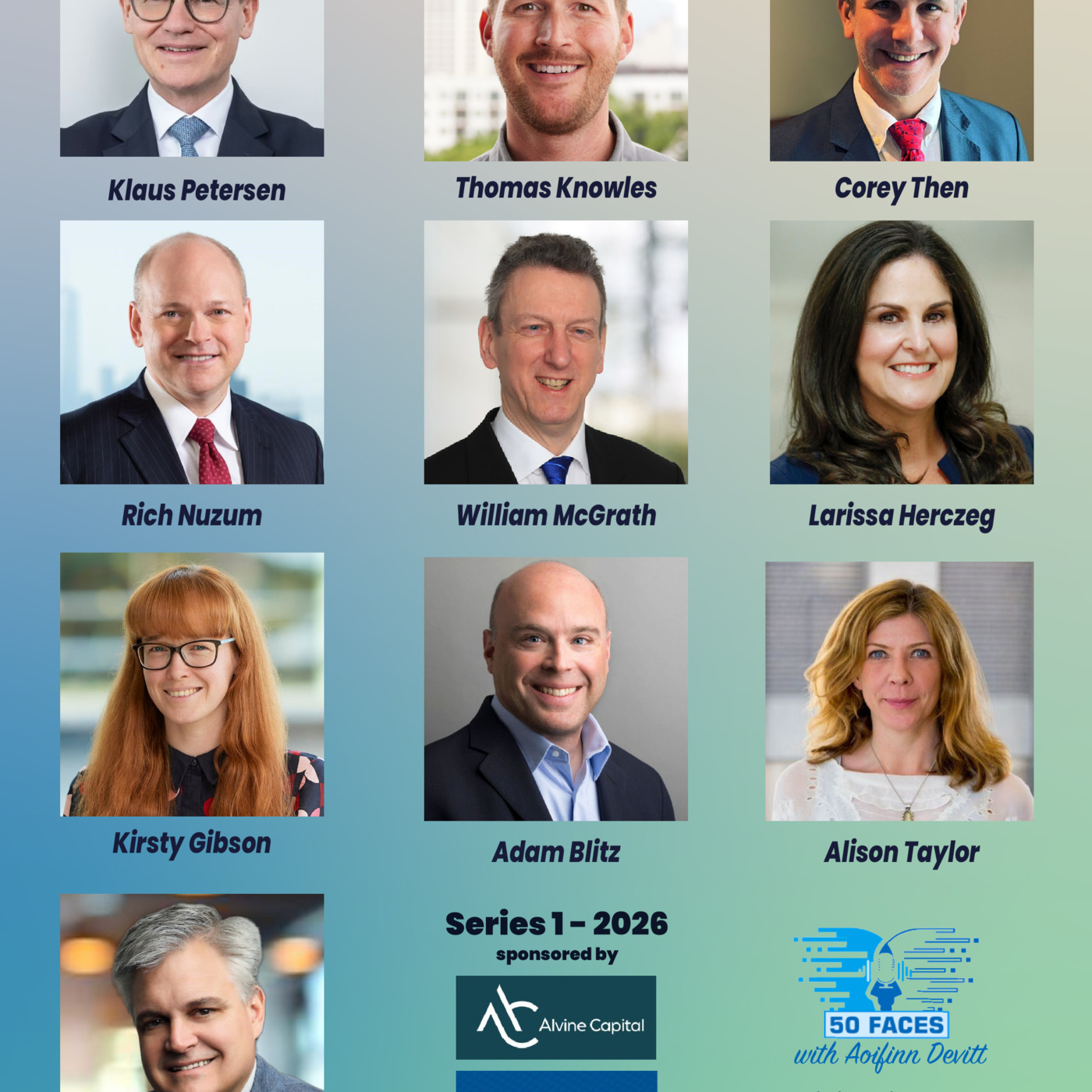

Aoifinn Devitt: This podcast series is kindly sponsored by Evanston Capital. For over 20 years, Evanston Capital has had a key focus in identifying early-stage investment managers it believes are capable of generating long-term value-added returns in complex, innovative strategy areas. The series is also sponsored by Alvine Capital. Alvine Capital is a specialist investment manager and placement boutique with a particular focus on alternative assets, a significant presence in London and Stockholm.
Larissa Herczeg: And then as far as what keeps us up at night, we’re seeing a lot of great deals with base cases, decreasing rents, expanding cap rates on exit, unlevered deals, checks every box. Seems very exciting, but I do feel like there’s this overhang that the markets don’t always go up. And I, my team is probably sick of this analogy, but I like to say back in your college days, you can go out and party and it seems like a good idea. And the longer you party, the worse you feel the next day. And if you keep partying too much, you wind up dead in a gutter. And it feels like we’re at that point where we’ve been partying for a really long time as an economy, and I worry we’re going to wind up dead in the gutter. And if that happens, there’s really no underwriting today that makes sense. So we are trying to approach everything with rational behavior, but also with the knowledge in the back of our head that it’s at some point things could come crashing down and what happens to this investment when that happens.
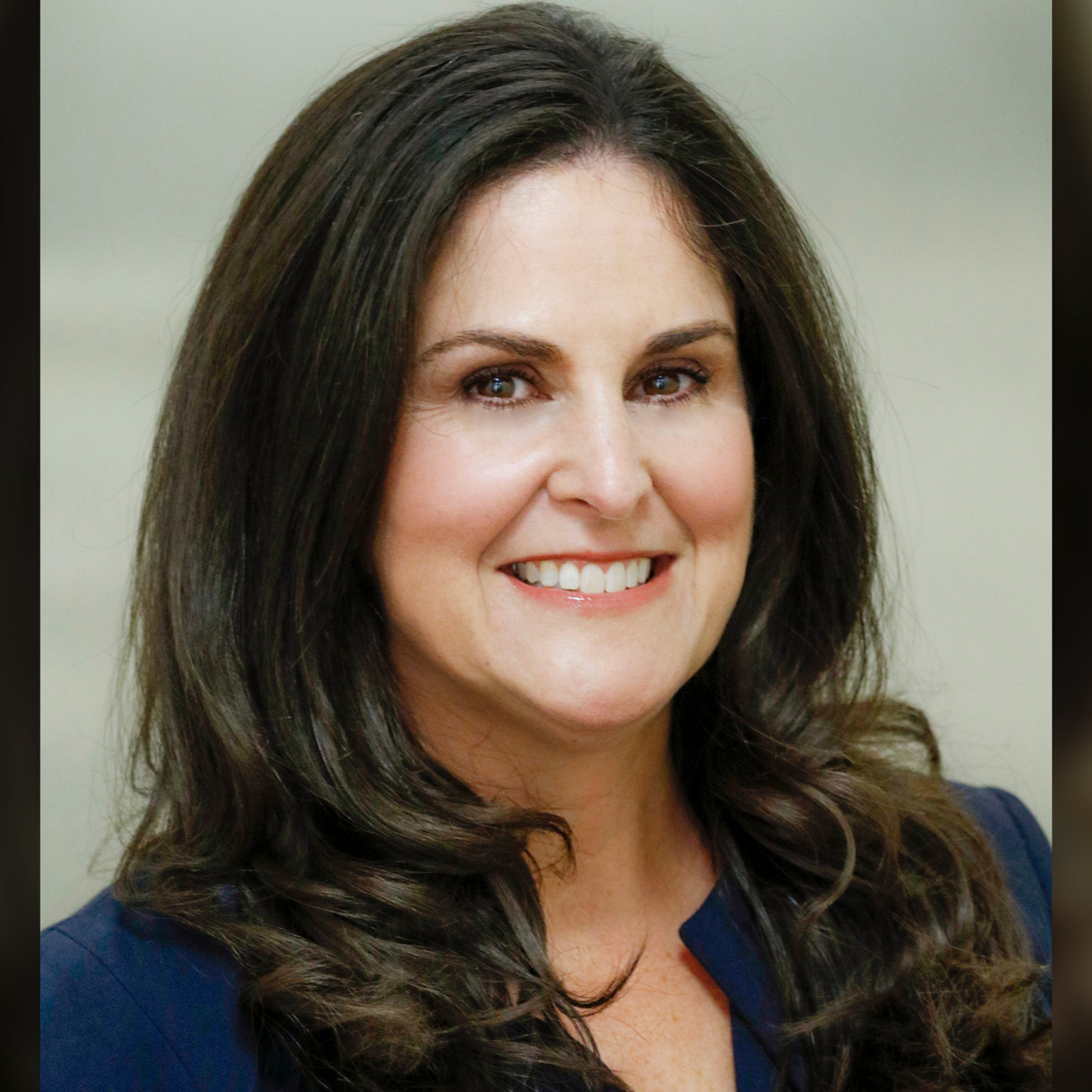
Aoifinn Devitt: I’m Aoifinn Devitt, and welcome to the 50 Faces Podcast. A podcast committed to revealing the richness and diversity of the world of investment by focusing on its people and their stories. I’m joined today by Larissa Herzig, who is founder and managing partner of OneSeed Partners. OneSeed Partners backs rising stars across the real estate complex. Prior to founding OneSeed, she was head of seeding at Blue Owl, and prior to that, CIO of the seeding business at Oak Street Capital, before which she had a series of financial roles. She was a 2025 honoree for the Influential Women in Institutional Investing Awards. Welcome, Larissa. Thanks for joining me here in person. Thanks for having me. Let’s start with your background and career journey. We’ve known each other for many years on the Chicago public fund circuit, and it’s been fantastic to follow you along that circuit, but I don’t think we’ve ever talked about your background and your entry into finance and real estate in particular. So can you talk us through that?
Larissa Herczeg: Yeah, it was definitely not a linear background. So I was a lawyer by training, went to law school, definitely terrified of numbers. They do not teach you Excel in law school and wound up switching from the law firm over to an investment bank. And while there, they had asked me to move over and do some real estate investing. I was terrified. I said no. And a couple of weeks later, the person they had hired to do the real estate investing had left. And so they said, well, you’re going to do it now. And so it was just very, in hindsight, fortuitous. At the time, I did not think it was so fortuitous, but was told I could either do that or find a new job. So I figured I would try it and then loved it. So sometimes other people know better than you.
Aoifinn Devitt: And I suppose real estate is one of those areas that we all think we know a little bit about, right? Because most of us will own some property at some stage of our lives. It’s certainly very visceral. It is a real, of ultimate real asset. Do you have any core beliefs or investment beliefs when it comes to, say, well, investment in general, but real estate in particular?
Larissa Herczeg: Yeah, obviously our strategy is a bit more designed around people and real estate. So our core belief is in people. And I, I still think even with real estate, that still ties over. Even if you’re looking at a building, it’s about the tenants, it’s about the people, it’s about understanding the market, who can you talk to. The physical building is also obviously very important. How attractive is it? Do people want to live there or work there or play there? But I do think sometimes with an actual hard asset, you forget how important the people aspect is, and it’s still I think is really, really important. You know, a spreadsheet tells you a lot, but at the end of the day, it is about the people still.
Aoifinn Devitt: I think just tracing your role in real estate over the various— we met when you were at Oak Street Capital and before that you had various other financial roles, including Morgan Creek, I believe. So can you talk us through, I suppose, how investing in real estate has evolved over that time?
Larissa Herczeg: I started investing in real estate in 2006. And right, trudging up the snow barefoot both ways like my ancestors. It seems crazy, but the internet was not a thing. Transparent accessibility to information was not a thing. And so it was a very, very different world. I mean, even Excel was much more limited in scope. And so processes were very different. And today, really everyone has the same competitive advantage. And so I think it’s on the one hand, easier to understand and poke holes in assumptions, but it’s also harder to show that you have a real differentiated approach or different information because the information is so widely accessible. So it’s been an interesting 20 years with a lot of growth and a lot of probably parity that didn’t exist in 2006.
Aoifinn Devitt: And when you look at real estate, are you sector agnostic? Do you have a particular sector that you focus on?
Larissa Herczeg: We, again, because we’re investing with partners, we are really partner-focused first and sector agnostic depending on what they show us. And I do think historically, I strongly believe that a lot of the problems you get yourself into are when you are so fixated on, I have to find a multifamily group and you have to check boxes, and that creates bad decision-making instead of really saying, I have a blank slate and the first investment can be anything. The second investment needs to fit with the first investment and so on. And so that’s more our approach. We are very people-first focused. That said, we do have sector biases and we’re going to apply those in our underwriting, but that step comes after confirming that we want to be partners with these people and that they would be good stewards of our capital.
Aoifinn Devitt: And in terms of then OneSeed itself, so could you speak about maybe was there a particular gap in the market or a problem that that was designed to solve? Or just seeding, how do you see a role in that?
Larissa Herczeg: Yeah, our thesis is since COVID real estate allocations have been shrinking. There’s been less and less money for real estate, but that said, there is always money for deals. And so our thesis really is it’s very hard for a lot of these smaller groups to get off the ground. Invest— institutional investors especially are trying to do more with fewer partners. So it’s hard to unseat an incumbent. I think we’re starting to see that pendulum switch back a bit. But our thesis was, and our thesis has always been, we think giving our partners discretion is really valuable. We think we attract better partner talent, and we think you get better deals if you can speak for a deal and sit across the table from someone and shake their hand. Instead of them knowing that you have to go back and get approvals, you maybe have to fundraise. And if you look around the market, there are not a lot of groups willing to provide that discretionary capital to a smaller group. There’s a lot who are willing to pursue a deal or something more programmatic, but our thesis is there really aren’t groups willing to give up that discretion and let the partner run with the ball. And so we think that’s an underserved aspect of the market, and because of that, we can leverage that supply-demand dynamic to do better for our investors.
Aoifinn Devitt: And then thinking about investors, so I suppose there are two parts to your investors’ return. There’ll be that return that comes from the seeding element as well as just that underlying fund return that comes from being invested in the fund. Just starting with the fund return, I’d love to talk about where we are today, the current interest rate environment, interest rate trajectory, the kind of yield that’s achievable, and maybe are you on the more the core, core plus value added?
Larissa Herczeg: Yeah. So our thesis is let’s take as little risk as possible from the real estate and get to opportunistic returns by layering in that GP economic seeding alpha. So with that in mind, we’re hopeful it’s a really good time to be investing. If you look back historically, the relationship between returns and successful fundraising seems to be inversely correlated where the more money that’s raised, the worse returns are, and the less money that’s raised, the better returns from that vintage are. Makes sense. More money chasing deals drives up prices. So we’re really excited about the dynamic and where we see both returns, but especially in this environment, the risk level is lower. The conservative underwriting we think provides a really attractive risk-reward proposition, even if returns aren’t through the roof, the risk that’s being taken is so reduced that any double-digit return should be really strong. And we’re looking at a lot of unlevered deals as well. And so we’re hopeful it’s a very good vintage.
Aoifinn Devitt: I was going to ask about the leverage actually, whether there was a greater equity component. How does the financing environment kind of affect the return possible across your partner funds?
Larissa Herczeg: Yeah, again, it’s an interesting capital markets environment where for the past couple of years we’ve actually seen capital markets be more liquid for smaller groups, which again, when you first say it seems counterintuitive, but if you are trying to close a billion-dollar transaction and you need $500 or $600 million of financing, there’s a handful of institutions that can do that. And they have limitations around how much they want to lend versus the smaller groups have endless— they are working with credit unions, with local and regional banks. And they’re typically the 500-pound gorilla in those markets. And so they are the most important relationship to that local bank, whereas no one is the most important relationship to JP Morgan. They have a lot of very important relationships. And so interestingly, the leverage has been pretty readily available, probably outside of office in most markets and for most smaller deals from a variety of sources. Now, of course, just because it’s available doesn’t mean you want it, or it doesn’t mean the math works based on how you’re buying that asset. And so again, that’s been a challenge. We as a firm really take the view that we don’t want negative leverage deals. Our view is we’d rather sacrifice returns and do something unlevered because leverage just gets you into trouble and it, we don’t want leverage creating our returns for us. So we’d rather avoid the trouble and perhaps our upside is a bit less high, but we’ll take that trade-off.
Aoifinn Devitt: And then when it comes to the other aspect of the return, the seeding return, how do you think there are, are there any particular innovative structures you use? Is there a preferred structure you have and how is that evolving that the seed environment say?
Larissa Herczeg: The environment’s evolving and we are always evolving our structures. We learn something from every deal we do. And so we’re constantly trying to reflect on that and improve the structures. So, key to our thesis versus some of the other groups out there is we don’t want true perpetual ownership. We want a revenue participation, an ownership light where we are not willing to be forced to kick in money as an owner. We want the option to put in more money, but not the obligation. Our view is to create a well-aligned, equitable deal. That means you need to cap your upside as well. And so our structures will naturally sunset over some sort of AUM hurdle, some sort of multiple hurdle. But no one has to buy us out at the end of the day. And in our view is that’s, it’s better alignment with our partners, both investment partners and invest store partners.
Aoifinn Devitt: And I suppose some seeders would actually lend a hand to the underlying funds to raise assets themselves, that there’d be a natural alignment of interest there. It seems that that can often be the lion’s share of the effort sometimes is that helping the underlying fund to get to critical mass. Do you do that and what’s that environment like?
Larissa Herczeg: Yeah, I, I mean, fundraising for these groups is impossible and so that is very tricky. Again, you’re exactly right. We don’t need them to grow astronomically, but we do need measured organic growth. And so we want to help them grow. I would say it’s a two-part answer. A, first and foremost, we manage expectations very heavily going in where We want to be well aligned with you. We’re giving you this capital to use to anchor your fund, your whatever it is, and we want you to grow, but we’re not magicians and we don’t control the broader fundraising world. So we want you to grow, we need you to grow, but just because we show up and write you a check does not mean the floodgates are gonna open. And we want our partners to understand that because I think if you’re mismanaging any expectation in life, it’s going to result in frustration and a bad relationship. So we want to be very clear with them about what we are and are not capable of. And then beyond that, we certainly do— we’re not a placement agent, we’re not a third-party marketer, so we don’t want to set up 1,000 meetings for them. What we do want is when an investor calls us saying, hey, I really am interested in a credit strategy that looks like this. Or a data center strategy or medical office, we will make a thoughtful introduction and hope that that goes somewhere. But I would say the more meaningful part also is we get involved, they’ll do practice pitches with us, we’ll review marketing decks, we can backchannel, you know, a lot of times they’ll have what they thought was a great meeting and then never hear from the investor again. If it’s an investor we know, we can either directly or indirectly poke around, understand what’s going on. Usually it’s, something behind the scenes, a change in consultants, or who knows what, but there’s a reason for it. And so we try to help them manage their time and resources around fundraising efficiently, and that’s something we can commit to doing. Whereas sadly, we can’t promise them endless investors are gonna follow us in.
Aoifinn Devitt: We’re gonna take a quick break to hear from Evanston Capital Management, one of the sponsors of this podcast series. I sat down with Kristin Van Gelder, who is partner and co-CIO at Evanston Capital Management. And I asked her to describe her investment philosophy and some of the culture at the firm.
Speaker C: Don’t be too afraid to make mistakes. This industry, I think, attracts a lot of Type A personalities and people that can have a hard time accepting anything that’s less than perfect. And I, you know, I think I put myself in that category, but mistakes do provide these important opportunities for growth, and I think really lasting lessons that help shape you as a person, as an investor. And as a team, as an investment team at Evanston, we often talk about how only making the safe decisions or investing with the crowd likely isn’t the way to, you know, generate distinguished results.
Aoifinn Devitt: And now back to the show. But I do think that kind of wisdom that you’ve gained over the years, we got to know each other. I was on the allocator side. You were, we were at the fund side, but there was also an emerging manager narrative there that my fund was promoting. And we were in discussions around that. How would you say that dynamic has shifted over the decades, I suppose, because it does seem, as you mentioned, fewer relationships, strategic partnerships, that seems to be where large institutions are heading. What does that then mean for the smaller manager?
Larissa Herczeg: You know, it’s hard for the smaller manager. I think it is shifting. I think there’s a lot of value to investing in a Blackstone and a Blue Owl. You know, I obviously, Spent 2 years there, think very highly of them. But I think investors are also starting to see that’s one piece of a portfolio. And in the same way that you want diversification across sectors and across private equity, real estate, real assets, you should want some size diversification and not have all your eggs in one basket. And so I do think investors are starting to see that and appreciate that. And I do think also there’s a lot of pros to the large shops. There’s a lot of cons. And so much the same, the smaller shops have a lot of pros. There is better alignment there in many respects because they aren’t just focused on shareholder value. They’re not focused on fees alone. They’re, they’re in it for the carry. And again, there’s pros and cons. The fee revenue of the large shops enables them to hire a lot. Pros and cons to both. But I think investors are starting to see that, and I think hopefully the wisdom we share And you mentioned this with your podcast with James Clark, and I think James and I share philosophy. It’s fundraising is not a trade. It’s not about getting the check. It’s about a long-term relationship. And I think a lot of the smaller groups get frustrated if they have a couple of good meetings and then a CEO changes or a CIO changes or the consultant changes, and that’s a setback. And of course that’s frustrating, but I, I think they lose sight of the fact that this is a very long-term industry and a long-term relationship. And so that’s what they need. Investor relations is focused on building relationships, not just about getting a check in the door. And I think that’s important to appreciate. And it’s— it can be hard, you know, it can be frustrating when you spend a lot of time and you don’t get a good result, but hopefully you learn something from it and you come back better the next time. And at some point it should work out and all relationships are valuable even if there’s not a check.
Aoifinn Devitt: So I completely agree. And that’s actually why I really enjoyed the conversation with James so much. And I tracked him down based on his previous interview. And I suppose some of those things you mentioned, what is the investor actually looking for? He seems to be very in tune with that. And I think you are too in terms of, you know, not anticipating what they need. And this brings me to my question about what excites you about real estate. And I suppose thinking not only in terms of sectors, but in terms of what investors might be looking for, Is it income? Is it inflation protection? Is it just diversification? And then finally, is it local impact? For example, opportunity zone or a placemaking initiative?
Larissa Herczeg: Yeah, and I, I think it’s a great question and I think if you took 10 investors and asked them that question, you’d get 10 different answers. And so again, that’s why the relationship is so important in understanding, you know, Investor A might really want local impact. Investor B might want cash flow. Investor C might have real estate competing with private equity, and so they really need a lot of juice from their return, or it doesn’t make sense for them to do it. But I think understanding where they’re coming from, what real estate is solving in their portfolio, and then also understanding that it makes no sense to fit a square peg in a round hole. And no matter how good a relationship is, if there’s not a need for that product, it’s not going to work right now. That doesn’t mean it’s, it’s always gonna be a no. And certainly it, it never makes sense to change your colors and change your tune to try to fit with what an investor wants. ‘Cause I guarantee you by the time you, A, it’s, it’s disingenuous, but B, by the time you get there, the investor will have changed their mind and not want it anymore. And so I think again, it’s all investors are different and there’s, there’s a lid for every pot.
Aoifinn Devitt: Looking at the opportunity set today, does anything excite you or anything proverbially keep you up at night?
Larissa Herczeg: You know, we are so excited by the environment today and the deals we’re seeing. You’re seeing a lot of lenders be very frustrated across asset classes, even starting to tick up in multifamily and industrial where there’s been a maturity default. They’ve agreed to extend for a sales process. Sales process was run. You go through a couple of buyers who are at much higher price points. They fall apart for a variety of reasons. And that lender now 9 or 12 months later comes back to the, the broader pool and says, well, this got screwed up. We are really frustrated and fed up. Who, raise your hand, like what’s your price and can you get it done in 30 days? And so we’re seeing a lot of really interesting deals, very short timeframes, but where our partners have done their homework already and you can acquire the deal unlevered for a very conservative kind of 10 to 12% net. And if one day you can apply leverage or one day you can underwrite increasing rents, fantastic. That should be a much better return. But that’s what we’re excited about. And you’re seeing that sort of lender fatigue across asset classes. And then as far as what keeps us up at night, we’re seeing a lot of great deals with base cases, decreasing rents, expanding cap rates on exit, unlevered deals. Checks every box, seems very exciting, but I do feel like there’s this overhang that the markets don’t always go up. And I, my team is probably sick of this analogy, but I like to say back in your college days, you can go out and party and it seems like a good idea. And the longer you party, the worse you feel the next day. And if you keep partying too much, you wind up dead in a gutter. And it feels like we’re at that point where we’ve been partying for a really long time as an economy, and I worry we’re going to wind up dead in the gutter. And if that happens, there’s really no underwriting today that makes sense. So we are trying to approach everything with rational behavior, but also with the knowledge in the back of our head that at some point things could come crashing down and what happens to this investment when that happens.
Aoifinn Devitt: And I suppose I bring it back to your focus on people because most of the people you invest with, I’m sure, have seen one or two cycles. You know that they’re a solid pair of hands when it comes to salvaging value or, you know, putting the client’s needs first. So I suppose that’s really the only thing we can hold on to when we don’t know when the economy is likely to turn. Yes, I’d love to turn to some personal reflections now and go back to your personal story. So we’ve known each other for probably, definitely, it goes on a decade, I think, at this point. Have there been any highs or lows over the course of your career that you can speak to? And I know we don’t like to dwell on low points, but I really focus on them more from a kind of a learning opportunity or lessons learned.
Larissa Herczeg: Yeah, absolutely. I think I’ve been so fortunate in that my life has been a series of things that at the time seemed terrible, that in hindsight were the best thing that ever happened to me. So, you know, career-wise especially, I touched on, you know, I was kind of forced into this role at an investment bank that I did not want and wound up loving it. And at the time it seemed horrible. I was being forced to do something. I was going to have to get a new job. Wound up great. You know, Morgan Creek, we had some turnover, we were losing AUM. It was such a fabulous place to work. I love the people and kind of decided, okay, I’m going to join Oak Street. Like it was so heartbreaking to leave that firm. And again, was the best thing that ever happened. I really think, A, I’ve been very lucky. The bad things that have happened to me have not been tragic, but, but still in your own world, they were hard. But I think any adversity it’s how you respond to it and trying to take a positive attitude and figure it out and, to your point, learn from it. So there were a lot of inflection points that I feel like at the time seemed really upsetting. And in hindsight, again, I’m so grateful for. And life has gotten much better because of them, even though it did not seem like that in the moment.
Aoifinn Devitt: Usually the ability to turn a situation like that, the classical lemons being turned into lemonade, it comes from a work ethic or something in your upbringing. That maybe taught you to be resilient. Was there anything in particular looking back there that you think sowed the seeds of that personality?
Larissa Herczeg: You know, my parents definitely always harped on hard work, and, you know, the old adage that it’s, it’s amazing how luck happens to people who are working hard and who are prepared for it. And so I do think that’s true. There’s certainly luck— you could win the lottery— but that’s not the way it happens. And And I think it’s interesting, you know, especially with some of the younger generations who want to work from 9 to 5 and have boundaries, but also want to be uber successful. I don’t believe that’s possible. I think if you look at any person that’s successful in the world, they don’t have the luxury of boundaries. They are responding to emails at all hours regardless of who’s emailing them. And so I definitely think I attribute a lot, you know, to hard work and also to people. Again, you know, bringing it back to people and relationships. And at every one of those turns, having peers, having mentors, having people I could talk to, bounce ideas off, who would encourage me, you know, and kind of pick you up when you’re depressed about things. I think that cannot be underestimated in those relationships. Evolve over your life, but they’re so important. The, you know, Michelle Obama board of directors concept, I, I fiercely cling to all the time.
Aoifinn Devitt: And my last question is around any creed or motto or words of wisdom. I think we’ve touched on a few of them in terms of the importance of people versus, say, transactions and having the long-term view. But is there anything, either advice for your younger self or just anything that you’ve internalized after your career to date?
Larissa Herczeg: Yeah, you know, advice I got probably about 15 or 20 years ago was most of us make something about ourselves, right? That makes perfect sense. And I think particularly in the work context, but in any relationship, if you’re approaching a discussion and saying, what does this mean for me? You’re probably missing the boat. And the really important discussion or the, the thought process is, How can I be helpful? What does this mean for the person I’m talking to? What do they want? And so I think constantly trying to put yourself in the shoes of others and approach things from their perspective about how is this news going to impact them, or how can I be helpful to them instead of asking, well, what can I do? It’s how can I help you more? So I think that was I’m not articulating it in a little short motto, but I think just making sure you’re putting yourself in others’ shoes is really, really important in everything you do.
Aoifinn Devitt: And if I may sneak in a bonus kind of follow-up question to that, I think that is very noble. And certainly, I can know it’s the secret of your success. But for somebody listening to that, you may think, well, that is the right approach, but the majority of people don’t think that way. They don’t operate that way. How do you find the resilience to continue to think that way when I would say that’s not the majority? A lot of people do not think about their impact on others.
Larissa Herczeg: You know, obviously impact on others is important, but it, it doesn’t need to be noble. And so I think a good example is if you want a promotion at work and you walk into your boss’s office, isn’t about I want to be promoted. Here’s what I have done. It’s here are things that I’ve seen that I believe would be accretive to you and would help run this business better and would help you do more. And these are things I think I can do. And so it’s just, it still can be about yourself. It doesn’t need to be noble, but I think positioning it as I want to help you versus I want to get ahead just resonates with people. And hopefully it’s both. I mean, alignment is so important, but it, it doesn’t need to be as noble as I made it sound.
Aoifinn Devitt: Thank you so much, Larissa. It is so lovely to sit here with you. As I said, almost a decade after we used to sit together when I was at Chicago Police, because I think so little has changed in terms of your focus. We, we started by speaking about people, we’ve ended by speaking about people, and a seeding business is ultimately about seeing the potential in people and allowing them to realize that. So I’m very excited to see OneSeed up and running and look forward to seeing seeing it progress in years ahead, and thank you for sharing your insights with us.
Larissa Herczeg: Thank you.
Aoifinn Devitt: I’m Aoifinn Devitt. Thank you for listening to the 50 Faces Podcast. If you liked what you heard and would like to tune in to hear more inspiring investors and their personal journeys, please subscribe on Apple Podcasts or wherever you get your podcasts. This podcast is for informational purposes only and should not be construed as investment advice, and all views are personal and should not be attributed to the organizations and affiliations the host or any guest.
This podcast series is kindly sponsored by Evanston capital. For over 20 years Evanston Capital has had a key focus in identifying early stage investment managers it believes are capable of generating long term value added returns in complex innovative strategy areas. This series is also sponsored by Alvine Capital. Alvine Capital is a specialist investment manager and placement boutique with a particular focus on alternative assets, a significant presence in London and Stockholm. So I just think that you’re going to see stablecoins enable commerce to speed up and as you increase money velocity you can actually bring more prosperity to more people around the world, which is what our mission actually is. Foreign. I’m Aoifinn Devitt and welcome to the 50 Faces podcast, a podcast committed to revealing the richness and diversity of the world of investment by focusing on its people and their stories. I’m joined today by Corey Penn, who is Vice President and Deputy General Counsel, Global Policy at Circle, a global financial technology company. He previously held a series of in house legal roles and spent a period in the White House as an Economics and Department of justice leading. He’s also an adjunct professor at the Washington University School of Law. Welcome Corey. Thanks for joining me today. Thanks for having me, Ethan. I’m glad to be here. Well, we of course worked together at Vanetta briefly. We had some overlap there a few years ago and I always was fascinated by your background, particularly the fact that you’d spent a period in the White House. So before we launch into your current very exciting role in digital finance, can you talk us through your background and entry into finance here? Yeah, sure. Appreciate the question. So I got to finance in a little bit of a winding way, I guess. I started my career litigating what we called bet the company cases at a white shoe Washington law firm called Williams and Conley. And the first case I was ever put on was defending the former CEO of Freddie Mac in a case alleging that he hadn’t run Freddie in a safe and sound way against the government. And it was a fascinating case that put me right in the middle of a massive publicly traded company that had deep Washington roots and a couple of different masters, both shareholders and politicians. And I was in trial my first year. Warren Buffett was a witness in the case and I actually got paid to read old Berkshire shareholder letters because he was testifying against us and and we actually had to figure out a way to cross examine him. And I remember reading these and thinking, wow, this guy is an absolute genius the way he thinks about the world. So I got very interested in finance from that and I was at the Law firm for six years. I was in the Obama administration for his second term for four years. And then once the Obama administration ended, you essentially tender your resignation in advance and if your party wins, you could continue on. If they don’t, you obviously leave as a political appointee. So at that point, my wife and I moved back from D.C. To St. Louis, which is her hometown. So that takes me up to me sort of going in house as an attorney. And I ended up leaving to go to Circle to a crypto company. When I looked at Circle, where I am today, I didn’t really see crypto. What I saw was using the technology of cryptography and blockchains to move money around the world much faster and cheaper and in a programmable way that just doesn’t exist with current forms of money. So with Circle, I basically saw a company that was transforming the dollar from something that moved on paper or in Oracle databases in ones and zeros to something that moves at Internet scale on blockchains. So anyway, that brings me up to the present day before we move on to Circle. And I think there’s lots to talk about there. Very topical, certainly, and it is ironic, but that’s where you ended up. I kind of hadn’t joined those two together. What do you think you took away from your time at the White House? Because I think all of these times in public service probably make an impression on us and give us an imprint as to how we approach the private sector later. Was there any kind of key takeaway there or takeaways? Yeah, I mean, I think from the White House. I had gone from a high stakes institution like at Williams and Conley, where your clients, potential freedom, some of them could go to jail, white collar type of stuff. And certainly their businesses were at stake. So I was used to working in a high stakes environment. But I would say just walking in the gates every day was just special. Like it was never lost on me. I grew up in a small town in Iowa and all of a sudden I was working in the White House for a person who was a very popular president and was doing big things. So first of all, I think I already had this ethos, but if you’re going to do something, you better do it well. At the White House, literally everything you do is magnified. The public is watching and so you can’t take days off. Right. So I think there’s that. I think I have a lot of empathy for people, doesn’t matter what party you’re in, who are in there trying their best to make a positive change in the world and contribute to the United States as sort of being a flourishing place. So again, it doesn’t matter which party but like it’s really hard. It is very, very difficult to essentially conceive of what are the right ideas and then execute them under a sort of magnifying glass. So I took that away and really just a great respect for the country and the history that we have here. It’s actually really incredible. And then last thing I would add to that is just the absolute scale. Like Obama used to say, this is the biggest organization in the entire world and you’re sitting at the top of it, right? So we need to do something good with it. The US government is massive. And I was in the White House for three and a quarter years, something like that. And then the last nine months I went out and I was deputy general counsel at the Department of Agriculture and the Department of Agriculture. I actually oversaw forest service stuff. And then the financial portfolio from the legal perspective. And USDA has a financial portfolio that would put it in the top 10 banks in the country if that’s how it were organized. So it has crop guarantee programs, insurance programs, lending programs, venture capital programs in a lot of parts of rural America literally rely on USDA loans to have their utilities running. Right. So it’s massive, it’s $150 billion annual budget organization and that’s just one of the cabinet agencies. So when you understand the scale that you’re dealing with and how it like seeps down into society and actually affects people’s lives, it definitely makes you bring your best self to work every day. That is quite humbling I think to say that. And I think it’s interesting given the role that stablecoin could likely play in the bigger picture in this ecosystem. It’s particularly apt that this is where you’ve ended up and just to talk about the white paper because I think this was interesting. I found it on LinkedIn, have to admit I had to do some digging. But the thesis of this white paper was that you said that well regulated dollar stablecoins issued by American companies could make finance faster, efficient, more accessible and enhance the strength of the dollar. So very much kind of, I suppose all enabling ongoing. It’s a. We hear a lot in Mineta say about the concern about dollar debasement or de dollarization and it seems that this would be maybe an offset to that. So can you talk a little bit about white paper and maybe then how this relates to what stablecoins are and what you do at Focus. Sure. That paper lays out a sort of unbiased view of the upside of stablecoins, potential downsides and just what they are and what they’re doing to try to like demystify. Right. But basically. So Circle we’ve been around since 2013, our stablecoin USDC is backed entirely by dollars that are either in cash at global banks, reverse repurchase agreements, which are essentially overnight loans to banks that are over collateralized by treasuries and 3 month T bills. So if you come to us and you have what we call a Circle mint account with the company, and we’re a wholesaler, we don’t sell retail. But if an institution comes to us and says I want to buy $1,000 worth of USDC, they give us $1,000. We put that in these ultra safe, high quality liquid assets that are as an equivalent to a dollar as you can possibly get. They have very little to no interest rate risk, credit risk, duration risk. They can be converted very quickly. And then we give you 1000 USDC and then you can go out on blockchains and transact with them. And why would you want to transact on blockchains rather than through the traditional financial system today? Well, the traditional financial system has all sorts of inefficiencies that have just been reliant on the tech. Right. So in the United States we have decent retail peer to peer money with like a Venmo. Right. But what we don’t have is anything other than blockchains that can settle instantaneously. So if you’re a merchant getting paid through a Visa swipe, your transaction that comes over from an originating bank doesn’t settle for a couple of days. Blockchains will settle instantaneously. If you’re trying to send money overseas, you might be working through the correspondent banking network. So I’m with pnc, I want to send money to Liechtenstein. There are no PNC banks there. So PNC has correspondence in Europe. Right. But that transaction might have to go through three or four banks today and it might take a week and a hefty charge for me to send a wire to whatever country. Right. Blockchains can settle and send and settle instantaneously. And then with blockchains you can actually program if then statements, what we call smart contracts, into the actual transaction itself. So you can start wringing out a lot of middlemen in the economy that cost money. Think about for instance an escrow agent when you’re buying a home. Right. Escrow exists because it’s one of Those trustless scenarios where I’m not sure, Ethan, if you’re going to deliver title to me or you’re not sure if I’m going to actually close on the day and bring funds to the closing. So we have an escrow of a certain earnest money, right? On blockchains, you can essentially say, hey, if X, Y and Z conditions are met by January 1, the money that I can see that you have on the blockchain will move on that day when title to the home moves. Right. And so it’s an if then statement. And now you’ve basically limited what can be done only to the creativity of developers who can come in and write on blockchains. So that’s kind of what we’re doing with stablecoins. So Circle USDC has about 78 billion in circulation. We also have a euro based stablecoin called EURC that has, I don’t know, maybe 700 million. So it’s much, much smaller, although it’s growing pretty quickly. So with that $78 billion over the history of USDC, which was launched about seven years ago, more than $50 trillion of transactions have been settled. So this is like real scale. When I started three and a half years ago at Circle, four and a half trillion in transactions had settled. So that seemed like a lot at the time. Now we’re doing almost 4 trillion a month in transaction settling. So you’re seeing hockey stick like growth. Why is that? Well, USDC is being used in 185 different countries right now, possibly a little bit more. So it’s a true American export product first of all. Secondly, even though I noted that we have decent peer to peer money here in the United States. And by the way, most people get USDC at a retail level off of an exchange like Coinbase or Kraken or something. But in many countries now people are just sending it from one wallet to another that essentially, you know, these wallets live on people’s phones. Right? But people are using this as a store of value. So if you’re in a country like Argentina or Venezuela where your money is literally being inflated away, I think Argentina might have had like 90% inflation last year. Maybe Venezuela was like 50. When your money is being inflated away, the best possible thing you could do is get a dollar denominated instrument. So a lot of people want to hold USDC for that reason. Secondly, just the velocity of real world payments, especially in a cross border context is picking up quite a bit. So think about business paying suppliers, business paying employees who are abroad A lot of them favor getting a stablecoin because of its speed. Right? USDC is being used in humanitarian aid. So we have a partnership with the United Nations High Commission for Refugees where they essentially send USDC to pre vetted people. So they give them a wallet, they make sure that they’re legit people. And then these are folks who have been displaced by the war and they can get USDC wherever they might be in the Ukraine or even if they leave, and then they can either spend it on chain, which a lot of people are doing. I mean they’re like paying for haircuts and what have you, or they can cash out at like a MoneyGram International so they could take the USDC and turn it into the Ukrainian currency or the euro or really whatever that they want to have. So we’re seeing hockey stick like growth. It’s a network effects business. And now the network effects have really started settling in in the last couple of years. We’re going to take a quick break to hear from Evanston Capital Management, one of the sponsors of this podcast series. I sat down with Kristen Mingelder, who is partner and co CIO at Evanston Capital Management, and I asked her why hedge funds were in favor today. I think hedge funds are very much back in the conversation today. I think it’s because, you know, the last several years we’ve just been in a very different environment and diversification and downside protection have become, you know, even more of a priority for investors. I contrast that to the decade following the global financial crisis where things looked a lot different. You had interest rates globally pinned near zero. You had markets generally going up and to the right. You had volatility fairly low and correlations relatively stable. And I think that environment, as you rightly point out, favored stuff that maybe wasn’t hedge funds that favored passive long only strategies. I think it also favored longer duration strategies like private equity and venture capital. But I think the environment today is so much different. You have a meaningful cost of capital. There is a lot of uncertainty in terms of the macroeconomic backdrop. You have much higher market volatility and you have less stable cross asset correlations. So I think that’s a backdrop that very much favors active management and the flexibility of the hedge fund mandate in particular. And I think it also likely favors alpha over beta. And now back to the show then, in terms of how Circle makes money from this, my understanding is it is investing it in the return on those instruments that you mentioned earlier, the kind of cash substitutes, is that correct? That’s where the yield for say a Circle or another similar entity would be. Yes. So that’s sort of your opportunity cost is if you hold USDC and you don’t have it sitting in a bank earning whatever. I mean I think we all know today banks pay like 0.2% or whatever, but you could be doing something else with that money. What we earn is the net interest income, so we keep whatever those T bills and reverse repurchase agreements return we keep. Now we’re also building a platform business. So we’ve recently launched our own blockchain called Ark. And ARK is a very unique blockchain. It’s built for institutional grade companies. What’s interesting about it is today when money moves on a blockchain there has to be paid what’s called a gas fee. Right. And that’s essentially like micropayments of whatever the cryptocurrency that is native to a particular blockchain is. Right. So let’s just say like on the Ethereum blockchain, its native token is eth. And the people who are out there validating blocks and looking at transactions essentially like scribes and saying yes, that actually happened in writing a new block to the blockchain itself, they have to get paid in some way because this is like decentralized compute. It takes time and effort and energy to actually do that. Right. So they get paid in that native token on Ark, people are going to get paid, validators are going to get paid in usdc. Why is that important? Well, because USDC holds a stable value whereas ETH and Bitcoin and all these other tokens that you’ve heard of do not. They fluctuate because they weren’t built as a stablecoin. Right. And people trade them oftentimes with speculative purposes. So now we have our stablecoins, we have our blockchain and then finally we have what’s called the Circle payments network. So this is essentially a pre vetted group of participants who all want to interact with each other, send payments to one another. So we at Circle vet them and then we essentially set up the network where they can send payment. It’s blockchain agnostic, it’s stablecoin agnostic. But they can code things in compliance with the travel rule, which is an important money transmission rule. They can pre code in an agreed upon exchange rate. So you’re sending dollars and they’re going to be transferred into a Brazilian Ray I we can agree in advance what that exchange rate is going to be and then that can happen instantaneously when the money’s sent. Right. So anyway, that’s kind of how we’re building the company. We have other revenue streams outside of net interest income, but that is the primary source as of today. When you look to the next, say five years, what excites you? You mentioned this network effect and just the hockey stick growth trajectory. And how can you see more companies clearly there’s been a lot of traction already, but how do you see the next five years will look? Thanks for asking that question because I am excited. I think one thing that you’re going to see is crypto fade to the background. The technology will fade to the background, at least with stablecoins, and they’ll just be incorporated in all sorts of things that you’re doing. And you may not even know about it. Right. So on one hand you might be paying people peer to peer and maybe you have a Coinbase wallet or a Metamask wallet or something on your phone. And that’s another thing that’s really cool is there’s no walled garden problem, right? So if you have Venmo, you can’t pay somebody into their PayPal account, even though Venmo is a subsidiary that’s called a walled garden. So stablecoins don’t have that. I think you’re going to see an explosion of use in sort of like big capital markets cases. Right. So securities are becoming tokenized. That allows them to trade 24, 7, 365. Among the other advantages that I mentioned, like programmability and divisibility. And that’s actually going to open up all sorts of new investors to markets that they can’t get access to today. Think about like a small, I don’t know, somebody who’s rolling up nursing homes or commercial housing in the United States or something like that today. That’s probably pretty difficult for an investor in Japan to participate in, but tokenization is going to aid that. Right? So I think USDC will be the money layer that people are paying when tokenized transactions happening. And then another big capital markets use case that we’re already inching towards and getting pretty close is being used as collateral in derivatives transactions. So today it’s $700 trillion of derivatives transactions notionally in the world, right? And every day hundreds of billions of collateral move around, but those have to go through clearing houses and they have to like take a couple of days to settle with stablecoins that will happen instantaneously. So I just think that you’re going to see stablecoins enable commerce to Speed up and as you increase money velocity you can actually bring more prosperity to more people around the world, which is what our mission actually is. What about you are an ex attorney and I think attorneys are known to always look in the round at perhaps risks and threats. So what would you say keeps you up at night in terms of say a regulatory outlook, maybe hurdles that may be in place that might get in the way of this vision? Yeah, I think, you know, it’s interesting because for many years I was one of the primary advocates for stablecoin law that was passed in July of 2025 called the genius Act. And I had worked on trying to get stablecoin legislation for the entire time that I’ve been at Circle and we came close many times and finally it got over the line this summer. And that bill really is a consumer protection bill because hundreds of millions of people around the world were using stablecoins but there was very little regulation around it outside of we have licenses with state money transmission licenses and then through the New York Department of Financial Services we have a bit license which was like the first crypto license that was granted we got. Right. So we were heavily regulated, but a lot of other providers didn’t bother to go do the registrations and, and they weren’t necessarily following those high quality liquid assets and the fulsome disclosures that we do and the illicit finance prevention that we do. So Genius is bringing structure to this, I think. Now I have been on a worldwide tour, I think since Genius passed, I’d probably spoken to at least 30 different central banks around the world trying to make sure that everybody standardizes and harmonizes to the same sort of set of principles. So I don’t think globally we’re all going to have equivalent laws, but what we want are comparable laws that allow this international innovation to meet its full potential. If you end up with balkanized regulatory structures around the world, you could end up with stablecoins stopping at borders and that would be a huge disservice to consumers around the world. And so I think that’s the number one thing that I think about is, you know, how do we make sure that we have a global system that works for consumers? Ultimately your trajectory since Veneta has been quite a stellar one in terms of a world that’s probably at the forefront for many of change and quite an exciting time certainly to be in it. But I would also like you to reflect on any highs and lows throughout the career. Is this the high or have there been any highs and lows that maybe you’ve learned lessons from throughout your career. Yeah, I mean, obviously there’s different periods of your career and there’s highs and lows in all of them. I mean, I, I loved working at Williams and Conley, this sort of like storied Washington institution. We had some great cases, some great wins. There were highs there. Then, of course, working at the White House was just an amazing thing. That lightning doesn’t strike twice. But I will say this year has been probably the highest part of my career. Highlights, if you will, because we took Circle public in June and then in July we got this law passed. And so the things that I had been working towards very hard for three and a half years all sort of came to fruition at the same time. Also along the way there were definitely some lows. I mean, we had some difficult moments at Circle along the way and you know, there were times where there were some white knuckle moments. Right. But I think having the grit and persistence to get through it, not only me, but like my entire team, the entire company, makes it all the sweeter when you succeed. And the last thing I’ll add there is when I joined Circle, I like being at mission oriented institutions. And I always thought of this as a technology that was really important for the United States to maintain dollar dominance, to just make sure that the dollar is ubiquitous around the world. I’m a great student of world history and world economies and obviously China has made massive inroads around the world. There’s these new currency blocks that are forming between China and Russia and some of our quote unquote adversaries where they’re trying to displace the dollar. And the fact that the dollar is the world’s reserve currency redounds to the US’s benefit. I think one famous economist called it the US’s exorbitant privilege. Right. So it’s been really gratifying to see the Treasury Department and the White House lean into that and say we want to push forward dollar denominated stablecoins because we think that this is great for commerce around the world. It also, if you think about it, could end up helping us lower borrowing costs in the United States. Because if we have trillions of dollars of dollar denominated stablecoins that are backed by treasuries that now has added a massive and dispersed rather than concentrated buyer of treasuries, which makes the system all the stronger to have that sort of dispersion. So it’s been just gratifying to be back doing Public policy oriented work. So it’s been great. Yeah, no, it’s been wonderful to watch from the outside as well. And my last question is about people or wisdom? And it can be either one or both, because I think the world you’re in is certainly filled with personalities, with characters, with visionaries, and as you said, it’s not without its setbacks. So perhaps they have been resilient as well. Is there any person or mentor that you’ve met in there that you can meet or maybe any kind of takeaway in the form of wisdom that you’ve learned maybe since you’ve been in this world? Yeah, sure. So, first of all, our CEO, Jeremy Allaire, who started this company, he really is a visionary. Originally he was attracted, I think, by the promise of bitcoin. And he saw this and he was an Internet entrepreneur. He had already taken one of the first Internet video companies that like used to compete with YouTube. He had taken that public. It was called Bright Cove. And he sort of came up on the Internet seeing like the power that had to get people information behind the iron curtain. He was like very early to Internet stuff. So he saw this with putting money on the Internet and the positive effects that could have around the world. And you talk about grit, he went through it all. And so that’s inspiring to see. I think for me, my biggest lessons came from my parents. They worked their butt off in rural Iowa, didn’t make a lot of money. You realize, yeah, I’m working hard and a lot of other finance professionals are working hard, lawyers are working hard. But like, I saw my dad working physically hard every day, coming home exhausted. My mom worked in a factory. And so they were blue collar people. So I think all of my attitude towards life and biggest lessons that I’ve learned come from them. And it really, they’re pretty simple. They’re the things that you’ve always heard of. But it’s like showing up for other people, putting out as much energy towards other people as you want to receive from them and just sticking with it and keeping a positive attitude and just working as hard as you can possibly so that you can take advantage of the opportunities that do come your way. And I think if you do all those things, things will fall into place. And then I would consider Warren Buffett’s annual letters. I’ve read all of them. Back through the Buffett partnerships in the late 50s or early 60s was probably my best business education. I took a semester’s worth of business classes down at Duke, and those were great. But reading the Buffett annual reports, by far the best business education that I’ve gotten. And then, I guess the last thing if you want a pithy saying, a lawyer at my old law firm told me once, here’s the keys to a good life. Be good to your friends and family and have a short commute. So I’ve always done that. I’ve never had a long commute, unless you consider the St. Louis Washington D.C. Corridor to be a long one. But I guess, thankfully we can do some of that remotely now. That’s fair. I spend a lot of time in Washington, but I consider those the flights an hour and a half long and nobody can get me. So those are my best reading hours that I get. So that’s a good commute. Well, thank you so much, Corey. This was a very grounded discussion. It was, I think, starting with your roots and returning to those roots as we reflect, but equally taking us into this dramatic ascent of a brave new world around stablecoin and digital assets. I think you’ve made it very relatable and we at Mineta have certainly watched your success from the sidelines, and it’s been great to catch up here and check in and learn a little bit more about this world. Thank you so much for coming here and sharing your insights with us. Yeah, thanks for the opportunity, Ethan, and always glad to be back with you and with Mineta. It’s a great institution, so I really appreciate it. I’m Aoifinn Devitt. Thank you for listening to the 50 Faces podcast. If you liked what you heard and would like to tune in to hear more inspiring investors and their personal journeys, please subscribe on Apple Podcasts or wherever you get your podcasts. This podcast is for informational purposes only and should not be construed as investment advice and all views are personal and should not be attributed to the organizations and affiliations of the host or any guest.

Aoifinn Devitt: We would love to wish you a happy New Year from everyone at 50 Faces Productions. While we are busy curating Series 1 of 2026, we’d like to bring you some thoughts that we gathered over the course of the Christmas and New Year break. It was great to sit down with a friend of mine and previous guest on the podcast, Ian McKnight, for his inaugural podcast called The Long and Short of It. In it, we engage in our typical banter. We speak about everything from recent political developments on the geopolitical stage as well as to our thoughts on markets. We discuss a little bit of what’s going on in our lives, and we discuss what our thoughts are in terms of the investment mindset and investor mindset as we head into 2026. I hope you enjoy this inaugural episode of Ian’s podcast, and we look forward to coming to you both weekly with the Markets Happy Hour podcast, as well as weekly with our 50 Faces interviews very soon. Happy New Year, everyone.
Ian McKnight: Hello and welcome to The Long and Short of It, an occasional podcast where we bring you economic market and investment commentary with a bit of real life and good humor thrown in. I’m Ian McKnight, a senior advisor at Cartwright’s Giant Shoulders Hinane and CIO of Tontine Trust Fintech. And I’m joined by Aoifinn Devitt, absolute legend of the industry, senior investment advisor at Moneta and several pension schemes to boot, the host you’ll know of the 40 Faces and Markets Happy Hour podcast. Welcome, Aoifinn, and happy New Year.
Aoifinn Devitt: Happy New Year to you too, Ian. Great to chat with you here.
Ian McKnight: It’s very exciting indeed. So there’s, I mean, where do we start, right? We want want to, we to give listeners to this podcast a bit of, a bit of our thoughts on the whole craziness that’s just been going on. And with so much material, we’ll have to be parsimonious in what we say, won’t we?
Aoifinn Devitt: Exactly. Well, it’s been a crazy Christmas period. I hope you had a good time. I was relaxing in France, but with an inundation of news flow, it seemed, uh, there was a lot to get through in terms of rethinking the new order of the world and politics, finances, economics. And there was barely time to make many New Year’s resolutions?
Ian McKnight: Well, how about we have a little chew over some of the Christmas festive news flow, which frankly was just nonstop, and then have a little look forward to the next year or two and see what we think about that. So maybe if we start, I guess, with something we brought up in a chat we had on one of your podcasts before Christmas about the Venezuela situation and the impact on the oil markets., but also the knock-on of two precious metals, both of which have been big stories financially over the peak last week too. And.
Aoifinn Devitt: No, and you have caught— you actually called this, I think, in our last discussion. Well, I was finishing out the year of 2026, looking back, looking at this phenomenal resilience from the US economy, and I’d seen the term that 2025 was a defining year for metals. And that was something I was running with on Christmas Eve as I was preparing my kind of Christmas podcast. Didn’t do Christmas Day, but Christmas, the day after Christmas, Boxing Day. And then no sooner was I then looking at the notes to prepare my New Year’s Eve podcast, the defining year for metals had taken another turn because we’d seen some pretty sharp volatility in the silver market and an alteration of some of the margin requirements by the CME and very sharp falls in silver and some rumors circulating which have completely gone to bed at the moment. That one large financial institution had been caught with these rising margin requirements. So it was a specter of another kind of whale trade or something capturing a large too-big-to-fail bank in its wake. And again, the perils of leverage. So it was a real kind of blast from the past that particular week, I think, in terms of just what we were seeing in terms of silver. That was one theme. And then in terms of what else, the AI, geopolitics, I think we now know from Venezuelan news, geopolitics still does not really move markets. I think Venezuela as an oil producer, what is it, number 18, seriously dilapidated and under capacity infrastructure, and as well as its impact on world GDP, no better than minuscule. So certainly it’s clouding our social media feeds and the headlines, but in terms of its impact on the economy, I at this point am guided towards thinking it’ll be very minimal in terms of its impact on markets.
Ian McKnight: Hmm, I think that’s a very good point. So we’ve seen this for the past few invasions, wars, and crises. The markets tend to just take them in their stride. And it’s a very modern phenomenon to not have a massive panic when things like this happen. What are your thoughts on why that might be?
Aoifinn Devitt: I do think that it’s really history has taught us that these geopolitical events tend to be flash in the pan as far as markets are concerned. There could also be the inability maybe to potentially extrapolate from a very large, almost abstract event into tangible kitchen table issues that drive stocks. That could be just a disconnect where we can’t process it. So we therefore don’t process it and we just focus on what we can process, which are backward-looking earnings statements. That could be one reason for that particular disconnect. It could be that markets are just so resilient today that they run on their own steam and they don’t need to take into account geopolitical events. But it is a great question as to why this is occurring. And it does seem you that, know, looking back over the last 18 months or even longer, that has seemed to be the mood that geopolitical events can dictate headlines. They can certainly hint at a shifting world order, but that shifting world order, even tariffs as they relate to the world order, do not tend to impact markets that much day to day.
Ian McKnight: So you’ve touched on tariffs there, which is relevant to the US. What are your thoughts around that? I’ve got some thoughts on what might happen there.
Aoifinn Devitt: Well, it’s interesting. The— you mentioned what that may be, some of the heuristics that maybe come into place as to why geopolitics aren’t affecting markets. And one of the other, I think, trends and behavioral biases I’m seeing is a tendency to believe that causation is instant, maybe unilateral in terms of that. For example, interest rates being dropped will instantly lead to a flood of new credit and drive up inflation. Or the opposite, in effect, this more stringent monetary policy, more restrictive policy would lead to lower inflation. Equally, there was the expectation that tariffs would immediately lead to higher inflation, not taking into effect many of the intervening factors that can get in the way of a very strict causation. And I think we are also assuming perhaps as markets open today, we’re recording this on January 5th, Monday, that there will be an immediate effect on the oil price. From the Venezuelan affairs as well as perhaps a short trade around Canada. And these effects are not immediate. So I’m not sure whether this is again a cognitive bias that investors assume that causation is straight line, single cause, and also immediate. So I don’t think these things are immediate. I think that that’s one of the things that we do need to factor in.
Ian McKnight: Because it always strikes me, so in the bond markets, for example, even when things are well heralded, they often wait until it’s actually happened before moving. Whereas I think what seems to happen now in other areas is lots of— there’s so much news constantly that, as you say, identifying genuine cause-effect, this is a nightmare for economics professors, right, when they’re teaching their classes what should happen and what does happen. And in the past, as we’ve seen, sometimes it’s the complete opposite. But it’s a muddied somewhere in the middle of theory versus actuality. And this cause and effect thing in, for example, the stock market, we’re looking at massive multiples, which we’ll come back to in a minute, I think, because that’s particularly interesting. And you’ve got a delay in realization of what’s actually going on. But fundamentally to me, and back to this commodities complex, Isn’t it all fundamentally cost of energy and raw materials that should be the inflationary factor? Because you’ve got the rate situation has just got a mind of its own now, and the central banks have different remits than they used to. And they’re also arguably pretty politicized. They’re not as independent as they might want to pretend.
Aoifinn Devitt: It’s a great point. And I think, yes, our assumption that an easy monetary environment would drive inflation is usually based on these demand factors. And in effect, much of the inflation around COVID was supply-driven, supply-side driven. And certainly on the energy side, with oil being suppressed as it has been, or at least the price coming down, and it’s still down about 20% on the year, on the full year, trading in the 50s, that would be a conducive environment to having lower, at least energy prices at the pump, at least as far as that kind of big sticker price of a gallon of gas that President Trump seems to focus on. Whereas we do know, though, that electricity is rising in price, particularly in the UK. We know that it’s taking an increasingly large share of that inflation budget, and that is something that’s causing a lot of sensitivity to communities in the US that are concerned about data centers essentially devouring their energy allocation and driving prices higher. As well as just the affordability point more generally. So I think that why— and I found a very interesting stat at the end of the year that the clean energy index was up over 40% over the course of 2025. And this is against a backdrop of incontrovertible headwinds from the Trump administration.
Ian McKnight: Yeah, but isn’t this just a global phenomenon where governments are just hose piping money? This is basically a subsidized industry to a degree, and you are being political, so it’s all linked. This confluence of politics and economics, because standalone, I can’t see that they’d have ever got off the ground, these offshore wind farms and so on.
Aoifinn Devitt: But I think it does illustrate this 40% rise, and there was an interesting article in Bloomberg that was shorting regular oil and long the clean energy index, and that would have generated 80% according to John Authers’ Hindsight Capital, which is of course a backward-looking artificial construct. But at the same time, I think this does illustrate that the demand for energy, and this gets back to your AI point, that is only heading in one direction. So if we can— Yeah, so this.
Ian McKnight: Is great for it. Sorry to interrupt you, but it’s like the oil majors are probably quite interesting at the minute. And this whole Venezuela thing, which fundamentally, whether it’s caused by or it’s just a nice corollary of what they’ve done, is to keep the oil flowing in, this heavy oil they’ve got that’s nicely refined on the south coast of the US. Of course it is.
Aoifinn Devitt: It’s— well, this is a very interesting time for oil majors. On the one hand, they seem to be getting the promise, a very vague promise, I’d say. It’s been difficult to— there is always this guardrail against whether we should take President Trump literally or seriously or both. And I think taking him literally with some of the statements around Venezuela would be a little misleading because some of them simply have been contradicted the next day or simply will be difficult to imagine, for example, running the country from the US. But what has been quite clear in the rhetoric has been this statement around reclaiming stolen oil or regaining rights to oil. I think that has been a narrative that has been front and center of the recent developments and a suggestion that the US and maybe even multinational oil majors would be involved in essentially reclaiming some of that oil and certainly getting a right to develop it. That is another point of cause and effect, though, And certainly in terms of timescale, because it’s by all accounts, this could be something that would be 10 years in the developing, this under-invested in oil infrastructure within Venezuela. And it would certainly not be a plain sailing situation given the fractious economic situation.
Ian McKnight: It’s a decent strategic shift, and not least with the Russian and China influence over there. And I heard there’s like Hezbollah presence and Cuba’s interference and you know, potentially Cuba. They’ve got their eye on them now as well. So, but Donald Trump to me always comes— he’s like a bloke in a pub, isn’t he, who’s had somebody tell him in probably reasonable detail what they’re doing, why, how he should present it, but what it really means. And he just blurts out things he shouldn’t blurt out. So, and it’s quite amusing. The first time I noticed this was when he talked about you know, injecting yourself with bleach, as I think people were accusing. But what somebody obviously briefed you, say, look, we’ve got like 50 different trials going on. One of them is effectively screening your blood, passing it through a sort of cleaner and putting it back. And it’s effectively like you’re sort of bleaching it out. And he’s like said this, and then of course everybody— somebody died, you know, I can’t remember, doing silly things. But he almost just tells you some of his briefings without meaning to. And clearly, I doubt very much whether they’d have wanted apart from the obvious oil rights that were being withheld, that they had a legitimate grievance about, that they would have wanted front and center, as you say, the, oh, we’re just doing this for oil and money. And because actually, there’s about 5 different reasons that they would reasonably have wanted to do this— to stop the flow of cocaine into North America, to moot the influence of other large global players in their backyard, And any one of them is a more legitimate reason than we just want them. ‘Cause it’s a nice corollary, nice to have, isn’t it, for America? There’s loads of oil in America, right? You could frack, baby, frack. There’s a ton of it. They’re not wanting for it. It’s just a strategic play on the oil for them.
Aoifinn Devitt: There was an excellent ex-post over the weekend by a trader who posts a lot on commodities, and her theory was that oil was a narrative essentially that was convenient and easy to understand, but it was actually— that was basically a show. And that behind the scenes, it was that trifecta of, as you mentioned, the bad actors as far as the US geopolitical scene were concerned, trifecta of China, Iran, and Russia, all of whom had operational interests in Venezuela. This was again the Monroe Doctrine in full force and effect in terms of the the desire to strategically mute these actors in various ways or neutralize them by taking this presence and removing the kind of common factor of Venezuela from the equation. Certainly those actors did not step up in defense of Venezuela during the recent actions. And it’s been, I think, very little has been said. But I’d love to take up that theory of how you did the drunk in the pub. Um, so shooting from the hip with the latest.
Ian McKnight: Well, Donald Trump doesn’t drink, of course, so he’s just in a pub.
Aoifinn Devitt: But sure, No, but how do you treat that drunk in the pub? How does one— um, I no longer drink, so I’m often maybe the sober, uh, you know, person at the table, but how do you tend to treat the drunk at the pub? You kind of go, you nod your head, you go, okay, okay, great, yeah, sure, right. And I think that maybe that is the, uh, the attitude we need to take. I mean, it’s not just shooting from the hip about running Venezuela. There was another X post, as you said, I probably spent far too much time this weekend or this past week on X with the map of Greenland with an American flag interposed on top of that. And that was posted by Katie Miller, the wife of Stephen Miller, who is by some accounts very close to the president. And this had then not only sparked some outrage online, but certainly well over 20 million views. The time I last looked, but it has now sparked responses from the administrative head of Greenland as well as the Danish Prime Minister.
Ian McKnight: So it’s outrageous. I mean, they basically want to buy Greenland. That’s what’s going on here. It’s not for sale last time I checked, but I don’t doubt he’ll bid them at some point.
Aoifinn Devitt: It’s— but I think what I might— my point is really that these gestures, which maybe are— are they to be taken seriously? Are they provocative? Are they jokes? Are actually sparking quite serious responses. And I think this is— are we being trolled with some of this, this flooding of the zone? And but I think they’re all sparking interesting conversations. The winners, I believe, in 2026 of this increased rhetoric will be most likely defense stocks.
Ian McKnight: Right. And the consultancy universe that goes around Booz Allen, I forget who it is. Yeah. Mm, that’s fascinating. So back to the US and what’s driving that, because, you know, it’s been all the talk, and I know you’ve done a lot of work on AI, the Magnificent Seven, or MAG Seven. He’s even got abbreviated. It’s so cool to talk about. But I mean, I’m almost yearned off about it, but there’s still loads to go. And Tesla in particular, I think, is worth exploring, because what I want to get to on on the equity markets is, first of all, the jobs, which I go on about relentlessly, and there was updates yesterday we can talk about if you want or not. But the multiples that have been applied to different levels of growth, and are those multiples due for a correction? So notwithstanding the growth may or may not be coming, and it may or may not be supporting some of those stocks, are some of these, because of AI, going to even be there by your payback period? And this concept of terming out an investment Would anybody rationally pay £100 for something giving them £3 a year if they didn’t think it was going to make it to the end? It’s like a bad bond.
Aoifinn Devitt: Exactly. Well, great, great question. And I suppose we’ve been kind of wrestling with this valuation point all year. I think just getting back to the Magnificent Seven, even though they have led the conversation, not only because of their dominance and representing 40% of the S&P, as well as their dominating headlines, certainly capital expenditure and just the whole AI story, their actual performance over the year was somewhat lackluster in some cases. And probably you mentioned Tesla, and Tesla had a particularly volatile start to the year. It was of course tied to Elon Musk’s role in government and Doge, and his, he was, that was perhaps most accentuated around the aftermath of Liberation Day. So just looking at a stock chart of Tesla, of Tesla here, and it didn’t really start to recover until September, October, and is just back to where it started the year essentially. So not a particularly illustrious run, I’d say, for Tesla. What the stocks that really did stand out were Alphabet, and we know that they are stealing a march on Nvidia when it comes to their AI models, and Nvidia itself. But if you take out, um, Alphabet and Nvidia from the Mag 7 chart, we’ve had a fairly lackluster plodding along recovering of what they lost, but not a particularly strong, strong year in absolute terms. And then just getting back to valuations, I suppose the key problem for extrapolating around now is that we do have solid earnings just ongoing, exceeding expectations coming out of the US. We know they have fat margins that have been defended, and that’s really what differentiates the US from other countries around the world is just that sheer robustness. Earnings picture.
Ian McKnight: It’s the world in a continent.
Aoifinn Devitt: Exactly. Yeah.
Ian McKnight: And I think the jobs is fundamental to it all. If you start seeing those come off, you’re soft— not even a landing, is it? But you sort of soft playthrough of that, uh, doesn’t, doesn’t work. But whilst they hold up, that earnings robustness that you mentioned carries on. And so it’s quite curious to see what it will be. It’s not— we’ve assessed that it’s not a esoteric political war-based shock. What is it that would cause some correction in that? And how long does it take the market to realize they’re paying chronically over long-term rates for income?
Aoifinn Devitt: Yeah, well, we’ve got back to, we were talking about cognitive biases and how we’re extrapolating causation and short-term and long-term effects. And I think the other problem is this kind of average. I had a guest on my podcast who described the average as a lie. And we do tend to focus on averages. And when we look at the average, say, earnings growth, again, the S&P, that the average earnings growth is supposed to be at 15% and double digit for the third straight year in 2026. And the estimated earnings growth rate to be 15%, which is above the trailing growth rate 10-year average of 8%.
Ian McKnight: What’s that mean, a median?
Aoifinn Devitt: Well, that, that’s the mean. And then if you break it down, the real estate companies are languishing with a 5% earnings growth. Whereas technology is, you know, closer to 30% earnings growth. So this average of 15% is quite distorted and not representing necessarily the, the entire picture.
Ian McKnight: Very high growth coming from the big.
Aoifinn Devitt: Large-Cap growth, and particularly technology. And why? I mean, this is of course backward-looking. What we’re seeing, staggering growth numbers which probably cannot be extrapolated in a straight-line way into the future. And then the, similarly, um, the The CapEx requirements will be significant. That will certainly start to eat away.
Ian McKnight: At— Well, that takes us back to a topic we’ve discussed before, which is barriers to entry issues and why it’s different this time kind of chats. So looking back to 2000 and you had myriad startups and non-revenue-producing internet companies, many of which disappeared entirely, many of which went on to be those big names today. However, in AI, the CapEx is so vast to keep up and enhance their offering. And you’ve also got this sea change of people, perhaps I think going from using Google to looking at their Grok or to whichever else they seem to have— ChatGPT and so on, and others are available. So, and this led to a war for being the new search engine, such that when you Google stuff now, the AI is the first answer, its own meta one. Comes up at you. And so there’s a sort of a behavioral adoption piece for those, for those big ones that are already spending. And because it’s concentrated in those 7, you don’t sort of have this, oh God, what if they’re overvalued, in the way things were overvalued back in ’00 that were just never going to fly. What do you think about that? Yeah, is it different this time?
Aoifinn Devitt: Those, those classic words about the 400 Most dangerous words in the English language. I’d say a few things are different. Yes, these companies have solid balance sheets. They have, in case of Alphabet, but not the case of OpenAI actually, a very solid existing business that can subsidize the spending on CapEx needed for their AI buildout and can also, that it gives them that they have the ability to issue debt. There’s always, they’re oversubscribed, these offerings. And there is, I’d say, a very solid capital formation picture there for, say, for Alphabet. But what’s different, what’s not different is the tendency for market participants to buy the dream, buy, to drink the Kool-Aid and to kind of overestimate the impact of certain, of the growth will continue on the same trajectory and underestimate the ability for customer behavior to reach saturation point. And you mentioned the switching between models. I do think that this switching is indicative of the exploratory and experimental stage, that there will be a choosing of a model that works for your needs. And your needs may not be the needs of a kind of a vibe coder that needs the fastest, most powerful model available to, say, somebody doing biotechnology research. You may need something very basic that has already been satisfied by the current model. So there will be, I believe, a discrimination by consumers in terms of what they need and what they don’t need. And this will be a reckoning for many of the, the AI companies because they will not, I believe, see the same growth that they’ve seen up to now.
Ian McKnight: Well, I think that that’s almost inevitable because growth has to taper to something eventually once you saturate. But is it— I saw some narrative yesterday or this morning on a news feed about potentially the commoditization of that Mag-7 universe. What do you think about that?
Aoifinn Devitt: That would accord exactly with what I’ve been thinking in terms of, you know, have we reached saturation point? I’ve spoken about 2026 being the year of enough. A good friend of mine called Brian Portnoy, you would enjoy him. He’s not afraid to speak his mind. He has a company called Shaping Wealth and he speaks about the— or his book called Shaping Wealth and his company speaks a lot about the idea of what are we seeking to achieve in our retirement or is funded contentment. And that there’s that concept of enough, that we’re not always striving for more, that if you can actually be content with what we have, that is the goal, and being able to fund that, that that is enough of a goal.
Ian McKnight: As a human being, I would agree with that, but as a society and a planet, we never ever have enough. Well, that’s Ferris Bueller’s wisdom. You can never go too far.
Aoifinn Devitt: That’s an interesting topic. I mean, I think you were getting into the philosophical now, but what I do believe on this enough point, we can at times say call timeout perhaps on future development. We’ve already, I’ve mentioned before the pushback around data center buildouts and the price of energy. There will be timeout, I believe, on the consumers’ ready adoption of AI because they will have reached either saturation point. They won’t be, we’ve already seen this point with some of the AI videos and AI content and even the discussion that influencer roles when it comes to marketing, maybe reaching some saturation point. So these are fascinating pointers to, I think, to note is that how quickly do we change how we consume, who we listen to, creator economies getting a lot of attention today. Are big brands losing their way because they haven’t got that? So all of these enough, I think affordability mentioned at the very beginning, mentioned that the oil price, the price of gas at the pump for US drivers, has there been appointed— they’ve just elected a socialist, Democratic Socialist mayor in New York City on the platform of affordability.
Ian McKnight: Who’S just put the tube fares, their subway fares, up to $3, I believe, having promised to ax them to zero.
Aoifinn Devitt: There, there you go. Do as I do, not as I say, or listen to— watch what I do, not what I say. And this will be a fascinating thing to watch in terms of also just whether these There were some pictures of Mamdani recently, the mayor, going to rent-controlled buildings and looking at the state of them. Arguably, the reason they’re in this state is because with rent control, the owners have not been able to actually make the upgrades that would be required in any old building. You can’t have it both ways. You can’t have rent control and perhaps state-of-the-art maintenance.
Ian McKnight: The failure of socialism, a bit of a theme. With Venezuela’s collapse and rent controls not working.
Aoifinn Devitt: It’s, it’s been popular. It’s been— I mean, that’s one that certainly in the US I did not perhaps take fully into account, just the, the cultural backdrop to that push. And I first started to see it during the, um, the presidential election, um, in when, you 2024, know, where we had Donald Trump and Kamala Harris running, and this Kamala or the assessment of the socialist, the communist undertones. And it came up during the Bernie Sanders candidacy 4 years previously, but certainly I did not appreciate that cultural backdrop against socialism.
Ian McKnight: It’s a massive polarized society. It’s not just in the US, to a degree here. You have, you have, and basically the angst is from, is about the wealth gap. And it’s not really an earnings Gini coefficient wealth It’s a wealth gap. And the problem is, to my eyes, I’ve discussed with you before, is governments just spending too much money, depreciating their currency, and making people hide out in assets that inflate. So the haves have more, and the have-nots literally can’t get there because they’re precluded. And as the need for more spending results in higher taxation. The likelihood of them escalating at that social scale diminishes further, amplifying the wealth effect, the wealth Gini coefficient. Until that’s fixed, you’ll just keep getting more and more angry people realizing that they’re the victim of this. Frankly, the government just need to stop spending too much money telling you you just need more and more people to prop up what is effectively a Ponzi scheme. It is. And at some point as a planet, and this is very philosophical but actually real, there will be a maximum population on Earth. And at that point, you will not be able to go any further. So working back from there, there has to be a reckoning before that point or at that point certainly. So why not get it out of the way and stop making everybody’s lives harder? You know, just stop spending too much. That would be my answer to this.
Aoifinn Devitt: Well, this is why I love conversations with you because you never— there are so many rich layers to what you just said. And I think a couple of things. One is we’ve spoken before about the lack of influence of geopolitics on markets. Does the K-shaped economy and the wealth gap and the rise of inequality, does that have an impact on markets? I showed a slide recently in the Markets Happy Hour podcast, which showed that the top 10% of earners in the US are responsible for 50% of spending. So clearly the bottom 10% are not moving the needle when it comes to those earnings numbers that we mentioned before. Maybe they’re downsizing into the dollar store, Dollar General, and they’re not spending money at Chipotle because they can’t afford a $15 salad bowl or burrito bowl. And I’ve never been able to justify that personally. So, you know, I’ve always been surprised at the rise of that, that class of spending. But so if they’re not really moving spending, what is this going to mean? I think you and I both know that it drives populist politics. It can drive socialist politics. We spoke about that. So that can then drive wealth flight, which we can see. There’s a lot of wealth, whether it’s exiting the UK or exiting New York and going to Miami. So there will be that. But does that really move the needle at the end of the day? It’s hard to tell. But I think what does, the incontrovertible common factor that is associated with positive outcomes for every member of society is economic growth. And I had this conversation down in Argentina in the summer. I was there in August before suppose the— I the affirmation of Javier Milei’s policies in September. So there was quite a bit of concern at that point that he would not get that congressional affirmation and that it could be sidetracked or waylaid. Whereas some of these cuts, as you mentioned, were critical in Venezuela, what he also successfully did was kind of a little mini Doge down there in terms of cutting out middlemen, stripping away some layers of bureaucracy. He was, of course, the original chainsaw man. It was to see that the adoption of that, despite the fact that there had been some austerity resulting from it, it was seen as the essential must-have before growth could take place.
Ian McKnight: Yes. I mean, it’s a template, that’s the template, right? And until it gets followed by major Western countries, we’re just going to keep languishing like this, to my eye.
Aoifinn Devitt: Well, growth is the answer. And that’s why I’m so committed to the UK growth, living here now.
Ian McKnight: Because ours has been stagnant, stagnant for 20 years, really.
Aoifinn Devitt: Right. And I think some of that’s due to the, perhaps the ecosystem is not conducive to encouraging venture capital. Certainly there have been more listings happening elsewhere. We’ve had the many pension funds forced into fixed income instruments. Some of that has been a regulatory requirement in order to shore up funding ratios. Pension funds have exited, foreign investors have exited the market, stock markets, the British stock market, the FTSE has shrunk as a component of global markets. It’s all of these factors, but I don’t think it’s too late. I tend to be, I think fundamentally at heart, an optimist and believe that it’s not too late to kickstart growth in the UK. I think we’re on the right path with government policy and with some of the recognition of what needs to be done. And this goes back to one of your points about some of the green energy lobby. You mentioned getting a peak, reaching a point where we go ex-growth, we can’t, the population can’t grow anymore, it just reaches saturation point. If growth is sustainable, to use one of those buzzwords that were popular a few years ago with along with DEI and ESG, Sustainable growth, that is as part of it. And I do think that local investing in the UK is a form of sustainable growth because it’s— it may— you may be sacrificing some return at the margin, but you are creating communities, building places, investing in agriculture. You’re seeing biodiversity enhanced. You’re building new carbon-neutral buildings. So this is sustainable growth. I’m very optimistic about that.
Ian McKnight: You have a conflation on the wealth thing because of the population aging. So it’s not just the growing population, the sort of sanguine growth generally, but you are— I think David Willets mentioned it years ago in his The Pinch book. Remember the Tory MP, Two Brains Willets he was called, and he wrote on this and it was how the baby boomers, he said, have stolen our, you know, future and how they should give it back and all this. But effectively, we’re kind of at that point where baby boomers, bless them, are about to, you know, reach the end of their, their time here. And it’s going to pass whether it drops a generation or drops two generations. And you’ve seen all the talk about inheritance planning and, and the second order of the government’s recognizing this, trying to lick their lips. How can we get that? How can we get it? That’s the wrong answer. Because that’s needed lower down the the youth, young people without jobs and without prospects and without the chance of buying a house, frankly. To take that away as well would be the final insult, as it were, of that generation that has enriched itself beyond any reasonable measure and leaves everybody else to pay for it because they’ve geared it all up, of course. I think that story is fundamental to understanding the spend and wealth inequalities, not just— and it’s all linked, of course— not just the fact that, you know, if you do a day’s labour, it doesn’t seem to move the needle on getting you wealthy, as it were, because it’s all stashed in these older demographics.
Aoifinn Devitt: Well, you touched there on two topics that, again, the last two that I just brought up, and maybe it’s a good place to To just kind of end my thoughts on the year, but two points you made is one, the baby boomers and how they had it so— nobody ever had it so good as the baby boomers. They earned more than their parents. They had a nice trajectory, stable jobs, built nice retirements, and are now sitting around these wonderful houses that they own, and they’re doing better than their kids could ever hope to do. And but yet, on the other hand, they are downsizing, baby boomers. They’re living longer perhaps than they thought they would. And they’re downsizing, and that’s actually opening up the real estate market for first-time home buyers who are, it’s granted, older than they would’ve been in the past. They’ve waited longer to own a home, but because they’re waiting, that perfect point will synchronize that as baby boomers are selling, they’ll be entering the market. And maybe if the new Fed chairman has his way, and we’ll be seeing lower rates in the US at that point. So the housing market isn’t quite the basket case or disaster as we might have thought. And in fact, the baby boomers do have to go somewhere. And there is that kind of, that is there. But the second point, I think this is something I talked about again at the beginning of the year, is this new nihilism. And one of the other, as I said, far too many time on X rabbit holes over the Christmas period was this idea of, you know, that it was in the Wall Street Journal that essentially, we’ve the current generation has essentially given up on traditional wealth creation. They have seen it’s not possible. They’re out of the housing ladder. And they are instead focusing on speculation and perhaps, you know, gambling, throwing it all on black and hoping that they’ll be the next unicorn founder. But that they— well, you see this.
Ian McKnight: Don’T you, with the Insta-ready generation that make fortunes from a few, you know, videos, whatever it is they do. And, but you might also see, I’ve mentioned this to you before, that with the dawn of AI, you could see people with without much experience or savvy, being able to use the AI to do something that actually sells. You know, ask the AI, what is it that will sell? How do I do it? Can you do it for me? And they sit there just talking. And ask the right question, you would have to be pretty bright. But you know, the barrier to entry might actually, for many, be quite lower in that new world. Um, and, and there’s an interesting corollary point there on the meaning of brand in the, in the next decade, you know, does that carry the same weight it does? Which takes us nicely back to Tesla, actually, because the, um, the, the cult following that it does have of, of, of investors who, who are Elon um, fans, will, will hang on his every word and read everything there is to say about it. But their, their story would be, okay, robotaxis, everyone’s going to want a robotaxi, they’re going to take over the Well, of course, yeah, Tesla Robotaxi or the competition that will inevitably follow, you know, which one wins and does it actually, does it work and are they the winner? They’re big questions and that’s possibly why it’s lagged some of the others. But all the other things it has, like the robots thing, you know, everyone’s going to have a robot. Well, will they? And if they do, are you going to be the one providing it? And I think that those two, if they’re right, they’re going to make a fortune. If they’re not, Um, you know, they’re going to have a bloody nose. So it’s a really interesting one to chat about because it ties all of this together. It’s sort of a little microcosm of the economy.
Aoifinn Devitt: Well, I think where our conversation started is where we, you know, I, I come back to that. You said I— the mistake that when you look at your social media feed, you have it on all, read all. You don’t look for tailored news because of the echo chamber. Confirmation biases that we already know. And that is exactly what I think this nihilism article revealed, is it was profoundly depressing to think that all young people might think that way, to think that the rise of Polly Market and Kelshee and other betting vehicles and sports betting has increased dramatically is a sign that people just have given enough. And usually, as you know, lottery ticket sales are higher in poorer neighborhoods because it’s that when you’ve nothing to lose, you know, that little bit of a gamble and so much to gain, and you think about those odds quite differently. And they essentially were saying that the current generation has nothing to lose. They are at this place of such degradation in terms of their financial outlook that they’re just, you know, gambling it all.
Ian McKnight: So what we need, Aoife, is hope. We need hope for the generation and for us. So what’s getting you all excited and optimistic for the next year?
Aoifinn Devitt: Let’s start with that article. The backlash to that article was like, well, you know, my kids aren’t like that, or I don’t see that the only answer is betting on these casinos, you know, buying it, getting into the gambling platforms, that I actually see that things are a little different is perspective. The answer is hope, but the answer is also perspective. What am I hopeful? I think, as you mentioned, with AI, it can be empowering. I think these pushbacks around the ethical case for AI, the moral case the social media ban in Australia, as well as the desire for AI to just slow down, the rise of awareness of the anxious generation, the effect of social media on our kids. You know, we are not amoral as a society. And I think that is, that is reassuring. There’s no necessary formula for the moral code that dictates how quickly we accept change to our existence. But there is a code.. And if we were to hope that we bend towards it over time, that, that gives me hope. And again, just back to that growth phenomenon, I think when we— things have to get sometimes to rock bottom in terms of perspective and outlook before something gets done. And I do think with the UK in particular, you know, such— and probably the last budget was probably, I think, a rock bottom point. That was when we last spoke.
Ian McKnight: It certainly was.
Aoifinn Devitt: I think since then it was seen as an anti-growth budget. And I think that the calls, the catcalls were far and wide in terms of this has gone too far.
Ian McKnight: Yeah. Well, thank you for your thoughts. And I guess we should wish everybody listening a very, very happy, fruitful, and successful 2026 and healthy, most important commodity of all. And a bit like you, I’m off to get some snow while there still is some. And hopefully we’ll reconvene to chat over again and see how that January is playing out.
Aoifinn Devitt: Thank you, Ian. Fantastic conversation. I really enjoyed it.
Ian McKnight: Lovely to speak to you, Finn. God bless. Thank you all. Bye.



Aoifinn Devitt: In terms of what my generation is looking for, I think the two key themes is a key theme of flexibility, to have the flexibility to work from home and an employer that can provide that. And also like the theme around who can mostly help safeguard your mental health and make sure that you are not burning out at work.
Aoifinn Devitt: I’m Aoifinn Devitt, and welcome to the 50 Faces podcast, a podcast committed to revealing the richness and diversity of the world of investment by focusing on its people and their stories. I’m joined today by Jameela Osman, who’s a trainee investment manager in the graduate training program at Baader Gifford. She graduated from Edinburgh University with a first in chemical engineering. Welcome, Jameela, thank you for joining me today.
Jamila Osman: Thank you very much, Elfin. Very, very great to be a part of the 50 Faces podcast, and I’m very glad to be able to talk about my experiences and my journey in investment. So thank you.
Aoifinn Devitt: Well, I look forward to capturing that, as well as the really interesting program that Beta Gifford has in place to ensure that you all rotate through different segments of the workplace. But before that, can you tell us where you grew up, what you studied, how the world of investment made itself known to you.
Jamila Osman: Yes, so I grew up in Tamale in the northern region of Ghana. That is where I spent 18 years, um, sort of attending kindergarten, junior school, like senior school. So I guess for most part of my education, I was— I think I considered myself a science student. So I really love mathematics and chemistry, and I think that led me to want to study like chemical engineering, but I often think that if I was in Ghana, maybe my career path would be very different just because, I mean, it would likely be medicine because it’s a more secure path, or my parents would probably have given me no choice. So that’s how I kind of think about it. But in terms of just, um, how I ended up at Baylor Gifford, um, I had a really transformational moment during my final year in senior high school, which is in Tamale, and Whilst I was there, I sort of met a few people who were talking about this new upcoming pre-university school that was going to happen. And they sort of said, are you sort of interested? And I kind of said, yes, maybe. This seemed very interesting. So I guess looking back, without sort of that opportunity to go to the African Science Academy, that I wouldn’t have ended up in Edinburgh, or I wouldn’t have ended up studying chemical engineering, or even joining the Bayley Griffith Research Program. It is a fascinating journey to be here, and I did work hard, but also I feel very lucky because there are a lot of people who helped me and guided me to get to where I am today. So yes.
Aoifinn Devitt: Oh, that’s fascinating. And could you tell us a little bit more about the African Science Academy? So did you have to go away to school? Was it local to you? And how did they then shape you through the university path?
Jamila Osman: Yes. So the African Science Academy was just starting out that year in 2016, and they were looking for girls around Africa to come and study A-level mathematics and A-level pure elective maths, pure mathematics, as well as physics. And it was mostly to get women to get into science courses, so do engineering or do computer science. And during that program, it was not mostly only learning about A-levels, it was, it was a lot mentorship around like where career paths— we had very interesting people come give talks. So it was a very transformative journey. And through that, I got that opportunity to think a bit more broadly around what, or what universities I wanted to attend outside of Ghana. And I did apply to a few. I ended up doing not A-levels only, I also did SATs as well. So I had that broad opportunity to not only apply to Ghanaian universities but also abroad. And I was very fortunate enough to get the MasterCard Foundation scholarship at Edinburgh Uni.
Aoifinn Devitt: So yes, and moving then from chemical engineering to investment.
Jamila Osman: So I think coming out of uni, I was sort of like, oh, during my uni process, I thought maybe I’m going to do process design engineer. But coming out of uni, I did a lot of applications, but I started to think maybe I should broaden my net a bit wider because wanting to do process and design engineer, a lot of the courses were expecting me to have like master’s degree and sometimes that made me feel uncomfortable. And I felt, but I still wanted to gain a lot of work and experience. I just didn’t want to continue uni because that’s what I realized during university that I didn’t have a lot of work and experience. And so I was quite keen to get that. A few friends talked about sort of Baillie Gifford as a very interesting place to work. And so I checked out the investment graduate program. And I mean, whilst I wasn’t really thinking very strongly about investment, it was an interesting company enough for, to want me to take a leap. I think one thing that drew me more to the investment research program, they talked a lot about like curiosity, learning a lot, being able to have perspective around the world. That was very, very interesting to me. So I was like, yes, I’m going to apply. And I did. And I didn’t think I would get in, and I got in, so it was great. Great. It was Yes.
Aoifinn Devitt: Oh, fantastic. And could you describe like a typical day in a graduate program or maybe how it’s set up as well?
Jamila Osman: Yes. So I guess the way to think about it, so in the graduate program, you have people from year 1 all the way to year 5. I think it doesn’t really matter which year you are in within the program, the structure of our day tend to look quite similar. From people to people, so the sequence of your tasks might like vary, but the core activities will largely look like very similar. So typically the first thing I do usually would like check my emails. Sometimes I’m commuting into work like 45 minutes to the so if I office, am, that will usually give me a head start to reading up on some of my emails and catching up. And these are not just any emails, they sometimes often contain very important updates from brokers around companies we hold or are considering. So it’s just best to really stay on top of these things so that you don’t miss anything material that could impact like your investments or like companies that you are sort of looking at. And most importantly, like the large part of my day is like split between like research and writing reports. Also, so sometimes it’s all research, sometimes it’s all like just writing, but Because like at Baillie Gifford, we are bottom-up investors, so meaning that our decisions are sort of driven by the fundamentals of individual businesses. So rather than taking what a sell-side analyst will say, that this company has strong fundamentals, my job is to sort of dig deeper and understand exactly why, what are the key strengths. And sometimes that means in a day I might be going down a few rabbit holes because I, because I’m trying to find any information, and I just, I’m very on focused that. And I might just end up getting down a few rabbit holes that I shouldn’t be, but, um, it is essential to make sure that you really understand what is driving sometimes, like, either the growth or the competitive advantage. And so that’s like in the research phase and trying to understand that fundamentals, and you sort of also move on to trying to understand, is this a great business? And sometimes you end up doing financial modeling and valuation to really understand that and But that’s like the research and sort of writing phase. And once you have that, you can have like 20 pages, but you kind of have to condense it to like maybe 4 pages and to clearly be able to articulate why this is a good investment or why this is a good company. And sometimes they’re not synonymous, so you have to be quite clear on that. And another significant part of my day, which I really enjoy sometimes, is like just looking for new ideas. So sometimes that involves like you’re at a screen, so you’ve got like either Bloomberg or Refinitiv icon, and you’re just trying to like look out for companies with particular characteristics, or like you’re speaking to brokers who might be very eager to share ideas that they have with you. And sometimes not every day is spent in the office, so I do get the opportunity to go out to conferences to meet, or Capital Markets Day, to discover like new companies or get to meet company management one-on-one encounter, which is very, sometimes very insightful and valuable just to get a sense of who they are and what their motivations are. So yeah, that is the kind of varied things that we have as an investment analyst at Baillie Gifford. Maybe it’s quite similar to some few places, but I think the depth that we go in our research is very, very unique. That’s fascinating.
Aoifinn Devitt: And I suppose you mentioned the word curiosity earlier, and certainly anyone who is curious, it certainly seems like it would be a very fulfilling role in terms of always change, always something new. When you think of stepping back and looking at your generation, just like to have a few questions of that. There is this concept of, you know, that used to be a pyramid looking like a diamond, in that some of the entry-level roles are being affected, maybe AI, just less hiring, the sense that this— it’s tougher to obtain a graduate job. As you said, it is competitive. How would you say your peers are kind of approaching the job market today? Is there positive change in any way? Is it just getting more difficult? What are you kind of hearing from the ground? And equally, what are your peers looking for in an employer?
Jamila Osman: Yes, I guess maybe on that sort of environment, in terms of the change that is happening, the difficulty in terms of graduate role— I mean, a lot of my peers are finding it very challenging. I found it really challenging to land a graduate role, and it’s just because the pool of roles are probably just getting shorter and shorter. And I mean, I think it’s even harder when you are sort of an international student where you kind of have to consider the right to work situation that even makes it even more challenging. But in terms of how we’re sort of adapting, I think there’s a clear understanding that the job market, it is going through massive transformation, whether it’s for the good or for the bad, who knows. But I think instead of like being worried and sort of frustrated about either AI automating, replacing some entry roles. I, I think the way that some of my friends have approached it is like a bit more with like pragmatism and like trying to really upscale themselves. So there’s kind of like what I see mostly is that like people are more open now to taking like courses. So even when I was in university, I was open to taking an IT course or it was a coding course. So they did that for like a couple of like summers, so you also have an online certification. I think it’s just to make sure that you’re casting your net a bit wider rather than being narrow. So, and in just terms of what my generation is looking for, I think the two key themes is a key theme of flexibility, to have the flexibility to work from home and an employer that can provide that. It would be very attractive to us. And also, like, the theme around who can mostly help safeguard your mental health and make sure that you are not burning out at work. And sometimes it’s really hard to tell when, like, some employers say we’re going to do that for you, but you’re not really sure until you get there. And when it’s not really working out, you find that it is a big challenge, and then you start to even question what they stand for. So I think Just those two things.
Aoifinn Devitt: Yeah, that is a really interesting observation in terms of well-being and where it ranks for your generation. And the flexibility too, do you see that as changing at all? Maybe as the job market gets more challenging, that they may relax that requirement for flexibility? Have people just become less demanding, or do you think actually that is a sea change just in terms of how your generation sees the work-life balance?
Jamila Osman: Maybe on flexibility, I think they might be willing to be flexible as well, because we’re getting into like an environment where there’s a lot of call for coming back to work and an emphasis on being in the office. And that’s not necessarily what we thought maybe it was going to look like. And so that has bred a few like feeling of like discomfort and wanting to push back against that. But I guess it takes two. So there needs to be flexibility on our side, but also flexibility on the employment’s understanding that maybe 4 days, 5 days, it’s too much. Which 3 days is probably like quite optimum for both parties involved. But I guess on mental health, I think that it’s probably like one thing that people might be unwilling to compromise on because an employer who can help safeguard your mental health, that means a lot. It means that you can continue to develop in your role, you feel empowered, you feel like they’re looking out for you. I think it means quite a lot. If you’re probably not getting that at a particular company, you might be looking to move. But again, it’s really hard to move. So, I guess it is a challenge. Yeah.
Aoifinn Devitt: Well, really interesting. Thank you for that feedback from, I think, the employee side, which is always helpful to hear just how much these initiatives are being appreciated. And then moving on to some of the strategies you work on within Baillie Gifford, can you talk about some of the strategies that you’ve rotated through? And did any capture your imagination in particular?
Jamila Osman: So yes, I’m on my third year on the graduate program, so that means I’ve done 3 rotations. So I initially rotated on a positive change strategy for a year, then moved on to the international growth strategy, then now I’m on the UK team. And what that means is that I’ve got to experience quite diverse sort of style of investments, but as well as like the universe in which we have the opportunity to invest in. So I mean, with the positive change, it was a bit more global, so it could invest across the entire world, and it had like a dual strategy. I think it was a particularly interesting place in terms of not only investing in companies for strong financial returns but also thinking a bit more carefully about the companies that you’re investing in. That— so the mandate was you wanted to invest in companies whose products and services were making an impact, so they were trying to solve challenges in the environmental across various like communities or regions. So it was particularly interesting. So you are sort of thinking about the financial side, but you’re also thinking about how much of this is impacting the environment or like social inclusion type of situation. So you probably end up thinking about a lot of that, which was very interesting. I think on the international growth side, it was a very different team in terms of the philosophy and it was a lot of like the type of thinking there that you get. It was particularly enriching. Interesting to hear a lot about the different fund managers that you had then, like their investment style. So I found that very, very helpful in, in helping me sort of gain a very different set of investment. It’s a lot of like thinking about the upside, which again, it’s a growth strategy. So again, we’re a bit more optimistic on that side. So it was very, very interesting. Then I, on the UK team, I think on the UK team there’s a lot of focus on doing like very deep, detailed research. And so as a graduate, it’s really good for you. It helps you sort of develop a bit more, but also it forces you— so you only get to write maximum 3.5 pages of reports when you probably have like 20, 30 pages. So again, it forces you to be very concise and think of it more clearly. So that’s the sort of different experiences that I’ve had on those teams, and I think they’ve been quite valuable in helping me sort of grow as an investor.
Aoifinn Devitt: And you certainly had an interesting market backdrop for those first 3 years as a fundamental. I mean, it’s hard to, I suppose it’s been good, it’s been bad, but it’s been concentrated and been recently quite good in terms of the UK. How would you say that that has affected your development as an investor? Just the fact that you may be bottom-up, but then there’s the sheer momentum and concentration of the US tech, for example, those factors maybe that make active stock picking challenging.
Jamila Osman: Yeah, I think one thing that we do is that we focus a lot on like the stock picking and being very active, like you say, picking stocks outside of the index. And I mean, sometimes that can be very like— so returns get really concentrated in a pool of assets, and I mean, that would hurt like active investors like us. I think there’s an emphasis that sometimes this is just a cycle, and its cycles last long, but We’re quite patient investors and we’re willing to sort of wait for that, but we continue to think about active, looking for those best ideas outside of the index and hoping that the market at some point is going to sort of recognize it. And yeah, so I mean, it is sometimes it is a challenge when that happens because again, people’s money is on the line and you’re going to have to explain to them why you don’t hold this and that. But I think sometimes the investors or the clients we have understand our style of investing. And quite patient as well, so that also helps.
Aoifinn Devitt: Certainly, and a brand and a following, a loyalty is key in these markets, which are, I think, going to be cyclical as well, and pro and in favor and out of favor for active strategies. I’d love to talk about diversity now. 3 years into the industry for you, how do you see the diversity in the financial services industry? Maybe the— I suppose how many female PMs you see? As well.
Jamila Osman: I mean, I, I don’t see that many female PMs, if that’s the observation. And I think that, I guess, in terms of why that is, it’s just systematically this hasn’t been an industry where women have been sort of empowered to go into. And I think at Bailey Gifford, there’s the recent grads, you see a lot of like females joining. On the upper end, there’s still quite a lack of like female fund managers and Eventually, maybe that might change in the next 20 30 or years, but for now, I guess that lack of representation makes it really very hard to convince like other younger people to want to continue the job. But also, I think it’s just quite demoralizing to see that because you sometimes— that can get into your mind around like, why is this not the case? And can I really succeed in this role or not. But I think for me it is going to change. I think the structures that you’re putting in place to help women to be able to like balance life as well, because being a fund manager is very intensive and you need a lot of working hours and you’re constantly having to think about your company. So yes, having that sort of support in terms of work-life balance, but also I think in terms of like just putting the systems in place So there has been a lot of like changes to attract women, and I think in Baillie Gifford you can see that that is sort of happening. But there needs to be more, not just like putting targets on like how many female fund managers you have to have, but you have to change the processes that makes it challenging for them to not only be in that role but also be able to want to continue in that role.
Aoifinn Devitt: That’s a great, great point. And I suppose looking more broadly at, you say, your entry class What have you seen to be particularly effective in terms of improving that sense of inclusion, whether it’s industry events or just efforts within the firm or within the recruitment process? Anything that you’ve seen to be particularly good at moving the needle?
Jamila Osman: Yeah, I think on that, just improving that sort of representation on the top is very helpful, but also those industry events, like having female fund managers come and speak to you about their experiences and making like sort of demystifying that this is just a male role, I think it’s very sort of helpful. I think even though I’m sort of hopeful that it’s going to change, I feel like it might be a really slow process just because some of these things, they kind of take ages. And also when I think about it, I think about the number of female analysts that you sort of have. And I think that makes me very excited that maybe over the next 10 or 20 years, this is changing. I think it also goes back to the hiring being a bit more inclusive. Like, you now have female-only events, which is trying to sort of get the crowd and try and sort of say, you know what, this is not an environment for male. You could also succeed in this, and I have, and so you can. So I think that recruitment and also just flexibility around working can help attract people into finance.
Aoifinn Devitt: Fantastic. I’d love to just move to some personal reflections just to close us out here. So obviously you haven’t had a very long career yet, so to date, but, you know, early stages. But have there been any particular highs or lows even in the career so far or in the run-up to it?
Jamila Osman: Yes, I think, yeah, like it has been a short period, and I think when you are in sort of an investment research role, it feels even shorter. But there has been sort of like challenges, but there has been also like very interesting points in this career. So I think about developing as an investment analyst where I can communicate a bit more critically and be more concise and have clarity in my communication is an area that I’m sort of developing, and it is quite important for that role. And I think you sort of have to be very incredibly lucky to just go through like 3 years without any sort of challenges. So I think one thing that I’m learning is that you kind of have to embrace the discomfort that comes with this role. I did not have a finance background, and so like sometimes it will probably take me longer to get something compared to somebody else. So I think it’s just a recognition that even though there might be challenges, this job is particularly like interesting in terms of the companies you meet, the conferences you go to, the intellectual ability. So like you just learning about different sectors, it is really like a very interesting job. So I’m quite grateful for that, and working at Baylor Gifford has also been quite helpful. In terms of helping me develop in certain areas. So I mean, I think that my mindset is that yes, some of these challenges have to happen for you to sort of move forward.
Aoifinn Devitt: Yeah, that’s fantastic. And mentors or sponsors, have you had any so far, and how important do you think it is to have them?
Jamila Osman: So I’ve had mentors throughout my career, and I mean, so there are mentors that you probably get from the company, but also like you choosing someone to really mentor you and guide In terms of the second bracket, it’s just like this year that I’ve thought a bit more around that, and I’ve had people who have been quite encouraging in terms of like, you know what, this obstacle that you’re facing is not only you, someone has also been through that before. And like what really matters is like your mindset and wanting to sort of do this. So like it’s sort of like stepping up and the challenge. Taking it head-on rather than sort of like trying to just look past it or behave like it doesn’t exist. So yeah, I think in terms of mentorship and also just mentors around helping me think about investing as well as an analyst, so I think, yeah, I’ve had quite a few and they really have been quite helpful in either just helping to empower me but, or helping me to think a bit more differently about some of the stocks I’m looking at, I guess.
Aoifinn Devitt: I love that. Then my last question is around any creed or motto that you live by, and I’m just going to harken as an example another wonderful guest we had 5 years ago, and she was also from Ghana. Her name is Justina Ete, and her motto was there, “Lift as you climb.” And I think it really, for me, captured what she was doing in her role in finance and how she was lifting others as she climbed. And I can see you’re already doing the same by the involvement you’re doing, for example, in the graduate recruitment drive that I’ve seen your picture there with Giffords. So do you have any creed or motto of your own or any words of wisdom to leave us with?
Jamila Osman: I think for me it’s mostly that it’s around like that things are not going to be a straight line, and along the ways you have to embrace the challenges. If you are not able to sort of stand and live up to those challenges, then they overcome you. So you kind of have to overcome that, otherwise you can’t move forward. So I think for me it’s more like embrace the discomfort and try and overcome them. Otherwise, you, you get overcome.
Aoifinn Devitt: Well, that’s fantastic. And I have to say, I feel the next generation is in very good hands when I speak to the likes of you. And what really does also cheer me is to hear the focus you’re putting at a very early stage on averting burnout, ensuring you’re optimizing for presenting your best self in the work you do. Thank you so much for coming here, for sharing these early years of your journey with us, and for giving us lots of food for thought as employers ourselves.
Jamila Osman: Thank you very much for having me. It’s a very interesting conversation.
Aoifinn Devitt: I’m Aoifinn Devitt. Thank you for listening to the 50 Faces Podcast. If you liked what you heard and would like to tune in to hear more inspiring investors and their personal journeys, please subscribe on Apple Podcasts, wherever you get your podcasts. This podcast is for informational purposes only and should not be construed as investment advice, and all views are personal and should not be attributed to the organizations and affiliations of the host or any guests.
Jamila Osman: Rest.
Aoifinn Devitt: Series 5 of the 2025 50 Faces podcast is kindly supported by Diamond Hill. Diamond Hill invests on behalf of clients through a shared commitment to its valuation-driven investment principles, long-term perspective, capacity discipline, and client alignment. An independent active asset manager with significant employee ownership, Diamond Hill’s investment strategies include differentiated US and non-US equity, alternative long-short equity, and fixed income.
Jo Natauri: Healthcare always needs to drive to efficiency. It is not an industry that has a lot of money floating around in it. Let’s take pharma, biotech out of the equation for a minute. The rest of the industry, which is the vast majority of healthcare, is all about finding efficiencies and optimizing care. So that’s where I think the fundamental opportunity is. To your point,— and I firmly believe this— I think there are places where private equity has a role to help drive that change and growth. And then there’s areas where private equity maybe should shy away from, because at the end of the day, it doesn’t matter what company you invest in or touch. The endgame of anything in healthcare is to do good. You are trying to drive better patient outcomes. And it’s funny, there’s like a rule of three that people in healthcare talk about. If it’s not good for the patient, if it’s not good for the provider, and ultimately not good from a cost-effectiveness, i.e., the payer, it’s probably not going to be a good investment because at some point those forces kind of catch up to you.
Aoifinn Devitt: I’m Aoifinn Devitt, and welcome to the 50 Faces Podcast, a podcast that showcases inspiring professionals in the world of investment and beyond by focusing on people and their stories. I’m joined today by Joe Natari, who is founder and managing partner of NVIDIA Capital Management, a healthcare-focused private equity firm founded in 2024 with a focus on middle market buyouts in North America. She was formerly Global Head of Healthcare Investing in the Merchant Banking Division of Goldman Sachs. Welcome, Jo, thanks for joining me today.
Jo Natauri: Thank you. Thank you for having me.
Aoifinn Devitt: Well, I’d love to start by talking about your career journey. Can you take us back to the very beginning and talk about what you studied and whether it took any surprising turns along the way?
Jo Natauri: That’s going way back, so 30-plus years at this point. But I’ve always been in the healthcare field, both at university and beyond. I actually had 3 majors in college: pre-med, biology, and economics, which was a little bit late to the game. But the idea was always to stay in the industry. At one point, I thought about getting into healthcare policy, but the idea of healthcare, the opportunity to support investments that ultimately do good for humanity, is something that’s always been appealing to me.
Aoifinn Devitt: Fascinating background there. And what made you then decide to channel this into healthcare investment as opposed to healthcare in its purest sense?
Jo Natauri: Yeah, so, you know, I think I initially started off and the econ degree was part of that. I felt to really have an impact in healthcare, you had to understand the business of healthcare. And so I started out in my career, not necessarily on the sciences, but as a healthcare investment banker. At a firm called Alex Brown, who was really the lead at the time when I joined in the space. So the idea was really, you know, let me do my turn in banking, get really integrated on the business side, and potentially go into the healthcare industry or healthcare policy. At least that was the idea at the time. But turns out I really love the business side of healthcare, the idea to help companies grow, especially in this space. And the variety of companies in healthcare that you can support was really appealing. So I ended up staying my whole career more on the finance side. I, like I said, started in banking, covered a lot of different industries while I did that, joined Goldman and stayed at Goldman for almost 20 years, but originally made partner on the investment banking side of the business where I led kind of over $200 billion of M&A transactions in the sector. It gave you a good grounding on, one, the strategic nature of healthcare. Healthcare is an industry that services itself. So the volume in M&A and the strategic activity tends to be higher than most other industries. And that’s something that I think is very important as you think about investing in the space. So did that for a period of time and in 2017 made my first investment. At Goldman, which was in a company called Avontour. Avontour was looking to buy a much larger company called VWR. We came in and supported New Mountain from a capital perspective, but also made a significant capital contribution ourselves as an investment in that business. And then post that investment was moved over to the investment side where I led global healthcare investing for the firm on the private side of the business, on the alternative side.
Aoifinn Devitt: Well, I can’t wait to launch into you painting a picture of a bit of the healthcare environment today. But before that, can you then take us through the step to go from Goldman, which is probably very established, secure surroundings with plenty of deal flow, into launching NVIDIA and your own firm?
Jo Natauri: Yeah, I would say it was a super scary step, something that wasn’t a quick decision. I think it took me over 2 years to make the call to leave. I’d been a partner for 12 years. We invested over $9 billion of capital into the healthcare space while I was running the business. And it wasn’t easy. It definitely wasn’t an easy decision, but I saw an opportunity in the market. When you look at the data, middle market healthcare is where the best returns are in private equity. Healthcare is the best performing subsector in private equity, but middle market is really where the returns work well. There’s a lot of sector-specific reasons for that. It’s at that point where you probably see the most number of opportunities from a private equity standpoint. You also have scale, and in healthcare, scale is very, very important. And the nature of the business is that you need to have executive-level talent that has spent a good chunk of their career in the specific area that you’re investing in. And typically in, in smaller companies, it’s hard to attract that executive talent. So from a risk-return standpoint, the best place in the market. And when I looked around, there really weren’t that many— even though the returns are great, there really weren’t that many specialized funds in the middle market for private equity. The vast majority of capital that gets deployed in the space come from generalist funds that need exposure to healthcare given its percentage of GDP. And it just felt like to me that the missing opportunity was bringing really specialized healthcare expertise into this part of the market. And so that, plus I had a handful of advisors who I’d known for a long time who wanted to come do this with me, people that I respected in the industry. And that was kind of the push that made me consider it. So long story, but it was not an easy decision for sure.
Aoifinn Devitt: And that’s a good segue to the kind of perception of healthcare today, because I think that might affect, well, the fundraising environment. Which you may have experienced since launching, and this was a level of interest in healthcare versus, say, other sectors. And could you just paint a picture for the healthcare dynamics today, just in terms of the percentage of GDP and where you think some of these opportunities are?
Jo Natauri: Yeah, so it’s typically, you know, almost a third of GDP is healthcare spend. The reason why healthcare is so interesting to me, and I think people who aren’t in the industry tend to view it as one big monolithic bucket. But healthcare, I think, is the only industry where you have many industry and many industry models within kind of the category of healthcare. You could be a biotech company, which is obviously very different from being a hospital, which is kind of the other side of the spectrum, and everything in between. You can have a tech company that’s healthcare, you can have a consumer company that’s healthcare, you can be an industrial manufacturing business in healthcare. And so the diversity in healthcare, I think, is sometimes underappreciated by the folks who don’t spend their whole lives in the space. And sometimes it is worrisome when you see healthcare in the headlines the way that it always is. But for people who are in the industry, regulatory, government, in the 30 years I’ve been in the sector, almost 30 years I’ve been in the sector, they’ve always been things to think about. If that makes sense. But the compelling reason to think about healthcare broadly is I think it’s the only industry where you have a permanent base of demand that for the foreseeable future, unfortunately, will be a permanent base of demand. But it’s an industry also fueled by innovation and change. And so those three things combined, I think if I were to simplify it, that’s why the returns in healthcare have been so good in private equity. There are always pockets to think about, think about investment opportunities because of those dynamics. You have growth and you have sustainable demand.
Aoifinn Devitt: And how about some of the idiosyncratic aspects of healthcare? I suppose the fact that it is obviously a necessity and you we’ve, know, there sometimes can be some controversy about the involvement of private equity in healthcare given the agency involved, I suppose, and also just the effect, for example, on cost cutting. And then equally the other dynamic of AI, Two very different areas. It’d be great if you could comment on those.
Jo Natauri: Two different areas and two, I think, interesting opportunities. So healthcare always needs to drive to efficiency. It is not an industry that has a lot of money floating around in it. Let’s take pharma, biotech out of the equation for a minute. The rest of the industry, which is the vast majority of healthcare, is all about finding efficiencies and optimizing care. So that’s where I think the fundamental opportunity is. To your point, and I firmly believe this, I think there are places where private equity has a role to help drive that change and growth. And then there’s areas where private equity maybe should shy away from, because at the end of the day, it doesn’t matter what company you invest in or touch, the endgame of anything in healthcare is to do good. You are trying to drive better patient outcomes. And it’s funny, there’s like a rule of three that people in healthcare talk about. If it’s not good for the patient, if it’s not good for the provider, and ultimately not good from a cost-effectiveness, i.e., the payer, it’s probably not going to be a good investment because at some point those forces kind of catch up to you. So doing it right, thinking about the constituencies the right way, actually makes for better investments. So there are things that you just want to stay away from generally. But again, it’s such a diverse industry. There’s also lots of opportunities to invest.
Aoifinn Devitt: Really interesting. And then just in terms of core beliefs, coming from Goldman— I spent time at Goldman myself, not as long as you did. But I often think that our origin places where we learn to be investors can really mold us. And sometimes these core beliefs can stay with us. Do you have— I mean, this is really interesting. And you talked about the core approach to health care, but to do good. Do you have any other core beliefs, preferences, kind of no-go areas?
Jo Natauri: Yeah, I mean, I think again, you’re right, Goldman tends to be pretty conservative, but I actually think it’s the right way to think about investing in this space. So there are things like returns based on increasing drug prices, we’re not going to do that. Really investing against vulnerable populations, also something that we’re probably not going to do. Interfering between physician and patient care, also something we’re not going to do. There’s a lot of areas that just reputationally that you want to stay away from reputationally. And I also think just from a moral standpoint, you just don’t want to do in this space. And I think that’s something we think about. It’s something our advisors who also have very high-profile reputations in the industry also don’t want us to do. So we’re really kind of fully aligned on that. I forgot to touch on the AI bit, which I know you did ask, just to kind of pivot a little bit. We’re pretty excited about AI in healthcare. You know, when you kind of get to the core of where that technology is going to have real meaningful impact, it’s in areas that have large datasets. Healthcare generates 30% of the global data. Every company we look at has a dataset because That’s part of being in the healthcare industry. And the operating efficiencies around what that technology can bring to the table, we’re already seeing the benefit of. A lot of healthcare costs are tied to misinformation or processes that can ultimately be done better. I think the first impact has already been felt in imaging. The ability for AI to crunch through images and be a supporting tool for the evaluation of images in healthcare. It’s now standard of care. So that’s already had a huge impact and we’re seeing that kind of across the industry. I think it’s going to be a great place to think about putting capital in the next decade or so.
Aoifinn Devitt: And it’s so interesting. Do you think in public markets that wave has been felt yet? We know that obviously the AI euphoria has hit the tech sector, but I suppose given you will ultimately look to exit, You will keep an eye on public markets in the healthcare arena too?
Jo Natauri: Yeah, no, I think it’s like any cycle. I lived through the internet bubble when anything.com was going public and everybody saw the promise of the internet. Ultimately what happens, I think, is there’s an infrastructure part of the public markets. I think that’s where we are right now. Ultimately it gets down to applications. That’s what happened to the internet. We don’t talk about Netscape anymore, right? Like, those were all big companies back in the day, but we talk about the impact of the internet in various companies. I think right now it’s been AI, the technology platform. I ultimately think it gets to AI-fueled applications, and I think that’s where healthcare is going to have its day in the sunshine because there will be a lot of applications in this sector.
Aoifinn Devitt: We’re going to take a short break to hear from the sponsor of this series, Diamond Hill. I sat down with Heather Brilliant, CEO of Diamond Hill, and asked her to talk about the culture of Diamond Hill as a boutique asset manager.
Speaker C: When I think about our world as defined by being a boutique, I’d say we’re really committed to making sure that we are very investment-led and investment-driven. I just think that’s critical when you’re a boutique because your point of differentiation is differentiation or performance. And in addition to that though, I’d say one of the things that I think has really helped at Diamond Hill is that we have additionally invested in making sure that we can have a higher level of client service and that we have the people, the technology, and the resources to make sure that we can deliver what our clients need from us on a more custom basis. Because that’s one of the things that I think being a boutique gives you an advantage in doing.
Aoifinn Devitt: And now back to the show. And I love that you mentioned earlier efficiency because clearly some of these will make the patient experience much more efficient, much more personalized, in a way could actually lead to better holistic health outcome because either through earlier detection or just through, I suppose, avoidance of needing to go to the emergency room or other areas with wearables, et cetera. So I suppose a really interesting upside And you just, if you could maybe help us just with, in terms of the middle market, the kind of operational alpha that you would seek to add in NVIDIA, what is the type of ideal, say, deal size and maybe exit strategy ultimately?
Jo Natauri: Yeah, so I think what we’re bringing to the table is kind of the large-cap industry expertise into the middle market, if I were to simplify our strategy and approach. The two areas we talked that I think across all of our platform companies we’re going to be pretty focused on. One is around the integration of data and tech. Unfortunately, healthcare is just always behind the curve for a lot of reasons, because it is complicated, there’s always a regulatory element. They tend to take a little bit longer to adopt newer technologies. I think focusing on that as an opportunity, we see that in almost every opportunity that we’re evaluating as a potential upside efficiency, and that could be as simple as optimizing call centers, right, to give you a basic example. But it also could be predictive assessment of data to improve customer experiences. So it has, I think, a wide variety of applications on the operating side that we’re kind of thinking through pretty much in every investment. The other pieces around talent and talent strategy, not necessarily the CEO, but kind of through the organization, in the middle market, that’s almost always an opportunity. So we think there’s a lot of potential upside there. And I think the final piece where I do think we are potentially differentiated is our reach into the space. All my partners have all been just in healthcare, anywhere from kind of 20 to 35 years in one sector. The relationships you develop, the access you get into the market, I do think is quite differentiated. The other area is just through our advisors. Again, very, very deep and across all aspects of healthcare from payer to pharma to distribution to diagnostics. They have been deep in basically the entire spectrum of healthcare. And that’s been great because it allows us to flex very quickly into what really matters and where we think we can drive value.
Aoifinn Devitt: And just pivoting then to your board roles, because clearly you rely a lot on your advisors and you probably have the same role for other companies. What do you seek to bring to the board roles and what makes a good board member in your view?
Jo Natauri: Yeah, I think that it’s partly our approach. From my experience, having both advised boards and then obviously sat on boards, being clear and direct tends to have the better outcomes. In terms of actually driving business opportunities. And so part of our approach is to really align with senior management before we make an investment on what we think are the key opportunities for value creation. Having a surprise is not something that works very well or very often. It tends to create more chaos than actual accomplishments. And so aligning both on strategy, where we want to make investments, but frankly, making sure everybody’s comfortable with the board strategy, i.e., who we’re bringing to the table, what their role could be, tends to drive and optimize outcomes. And so kind of clarity and simplicity— here are the things we’re going to focus on. For every investment, we try to identify 2 to 3 value creation opportunities that we can effectively implement in the first couple of years of our investment. And having that clarity up front just keeps things simple.
Aoifinn Devitt: And then just to move to some reflections. So a career that’s spanned a very successful stint at Goldman and now your own firm in a different sector, but bringing some of best practice into the mid-market. Were there any highs or lows that you can point to and maybe any lessons learned from any setbacks or any low points?
Jo Natauri: Yeah, so look, being a healthcare investor, I made some investments and I did not underwrite COVID. That was a very difficult period, especially when you could not deliver care in the same way that you normally could deliver care. And so working through that period, know, you it turned the industry upside down. We didn’t know when it was going to end. Capital markets were a mess, a lot of sleepless nights around a few investments, but the ability to kind of head down, partner with management, work through that period was a huge lesson learned. And I think that’s something that every investor has to go through because again, not something I think anybody underwrote, but to get through something like that and keep focused and keep the management team focused, it was a lot of great learning. In terms of the highs, I love having come to the investment side from being in the industry in different ways. I love this part and this chapter of what I’m doing. Supporting companies for the long term, helping companies grow, working with management teams, thinking through strategy in a more detailed, integrated way with these companies has been quite fulfilling. So really excited about this new chapter for myself.
Aoifinn Devitt: And was there anyone in particular along this journey— and this does not have to be an exhaustive list— that was a mentor that you learned a particular thing from or that influenced you in a particular way?
Jo Natauri: Yeah, I mean, I did work at Goldman. There are many mentors that I could point to. It’s hard to go through the whole list, but Rich Friedman, who I still keep in touch with, he’s just so good at investing. I feel like every conversation I have with him, I learn something more and something different. So he’s been a great mentor to me and frankly inspirational in terms of what I would like to get to someday. In terms of his investment acumen. So I definitely would list him, but many, many mentors. I mean, you can’t have a career without them, so hard to name them all.
Aoifinn Devitt: And just to ask a little bit more about that, because that’s such an intriguing thing, what makes an investor have such acumen that is so worthy of comment, was it in terms of being able to spot opportunities or a kind of managing of people, managing of opportunities? Anything in particular that stood out?
Jo Natauri: I mean, I think it’s all of the above, but where Rich is amazing is he can look at any business, any industry, any sector, every structure, and quickly get to the heart of the matter and what the risk— because all we do is we manage risk, right, when we think about investments. And that’s the lens he looks at everything through. And it’s really amazing how quick he is and knowledgeable he is with that.
Aoifinn Devitt: I think it really underscores the importance of the apprentice model we have though in investing. You know, when you work with people like that, you know, you learn something from being around them. So I think it just reinforces why we can’t lose that. And my last question is, any creed or motto that you live by or a piece of advice that you either heard or you have developed that you can leave us with?
Jo Natauri: Yeah, so it’s early advice, but the advice that was given to me early in my career was around looking up. So never settle for where you are. You have to kind of always think about the next chapter. And there are people who are doing your next chapter. So what can you learn from them? So I’ve tried to live by that my whole career, and I think it’s kind of worked out.
Aoifinn Devitt: So, and just my— I said I’m going to sneak another one in because it is so interesting. When you look across the healthcare arena now, if you were to maybe pick out one or two sectors that really interest you and excite you the get you up in the morning ’cause they think this is, and maybe one that isn’t yet as well known or as well understood because all the focus is on AI and data centers and energy. Do you think that there’s something that we’re missing? And I think of things like say women’s health or wearable devices or you maybe, know, the GLP-1s and anything that really you think is worthy of excitement.
Jo Natauri: Yeah, women’s health actually potentially one of our first investments will be in that space. I think there’s a renaissance around understanding women’s health. Menopause in particular is an area that’s been underinvested in, that there’s a lot more awareness both from women but also from insurance, the payers, employers. And so I think there’s going to be a lot more growth in that part of the market. One of the other areas we’re thinking through, and I think it’s going to be a big shift in healthcare, is thinking about low-acuity healthcare needs. One of the unfortunate trends in healthcare is costs are going to go up. We don’t think that abates necessarily. What that means is ultimately that burden is going to continue to be increasingly borne by consumers, not the traditional payers of the world. And for low-acuity healthcare needs, if you kind of split the bucket, we think consumers are going to have more of an influence in how they select their low-acuity care and how they pay for their low-acuity care. We think that’s a pretty fast-growing trend, and there’s lots of ways to kind of invest against that trend. But we’re spending some time there thinking through what those opportunities could be.
Aoifinn Devitt: Well, thank you so much, Jo. It is great to hear such enthusiasm for a segment that is, I think, often overlooked. And often I think we don’t take full account of just what a large percentage of GDP healthcare represents. Good luck with the new enterprise, and I look forward to hearing great things in the years to come. Thank you for sharing your insights with us.
Jo Natauri: Thank you so much. Appreciate it.
Aoifinn Devitt: I’m Aoifinn Devitt. Thank you for listening to the 50 Faces podcast. If you liked what you heard and would like to tune in to hear more inspiring professionals and their stories, please subscribe on Apple Podcasts, wherever you get your podcasts. This podcast is for informational purposes only and should not be construed as investment advice, and all views are personal and should not be attributed to the organizations and affiliations of the host or any guest.
Aoifinn Devitt: Series 5 of the 2025 50 Faces podcast is kindly supported by Diamond Hill. Diamond Hill invests on behalf of clients through a shared commitment to its valuation-driven investment principles, long-term perspective, capacity discipline, and client alignment. An independent active asset manager with significant employee ownership, Diamond Hill’s investment strategies include differentiated US and non-US equity, alternative long-short equity, and fixed income.
George Graham: We need more skill and expertise within pension funds if we’re going to do that. Well, getting the skill and expertise you need to manage those sorts of investments and design those sorts of investment strategies is not easy in the traditional public sector. We cannot build sustainable professional investment teams on local government salaries. It’s just a fact of life. So we need to find different ways of doing that, and pooling is one of the ways you can deliver that more sustainably. Because the pool entities are at arm’s length.
Aoifinn Devitt: I’m Aoifinn Devitt, and welcome to the 50 Faces Podcast, a podcast committed to revealing the richness and diversity of the world of investment. By focusing on its people and their stories. I’m joined today by George Graham, who’s Director and Head of Fund at South Yorkshire Pensions Authority. He has spent a long career in public service culminating in the last 8 years at SYPA, and prior to that, he spent his career in various finance roles at Oxfordshire, Northamptonshire, Chorley, Lancashire, and LPP. He is Governor and Vice-Chair of Barnsley College, as well as Independent Chair of the Local Pension Board at Lincolnshire County Council. I am catching George in the sunset of his career at the LGPS in this current role, supposed that he will be retiring at the end of this year. And he and I have had the pleasure of working together for the past 10 years since his time at Lancashire and then LPP. And we currently work together at SYPA where I sit as independent advisor. So after that long introduction, George, very welcome. Thank you for joining me today.
George Graham: Thank you. It’s good to be with you.
Aoifinn Devitt: Well, you are definitely at this point, you’ll be bashful when I say this, a legend in local government circles, and that has been rightly recognized with a recent Lifetime Achievement Award which we can link to on our show notes. But before we get into your career in local government, can you take us through how that started? Where did you grow up? What were your early interests? And how did this make itself available to you as a career?
George Graham: Well, I had a vaguely peripatetic childhood. I was born in Scotland and spent most of my childhood in North Wales and then emigrated to England to go to university. So I moved around a bit. I was always interested in history, and I think an interest in history takes you to an interest in politics and economics, and those sorts of things intend to move you into public service or local government. But the immediate cause of me ending up as a trainee accountant at Oxfordshire was the fact that when I got to my final year at university, I had absolutely no idea what I wanted to do. I knew I didn’t want to go and work as an accountant for one of the big firms, which was what most of my contemporaries were doing. My dad sent me this advert for trainee accountants at Oxfordshire. I applied and got it because, partly because it sounded interesting, partly because I was interested in local government, and the rest is history. I have been very lucky. I’ve worked for bosses who’ve been prepared to let me get on with stuff, explore stuff, sometimes make mistakes, and we learn from mistakes. We probably learn more from mistakes than we do from our successes, it has to be said. And I’ve gradually taken on different things, and I’ve been able to move from one thing to another in my career. So I, I started off after I qualified as an accountant in social services. I then went on to be a chief accountant and manage financial systems, and then to be a treasurer, and then take more of an interest in things like treasury management and financial planning. And that led to the pension fund and working on major economic development schemes and That led to an interest in local investment, and so on and so on. So it’s been a gradual accretion of knowledge, I suppose, but it all sort of stems from that, I suppose, an inquisitiveness about how things, the reasons why things happen. This happens, therefore that happens, therefore you end up with whatever it happens to be. So I I suppose, suppose that’s what it all springs from.
Aoifinn Devitt: Well, we’ll definitely get into that when we speak about pooling, as I think now it’s actually really interesting to kind of pull the lens back and look at how you think about changing systems, regimes, regimes, norms, and maybe with your interest in history and politics as well, I should say, you’ve introduced me to a lot of great political podcasts and why you, you see the changing shape as perhaps being a necessity and inevitability essentially as we seek to gain advantages of scale. Maybe just to keep that historic lens a little bit going back over the course of your career, can you speak about the evolution of local government pensions? When you started and to the present day where you see that pooling is ever greater, pooling is now the norm. Can you speak about that and how this has been necessitated?
George Graham: Yeah, I mean, I wrote about this recently and sort of reflecting back on what things were like when I started. We didn’t talk about pensions then, we talked about superannuation. You know, even the language has changed in the course of my career. But the management of the investments of the fund effectively consisted of the treasurer taking a trip down to London every 3 months or so to visit the fund managers and probably have a very nice lunch. And funds probably had a couple of balanced managers in those days. Things have moved on. Financial markets have evolved. A much wider range of products is available, and those products are much more complex. So even ignoring the benefits that you might achieve through greater scale and so on, the idea that we could manage a multi-billion pound pension fund’s investments through the treasurer spending a day every 2 or 3 months taking a trip to see the managers. It is just for the birds. We can’t do that anymore. We need to apply more intimate knowledge of how these things work to their oversight. So we need more skill and expertise within pension funds if we’re going to do that. Well, getting the skill and expertise you need to manage those sorts of investments and design those sorts of investment strategies is not easy in the traditional public sector. We cannot build sustainable professional investment teams on local government salaries. It’s just a fact of life. So we need to find different ways of doing that, and pooling is one of the ways you can deliver that more sustainably because the pool entities are at arm’s length. But that doesn’t mean that we will be without investment skill within pension funds. We need to oversee what the pools do for us. The pools are acting as our interface with the investment management industry who selling all these complicated products, and the pools are able to challenge those investment managers. In some cases, they’re capable of managing money themselves, and that is clearly a way of doing that at significantly less cost. So I think what’s evolved is— I don’t want this to sound as dismissive of what happened in the past— it would be perceived as a greater professionalization of what we do. Now, that’s not to denigrate, um, the people who were running funds in the past. Everything happens in a particular time and place, and it was late ’80s, we were in a very different time and place. I remember after the Maxwell scandal, all of a sudden every fund was rushing to appoint their first ever global custodian so that the issues caused by Maxwell dipping into the Mirror Pension Fund couldn’t happen in our local government pension fund. Now, the chances of it happening were vanishingly remote because of all the other controls that existed, but we were in a much, much more innocent time, maybe is the way to describe it, and things have moved on. The world has become much more complicated. We have to deal with that complexity. Part of the way we deal with that complexity is by trying to skill ourselves up. There’s a degree to which we can skill our own teams up, but we have to— to a degree, we need to outsource that because we can’t build our own teams. In Lancashire, I was very lucky. I had a team of genuine investment professionals who could do direct investment and could trade. And when I came to South Yorkshire just prior to pooling, we had a team who were running global equity mandates. From Barnsley and doing so fantastically well, but they were doing so without any backup resource and any resilience. And the same is true in Lancashire. Now, if you put those two teams together, and maybe with the team from a couple of other funds, you’d have created something that had the resilience and created something greater than some of its parts. And essentially, that’s what pooling has done for us. So I think we’ve seen a professionalisation, and we’ve also seen pensions become a specialism. Within local authority finance departments in a way it wasn’t back in my early days. That’s a good thing. Running the pension fund is not the same as running the finances of the council. You have very different considerations. If nothing else, you’re looking at things over a much longer timescale. Our liabilities run out 50, 60 years, if not more. That’s very different to the council treasurer who’s looking at the next 12 months if he’s lucky.
Aoifinn Devitt: And I think let’s give credit where it’s due. I think it’s a really interesting aspect, points you pointed out there, because what I think is really remarkable is that you at Lancashire saw the writing on the wall before there was writing on the wall, essentially by taking this first move with LPFA. This is when we started working together back, measure about 10 years, 2015 or so, when the discussions were maybe started even earlier perhaps. What was it that led you to see the inevitability of building scale long before it was policy or certainly mandated?
George Graham: Well, I’m not going to take credit for the original idea. The original idea came from Mike Jensen and the investment team, and they saw the ability to collaborate with others on individual deals, but they also, they recognized the unsustainability of the operating model and would there be a way of doing that differently, which would create a sustainable operating model. I think where credit it’s due, they came up with the original idea. My role was essentially working that through a political process and the process of negotiation and agreement. There were trade-offs that had to be made. I think what we ended up with worked for the partners that were involved and has achieved probably in some senses more than we might originally have expected. And that’s a good thing. It reflects one model of doing pooling. What we created between Lancashire and the LPFA reflects one way of doing pooling. There are other ways, and the fact that we ended up with 8 pools in response to George Osborne’s original invitation for a zolder pool indicates there are clearly more than— there’s clearly more than one way to do it. And there are a spectrum of views within the LGPS, all of which are extremely strongly held. And I think LPP was— when the London SIP came first, which was a response by the London funds to a perceived threat, then came LPP. And LPP was about more than just the investment side. It was about pension administration as well as investment. And that was an equally important part to it. Certainly for in us Lancashire, it was an important part of the thing because We went into that aiming to achieve benefits for Lancashire, particularly in the area of jobs and pensions administration. I think it’s fairly obvious that if you’re going to create sustainable investment teams, you’re more able to do that if they’re managing more money. You can do that through creating a function that manages through some sort of ACS— well, sorry, unitized funds. Well, so far so good. That bit of thinking is the easy bit. The difficult bit is actually getting from the thoughts to the execution, and that was somewhat painful.
Aoifinn Devitt: I lived to tell the tale, and so did you. So I think that’s certainly, I mean, probably painful doesn’t even begin to express, because that is obviously a prolonged, protracted process that is not always made easier by regulatory change in the backdrop and having to kind of repivot. But I think you’re right, certainly the direction of travel has been fairly consistent, even if sometimes the execution has varied. And I want to kind of hold that thought on the idea of the sustainable— you use the word sustainable in terms of investment team, and we’ll get back to that when it comes to the investing style moving forward. Just very quickly, you mentioned the local government just as an employer. Clearly, there’s an element of public service. What is it that drives you in this role in terms of the beneficiaries, your sense of mission, and how do you think it can be expressed to attract people into these roles, which often provide good economic regional solutions for employment?
George Graham: I tend to focus on, well, what is it that we deliver? Our average scheme member is a woman in her 40s who works part-time, who earns something between £15,000 and £20,000 a year, and will take home a pension of between £4,000 and £5,000 a year when she retires. Now, that pension, together with the state pension, is enough to put that woman assuming they’re a single person, into the sort of lowest level of the retirement living standards, which is a tool we use to gauge how much income you need in retirement. Now, keeping the lowest paid element of the UK public sector workforce out of retirement poverty strikes me as quite an important mission. I wouldn’t necessarily describe myself as someone who’s sort of mission-driven, but achieving that end goal is clearly a motivating factor. I suspect if I was to ask the people in my team who process pension benefits what their key drivers and motivations are, it’s more about the fact that I’ve got what I regard as a secure, well-paid job. And as you say, well-paid in the context of our locality is, is quite important. And I have a decent pension. And one of the reasons my dad sent me that advert all those years ago was, you want to get yourself a job with a decent pension sum. And that’s the same advice I’ve given to both my children. Don’t really care what you do, you’ll find your own route, but find something with a decent pension. One of them has done. He works in a job where he’s in our scheme. My other child, unfortunately, works in a charity, so has less generous pension provision, as it were. So I think we’re all motivated by our own things. But I mean, a part of the public sector that is actually growing simply because we have a continually growing number of members of the scheme, whether they’re pensioners or whatever, Regardless of the amount of money we put into the economy and local economy in terms of pensions we pay, and that is clearly very significant, we also put a lot of money in back into the local economy in terms of salaries we pay to our staff and, you know, the things we buy from local businesses and so on. So we do deliver that economic benefit. It’s probably not something we talk about terribly much, nor is the fact that by keeping our pensioners out of poverty, we’re reducing the call on other elements of the public purse. The typical pensioner I mentioned will not be claiming means-tested benefits. That’s a significant benefit to the public purse. So we do have that impact. We should probably talk about that more, but we should talk about the impact of everything we do far more than we do.
Aoifinn Devitt: We’re going to take a short break to hear from the sponsor of this series, Diamond Hill. I sat down with Krishna Mohanraj, International Portfolio Manager of Diamond Hill, and asked him about the current opportunity set for international investing.
Speaker C: And from our perspective, we’ve always said valuations are important, currency is important, and in both senses, international has been super attractive for a long time. So that’s kind of the backdrop today. I would say there’s only one story in town. Know, You the world seems to be coming around to accepting that there is a regime change. We are moving— we don’t know how much, but definitely away from a truly global world to a more local world. And then the question is, how does that path look like? Ups and downs. So that’s kind of more current thinking. For us, what is the true north, right? That’s the key. The true north, the philosophy for us is buy good businesses that you can understand.
Aoifinn Devitt: And now back to the show. Well, I mean, clearly SYPA has a phenomenal communications effort, and I think the other important part of what you do, not just preserving the fiscal security or financial security of the people at the lower end of the earnings spectrum, is also how you engage them about their pensions. I think that that is often something that is a mystery, is not well understood, is opaque. And I know that there are huge efforts underway to make that process more intuitive, automated, to ensure that there are fewer delays, in general, that that’s more accessible. So I suppose that’s another advance. I know we didn’t normally touch on this, but just in terms of that side of things, are you optimistic about the possibility for AI to automate, to make this process smoother?
George Graham: I tend to be a little skeptical of AI, possibly not having had much direct exposure to it, which I suspect is a symptom of age. I think yes, it will be possible, and undoubtedly automation driven by AI will enable us to improve elements of pensions processing in due course. And I think that’s great because that means we will be using our staff to do the things that only humans can. And in the context of our scheme, which is horrendously complicated and going to get more complicated. Freeing staff from the stuff that can be automated to do the stuff that requires human input will be undoubtedly a good thing. But things like pension dashboards and that sort of thing, which are partly driven by AI, they’re an increasingly necessary part of how we engage scheme members with their pensions. There’s a statistic I saw the other day, I think it was something like in the UK, the average person will have 11 different pension pots. The end of their career. It is no wonder people lose some of them. If we can do things which connect people to those pensions and enable them to make sensible decisions about how to manage those in aggregate, we will have achieved a great deal. That may mean more people consolidating various DC pension pots, transferring DC pensions into our scheme if they’ve got them. Now, that is allowed. There are limitations on that, One of the things the government might do if it wanted to encourage pension saving and so on is to bring up some of the restrictions on transfers in from DC schemes. Don’t honestly see that happening because it might have cost implications, but it would certainly be a way of helping people secure an income for the rest of their life post-retirement. DC schemes can deliver an income for life post-retirement, but only if you have sufficient savings in them. It’s very difficult to achieve sufficient savings in them to do that, certainly for people that are on average incomes.
Aoifinn Devitt: Well, before we move on to, I think, personal reflections and hearing what’s next for you, I’d love to circle back briefly to the investment side because South Yorkshire has been at the forefront of both local investing, setting bold net zero targets, and really moving the needle on sustainable investing efforts within the LGPS. So I suppose if we just take that as a given, can you— do you want to talk a little bit about what excites you now as you end the near of your tenure in this role? When you look at the investment landscape, what excites you about the opportunity for the LGPS pensions to invest?
George Graham: I think the whole local investing arena represents a fantastic opportunity for LGPS, and one that has been massively underexploited. You don’t know that investment opportunities exist until you go looking for them. We haven’t generally gone looking in our backyard. There are some honorable exceptions to that, Greater Manchester Fund being the most obvious one, but most funds haven’t gone looking for those opportunities. They are there, and you can achieve an enormous amount as well as delivering the returns that are necessary to pay pensions. I think there’s a vast opportunity there. I think we tend to focus on climate negatively. We focus on how we must reduce emissions, we must reduce emissions. Yes. I understand that, and yes, the survival of the planet— ideally we do need to reduce emissions. But the transition to a low or no carbon economy represents an enormous investment opportunity. There are new technologies that we need to have to allow us to eliminate emissions. So there’s a fantastic opportunity there. The challenge for an LGPS fund is that all of those opportunities are— tend to be in private markets, and we need liquidity. So the degree to which we can tie up our funds in ever-increasing amounts in private markets is challenging. And I think we’ve probably— certainly in South Yorkshire, we’ve probably reached the limit of what we can tie up in private markets. We might move stuff around within the total, but in terms of the broad sort of public markets-private markets divide, we’re probably at the limit, at the limits now. But we always talk in pension funds about we are long-term investors with long-term institutions. Well, The corollary of that, I suppose, is that every investment we make has to be sustainable, because an investment won’t be there for the long term if it’s not sustainable. That’s in a sense the definition of sustainability. When we talk about sustainability in the context of investments, we’re talking about investing in companies that are there for the long term. They have a sustainable business model. So if the UK has a policy that effectively bans smoking and means that it becomes increasingly illegal to sell tobacco products to people, as is the government’s intention, previous government’s intention, then that doesn’t strike me as tobacco companies having a sustainable business model. So why would we be looking to invest in? So those are debates that will, I think, flow through. But the fundamental point is all of our investments have to be sustained. Excuse me, we tend to talk about sustainability as though it’s some sort of thing that’s off to the side and is a bit trendy and sandal-wearing hippies and all that sort of thing, and it’s not. It’s it’s hard, hard capitalist economics. A business is not going to survive, it is not sustainable.
Aoifinn Devitt: 100%, and I think that obviously it’s very intertwined. What is next for you now as you bring this chapter at South Yorkshire to a close, and what would you like your legacy to be in this role? Because I don’t think your legacy with the LGPS is finished yet.
George Graham: I think the second bit first. I think the best that anybody in the sort of leadership role I’ve been doing for the last few years, best that anybody in that sort of role can hope for is to leave the organisation in a better position than they found it. And I would hope I’ve achieved that. Certainly the nice things that people have been saying to me would seem to indicate that that’s the case. We’ve just communicated the results of our triennial valuation to employers. All of our employers will be seeing a reduction in contribution rates. That’s a good way of going out. Over that time, we’ve improved customer service and so on. Lots of things are in a better place than they were. The organisation is certainly more robust and resilient than it was. That’s my legacy in that sense. I suppose that proves that the model of a single-purpose pension authority can work. What’s next? Well, more holidays. My wife is very determined that we will take more holidays, so that’s definitely on the agenda. People have been kind enough to ask me to do some pieces of advisory work, which I’m more than happy to do. And as you said, I chair Lincolnshire’s local pension board, and I’ll continue with that, and that’ll keep me engaged with the LGPS in the same way some of that advisory work will do. And I’m continuing as vice chair at our local college, which is currently going through a merger with a small specialist institution, and that merger process has some interesting pension elements to it, which will no doubt test my thought processes over the coming months.
Aoifinn Devitt: Well, now let’s move to some personal reflections, because as I said, one doesn’t come up with Lifetime Achievement Awards without putting quite a bit into an industry and, and I think taking lessons and memories out of it. So I’d love if you could just talk through some, starting with maybe your influences in this arena. Think I you mentioned having a very forward-looking investment team at Lancashire, and I would definitely share that view. But, you know, across the course of your whole career, any particular influences or mentors you can mention?
George Graham: Yeah, I mean, there are two chief executives I worked for at the same council. This was a small district council which had a very troubled history. I was part of a new management team that was appointed to help turn it around, and both of them in different ways helped, I think, shape my leadership style and helped me understand that if I was to be effective, I needed to play against type. I’m naturally something of an introvert, and in order to get the best out of teams, any sort of team, you can’t just lock yourself away in a room and put a towel over your head, which might in some cases be my default position to sit and think about stuff and come up with the answer. You need to actually sit and engage with people and be visible and acknowledge them. So rather than As one of these people said to me, every morning, George, I see you come into the town hall and you just head down the walk straight to your office and straight past the people on reception. What he said was, I want you to make sure when you come in you say good morning to those people. There’s a good manners element to that, which I hate to be thought to be rude anyway, but it’s also the human thing. We are all human beings. If you acknowledge people as human beings,, you will get more out of them and get more out of your team. So I think both of those chief executives in different ways helped shape my leadership style. I mean, I learned a phenomenal amount, phenomenal amount about investments from the investment team at Lancashire, and they forced me to think about, well, what are my rules about what I will invest in and what I won’t invest in? You know, so your sort of personal risk appetite, and helped by yourself and as an advisor and Eric Lambert, the sort of longerstanding of the investment advisors there. So I sort of came to the conclusion, well, if I can’t understand how I’m making money, then it’s not an investment for me. You know, that’s the— and there are lots of investments where it’s fairly obvious how you’re making money, but there’s some really complex transactions where it’s very difficult to see, to understand how the profit flows. And I think I suppose the other version of that is keep it simple, and that’s something that our strategy here at South Yorkshire has been for many, many years, simply because so much of the money used to be run internally before pooling, we didn’t have the resource to do really complicated stuff. We had a nice simple investment process that bought and sold shares and bonds. That worked and delivered really good long-term returns. And some years the team here were able to demonstrate performance better than some of the big outfits in the city. All the years weren’t so good, but we’re long-term investors. You ride the rough with the smooth.
Aoifinn Devitt: Well, great advice there, and I hear a little echo of Mr. Lambert in that wisdom there, which I certainly internalize myself. A true legend there, Eric Lambert. Yet to get him on the podcast, but hopefully someday. And then just in terms of setbacks, so obviously this trajectory you paint is very consistent, but I’m sure there are setbacks along the way that maybe were lessons learned took place. Anything you can mention there?
George Graham: Yeah, and you learn from those things. I mean, I can remember making a real mess of budget monitoring when I was a social services accountant, which caused us a real problem when we came to the end of the year. We’d overestimated income as part of the forecast for some reason, and I was feeling absolutely dreadful about it because it really was down to me. My learning from that was the conversation I had with the Deputy County Treasurer, who said to me, you feel bad enough about this anyway, I’m not going to give you a rollicking for it, but what have you learned? And that was another of those pivotal learning experiences that I hope I have applied in similar circumstances to situations where people who work for me have made mistakes. We all make mistakes, we learn about them. I think I’ve over time learned as well to become more personally resilient. I can think of times in the past when I have allowed myself to become unduly stressed, and that has probably manifested in me not being as nice a human being as I would like to be to those around me. So I think I’ve learned to recognize that in advance as it’s developing and sort of take steps. I think I’ve also found that to know my limitations And there have been occasions when I have been a square peg in a round hole, and being able to recognize that and then do something about it to avoid the stress that causes, if nothing else, is, I think, something I’ve learned from.
Aoifinn Devitt: And I do have one last question, even though you’ve laced this conversation with a lot of wisdom already. It is any word of wisdom, a creed or motto that you can leave us with. Maybe it’s something you might have given to your younger self. Something you know now, something that you, you think defines the way to enjoy a life well-lived, which I think, yeah, to date is certainly what I’m hearing.
George Graham: I think I have been lucky enough to be given lots of opportunities by people I’ve worked for, and I hope I’ve properly taken advantage of those opportunities. I suppose if I was to give my younger self some advice, it would be to make sure you do take advantage of those opportunities that you’re given, whether it’s new to work on a particular project, or whatever it happens to be. And I think that’s the sort of advice I try to give to some of the people who work for me now. And hopefully I try and give them those opportunities as well, in the way that I was given them.
Aoifinn Devitt: Well, very well said. And I think this is a long goodbye, perhaps from this role I should say only, and not a short goodbye. I want to be one of the first to note here what a giant you are, not only literally, Our audio listeners may not be aware of that, but also figuratively in the LGPS space, how much you have contributed so selflessly, so mission-driven and so purposefully and intentionally around the world of pooling. It resonated with me here, what you said about acting against your normal instincts when it comes to personality-wise, that is not only extremely difficult to do, but very courageous. And I think courage is something that comes across a lot when I think about your contributions to the industry. The courage to break the mold, the courage to be first, and more importantly, the courage to stick with the position. And that is something that we know from history is not always easy, but always critical. And you will be missed profoundly by us in the LGPS community that see you on a day-to-day basis. But I take reassurance from the fact that you are going to be engaged in other roles. So thank you so much, George, for your contribution to the history of the LGPS and its future. Most importantly.
George Graham: Thank you very much. Thank you.
Aoifinn Devitt: I’m Aoifinn Devitt. Thank you for listening to the 50 Faces podcast. If you liked what you heard and would like to tune in to hear more inspiring investors and their personal stories, please subscribe on Apple Podcasts or wherever you get your podcasts. This podcast is for informational purposes only and should not be construed as investment advice, and all views are personal and should not be attributed to the organizations and affiliations of the host or any guest.

Aoifinn Devitt: Series 5 of the 2025 50 Faces podcast is kindly supported by Diamond Hill. Diamond Hill invests on behalf of clients through a shared commitment to its valuation-driven investment principles, long-term perspective, capacity discipline, and client alignment. An independent active asset manager with significant employee ownership, Diamond Hill’s investment strategies include differentiated US and non-US equity, alternative long-short equity, and fixed income.
Ian McKnight: What needs to happen in the UK is to encourage risk-taking. There’s been article after article lately saying downplaying the UK. I wouldn’t downplay the country. I think we’re just raring to go, but you need to take the shackles off, whether it’s regulation, incentives, blockages, barriers to mobility. And, you know, your podcast is about just that, taking down barriers to progress, whoever you are, and I couldn’t support it more. But I think that we really need to focus on that and prioritize. And it— this is a, a multi-generation game. It’s not a quick fix.
Aoifinn Devitt: I’m Aoifinn Devitt, and welcome to the 50 Faces podcast., a podcast committed to revealing the richness and diversity of the world of investment by focusing on its people and their stories. I’m joined today by Ian McKnight, who’s a longtime CIO who currently holds a portfolio of roles including as Chief Investment Officer of Tontine Trust, Senior Advisor of Cartwright, Hinaney Capital, and Giants Shoulders Capital, as well as a series of other roles. He previously was Chief Investment Officer at Royal Mail for over 13 years. Welcome, Ian. Thanks for joining me today.
Ian McKnight: Thanks, Aoifinn, and thanks for having us on. It’s a bit of an honour. I’m a fan of your 50 Faces, and I’m excited to do it with you.
Aoifinn Devitt: Well, long overdue, certainly on my side too. And yeah, as I said, I got to know you during your time at Royal Mail, or maybe a little before that, but I don’t think I’ve ever asked you about your— where you grew up, your early interests, and how you came to enter finance in the first place.
Ian McKnight: I can confirm we’ve never discussed it before, so it’ll be quite interesting. So, where did I grow up? I’m from village called Oswaldtwistle, which is the birthplace of the Industrial Revolution. They invented the spinning jenny there 100-odd years ago, many years ago. And it’s near Accrington, which is near Blackburn. Yes, the milk advert. It’s near Blackburn, which is north of Manchester in the northwest in Lancashire. So nobody has any clue where Oswaldtwistle is when you tell them, but that’s where I’m from. My early interests, gosh, I’ve had a, just a sequence of obsessions. Over my life, really. I fixate on something. So I remember my first film was E.T., that helps, and I was obsessed with Star Wars for years, the Pet Shop Boys. I started playing piano at 9 and obsessed about that pretty much ever since. So I’d studied mathematics at Warwick, the University of Warwick, and I loved it there. And it was a total bit of serendipity because I’ve been a bit bad planning in terms of what strategically I to wanted do. I’ve never had some strategy for a career or anything. I was like, what do you do with a maths degree? I’ll be an accountant. So I looked under A in the library. I think it was the second time I’d ever gone in there, frankly. And down at the bottom right, there’s this thing saying Watson Wyatt, and I recognized it from the maths common room wall. So I’ll do that, that sounds good. So I filled it in and applied, and I ended up getting the job, right? But I didn’t have a clue what it was. I thought it was an accountant. It’s an actuary. So an A was next to— it’s this.. Unbelievable, And so I went in, somebody dropped out, and they said, oh, can you make it today? So I went in, interviewed away there, and they said, we think you might be a little bit personable for pensions. Why don’t you try the investment team? Somebody drops out upstairs, go and speak to them. And I did, and the rest’s history. It’s complete blind chance, and I’m really sorry for anybody listening who plans their life and career better than me.
Aoifinn Devitt: Well, no, obviously you found your calling. You found your calling. And I suppose in terms of your preferences and your core investment beliefs, I think you at Royal Mail were known to have done some— I suppose be an early adopter of certain strategies, maybe around risk transfer. Can you talk about that?
Ian McKnight: Yeah, I get this a lot. Oh, you’re really innovative. Oh, you did those cool things. It just seemed obvious to me. I was very lucky and you felt, know, to get a CIO gig of that magnitude at 31, 32, I think I got the job, the big job. And because I got into strategy management and ended up as CIO, and, you know, we had fortunes to invest every year, and it just seemed eminently sensible what we’re doing in it. And so what I— you said core investment beliefs— other than, you know, buy it when it’s cheap and sell it when it’s high, is more common sense really, and very pragmatic. So my shtick is I’m good at— and I can say this objectively, sorry, I’m good at finding solutions to problems, and oftentimes they are seen as innovative, but it’s the obvious answer to me. And you get a lot of people, oh, you can’t do that, you can’t— yes, you can, you know. So I just made stuff happen with a sort of force of personality, and they all kept working out, right? So then you got more leeway to do more things. So it’s a fascinating experience, but it just seemed eminently sensible to me at the time. But I think it’s that feature of just having a strong mind. I don’t think like everybody else, so I don’t care what other people are doing, if that makes sense.
Aoifinn Devitt: And it doesn’t surprise me at all to hear that that is your preference, to go your own way. I suppose I just wanted to— just let’s go back before we go forward, because I think that’s a really fascinating character trait and, and rare, I would say. Where do you think you got that ability to solve problems with such fluidity, as well as the sort of power and the resolve to go your own way? Did that come from your upbringing, from personality, that family?
Ian McKnight: It’s a very good question. So this— well, I’m just thinking there’s several aspects to that. Okay, so one of my recent obsessions I might have mentioned to you is about personalities and understanding how people think, what their cognitive stats are. So my personality is exactly the same apparently as Ricky Gervais, Lee Mack, fellow Blackburn fan, Robin Williams, you know, and I should probably be a stand-up comedian if I was funny at all, but I’m not, or an actor or something. And so that sort of brain tends to map laterally to just everything you know, right? And I love soaking up news and data and everything, so you just map to things that maybe other people don’t spot, if that makes sense. So I think there’s something about the way my brain’s set up, and it’s not a a type that tends into finance or actuarial science or risk management, which is what we are really, or even accounting. It’s something that should be in a totally separate world. But applied to this, it turns out it was very effective. So that, I think, is just innate in my character. But in terms of being strong-willed and doing my own thing, my mother probably instilled a great sense of self-confidence in me. She very much had the view that you can do whatever you turn your mind to. In fact, I remember her saying something like that. And my dad was a grafter, you know, he’s a paint and decorator. He worked every hour God sent. And so those two things together are quite powerful if you can spot things of this kind, because then you can make things happen. And that’s what I like to do.
Aoifinn Devitt: Lovely. I love that reference to your mother’s feel that the world is your oyster. And then moving now, taking that personality which clearly serves you well in finance into your current portfolio role?
Ian McKnight: No, actually, but go on.
Aoifinn Devitt: Well, I mean, yes, I mean, that is a point. I mean, yes, it’s, as you said, it is unusual and sometimes it doesn’t necessarily fit a mold, but we all have war stories to tell from, from Times and Finance. Let’s move to the future, to the portfolio career now. Can you just give us an overview of what each of these different roles does? For example, what you do at Cartwright, what Tontine is?
Ian McKnight: Sure. So they’re all linked, right? So when I finished at the Royal Mail Fund It was, what’s the future? What can I do with all this experience and knowledge and how I am? And I think what’s clear is the two big themes of the world today coming into, you know, certainly in investment in the UK, it is decumulation, but this is a bigger problem. So decumulation and pension schemes are facing endgames, and there’s a move to digitization and tokenization and digital finance. And both of those are the big— that’s the story, right, in a nutshell. And we’ve separately discussed broader market reasons, but I think they’re with the big T. And all of the things I’ve done have been linked to these, and not surprisingly given what I said about my background. So Cartwright is a consultancy for pension schemes, charities, and funeral trusts as well, in fact now. But we help advise people how to invest their money, historically with smaller schemes, but of course my background, not just at Royal Mail. I’ve done smaller schemes, but medium-sized schemes, mega schemes. And it’s how can we get really good ideas for more clients that might not have the governance or might not have done it. And so a lot of my time spent thinking about solutions for that and educating people on stuff like Bitcoin, for example, or monetary premium, or just economic fees that they might not otherwise have had from a generic consultant where you’re getting me to junior consultants giving you stuff. We have an experienced team, and so you get that. It’s kind of our differentiator. Whether, you know, everybody in the team is kind of very innovative, you know, and so it suits my character to be surrounded by people. Tontines is one of the answers to the big question of decumulation. So you know what a tontine is, or do you want me to briefly explain it to the listener?
Aoifinn Devitt: I think it would be good to have an explanation.
Ian McKnight: Okay, so if you have a pot of money and you want to go and buy an income for life, currently the only option available to you is to go and buy an annuity, which is to say I give an insurer £100,000, say they give me, say, £5,000 per year for the rest of my life, and if I die they keep it. With a tontine, say there are 10 of you with £100,000 each and you take your £5,000 per year and then somebody dies, well then suddenly Instead of taking that as profit first, we’ll give you 100,000 divided by 9, so it’s 1, 1, 1, 1, 1, 1, 1. I think that was a university interview question. And then you get 5, 5, 5, 5, 5, 5, 5, and so on. And effectively, you’re paid to live, right? So you’re betting on yourself, but you’re getting that mortality risk premium usually harvested by the insurance industry and giving it back to the real economy. So the exciting thing about this is it’s good for the member. It’s good for the economy and it’s bad for the insurance industry. This effectively will, I think, be very disruptive to the lifetime income market, not just in the pensions market because a pension is just a tax wrapper, but also for non-qualified assets. Say you have a baby and you want to give it some money, well, you put it, say, 10, 20, 50 grand, whatever. And when it’s a baby, it compounds, which I think there’s discussion about in the US today, but it’s not a new idea. And when they’re 18, you switch it on, pay for college, switch it off, and you’ve also paid for their retirement. Remarkable, really. And it’s a benefit of compounding in a tax wrapper that’s simply offshore. So you can do onshore qualified, offshore. In the US, I expect— I think half of US households used to have one. They became an antiquity because insurers who ran them engaged in corrupt practice, shall we politely say, and reinvented the modern annuity market as we know it today, and threw this thing under a bus, and there it sat. As a student of actuarial science, we studied these and it was just a curiosity. However, it’s coming back. Tontine.com, have a look.
Aoifinn Devitt: Fascinating. And so now, of course, this is about communication and awareness building and education, and how do you propose to do that? I know you’ve been on the Naked Short Club just recently talking about it.
Ian McKnight: Oh, I did.
Speaker C: Yes.
Aoifinn Devitt: Is there a campaign that you will have to undertake given the lack of knowledge that you had to define this for us, for example?
Ian McKnight: There is, but yes and no, because this is something that the OECD are kind of mandating lifetime income. You’ve seen in the UK all the masses looking at lifetime income. Deferred annuities is the one the government like because, yeah, that’s all there is. But I think you’ll find everyone will very soon know what a tontine is and be talking about it. They’re the things that are bought, not sold. They’re interesting, they’re fair, they’re transparent. And I think that awareness is word of mouth to a degree, but they’re so interesting. I expect them to get a great deal of attention once we launch. Each market is different, so the US market is different to the UK, but half of people, 70% of people want an income for life and only 15% currently buy an annuity. So there’s a huge untapped potential in this area. I think given what we see certainly on the pension side with people rushing to buy in, unaware of the profits being extracted by the insurers, there’s a lot of excitement that could follow bringing this back to markets. It is Sharia compliant as well, so of course for Islamic countries that need to offer this under OECD, they can’t buy annuities that are haram, but tontines are naturally Sharia compliant, so there’s an interesting twist to them there. It really is very exciting.
Aoifinn Devitt: Well, fascinating. And I think I’d love to then refer our listeners to— you have done a Markets Happy Hour podcast with me recorded on the same day as this. And you’ve always been a keen observer of macro trends and gatherer of data. But I’d love to ask you, given we talked about you being an early adopter, maybe a problem solver at the early days of being a CIO, and this is clearly another way of solving problems, I’d love to kind of step back again and look at the market landscape. What are your thoughts on the current evolution? And in particular, I think of kind of problems that may have been solved through LDI. What products do you think have kind of served their purpose and are no longer fit for purpose? And what excites you when you look around today? It’s a big question, so take it whatever direction you’d like.
Ian McKnight: It depends on which market you’re talking about. So in the UK, certainly, where there’s a massive trend towards winding up and insuring away or transferring risk at whatever And therefore, assets that have— that until very recently were very on-trend, illiquids, have been much less attractive to people with shorter time horizons. And so liquidity is massive there, really. But I also think— and you’ve seen as well, actually, on the active side, people— we mentioned, I think, in the market discussions we had earlier today that at the shorter end of the curve, you’ve got a lot of people hiding out and letting the backends roll. Maybe it’s normalized or maybe there’s something else going on. But I think shorter duration, people hedging their position against a potentially continued rising of rates, which links nicely to the debasement of currencies. And where I think there’s actually a very exciting opportunity is— but I met a chap once on a holiday in New Zealand, of all places, and he was out of Tassie. And he said he’d made a fortune in the ’80s. On FX. I was researching FX actually, it’s Ray Dalio. Hello, Ray. When he was just an FX salesman, no less, at Watsons. And it was easy money apparently in the ’80s, a bit of carry trade, a bit of PPP, job done. And it became very difficult as actually the differential between interest rates was sort of priced efficiently. And I think we’re in for a bit of volatility in global FX markets. Certainly there’s more fun to be had in the emerging currencies, but with the dawn of Bitcoin, if you threw that in the mix and if you consider, say, Swiss franc or Singapore dollar is historically quite cool hedges for a tail risk, there’s a really interesting trade there on a basket of monetary premium unwind tail risk hedge baskets. Let’s call it for the sake of argument. I think you liked gold. That could be in there too. But there’s something there I’d probably consider. If you don’t like the options pricing for put spread collars, maybe That’s something to consider. It’s pretty sophisticated. It would take a lot of explaining to most people in most cities, but I’d be looking at that. And I think that’s exciting because bond vol as well, you know, bond vibes, some hedge funds love that. Who’s good at that? You know, who’s good in this sort of environment? I always tend to think he’s— with history echoing as it does, can we find somebody who’s seen this before? And it’s difficult because none of us have for a very long period of time.
Aoifinn Devitt: It is a crystal ball. I suppose to take you off some of the— we certainly don’t have a crystal ball. We’re going to take a short break to hear from the sponsor of this series, Diamond Hill. I sat down with Heather Brilliance, CEO of Diamond Hill, and asked her how she thinks about the primary stakeholders of the firm.
Speaker C: We talk a lot about our three primary stakeholders as being our clients, first and foremost, as we discussed, and then secondarily, but also critically important, our employees and our shareholders. We are a public company, and so that is an interesting dynamic in terms of making sure you’re looking after your shareholders as well. But we ultimately believe that we can do the best job of delivering for all stakeholders by focusing our effort primarily on our clients. In order to do that, of course, we have to make sure that we are attracting and retaining great talent, both on the investment side of things as well as across all of our teams. And so we put a lot of effort into how we think about recruiting. Over the last few years, we’ve made a number of changes to making sure that we’re looking in new areas to attract talent that comes from diverse backgrounds. And I think that’s really helping make us a stronger firm.
Aoifinn Devitt: And now back to the show. But just in terms of some of the other areas, perhaps to get less attention, such as maybe venture capital, I think we mentioned on our macro podcast discussing some of the innovation, and that is really worthy of capital in the UK. Yeah, um, that’s maybe being overlooked.
Ian McKnight: Oh, completely right. So I could go all day on this. I think we’re going to enter into a period of history that will be a just remarkable change, and the pace of change, and remarkable opportunities. So on the one hand, I’m quite cynical, thinking, oh gosh, you know, there was a great thing in that book Capital in the 21st Century. I think we discussed it a few weeks ago, and I said they started there saying, oh gosh, if only Marx had written his second book, you know, we’d have had his complete view because he’d got to the end of the first, started the second, thought, no, that doesn’t quite work. Let’s go to this one. And what happened, unfortunately, is the Russian Revolution and the First World War. We never found out what 7 big companies ruling the world looked like and whether or not they were regulated or all-powerful and abused their position, but we’re about to find out. Right, because there’s this rush, as you said, into this Wild West of massive tech ruling the world. Set against that, what gives me kind of hope and excitement is the dawn of AI alongside it. The irony is that the tech firms leading these, right, these sort of currently somewhat unregulated and morally ambiguous areas enable in extremis and in not a great deal of time people with absolutely no coding knowledge whatsoever to design an app. And my friend, I heard, has done this, right, using— and he is actually very technical, but asking it just the questions and checking that it was giving the right answer at each point, designed an app without inputting one line of code himself, even though he kind of knew how to do it. Remarkable. Now imagine if a kid out of college could do this. That puts the barrier to social mobility, which given my background, I’m a large proponent, much lower than it has been historically. Now, isn’t that a curiosity? So I think we’re in for a real treat, and venture capital of course becomes part of that.
Aoifinn Devitt: Absolutely, and it does. And I think one of the things I was just going to ask you is what seems to be missing. But it’s not the will to invest, it seems to be the ecosystem in the UK is not as supportive, as established as promising perhaps as the US ecosystem. But people like you could change that, right? I mean, with people like you being on boards, advisory, providing that kind of support, as well as the capital. How far do you think we are from that?
Ian McKnight: They’ve got enough entrepreneurial spirit, and I love it. And I think there’s a cultural problem, just candidly, in the UK where, I saw this actually once visiting Blackburn, and somebody drove past in like a lovely car, and somebody shouted abuse at them. And I’m thinking in the US, where I just come back from actually, and they said it’d be like, wow, well done you, I want that too, and I’ll work hard and do it. And we sort of have, oh, look at you, who do you think you are? And I think there’s just this legacy cultural attitude that’s kind of wrong. We need to reward success and social mobility and entrepreneurship. And unfortunately, I, I just get the sense that is kind of dead right now from my lens. In the UK, and that has to fundamentally change. I’m a Thatcher’s child, right? I wouldn’t be sat here if it weren’t for a food chain of kind of working-class lads hiring somebody a bit like them. Thanks, Stephen Bebban and Nick Fitzpatrick, right? There wouldn’t be this me sat here. And so who’s the next me doing that with that gung-ho lateral thinking spirit? And are we encouraging those people? And I don’t think we are. And in fact, the tax system is set up to preclude you becoming wealthy unless you’re entrepreneurial or you leave the country. It’s remarkable.
Aoifinn Devitt: And I suppose bearing in mind that being an entrepreneur in this country has probably a lower risk in the sense of, you know, health insurance is not an issue, I’m always amazed at the entrepreneurial spirit in the US given some of the barriers to it.
Ian McKnight: Well, you have to be. You have to go for it because you might end up with a big social care bill at the end that we don’t have. As you say, there’s still the concern that, know, you what if I lose my house and I Yeah, but you’re going to get looked after, aren’t you? You’re out on the street or your kids get the billing in the Midwest, right? So it depends which country you’re in. But yes, I think there’s something about what needs to happen in the UK is to encourage risk-taking. There’s been article after article lately saying downplaying the UK. I wouldn’t downplay the country. I think we’re just raring to go. But you need to take the shackles off, whether it’s regulation, incentives, blockages. Barriers to mobility. And either your podcast is about just that, taking down barriers to progress whoever you are, and I couldn’t support it more. But I think that we really need to focus on that and prioritize it. And this is a multi-generation game, it’s not a quick fix.
Aoifinn Devitt: True, but I do think that— well, I don’t believe in deglobalization, and I certainly don’t believe in deglobalization of ideas. I think if anything, the spread of ideas, the spread of culture is faster now than ever, and it— that train has left the station, there is no reversing forcing that kind of flow across borders. And what I think is going to be the impact of that is there has been a suggestion that, you know, this attitude towards failure is different, say, in the US, it’s more celebrated, it’s seen as a stepping stone, that there may have been some kind of a shame attached to failure. I think that that entrepreneurial doctrine is changing the world over. And I think in the UK with the venture capital industry, we can change that fear of failure. By bringing some of the international attitudes to that.
Ian McKnight: The best entrepreneurs I know in the UK had several failed businesses before flying on the next attempt. And that attitude— my cousin’s one, right, actually, but she didn’t do the failing bit. God bless you, Angie. You should have her on your show. She’s one of the most remarkable people I know, and that’s saying something, right? But being an entrepreneur in the UK, you need a certain grit and resilience that is not perhaps bred in our school system, certainly the state system, as it might be. Whereas in the US, my partner is American, the show and tell, it starts in nursery, right? And you are loud and proud and you get out there even if you’re shy, you know how to sell, you know how to sell yourself, you know how to make stuff happen. And it’s this, you can do it. I love that. I love it. I want more of that. Because England’s conservative with a small team, stiff upper lip. But fundamentally, we love winning, right? And we need to get that back. I absolutely love winning, but I’m not afraid to fail and cock up and embarrass myself, which, as we said before, sometimes splits the crowd, right? I don’t care. Let’s just go on and win again next time.
Aoifinn Devitt: I love the energy. Well, let’s wind this up with a few quick reflections. You’ve spoken quite candidly about career highs and lows. I’d love to know, like, what you’ve learned from some of the lows, some of the challenges and setbacks.
Ian McKnight: If something goes wrong, just win again tomorrow. Just start again. It’s compartmentalizing, you know. You learn from everything, right? You’ve got to just keep going. And I’ve had a lot of people, especially given, I don’t know, my accent or whatever, they underestimate you. And it’s a joy to watch them wrong. And it’s that determination to prove people wrong And especially when this is a trait of our industry— oh, you can’t do that, you can’t do that, oh, you’re never going to do that— and you do it, and they do it again, and it’s like, you can’t watch me, you know. I absolutely revel in it.
Aoifinn Devitt: Seems like that’s the lightning rod, being told you can’t do that.
Ian McKnight: Yeah, if you tell me I can’t do something, you might as well have just told me to do it, right? It’s resistance to authority, I think.
Aoifinn Devitt: Coming through loud and clear. Then just on the people side, you know, you mentioned some people who took a chance on you and that why you’re here. And it’d be great if— this is not supposed to be an exhaustive list, so no need to listen all, but any one or two that were a particular mentor to you and why.
Ian McKnight: You did very kindly tell me you were going to ask this, and I thought, gosh, I’m going to upset lots of people if I do. So forgive me if you’re one of them and I didn’t. But I mean, Steve Bebban and Chris Hawdy took a chance on me at Watsons, and Roger, and he’s been brilliant. Everything— I love that business at Watsons there. It was such a great place to be. And a special mention to Patrick McCoy, who— one of the great lows of my career, actually. After Morgan Stanley in the financial crisis very kindly made me redundant, along with half the you team, know. It was heartbreaking. And he picked up off that. I stood in for one of his colleagues who was away for 8 months. And then Heath Mottram, who took me to Royal Mail, the biggest thing that could have happened to me. I would describe Heath as finishing school. He’s absolutely magnificent. And I realized then, you don’t know what you don’t know until you work with him. I can’t explain it. Huggy, Chris Hogg, and I worked together. We grew up together. We had an absolute ball. Bev Dustin. Then I worked with Stephen Bebban again. Right now I’m working with two absolute titans of the change of the future of the industry, right? Sam Cartwright, and Dean McClelland of Tomte, absolutely remarkable individuals driving forward change and innovation in their own way. But I did think back to one person you said, you know, who influenced you. And the best piece of advice professionally I had, and this is my mentor, Tammy Belshear, she was called Tammy Battersby. And on my first day, second day in the office, she texted me to one and side said, I was like, I think I asked her that question actually, but what advice did you give me? And she just said, network, network, network. And I am, whether you know this or not, slightly down the spectrum, right? So I was like, okay, I’ll do that. And I did. And pretty much everything that followed is a massive vindication of her advice. And thank you, Tammy, I love you.
Aoifinn Devitt: More great advice. And it’s funny, that’s been resounding advice and resonating with listeners, I think, for 5 years on this podcast, because one of my first very first podcast that came out, and it’s still something that’s not being taught in schools or universities, and it’s still something that has been taken for granted.
Ian McKnight: Well, do you know, I’m going to plug my friend here, my friend Will Kintish. I turned up cockily to his training session at LCP, who I should thank for putting it on, and, and he comes in, he’s from Oldham, he goes, hello, Kintish here. We’re friends to this day, and he teaches you how to work a room, to network Know, like, and trust. Follow up. Be polite. Wonderful. And I recommend his courses to people who want to have their staff and teams network effectively. Sorry, I couldn’t help that.
Aoifinn Devitt: I just thought— well, I’d be happy to promote a skill that our listeners could learn from.
Ian McKnight: And understanding people’s personalities is the best thing I’ve done recently. How people work, their cognitive stack, how they interact. How to build a team using that. I’ve done that twice now. And that’s one of the most powerful things. Paul Craven, who’s the magician, ex-Goldman, is becoming a friend. I love it. And he’s a massive proponent of this, that the finest of his art at understanding people. Very powerful.
Aoifinn Devitt: Absolutely.
Ian McKnight: Not to be used for ill, by the way.
Aoifinn Devitt: No, apparently those schematics cannot be used to hire people, they say, because they are too idiosyncratic, but they can be used to analyze an existing team.
Ian McKnight: But I can, you know, guess what people are from talking to them. And that is a talent.
Aoifinn Devitt: Indeed, one of your many. Well, my last question is around any piece of advice besides the network, network, network, and some of the exhortation around backing talent and innovation. Is there anything you can leave us with in terms of either advice for your younger self or a creed or a motto that you live by today?
Ian McKnight: Yeah, well, a creed or a motto is a good one. So my auntie told me, actually, and she repeated it several times as she’s got older and reminded me, It’s that whole, nobody’s better than you, but you’re not better than anybody else. And I loved that. But the advice I’d give to myself is don’t listen to anybody telling you you can’t do something. Just watch me.
Aoifinn Devitt: Well, a great place to conclude, Ian. You are a legend in the industry and your reputation goes before you. It’s been great to capture your wisdom twice in succession today on our Markets Happy Hour, which I’ll link to in this podcast if anybody wants to hear more from you. That will have been a few months ago by the time this podcast is launched. And thank you for coming here and sharing your insights with us.
Ian McKnight: Oh, thanks so much, Tessa. Always an absolute pleasure to see you and speak to you.
Aoifinn Devitt: I’m Aoifinn Devitt. Thank you for listening to the 50 Faces Podcast. If you liked what you heard and would like to tune in to hear more inspiring investors on their personal journeys, please subscribe on Apple Podcasts or wherever you get your podcasts. This podcast is for informational purposes only and should not be construed as investment advice. And all views are personal and should not be attributed to the organizations and affiliations of the host or any guest.
Aoifinn Devitt: Series 5 of the 2025 50 Faces podcast is kindly supported by Diamond Hill. Diamond Hill invests on behalf of clients through a shared commitment to its valuation-driven investment principles, long-term perspective, capacity discipline, and client alignment. An independent active asset manager with significant employee ownership, Diamond Hill’s investment strategies include differentiated US and non-US equity, alternative long-short equity, and fixed income.
Deanne Stewart: We are very, very clear that our number one mandate and objective is to get the very best returns. So we’re very clear about that. But as we do that, because we’re a retirement business, a pension business, we’re not investing for what might happen overnight or short-term returns. We’re actually investing for someone— if you think about a member that joins today, they may not be retiring until 2070. And so when we think about what we invest in, whether that be listed, but particularly when we’re thinking about our unlisted or our private assets, we’re thinking about how do we ensure we create enduring value. And so that’s where, whether it’s ESG or environmental social governance and thinking through those risks, but those opportunities, but also really ensuring that what we’re doing is responsible and will be enduring is a really core part to what we look to. We’re not looking to invest in sort of things that will create a short-term profit but may actually not be there for the long term or not be great from an overall longer-term perspective.
Aoifinn Devitt: I’m Aoifinn Devitt, and welcome to the 50 Faces podcast, a podcast committed to revealing the richness and diversity of the world of investment by focusing on its people and their stories. I’m joined today by Deanna Stewart, who is CEO at Aware Super, an Australian superannuation fund with over $200 billion Australian dollars in assets under management. And the third largest superannuation fund in the country. She has held this role for close to 7 years and was previously Chief Executive Officer at MetLife in Sydney, and prior to that held a series of financial services roles. Welcome, Deanna, thanks for joining me today.
Deanne Stewart: Oh, thanks so much, Evin, it’s great to join you.
Aoifinn Devitt: Well, you are no stranger to podcasts and you’ve told your story in wonderful detail many times, and I’ll put links to those podcasts in the show notes. So instead of repeating your career trajectory here, I’d like to take a slightly different approach and focus on the future and some of your reflections also in getting to this role. And you’ve worn many different hats, a consulting firm, within an asset manager, and now within an allocator. How would you say you weave those insights from wearing those different hats into your role as CEO?
Deanne Stewart: Oh, you are right. I feel like I really have had a grab bag of different experiences that has really helped me with the role that I have today, getting to lead such an incredible pension fund here in Australia. So those grab bag of experiences, as you said, it started with an asset manager firm, BT Funds Management, that was preeminent asset management firm here in Australia in the early 1990s. Then an opportunity to work for McKinsey and Company and really cut my teeth on management consulting in the world of strategic problem solving. Then an opportunity to work in New York with Merrill Lynch And then back to Australia where I got to work with BT, then was CEO of MetLife, so we’ve got the life insurance side, and then ultimately here at Aware Super that is a really global asset owner. And I think if I think about the different experiences, it’s helped me recognise that in your role, particularly as a senior executive or as a CEO, you need to have expertise in the industry that you’re in. So being able to sort of cut my teeth and get the asset management side, the asset ownership side, the life insurance side, all of that is very relevant for the role that I play today. But also the fact that as CEO in particular, you know, really creating that ambitious strategy, that vision, that north star for the organization, working with the people in the organization to really create that, that has been really useful having an experience like a McKinsey company together with the expertise of the industry. But I think the other elements I think you can learn no matter what your role is that I think I’ve really learnt so much, and quite frankly, even I’m learning every single day, is actually much more the human side. So in any leadership role, most of your role is truly about how are you unlocking the potential of your people, how are you attracting and retaining and truly developing the the very best people, and then how are you harnessing that to really execute well around a purpose, around a vision? And for me, I feel like as my experience has gone, I’ve learned more and more how important that side, together with relationships more broadly with stakeholders, is so paramount. So you might have the strategy, you might have the technical expertise, But if you don’t have that human side, you can really only go so far or so fast. And so that bit, I’ve really probably learned so much more over the past 7 years, and it’s been a pretty awesome journey.
Aoifinn Devitt: Well, let’s jump into that human side now in terms of leadership style. So how would you then describe your leadership style and maybe how has it evolved? Yeah, how do you bridge the technical with that human side?
Deanne Stewart: I would say it’s certainly evolved and it’s still evolving now. I am far from a perfect leader and I, I don’t know that I have met a perfect leader. I’ve certainly met great leaders, but I think you’re constantly evolving. I think me in the earlier days, and people would recognize this that certainly worked with me or that I led, I was certainly much more that classic manager in many ways, managing people being more technical, I felt like I needed to know the answers, I needed to be technically capable in the area that I was leading. And that only gets you so far. And certainly I remember at that time, it was when I was at Merrill Lynch, it was a 360-degree feedback. And the feedback was like, you’ve got a great strategy, you’ve got a great vision, da-da-da, but it’s your strategy, it’s your vision. Like, we want to be engaged and taken on this journey, we want to be heavily empowered And so I think my leadership style has really evolved to being one much more as sort of really how do you engage and inspire and unlock that potential and really empower people and bring them on that journey to be able to do things that they didn’t even know they were capable of themselves. So that part of me, I’ve really learned. I think I’ve also learned, I think I always had it in me, but I think leadership is also about being courageous. And I think about where we’re at today from an Aware Super perspective. We’ve taken some really bold moves. We’ve been very innovative in what we’ve done in technology, in member experience, in a number of— on the investment side. We haven’t remained static. We haven’t remained the same as the pack. And that has really paid dividends. So I think I’ve learnt to sort of embrace that courageous, bold side Probably the final thing that I’d say, which I’ve always had from— I think my parents would say I had this as a kid that I think has served me well— is that curiosity. You know, that thirst for, “But what about this?” and “Why does that happen?” and just curiosity about people and curiosity about the world. I think if you’re just constantly in that learning mode, you fear failure a lot less. And I think that has really helped me with that sort of more courageous and humanistic side as well.
Aoifinn Devitt: It’s fascinating because even that whole aspect of asking questions, there’s a certain vulnerability to that, not knowing all the answers. And I really love that part about the need to continuously communicate a vision and get that engagement piece, which of course is key to enacting it. And let’s segue then to Aware Super today. Can you describe where it sits? We’re over $200 billion, as we noted in the intro. Where does that sit within the Australian superannuation landscape and the role that you see Aware Super playing in it?
Deanne Stewart: Yeah, so Aware Super is one of the largest pension funds here in Australia, and it’s probably known for a couple of things. First of all, its history and its heritage. It came out of the New South Wales public sector, and so at the heart of our fund is a really strong ethos around essential workers and really making sure we’re providing truly the very best retirement outcomes, including the way we invest, and that has really impacted our DNA of that responsible ownership ethos from an investment perspective of really making sure we’re taking care of our members where they work, live, and retire. We’re taking care of their future, and so that’s certainly a core part of Aware. But as we’ve evolved over the years, we’ve also really invested very significantly in technology. So here in Australia, we’d probably be regarded as one of the most innovative tech tech-led superannuation funds. And if you look at our members, if they’re wanting to do anything, they can do it all online. Most of it is straight through. We’ve invested very significantly in digital tools, digital advice, both before retirement and in retirement. And so Aware is known quite as a very strong innovator in customer experience and real member engagement. And then finally, as I touched on, from an investment perspective, because we are one of the largest funds, we’ve really expanded globally, but we’re also very strong from an internal perspective as well as partnering with global asset managers around the globe, both on the private side and on the public side, but with a very strong responsible ownership ethos. So that’s sort of where we would be known. Where we fit inside the superannuation sector, well, it’s a really fascinating and rapidly growing sector here in Australia. The super system here in Australia is now $4.3 trillion, but it’s expected to grow to $11 trillion by 2040. So at the moment, even though Australia from a GDP perspective is the 13th largest economy in terms of assets under management for its pension business, it is the 4th largest, but tipped to become the 2nd largest only behind the US within the next 5 years, including the UK. And Canada. So that gives you a sense of the size and scale of the superannuation system. What really drives that is the fact that the super guarantee, the 12% coming out of people’s wages, is mandated. It’s a defined contribution system, so 12% of people’s remuneration comes out mandated. It’s universal, so all working Australians have superannuation, and it really works for all working Australians. And it’s also preserved ’til they’re reaching retirement, and so you can’t tap into that superannuation. So that really does embed that very strong growth side of the superannuation system, which I think is what helps it really be one of the, I think, the world-class pension systems.
Aoifinn Devitt: And just digging into that, this responsible ownership ethos, what does that mean to you today?
Deanne Stewart: For us, what it means is We are very, very clear that our number one mandate and objective is to get the very best returns. So we’re very clear about that. But as we do that, because we’re a retirement business, a pension business, we’re not investing for what might happen overnight or short-term returns. We’re actually investing for someone— if you think about a member that joins today, they may not be retiring until 2070. And so when we think about what we invest in, whether that be listed, but particularly when we’re thinking about our unlisted or our private assets, we’re thinking about how do we ensure we create enduring value. And so that’s where, whether it’s ESG or environmental, social governance and thinking through those risks, but those opportunities, but also really ensuring that what we’re doing is responsible and will be enduring is a really core part to what we look to. We’re not looking to invest in sort of things that will create a short-term profit but may actually not be there for the long term or not be great from an overall longer-term perspective. So that really is at the heart of our responsible ownership ethos. And from a member perspective, if you think about the type of members we serve, whether it be teachers or nurses or doctors or emergency workers, they are at that frontline of serving the community and are very keen also to make sure the way we think about what we’re investing in has a positive impact on the community where they live, where they work, where they retire. And so that really does drive quite a strong ethos in the fund as well.
Aoifinn Devitt: And just when we’re discussing returns, so the idea of a total portfolio approach has got a lot of traction recently, particularly among some of your peers as well as some of the Canadian pension plans. Do you adopt this approach? How do you frame it? Is it a total return, total portfolio approach?
Deanne Stewart: I would say we’re in the early stages of that even. Like, I think particularly with an Australian landscape, our approach has been a more traditional strategic asset allocation approach with very strong sector teams where we internalise some of it and work with external partners. That essentially has been our approach up till now. We are very much looking at the whole total portfolio approach going into the future, particularly that should be a competitive advantage. When you think of it as an asset owner, there should be advantage to that. But for that to be an advantage, you actually need to invest really significantly in technology and data. And so if you think about the data flow you need right across your portfolio to be able to truly determine where that next marginal investment from a risk perspective should go, you actually need really good data. And so over the last couple of years, we’ve been investing very significantly in a whole technology right across public and private assets so that we have complete data look-through across the portfolio to be able to enable that. And so for me, your total portfolio approach is really strong culture and ethos and principles around it, but so too do you need the data. And so that really is our next chapter of where we’re moving to.
Aoifinn Devitt: And in terms of the global focus, you mentioned just the pace of growth of all the superannuation funds given the structure there. How do you, with obviously the Australian market has its limitations, how do you continue to secure these returns and what’s your focus on the global expansion?
Deanne Stewart: Certainly from an Aware Super perspective, when you look inside our portfolio, we’re about 50% domestic assets, including listed equities, property, infrastructure, private equity, and about 50% global. We certainly envisage that as we continue to scale up, we’ll continue to invest significantly in Australia. But I do think more and more that global assets is a really core part of our portfolio. From a listed perspective, that is a relatively easy thing to scale up. If you think about whether it be index or working with fund managers around the globe, But from a private assets perspective, that is why, for example, we started our London office a couple of years ago because we’d already started investing in really significant private assets in Europe, including Get Living, for example, which is build-to-rent, or certainly taking a stake in Octopus, for example, with the energy transition. That’s some of the examples, but what we found was it was much better to have sort of feet on the ground and really strong relationships in local markets to both look after those assets, but also be much closer to the deal flow. And so we started the London office a couple of years ago, and so far that has worked really well for us, and we’ve found some very good opportunities in Europe.
Aoifinn Devitt: Moving then to the future, and clearly you mentioned the size, the growth of assets, focusing on Europe. And what would you say is at the forefront of your mind today as you look to the next 5 years? We’ve heard about the evolution of your responsible ownership ethos, and I know that there is future consolidation and existing consolidation announced around Telstra Super. How do you see the next 5 years evolving and what is at the forefront of your mind in light of that?
Deanne Stewart: The main thing that’s at the forefront of my mind, and then there are implications for this as it relates to investments, is actually how we really win in retirement. And so what I’d say about the Australian pension system is that it is still relatively young. It sort of, as we know it today, the super guarantee that’s now 12% began back in 1992. So it’s 30-odd years old. And so the system to date has really focused on the accumulation side or being a great savings machine. But as more and more Australians, and you can see this pattern around the globe, head into retirement, what you need in retirement, the help, the guidance, the investments, the investment solutions, the products, are actually quite different. And so that is forefront on my mind, is how do we truly be the number one choice in Australia and really reimagine what retirement should and could look like for our members. And so we’re investing really significantly, not just on the investment side as to what that means, but also on the solutioning side as we sort of really work through what does it mean for downside protection for members, what does it mean for a more income base, what does it mean for liquidity, those aspects. But we’re also investing really significantly in that help and guidance and advice, as many members retire, you know, many don’t have that confidence or aren’t sort of experts in the field, and certainly superannuation is quite complex to get your head around. And so we’re really investing significantly on that side as well. And then the final aspect that I would say as an asset owner is really around security. So whether it be financial crime or cybersecurity, making sure that we’re very safe for our members because, as you can imagine, retirement savings are significant per individual. And so there are huge ramifications if you don’t keep the system safe. So there’s some of the aspects. I can dive a little bit more onto the investment side if that’s helpful, but that’s really at the heart of what’s on my mind.
Aoifinn Devitt: I’d love a little bit, if we could, just a little bit of a sneak peek into the investment priorities. And then also when you speak about the engagement, which is clearly so key across across the world in terms of retirement, it is a challenge, I think, to get that engagement. Do you find that that engagement kind of can latch on to some of this responsible and mission-driven investing that you do? Does that help?
Deanne Stewart: So if I just— maybe if I touch on a couple of things we’re doing in the investment space, and then I’ll just jump into engagement, if that’s helpful. So on the investment side, firstly, as we’re doing a lot more in the retirement space, we’re certainly spending a lot of time at the moment as to What does longevity mean and how do we build that into our solutioning and how do we support Australians in that? And therefore, what do you need from an investment perspective? So that’s part of it. But even beyond just pure longevity, when we’re looking at our retirement propositions, how do we really make sure we’re stress testing the liquidity side under completely different scenarios, knowing the volatility in the markets? But also build a little bit more focus on income because that becomes far more important in retirement. So there’s some of the things that we’re doing more focused because of the retirement side. More broadly in investments, as I said, we’re certainly looking at how we continue to grow globally and what we want to do internationally versus based out of Australia. We’re also spending more time on what we want to internalise more given the scale and size of Aware Super now. So there’s some of the things that we’re doing on the investment side together with that total portfolio approach, as I mentioned earlier. On the engagement side, this for me is just so exciting and such an opportunity if you think about where the future lies in any pension fund around the globe, but certainly in Australia where it is a defined contribution and choice is a really core part of our system here. So a member can move super funds literally at the click of a button here in Australia. And so really engaging members and really helping them take actions that set themselves up for their best possible retirement is really where we’re putting a huge amount of focus. And behind that is really harnessing the power of technology and data and how you really get under the hood of consumer behavior and why they are and aren’t taking actions. And you have to get all three right to truly engage a member. And I think that that’s why not too many pension funds around the globe have actually nailed member engagement. So some of the things we’ve been doing is investing really significantly in our technology and data on personalization, and so how we hyper-personalize. And so depending on what we know about you, depending on your age, depending on your assets, how do we serve up very different communications and messagings. We’ve also worked on our retirement tools. So we have a tool where if you’re planning your future, you can go on and play around with the tool and actually set up what type of future you’d like, and then you get a confidence score based on the type of retirement you’re wanting versus where you are at today. And then there’s little nudges and advice on what steps you might take to improve your confidence score. So that, we’ve had more than 200,000 members come on and use that and play around with that. We’ve just launched a new tool called Retirement Manager, which is actually more for members just about to retire or they are retiring. And unlike a defined benefit system where a lot of UK funds are, in Australia when you retire and you’ve got defined contribution, you don’t necessarily have a guaranteed income every year, and it’s the first time in your life you don’t have a paycheck. And so how do you actually plan your income, what your income needs are, what your expenses are? You want to, like, travel, you might want to pay down some of your mortgage. And so we’ve just developed Australia’s first tool for retirement of how you set up an income, and once again, giving you a confidence score for the type of income you’re wanting, the type of lifestyle you’re wanting to live, ‘How confident could you be that your money will last to your life expectancy?’ So we’ve just launched the last couple of months and it’s certainly getting pretty incredible feedback so far. So there’s some of the things that we’re doing to engage members and we’re certainly finding that that really is hitting the mark, but we are co-creating them with our members, so that’s been really helpful as well.
Aoifinn Devitt: We’re gonna take a short break to hear from the sponsor of this series, Diamond Hill. I sat down with Heather Brilliance, CEO of Diamond Hill, and asked her to talk about the culture of Diamond Hill as a boutique asset manager. When I think about our world as.
Deanne Stewart: Defined by being a boutique, I’d say.
Aoifinn Devitt: We’Re really committed to making sure that we are very investment-led and investment-driven. I just think that’s critical when you’re a boutique because your, your point of differentiation is differentiation, our performance. And in addition to that, though, I’d say one of the things that I think has really helped at Diamond Hill is that we have additionally invested in making sure that we can have a higher level of client service and that we have the, the people, the technology, and the resources to make sure that we can deliver what our clients need from us on a more custom basis, because that’s one of the things that.
Deanne Stewart: I think being a boutique gives you.
Aoifinn Devitt: An advantage in doing. And now back to the show. So interesting. And I would imagine you mentioned your investment in technology, that that’s greatly assisting the personalization quest.
Deanne Stewart: Correct. So because we’ve invested so much in the technology and really automated a lot of our servicing side, and we’ve actually got our digital advice tool completely integrated into our administration system, it does mean our ability to sort of move quite rapidly in building these new tools and allowing members to play around and then actually be able to transact off the back of them is really heightened relative to where many other pension funds are at.
Aoifinn Devitt: And I’d love to move then to the question of diversity, because clearly you serve a diverse body of members and you yourself have moved through the financial industry, which has had, I’d say, varying grades. Afforded to diversity. I’d love to hear your comment on where you think the industry is now around diversity, inclusion, representation, and maybe areas that you think it has for improvement.
Deanne Stewart: Well, certainly, and I have certainly been a very strong advocate for diversity for a number of reasons. From an Aware Super perspective, what you might not know is 63% of our members are women, and so we’ve got a very strong skew to women in our fund, but when you look at the system as a whole and you look at our membership as they’re going to retire, there’s a 25% gap in the retirement savings of men and women. So working out and certainly advocating for some of the changes to the super system that would make it a far fairer system is certainly one of the things that I’ve done in the system, as have many of my colleagues, by the I way. Certainly wouldn’t want to take all that credit, but that has certainly been one area where I think we’ve got room to improve, and certainly the government has been taking some great action on that front. But then when I look inside our industry, if you think about— so if I look at Aware Super, we’ve got just over 1,500 people in Aware Super, and we are very strong from a gender balance perspective. So I think we’re 54% women and 46% men.
Aoifinn Devitt: Men.
Deanne Stewart: Certainly at really senior levels, senior executive is 50/50. The board actually has a skew towards females, so we’ve got a very strong gender representation. Interesting, in our investment team, we’ve also got a very strong female representation, so 43% of our investment team are women. Now, that is very different to the investment management industry. If you look at the investment management industry and you look at portfolio manager or above, it is less than 20% are female. So the investment management industry, and I would certainly call out private equity as one of the worst offenders, certainly has a long way to go to really, really harness the very best in talent from a gender perspective. So that is certainly something that I’m doing a fair bit of work on here in the industry as really getting— we’re working with one of the universities here to get under the hood as to what’s really going on and why is that happening and why is it particularly happening not just at the grad level but particularly at that mid-career level where there might be strong gender diversity up to that point and then women are electing not to stay and stay on to senior roles or are not getting those senior roles. So, that’s something that I feel very passionate about and that we really need to address certainly here in Australia, but it is a global phenomenon. So that is certainly one of the areas. Now, a big reason that I am passionate about that isn’t just because of our members, isn’t just because of my own gender, but it is because if I think about the moments where we have done our very best work, and if you really want to harness the best ideas and the best from an innovation perspective, I think about the moments where that has really been a catalyst, and often it’s you’ve got very different people around the table from very different perspectives. And if you want an investment team that is at its best, you have to have an investment team that has very different perspectives, that brings different ideas and really challenges and is really courageous in their conversations so that the best ideas surface and win versus everyone thinks a very similar way or comes from a very similar background. So there’s a long way to go, I think, in investment management on that side.
Aoifinn Devitt: And in terms of that diversity around the table, hearing the diverse voices and getting contributions and challenge, how do you create a climate for that to happen? Are you intentional as a leader about stating and restating that you want opinions to be heard, that you want people to feel safe expressing those opinions, and that’s essentially why you’ve gathered them there.
Deanne Stewart: Yeah, look, I would say there’s no silver bullet to this, and that’s a real— there’s rarely a silver bullet to some of the wicked problems. I think you’ve definitely got to have the right policies in place that really support a more diverse organization, but the reality is it really comes down to good policies. It actually comes down to the culture and the work environment. And do people feel that they belong? Do people feel that if they put their voice forward, that that is going to be well supported? And the reality is, if you’ve got a team that really do look a certain way, act a certain way, and you’ve got a really different way of thinking coming to that, and it’s just one person, that is close to impossible to truly be heard. And so for me, there’s a real power in numbers, but there’s a really important setting up the culture, a culture that is curious, a culture that is really inclusive, and a culture that really wants different voices to be at the table. And so we’ve done a huge amount of work around that, Aoifinn, like very deliberate. We call it the Aware Way, and it is very much creating a culture and a way of working where you are surfacing different perspectives right up front, you’re really spending time on the problem you’re trying to solve, you’re really trying to be that adaptive type of thinker that really wrestles with really good problems by bringing different perspectives and then moving forward with potential options to then move forward. And so we’ve done a lot of work on that to really try and create that culture. I wouldn’t say that we’re perfect, but it’s certainly something that we’re being very intentional about in what we’re trying to create. So that is a really big part of it. And the last thing that I would say is that when you talk to people, and it can be men or women, at the heart of what people really want beyond feeling that they’re fairly compensated is actually they want to know that they’re learning and growing. And that they are empowered and that there’s flexibility to the way that they want to live life. And I often find many organizations, many investment organizations quite rigid in what they expect, the box that they’ll put in people. They get stuck in a certain type of role or a certain type of industry that they’ve got to cover rather than the ability to really learn and grow across different sectors, different industries. So we really try and harness that in our employee value proposition. But so do we really try and harness much more flexibility in the way of working and recognizing the different patterns of people’s lives. And so that really works for us in terms of our ability to attract and retain talent, together with a very strong purpose around our member-first ethos. So that, for me, they are the components that I think really help you attract very different people from different walks of life.
Aoifinn Devitt: I love that emphasis on learning and growing. Certainly I’m projecting my own, my own priorities there. And just before we move to some reflection questions, just to build on that learning, growing, and I think a piece on how we actually met was at a women’s event hosted in LinkedIn’s offices by yourself. And a lot of the focus was on voice and on amplification and having that piece heard, because it’s great to have a leader like yourself that wants the team to learn and grow. But there has to be a piece whereby they can also express themselves and make themselves heard and advocate. So can you just describe your motivations around that event?
Deanne Stewart: Fantastic. Yes, thank you. And part of the thinking of that event came from— and there’s a lot of research on this, certainly I’ve read a lot of research that’s come out of Harvard and INSEAD, for example, that shows— and this is stereotypic, right? So this is not every female or every male, but on the whole What you do find, and some of this I think is very societal and cultural norms, that as women go through a workforce, particularly if they are not a majority in a workforce, they often find that they lose their voice and confidence. And so for me, really helping address that and really help women find their voice, find their brand, find who they are, and have that confidence to really bring their perspectives to the table is a really core part of solving this equation. And so certainly in a cultural sense here at AwareSuper, it features very strongly around really making sure people feel that they have a voice, that they feel that they can speak up. That we survey that all the time and have a really good sense of where people are feeling on that dimension. But we also do quite a few training and learning so that people get to practice those things. And like all things, there is something about just putting yourself out there, practicing, and then practicing again and practicing again. And so we certainly do a fair bit of that type of training as well.
Aoifinn Devitt: Well, just moving to the— thank you for that and for the work you’ve done. And moving to the reflection questions. So what really struck me about the many podcasts I’ve listened to that you featured in, and I also will, as I said, link to them so our listeners can also take advantage, is you’ve been extremely open and transparent about your career journey, about some of the vulnerabilities and the comfort zone breaching that you had to do as part of that and what you learned. And I’ve given businesses to run where you didn’t feel you were ready, etc. And one thing that struck me as I moved through my career is that those challenges and setbacks, they keep coming. It’s not as if we just experience them and then we kind of go through them. Mean, I just maybe if you look more at maybe, say, recent years as opposed to the early years, were there any challenges, setbacks that you learned lessons from maybe in the last 10 years? That you can mention here?
Deanne Stewart: Certainly, and I think it’s very much under that banner of what doesn’t kill you makes you stronger. But also, I do think some of your biggest moments of learnings do come from trying something and it doesn’t work and actually facing into that and being really self-aware. Okay, what did I own with that and what actually was outside of my control? And really taking that time of self-reflection. Otherwise, you don’t grow, you don’t learn, you don’t get better. And so for me, I’m a really avid believer in that. That’s probably why I’ve probably sounded a little bit more vulnerable in podcasts, is I’ve probably done a fair bit of that heavy thinking and lifting because I have had these moments that haven’t worked out and I’m like, huh, what happened there? So possibly a couple that I can think about that have occurred over the last, I’d say, 10 to 15 years Certainly one is where I had a very senior role and more and more work was being piled on me. And also, at the same time, I wasn’t really lined up to the values of the organization. So two things were happening. I didn’t feel that extra energy and lift because I didn’t feel really attuned to the values and where the organization was really going. But then secondly, I was getting more and more work piled on me and I just came close to being burnt out. And when I reflect on that, I’m like, how did I let that happen? Why did I not just make completely different choices way earlier? But sometimes you can’t get out of that. You don’t have that time to do that self-reflection. But the self-reflection I did on that was I will never work again for an organization where I don’t feel so deeply aligned to the purpose and values because that is really at the heart of who I am. And so that was a really awesome learning on that side. But secondly, I also learned that you’ve got to create very clear boundaries. You know, you’ve got to be really clear what are the couple of things you do need in your own personal life that give you joy, that give you your energy, that you can’t compromise on every week as you’re just being piled with more work. And so for me, I really learned about the power and importance of purpose and values and the importance of setting very clear boundaries on a couple of key things. You can’t do it on 100 things. And that has really helped me every day since, as an example. So that was certainly one of the big lessons that I’ve had over the last 10 to 15 years. The second is I certainly remember when I came into Aware Super, it was a really I mean, it’s such a beautiful organisation that is so purpose-driven, so it was very aligned and had done so well, but it was also at a time when the industry was changing really significantly. So this is when choice was becoming much more of a thing. And so Aware Super, that had been the default superannuation fund for the New South Wales government, was very used to a certain way of operating. But suddenly the industry was changing quite rapidly and the ability to compete, the ability to grow, the ability to have a strong brand out in the marketplace, the ability to be more commercial together with a very purpose-driven heart became a real necessity for the organization. And so really learning how to really pay respect to the history of an organization and make people feel really appreciated for what they’d done to that point, but actually bringing them on that change journey, that transformation journey. I have really learned through this, the last 7 years that I’ve been there, I’ve really fine-tuned how you do that and how you bring people on that journey rather than just go, “Let’s go here!” You know, the reality is you actually need to spend time really deeply with people honoring the past, honoring what’s been done, You need to create a burning platform for why you need to change, and then together you create the vision for the future. And if you don’t do those 3 steps in that order, you will fail. And so there’s some of the big lessons that I’ve learned over the last 10 to 15 years that hopefully are helpful for some of your listeners, but they’ve been incredibly helpful for me.
Aoifinn Devitt: Very much so. And, and certainly the point about setting boundaries, getting back to the point of courage, That takes courage because, you know, you feel at some point that you have to essentially surrender. And I think it certainly comes with the wisdom of maturity through careers. And just like at that point, I know you’ve mentioned mentors and leaders and people who are influential in your career, but I’m thinking again, because these don’t stop, you know, at a certain point, you continue. Anyone over recent years that you have taken lessons from?
Deanne Stewart: Certainly. And it’s really interesting. I do get asked this sometimes. I struggle to give you one person’s name, and the reason for that, I think, even is I actually love taking different things from different people where you’re like, wow, they’re amazing at that. And by the way, some of those people work for me. So if I think about some of my mentors or the people that I really tune into, some are because they’re very good at execution and transformation, and they know how to get change to happen. One that I meet up with quite often is because they are so good at asking the curious question. And so that curiosity and the ability to ask great questions, that really unlocks things for people. But also one that, for example, is inside my organization, they’re just amazing at the way that they really harness people and really bring the best out of people and really unlock. And so just talking about what they’re doing. So for me, I think I’m probably less a one-hit wonder, you know, this person’s my mentor, but it’s more looking for what you can learn from different people according to the different things that you need to fine-tune.
Aoifinn Devitt: Great question. I always say it’s never an exhaustive list. Well, and we’ve had so much wonderful insight here. Last question is any key word of wisdom takeaway motto, something that you say to keep yourself perhaps centered and grounded that you can share with us here?
Deanne Stewart: I don’t know this is what keeps me centered and grounded, but certainly a piece of advice I got from one of my bosses way back when, when I was given this massive opportunity at Merrill Lynch to run this global business, and I didn’t think I could do the job. I just was not confident and didn’t feel that I was up for it. His words to me was like, okay, Dee, you’ve got to stop thinking so small. You’ve got to think big. You’ve got it. And I have often reflected on that, particularly in those moments where you need to find the courage to really go for something. It’s amazing how I think the human spirit and most people have the potential to do incredible things, but they really limit themselves. They want to stay in the safe zone. They want to stay in the same swim lane because it feels comfortable, it feels familiar, but you don’t find growth there. And I think allowing yourself to really think big, think ambitiously, go for it, and think, what’s the worst that could happen? If I can face into that, I’m gonna give it a go. I’ve come back to those words again and again as I’ve got more and more courageous as every year’s gone by, and I can really feel that spirit inside myself. And hopefully, I am able to inspire or influence others around me with the same sort of sentiment.
Aoifinn Devitt: Wonderful. Well, thank you so much, Deanna. This is exactly as I had hoped it would be. I was very inspired by our event in London that you hosted. And I think what your clear energy, not only through channeling your own career into the unknown, past the frontier of the comfort zone, but in rallying so many others to do so. It’s truly extraordinary and a leader, and truly Aware Super is lucky to have you at the helm, and so are not only the employees, but the thousands of beneficiaries that take advantage of this leadership and vision. So thank you so much for coming here and sharing your insights with us.
Deanne Stewart: Oh, thanks, Even, that’s very kind.
Aoifinn Devitt: I’m Aoifinn Hindevit. Thank you for listening to the 50 Faces podcast. If you liked what you heard and would like to tune in to hear more inspiring investors and their personal journeys, Please subscribe on Apple Podcasts or wherever you get your podcasts. This podcast is for informational purposes only and should not be construed as investment advice, and all views are personal and should not be attributed to the organizations and affiliations of the host or any guest.

Speaker A: Welcome to our final series of the 50 Faces podcast in 2025, where we will interlace solid investment insights with career and personal development advice to help take you to your next pivot or your next chapter. We hear from a healthcare investor who speaks about the reason to invest in healthcare today.
to our final series of the: The compelling reason to think about healthcare broadly is I think it’s the only industry where you have a permanent base of demand. But it’s an industry also fueled by innovation and change.
Speaker A: We do a deep dive into the human psychology behind fraud and due diligence and talk about the fraud triangle.
Speaker C: The theory is that in order for fraud to exist, there needs to be 3 components present. The first is pressure. The individual has to have some type of internal or external pressure. Then there’s the opportunity. And then the third point is rationalization.
Speaker A: Our guests share many reflections, including about knowing themselves as a leader and as a manager.
Speaker D: I’m naturally something of an introvert, and in order to get the best out of teams, you need to actually sit and engage with people and be visible and, and acknowledge them.
Speaker A: We hear from a member of the newest generation of investment professionals and hear from her about what her generation wants from a leader and a manager.
Speaker E: Just in terms of what my generation is looking for, there’s a key theme on flexibility. We’d like to have the flexibility to work from home and an employer that can provide that. And there’s also the theme around who can mostly help safeguard your mental health and make sure that you are not burning out at work.
Speaker A: We find out what is important to have in place for when it all goes wrong.
Speaker F: I really truly started realizing the value of having a well-rounded life when Lehman collapsed, because I saw a lot of my colleagues who had put on hold their lives just to succeed in a career, and they lost everything. But I realized that I had a rich life outside of work with my family and my friends.
Speaker A: How to find the courage to think big?
Speaker G: You’ve got to stop thinking so small. You’ve got to think big. You’ve got it. And I have often reflected on that, particularly in those moments where you need to find the courage to really go for something.
Speaker A: To keep saying, keep having fun and.
Speaker H: Do things because they’re fun. Do things because they’re enjoyable. Keep learning. Look after yourself. Look after yourself physically. Look after yourself mentally and look after the people around you.
Speaker A: And when necessary, to start again.
Speaker D: If something goes wrong, just win again tomorrow. Just start again.
Speaker A: So join us as we round out 2025 with a bang. Series 5 of the 2025 50 Faces Podcast is kindly supported by Diamond Hill. Diamond Hill invests on behalf of clients through a shared commitment to its valuation-driven investment principles, long-term perspective, capacity discipline, and client alignment. An independent active asset manager with significant employee ownership, Diamond Hill’s investment strategies include differentiated US and non-US equity, alternative long-short equity and fixed income.

Karen Shackleton on what impact investing means to her, and the vision behind Pensions for Purpose: 1.28 to 5.20
Eve Ellis, a wealth advisor at William Blair, who describes herself as a “feminist forever” describes her gender parity and diversity, equity and inclusion strategy that she developed: 6.06 to 13.25
Simon Chisholm of Resonance is committed to achieving Impact through Place-Based investing – find out more about that here: 3.30 to 13.05
Aaron Joseph spent part of his career in an Urban Bank focused on closing the equity gap with underserved and underbanked communities. He also talks about his time working at in the sustainability area at the Mayor’s Office of the City of Chicago. Find out more about that here: 4.33 to 12.12
Cynthia Tusan describes why she reacted so viscerally to an article that suggested that female fund managers were more distracted during Covid restrictions due to family obligations and how she secured a retraction of that article: 10.15 to 13.31
Simon Chisholm of Resonance Limited discusses place-based impact, how it is measured and their work with homeless people, vulnerable women and adults with learning differences: 3.46 to 10.08
Deirdre Cooper, who manages a sustainable equities strategy, shares her views on the explosion of sustainability focused strategies:10.37 to 18.34
Fabiola Schneider who works on industry and policy groups relating to the EU taxonomy and green washing shares her thoughts on current developments: 2.56 to 24 – or just listen to the entire podcast in fact – it is fascinating!
Nawar Alsaadi shares his unique interpretations of what ESG truly means and how we should frame concepts in ways that are easy to understand:
Alex Edmans, an academic at London Business School, lays out the business case for a measured approach to sustainability: 4.07 to 22.11
Joel Moreland a consultant across the ESG arena, sets out his “no jargon” manifesto – the entire podcast is relevant to this topic.
Stavros Siokos discusses the work that Astarte Capital Partners is doing in the field of forestry investments and how these investments contribute to impact: 25.26 to 30.52
Diana Amoa provides insights into Emerging Markets and their unique challenges: 16.20 to 22.17
Cary Krosinsky, Yale university lecturer, on how he proposes to solve the sustainability challenge and how investors can stay abreast of changes in this area: 14.25 to 20.16
David Hickey of Lothian Pension Fund discusses how he was introduced to Responsible Investing and the approach his engagement takes: 37.26
Tim Hodgson of the Thinking Ahead Institute on why he is hopeful for the future: 12.45 to 20.02
Pippa Gawley on the opportunity in ClimateTech and what excites her most about the current innovations: 3.19 to 9.59
Luba Nikulina discusses why stewardship should be at the heart of asset ownership: 6.25 to 11.31
Terry Mellish, Ambassador at The Diversity Project, discusses his upbringing in Essex, how he felt when he entered the city and how his path was somewhat different than most: 2 to 9.36
Darren Johnson, of Impax Asset Management, grew up in South London and had some unusual role models that inspired him to enter the corporate world: 1.09 to 6.16
James Penney describes his early years during college doing missionary work in Latin America and the profound effect that that had on him, and what it taught him about human dignity: 1.52 to 8.08
Tremaine Wills, a financial advisor committed to helping the under-served black community, details some of the issues she encounters when it comes to furthering financial literacy: 14.36 to 19.55
Kimberly Smith describes her passion for education and why she is driven to give back: 20.24 to 25.40
Rachel Green tells the story of her own upbringing with searing honesty (6.18 to 8.32). She the describes why her Skills Workshop is such a passion project and the leverage and effect that it has: 11.34 to 18.35
Les Bond reveals the moment that he realized that social change was inextricably tied up with political power: 0 to 1.14
Jessica Portis, of TIFF Investment Management, enjoyed the backing of an Inroads program to introduce her to the corporate world and has not looked back since: 0.56 to 2.22
Judy Chambers, of Meketa, had a mom who set a high bar for her daughters, and thanks to her, as well as a program called “Better Chance” she found an internship at JP Morgan at the age of only 15: 1.11 to 3.50
Anji Kaur Kang-Stuart, of Man Group, tells a poignant story of her upbringing and the challenging early years of her adult life: 1.19 to 5.52
Elois Joseph, co-founder of The Greenwood Project, discusses growing up in Chicago’s West Side and how her first job came from an unexpected place: 1.11 to 2.13
Andrew Osayemi former Trader turned Netflix Producer on using his true voice, and his South London accent, in the City, and the liberation that that brought: 5.28 to 11.40
Marisa Hall of the Thinking Ahead Institute on empowering underrepresented voices in finance: 16.04 to 21.28
David Hickey discusses growing up in a Yorkshire pit village and how he entered university 2.12 to 3.37
Rob Gardner of St. James Place describes his passion for financial literacy and why he believes it should start very young: 17.05 to 22.46
Dawid Konotey-Ahulu, founder of 10,000 Black Interns, reveals his vision for what has now become the 10,000 interns program: 17.28 to 26.39
LaRoy Brantley of Meketa describes his background in teaching and how that set him up for a career in finance. 18.36 to 20.10
Meredith Jones discusses her passion for the “Rock the Street” initiative that introduces young women to roles in the financial world: 20.16 to 22.33
Cynthia Tusan, in addition to being a successful founder of her own asset management firm, also has a passion for making education accessible and rich in its offerings. Hear about her non-profit initiatives here: 7.11 to 9.50
Robin Powell is a journalist and consultant dedicated to advocating for transparency and education when it comes to choosing investment products. Hear just part of his vision here: 5.13 to 13. 48
Kimberly Smith of Techstars discusses her passion for education here: 20.24 to 25.40
Daniele Beasley reveals why financial literacy is critical at every age: 4.07 to 6.04
Henry Tapper is passionate about making pensions more transparent and more accessible in the UK. Find out why here: 3 to 8.03
Rachel Green founded The Skills Workshop to light a spark for thousands of young people and inspire them to enter the investment profession. Find out why: 11.23 to 15.30
Bevon Joseph discusses the Greenwood Project, which aids black and Latin-x students to enter the finance profession: 3.49 to 12
Justin Onuekwusi, host of A Rolling Start podcast, discusses mentoring, breaking down biases and where we go from here: 29.56 to 32.47
Angela Miller May, an Illinois based CIO, discusses her commitment to diversity in her team and portfolio: 5.28 to 3.56
Elizabeth Burton, CIO of the State of Hawaii, describes what is at the forefront of her mind: 3.35 to 8.38
Mark Steed gives some examples of his “out of the box” thinking that enables him to seek outsized returns for his public plan in Arizona: 3.08 to 6.49 and 18.27 to 25.44
Daniel Booth believes that we should always start from a position of trust and relies on his global background to inform his investment decisions: 16.01 to 16.57, 23.43 to 25.19
Rod June of Los Angeles provides insights into the right approach to governance in a public plan, as well as insights into how to create an atmosphere of true inclusion 5.52 to 9.47 and 17.44 to 23.56, 26.50 to 31.32
Katie Wyatt, CIO at Loyola University, on running a mission-driven and values-based portfolio: 11.02 to 16.45
Leslie Lenzo, CIO at Advocate Aurora Health, on nurturing a diverse team and managing hospital assets: 1.53 to 2.50, 8.51 to 15.08
Genia Diamond breaks down the essential steps in building billions of dollars in assets: 10.59 to 16.39
Kerry Duffain reveals the variety that characterized her early career and how this led to her flexible and adaptable approach to business building: 3.14 to 8.36
Marquette Chester is another legend in the field of business and team building. He discusses how he had stayed the course here: 10.22 to 11.48
Rahul Moodgal, described as a master fundraiser, describes his own long-term and relationship driven approach:2.58 to 6.13,
Kimberly Smith of Techstars discusses how listening to learn was the key to developing a successful career in client relations and business development for hedge funds. She describes her passion for education here: 3.49 to 5.44
Machel Allen, fund founder, describes her vision of building a value-driven asset manager and the steps that it involved: 5.50 to 8.17
Cynthia Tusan, fund founder, shares her experience of founding a firm, her insights into how to retain staff and what kind of mentorship and advice really makes a difference 13.31 to 23.56
Jenna Gerstenlauer has an all-female executive team at her firm focused on real estate debt. Hear about her journey as a founder: 8.22 to 13.58
Tom Majewski, CLO equity fund founder, plans his life in 5-year stages – find out how he builds for success: 1.11 to 2.31
Connie Teska, fund of hedge funds founder, faced an interesting reaction when she and her female co-founder announced they were launching their own fund of hedge fund firm: 5.36 to 10.59
Aman Kapadia, hedge fund founder, believes in intellectual curiosity and orthogonal thinking at his young hedge fund firm. Find out how this culture translates into success: 6.18 to 8.33
Bob Snigaroff, founder of a value-based asset manager, on the challenges of running a small active manager amid today’s surge of interest in interest in passive investing: 7.15 to 9.05
Carrie Pickett, serial founder, reveals some inconvenient truths about starting a business: 5.57 to 10.31
Roxanne Martino, original founder of a $11 bn hedge fund of fund firm, on blazing a trail through hedge funds: 5.09 to 7.52
William Heard on starting small and winning the trust of backers: 3.21 to 7.38
See our entire Next Chapter series for excerpts from 17 non-executive directors, chairs and committee members for how to build successful portfolio careers and how to be effective in such roles.
In our 2022 Series Cynthia Steer shares what she brings to her portfolio of Board Roles. Listen from 18.30 to 21.59.
Chris Hitchen shares his views on creating institutional resilience and how to build it as well as what he focuses on in his portfolio career. Listen from 11.46 to 15.14.
From our Inspiring People in Law Series Nancy Stern gives us her take – “Nose in, Fingers out”. Listen from 20.40 to 21.45
David Hutchings is embarking on his own portfolio career and shares some wisdom from a legendary tour through private equity. Listen from 22.16 to 22.54
Dr. Namukale Chintu has an illustrious and varied portfolio career which sees her help not only entrepreneurs in her native Zambia but also focus on adding value at a variety of asset management firms. Listen from 14.17 to 18.23.
Mitesh Sheth, OBE discusses the spirituality that has grounded him throughout his career: 11.34 to 12.51
Gary Greenberg, who also hosts our Meditations series, discusses his Buddhist meditation practice and how it co-exists with his day-job of finance: 7.42 to 11.36
Hear from Matteo Dante Peruccio about how he thinks about the current wave of digital assets and how to make sense of it – from 13.55 to 17.24.
Maureen Downey is at the forefront of alternative asset innovation at The Beneficent Group, she tells us about innovations in the secondary market area and how they are helping to democratize access to and exit from these assets. Listen from 22.50 to 29.57
Hardeep Rai describes his business focusing on empowering disabled business owners and entrepreneurs and details some of the shortcomings with true inclusion for people with disabilities across various careers. Listen from 14.24 to 17.26
Matthew Sherwood shares why his blindness has taught him to see persons with disability as people with determination – and why we should perhaps all reframe disability as this. Matt shares what new technologies have made possible and how we need to break the bias against persons with disability. Listen from 4.18 to 17.45.
In our Inspiring People in Law series Richard Daly, blind from birth, shares how his career was affected by shortcomings in technology as well as a “can’t do” attitude instead of a “can do” one. Listen from 2.54 to 5.41.
Go to our Meditations Hub for a series of free inspiring meditations. Whether you want to start the day with a positive mindset, reset during the day, calm your mind or draw upon the power to forgive, these reflections will encourage you to give yourself this time.
Go to our Coaching Hub for videos from some of our inspiring guests and coaches to help with your career and personal development.
Hear from Oli Shakir-Khalil about his mental health advocacy here: Listen from 6.30 to 12.5 on Apple or Spotify.
There is no better place to start that this outstanding LinkedIn post by the extraordinary David Hickey. Please add to this list and feel free to write a recommendation.
Many keen young grads have recently asked me about resources for starting a career in investment management. While this may have been a ploy to try and engage me so I might give them a job, I have taken their requests seriously and come up with some ideas for books, podcasts, and other resources.
Given my heavy involvement in Responsible Investment and all the opportunities for collaboration that brings, I thought I might approach my network and see what others were thinking. After all, in finance there’s no right or wrong; if you want to be a buyer, there has to be another market participant who is a seller. Getting a broad array of views and then deciding yourself is critical. Stay curious and question everything! Before I give away the top picks from my collection and my network, I’ll quote Rachel Lord (head of EMEA, BlackRock), who was kind enough to leave some very good advice to ANY reader (fresh grad or seasoned executive):
“My advice: It’s important not to think about finance and investing in a vacuum. Mastering the technical skills is absolutely critical, but I’d advise anyone starting out to think about the context in which those skills get used, and to remember just how important the skills of communication are. With that in mind I have two recommendations:
1. Subscribe to Foreign Affairs. Understand the broader geopolitical drivers that impact people, society and the world’s economies; and
2. Read great poetry, novels, philosophy and plays, in whichever language you are fluent in. Understanding people, their basic motivations, and how they respond to communication will matter tremendously as you progress in your career, whichever part of investing or finance you may work in.
And remember that an insatiably curious mind is the most important skill of all in this industry.”
And with that, here is a list of things you may find useful
Bad Science Ben Goldacre
Factfulness Hans Rosling
Fooled by Randomness Nassim Nicholas Taleb
Prisoners of Geography Tim Marshall
Start With Why Simon Sinek
The Infinite Game Simon Sinek
Thinking, fast and slow Daniel Kahneman
Rebel Talent Francesca Gino
Deep Work Cal Newport
The Emperor of All Maladies Siddhartha Mukherjee
Zero to One Blake Masters and Peter Thiel
Extraordinary Popular Delusions and the Madness of Crowds Charles Mackay
Nudge Richard Thaler & Cass Sunstein
Freakonomics Steven Levitt & Stephen Dubner
The Great Crash, 1929 JK Galbraith
Irrational Exuberance Robert Shiller
Sapiens Yuval Noah Harari
The Defining Decade Meg Jay
Grow the Pie Alex Edmans
Modern China Cary Krosinsky
Liars Poker Michael Lewis
Talking to my Daughter – a brief history of Capitalism Yanis Varufakis
The Decisive Moment Jonah Lehrer
The Intelligent Investor Ben Graham
Finance for Ordinary People Meir Statman
The Rule of Law Tom Bingham
Outrage & Optimism
Freakonomics Radio
FiftyFaces
The Daily – a New York Times Podcast
Man Group – A Sustainable Future
The Ethical Compass Podcast
Capital Allocators (check out especially the episodes with Hiro Mizuno and David Blood)
Climate Rising
Motley Fool
Hugh Rockoff ‘The “Wizard of Oz” as a Monetary Allegory’ https://economics.rutgers.edu/joomlatools-files/docman-files/RockoffWizardofOz.pdf
Letters to Investors from the likes of Howard Marks etc. Here is a good list to get you started
https://www.vintagevalueinvesting.com/the-complete-list-of-q1-2020-hedge-fund-letters-to-investors/
Anything about Charlie Munger, ever in Buffet’s shadow https://www.thendobetter.com/investing/2017/8/29/charlie-munger-life-lessons
And of course Warren Buffet’s Letters to Berkshire Shareholders https://www.berkshirehathaway.com/letters/letters.html
Organisations with great output!
CFA Institute Research Foundation – https://www.cfainstitute.org/en/research/foundation
PRI – https://www.unpri.org/investment-tools
IIGCC – https://www.iigcc.org/resources/
Pensions for Purpose – https://www.pensionsforpurpose.com/
GMO – https://www.gmo.com/europe/research-library/
Asset TV – https://www.asset.tv/
IEA – https://www.iea.org/
Girls are Investors (GAIN) posts job opportunities in the investment arena here. Their summer internship program for 2022 is now closed, but check back for details of other opportunities and their 2023 program.
Twenty Wealth Management provides tailored guidance in wealth management and experience design and is looking for an intern. Please write to them directly at this link for more information.
Georgeson, a Computershare Company, is searching for an ESG Analyst to join their advisory team. Arun Kelshiker is Head of Environmental and Social at Georgeson (UK/Europe). Please find further details here.
If you would like to recommend a guest, send us any resources to share with our listeners, make any suggestions, or contribute to the discussion, please write to us via the form below: